
Author: Meysam Soheili
Raja Ampat in Indonesia
Whenever you decide to visit a place full of life and full of colors, be sure to make a stop at Raja Ampat. Raja Ampat Archipelago in Indonesia is a paradise for looking to get away from life in a city. It is calm and quiet and has few crowds in many of the areas between its 1500 islands. It primarily attracts tourists because of its beautiful beaches and marine life, but the environment above the water is also worth the trip.
Travel alone, or with others, on the budget, or with lots of money; it is among the tops places you can pick for a vacation. You can visit the local wildlife, and try scuba diving and snorkeling as well as boating around the amazing islands. Read below to find out how you can make the most of this destination in Indonesia, and if possible, share your experiences about Indonesia in the comments.
What to do at Raja Ampat
Whether you want to spend time in nature, underwater, or on the beach, Raja Ampat has you covered all the way. What you have to keep in mind is that you should prioritize or plan for more than a few days. While planning for the number of days you want to stay, always check the forecast as the rain may bother your experience.
One of the first things you can do is discover the locals’ hospitality and learn about their legends. The people living on the islands are famous for their hospitality and their songs and dances to welcome travelers. If you enjoy this kind of activity, you can stay around the people and learn their way of life and even hear the story behind this place’s name.
The literal translation of the name means “Four Kings,” which comes from a tale of a woman who finds seven eggs, four of which are named after the four main islands. These four main islands of the so-called Raja Ampat are Salawati, Waigeo, Misool, and Batanta.
[woo_mod carouseltype=”review” show=”8″ autorotate=”1″ showrow=”4″ cat=”357″]
Visiting the Local Wildlife
After getting to know the people of these islands, you might want to go for some exploring. As mentioned, there are four main islands and hundreds of smaller islands. There are heritage sites as you go around, especially in the Misool islands, but what you must look for are the islands’ marvelous birds. It is not just the birds; as you move around, you will always find amazing creatures in the midst of the woods and near the numerous waterfalls.
Trekking in Raja Ampat
The same as finding amazing animals, you will always find great spots and viewpoints. If you want to walk in the greens, you should find a large enough island and go on adventuring. If you prefer trekking on the beach, there is no shortage of beaches either.
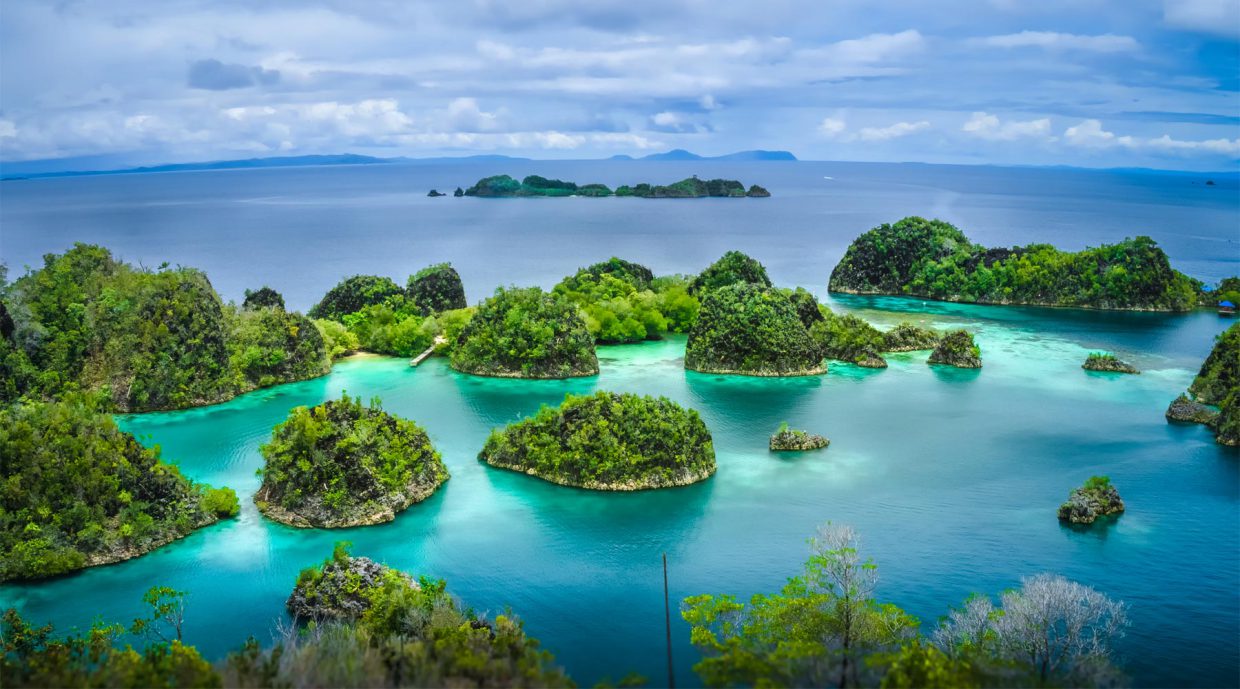
Raja Ampat in Indonesia
Boating Around the Islands
In the paradise of watersports, you might want to go around on a boat. You can go kayaking, get on a luxurious cruise, or get a liveaboard and take your house with you. If you are a determined traveler, you can find uninhabited islands. But if you plan to stay at one of these uninhabited islands, you need a permit from the local community.
Scuba Diving and Snorkeling
The number one reason for most travelers is the amazing experience and diving spots of Raja Ampat. You can go and find your perfect spot for diving or snorkeling at any location around the islands. The diversity of marine life near the islands is so much that you have the chance to see most of the underwater creatures in just one trip. The coral reefs are also an amazing attraction, making you bring your equipment to take the best pictures of your life.
One of the exciting aspects of diving in Raja Ampat is visiting the wreckage left from WW II. Some ships were destroyed by mistake, which are now part of the underwater world.
There are always courses for diving and snorkeling. There are also places to rent equipment. But keep in mind that the currents are not very suitable for beginners unless you have help. You are also always recommended to bring your own equipment.
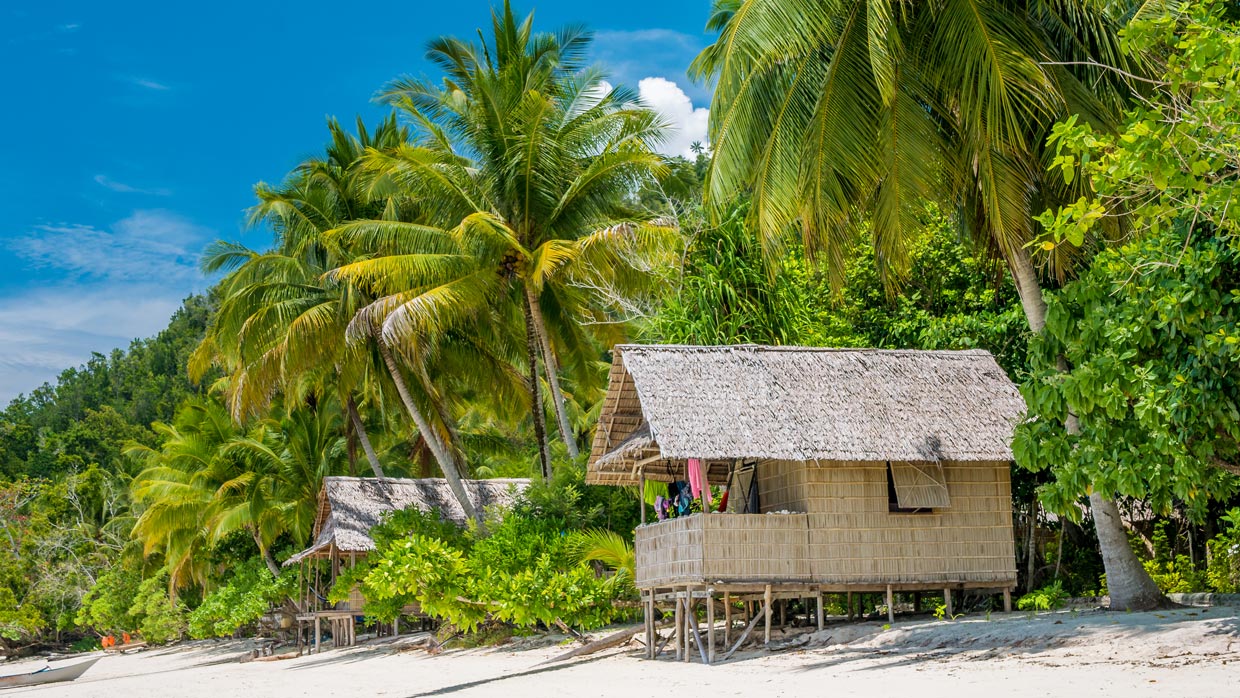
Raja Ampat, Indonesia
How to Get to Raja Ampat
You can make the traveling experience easier by traveling most of your way by plane. You should get to the province of Papua and fly to the Dominique Edward Osok Airport. This airport is the central hub of transportation in Raja Ampat in Sorong city. From this place, you can get flights to other areas of Indonesia and vice-versa.
Right after reaching the islands in the west of Papua, you can decide which of the islands you want to visit. As soon as you decide, you can head to Sorong harbor and get a ferry to Waisai harbor or any other place in Raja Ampat.
Alternatively, you can also check to see if there are any flights to Waisai’s airport, which is in the capital of Raja Ampat.
Raja Ampat Permit
Before getting to the islands and beginning your adventure, you need to purchase a permit to visit Raja Ampat. To preserve the entire area as a vast marine biodiversity park, the permit is sold for gathering funds. Besides funding and preserving the area, the permit is also a means of discouraging the ordinary traveler from visiting. The price for this permit is Rp 1,000,000 and can be acquired at the airport or the harbors before heading to the islands.
Notes
- You better pay for the permit in the local currency to avoid any complications and scams.
- Keep in mind to acquire the permit at the tourism office to ensure you have a legitimate permit. Scammers may also attempt to sell you fake permits.
- Your passport is enough proof for identification as you attempt to get your permit.
- If you are going on a tour, your tour providers will acquire your permit, but it is always best to check them to avoid complications.
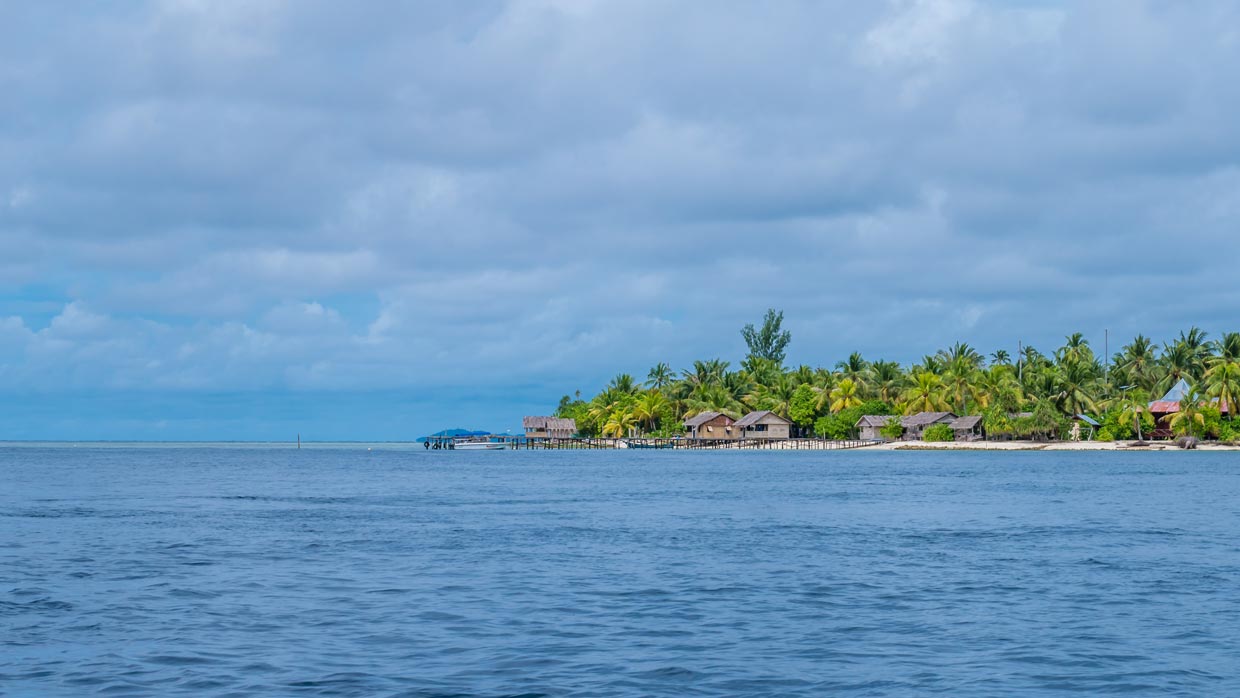
Raja Ampat, Indonesia
Accommodations in Raja Ampat
According to how much money you want to spend, you can take your pick of any place you want to stay. You can go for Homestays with reasonable prices, Resorts with higher prices and better facilities, or Liveaboards with flexible prices and ant range of facilities. The point is to find the one you believe to be more suitable for you and book that place before heading out.
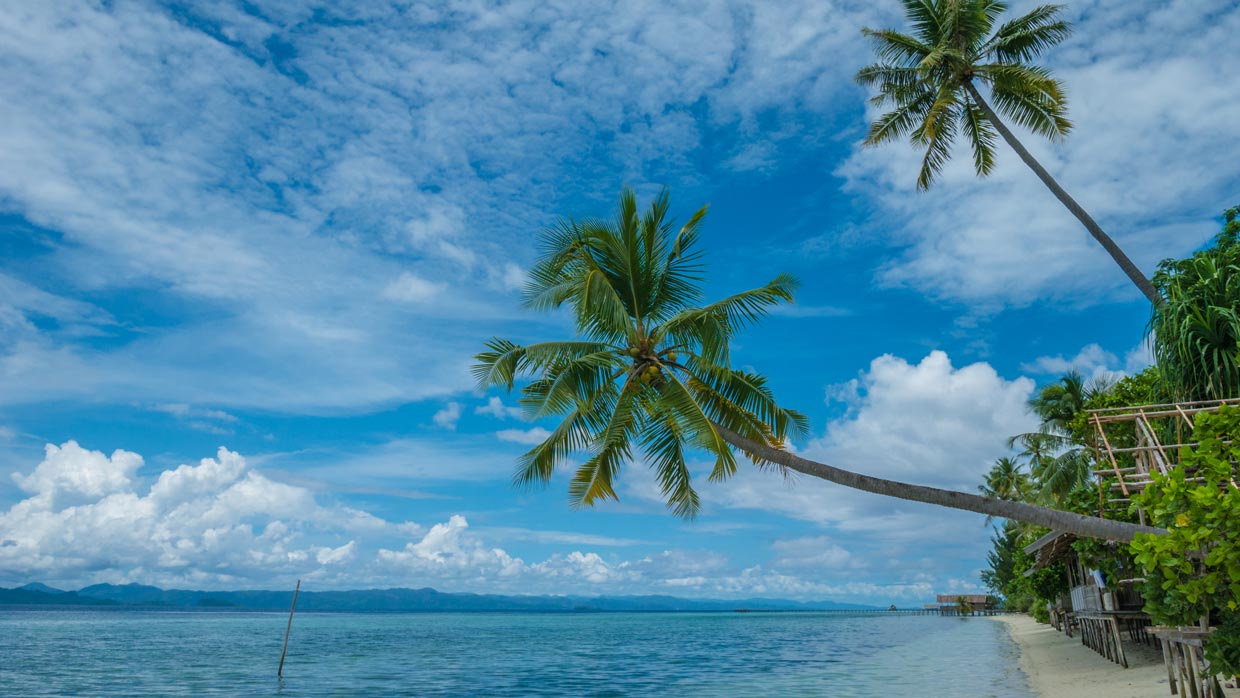
Raja Ampat, Indonesia
All the Things you Need in Raja Ampat
Before you head out, you should know that you can always find guides to help you if it is your first time to Indonesia and Raja Ampat. You can also find the necessary equipment for any of the watersports you wish to try. But it is best to have someone with experience on your first trip. Or learn a thing or two before going diving. The ideal situation for Raja Ampat is going on a tour and having a guide and a group of other people with you.
If you are going alone, be sure to have some money in the Indonesian Rupiah’s local currency. Most of the transactions are done only with their currency, and therefore you need to exchange for most of the shops and areas you visit. If you do not want to exchange your money, you better check first with your booking. Other than that, keep in mind that bank access is very limited in the islands, and you may not find an ATM. Your credit card may be of little use to you here.
Other than money and your identifications, you might want to plan and bring sleeved clothes as well as sunscreen and mosquito repellents. Chances are, the necessary lotions and appropriate clothes can be acquired the same way you can find diving equipment, but it is always better to come prepared.
Luxor Temple in Egypt
When you plan to travel, the most critical question is always where to, because the world has many wonders that one would want to see and explore at least once, which is why here we’re going to tell you why the Luxor temple in Egypt should be on top of your list. That being said, traveling to a place you have never been before can bring forth several questions that their answer could be detrimental between enjoying the most out of your trip or regretting ever setting foot out of your home. In this article, we have provided a list that will help you be prepared to enjoy the most out of your trip and make spectacular memories.
The History of the Luxor
Although the mud-brick houses and palaces of Thebes have disappeared, its stone temples have survived, and the most beautiful of these is the temple of Luxor. Luxor Temple is a large Ancient Egyptian temple complex located on the east bank of the Nile River in the city today known as Luxor, ancient Thebes, and was constructed approximately 1400 BCE. The temple was built by Amenhotep III but completed by Tutankhamun and Horemheb and then added to by Rameses II. To the rear of the temple are chapels built by Amenhotep III of the 18th Dynasty and Alexander. Tutankhamun and Ramesses II made other parts of the temple. During the Roman era, the temple and its surroundings were a legionary fortress and the Roman government’s home in the area.
For thousands of years, the temple was buried beneath Luxor’s streets and houses, and Eventually, they built the mosque of Sufi Shaykh Yusuf Abu al-Hajjaj over it. This mosque was carefully preserved when the temple was uncovered and, these days, it forms an integral part of the site today. In Luxor, there are several great temples on the east and west banks. Four of the significant mortuary temples include the Temple of Seti I at Gurnah, the Temple of Hatshepsut at Deir el Bahri, the Temple of Ramesses II, and the Temple of Ramesses III at Medinet Habu. The two primary cults’ temples on the east bank are known as the Karnak and Luxor.
Attraction sites
The Valley of the Kings in Luxor, Egypt, is a site with over 60 tombs built for the pharaohs and powerful nobles of ancient Egypt. First, you should buy a general admission ticket at the gate, which will give you entrance to any 3 of the tombs. There are also a few notable tombs that you might want to buy a separate ticket for them. If you’re going to take pictures inside the tombs, you will need to buy a photography ticket, and as with most of the sites in Luxor, Egypt, the tickets are cash only, make sure to have cash with you. As we mentioned, There are over 60 tombs, but usually, only 6-10 are open to the public, and since with your ticket you can visit 3 of these tombs, here are some of the most interesting graves you can choose from.
Luxor Temple
In what was then Thebes, Luxor Temple was “the place of the First Occasion,” where the God Amon experienced a rebirth during the pharaoh’s annually reenacted coronation ceremony. Today remains of this vast complex include the colossal Great Colonnade Hall, almost 61 meters long, with 28 twenty-one-foot-high columns, its decoration largely undertaken by Tutankhamun around 1330 B.C. the thousands of sandstone fragments retrieved from the vicinity of Luxor temple contain carved and painted details of hieroglyphic texts and temple ritual scenes. Luxor Temple is also beautifully lit up at night, and you can walk around and see it from the outside.
Karnak Temple and Queen Hatshepsut’s Temple
Karnak Temple is a massive temple complex in Luxor, Egypt, and is considered one of Egypt’s most sacred sites. The temple is over 4,000 years old and is the second-largest religious complex in the world (after Angor Wat in Cambodia) in Karnak. You can touch the walls and columns and feel the groves of the hieroglyphic carvings with your hands. The Sound and Light Show at Karnak Temple is also extraordinary. After sunset, the temple is illuminated with an audio-visual show that explains how the temple was built and what life was like in ancient Egypt. Queen Hatshepsut’s Temple is one of the most impressive examples of ancient Egyptian architecture. The interior provides you with the most wonderful ancient art, and It’s also located on the west side of the Nile River, so it’s easy to visit after the Valley of the Kings.
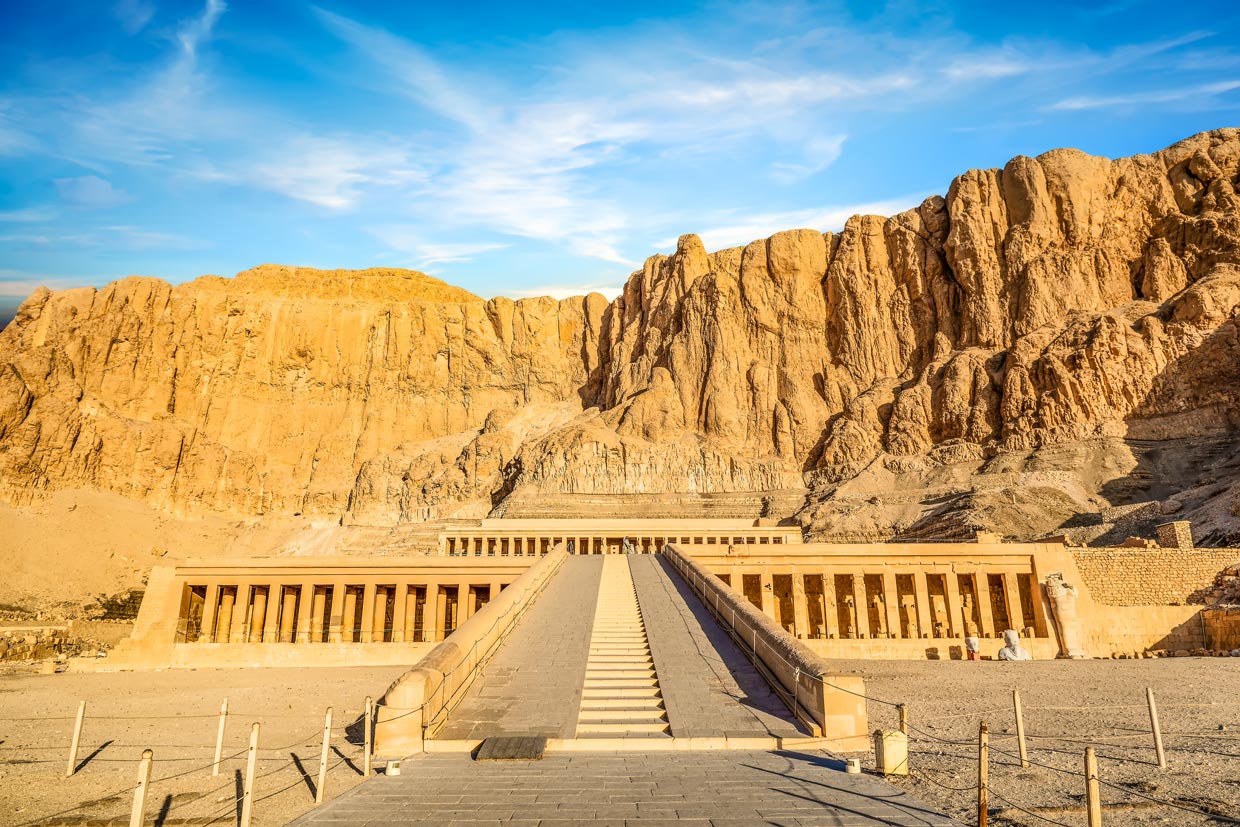
Queen Hatshepsut’s Temple in Egypt
KV11,16,34,35
KV11 is the tomb of Pharaoh Ramses III. A large tomb with bright colors and detailed hieroglyphs covering the walls. KV16 is the tomb of Pharaoh Ramses I. He died before it was finished; therefore, it’s a smaller tomb, but still very beautiful inside. KV34 is the tomb of Pharaoh Thutmose III. It was one of the first tombs to be dug in the Valley of the Kings. It’s in the back of the Valley, so you may want to start with this one and then work your way back towards the front. KV35 is the tomb of Pharaoh Amenhotep II. Later, it became a storage unit for other mummies; when discovered in 1898, they found a dozen other mummies of pharaohs, queens, and more stuffed into this tomb’s side chamber.
What kind of weather will you face in Luxor, Egypt?
Egypt is a wonderful country, but the hot climate poses the question of what is the best to wear while there. Egypt is hot throughout the year and is one big desert, it rarely rains, maybe only two days during the year, and the only thing you possibly have to worry about is a sandstorm. The sun will be too intense no matter the season you travel, but it’s a dry heat with extremely low humidity, so it won’t feel as hot as it is. Still, places like Cairo, Luxor, or the famous Valley of the Kings will be an actual furnace in summer, especially June to August, and usually, it doesn’t cool off all that much during the night. If you are visiting Egypt in winter, November, especially December & January, until March, you will be able to enjoy cooler temperatures around. The sky can be a bit overcast during that time of the year. But for visiting temples like Karnak, Luxor or the Giza pyramids it might be the more enjoyable time of the year to travel.
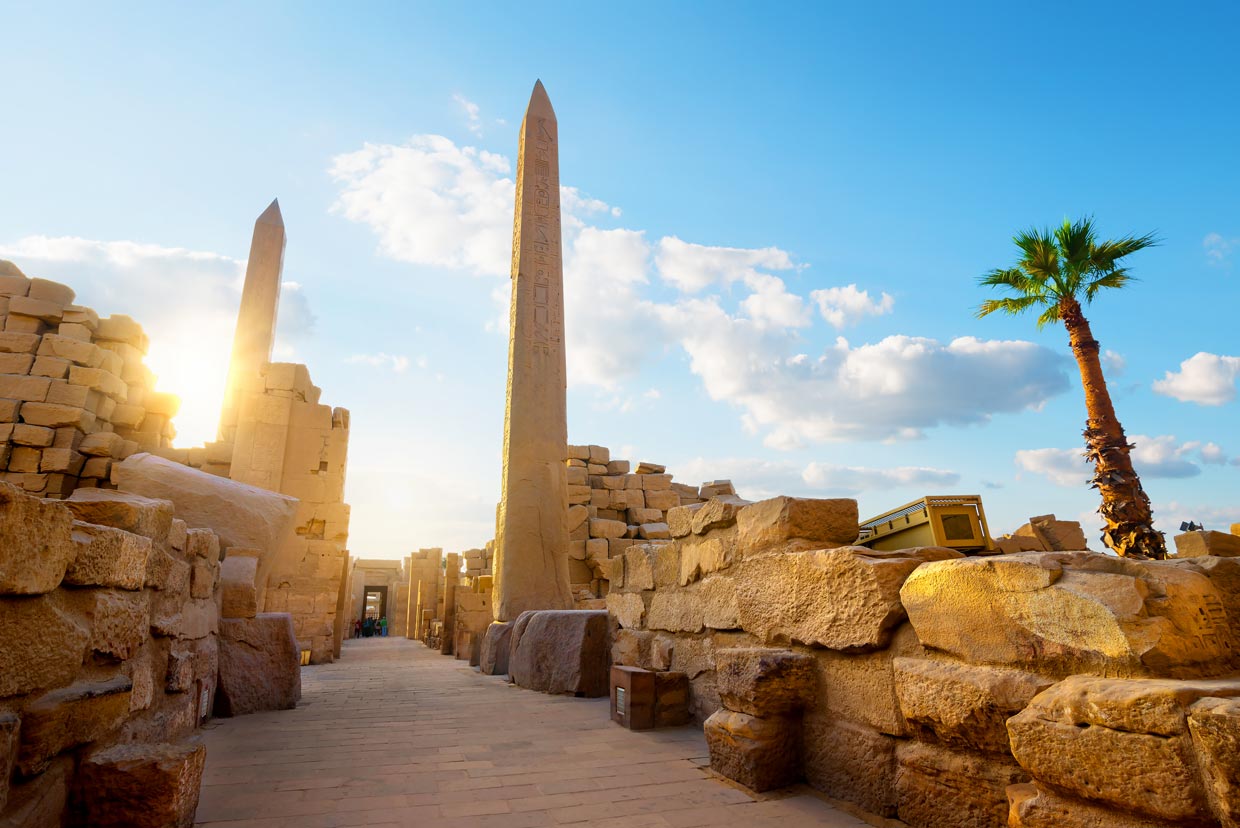
Karnak Temple, Luxor, Egypt
What clothes to wear while in Egypt?
Wear loose & long clothes and make sure always to stay protected from the sun. Since Egypt is a hot country and the laundry service is too cheap, we recommend staying away from overpacking and just picking a small suitcase. Remember that you will sweat quite a lot, there’s a lot of sand/dirt in the temple ruins, and also remember that sunscreen mixed with sand can leave stains on your clothes, not easy to be removed. So, for visiting Luxor, pack a spare or two and remember to bring at least one smart casual outfit for visiting mosques and good restaurants. When visiting Luxor, Egypt in winter, pack a light jacket since you will need it in the evening and because some places will have a massive air conditioner active. Consider bringing a small umbrella and a hat since the extra shade they offer could be quite helpful.
What shoes to wear in the Egyptian heat?
Picking the right kind of shoes for Egypt is difficult. The climate is hot, and the ground in most temples and around the pyramids is not even, usually quite sandy with rocks in between, so High heels and heavy boots won’t be the right choice. Instead, bring comfortable light walking shoes, and trekking sandals can be an excellent option for exploring the temples in Luxor, Egypt, and also a pair of closed shoes or leather shoes for less sandy places. Note that it is not uncommon for your shoes’ glue to melt due to the scorching ground, so It might be a smart idea to bring spares along.
An essential tip for visiting the Luxor temple in Egypt
It is quite vital to stay hydrated throughout the day while visiting various temples and tombs in Luxor’s heat. Be careful! Egyptian tap water is not edible. We don’t recommend using sterilizing agents either, as they mostly don’t kill tapeworm eggs. You won’t need to bring a canteen, but a shoulder strap to carry your water bottle will be quite a smart idea. In theory, you could also get a small daypack, but it usually means you’ll sweat a lot on your back.
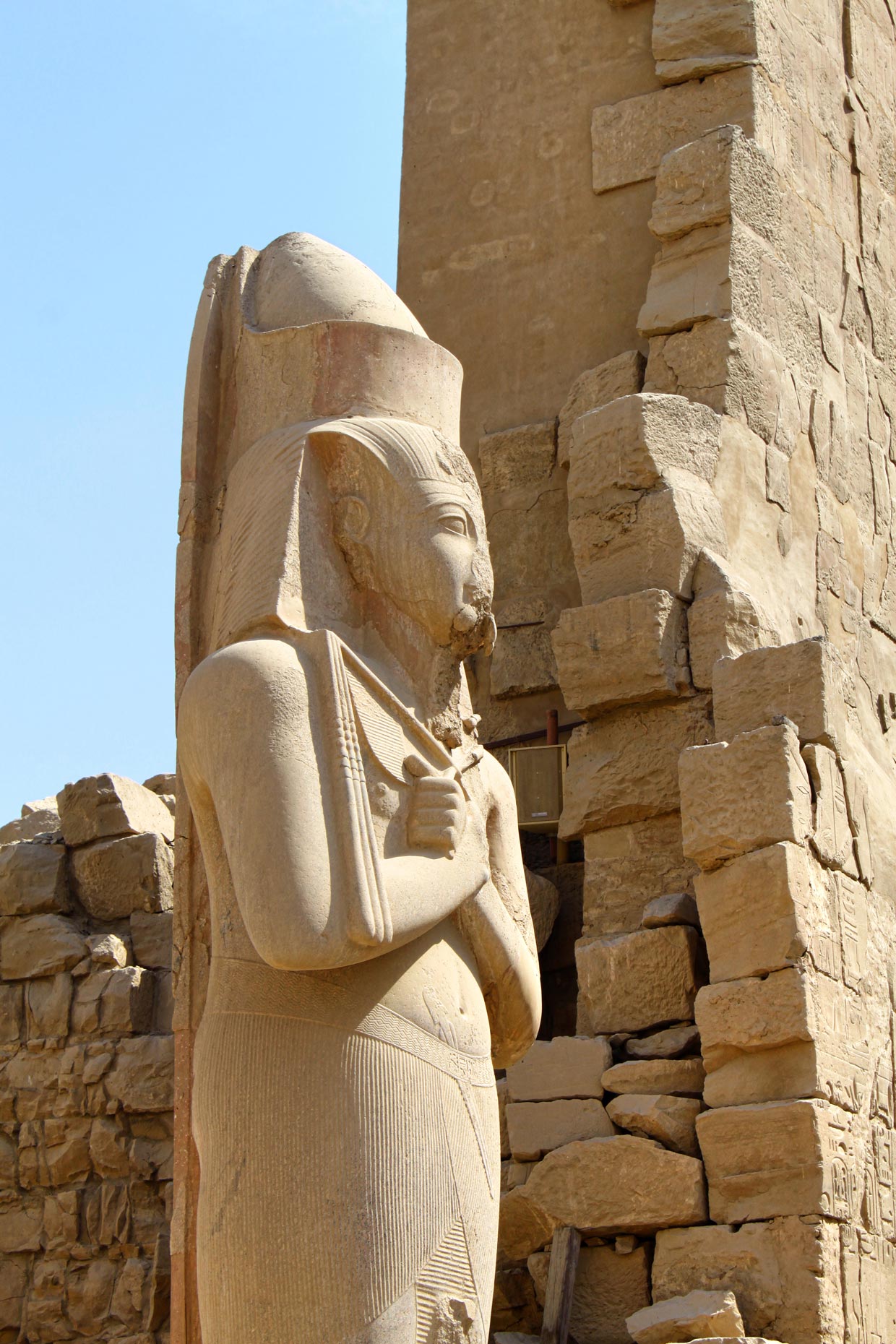
Luxor, Egypt
The best places to stay and rest in Luxor, Egypt
Bob Marley Peace Luxor Hostel, this is, definitely, the most famous hostel in town. With plenty of backpackers, it offers two and 4-bed dorms and private rooms: excellent location, great breakfast, good Wi-Fi, and friendly staff.
Luxor Guest House, located on the shore of the Nile River, on the West Bank side, but right next to the ferry station, this guest house is one of the best-rated places in town, and it’s easy to understand why. Excellent service, breakfast, super clean rooms, and everything at a very affordable price. This place is perfect for both couples and independent travelers.
Amon Hotel, with a stunning and lovely garden, Amon Hotel is another excellent choice in town for mid-range travelers. A hotel with a real character! The staff is some of the friendliest ever, very kind, and informative. The food is also great, and the location is better than ever—an excellent choice for families and couples visiting Luxor.
Hilton Resort and Spa, the Hilton is the top-rated top-end hotel in Luxor. Located on the Nile’s shore with excellent sailing boats’ views, this luxury hotel is everything you can expect from the world-wide famous Middle Eastern service.
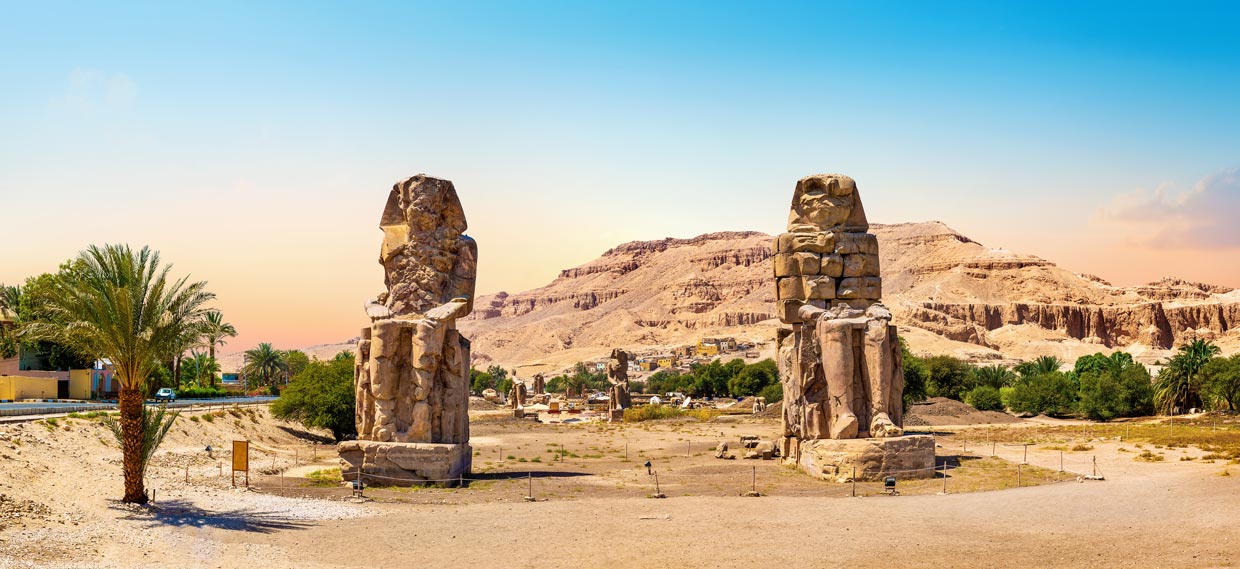
The Colossi of Memnon in Egypt
How to get to the Luxor?
There are several ways to get from place to place in Luxor. Firstly, as most of the incoming flights to Egypt arrive at Cairo International Airport, reaching from the capital to Luxor can be done by plane, taxi, rental car, train, or bus. The best method of getting around this ancient city would be by private limousine service operated by the driver. They can be accessed by most of the tour companies in Luxor and can also be booked by hotels that you are staying in. As buses are everywhere and cheap, going by bus from place to place is the most local way to travel and a terrific experience for those wanting to get a unique insight into the Egyptian way of life. Your local hotel can obtain bus schedules and fares.
Have you ever been there?
The Luxor Temple is only one of the magical places in Egypt, and surprisingly, whenever you visit this part of the land, the experience would be different. As we provide you with useful information and guides about places worldwide, we would love to hear about your stay in Egypt and the time you spend in The Luxor Temple. Let us know about your journey,
Blue Mosque Istanbul: The Ultimate Visitor’s Guide (History, Tips & Tours)
Istanbul’s Blue Mosque, known officially as the Sultan Ahmed Mosque, is a sight that captures the imagination of millions. With its cascading domes and six slender minarets piercing the sky, this 17th-century masterpiece stands as a living symbol of Turkey’s rich Islamic heritage and the architectural grandeur of the Ottoman Empire. Located in the heart of historic Sultanahmet, the Blue Mosque isn’t just a museum piece – it’s an active place of worship and one of Istanbul’s top attractions. From its storied history under Sultan Ahmed to the exquisite blue İznik tiles that give it its nickname, the mosque offers visitors a blend of spiritual ambiance and historical intrigue. In this comprehensive guide, we’ll delve into the Blue Mosque’s history and design, share essential tips for visiting (like timing, dress code, and what to see), and highlight how you can enhance your experience – whether exploring on your own or through an informative guided tour of Istanbul’s old city.
History of the Blue Mosque (Sultan Ahmed Mosque)
The Blue Mosque was commissioned by Sultan Ahmet I in 1609, at a time when the Ottoman Empire was at a crossroads. The young sultan, only 19 years old when construction began, sought to reaffirm Ottoman power and leave a lasting legacy by building a grand imperial mosque to rival the nearby Hagia Sophia. Following the Peace of Zsitvatorok, which concluded fifteen years of conflict between the Ottoman Empire and the Habsburg monarchy—and a significant military setback against Persia, Sultan Ahmet I was determined to reaffirm Ottoman power and boost public morale.
Among the various locations he considered, he selected the site previously occupied by the Ayse Sultan Palace on the Hippodrome side, facing the qiblah (the direction of prayer for Muslims). The area was vast, near the sea, and conveniently within close proximity to the renowned Topkapi Palace. Notably, the mosque is strategically located across from Hagia Sophia, once the greatest church of the Byzantine era, and later converted into an imperial mosque.
Over seven years, architect Sedefkar Mehmed Agha – a pupil of the great Mimar Sinan – oversaw thousands of craftsmen in bringing this vision to life. In 1609, Sultan Ahmet I famously broke ground with his pickax, an artifact now permanently preserved in the Topkapi Palace museum. With the empire’s treasury funding the elaborate project, including the controversial purchase of Ayse Hanim’s palace for 30 loads of pure gold dinars, the mosque’s construction took nearly seven years (1609-1616).
On June 2, 1616, a magnificent inauguration ceremony was held. Sultan Ahmet I and top state officials attended the opening prayers, and for a time, the mosque was known as the “New Mosque.” However, the dazzling blue interiors soon earned it the enduring nickname “Blue Mosque.” Mehmet Agha’s exclusive dedication to the project ensured the structure would become an unparalleled symbol of Ottoman artistry and piety.
Historically, the mosque has been at the center of Istanbul’s religious and social life. It’s part of a larger complex (külliye) that once included theological schools (madrasas), a hospital, a covered market, and Sultan Ahmet’s own tomb (which can be visited just outside the mosque).
Through the centuries, the Blue Mosque has witnessed the rise and fall of empires, stood through earthquakes, and hosted countless prayers. Notably, it has also welcomed visitors from around the world for generations – even Pope Benedict XVI paid a respectful visit in 2006, underlining its significance as a cultural bridge. After over 400 years, the mosque remains not just a historical monument but a vibrant piece of Istanbul’s living heritage.
Architecture and Design: Blue Tiles, Six Minarets & More
Stepping into the courtyard or interior of the Blue Mosque, you’re immediately struck by the harmony and grandeur of its design. Here are the key architectural features that make it extraordinary:
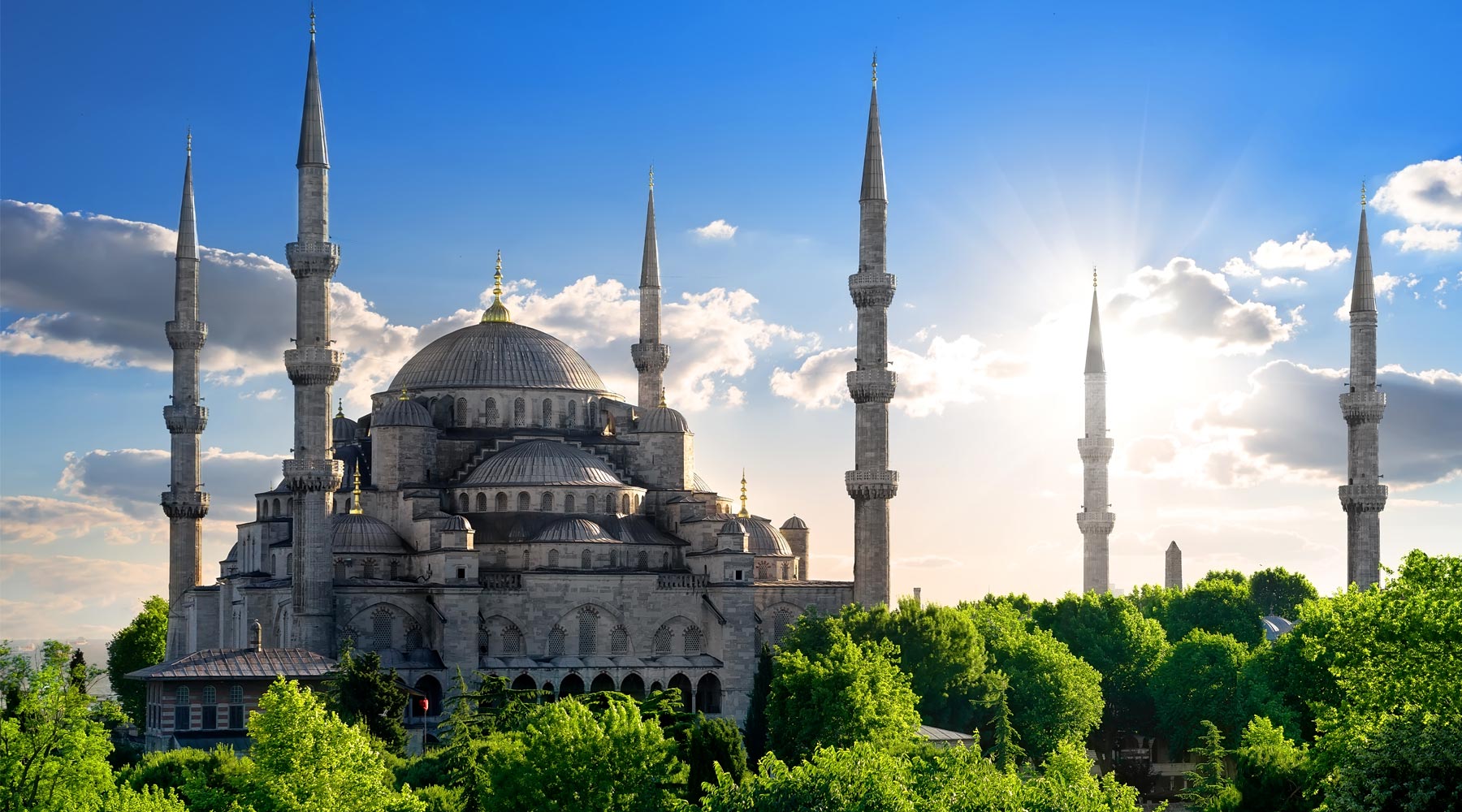
- The Six Minarets: The Blue Mosque’s most famous architectural distinction is its six minarets – a feature that was unprecedented in Istanbul when it was built. At the time, the only mosque with six minarets was the Great Mosque in Mecca. According to popular lore, Sultan Ahmet had originally requested “golden minarets” (altın minareler in Turkish), but the architect misheard it as “six minarets” (altı minare). Whether misunderstanding or not, the result was considered audacious. Facing criticism for matching Mecca’s count, the Sultan funded the addition of a seventh minaret to the Kaaba mosque in Mecca to maintain its supremacy. Today, the six minarets of the Blue Mosque remain one of its defining features, symmetrically framing the skyline. Four minarets tower at the corners of the mosque itself, each with three balconies (from which the call to prayer is chanted), and two smaller minarets stand at the end of the forecourt, each with two balconies.
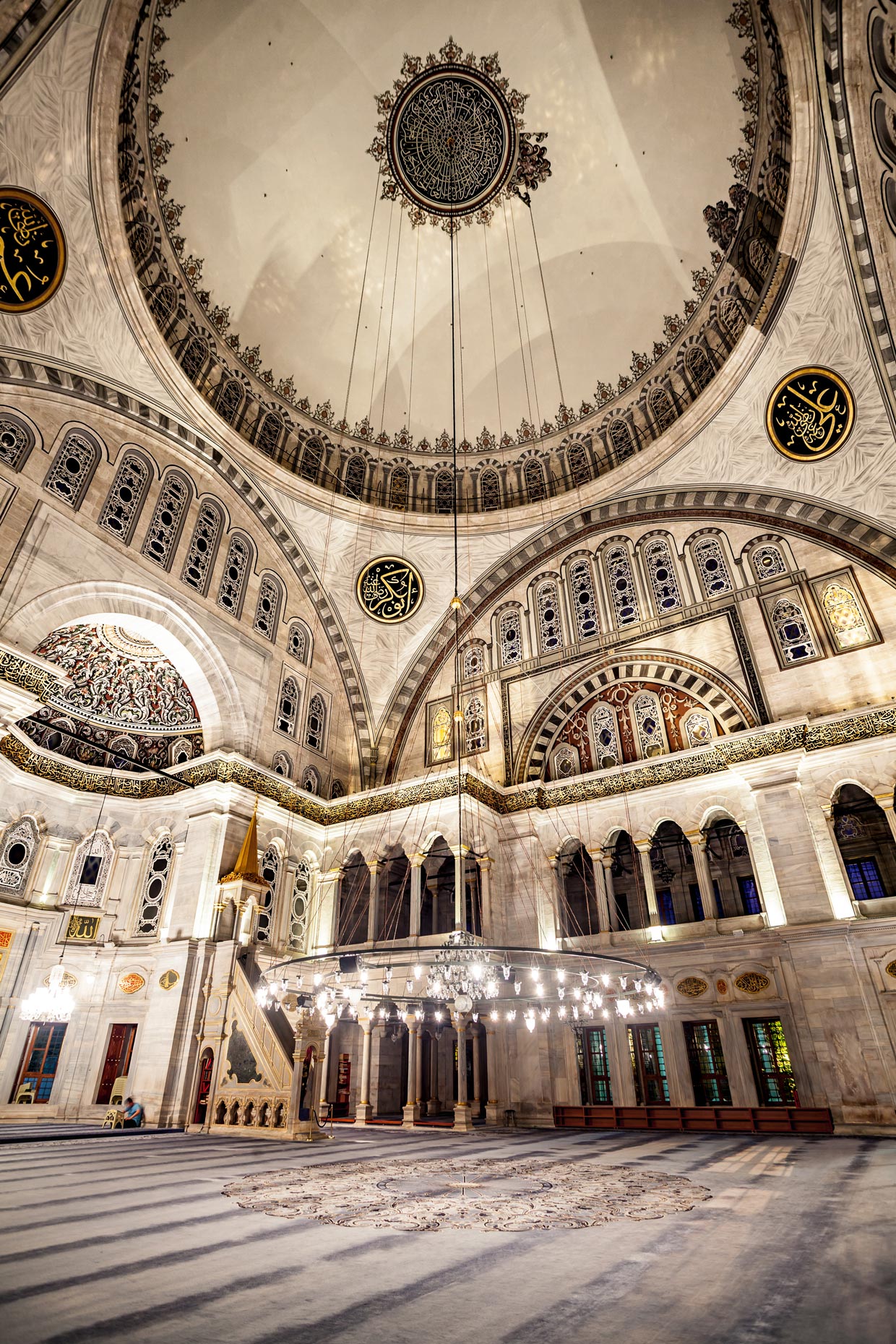
- Cascade of Domes: The central dome of the mosque, 23.5 meters in diameter and about 43 meters high, is flanked by a series of semidomes in a cascading form. This creates a terraced silhouette from the outside and a magnificent expansive ceiling on the inside. The design was influenced by the nearby Hagia Sophia, but architect Mehmed Agha introduced a more elegantly staggered profile of domes, giving the Blue Mosque a distinctive pyramid-like shape as you view it from the ground up. The ceiling is supported by four massive pillars nicknamed “elephant feet,” each over 5 meters in diameter, yet the arrangement of space and light makes the interior feel open and airy.
- Blue İznik Tiles and Interior Decoration: It’s the interior of the Sultan Ahmed Mosque that earned it the nickname “Blue Mosque.” Over 20,000 hand-painted İznik ceramic tiles in shades of blue, turquoise, and green adorn the walls and galleries. These 17th-century tiles feature intricate floral designs — tulips, roses, lilies, and carnations — as well as abstract patterns, all typical of classical Ottoman design. Lower levels of the interior are clad with these tiles, while the upper sections are painted with matching blue hues. When sunlight filters through the stained-glass windows (there are 200+ windows, historically with Venetian glass), it illuminates the tiles and gives the interior its famous bluish glow. It’s a truly mesmerizing sight, although interestingly, many of the blue tiles are high up in the gallery level, somewhat distant from viewers on the ground floor. The mosque’s interior decoration is completed by Arabic calligraphy – verses from the Quran inscribed along the walls and domes by Seyyid Kasim Gubari, one of the great calligraphers of that era.
- Lighting and Chandeliers: Hanging from the high ceiling are large chandeliers that once held oil lamps (now electric lights). In Ottoman times, the glass lamps were even said to be decorated with gold and gemstones, and among them were placed ostrich eggs to prevent cobwebs. The chandeliers today create a warm, atmospheric glow in the evenings. While much of the original glass and lighting apparatus has changed over time, the present setup still evokes the historic ambiance. Visitors will notice the lights hang quite low, which, along with the carpeted floor and the dome above, gives a very cozy, enclosed feeling despite the immense scale of the building.
- The Courtyard: Before you enter the mosque, you’ll likely spend time in the spacious courtyard (avlu). This courtyard is almost as large as the mosque’s interior and is bordered by a continuous vaulted arcade. In the center stands a small hexagonal fountain for ablutions (ritual washing), though it’s more decorative today as larger ablution facilities are on the side. The courtyard’s central gateway, with its heavy iron chains hung at head height, is notable – tradition says the chains forced the sultan to lower his head when entering on horseback, as a symbolic gesture of humility before God. From the courtyard, you also get a fantastic perspective on the mosque’s multiple domes and the forest of minarets around you – it’s a great spot for photography.
Overall, the architecture of the Blue Mosque represents the culmination of two centuries of Ottoman mosque development. It blends influences from the Hagia Sophia (just across the park) – like the dome structure and spacious interior – with traditional Islamic mosque elements (courtyard, minarets, tile ornamentation), achieving a masterful balance. It’s considered one of the last classical Ottoman mosques built on such a grand scale. Even today, architects and art historians admire how its exterior and interior design create a sense of awe and tranquility in equal measure.
Location and How to Get There
The Blue Mosque enjoys a prime location in Sultanahmet, which is the touristic core of Istanbul’s old city (the area is also often called the Historic Peninsula or Old Istanbul). If you’re standing in Sultanahmet Square – the park area that lies between the Blue Mosque and Hagia Sophia – you’re essentially in the courtyard of history, surrounded by major landmarks of the Byzantine and Ottoman eras.
Address: Sultan Ahmet Mah., Atmeydanı Cd. No:7, 34122 Fatih/İstanbul, Turkey. Don’t worry, you don’t really need the full address – everyone knows the Blue Mosque locally, and any map or local person can point you right to it.
Getting There: Istanbul’s public transportation makes it quite easy to reach the Blue Mosque:
- By Tram: The easiest way from many central areas is to take the T1 Bağcılar–Kabataş tram line to Sultanahmet station. From popular spots like the Grand Bazaar or Galata Bridge area, the tram is direct. Once you get off at Sultanahmet, you’ll be a 5-minute walk from the mosque. The tram is frequent and avoids city traffic – a huge plus.
- By Metro: If you are coming from areas along the metro (for example, from around Taksim Square, you might take the M2 metro), you can transfer to the T1 tram at interchange stations like Vezneciler or take the Marmaray metro to Sirkeci station and walk uphill for about 15 minutes through the historic streets to Sultanahmet.
- By Taxi: Taxis or ride-sharing (Uber) are plentiful in Istanbul. Simply telling the driver “Sultanahmet Blue Mosque” will get you there. From Taksim or Galata, the ride could take 20-30 minutes (longer in heavy traffic) and cost around 100-150 TL (roughly $5-8 USD as of 2025 – but always ask them to run the meter). One challenge for taxis is that the streets immediately around Sultanahmet Square are pedestrianized, so the taxi will drop you off a short walk away, often near the Hippodrome or Basilica Cistern area.
- On Foot: If you’re staying in the Sultanahmet neighborhood or around the Grand Bazaar/Sirkeci, walking to the Blue Mosque is quite feasible and enjoyable. From the Hagia Sophia, it’s a 2-minute walk across the plaza. From the Topkapı Palace area, about 5-10 minutes. Wandering the streets, you might first encounter the Hippodrome area with its ancient obelisks, and then the impressive sight of the Blue Mosque’s exterior as you approach.
Once you arrive, you’ll find the mosque’s visitor entrance on the south side of the building (the side facing the Hippodrome and away from Hagia Sophia). Signs in multiple languages point non-worshipper visitors to the correct entry (worshippers have a different entrance, usually on the courtyard side). During busy times, you might see a queue forming along the courtyard; don’t worry, it usually moves quickly as groups are ushered in batches.
Opening Hours and the Best Time to Visit
Opening Hours: The Blue Mosque is open to visitors every day, but since it’s a working mosque, visiting hours revolve around the five daily prayer times (Namaz). Generally, non-Muslim visitors can enter from 9:00 AM (roughly) until one hour before sunset, but closed during prayer times. Specifically, the mosque closes about 30 minutes before each call to prayer, and reopens about 30 minutes after prayer concludes. Each prayer session lasts about 15-30 minutes, but factor in time for worshippers to enter/exit. There are five prayer sessions daily, with the exact times changing slightly day to day (timed with the sun).
The most significant closure is for Friday midday prayers (Jummah) – on Fridays, expect the mosque to be closed for visitors from late morning until around 2:30 PM. Friday is the holy day of gathering, and large crowds of worshippers fill the mosque, so tourists are only allowed back in once prayers are completely finished and the congregation has dispersed. If you plan to visit on a Friday, either go very early (right at 9 AM) and leave before late morning, or wait until mid-afternoon.
Best Time to Visit: To truly enjoy the Blue Mosque with fewer crowds, timing can make a big difference:
- Early Morning (right at opening) on weekdays can be peaceful. If you arrive around 9 AM (except Friday), you might find it relatively quiet, as many tour groups tend to start a bit later.
- Mid-Morning to Late Morning is generally okay on most days except Friday. There may be school groups or tours, but the lines move quickly. If you arrive and find it’s prayer time, use that time to explore the outside, the Hippodrome monuments, or even pop over to see the Hagia Sophia’s exterior until the mosque opens again.
- Afternoon (Post-lunch) can be a good window, especially after 2-3 PM, except on Fridays. Many tour groups have come and gone by then, and there’s often a lull before the late-afternoon prayer.
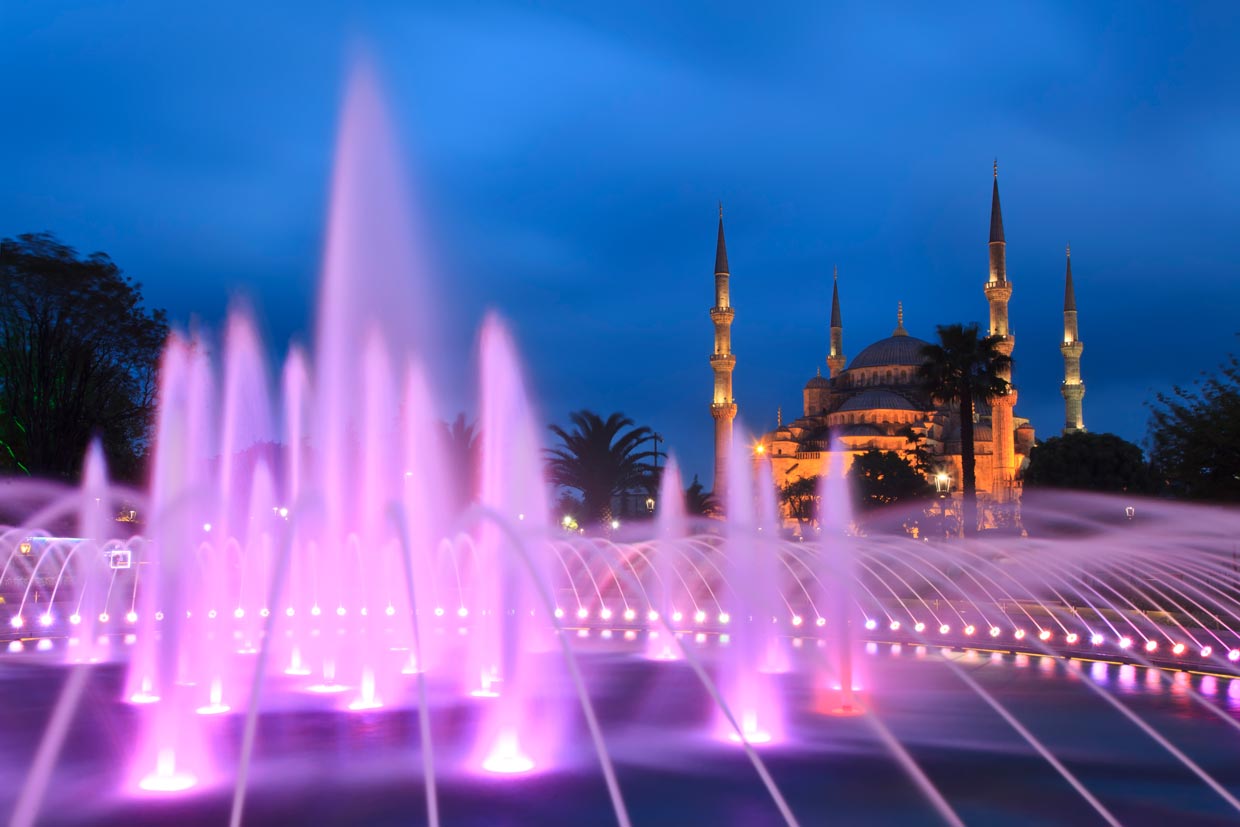
- Just Before Closing (around sunset): This is a mixed recommendation – on one hand, fewer people may be inside, but you might feel rushed if it’s close to prayer time or closing time. However, the advantage is that after you exit, you can enjoy the evening lighting. The mosque’s exterior, at sunset and after dark, is illuminated and looks stunning against the twilight sky. While you can’t go inside at night, walking around the courtyard or the park in the evening to see the Blue Mosque and Hagia Sophia both glowing is magical.
Avoiding Crowds: The Blue Mosque can get very crowded in peak tourist season (summer months and holidays). Lines form at the visitor entrance, but they usually move steadily. To avoid the longest lines, steer clear of the late morning rush (10 AM – 12 PM is prime time for tour buses arriving). If you encounter a big queue, you might choose to visit another nearby site first (for example, if the line is huge, you could visit the Basilica Cistern or Turkish Islamic Arts Museum nearby, then return an hour later when it might be shorter). Also note, during Ramadan and especially on its holy nights, the mosque will be full of worshippers late into the night and there may be special lighting or Quran recitations – tourists can still visit outside prayer times, but it’s good to be extra respectful during these periods.
Lastly, always double-check if there are any special events or state visits on the day of your visit. Occasionally, dignitaries or government events might restrict access temporarily (this is rare, but it has happened).
Entrance Fee and Guided Tours
One of the great things about visiting the Blue Mosque is that it’s completely free! There is no entrance fee or ticket required for entry. The mosque is a place of worship maintained by the religious authorities, so unlike some museums or historical sites, it doesn’t charge tourists. At the entrance, you might see a donation box – contributions are optional but appreciated, as they help with the mosque’s upkeep and charity efforts.
Entry Process: As you approach the visitor entrance, you’ll notice some helpful facilities. Typically, the mosque provides plastic bags for your shoes (since you must remove footwear to go inside – more on that in the Etiquette section). You’ll carry your shoes with you in the bag. If you’re not dressed to the required standard, attendants will lend you cover-up garments: robes or scarves are available free of charge (just return them after). There may be a quick security check as well; guards might scan bags or ask to peek inside backpacks – this is routine for safety.
Once that’s done, you’re free to step into the mosque’s interior and look around quietly on your own. There are usually some informational signs inside in multiple languages describing the history and features, and sometimes volunteers are around to answer questions.
Guided Tours (On-site): You do not need to hire a guide to enter – many people do self-guided visits. However, having a knowledgeable guide can greatly enrich the experience because there are so many historical anecdotes and details you might miss. Outside the mosque (and around Sultanahmet), you might encounter licensed guides offering their services. Agree on a price beforehand if you go with a freelance guide. Some will offer a short 15-20 minute tour inside for a fee, which can be worth it if you want detailed explanations on the spot.
Organized Tours including Blue Mosque: A convenient option is to join an organized city tour that includes the Blue Mosque as one of its stops. Many Istanbul walking tours or half-day city tours cover the “big three” sights in Sultanahmet: the Blue Mosque, Hagia Sophia, and Topkapı Palace (sometimes adding the Grand Bazaar or Basilica Cistern too). Going with a tour group can save you time and provide context:
- Skip-the-Line Access: While entry is free, tours often time the visit to avoid lines, or they may have arrangements for quicker group access.
- Expert Narration: A certified guide will share stories, for example, pointing out the exact panels of tiles that are most famous, or telling you where the Sultan prayed, etc. You’ll learn about details like the mihrab made from precious marble or the significance of the Arabic inscriptions.
- Efficient Itinerary: If you have limited time, a guided tour ensures you cover multiple highlights in a structured way without getting too exhausted or lost in logistics.
TripWays offers several Istanbul tours that feature the Blue Mosque. For instance, you could opt for an “Istanbul Old City Highlights Tour” which might start at the Hippodrome, take you inside the Blue Mosque and Hagia Sophia with a guide explaining each, and then lead you through Topkapı Palace – all in a half or full day. There are also private guided tours for a more personalized experience, or even specialized photography tours if you’re keen on capturing the perfect shots of places like the Blue Mosque at dawn. When planning, look for tours that match your interests (history, culture, photography, family-friendly, etc.).
Even if you prefer exploring independently, knowing that tours are available (and what they cover) can help you decide how much time to allocate and whether to budget for a guided experience. Some travelers visit first on their own and then come back later with a tour to dive deeper (or vice versa).
Dress Code and Etiquette for Visitors
Because the Blue Mosque is a functioning religious site, all visitors are expected to adhere to a dress code and behavior guidelines to ensure respect for the sanctity of the mosque. Don’t worry – the rules are straightforward and apply to mosques throughout Turkey (and many parts of the Muslim world). Here’s what you need to know before you go:
Dress Code
- For Women: Women should cover their hair, shoulders, and legs. This means you’ll need to wear a headscarf (hijab) to cover your hair while inside. It’s a good idea to bring your own scarf; otherwise, the mosque can provide a free loaner scarf at the entrance. Shoulders should not be bare (so no strappy tops or tank tops alone), and your legs should be covered down to the ankles – long skirts, dresses, or pants are all fine. If you happen to be wearing shorts or a short skirt that day, they will lend you a lightweight robe or skirt wrap to put on over your clothes before you enter.
- For Men: Men should wear pants or long shorts (below the knee at least). Going in with very short shorts is not permitted. In general, a T-shirt or shirt is fine for men, just avoid sleeveless tops. Basically, like women, shoulders and legs should be covered (short-sleeved is fine for men, though long-sleeved is okay too).
- General: No one (regardless of gender) should wear shirts with offensive slogans or images, and obviously, no swimwear, etc. Modesty is key. It can be a bit warm in summer with more clothing on, but remember the interior is shaded and often cooler than outside.
If you arrive not meeting these requirements, don’t panic – attendants at the mosque entrance are very used to tourists and have a supply of clean garments (scarves, wraps) that they will hand out to cover you appropriately. There’s no charge for borrowing these; you’ll just return them after use in a collection bin.
Shoes: All visitors must remove their shoes before entering the mosque’s carpeted interior. This is both for cleanliness and respect, since worshippers pray on the carpets. At the entry, there are usually plastic bags available from a dispenser. You put your shoes in the bag and carry them with you (keeping them with you avoids any mix-up or theft of shoes left outside, plus it makes it quick to put them back on when you exit). Pro tip: Wear shoes that are easy to take off and put on (like slip-ons) on the day of your visit, as you’ll be doing this at mosques and maybe some other sights too.
Inside Behavior:
- Quiet and Respectful: Once inside, keep your voice low. Even when no formal prayer is happening, people may be praying individually or just reflecting quietly. It’s not a place for loud chatter. Enjoy the beauty in a calm and respectful manner.
- Where to Walk: Visitors need to stay in the areas designated for tourists. In the Blue Mosque, non-worshippers are typically asked to remain behind certain barriers or not go onto the main prayer rug areas when prayers are about to start. Follow the signs or the guidance of any officials present. Basically, don’t wander onto the front section (mihrab area), which is reserved strictly for prayer.
- Photography: You are generally allowed to take photos inside (unlike in some mosques or churches where it might be banned). However, do NOT use flash, as bright flashes can be disruptive and potentially harmful to light-sensitive artwork. Also, avoid pointing your camera in the face of people praying or taking any photos that might make worshippers uncomfortable – it’s fine to photograph the architecture, but be mindful that this is an active religious setting, not just a tourist attraction. If a service is going on, it’s best to refrain from photography altogether at that moment.
- During Prayer Times: If you happen to be caught inside when prayer is about to start (they usually ensure all tourists leave beforehand, but occasionally, if you’re in there right up to the call to prayer), you will be asked to step aside or exit. Non-Muslims are not expected to participate in prayers, of course. It’s best to just quietly move out of the way, or leave and re-enter after the prayer. If you are Muslim and wish to pray, there are separate sections for tourists versus local worshippers at peak times – you might need to let the mosque staff know and they will direct you where you can join the prayers.
- No Eating/Drinking/Smoking: Needless to say, don’t bring food or drink inside the prayer hall. Finish your water or snacks before you enter. Smoking is completely prohibited anywhere in or around the mosque.
- Children: Kids are welcome (it’s common to see families visiting), but try to ensure they also remain quiet and don’t run around excessively. If a child starts crying or behaving loudly, it’s courteous to step outside with them so as not to disturb the peace inside.
All these etiquette points essentially boil down to showing respect. If you forget something (like taking off your hat, or you accidentally have a flash on), usually a staff member or even a friendly local will gently remind you. The atmosphere at the Blue Mosque among visitors is generally cooperative – everyone is there to appreciate the site and is conscious of it being a holy place. So, just follow the cues, and you’ll be fine.
By dressing modestly and acting respectfully, you’ll not only be adhering to the rules but also enhancing your own experience – it feels more special when you align with the customs of the space you’re in. Plus, it’s a sign of goodwill to the local community that opens their mosque to visitors every day.
Inside the Blue Mosque: What to See and Notice
Walking into the Blue Mosque’s interior for the first time is often an awe-inspiring moment. You’ve left the bustling city and entered a vast, serene sanctuary of worship. Here are the highlights and things you should pay attention to as you explore inside:
- The Spacious Prayer Hall: The interior is essentially one huge open prayer hall. Immediately, you’ll notice the rich red carpeting underfoot (recently renewed during the restoration – soft and clean). This expanse of carpet, with minimal furniture (only some book stands for Qurans and a few partition ropes), really highlights the openness of the space. Look around and soak in how large the area is – this is what allows the mosque to accommodate thousands of worshippers at once.
- The Mihrab and Minbar: On the qibla wall (the wall that faces Mecca, which is the eastern wall in the Blue Mosque), you’ll see the mihrab – a semicircular niche made of finely carved marble. This indicates the direction of prayer. It’s a work of art on its own, often illuminated by side windows and surrounded by ornamental tilework. Next to it is the minbar, a tall pulpit with a narrow staircase, also marble, from where the Imam delivers the Friday sermon. These are key focal points of the mosque’s interior and are usually roped off because they are used during services.
- The Dome and Ceiling Details: Don’t forget to look up! The ceiling is one of the most beautiful aspects. The central dome and the half-domes around it are decorated with elaborate patterns, predominantly in blues, golds, and reds. These are not tiles, but painted designs and Arabic calligraphy. The central dome has the names of Allah, the Prophet Muhammad, and the early caliphs inscribed, along with verses. The sheer height (about 43 meters/141 feet high) and the way the dome seems to float (thanks to all those windows at its base) is mesmerizing. You might spot large round wooden plaques hung high on pillars – they have Arabic calligraphy in gold, with names of Islamic figures (like the Prophet and Caliphs). These were added in the 19th century and add to the character of the interior.
- The Blue Tiles Close-Up: While many of the famous İznik tiles are high up, there are areas where you can get closer to them. Along the galleries and lower walls, you’ll see tiles at eye level. Notice the variety of patterns – no two panels are exactly the same. The colors are still vivid after 400 years (though some have been restored). The dominant color is a cobalt or slightly greenish blue, but there are also greens and reds. Some designs depict tulips, which are a big motif in Ottoman art (tulips were kind of a symbol of Istanbul). Other designs are more abstract or geometric. Considering each tile was hand-painted and glazed in the 1600s, it’s incredible artistry. Keep in mind much of the upper tile work and paintings had been obscured by soot and dirt over time until restoration cleaned them, so you’re now seeing them much closer to their original glory.
- The Elevation and Galleries: The mosque has an upper gallery level (which was traditionally for the Sultan’s family or women’s section). Tourists typically don’t have access to go upstairs – those areas are usually off-limits. However, from the ground, you can look up and around to see the second-level balconies that ring the interior. There’s a lovely symmetry in how the arches of the galleries frame views of the space. If you circle around the interior (keeping within the allowed zone), you can admire the perspective from different angles.
- Stained Glass Windows: Around the walls, especially above the mihrab, you’ll notice stained glass windows. The ones above the mihrab are particularly gorgeous when sunlight comes through, as they cast colored light onto the mihrab and nearby tiles. While many of the original 17th-century stained glass pieces were lost and replaced, the effect remains enchanting. The designs often incorporate floral motifs to complement the tiles.
- People at Prayer: Often there will be some individuals praying in a quieter corner, even outside formal prayer times. You’ll see how Muslims pray – standing, bowing, prostrating. It’s a normal sight in a working mosque. Be respectful – give them space and privacy. It’s actually a humbling reminder that this beautiful building isn’t just a historical artifact; it serves a living spiritual purpose.
- Atmosphere: Take a moment just to stand quietly and feel the atmosphere. Usually, there’s a gentle murmur of tourists speaking in hushed tones, maybe a whisper of a guide explaining something. If you’re lucky, you might be inside when the call to prayer (EzAN) begins – you’ll hear the voices of the muezzins from the loudspeakers on the minarets (they don’t call from the balcony by voice anymore). The Blue Mosque is famous for its call to prayer because historically it had six muezzins singing in response from the six minarets, creating a powerful stereo effect. Today, the call is centralized, but it’s broadcast from all minarets, so you’ll hear it resonate strongly if you’re nearby (they usually clear out visitors just before, but if you’re just stepping out and hear it, it’s hauntingly beautiful). The acoustics inside the mosque are slightly muffled due to carpets and furnishings, giving it an intimate feel even with crowds.
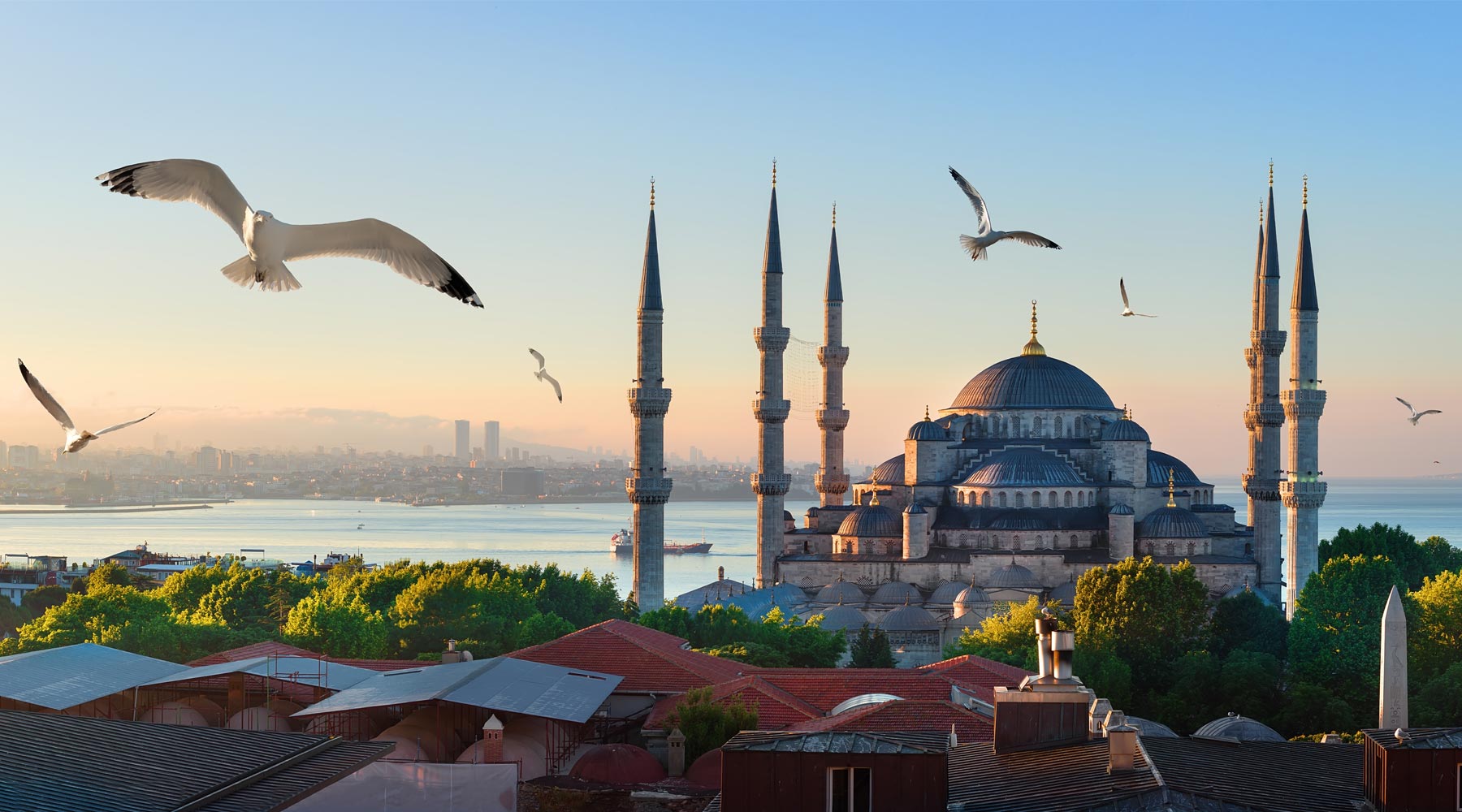
In summary, inside the Blue Mosque, you’re there to admire both the big picture – the expansive sacred space, the harmony of architecture – and the little details, like a particular tile pattern or the play of light and shadow. Photography is allowed (remember no flash), so you can capture some memories, but also try to live in the moment. Sit down (yes, you can sit on the carpeted floor, it’s quite comfortable) and just gaze around for a few minutes to fully appreciate where you are.
When you exit (likely through a side door leading back out to the courtyard), you might feel a bit of that bright Istanbul sun hitting your eyes – a reminder as you leave this tranquil place that you’re stepping back into the lively city. Many visitors, after seeing the inside, like to spend more time walking around the exterior again, noticing the details on the facade or the calligraphy above the gates now that they have context from the interior.
Nearby Attractions in Sultanahmet
One of the great advantages of visiting the Blue Mosque is that you’re right in the middle of Sultanahmet, an area packed with many of Istanbul’s most famous attractions. After (or before) the Blue Mosque, you can easily fill the rest of your day with these nearby sights, all within walking distance:
- Hagia Sophia (Ayasofya): Arguably just as famous as the Blue Mosque, the Hagia Sophia stands facing it across the central park area. Originally a Byzantine cathedral dating back to 537 AD, later an Ottoman mosque, and now a mosque/museum hybrid, Hagia Sophia is a must-see for its massive dome and stunning mosaics. It’s literally a 2-minute walk from the Blue Mosque’s courtyard to Hagia Sophia’s entrance. Many visitors debate which is more breathtaking – the Blue Mosque or Hagia Sophia – but the truth is they complement each other and showcase different eras of Istanbul’s history. If possible, see both to compare the experiences of Byzantine vs. Ottoman architecture in one glance.
- Hippodrome of Constantinople (Sultanahmet Square): Right outside the Blue Mosque’s courtyard (to the west and south) is the area that used to be the ancient Hippodrome – the chariot racing stadium of old Constantinople. While the grand structure is largely gone, several monuments remain in what is today a long public square (At Meydanı). You’ll find the Egyptian Obelisk (brought from Luxor, over 3,500 years old), the Serpentine Column (even older, from ancient Delphi), and the Walled Obelisk. These are lined up in the park and have plaques explaining their history. As you exit the Blue Mosque, strolling past these is like walking through a time portal to the Roman Empire era. This area is free and open, great for a walk and photos.
- Basilica Cistern: A short walk (5 minutes) toward Hagia Sophia and slightly beyond brings you to the entrance of the Basilica Cistern (Yerebatan Sarnıcı). This underground cistern was built by the Byzantines to store water and is famous for its eerie forest of columns and the Medusa head sculptures. It’s a cool (literally, quite cool and damp) escape from the heat in summer and a very atmospheric site. There’s a small entry fee, and it usually takes 30 minutes to explore the underground chamber. It’s well worth it, as it’s a totally different vibe from everything else — like a subterranean cathedral of water.
- Topkapı Palace: About 10 minutes walk northeast from the Blue Mosque (skirting around Hagia Sophia) is the entrance to Topkapı Palace, the sprawling palace complex of the Ottoman sultans. If you have the time (half a day ideally), visiting Topkapı is highly recommended to see the opulent courts, treasury (think jewel-encrusted thrones, emeralds, etc.), palace kitchens, and holy relics. The palace also offers great views of the Bosphorus from its terraces. Note that Topkapı Palace is closed on Tuesdays. If you plan to do this the same day as the Blue Mosque, consider doing the mosque and Hagia Sophia in the morning, and Topkapı after lunch (or vice versa) — but it’s a lot for one day. Many guided tours break them into separate days or a long full-day tour.
- Turkish and Islamic Arts Museum: Right across from the Blue Mosque (on the Hippodrome, in a former palace) is this often overlooked gem of a museum. It houses a rich collection of carpets, calligraphy, tiles, and ethnographic displays from across the Islamic world, including many from Istanbul and Anatolia. If you’re into history and art, it’s worth a peek and usually not crowded. It’s also relatively small and can be done in an hour or so.
- Grand Bazaar (Kapalıçarşı): If you’re up for a bit of a walk (about 15-20 minutes from the Blue Mosque, or you can take the tram one stop to Beyazıt), the Grand Bazaar is another iconic spot. It’s one of the largest and oldest covered markets in the world, a labyrinth of shops selling everything from spices and lamps to carpets and jewelry. Even if you’re not keen to shop, it’s an experience to wander its bustling lanes. This could be a great late-afternoon stop after absorbing the historic sites, transitioning into the cultural experience of bargaining and exploring Turkish goods.
- Spice Bazaar (Mısır Çarşısı): A bit further (near the Galata Bridge/Eminönü area, 20-25 min walk or a short tram ride to Eminönü stop) is the Spice Market, another sensory delight. It’s smaller than the Grand Bazaar, focusing on spices, Turkish delight, teas, and such. If you’re headed that way for an evening stroll, you might swing by.
For convenience, many people do the Hagia Sophia and the Blue Mosque together due to proximity, often with the Hippodrome monuments by default since they are in between. Then, depending on energy and interest, either Topkapı Palace or the cistern, or the museum next. You might also consider a lunch break at one of the many restaurants in Sultanahmet – eating with a view of the mosque is quite memorable (several rooftop terraces around offer that).
If you want a break from walking, an interesting idea is to attend a whirling dervish show or sit in a tea garden with a view of the mosque – there’s a famous one behind the mosque called Arasta Bazaar (actually a small market street with souvenirs and a pleasant cafe, plus the Great Palace Mosaic Museum hidden there).
By highlighting the cluster of attractions in Sultanahmet, we’re addressing the user intent of “what else can I do around the Blue Mosque” and encouraging longer stays (which could translate to interest in comprehensive tours). It positions TripWays as knowledgeable about the whole area, not just the one site.
Interesting Facts and Trivia about the Blue Mosque
To make your visit even more engaging, here are some intriguing facts and pieces of trivia about the Blue Mosque that you might not know. These tidbits can give you greater appreciation and are fun to share with fellow travelers:
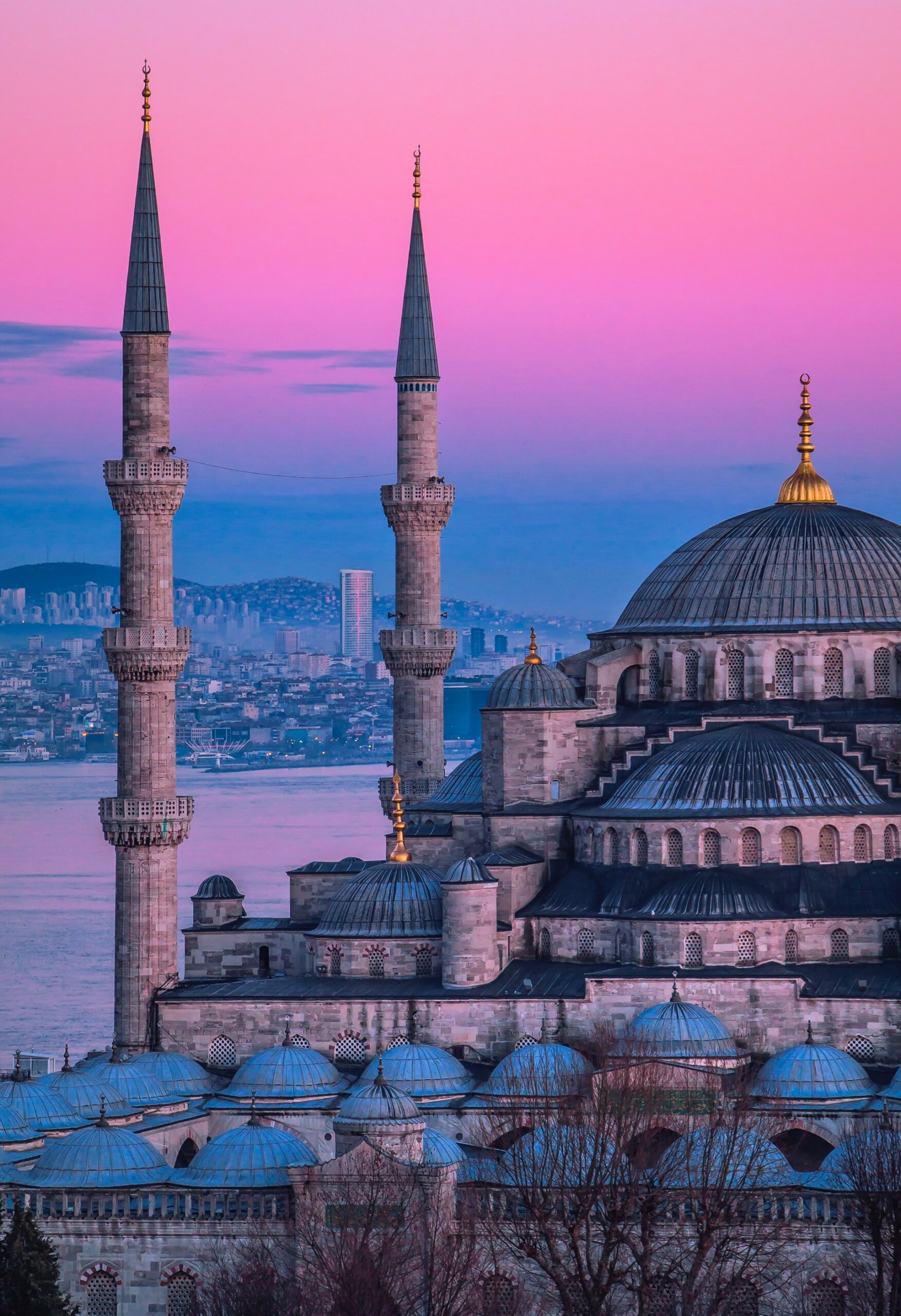
- Not Actually Blue on the Outside: First-time visitors are sometimes surprised that from the outside, the Blue Mosque isn’t obviously blue – its exterior is clad in classic gray stone. The “blue” name comes entirely from the interior tiles and ambiance. In certain lights, the interior does glow blue, and at night, the mosque is illuminated with a bluish hue, which might reinforce the nickname.
- Origins of the Name “Sultanahmet”: The area of Sultanahmet actually gets its name from the mosque and the Sultan who built it. So when you say “Sultanahmet,” you’re referring to Sultan Ahmet I. It’s quite literally the Sultan Ahmet Mosque Neighborhood. Before that, the area was loosely just the Hippodrome quarter. So the Blue Mosque essentially baptized the whole district with a new name when it was built.
- The Blue Mosque vs. Hagia Sophia – Friendly Competition: There’s a long-standing healthy rivalry in the minds of visitors between the Blue Mosque and Hagia Sophia. While Hagia Sophia (built in 537 AD) is about 1100 years older and was originally a church, the Blue Mosque (built 1609-1616) was intentionally positioned almost facing it, as if to show that Ottoman Islamic architecture could match the grandeur of the Byzantines. Sultan Ahmet I wanted a monument that would not only serve religious needs but also be a statement of imperial prowess. Interestingly, the two buildings have very different vibes – Hagia Sophia is darker with Byzantine mosaics and a massive, singular dome, whereas the Blue Mosque is lighter with Islamic patterns and multiple domes. Together, they create one of the most photogenic contrasts imaginable (try to capture both in one frame when you’re in the park!).
- 21,043 Tiles – A Labor of Love: Records state that 21,043 İznik tiles were used in the mosque’s construction. İznik (ancient Nicaea) was a town famed for its tile workshops. In the early 17th century, the quality of İznik tiles was at its peak, and the Blue Mosque got the best of the best. Each tile was hand-painted under the glaze, and you can even spot the signatures of some artisans on certain panels if you look very closely (though most are too high up to see). The cost of these tiles was enormous and nearly drained the royal treasury – which was controversial since usually sultans used war booty or personal funds for such constructions, but Ahmed I built this during peacetime, partly funding it through taxes, which drew some criticism.
- Built on a Palace (and perhaps a racetrack): The mosque’s site wasn’t chosen randomly – it was built on the grounds of the Great Palace of Byzantium (the Byzantine imperial palace), remnants of which likely had to be cleared. It’s adjacent to the Hippodrome. There’s speculation that part of the old chariot track of the Hippodrome runs under where the mosque’s courtyard is now. This symbolic replacement of Byzantine royal structures with an Ottoman mosque was a statement of the city’s transformation from Christian Constantinople to Muslim Istanbul.
- Six Minarets Club: The Sultan Ahmed Mosque is one of only a handful of mosques in the world with six minarets. Aside from the Mecca story, very few others have this number; in Turkey, only a couple of modern mosques (like the Sabancı Mosque in Adana and the Çamlica Mosque completed in 2019 in Istanbul) have six as well, and one (the Grand Çamlıca Mosque) even has six plus one auxiliary. But for centuries, Blue Mosque was unique in that regard in Istanbul. There’s now an unwritten understanding that no mosque in the city will outdo it in minaret count (except the new Çamlıca one broke that with 6, but it’s on a hill outside the historical area).
- Lighting the Sultanahmet at Night: Each evening, the area around the Blue Mosque turns into a relaxed social scene. Both the Blue Mosque and Hagia Sophia are beautifully lit up after dark. In the summertime, there’s often a light and sound show or projections on the mosque’s facade that recount Istanbul’s history (check local listings if it’s still ongoing). Locals and tourists gather on benches in the square, enjoying the cooler air, perhaps licking on an ice cream or sipping Turkish tea sold by vendors, with kids chasing each other. It’s one of the nicest free evening activities in Istanbul – and a great way to appreciate the mosque from outside when it’s less crowded.
- Royal Lodge & Privileges: Inside the mosque, on the upper level at the back, there is a royal balcony (hünkâr mahfili) from which the sultan and his family could attend services separated from the masses. It has its own ornate grille and entrance from the outside (so the sultan could arrive privately). While you can’t access it, knowing it’s there adds to understanding how the mosque also served as a royal chapel of sorts. Sultan Ahmet I, unfortunately, didn’t enjoy it for long as he died at 27, just a year after the mosque’s completion – he is buried in a mausoleum on the north side of the mosque, along with his wife Kosem Sultan and three of his sons (all sultans in their own right later).
- Long Restoration (2016-2023): If you visited Istanbul a few years ago, you might recall the Blue Mosque covered in scaffolding. A massive restoration project started in 2016 to clean and restore the tiles, strengthen the structure, and renovate the interior. For several years, large sections inside were hidden behind scaffolding and visitors couldn’t get the full impact. The good news is that as of April 2023, the restoration is completed and the mosque is free of most scaffolding, revealing a refreshed interior. This means now is an excellent time to visit – everything looks clean and vibrant, almost as it would have in its heyday. The restoration even revealed some original tile colors that had been dulled by time.
These facts hopefully give you a deeper insight and some great stories to tell. When you stand inside or outside the Blue Mosque, remember you’re looking at a structure steeped in such stories – from confused architects and visionary sultans to centuries of worshippers and visitors marveling at its beauty.
Conclusion
The Blue Mosque is more than just a beautiful building – it’s a living piece of history, a working place of worship, and a symbol of Istanbul’s rich cultural heritage. Whether you’re interested in architecture, history, religion, or simply want to experience one of the world’s most beautiful buildings, the Blue Mosque offers something for everyone.
Remember to:
- Plan your visit around prayer times
- Dress appropriately
- Take your time to appreciate both the grand architecture and the intricate details
- Visit nearby attractions like Hagia Sophia and Topkapı Palace
- Consider joining a guided tour for deeper insights
- Take advantage of the free entry and donation-based maintenance
The Blue Mosque stands as a testament to the artistic and architectural achievements of the Ottoman Empire, and its beauty continues to inspire visitors from around the world. As you leave the mosque, take a moment to reflect on the centuries of history that have unfolded within its walls and the countless visitors who have marveled at its beauty before you.
Best Cruise Destinations Worldwide (Ocean & River Routes)
Cruising opens up a world of adventure, from tropical island-hopping to epic river journeys through history. Below we present the top 10 best cruise destinations on the planet – a mix of iconic ocean routes and intimate river cruises – based on recent traveler reviews, expert recommendations, and overall experience quality. Each destination includes route highlights, recommended cruise lines, ideal seasons, typical pricing, onboard/onshore experiences, and the unique charm that sets it apart. Read on for an expert travel guide to these bucket-list cruises, plus a handy comparison table to help you plan your next voyage.
1. Caribbean – Tropical Islands & Crystal Seas
Route Highlights: The Caribbean is a classic cruise paradise, famed for its turquoise waters, sunny climate, and diverse islands. Routes are typically split into Western, Eastern, and Southern Caribbean itineraries. Western routes visit ports like Cozumel (Mexico) and Roatán (Honduras) for Mayan ruins and reef diving. Eastern routes include cultural stops in San Juan (Puerto Rico) and Nassau (Bahamas). Longer Southern cruises reach remote gems like Aruba’s white beaches and St. Lucia’s lush Pitons. You can swim with stingrays in Grand Cayman, zipline over Jamaican rainforests, or relax on private island resorts owned by cruise lines. Every island offers something unique – from reggae rhythms in Ocho Rios, Jamaica to the colonial charm of Old San Juan.
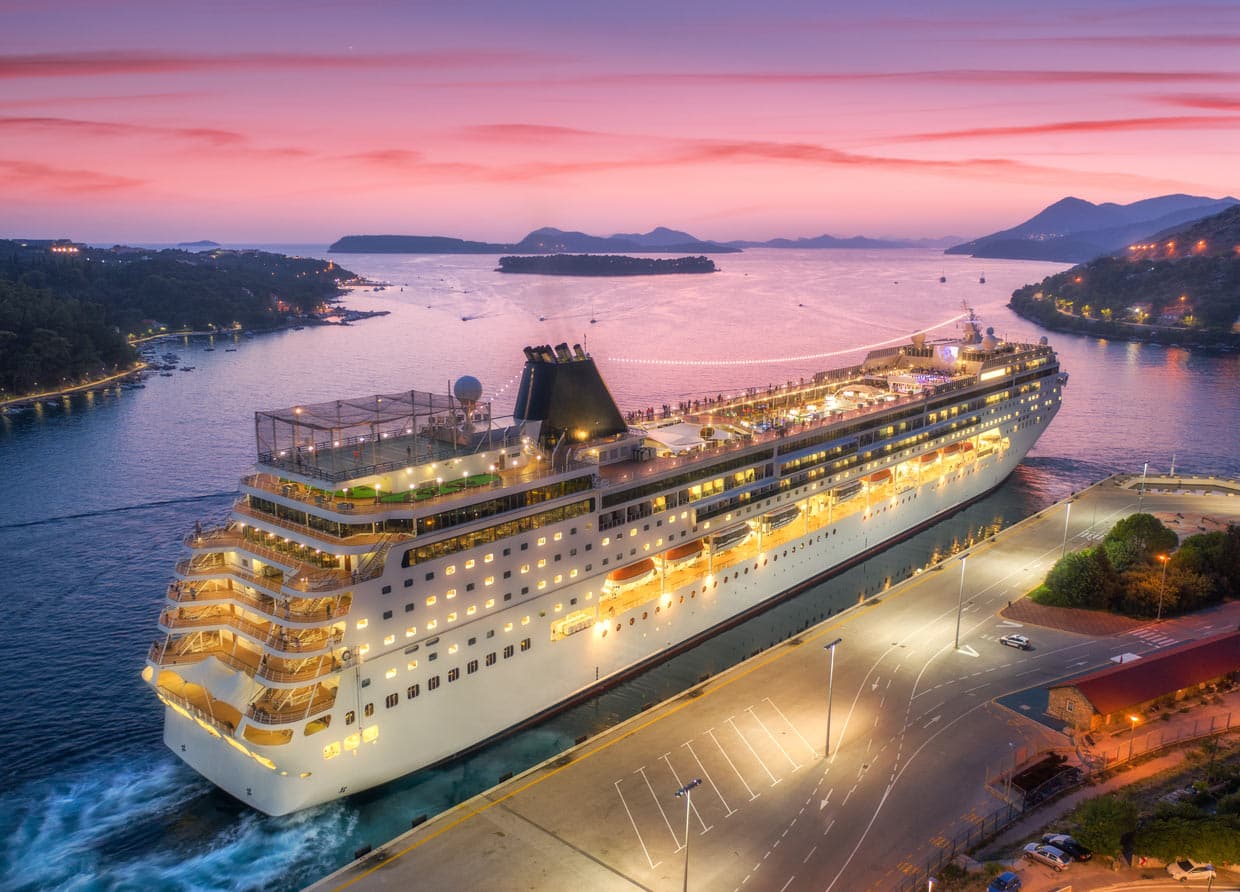
Cruise Lines: Major lines like Royal Caribbean, Carnival, and Norwegian dominate here, offering mega-ships packed with entertainment. For a premium experience, Celebrity Cruises and Princess are popular. Newer adult-only lines like Virgin Voyages also earn rave reviews for their modern twist on Caribbean cruising.
Ideal Season: November to April (dry, cooler months). This avoids the June–Nov hurricane season, though summer cruises are available at lower prices.
Average Pricing: Budget-friendly – ** ~$800–$2,500 per person** for a 7-night cruise (double occupancy). Short 3–4 night getaways can start around $500, while luxury or holiday sailings may exceed $3,000.
Onboard/Onshore Experience: Caribbean cruises boast the largest resort-style ships – think water parks, zip lines, Broadway shows, and endless dining. Onboard facilities include kids’ clubs, casinos, spas, and even surf simulators on mega-ships. Many itineraries feature a “private island day” (such as CocoCay or Castaway Cay) with beach barbeques and water sports. On shore, popular excursions range from snorkeling coral reefs and rainforest hikes to historical walking tours (e.g. old forts in San Juan) and shopping for local rum cake and crafts.
What Makes It Unique: Pure tropical bliss and variety. The Caribbean offers an easy, relaxing escape with a new island each day. Travelers love the beach time, warm hospitality, and fun in the sun, leading to very high satisfaction. It’s especially favored by first-time cruisers, families, and anyone seeking a carefree vacation in paradise.
2. Mediterranean – Culture & Cuisine in Europe’s Seas
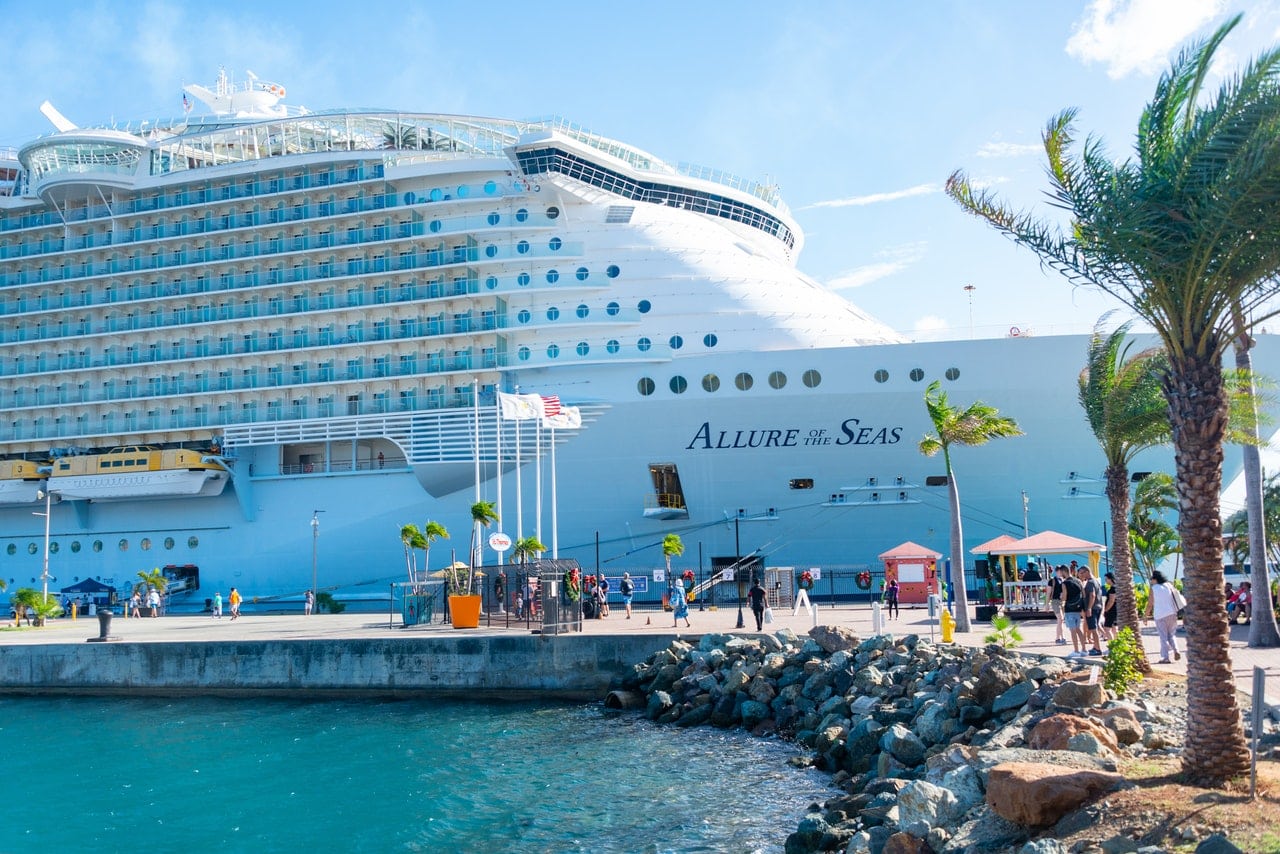
Route Highlights: A Mediterranean cruise is a grand tour of Europe’s coastal treasures, packed with historical and cultural icons. Typical routes cover the Western Med (Spain, France, Italy) or Eastern Med (Greek Isles, Turkey, Adriatic) – or combine both on longer voyages. You might stroll the Colosseum in Rome, shop the chic boutiques of Cannes, explore Gaudí’s architecture in Barcelona, and sip local wine in Mallorca – all in one trip. In the Eastern Med, travelers hop among Greek Isles like Santorini and Mykonos (whitewashed villages and blue domes), visit Istanbul’s bazaars and holy sites, and walk the medieval walls of Dubrovnik. Each port offers rich history: ancient ruins in Athens, Renaissance art in Florence, or the sacred sites of Jerusalem on longer itineraries.
Cruise Lines: You’ll find MSC Cruises and Costa (Europe-based lines) heavily in the Med, alongside Royal Caribbean, Norwegian, and Celebrity during summer. For luxury or small-ship experiences, Viking Ocean, Azamara, and Seabourn are top choices, often including more overnight port stays and curated excursions.
Ideal Season: May to October. Peak in July–August for hot beach weather (and crowds); April–May and Sept–Oct offer milder temperatures and fewer tourists – ideal for sightseeing. Many lines pause in winter due to cooler weather
Average Pricing: ** ~$1,000–$3,000 per person** for a 7–10 day cruise. Mainstream summer cruises average around $1,200–$1,800 pp. Longer or ultra-luxury voyages (or peak July) can run $4,000+. Budget travelers can find offseason deals under $1k. (Airfare to Europe is a big factor to consider as well.)
Onboard/Onshore Experience: Med cruises often emphasize enrichment: expect local cuisine, wine tastings, and cultural shows on board (e.g. flamenco dance performances or guest lectures on ancient history). Ships range from large resorts to intimate yachts. Onshore, days are filled with guided tours – exploring museums, cathedrals, and UNESCO sites – but also leisure time at cafés or beaches. You might take a pasta-making class in Naples, enjoy a flamenco show in Barcelona, or swim in the Aegean’s crystal-clear coves. Facilities on Med-focused ships are similar to Caribbean ones (pools, spas, broad entertainment) but with a bit more European flair in dining and activities.
What Makes It Unique: The Mediterranean is a cultural feast, where you can visit multiple countries in one cruise. Nowhere else can you experience such a blend of history, art, architecture, and cuisine in a single journey. From the glamour of the French Riviera to the sacred sites of the Holy Land, the Med offers unparalleled variety. Traveler satisfaction is very high, especially among culture enthusiasts and foodies, who rave about exploring bucket-list cities by day and relaxing at sea by night.
3. Alaska – Glaciers, Wildlife & Frontier Charm

Route Highlights: Alaska’s Inside Passage is a spectacular voyage through fjords and icy straits, offering close-up views of towering glaciers and abundant wildlife. Most routes sail from Seattle or Vancouver up along Alaska’s southeast coast. Highlights include cruising past Glacier Bay or Hubbard Glacier, where you’ll hear the thunder of ice calving into the sea. Ports like Juneau, Ketchikan, Skagway, and Sitka provide a taste of Alaska’s frontier history and Native culture. You can pan for gold in historic Skagway or visit a Tlingit village in Ketchikan. Nature is the star here: spot bald eagles, bears foraging onshore, breaching whales, sea otters, and maybe even the aurora on late-season trips. Don’t miss iconic excursions like a helicopter landing on a glacier, dog-sledding on snowfields, or taking a scenic railroad through the mountains.
Cruise Lines: Princess Cruises and Holland America Line are Alaska experts, known for their extensive itineraries and land-tour add-ons (like Denali National Park). Royal Caribbean, Celebrity, and Norwegian also operate big ships in Alaska with family-friendly perks. For small-ship adventure, lines such as Lindblad Expeditions (NatGeo) or UnCruise Adventures offer intimate wilderness-focused cruises.
Ideal Season: May to September (Alaska’s summer). June–August are warmest with long daylight hours (great for wildlife and scenery). May and September are cooler but less crowded; late September may feature fall colors or northern lights, but some facilities shut for winter.
Average Pricing: ** ~$1,200–$3,500 per person** for 7-night Inside Passage (higher than Caribbean due to remote location). Mainstream fares in shoulder season can be ~$1,000, while peak summer balcony cabins often $2,000+. Add-ons like land tours or one-way Gulf of Alaska routes (including interior Alaska) increase costs. Expedition cruises are pricier, frequently $5,000+.
Onboard/Onshore Experience: Ships in Alaska are designed for viewing – expect heated indoor pools, panoramic observation lounges, and expert naturalists giving talks. The vibe is casual and cozy: grab a blanket and hot chocolate on deck as you watch glaciers glide by. Onboard entertainment may include Alaska-themed programs (folk music, park ranger presentations). On shore, it’s all about adventure and nature: hiking in temperate rainforests, fishing for salmon, visiting sled dog camps, and scenic floatplane flights. Many cruises offer a salmon bake or crab feast experience. Facilities in port towns are smaller (think quaint shops and local pubs), which adds to the charm.
What Makes It Unique: Alaska is America’s last frontier – a cruise here feels like a journey into the wild. Nowhere else will your ship be dwarfed by massive glaciers and snow-draped peaks in this way. The combination of raw natural beauty, up-close wildlife encounters, and Gold Rush-era towns gives Alaska cruises a special magic. Satisfaction is extremely high (often 5/5) for those seeking scenery and adventure; even seasoned travelers call it one of the most breathtaking cruises in the world.
4. Northern Europe (Scandinavia & Fjords) – Majestic Fjords & Old-World Cities
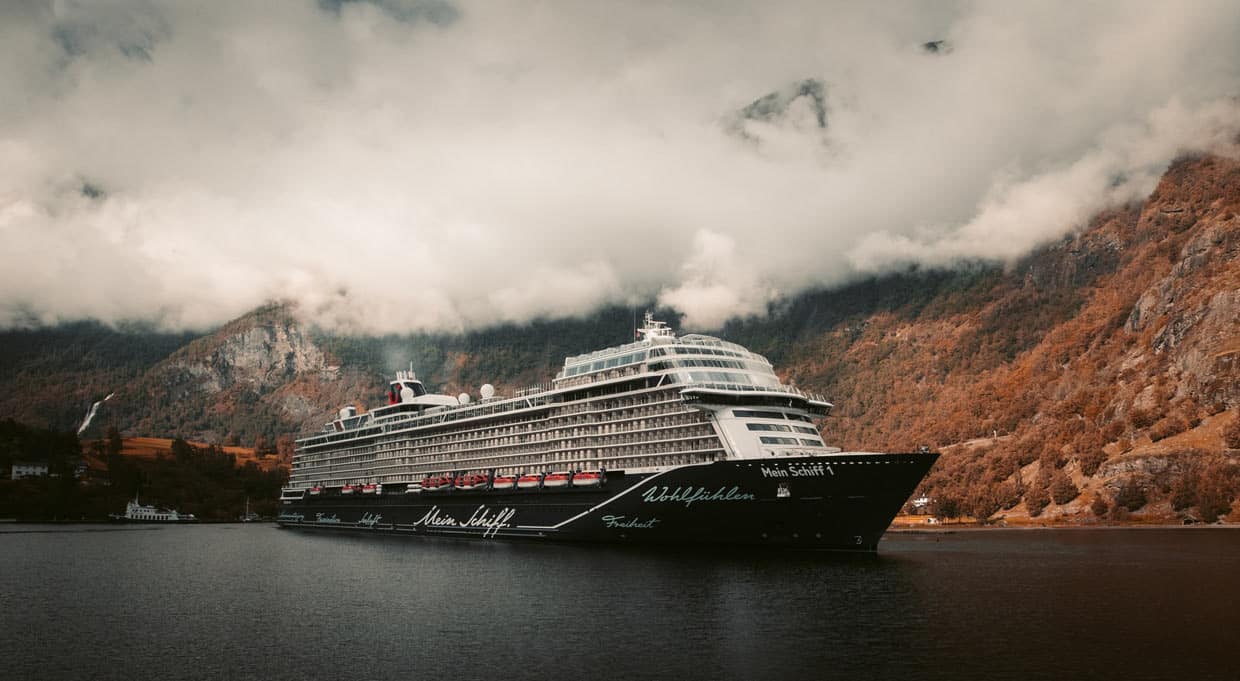
Route Highlights: A cruise in Northern Europe immerses you in storybook scenery and rich heritage. Popular itineraries include the Norwegian Fjords, the Baltic Sea capitals, or even the Arctic circles. In Norway, ships navigate deep blue fjords like Geirangerfjord or Sognefjord, flanked by cliffs, waterfalls, and quaint villages. You’ll explore Scandinavian ports such as Bergen (colorful Hanseatic wharf), Oslo (Viking history, modern design), and above the Arctic Circle in Tromsø or Nordkapp for the midnight sun – and possibly the Northern Lights in late season. Baltic cruises focus on culture: the grandeur of St. Petersburg, Russia (when accessible), medieval cobblestones of Tallinn, Estonia, the canals of Copenhagen, and chic design of Stockholm. Other routes might venture to Iceland (geysers and glaciers) or the British Isles. Highlights include medieval castles, Viking museums, and natural wonders like geothermal springs or puffin colonies.
Cruise Lines: Princess and Holland America often offer extensive Northern Europe programs. Viking Ocean Cruises (born from its Scandinavian roots) is highly rated for intimate ships and destination focus in this region. Celebrity and Royal Caribbean run summer Baltics/fjords cruises (with larger ships bringing more amenities). For the ultimate fjord immersion, Norwegian line Hurtigruten operates small ships that go deep into coastal communities (and also expedition cruises to Arctic Svalbard). Luxury lines like Regent or Silversea offer upscale options, sometimes including overnights in big cities.
Ideal Season: May to September. June–August are prime for mild weather and long daylight (the “midnight sun” near Solstice). Shoulder months May and September can be cooler (and Baltic cruises in September have beautiful autumn colors). The season is short due to cold/dark winters – most ships leave by October.
Average Pricing: ** ~$1,500–$4,000 per person** for 7–12 day cruises. Fjord cruises of a week might start around $1,200, but Baltic itineraries (often 10–14 days) average $2,000+. Because these trips are seasonal and port-intensive, prices are higher than Caribbean. All-inclusive luxury or expedition voyages can exceed $5,000 pp.
Onboard/Onshore Experience: Onboard, expect a slightly quieter, scenery-focused atmosphere – lots of time on deck or in lounges watching passing coastlines. Ships will offer enrichment about European history and local cultures. Many have heated pools or solariums for cooler days. Onshore, days are filled with guided city tours (palaces, cathedrals, museums) and nature excursions (fjord hikes, kayaking, or visiting a farm to taste local cheeses). In Norway, an unforgettable option is the Flåm Railway for stunning mountain vistas. In the Baltics, you might attend a ballet in St. Petersburg or a folk performance in Estonia. Facilities in ports are modern, and English is widely spoken, making independent exploring easy too.
What Makes It Unique: Cruising Northern Europe offers a blend of jaw-dropping natural beauty and European history. Waking up to a quiet fjord at dawn, or sailing past Scandinavian towns with church spires and bronze rooftops, feels almost magical. This region is also less crowded than the Med, and the cultural experiences – Viking lore, Nordic myths, Russian imperial opulence – are truly enriching. Travelers often rate these cruises very highly for their scenery and sophistication, calling it a must-do for nature lovers and culture buffs alike.
5. Asia (Southeast Asia & More) – Exotic Ports of the East
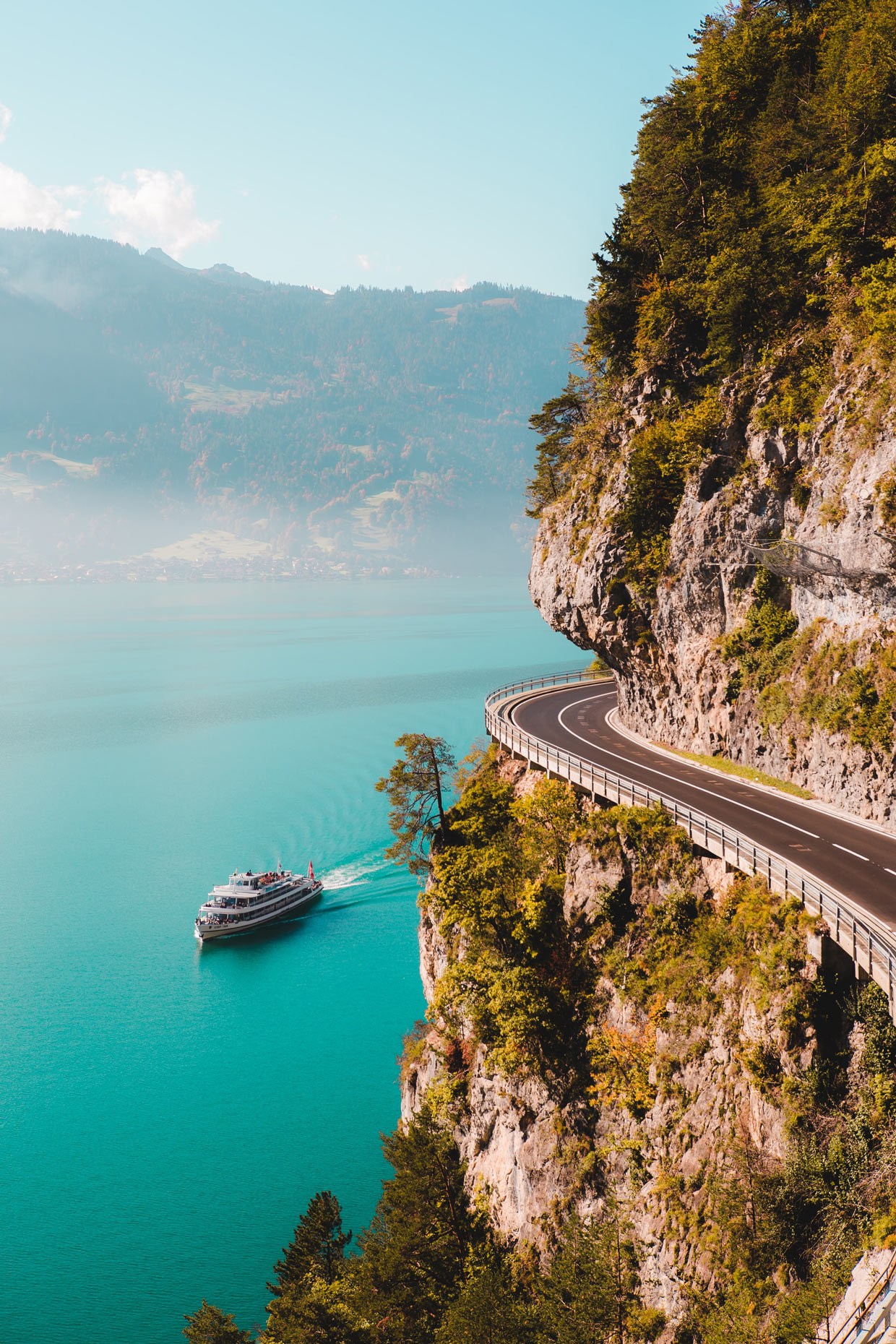
Route Highlights: An Asia cruise is a feast for the senses that can span many countries. Common routes include Southeast Asia (Thailand, Vietnam, Singapore, Malaysia), East Asia (China, Japan, South Korea), or combinations thereof. Imagine sailing into Bangkok (Laem Chabang) to tour gilded palaces and night markets, then hopping to Ho Chi Minh City for Vietnamese pho and history, and on to Singapore for futuristic skylines and hawker food. Other highlights: visiting tropical islands in Thailand (Phuket’s beaches) or Indonesia (Bali’s temples and rice terraces), exploring colonial heritage in Penang or Yangon, and experiencing ultra-modern cities like Hong Kong, Tokyo, or Seoul. Some itineraries include lesser-known gems like Halong Bay, Vietnam (limestone karsts in emerald waters) or Borobudur, Indonesia (an ancient Buddhist temple). River cruise options also exist – e.g. the Mekong River through Vietnam and Cambodia for an intimate look at rural life and Angkor Wat tours.
Cruise Lines: A wide variety. Princess Cruises and Celebrity are known for robust Asia itineraries (Princess even homeports in Japan seasonally). Royal Caribbean and Dream Cruises (now defunct) have sailed from China/Singapore with large ships tailored to local markets. Upscale lines like Oceania Cruises and Azamara offer in-depth Asia routes with more destination focus. River lines such as Viking or AmaWaterways operate Mekong cruises, and Pandaw or Avalon run smaller riverboats in Southeast Asia. For luxury expedition style (Indonesia, Philippines), look at Seabourn or Silversea.
Ideal Season: Autumn and Winter months are generally best. Many Asia cruises run from October to April to avoid the monsoons. For Southeast Asia, November–February offers less heat and humidity. Japan and China are lovely in spring (cherry blossoms in April) or fall (October) – summers can be very hot and typhoon-prone. Always check specific regions as climates vary (e.g. Indonesia is best in summer, while East Asia is sweltering then).
Average Pricing: ** ~$1,000–$3,000 per person** for a 7–10 day Asia cruise. Prices can fluctuate widely with season and itinerary length – shorter Southeast Asia cruises (5 nights) might be $600–$800, whereas a two-week cruise across multiple countries might be $2,500+. Luxury or small-ship options (and land extensions to bucket-list sites like Angkor Wat or the Great Wall) will increase the cost.
Onboard/Onshore Experience: On board, expect cultural touches: perhaps Asian cuisine options, enrichment lectures on history, or even Tai Chi classes on deck at sunrise. Many lines bring on local performers – think traditional Thai dancers or Japanese taiko drummers – during port stops. Ships range from large resorts with water parks (appealing to Asian families) to intimate vessels focusing on destination lectures and gourmet dining. On shore, the experiences are incredibly diverse: one day you might be visiting a sacred temple in Bali or taking a tuk-tuk ride to Bangkok’s Grand Palace; the next, shopping for silk in a Vietnamese market or riding a bullet train in Japan. Excursions can include snorkeling in coral-rich waters, feeding elephants at an ethical sanctuary in Thailand, touring war history sites in Vietnam, or participating in a Japanese tea ceremony. The blend of ancient traditions and modern megacities gives cruisers a fascinating contrast.
What Makes It Unique: Asia offers an unmatched tapestry of cultures, flavors, and landscapes. A single cruise can expose you to multiple languages and cuisines – from dim sum in Hong Kong to sushi in Tokyo to pad Thai in Bangkok. The region’s warm hospitality and dramatic sights (like sailing past Hong Kong’s neon skyline or into Halong Bay’s misty islands) leave a deep impression. Travelers report very high satisfaction, often describing Asia cruises as “eye-opening” and filled with bucket-list moments, whether it’s seeing iconic landmarks or engaging with local customs.
6. South Pacific & Oceania – Paradise Islands and Down Under Adventures
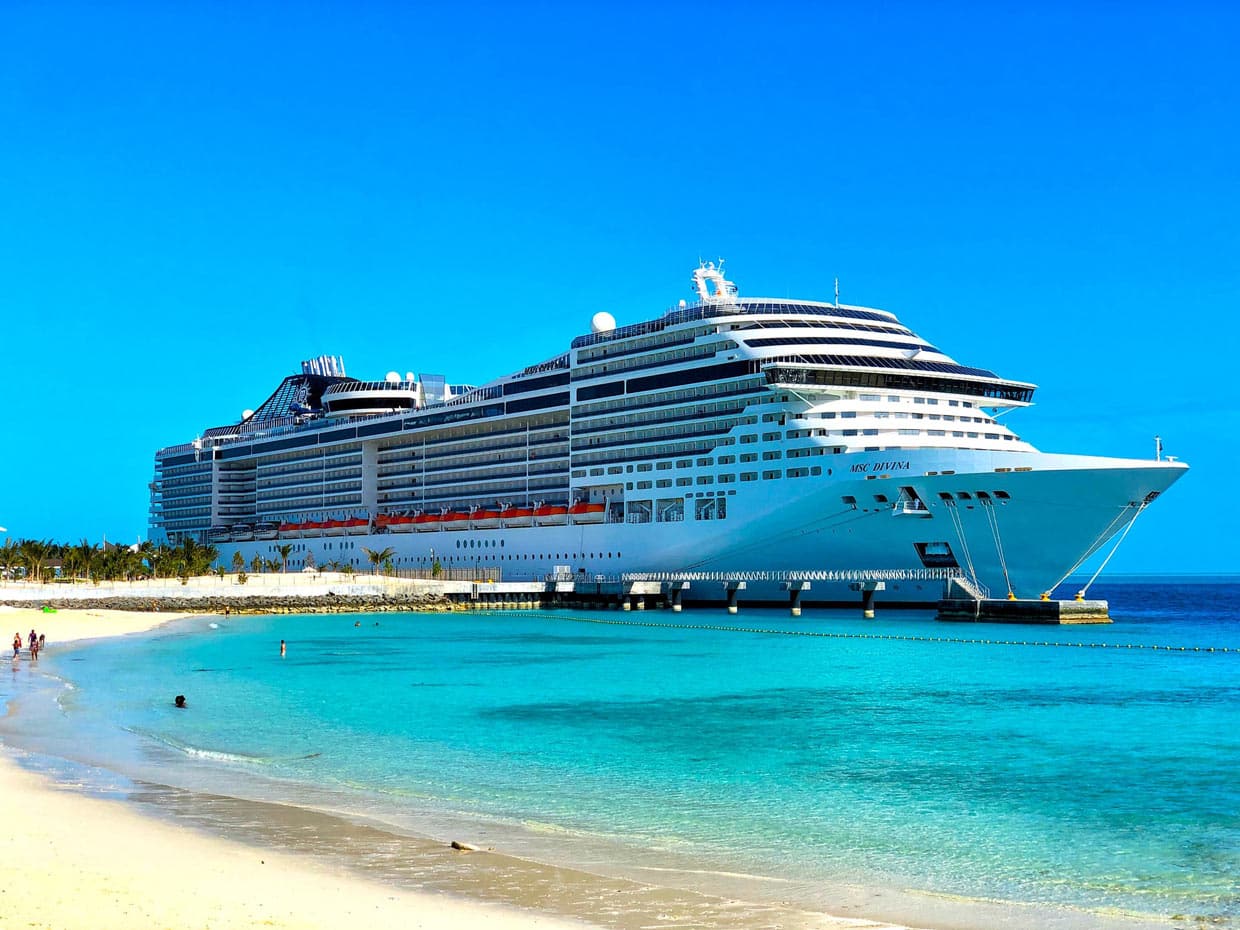
Route Highlights: The South Pacific is the stuff of dreams: turquoise lagoons, coral atolls, and lush volcanic isles dotting the vast ocean. Cruises in this region often depart from Australia or New Zealand, combining visits to idyllic Pacific islands with stops in those countries. You might sail from Sydney or Auckland and soon find yourself in Fiji, Samoa, or the Cook Islands, where time slows down. Highlights include French Polynesia – e.g. Bora Bora’s famous blue lagoon, Moorea’s emerald peaks, and Tahiti’s vibrant markets – truly “postcard-worthy” destinations. In the Melanesian isles like Vanuatu or New Caledonia, you’ll encounter rich indigenous cultures, fire dancing ceremonies, and world-class snorkeling over coral reefs. Many itineraries feature Suva (Fiji) or Port Vila (Vanuatu) for cultural immersion, plus smaller atolls where you can swim with sea turtles in crystal-clear water. If including Australia/NZ, possible stops are Great Barrier Reef towns (Cairns) or New Zealand’s Bay of Islands and scenic Milford Sound (spectacular fjordland on New Zealand’s South Island).
Cruise Lines: Princess Cruises and P\&O Australia are big players, serving Australia/NZ and South Pacific islands with mid-size ships tailored to local tastes. Royal Caribbean and Carnival Australia also operate fun-focused ships from Sydney or Brisbane. For an upscale boutique experience in French Polynesia, Paul Gauguin Cruises is renowned (small luxury ship intimately exploring Tahiti and the Society Islands). Oceania Cruises (the line) and Windstar also sail in the South Pacific, offering gourmet dining and unique ports. Expedition lines like Ponant or National Geographic Orion visit remote Pacific islands and Papua New Guinea.
Ideal Season: April to November for the South Pacific islands, which avoids the cyclone season (roughly December–March) and brings drier weather. Conversely, cruises around Australia/New Zealand are often best in their summer (November to March) when it’s warm, aligning with when many ships relocate there. Essentially, late spring, summer, and early autumn are ideal across Oceania.
Average Pricing: ** ~$1,500–$4,000 per person** for a 10–14 day South Pacific sailing (longer itineraries are common given distances). Shorter 7-night Australia coastal cruises might be $1,000–$1,500. Luxury Tahiti cruises (e.g., Paul Gauguin) typically range $4,000–$6,000 per person due to the exclusive destination. Watch for flight costs to the region, which are significant for most travelers.
Onboard/Onshore Experience: Life onboard tends to be relaxed and outdoor-oriented, reflecting the Polynesian vibe. Expect island-themed deck parties, beach BBQ days, and perhaps workshops on pearl jewelry or ukulele music. Many ships employ local guides or cultural ambassadors – for instance, Paul Gauguin Cruises includes Tahitian hosts who teach Polynesian crafts and songs. On larger ships, you’ll still have pools, shows, and all modern amenities, but with a bit more laid-back atmosphere than in busy regions. Onshore, the South Pacific is an adventure playground and cultural classroom: snorkel or dive among dazzling coral reefs (the marine life is spectacular, from clownfish to reef sharks), visit remote villages to experience kava ceremonies or fire dances, hike to waterfalls in lush jungles, or simply bliss out on some of the world’s most beautiful beaches. In Australia and NZ, excursions include the urban delights of Sydney or Melbourne, wine tasting in New Zealand’s Marlborough region, or wildlife encounters (kangaroos, koalas, kiwi birds) on special tours.
What Makes It Unique: This region is often described as paradise on Earth. The combination of utter natural beauty – vibrant coral reefs, coconut palm beaches, volcanic peaks – and the rich Polynesian culture makes every stop feel enchanting. It’s also far less crowded; you may be one of few ships visiting a tiny atoll, leading to very personal interactions with locals. Traveler satisfaction is sky-high among those seeking relaxation and natural beauty. Many call South Pacific cruises a “trip of a lifetime” for the romance and tranquility they offer, whether it’s a honeymoon in Tahiti or a family adventure to the Fiji islands.
7. Galápagos Islands – Wildlife Wonderland Expedition
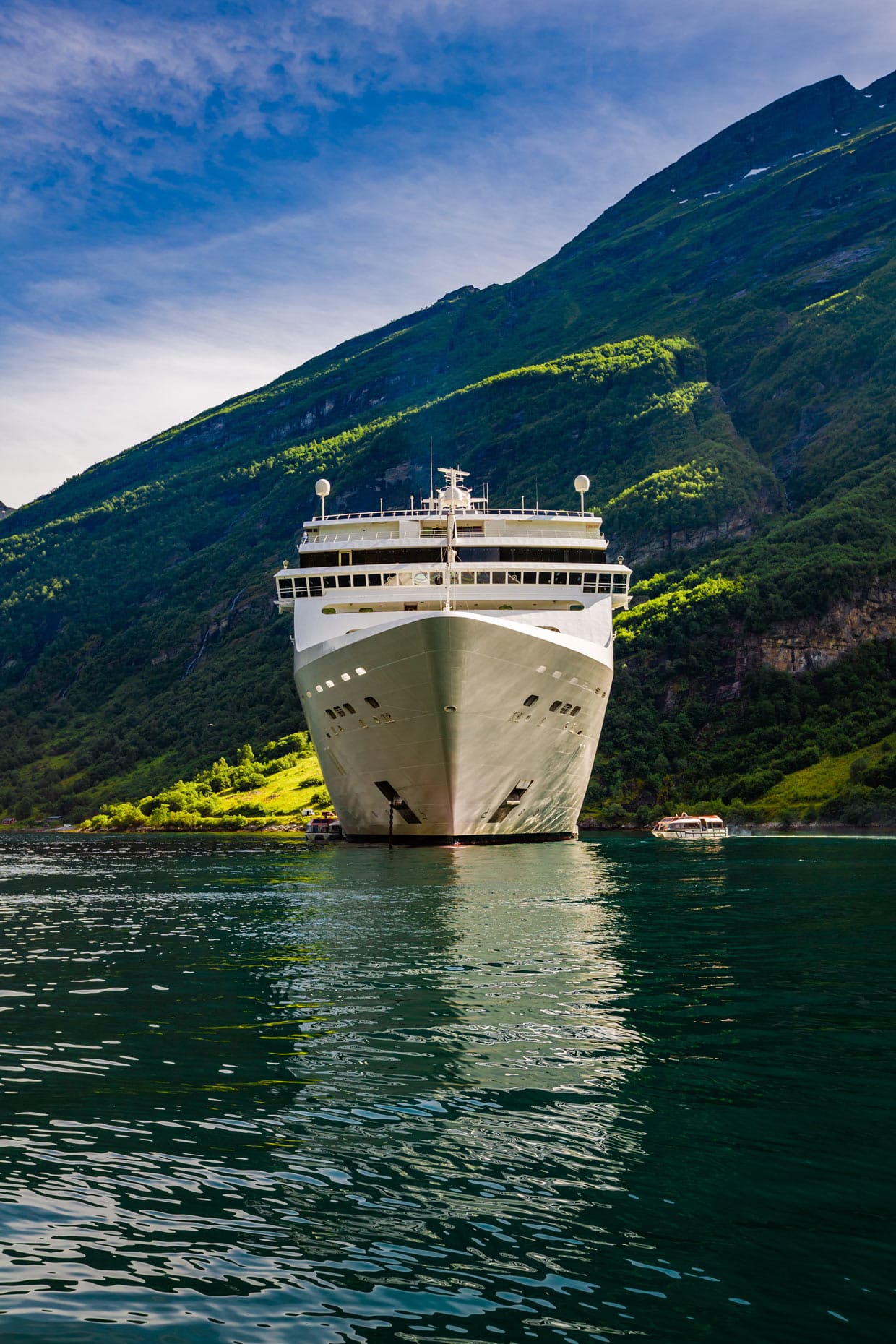
Route Highlights: The Galápagos, 600 miles off Ecuador’s coast, offer a once-in-a-lifetime small-ship cruise focused on astonishing wildlife found nowhere else. The itinerary typically sails between central islands like Santa Cruz, Isabela, Santiago, and San Cristóbal, with twice-daily excursions to different isles. You’ll walk among colonies of animals utterly unafraid of humans: see blue-footed boobies doing mating dances, watch marine iguanas swim and sun themselves on black lava rocks, and encounter giant Galápagos tortoises lumbering through the highlands. On other days, you might snorkel with playful sea lions and reef sharks, spot Galápagos penguins darting undersea (yes, penguins on the equator!), and observe flocks of frigatebirds and albatrosses soaring above. Each island has its unique species and landscapes – from the red-sand beach of Rábida to the volcanic vistas of Bartolomé. Naturalist guides lead every excursion, ensuring you don’t miss details of Darwin’s living laboratory.
Cruise Lines: Only small ships (max ~100 passengers) can operate in Galápagos National Park. Celebrity Cruises has a presence with its expedition yachts Celebrity Flora, Xpedition, and others, offering a blend of luxury and eco-adventure. Lindblad Expeditions (partnered with National Geographic) is a top choice for in-depth guiding and photography expertise. Other quality operators include Silversea Expeditions (Silver Origin ship), Quasar Expeditions, and Avalon or Tauck (which charter small vessels). All itineraries are fairly similar due to park restrictions, so the reputation of the line and guiding is key.
Ideal Season: Year-round destination. There isn’t a bad time – wildlife is always active, though specific events vary. The warm/wet season (Dec–May) brings calmer seas, warm water, and lush green islands – great for snorkeling and seeing the courtship of birds. The cooler/dry season (June–Nov) has nutrient-rich currents; you might see more marine life like whale sharks, and it’s the breeding season for some creatures. June–September can have choppier seas and garúa mist, but also is when baby sea lions are born. In short, pick any time based on your interest (and availability) – traveler reviews indicate that every month has its highlights and the islands delight year-round.
Average Pricing: ** ~$4,000–$8,000 per person** for a 7-night Galápagos cruise package. These prices are higher due to the remote location, small ship luxury, and all-inclusive nature (guides, gear, etc.). Shorter 4-5 night itineraries can be a bit less, and ultra-luxury options or longer 10-14 night explorations can run $10,000+. Also budget for flights to Ecuador and the Galápagos fee/taxes (roughly $100 park fee).
Onboard/Onshore Experience: These expedition cruises are all about nature immersion. Onboard, ships are upscale but casual – expect comfortable cabins, lectures in the lounge on what you’ll see the next day, and maybe a hot tub or small gym but no flashy entertainment. The ratio of naturalist guides to guests is excellent, so you get personal attention and expertise. Meals often incorporate Ecuadorian flavors (ceviche, local fruits) and you’ll dine with the guides and fellow passengers, sharing stories. Each day involves active excursions: guided hikes over lava fields, beach walks among sea lions, snorkeling or kayaking twice a day. You might make wet landings from zodiac boats onto pristine shores. There is downtime for siestas or stargazing on deck at night (with the equator’s clear skies). Onshore facilities are minimal – this is wilderness, aside from the small towns at start/end – but that’s the allure.
What Makes It Unique: The Galápagos cruise experience is like no other – it’s often described as “visiting another planet” of strange and wonderful creatures. The up-close wildlife encounters are beyond compare: animals exhibit no fear, so you stand literally feet from dancing boobies or giant tortoises in their natural habitat. It’s a transformative journey that deepens one’s appreciation for conservation and nature. While the cost is high, traveler satisfaction is off the charts – most consider it worth every penny for the intimate, educational adventure and memories of snorkelling with sea turtles or watching baby albatrosses learn to fly. A Galápagos cruise isn’t a typical luxury cruise; it’s a high-end eco-expedition that many rate as the best trip of their lives.
8. Antarctica – The Ultimate Polar Adventure
Route Highlights: An Antarctica cruise is an expedition to Earth’s most remote wilderness. Cruises depart from Ushuaia, Argentina (the “End of the World”) and cross the infamous Drake Passage – an adventure in itself, with either rollicking “Drake Shake” seas or calm “Drake Lake” conditions. After about two days at sea, you arrive at the Antarctic Peninsula, a realm of towering icebergs, snow-covered mountains, and wildlife galore. Instead of port calls, each day features zodiac boat outings and landings on icy shores (weather permitting). You’ll visit penguin rookeries bustling with Adélie, gentoo, and chinstrap penguins, watch elephant seals and fur seals lounge on ice floes, and perhaps spot pods of orcas and humpback whales feeding in the frigid waters. Notable sites include Paradise Bay (aptly named for its stark beauty), the Lemaire Channel (a narrow passage between cliffs nicknamed “Kodak Gap” for its photogenic splendor), and historic research stations. Some itineraries also include the Falkland Islands and South Georgia, where you can see king penguins and explore polar history (e.g., Sir Ernest Shackleton’s grave on South Georgia).
Cruise Lines: Specialized expedition companies operate here. Quark Expeditions and Hurtigruten are leaders in polar cruising, offering robust adventure activities (like camping on the ice or paddleboarding). Lindblad Expeditions/National Geographic has a long legacy of Antarctic trips with expert scientists aboard. Luxury seekers might opt for Silversea Expeditions, Seabourn (with their expedition ships), or Ponant, which provide a mix of pampering and exploration. Newer entrants like Viking Expeditions and Scenic also have state-of-the-art ships in Antarctica. All carry fewer than ~200 guests due to landing quotas, ensuring an intimate experience.
Ideal Season: November to March (the Antarctic Austral summer). Early season (Nov–Dec) has pristine snow and courtship behaviors (and is when penguin chicks hatch around Dec). January–February brings slightly warmer weather and very active wildlife (penguin colonies are busy feeding chicks, longer days). By March, many animals (and ships) prepare to leave, but the late season can offer stunning sunset light and whale sightings at their peak. Outside these months, the sea ice makes travel impossible.
Average Pricing: ** ~$8,000–$15,000 per person** for a 10–14 day expedition cruise. Antarctica is one of the most expensive cruise destinations – small ships, all-inclusive excursions, polar gear, and an expert crew drive up the cost. Budget options (simple vessel, triple-share cabins) might come down to ~$6,000, whereas luxury suites or longer itineraries that include South Georgia can exceed $15–20k pp. Keep in mind charter flights to embarkation (often Buenos Aires to Ushuaia) may be additional.
Onboard/Onshore Experience: These are true expedition vessels – your days revolve around exploration. Onboard, there may be lounges and a bar, a library, and a lecture room, but no Broadway shows or casinos. Instead, expect fascinating lectures on glaciology, marine biology, and Antarctic history each day. Many ships have mud rooms and equipment for kayaking or even a mini-submarine (on high-end ships). Cuisine is usually excellent and international (with free-flowing hot cocoa after chilly outings!). When conditions allow, you’ll embark on zodiac cruises among icebergs, watching seals sunbathe on ice floes, and make landfall to hike or sit among thousands of penguins – a sensory overload of sight, sound, and yes, smell (penguin colonies are pungent!). Onshore “facilities” are basically none – just nature and perhaps a flagged path marked by guides. Some passengers choose a polar plunge (a quick dip in near-freezing water) for bragging rights. The camaraderie on these trips is special; groups bond over the shared awe of what they’re seeing. Every night, over dinner, there’s excitement discussing the day’s sightings.
What Makes It Unique: Antarctica is the final frontier for cruisers – Earth’s last unspoiled continent, with no permanent population and an environment that feels otherworldly. The sense of exploration is palpable: you’re following the wake of legendary explorers amid ice and solitude. Visitors routinely describe feeling humbled and deeply moved by the grandeur of ice shelves and the close encounters with penguins and whales. It’s also a very active trip – you’re not lounging by a pool, but bundling up for an adventure that few will ever experience. Those who venture south give Antarctica some of the highest satisfaction ratings of any destination. In travel surveys, it often scores a perfect 100% – truly unforgettable and life-changing.
9. Nile River (Egypt) – Time Travel on the Nile

Route Highlights: A Nile River cruise in Egypt is a journey through ancient history along the world’s longest river. Most cruises are 4–7 nights between Luxor and Aswan in Upper Egypt, visiting the iconic temples and tombs of the Pharaohs at a relaxed pace. Highlights include the Valley of the Kings in Luxor – where you’ll descend into brilliantly decorated royal tombs (including that of Tutankhamun) – and the colossal Temples of Karnak and Luxor, which come alive with hieroglyphs and towering columns. As you sail south, you stop at Edfu to see the well-preserved Temple of Horus and at Kom Ombo to visit the unique twin temple dedicated to Sobek (the crocodile god) – often at sunset, a magical time. The cruise typically ends (or begins) in Aswan, home to the beautiful Philae Temple (devoted to Isis), which was relocated island by island from rising waters. Optional excursions include a bus or flight trip to Abu Simbel, the stunning rock-cut temples of Ramses II on Lake Nasser. Between these sightseeing stops, you’ll lounge on deck watching the Nile’s scenery drift by: farmers tending lush green fields, date palms swaying, and children waving from villages – a slice of timeless rural Egypt.
Cruise Lines: Nile cruises are operated by a mix of local Egyptian companies and international tour operators. Viking River Cruises offers a high-standard Nile cruise (with a Scandinavian touch to the ship design). Uniworld Boutique River Cruises has an all-suite luxury ship on the Nile as well. Tour operators like Abercrombie & Kent or Tauck charter ships for a deluxe experience, including Egyptologist guides. On the local side, there are many 5-star ships such as Mövenpick, Sonesta, and the Oberoi Philae, known for their hospitality. For a boutique feel, Sanctuary Retreats and AmaWaterways (AmaDahlia) also operate elegant vessels. All Nile cruises include guided tours at each site (usually with an Egyptologist), often as part of a larger Cairo + Nile package.
Ideal Season: October to April, when temperatures are cooler. Egyptian summers (May–Aug) are extremely hot (100°F+/38°C), so while cruises run year-round, the winter months have the most pleasant weather for walking around temples. December and January are peak tourist season (mild days and cool nights), so shoulder months like October–November or March–April can be ideal to avoid crowds but still enjoy good weather.
Average Pricing: ** ~$1,500–$4,000 per person** for a 4–7 night Nile cruise as part of a package (often including domestic flights and tours). There are cheaper local options under $1k, but quality varies. Luxury options (with top-notch ships and small groups) can be $4,000+. Many travelers book through a tour that bundles in Cairo hotel stays, which affects pricing. Standalone cruise-only rates might start around $200 per night and go up to $500+ per night for luxury.
Onboard/Onshore Experience: Nile riverboats are essentially floating hotels. Onboard, you’ll find a sun deck with a small pool, shaded lounge chairs to watch the riverbanks, a restaurant (set meal times, often buffet plus some à la carte dinners), and evening entertainment like traditional belly dancing or an Egyptian galabeya party where guests dress in local attire for fun. Cabins are comfortable (think hotel room size) and many ships have a spa or small gym. The atmosphere is peaceful as the ship sails during daytime between sites (nights are usually docked). On shore, each day brings incredible sightseeing with your guide: you’ll typically tour two sites a day (morning and afternoon) – start early to beat the heat, return for lunch and a rest, then an afternoon excursion. You might ride in a horse-drawn carriage in Edfu, sail on a felucca (traditional sailboat) in Aswan at sunset, or stroll through a colorful souk to buy spices and souvenirs. Security is well-managed and groups move together. Don’t underestimate the simple joy of evening on deck, under the stars, with the Nile gently flowing – you truly feel the spirit of ancient Egypt around you.
What Makes It Unique: A Nile cruise is often described as a floating history lesson – you are literally drifting in the footsteps of pharaohs. There’s an unmatched thrill to docking your boat and walking straight into a 3,000-year-old temple. The Nile itself lends a serene backdrop, connecting all these sites like pearls on a string. Beyond antiquities, interacting with local culture (like sipping hibiscus tea on a Nubian village visit) adds depth to the experience. Travelers frequently give Nile cruises very high satisfaction marks, citing the seamless blend of adventure and comfort: you unpack once and your “hotel” takes you to each new wonder. It’s both relaxing and intellectually stimulating, and utterly unique to glide on the Nile at sunset, flanked by history on all sides.
10. Danube River (Central Europe) – Castles, Culture & Charming Capitals
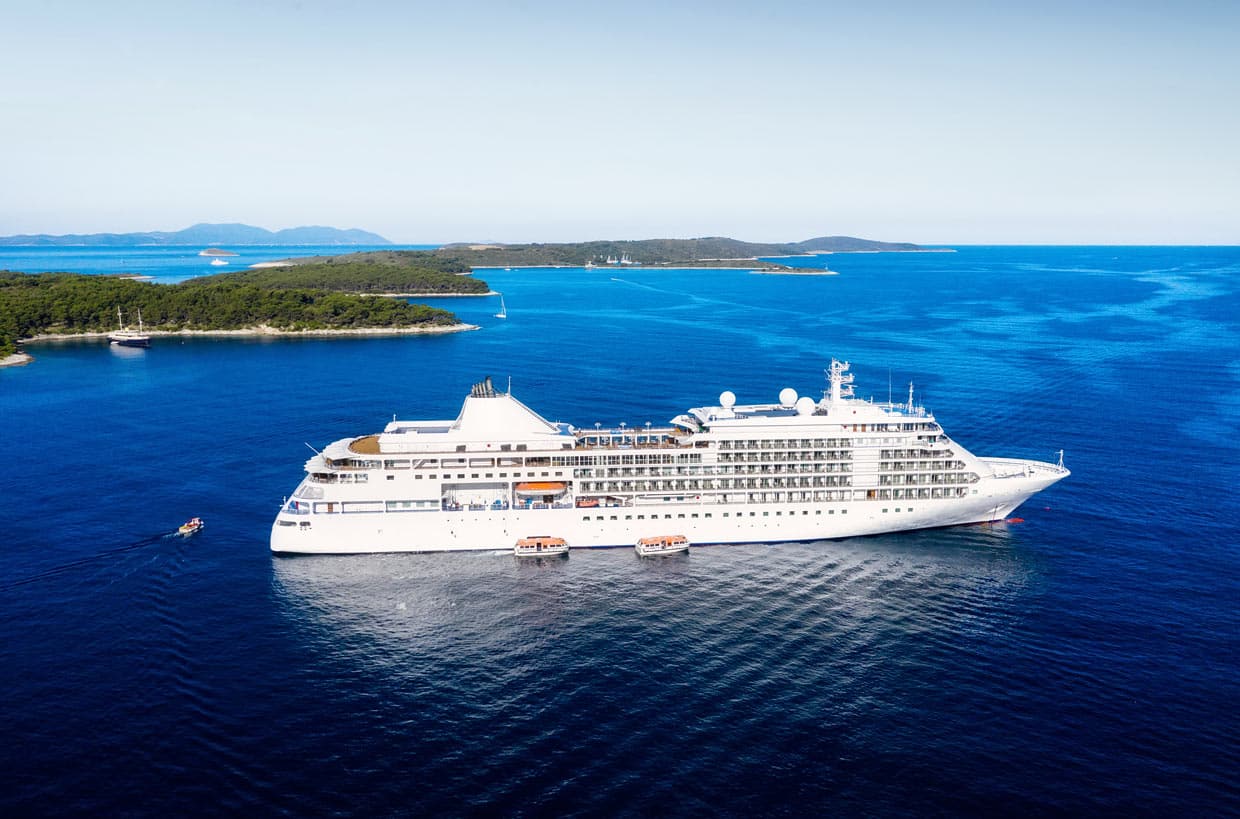
Route Highlights: The Danube is Europe’s quintessential river cruise, flowing through 10 countries and inspiring centuries of music and lore (think Strauss’s Blue Danube waltz). A typical 7-night Danube cruise covers the stretch between Germany’s Bavaria and Hungary, giving you a taste of Central Europe’s best. You might begin in Passau, Germany, then sail to Vienna, Austria, where you can attend a classical concert and savor sachertorte chocolate cake, and onward to Bratislava, Slovakia and Budapest, Hungary, with its stunning Parliament building anchoring the riverfront. Along the way, you glide through the Wachau Valley in Austria, a gorgeous UNESCO region of terraced vineyards and fairy-tale villages (don’t miss Melk Abbey’s golden grandeur). Other popular stops are Linz (with excursion to Salzburg, Mozart’s birthplace), Dürnstein (where Richard the Lionheart was imprisoned – and you can sample local apricot schnapps), and sometimes Belgrade, Serbia, on longer itineraries into Eastern Europe. The river itself is a highlight – from your ship you’ll see hilltop castles, charming churches, and daily life on the banks. In December, special Christmas market cruises are magical, stopping at festive markets in Vienna and Budapest for spiced mulled wine and crafts.
Cruise Lines: Viking River Cruises is practically synonymous with the Danube, with a large fleet of modern “longships” and culturally heavy itineraries. AmaWaterways, Avalon Waterways, and Uniworld are other top-rated lines on the Danube, each offering something slightly different (Ama often appeals to active travelers with bike tours, Uniworld provides luxurious boutique vessels, etc.). Tauck and Scenic cater to the high-end with all-inclusive pricing and exclusive experiences (like private palace tours in Vienna). Emerald Cruises and Avalon tend to attract younger or more budget-conscious guests with stylish ships. All these cruises include guided tours in each port, but also allow free time to explore.
Ideal Season: May to September for the best weather (spring flowers and summer sunshine). April and October are shoulder season – cooler but still pleasant and fewer crowds. In December, special winter cruises draw those keen on Christmas markets (bundle up!). One consideration: mid-summer can occasionally bring low water levels (or high, in spring) that impact sailing, but lines adjust with minimal disruption. The Danube is generally navigable most of the year, except maybe January–February when some sections can freeze or are less popular due to cold.
Average Pricing: ** ~$2,000–$5,000 per person** for a 7–10 night Danube cruise (often inclusive of excursions and wine/beer with meals). Pricing varies by season and cabin type: a standard lower-deck cabin in spring might be ~$2,000, while a balcony suite in peak summer on a luxury line might be $4,000+. Keep in mind these are smaller ships (around 150 guests) with nearly all tours included, which is reflected in the cost. Deals can sometimes be found in late autumn or for last-minute bookings on less full sailings.
Onboard/Onshore Experience: River ships are intimate – usually 3 decks, a sun deck on top, one restaurant and one lounge. The atmosphere is social and relaxed, with open seating dining and often local musicians coming aboard to entertain (like a Hungarian folkloric show or an Austrian violin quartet one evening). Cuisine tends to highlight regional specialties – you might have Wiener schnitzel in Austria or goulash soup in Hungary onboard. There’s no flashy entertainment or pools (though some newer ships have a small pool or spa). The real entertainment is watching the scenery as you sail gently past medieval towns, vineyards, and castle ruins – perhaps with a glass of Grüner Veltliner wine in hand. Onshore, sightseeing is very immersive: walk through ornate Baroque palaces, visit grand cathedrals like St. Stephen’s in Vienna, and stroll cobblestone lanes in quaint towns. Guides provide rich context about Habsburg emperors, Ottoman battles, and European Union modern life. Biking is a popular option on the Danube – many ships carry bikes or arrange cycling tours (one famous route is from Dürnstein to Melk along the river). Evenings in port might allow you to attend a concert or simply enjoy the illuminated architecture (Budapest’s parliament lit up at night from the ship is unforgettable).
What Makes It Unique: The Danube packs an astounding amount of culture, history, and scenic beauty into a relatively small area. In one week, you can experience four or five distinct countries, languages, and cuisines. The convenience is unbeatable: no long bus rides or trains – your hotel floats with you, right into the heart of each city. Many travelers say their Danube cruise felt like “sailing through a painting” with the picturesque landscapes and cityscapes at every turn. There’s also a poetic sense of retracing the routes of Europe’s traders and kings along this storied river. Satisfaction is typically extremely high, especially for mature travelers and couples who appreciate the relaxed pace and rich storytelling. It’s a romantic and enlightening journey that truly captures the essence of Central Europe.
Comparison of Top 10 Cruise Destinations
To help you decide which cruise destination best suits your interests, here’s a side-by-side comparison of the top 10 destinations, ranked across key criteria like uniqueness of experience, typical pricing, best travel season, onboard facilities focus, and traveler satisfaction levels:
| Destination | Experience Uniqueness | Avg. Price (per person) | Best Season | Onboard/Onshore Highlights | Traveler Satisfaction |
|---|---|---|---|---|---|
| Caribbean (Ocean) | High – Tropical island variety, beaches & cultures. Easy, fun vibe for all ages. | $800–$2,500 (7 nights) | Nov–Apr (dry season) | Mega-ships with waterparks, casinos; onshore snorkeling, private island beach days. | Very High (family-friendly paradise) |
| Mediterranean (Ocean) | High – Iconic cities & historic sites in one trip. Diverse European cultures. | $1,000–$3,000 (7–10 nights) | May–Oct (warm, peak Jul–Aug) | Large ships & mid-size vessels; enrichment lectures, UNESCO tours (Rome, Athens, etc.). | Very High (culture & food lovers) |
| Alaska (Ocean) | Very High – Dramatic glaciers, wildlife, frontier history. One-of-a-kind scenery. | $1,200–$3,500 (7 nights) | May–Sep (summer) | Ships with heated solariums, expert naturalists; onshore glacier treks, whale watching. | Extremely High (scenic awe) |
| N. Europe Fjords (Ocean) | Very High – Norwegian fjords, Baltic capitals, Northern Lights potential. | $1,500–$4,000 (10 nights) | May–Sep (mild, long days) | Smaller ships, cozy lounges; onshore medieval towns, Viking history, fjord kayaking. | Very High (nature & culture mix) |
| Asia (Ocean/River) | High – Exotic mix of cultures, temples, megacities. Truly multi-sensory. | $1,000–$3,000 (7–10 nights) | Oct–Mar (varies by region) | Mega-ships to luxe midsize; onshore ancient temples, street food tours, markets. | Very High (eye-opening, diverse) |
| South Pacific & Oceania (Ocean) | Very High – Idyllic islands, coral reefs, Aussie/Kiwi highlights. Remote paradise feel. | $1,500–$4,000 (10–14 nights) | Apr–Nov (islands); Nov–Mar (Aus/NZ) | Resort-style and smaller ships; onshore lagoon snorkeling, Polynesian culture shows. | Sky High (tranquil beauty) |
| Galápagos Islands (Ocean) | Extraordinary – Endemic wildlife encounters, Darwin’s living lab. Niche expedition. | $4,000–$8,000 (7 nights all-inc.) | Year-round (split seasons) | Small yachts, top naturalist guides; daily zodiac landings, snorkeling with sea lions. | Off the Charts (life-changing for nature lovers) |
| Antarctica (Ocean) | Extraordinary – Pristine polar landscapes, penguins & icebergs in an extreme environment. | $8,000–$15,000 (10–12 nights) | Nov–Mar (Antarctic summer) | Expedition ships with lectures, zodiacs; onshore walking among penguins, glacier kayaking. | Exceptional (bucket-list, 100% in surveys) |
| Nile River (Egypt) | High – Pharaonic history along an iconic river, temples & tombs galore. Time-travel vibe. | $1,500–$4,000 (4–7 nights package) | Oct–Apr (cooler weather) | Boutique riverboats, sun deck pools; onshore guided pyramid/temple tours (Luxor, Karnak), local folkloric shows onboard. | Very High (rich history & comfort) |
| Danube River (Europe) | High – Storybook European journey, multiple countries in one cruise. Castles & culture abound. | $2,000–$5,000 (7–10 nights) | May–Sep (summer), Dec (Xmas) | Intimate river ships, inclusive tours; onshore city walks (Vienna, Budapest), wine tastings, bike rides in villages. | Very High (enriching & relaxing) |
Traveler Satisfaction: All these destinations earn strong reviews, but expedition cruises (Galápagos, Antarctica) often achieve near-100% satisfaction due to their once-in-a-lifetime nature. More mainstream routes like the Caribbean and Med delight a broad range of travelers, consistently scoring high marks, especially for first-timers. The best choice ultimately depends on your personal interests – whether it’s tropical relaxation, ancient cultures, majestic scenery, or wildlife adventure. Each of these top 10 destinations offers a unique and unforgettable cruising experience. Bon voyage!
Aspendos Theatre – A Turkish Time Machine
Don’t you get bored hanging all the time in the modern city of Antalya, Turkey? We want to invite you to an adventure just 25 miles (47 km) away into the ancient worlds of mystery. It truly is a Turkish time machine for traveling to the ancient world of performance art. In Southern Turkey lies the ancient region of Pamphylia, holding the old city of Aspendos. Being in the riverside of the Eurymedon and rich with resources, the city of Aspendos always has been a prominent jewel for the kingdom ring of so many Greek, Persian and Roman kings. This city well preserved some ancient structures for us, including Nymphaeum, Basilica, and Agora, but among these, all the Aspendos theatre has a special place of being the best-protected ancient theatre, like a tunnel inviting you for a time travel to ancient times.
History and Myths
Aspendos theatre was designed by Zenon, son of Theodorus, and was built under the command of the Roman emperor Marcus Aurelius in 155 AD. We know these all from the precise inscriptions on the walls. We also apprehend that Zenon was funded by two wealthy brothers, A.Curtius Crispinus Arruntianus and A.Curtius Crispinus, who actually gifted the theatre the Gods of the country and to the Imperial house. It has been said that there was a competition for building this theatre for the reward of getting married to the daughter of the ruler of the city that finally resulted in a marriage held in the theatre, as the ruler was amazed by the sound system bringing Zenon’s voice from far away whispering that “Your daughter must be mine.”
Architecture and Structure
Although this theatre was built under the region of a Roman emperor, it actually has many Greek characteristics. For example, according to the Greek tradition, the spectator tribune is revealed in the eastern lean of the acropolis or the stage, back wall, and flanking towers are erected from a scheme of stone-built arcades and domes. The horseshoe shape of the auditorium is also a Greek idea. Anyway, you can also observe some roman ideas too, like barrel-vaulted substructure.
The diaphanous scale of the Aspendos theatre is imposing. The theatre is 315 feet (96 meters) wide, with other components following generic divisions: the width of the stage is half the width of the theatre’s wholesome and double the diameter of the orchestra. The stage building was adorned from the inside by a two-tiered frontispiece that still sustains its initial height, and from the outside maintains 17 windows divided into two levels.
Meanwhile, a horizontal walkway called Diazoma divided the spectator tribune into two parts. The upper part contains 21 rows of seats, as long as the lower section has 20 rows. It has been estimated that Aspendos theatre could accommodate at least 7300 to 7600 people. But it could contain up to 8500 spectators if the stairs were used as places to sit on.
The theatre is also famous for its exceptional acoustics and exquisite architectural adornment. In particular, the building on the stage with two floors is striking and luckily has been preserved in a superior manner. This is high because of the city’s ceaseless domicile through to the Byzantine and Seljuk periods as each of them used it in a different creative way. For example, the Seljuks had used the theatre as a caravanserai, a summer residence of sultans, and re-established the construction in the 13th century with a buttress and a portal.
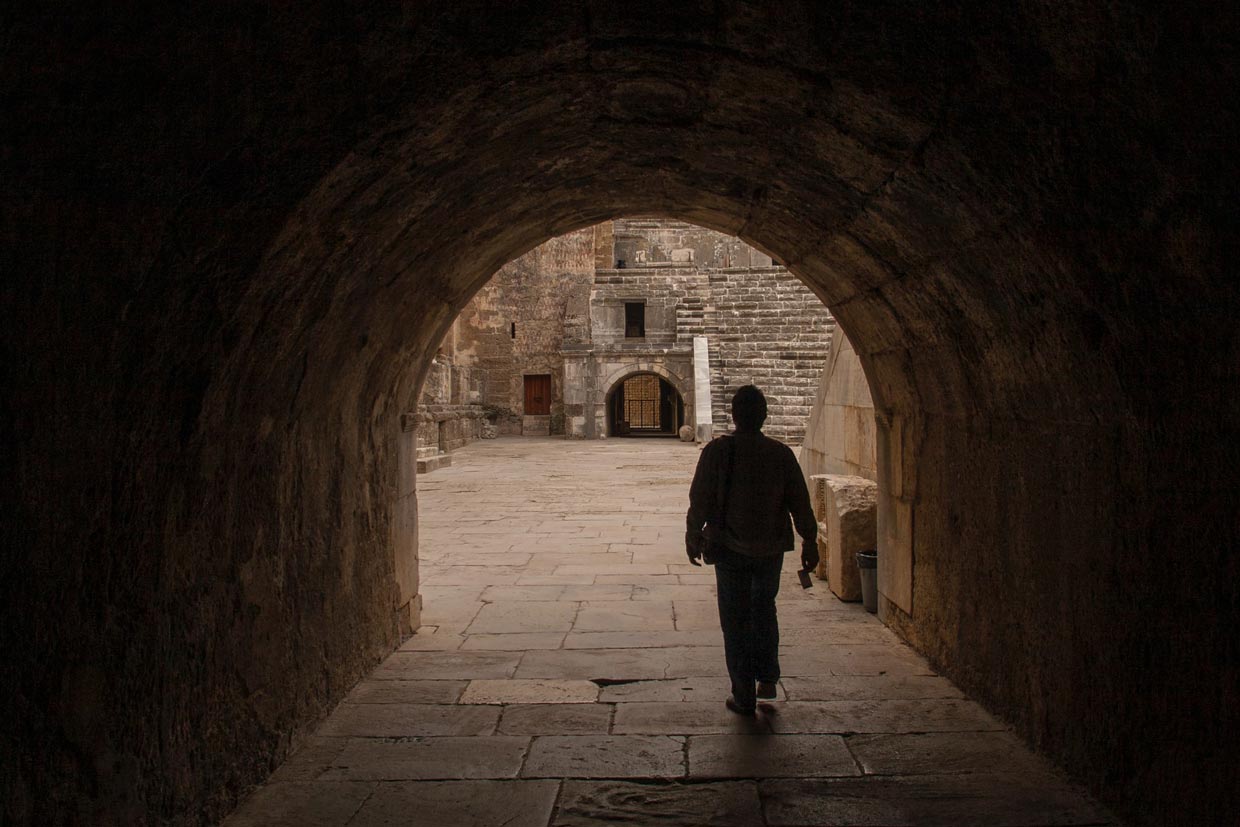
Aspendos Theatre, Turkey
Aspendos Theatre Today
Remember calling Aspendos theatre a time machine in Turkey for wandering through performative arts during ancient times? The theatre is still being used for its original purpose. Since 1994, the Aspendos theatre hosts the Aspendos International Opera and Ballet Festival annually (TR. Aspendos Uluslararası Opera ve Bale Festival). It is a locale for various cultural events, which thousands of people attend to enjoy the performances and events—just like the way people did 2000 years ago. You still have the chance to enjoy the spectacle of it.
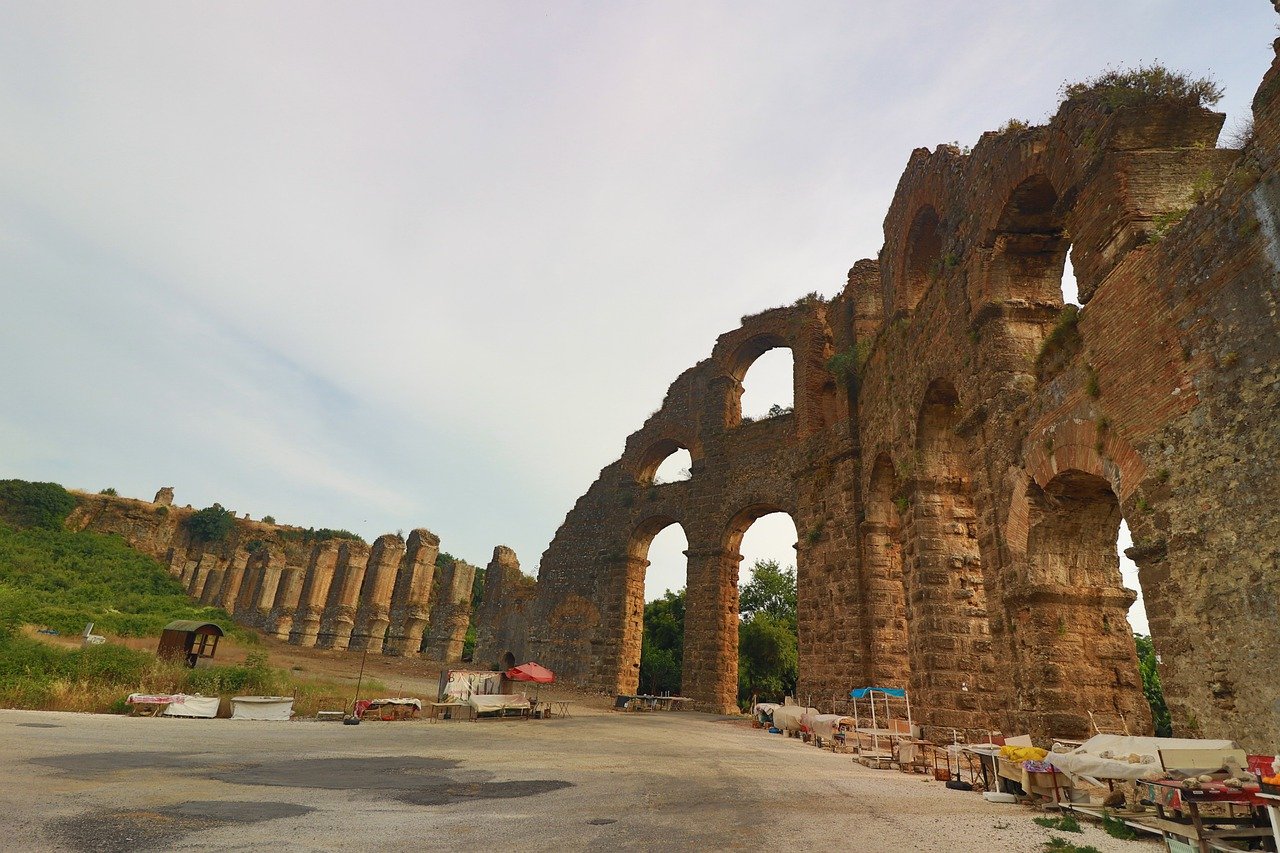
Aspendos, Turkey
How do I get to Aspendos?
There are many ways to get to the Aspendos, and the most common way is to get there from Antalya. The cheapest way is to catch a bus via Serik, and the cost is about 45 TRK (5.79 USD). be ready for a one-hour bus trip. If you like to get to Aspendos faster, taking a taxi would be the best option with the average cost of 240 TRK to 290 TRK (30 to 38 USD). You can get there in 35 minutes by taxi.
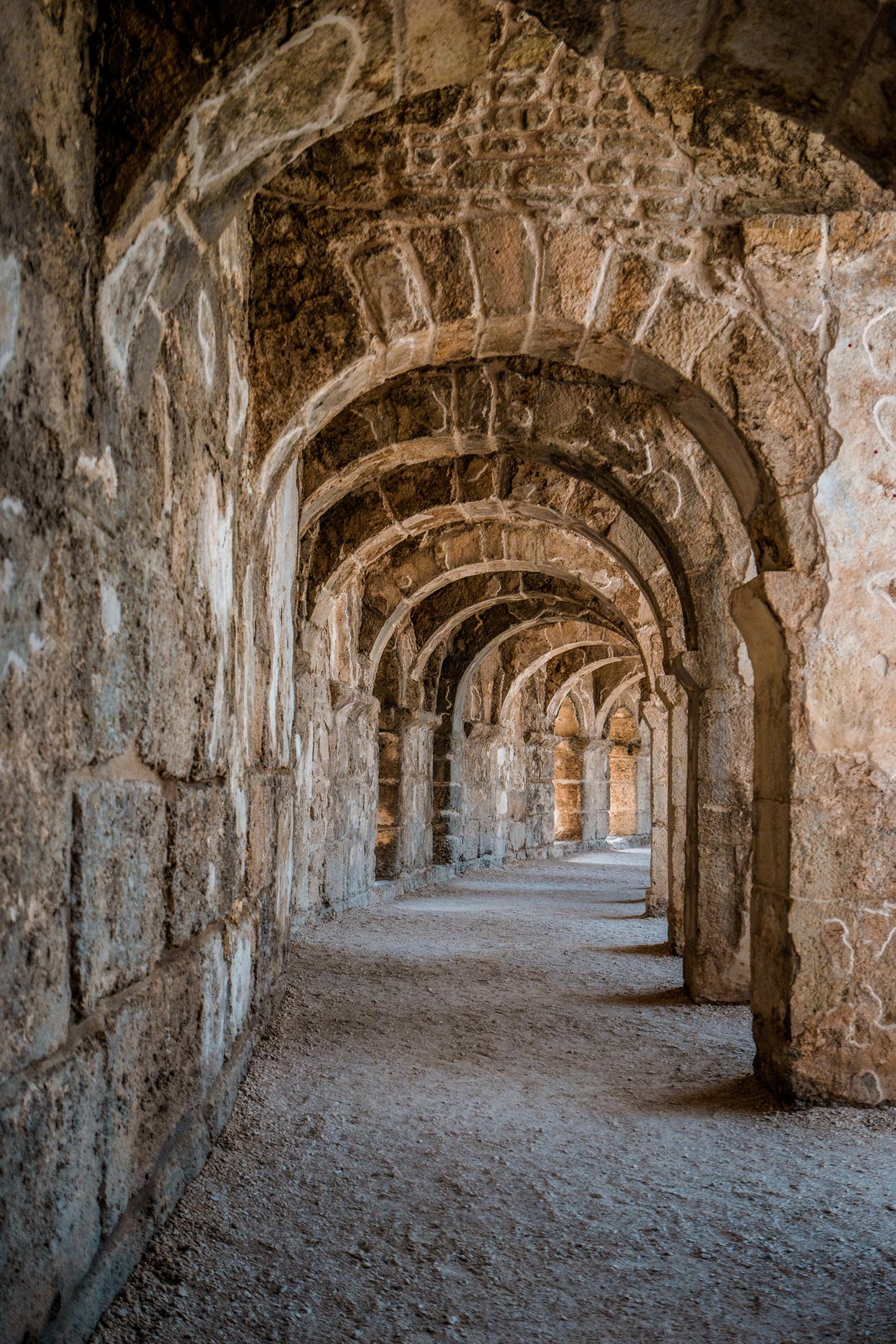
Aspendos Theatre
What to do in Aspendos theatre?
Visiting an ancient site is not a complicated thing to do, but everybody wants to have his/her own way of visiting. So don’t make it a big deal and visit in your manner. It is recommended to read about this place’s history to get closer to the building’s background. It can make your experience more joyful and meaningful. Without accurate information about the place, you may find it just a big monument!
Aspendos Theatre and ruins are located near some other tourist attractions, and visitors like to have a glimpse of them. Fishing places, boat tours, off-road tours, and Golf courses are the most popular things near Aspendos Theatre. To fully enjoy your trip, you can pick one of them to spend some hours in Aspendos.
How much does it cost?
The cost of your trip from Antalya or any other place to Aspendos is dependent on the way you want to spend your money, but the Aspendos ruins and theatre also need tickets, and the entrance fee is about 70 Dollars per person. Another option is attending local tours, which are available for tourists and provide you with all information and guides.
E-booking tickets for the theatre is also a good way to avoid trouble when the Aspendos Theatre is crowded. Hopefully, tour providers and the websites in which you reserve let you cancel your reservation 24 hours before the beginning of your tour.
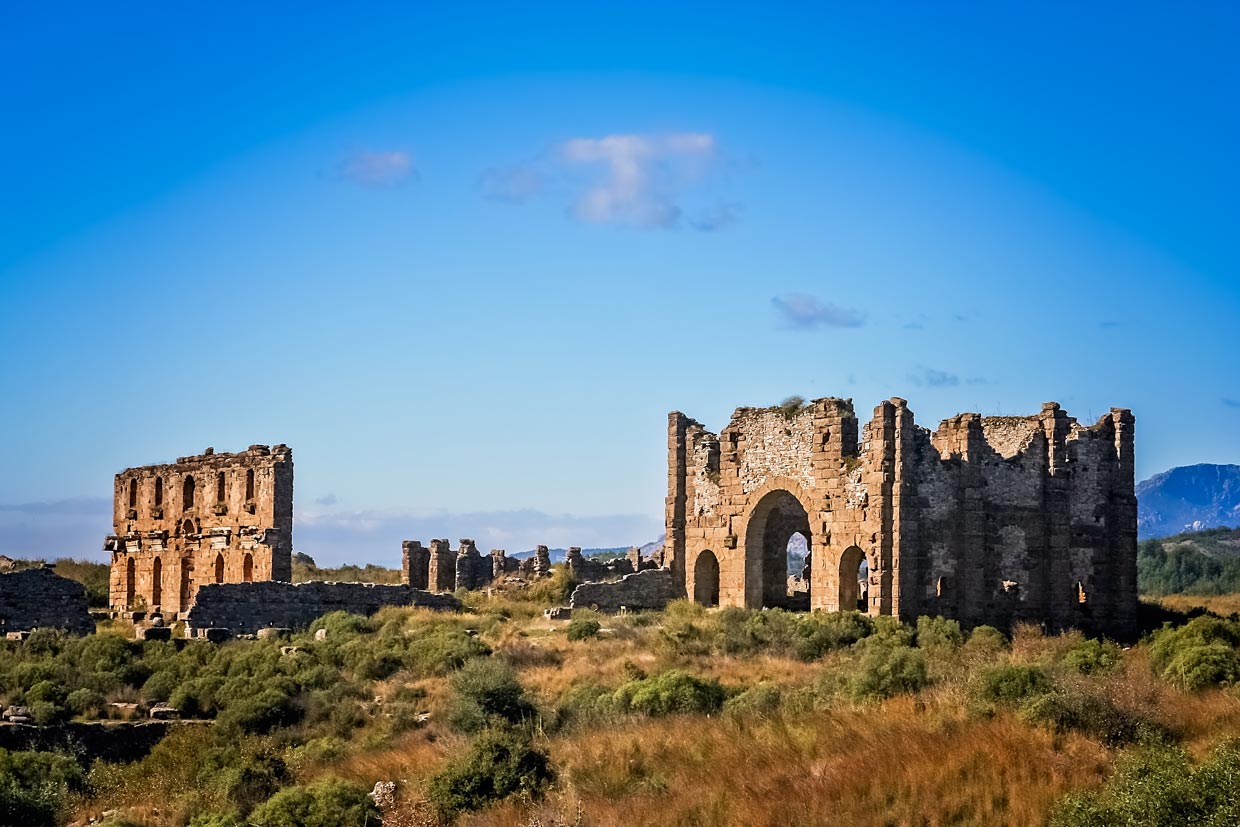
Aspendos Theater, Turkey
What do I need to visit?
Nothing much! But as the surface is not normal, you’d better find a pair of comfortable shoes for walking a long time on uneven ground. Fortunately, Headscarf and Islamic Hijab are not obligatory for entering the theatre.
Have you ever been there?
Have you ever visited the Aspendos theatre or any other similar ancient theatre? What does their ancient soul whisper in your ears? How did you find this old part of the land? Share your experience with us.
Istanbul Grand Bazaar
Bored of walking in the boring analogous malls? We are going to take you to an entirely new world of trading that can work as a time machine and take you back to the old times of the Ottoman empire and give you a chance to wander through all the colors and smells merchants offer you. Being one of the largest and the oldest covered markets globally, Istanbul Grand Bazaar in Turkey has so much mysterious beauty to offer to the curious exploring eyes. Smells of spices, coffee, and tea are like sirens singing to attract young sailors. Fingers can slide on soft textiles and explore rough bricks, searching for the imprint of the forgotten people of old times. Istanbul Grand Bazaar may please your different senses and feelings.
History of Grand Bazaar
Being one of the children of Constantinople’s conquest, Istanbul Grand Bazaar has a long story to tell you. This Bazaar was the heart of the Ottoman Empire. But contrary to most of its brothers and sisters, here you can face a living historical tale in which you can participate in making and narrating it with many other people. There is no single hero here, but a symphony of many with all their singularities, just waiting there to be heard and sung with.
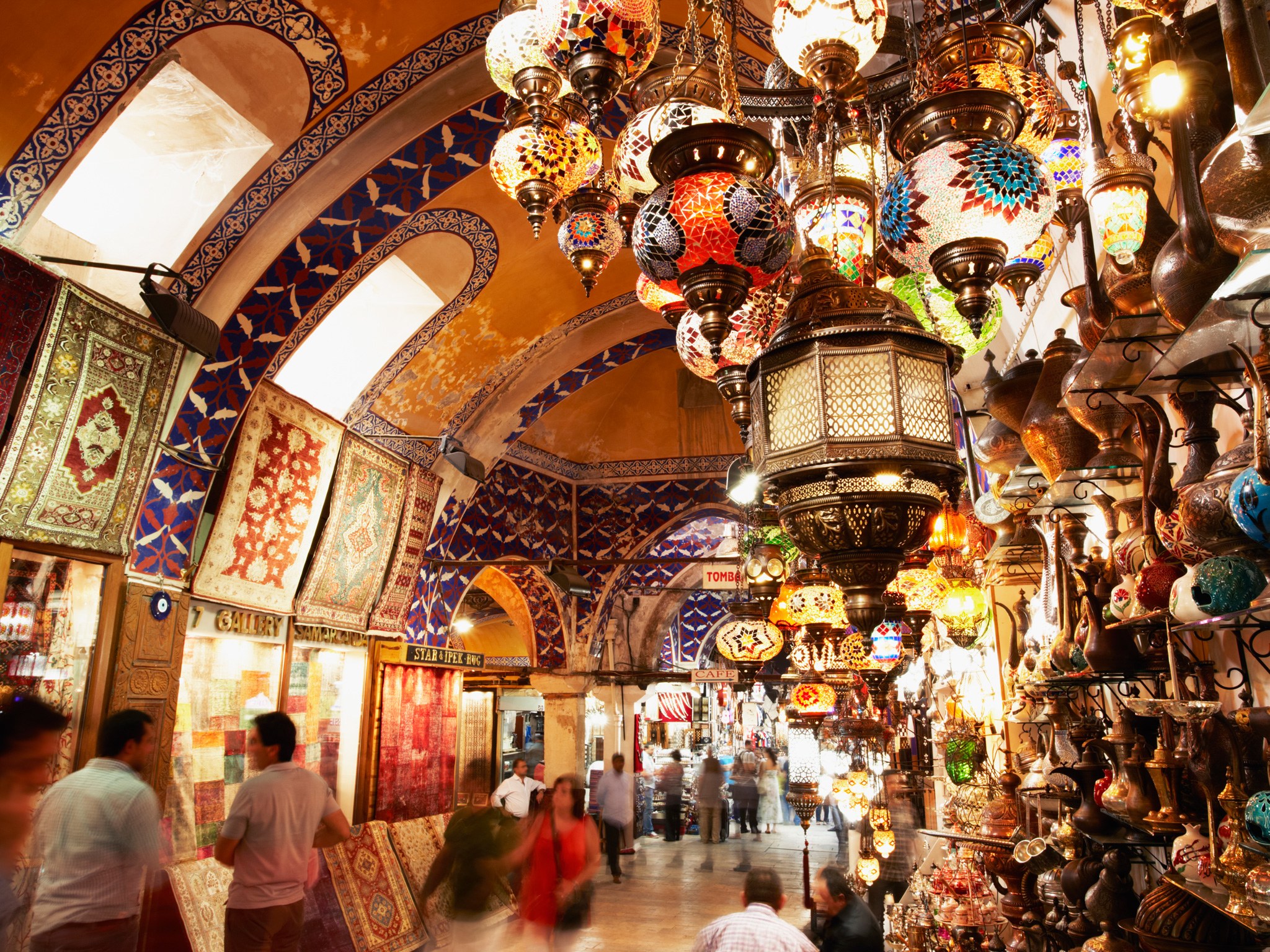
Istanbul Grand Bazaar
Location details and Best time to Visit
Except for Sundays and bank holidays, you can visit the Grand Istanbul bazaar on any day. Remember to visit between 8:30 am and 7 pm. Schedule for not missing the daylight slithering from the clefts in walls and ceilings and colorful windows. Located near some of its family, places like Hagia Sofia, Blue, Beyazit, and Nuruosmaniye mosques, you can plan to visit them all in a day. The best way to get there is by the city’s tram. But the best way to find ways and shops is the maps you can buy before going into the Bazaar or get them online. Don’t forget to get off at the Beyazit-Kapalicarsi stop!
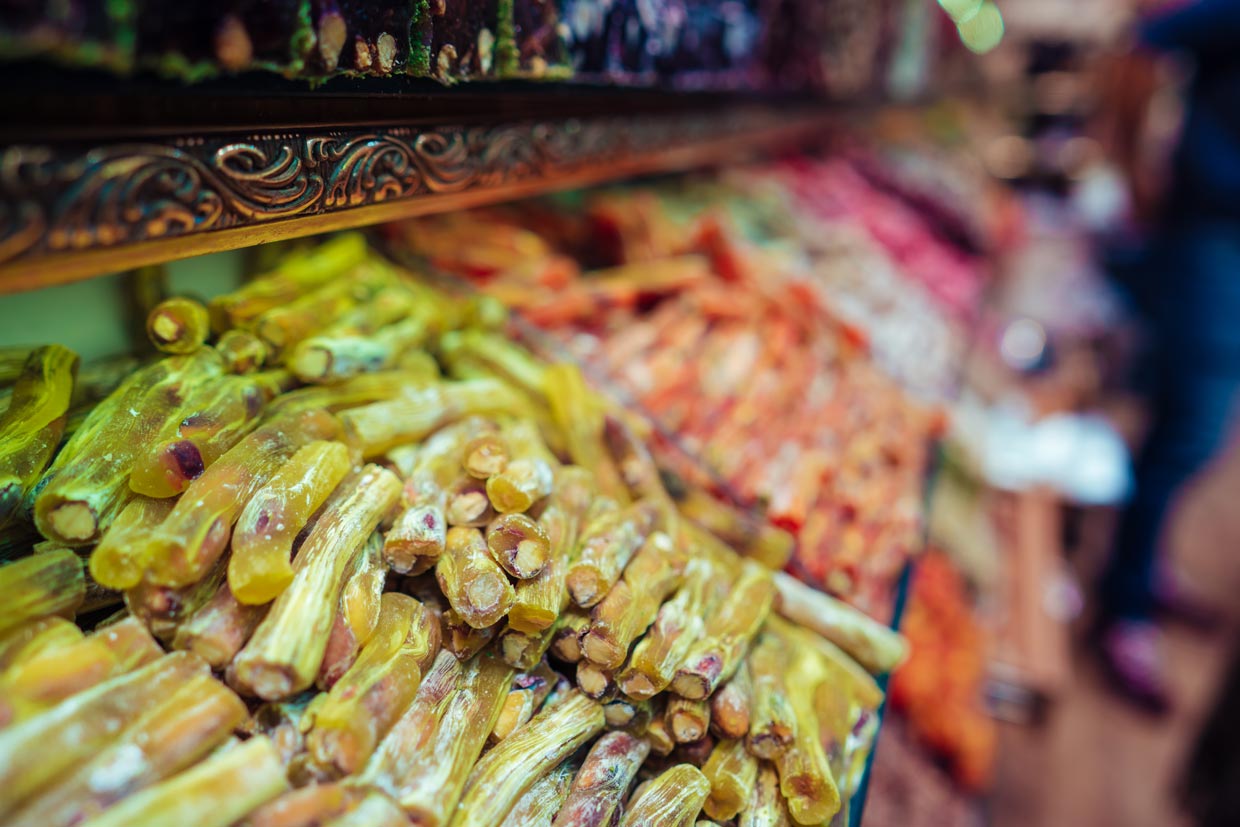
Grand Bazaar in Istanbul
What to shop in Grand Bazar
Istanbul Grand Bazaar sparkles in Istanbul city because of its glorious jewelry. From antique ones to ones with modern designs, you can choose something unique for yourself. Even if you have the time, you can order your one and only design! Some other Beauties that the Grand Bazaar can offer are cloth and textiles with an excellent global reputation. You can use them to customize scarves, gloves, stockings, blankets, etc. You can buy anything with your own custom-made design and use the material you like with workshops that have been working on these peculiar items for years. They will even make the craziest design you can think of, so choose wisely! You can check out Sivaslı Istanbul Yazmacısı for custom-made scarves and a big collection of them.
It is highly recommended to look for hand-made plates or some Calligraphy and even buy them. They show the beauty of Turkish history, and its Art at different times. Istanbul Grand Bazaar also provides a lot of breathtaking stuff to design your house. You can enjoy having praiseworthy antiques shining under the mysterious light of colorful Turkish lamps while you walk elegantly on your handmade Kilims. Want to double your joy and take more of Istanbul’s atmosphere to your house? Consider the smell of Turkish coffee or tasteful spices.
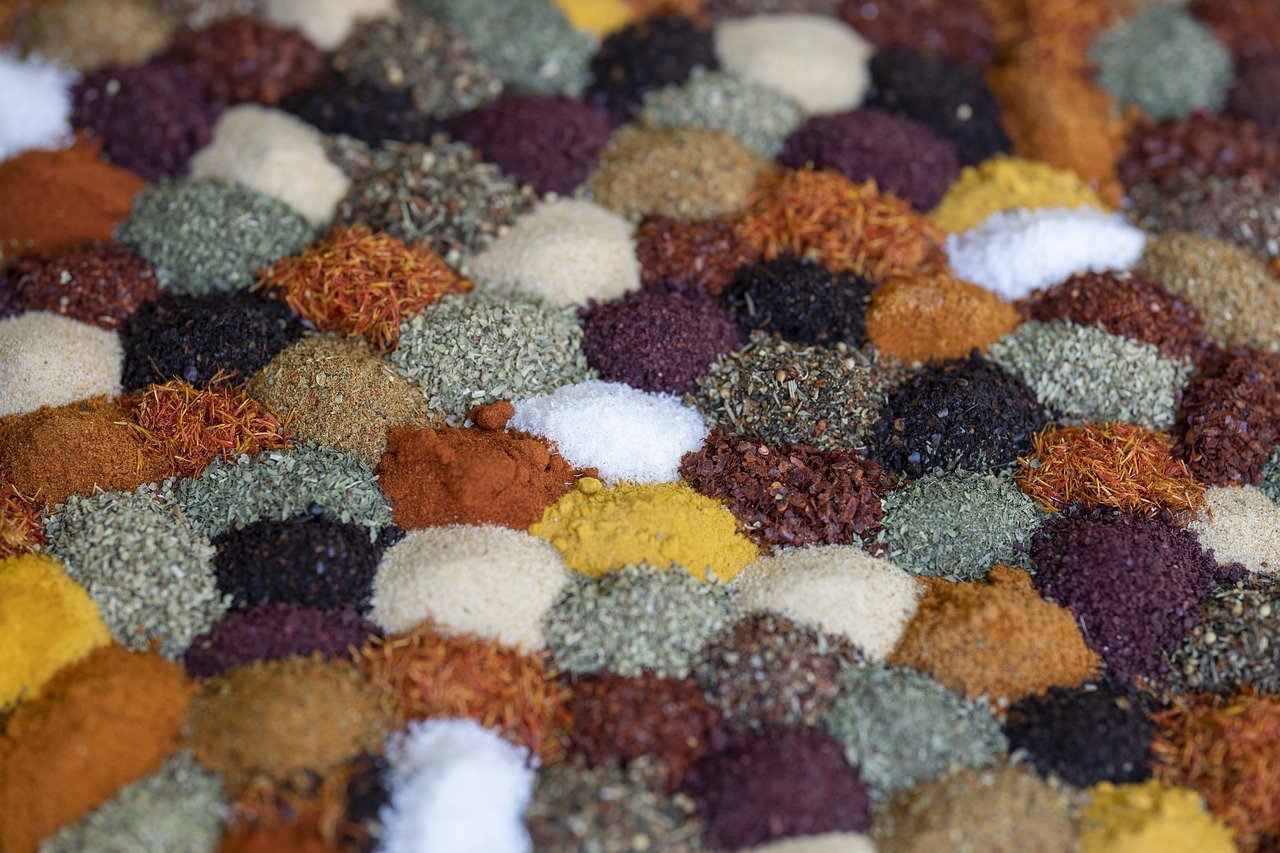
Spices, Istanbul Grand Bazaar
Etiquette and Behaviors
Just like any other place on earth, this Bazaar has its own culture and behaviors. The first thing that will get your attention is the people constantly bargaining with shop owners and people who are looking to buy something from them. These bargainings are mostly done calmly, but sometimes they can get a little aggressive. If you get uncomfortable, you can leave at any moment. But we can assure you that these incidents are rare. After all, you can easily see how hospitable people are in general. Don’t forget to check out other shops when you get the price of a product, this way you might find a better product or a cheaper one, this isn’t a disrespect but a normal etiquette. It’s completely alright to bargain about prices.
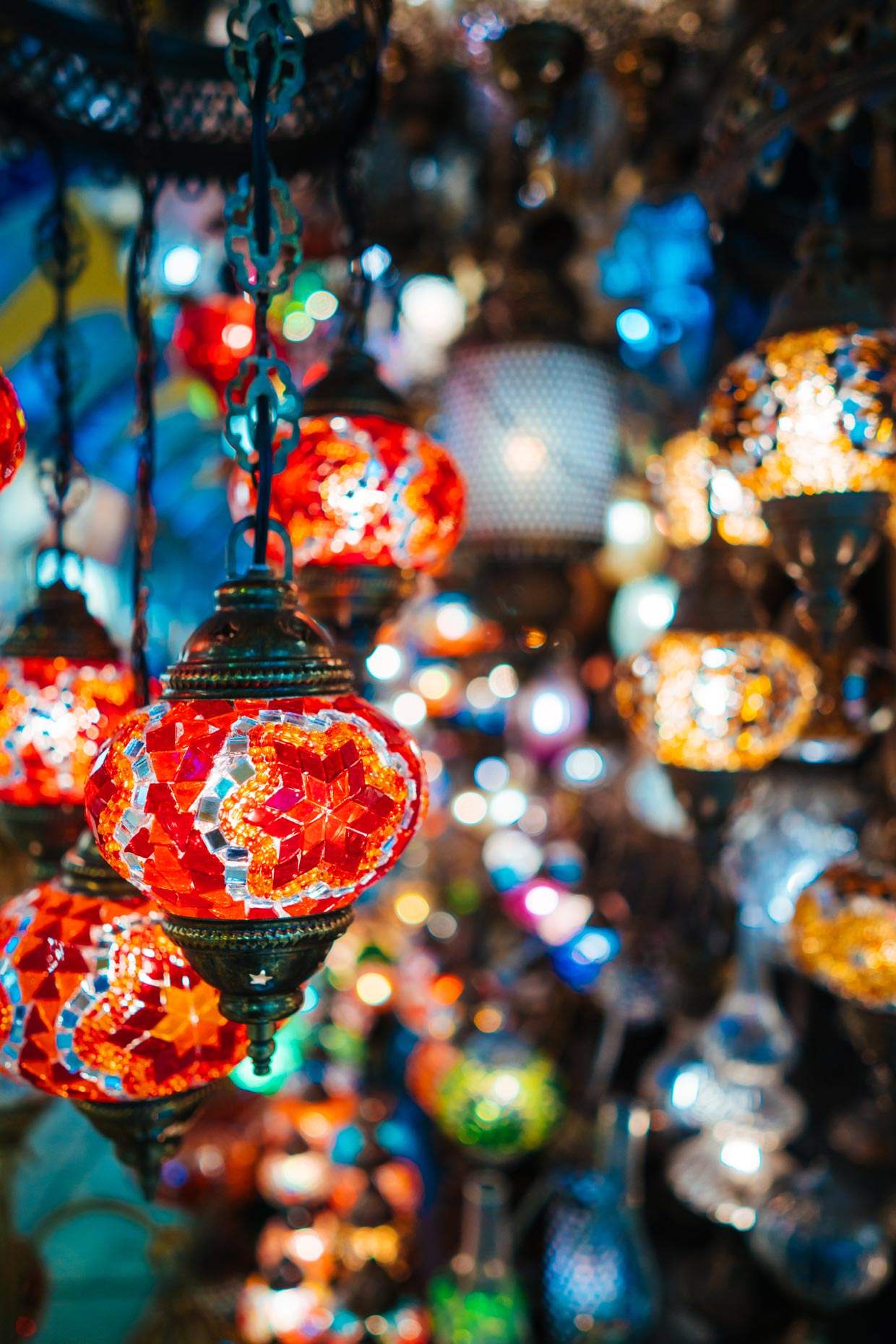
Grand Bazaar, Istanbul, Turkey
Dining and Coffee
After a long day of shopping and roaming in the Grand Bazaar, nothing but a hot cup of Turkish tea can’t refresh your body and mind. If you look around in the Bazaar, you can see different places for drinking tea or eating a meal. You should definitely buy some Turkish food. It is worth a try. You can check out Şark Kahvesi for some traditional coffee and tea. The Turkish Kebab is also a famous meal to try. You should check Gaziantep Burc Kebap for this amazing recipe. As there is an old saying that to understand a culture, you should try the food first!
Tours
There are many tours in Turkey you can get into and have an amazing experience with the help of the experts on The Grand Bazaar. Don’t forget to look up tours or find them near the Bazaar. And don’t hesitate to ask the tour leaders about everything that you are curious about.
[woo_mod carouseltype=”review” orderby=”rand” show=”8″ autorotate=”1″ showrow=”4″ cat=”1016″]
A Place to Rest
Usually, Hotels that are near the Bazaar are great for your journey. They have different rooms with different styles and a large variety of Customer services like food and such. For example, The Magnaura palace hotel is highly recommended. Also, don’t forget to check in early, even way before you travel to Turkey. There are some more traditional hotels in the city if you really want to get Turkey’s full experience.
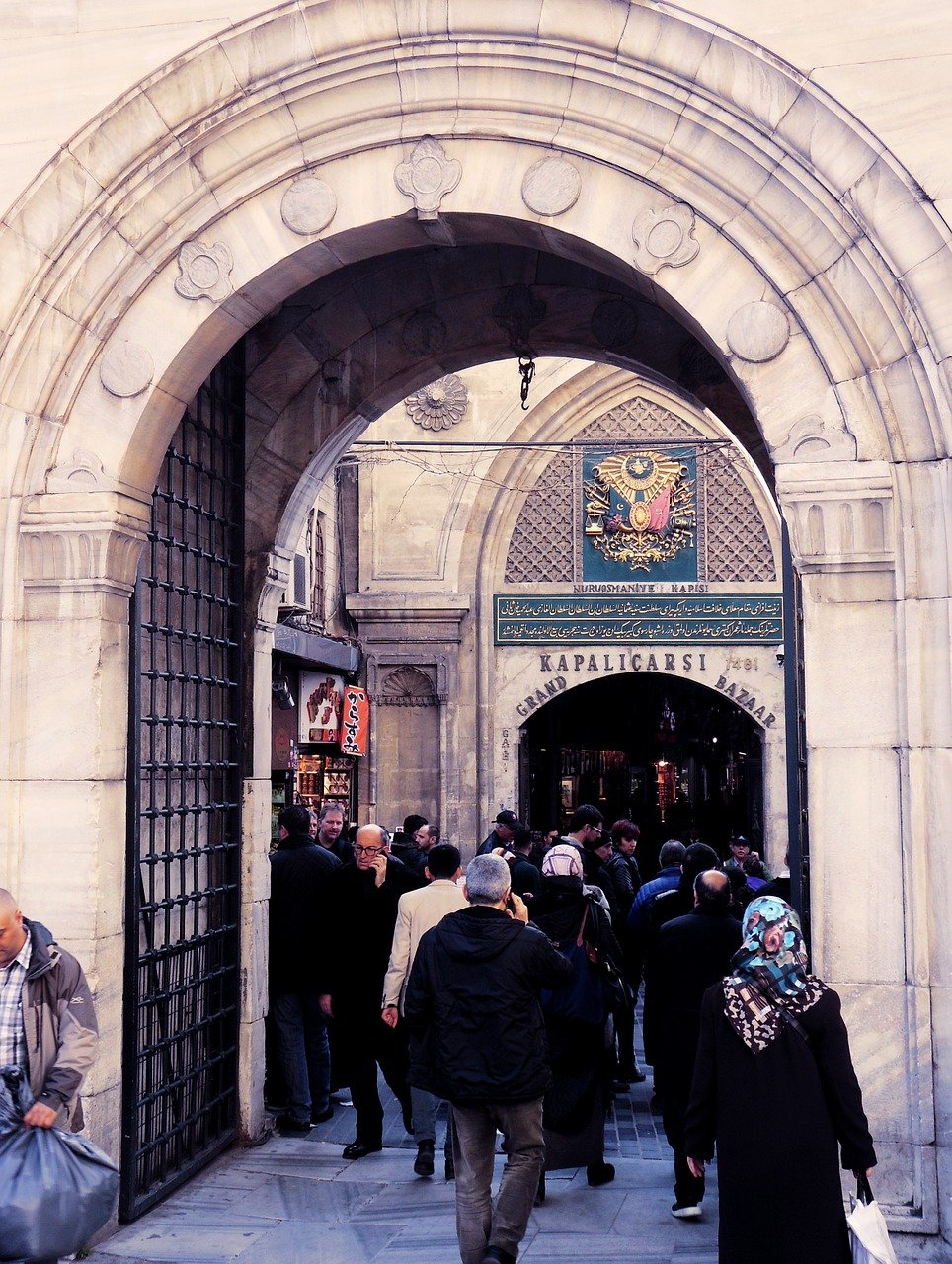
Grand Bazaar Entrance, Istanbul
Souvenirs
As we all know, souvenirs are essential, and here are some of the best you can find and buy for your family, friends, or loved ones. Nazar Buncugu or the evil eye is an oval-shaped blue, a shape of an eye in the middle which is used to ward off bad luck in Turkish culture, is a great choice as a cheap souvenir.
Now let’s look at Turkish coffee. By drinking a cup of this coffee, you can say that this is one of the best coffees in the world. This would make a perfect gift to a friend who constantly drinks coffee. Baklava is the best sweet in Turkey. But don’t forget to pack them carefully because they can easily get out of their place. Turkish Carpets can easily pursue you to buy them. These Carpets are absolutely perfect for your house or your loved ones’ house. You can buy a thousand more things as souvenirs like jewelry and gold, Nargile pipes, ceramics, and coppers.
Great Pyramid of Giza in Egypt
The Great Pyramid of Giza, or the Pyramid of Khufu, the final resting place of a fourth dynasty king of Egypt, is the oldest and one of the last standing Seven Wonders of the ancient world. Being nearly five thousand years old, there are still many things that are left unknown about this pyramid and the other buildings around it. Some claim that these great buildings were, firstly, the resting place of these great kings and queens, and second, a place in which they would ascend into the afterlife after the end of time.
It is massive, impressive, and still standing, as you have no doubt seen in pictures, but the view in person is something else. It is best to have a guide with you as you go for a tour of the area, but we have you covered if you want to go solo. Some rides will get you close enough, and you will have to decide how you want to explore the area. Be sure to consider when to visit and which sections and buildings you want to visit as the place is vast and massive.
A Small History of The Great Pyramid of Giza
The Giza Pyramid Complex includes three main pyramids, the largest of which is dedicated to Khufu (dates back to 2580-2560 BC). The other two are the Pyramid of Khafre and the Pyramid of Menkaure, respectively the later kings. A little to the south-west is also the Sphinx, which is to guard the Great Pyramid of Giza.
The general idea was to build these tombs and seal them up for the king(s) to rest until the end of time. They were, for this reason, buried with treasures and items they would need in death. There is no clear-cut answer for why they were constructed this way and how exactly they were built.
Accordingly, the later kings were tasked with watching over the Pyramids, which led to the Sphinx construction. Also, there were other statues inside and outside the tombs, which are not seen anymore. According to their lore, the tombs were put on the western side of the Nile, where the dead rest and the people would live on the eastern side, the place for the living to reside.
Khufu’s Pyramid
The construction of the Great Pyramid of Giza is said to have lasted for 20 years with over 100,000 workers. The nearly 6-million-ton structure uses about 2.3 million blocks of limestone that weigh about 2 to 80 tons each. Once the Pharaoh had passed, his corpse was moved to the mortuary temple to be prepared and placed in his tomb.
The same has happened for his three queens, but they were not placed beside himself. There are three smaller Pyramids beside the massive structure that were to hold his wives’ bodies after death.
Khafre’s Pyramid
When the first of the three was constructed for Pharaoh Khufu, his son decided to build his own sometime later (dates back to 2570 BC). This one is a little smaller than his father but follows the same pattern and has its own mortuary temple. It was also during his time that the Sphinx was constructed in his own image. The Sphinx was built to guard the body and his father’s soul and himself in the afterlife until their ascension into the afterlife.
Menkaure’s Pyramid
The last of the three structures is the Menkaure’s Pyramid that is the smallest of the three. It was completed in 2510 BC and followed similar designs. Like the other buildings, this massive structure is the best-preserved structure of its surrounding buildings. It used to have smaller Pyramids dedicated to the king’s wives, which are no longer seen.
Layout and Architecture of the Great Pyramid of Giza
Several elements are seen in all the structures and the surrounding buildings. One such similarity is the smaller Pyramids dedicated to the queens of each Pharaoh. Another element that was mentioned is the mortuary temples for each king and their tomb. Another similarity lies in the valley temples of each of these massive structures.
What is not similarly seen are the cemeteries and the Mastabas of the nobles. Such graves and tombs are mostly seen at the sides of the Great Pyramid of Giza alone. The other things that were discovered are boat-shaped pits in the ground. There are no longer any boats left, and the purpose of these pits remains unknown. But in the 1950s, some wood and material for making a boat were found, and it was reassembled.
Exterior
The exterior design of all three Pyramids is mostly destroyed, but small elements are still seen. The three monuments’ outer surface was covered with lither shades of limestone, also known as the Casing Stones. They were polished and had a slope, which was one of the impressive aspects of the Pyramids. There were also causeways between the temples and the Pyramids, some of which are destroyed, and several sections are not yet excavated.
Interior
You might expect to see all sorts of decorations and treasures, but that is not what you will see. There used to be treasures, which were lost due to looting of those who lived in the area later on, and lootings because of the wars in Egypt. As for decorations, since no one was meant to enter or see the interior, you will not see anything except the walls and the inner chambers’ granite. The mummies themselves have also been removed.
As you enter the Khafre and Menkaure Pyramids, you see similar passageways and descent to reach the burial chamber. But as for the Great Pyramid of Giza, it has the same underground passages as any other Pyramid, but to reach the tomb, you have to climb.
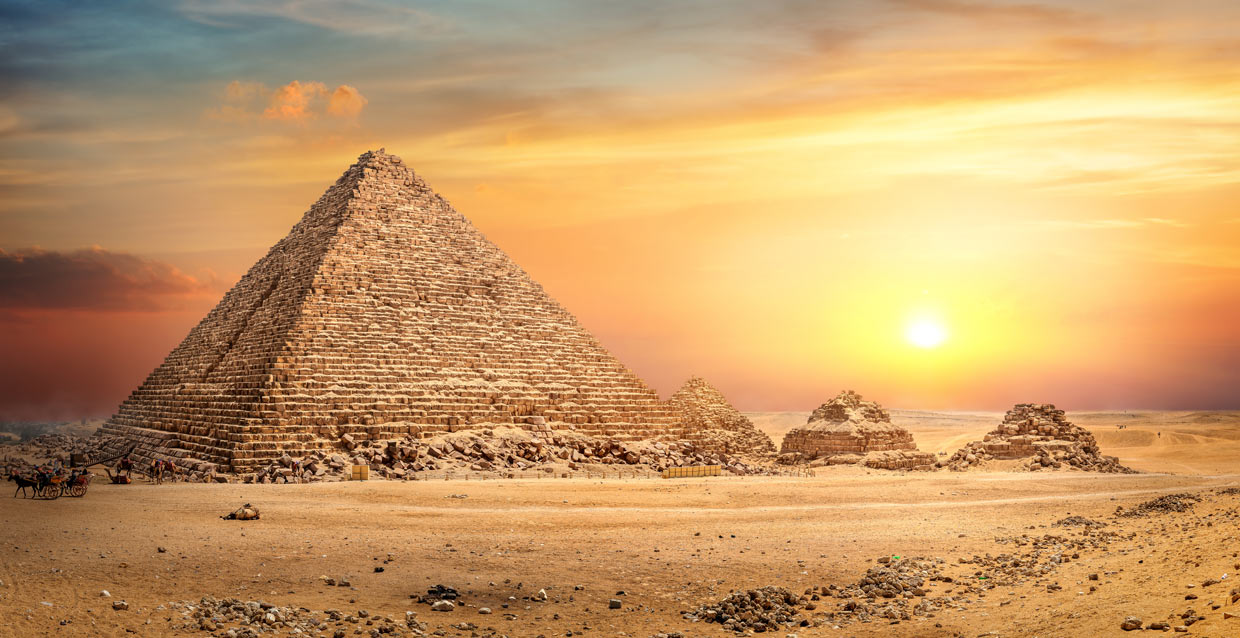
Pyramid of Giza, Egypt
How to Get to the Great Pyramid of Giza
By looking at the complex pictures on the internet, you might think that the Pyramids are in the middle of the desert. In fact, they are close to Cairo, but you will need to get there by bus or taxi. That is unless you are on tour and have a ride already.
Taxi
The best choice is to go by taxi, which is available in any part of Cairo. You just need to negotiate a price. Ask how much you need to pay before getting on a ride, and not just a taxi. You can always ask the usual prices from the locals or your hotel; better yet, ask your hotel to call a taxi for you.
Bus
Your next option is to go by bus; you can find them from downtown Cairo and ask which one will take you near the complex. The lines may change, but they can get you there in a few hours, depending on the traffic. There are about 18 kilometers to go, and it may take some time, but they are cheaper.
Metro
Alternatively, a good way to get around Cairo and see the top attractions is to use the metro. It is one of the most crowded options, but it is quick, cheap, and gets you close to the city’s highlights. In any case, they will take you close to the complex, but you will then have to choose one of the above options to get the rest of the way.
Minibus
The least advisable option, but still something to consider, are the minibusses. They are found in the city and get you close enough to the complex, but they are not comfortable as they get crowded. They are, however, rather cheap.
Notes on Transportation
- Early hours are ideal for a visit to avoid long lines, but public transportation is more crowded in such hours.
- When traveling by bus or metro, if there is a booth, ask for information and prices before going.
- Uber is available in Cairo and can be a better alternative to taxies.
- Your transport will drop you off near the Necropolis Complex. From there you can walk or rent a horse or camel.
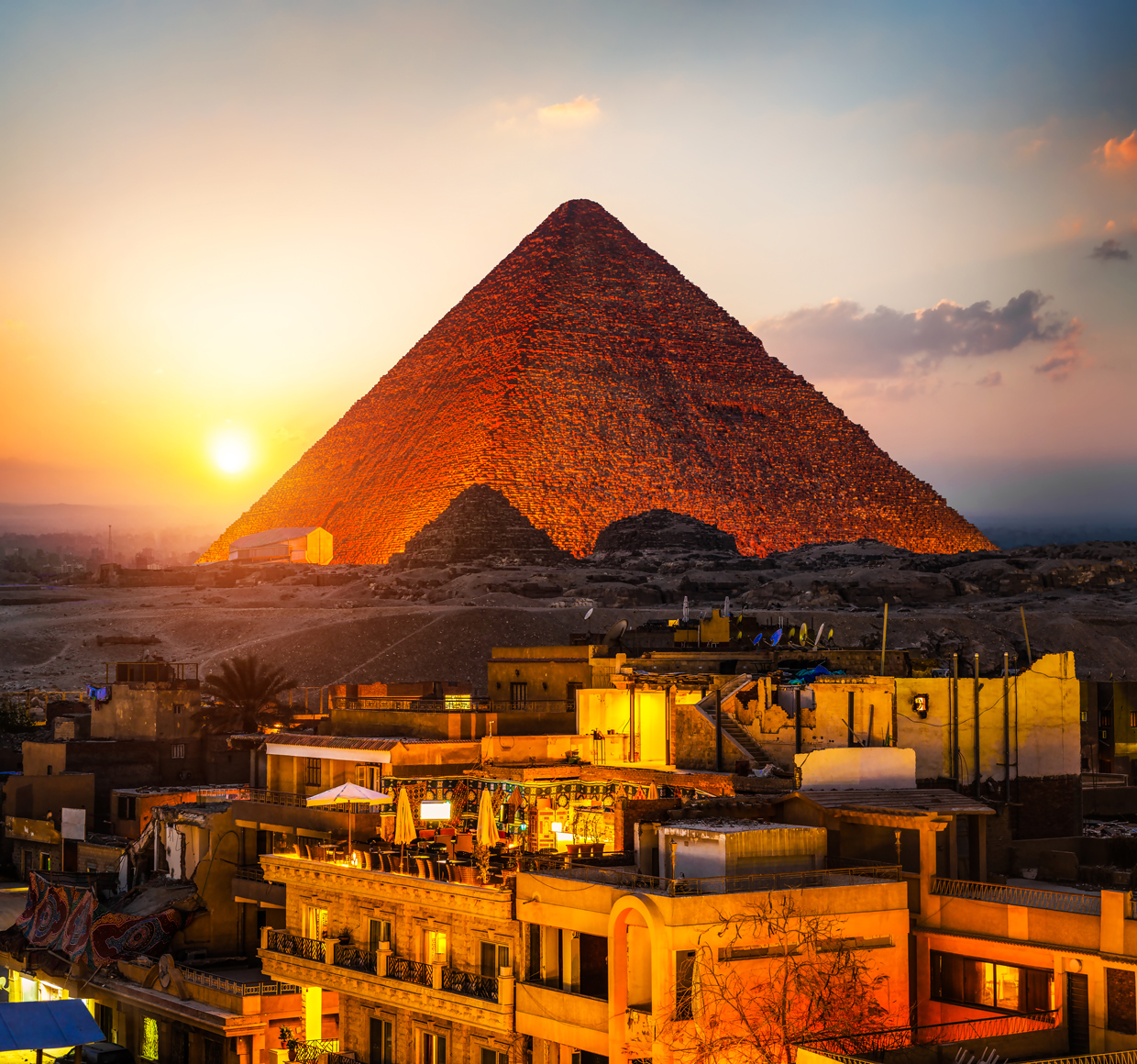
Pyramid of Giza, Egypt
Best Time to Visit
The best seasons for visiting the Great Pyramid of Giza is during autumn and winter, or from October to early April. At these times of the year, the weather is more pleasant, but the site is more crowded.
As for the most suitable time of the day, you can get a less crowded visit in the early hours of the day. But there is also the possibility of getting some haze, which may bother you if you want to take pictures.
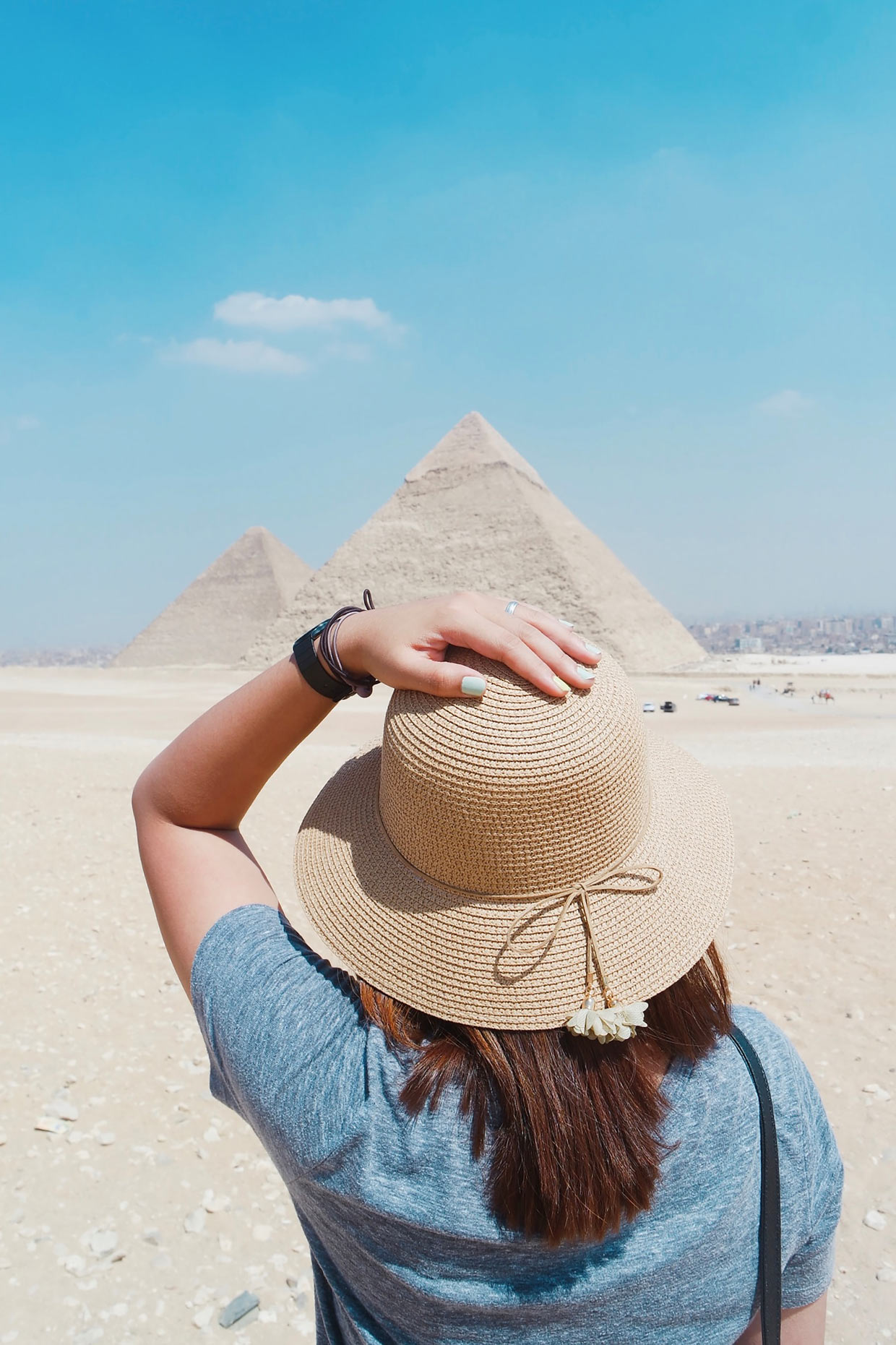
Pyramid of Giza in Egypt
What to Wear
When visiting the Great Pyramid of Giza, you can wear what you want, just like the rest of their tourist sites. But what you want to wear is something that will prevent the sun from burning your skin. Wear something to protect your head from the sun and your body and eyes from the sand. And chose appropriate shoes as you will have to walk a lot, perhaps even in sand.
Great Pyramid of Giza Traveler Information
So far, you know how to get to the complex and what to see. What remains is the exact location and opening hours as well as the entrance fee. Keep in mind that the entrance fee to the different sections varies. You will have to pay additional fees for each section.
[wpsm_colortable color=”main-color”]
| Location | |
|---|---|
| Address | Al Haram, Nazlet El-Semman, Al Giza Desert, Giza Governorate, Egypt (Get Direction) |
| Opening Hours | |
| Every Day | 06:00 – 17:00 |
| Prices | |
| The Complex | 200 EGP |
| The Great Pyramid | 400 EGP |
| The other Pyramids | 100 EGP for each |
| Solar Boat Museum | 100 EGP |
[/wpsm_colortable]
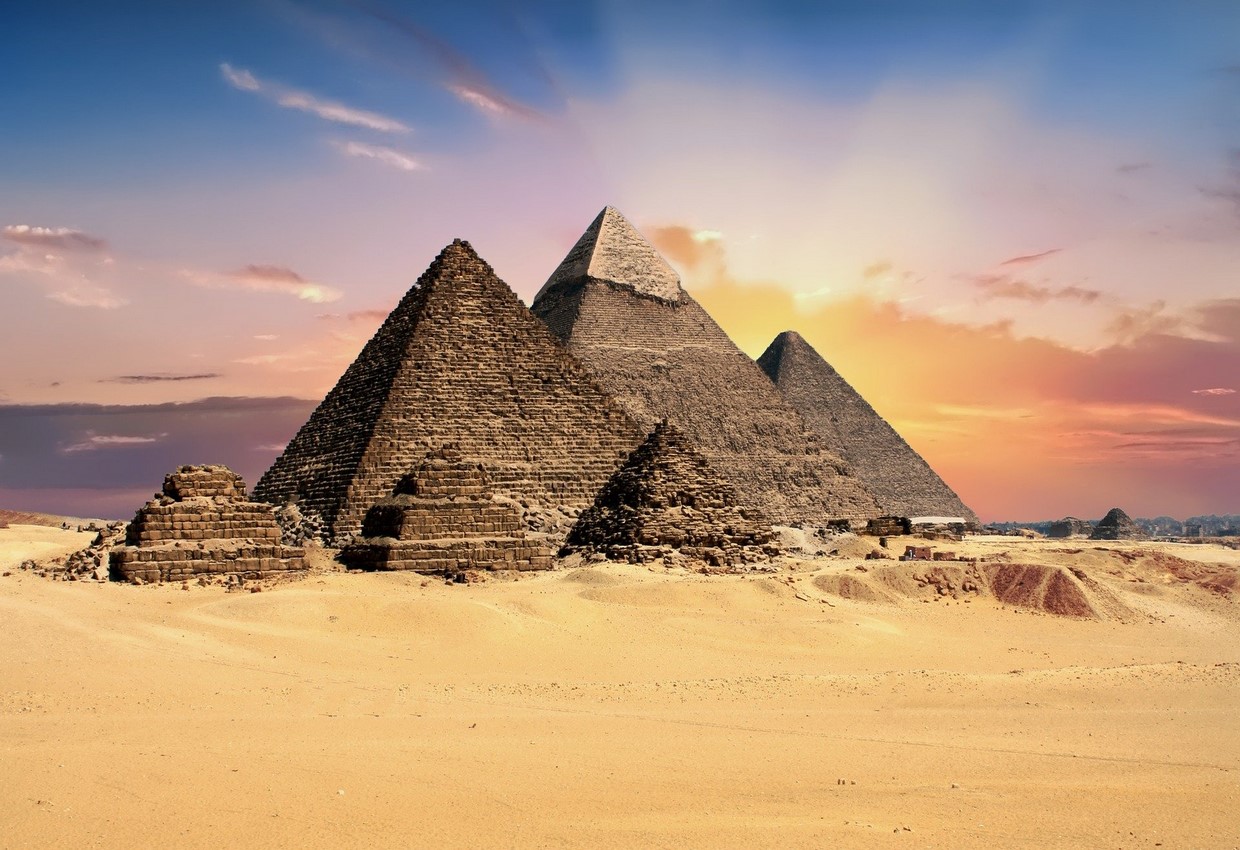
Pyramid of Giza
Tips on Exploring the Complex and the Great Pyramid of Giza
- You can take pictures while outside the Pyramids, but cameras and phones cannot be taken inside the monuments.
- You will not be permitted to climb the Pyramids.
- The top highlight of the complex is the Great Pyramid of Giza itself. If your time is limited, just head for this structure; if you have time, explore all the areas. If time is no issue, you can explore the surrounding areas other than the Pyramids and temples.
- It is a great idea to visit the Solar Boat Museum before going to the Great Pyramid of Giza.
- There are two entrances to the complex, one near the Great Pyramid, another near the Sphinx.
- There are only two toilets in the complex, and they are close to each of the entrances.
- If you feel hungry, the only place to eat in the complex is near the Sphinx and the valley temple.
Ephesus – The Turkey’s Most Important Ancient City
Ephesus needs a full day trip to be discovered. Of course, just a day is not enough for an ancient city with thousands of years of history but imagine a day out with an early flight to Ephesus, the ancient city with many places to see and a great opportunity to dive into the history and old ages. Who doesn’t like drinking a cup of tea in Turkey and one of its famous cities? What about the world’s greatest outdoor museums?
And yes! Ephesus is worth visiting. I don’t say that! Check out the reviews and read more about its features.
History
Ancient cities have strong backgrounds, and only a good approach to them can reveal those old places’ true identity. Ephesus is one of those many ancient cities which goes back to the tenth century BC. According to the Book of Revelation, one of the Seven Churches of Asia was Ephesus, and it carries a lot of religious stories about this place.
“The Golden Centuries” for Ephesus refers to when the capital city of Roman Provincial Administrations and the permanent headquarters was Ephesus. It is said that easy access to the sea has played a significant role during this period of time. Many determining things have happened there, and many rulers have sat on the throne in Ephesus. The result is a city full of archeological places and ruins that date back to the first civilizations.
Architecture
The style of monumental buildings in Ephesus seems like another world you can’t remember having seen before. The famous buildings belong to many eras, and in each building, signs refer to a specific period of time in History. The Library of Celsus is one of the many architectural wonders of the Ephesus. It is just like a two-storeyed building when you look at it from the outside and was once known as the third biggest library of the ancient world. This type of architecture can’t be found everywhere in the world.
Another excellent example of this ancient type of architecture is Ephesus’ Grand Theatre. what do you think about 25000 spectators all in an ancient place shouting, singing, or applauding all together? This moment you are imagining has happened in the Ephesus’ Grand Theatre thousands of times. Of course, describing Ephesus’ architecture can not clarify everything about it, but as you look at the big buildings in Ephesus, you will understand that the description can’t give you the feeling of being in front of an ancient, Greek-style building. Shh! Listen carefully, dive into history; a man is yelling in a fight with an animal. Where? There in the Grand Theatre.
The Old Ephesus
The old Ephesus is all about this city’s old character when the Romans and Greeks had many things to do. Considering the importance of religion and supernatural beliefs in those ages, many superstitions and stories have been said in this land. These stories can show us a bit of the old Ephesus and the most important issues of that period of time.
It is said that the house of the Virgin Mary and Basilica of Saint John are in Ephesus. These highlighted parts of the city show that the old Ephesus was a city of religions in the past. The ruins and the monuments tell us about the old Ephesus’ political identity and its clear role in the country. Now the New Ephesus attracts those who are still looking for the Old Ephesus. Visitors have said they have found it, the Old Ephesus in the New Ephesus!
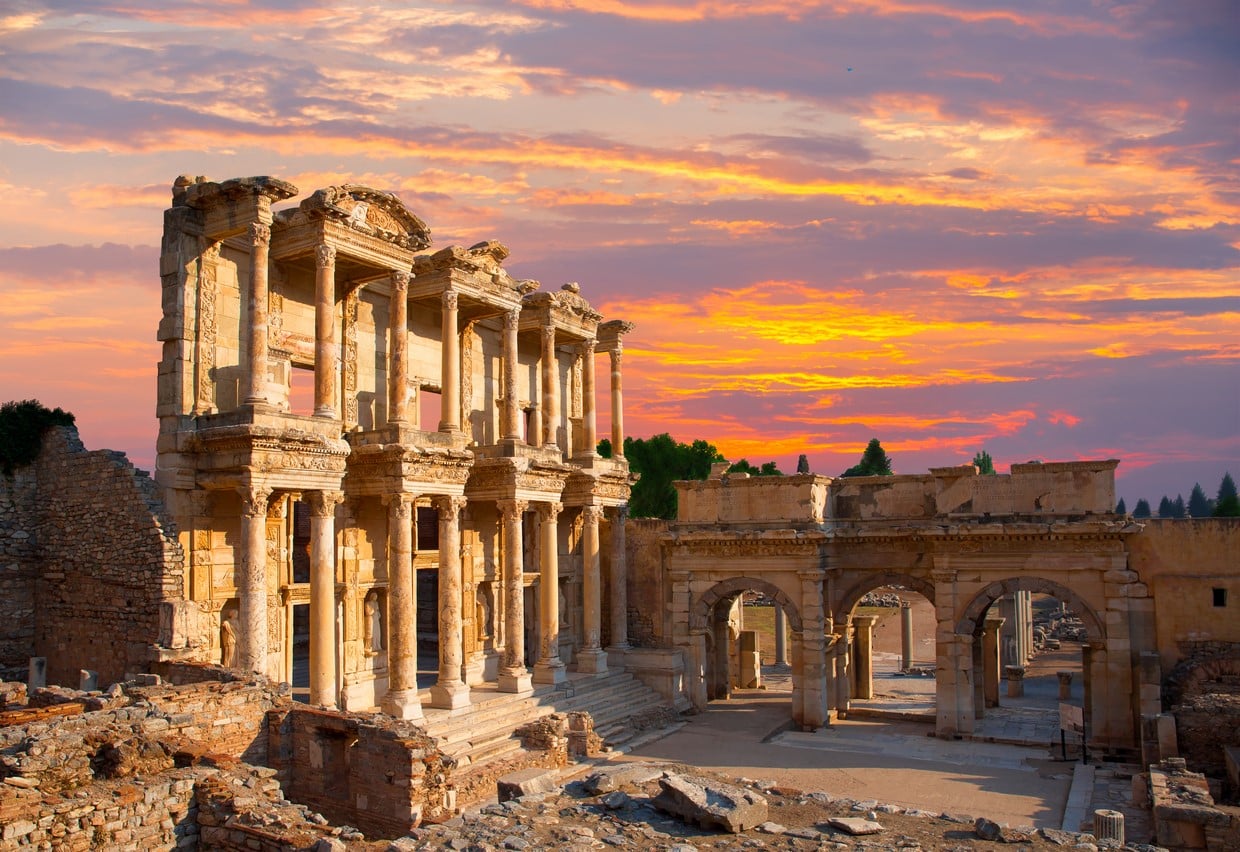
Ephesus, Turkey
Where to go in Ephesus
The most popular things to do in Ephesus are visiting sights and enjoying a calm stay in the city. So your To-Do list in Ephesus is mostly about visiting places. Here we made a list of the places to visit in Ephesus:
1.A house with a religious history
The House of Virgin Mary is a religious site near Ephesus’s ancient ruins and is known as a pilgrimage destination for many people. It is believed that The House of Virgin Mary was the place where the Mother of Jesus lived, and according to the story, she passed away in that house after Saint John took her there. Apart from the building and the site, locals’ religious stories can be another cool part of Ephesus. Asking believers about their feeling at the moment of the first impression would be a good idea. Thirty minutes can be enough for visiting the house of the Virgin Mary.
2. They used to read
Vitruoya was a Roman architect who designed the Library of Celsus in memory of Celsis Polemeanus, a Roman senator and Governor in the old ages. This library, which housed between 12,000 to 15,000 manuscripts, scrolls, and books, used to be super famous in the world. The Library of Celsus is big and remarkable when it comes to design. Building and well-designing a great building as a library in that age is a surprising fact that shows the importance of science and knowledge among the rulers and the people of ancient ages. They used to read! And that’s why after hundreds of years, many people tend to visit the ruins of their civilizations.
3. The Performance show
The Greek style of adventure is a little bit different. We are talking about the time people gathered in the Grand Theater to watch a performance by an artist or the fight of men and animals over almost nothing! The most important place to meet others and participate in ancient times’ social life is now the biggest and the most wonderful structure in Ephesus. The audience was on the seats facing the fight place or perform place. The seats are shaped in a semi-circular way, and around 24,000 people can be there simultaneously. This fact is that every day of old Ephesus’ day to day life could be a good day with daylong orchestras. Get there and try to picture yourself as a real audience, think of the performance and the atmosphere. That’s the souvenir of Ephesus: an everlasting memory of ancient people!
4. Signs of being in Turkey
Turkey is a leading country in the world for shopping, and as there are many products available there, you may miss the best things to buy in Turkey. Fortunately, Ephesus is a good place to find special things and materials. Leather, carpet, jewelry, and ceramics are the best things you find there. The quality is beyond the standards, and the bazaar’s atmosphere is a reward for the visitors. The carpets’ pattern, the smell of leather, shining pieces of jewelry, and colorful ceramics are all Ephesus’ golden parts. Make sure you will have a piece of these experiences.
5. Not a completed house but a perfect one
Archeologists have found a place in turkey, which was a great archeological step forward for the country. Terrace Houses of Ephesus are some ancient houses with damaged constructions. They discovered this site on a hill over the famous library of Ephesus. Those newfound houses used to be usable from one century BC to 7 centuries AD. Terrace Houses include a majestic piece of art that is the main reason for its fame and popularity. Beautiful mosaics and frescos in the decoration of those houses are the first things you can find interesting and artistic. The name of Terrace houses comes from the fact that most houses are built upon each other.
6. The destination is history!
Deep inside the city Ephesus, there is an attraction in which discovery is possible. That is the famous Marble Street in Ephesus. The most favorite part of the city on this street is the many ruins and structures around it.
This area used to be a residential area, and there was some basic role not allowing all to come over. Chariots didn’t have permission to get in. Fortunately, these days visiting this brilliant attraction is easily possible.
7. House of wonders
Many years ago, when people wanted to leave something for their future, the Temple of Artemis was built. It was one of the seven wonders of the world and still is one of them, but unfortunately, the only part of this magical place that is available is a pillar, and that breathtaking monument has gone. People believed that the Temple of Artemis is the most beautiful building globally, and because of that, we can see its name on the list of the world’s seven wonders. These days the Temple of Artemis is an inspiring destination for many people who want to discover history.
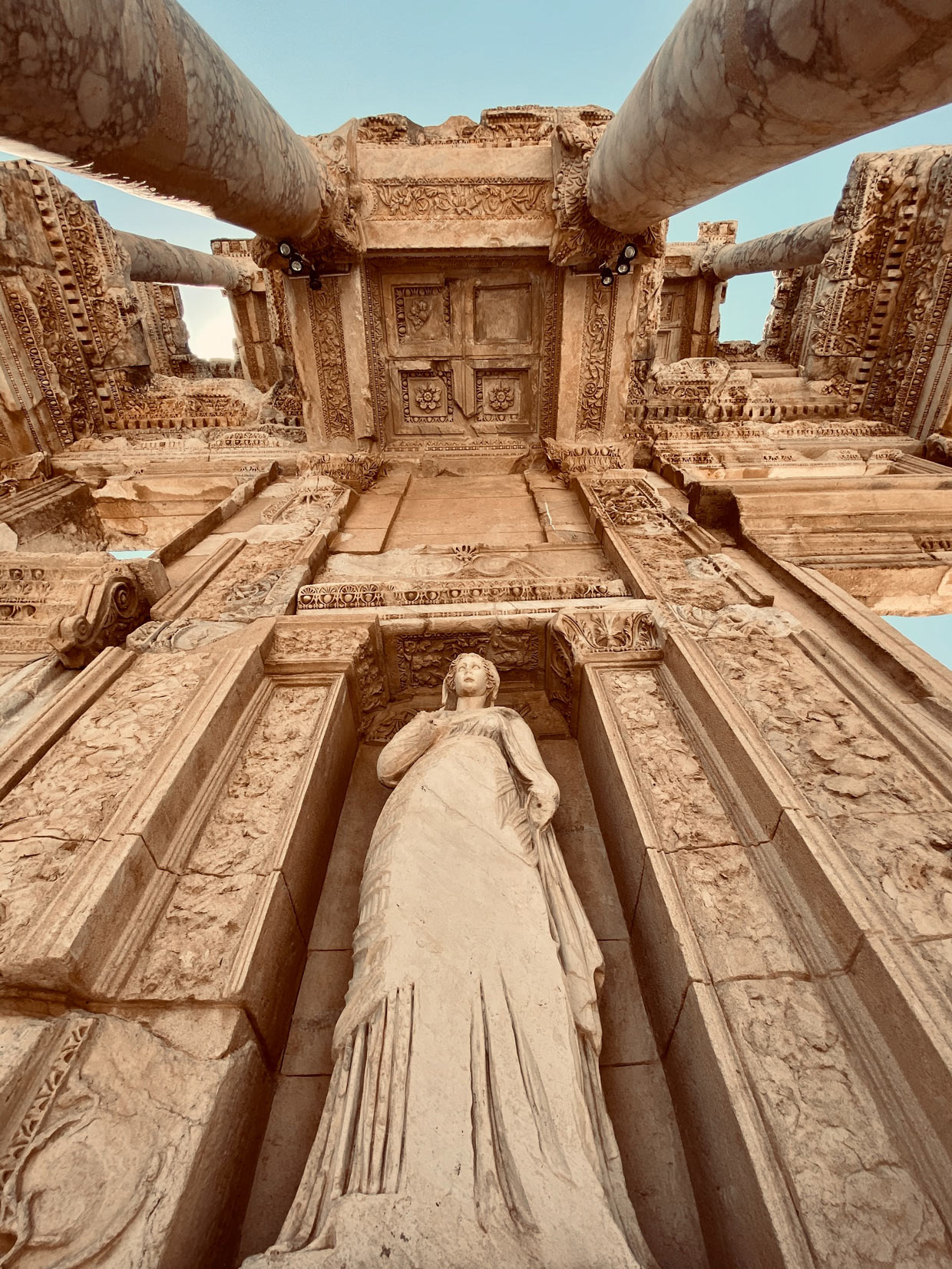
Ephesus, Izmir, Turkey
Best time to visit Ephesus
The best time to visit Ephesus is NOW! Why should you postpone a tremendous visit to another time? But if you care about the best time other tourists tend to go there, you must know that the summertime is the best time. This is because getting around is very easy during the summer and we can call it “festival time.” The average temperature is about 10C/40F. Heavy rain and freezing weather can’t be found there, but the rainy days are October and April. If you want to pack your stuff in January and February, consider your warm clothes not to get cold in the coldest time of Ephesus. April, May, October, and November are the best time for traveling to Ephesus concerning weather and climate.
Getting around in Ephesus
As long as you are traveling in Turkey, there isn’t any reason to be worried about getting around in the city. Ephesus is not an exception, and a variety of public services offer you the best options. Generally speaking, traveling to, from, and around all the sites, including beaches, Archeological sites, or towns, is super easy with minibusses and trains. Taxi services are very convenient, and the city has made a good transportation system for the residents and tourists.
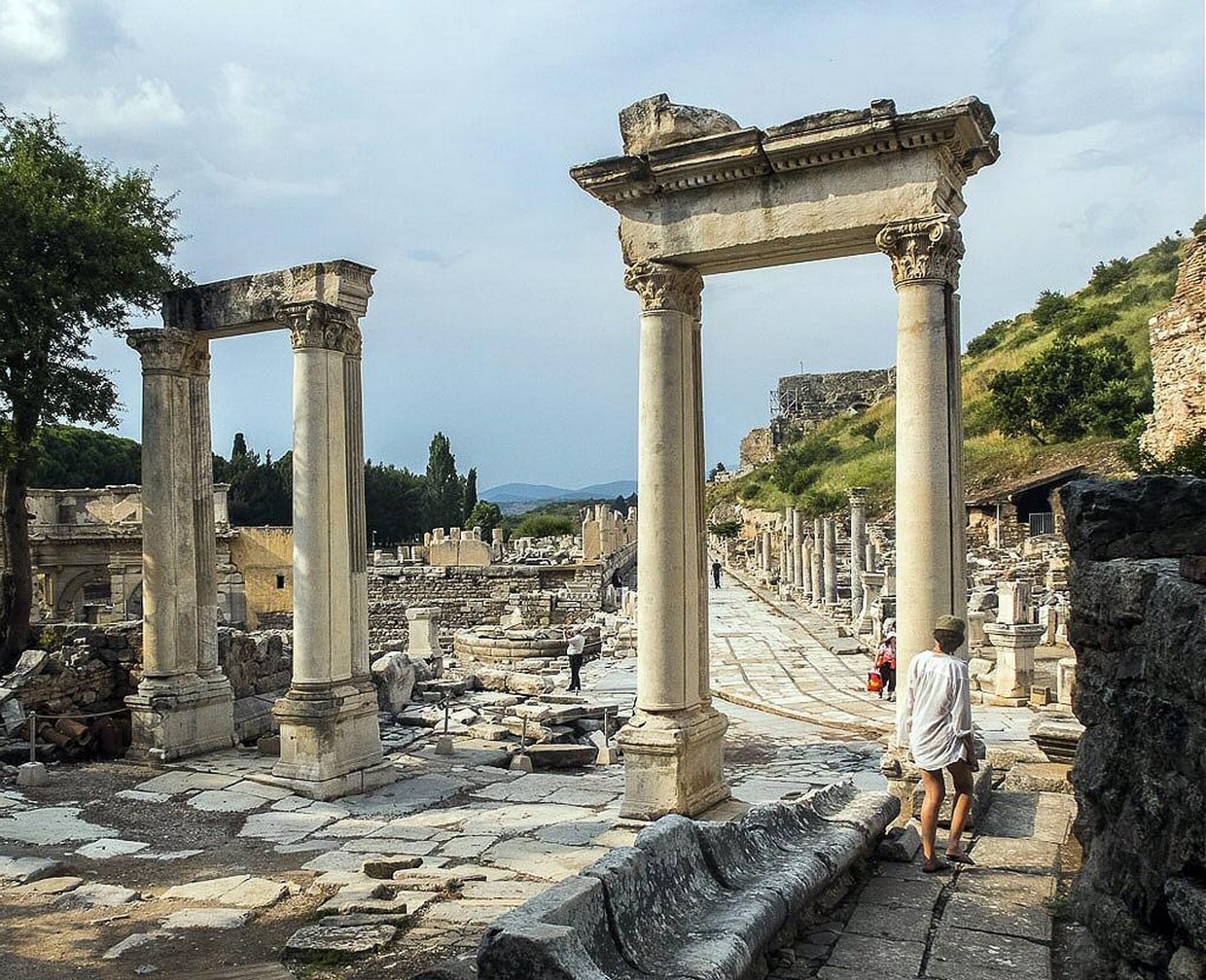
Ephesus, Izmir, Turkey
Costs in Ephesus
Costs in Ephesus are almost the same as the costs in other cities in Turkey. Previous travelers reported an average amount of money you may need during your stay in Ephesus, and that is about 10 Dollars a day, but obviously, many factors can change this number. Don’t count on the numbers; you’d better plan for yourself; however, just to have an idea, a one-week stay in Ephesus would cost about TRY550 and more. Check the price of the hotel you are going to stay in before you go there. By the way, the currency is Lira. Use your calculator not to get confused.
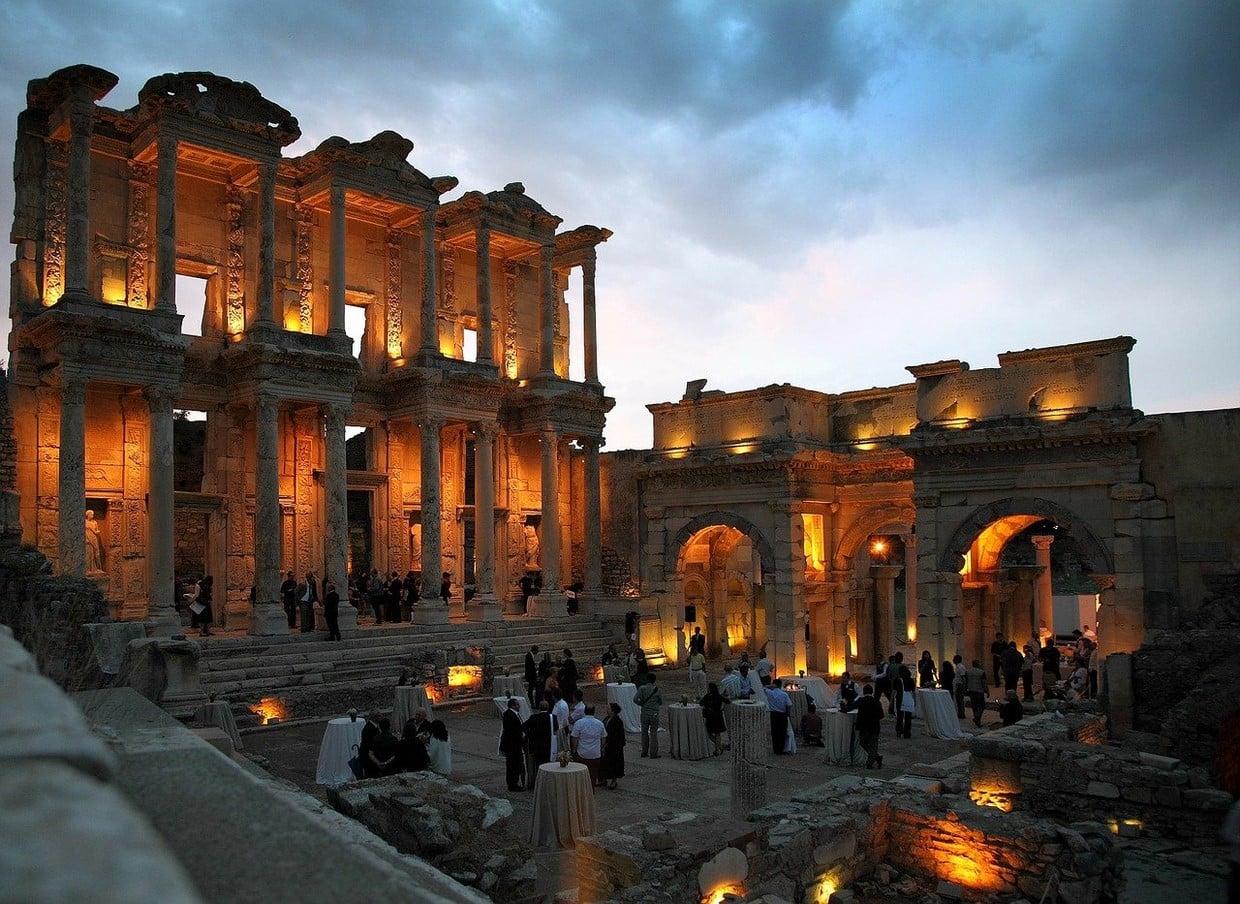
Ephesus, Turkey
Accommodation
Turkey has tried to prove itself with its rich culture and facilities. Tourism and hosting are not inconsiderable for Turkey’s people, and due to that background, accommodation is at a good level compared to other countries. Ephesus is also like other parts of Turkey, and a visitor won’t face any problem with accommodation. The reported average price for one person to stay in a hotel in Ephesus is about TRY35 to TRY 80. Hotels are varied, and you can find a good one based on your budget.
What to pack for Ephesus
Nothing special would be on the list, but there are some tricky things you might know about clothes and wearing style. For men, a simple style would be appropriate and not a big deal, but for women, there are some places where the wearing style is a bit of an issue. These places are sensitive, and the locals expect you to cover your body and appear there properly. Wearing normal trousers and carrying a scarf would be a good idea when the sun is doing its job, and you want to protect yourself and your skin.
Varanasi – Oldest Inhabited City of India
Varanasi is one of India‘s oldest and perhaps most sacred Hindu cities that was formerly known as Benares, Banaras, or Kashi city. This city has been inhabited for centuries Before Common Era as a cultural and religious center, attracting countless pilgrims every day. The Hindus believe that if you die in Varanasi, you will be liberated from the cycle of reincarnation and reach Nirvana.
Although the city is mostly known as a holy place next to the River Ganga, it also has several temples, museums, and fun places. It is a pilgrimage place, finding peace, getting a massage, or joining in their cultural events and festivals.
History of Varanasi
Varanasi’s city is believed to be the cradle of the Buddhist religion when Buddha founded this faith in 528 BCE. Before this time, it is believed that the city had already existed for two thousand years Before Common Era. It was, of course, known as Kashi city as part of the Kashi Kingdom.
This very ancient city is known to be the oldest inhabited city since there are artifacts that date back from several eras. This indicates that this place has always been a hub of art and ancient temples, and mythology.
Muslim Era of Varanasi
When Islam reached India in the 12th century, the city has reduced religion’s population and diversity. Religious conflicts and rivalry have always existed in India, but this time, the temples of other religions were being destroyed for nearly three hundred years. However, these harsh times did not mean the end of diversity as this sacred place remained a destination for pilgrimage.
One of the things that kept the city alive was the commercial aspect and the importance of silk, perfume, and ivory products, among other things. Besides trade, a helpful hand came by the founding of Sikhism. Later on, in the 16th century, the Mughal Emperor Akbar further helped revive this city by building two important temples.
Modern Day Varanasi
These two temples of Shiva and Vishnu, built by the Mughal Emperor, played their part until the 18th century Maratha era. The city continued to develop as the country was modernized and later on gained independence. Other than the events that took place, the name of this ancient and holy place comes from the two Ganges named Varuna and Assi.
Things to Do in Varanasi
Before You Go Exploring…
It would help if you were careful where you are going since there are always touts and scams around town.
Before introducing any of the sites you can visit, you need to know about some popular scams and how to avoid them! You will meet the first group of scammers as you get into the city. They are the Rickshaw or taxi drivers that will offer to take you to a hotel. They usually take people to a random hotel to take a commission from that hotel, even if you have booked your own hotel room.
To avoid this scam, you need to either insist on your instructions to the driver or firmly ask them to take you to a specific destination. If they refuse, you must either threaten them not to pay or get off. Alternatively, you can look for other means of transportation or call your hotel and ask them to call a taxi for you.
The other bunch of touts actually offer tours or good viewpoints, or rather, teach you about Varanasi’s culture and history and, in the end, ask for large donations and payments. The way to avoid these people is to reject their help at the start firmly. They may also make up other stories about how they or someone they know needs money, which is probably another scam.
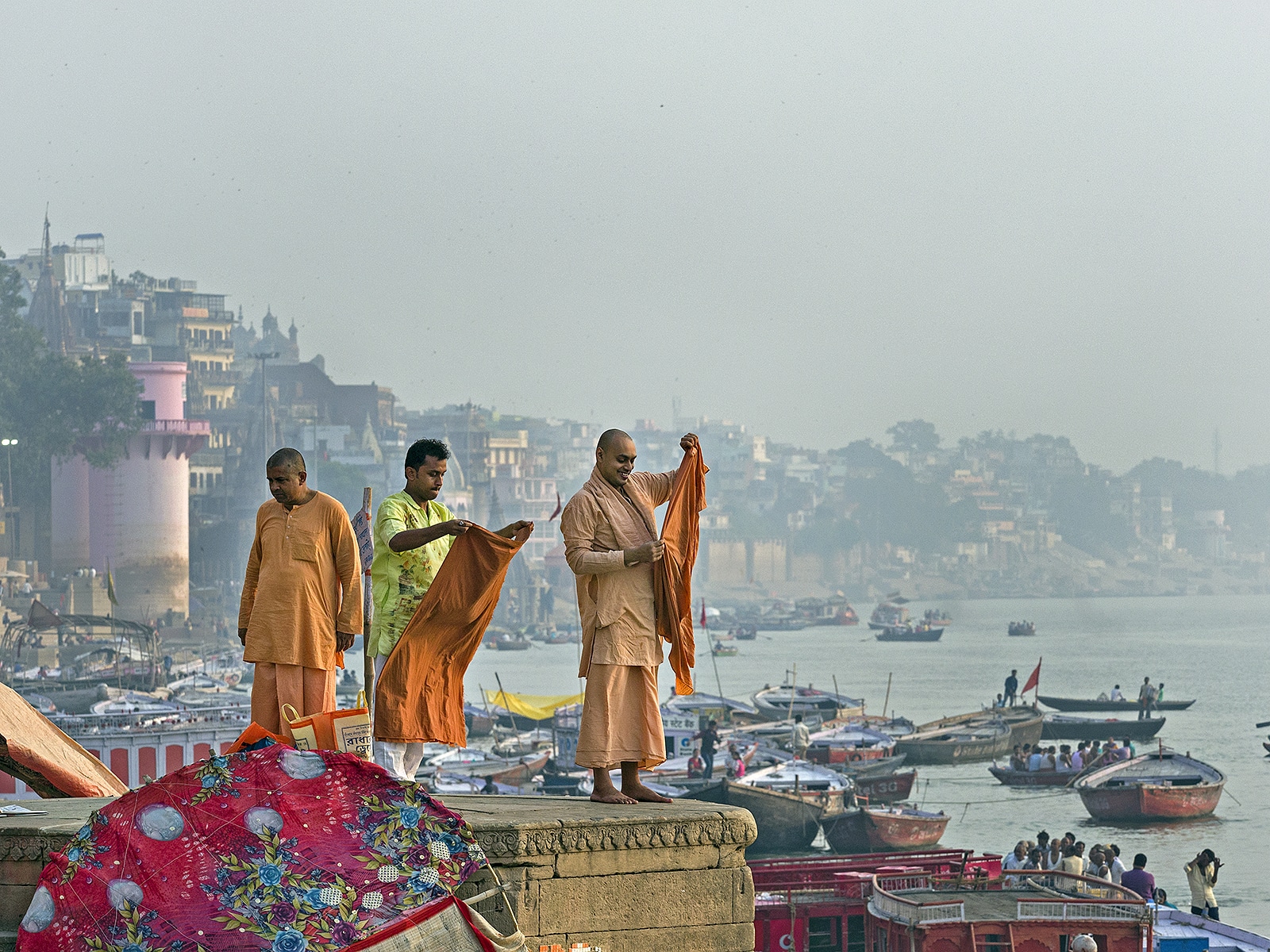
Varanasi, India
Visit the Ancient Places of Worship in Varanasi
Several important mosques and temples are worth a visit while you are in the area. You can see some elements of their architecture and learn a little about their religion and beliefs. Some of these important sites that you do not want to miss are as follows:
Durga Temple
The Durga Temple, also known as Monkey Temple because of the large population of monkeys, is a Hindu temple with north Indian architecture. While you are there, you can pay attention to the symbols of their religion. You can explore most of this place, but the inner sanctums and sacred areas are off-limits.
Vishwanath Temple
Vishwanath temple, also called the Golden Temple, was built in 1780 by Queen Ahilyabai Holkar of Indore. This temple has been destroyed and rebuilt several times in history and was moved a little from its original place.
Alamgir Mosque
Alamgir Mosque is one of the several mosques of Varanasi that is worth the visit for two reasons. It is a beautiful 17th-century mosque built upon a Hindu temple’s ruins, meaning it has a rich history. And Two, because it offers a great view over the Panchganga Ghat as the mosque is built on the high ground.
Sarnath
Sarnath is not in Varanasi; it is actually 10 kilometers to the northeast of this city. This sacred site is where Buddha taught Dharma for the first time. Besides a museum in this place and its historical significance, it is also a very peaceful area.
Varanasi, India
More Attractions
Being one of the oldest continually inhabited cities globally is not just because of its religious value. As mentioned earlier, Varanasi was, and still is, a trade and production hub. Other than trade and religion, knowledge is also a factor in keeping the city alive. Here are three more not-so-religious sites in the city that you should consider visiting.
Banaras Hindu University
Known as the Oxford of the east, the Banaras Hindu University (BHU) is a very famous educational center in Varanasi with a capacity of nearly 30,000 students. While it is always a good idea to apply and study here, some things are worth seeing as a tourist. One is the Bharat Kala Bhavan, a museum inside the university, and two, Tulasi Manas and the Vishvanatha, which are two modern temples inside the campus of BHU.
Ramnagar Fort
Ramnagar Fort in Ramnagar is a sandstone, Mughal style fort, built in the mid-18th century and on Ganga River’s eastern bank. The fort is not very far from the Banaras Hindu University, has a beautiful appearance, and a great view over the river. If you have the time, try getting a boat ride to the fort and explore the area.
Jantar Mantar Observatory
Jantar Mantar is one of the five observatories built by Maharaja Jai Singh II in 18th century India. He was an astronomer himself and was very much interested in this science; therefore, he sent scholars to other countries to gather knowledge and bring it back to construct the observatory. Jantar Mantar was built above and near the Manmandir and Dasaswamedh Ghats and still remains a highlight.
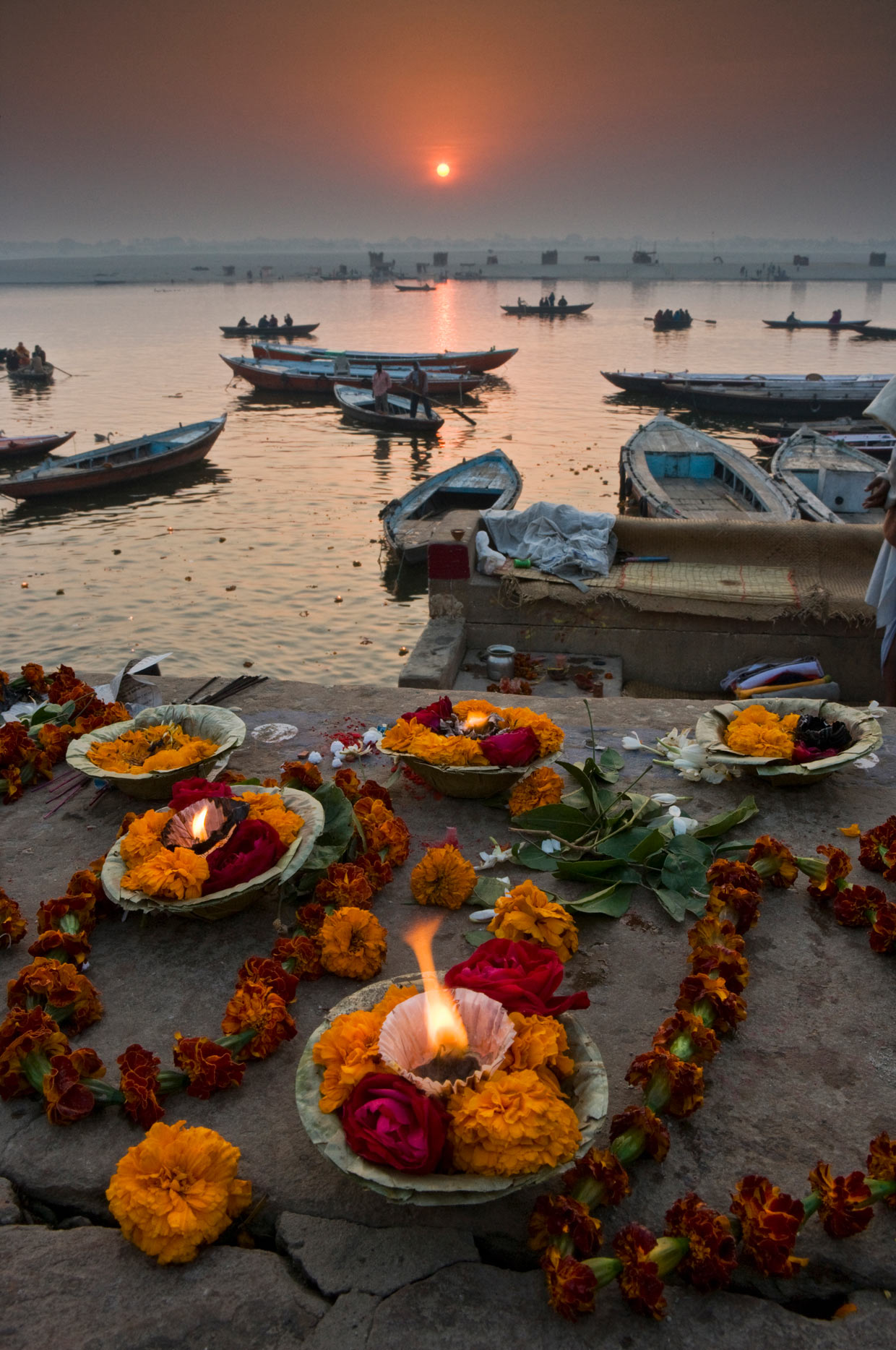
Varanasi, India
The Famous Ghats of Varanasi
Now is the time to talk about the number one attraction of Hindus’ religious and cultural center. The Hindu belief is that the waters of this river are sacred, and if you die near them, you will be free of the cycle of life and reach peace. As for the Ghats near the riverbank, they are the stone steps leading to the waters.
People come to these places to perform rituals and even clean themselves of their sins as they bathe in the holy water. There are more than 84 Ghats in Varanasi, where you see the locals, worshipers, and tourists. You can also see pyres cremating the dead and pouring their ashes in the river near some of them.
Some of these areas are centuries old, for example, the Dashashwamedh Ghat is also close to the Vishwanath Temple. Near the rest of the Ghats, you can see more temples, old or recent, as well as palaces and hotels that used to be palaces belonging to kings. The story behind these royal buildings is that India’s former kings who believed in Hinduism also came to Varanasi in their final days to expect their deaths and everlasting peace.
What to Do Near the Ghats and In the River Ganga
The Ghats are sacred places where you can find peace or take some amazing pictures. It is a great idea to go walking at the river banks and visit as many stone steps as possible. If you want to participate in some of their rituals, that would also be a good idea while avoiding touts.
What you do not want to do is to bathe in the waters, as tempting they may seem. This is mostly because of the pollution in the river and the chemicals dumped in the river by factories. If that does not disturb you, wait till you see a floating corpse or body part! Now don’t be alarmed, as the chances of seeing such things are low, but they are possible. After all, people come here to spend their last days before death…
Alternatively, if you want to have a closer look from inside the waters, you can hire a boat. In that case, it is very much recommended to have a good camera with you to take some amazing pictures of the pilgrims and all the lovely buildings near the riverbanks.
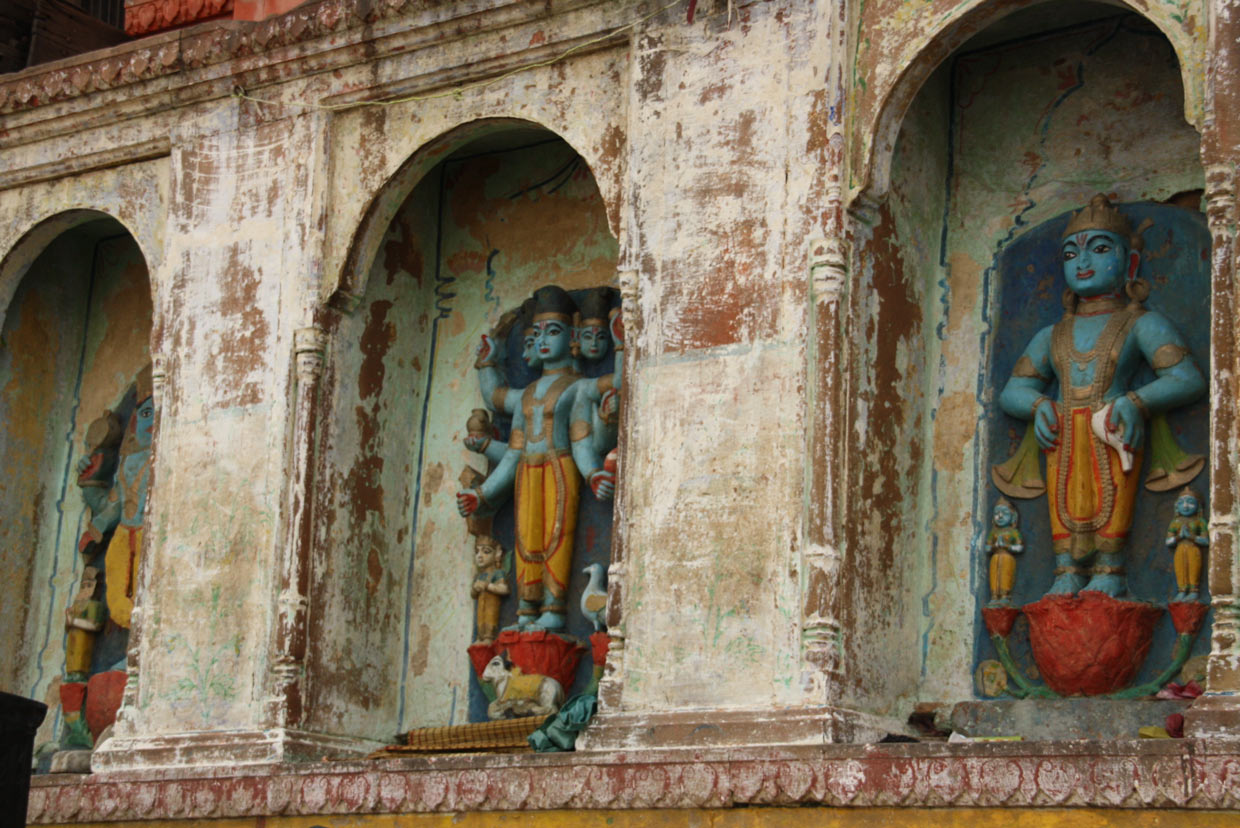
Varanasi, India
Varanasi Festivals
Finally, one of the best things you can do in Varanasi is to travel to this ancient city during a festival or national event.
Deepavali
One of the most famous festivals and perhaps the most recommendable one is Deepavali or Dev Diwali. This festival takes place in October or November. It is believed that the gods come from the heavens and bathe in the holy waters of River Ganga. The Ghats are decorated, and celebrations occur, making them an exciting place to be during this event.
Chhath Pooja
This festival also occurs in October or November and includes bathing in the river and drinking the holy water. Again, it is mostly advised not to join in on this part but watching the believers while they do their rituals and give offerings is fun. The best part is drinking Aragh (an alcoholic drink) as the sun sets or rises each day of the festival.
Maha Shivratri
This festival, dedicated to Lord Shiva, gets rather crowded as the pilgrims flock to Varanasi. The streets and the temples will be filled with worshipers; therefore, getting around may get a little difficult.
On a more general note, during the Hindu festivals, you will get a lot of traditional music and dances as people celebrate and join in the festivities. If nothing else, visiting this city during such times is the best way of getting familiar with the culture and mythology of the Hindus.
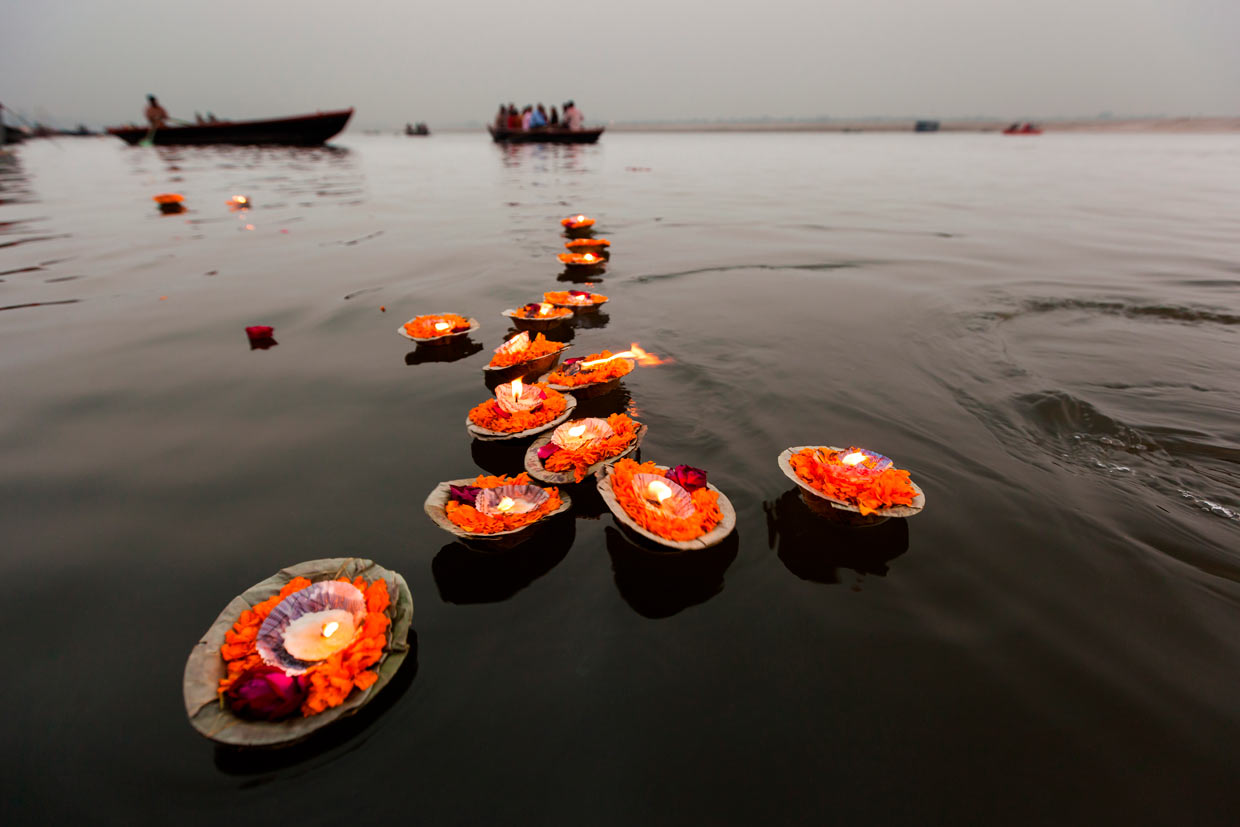
Varanasi, India
Varanasi Travel Guide
Watching out for scams and researching Hindu theology and mythology is always a good plan before visiting as this city needs prior knowledge. It is also better to look for the appropriate time to visit and how to get around.
Best Time to Visit
The weather is mostly hot, especially during spring and summer, so if heat bothers you, it would be wise to make your plans for cooler months. The best time is during autumn and winter, preferably during October when festivals take place. It would help if you also kept in mind to bring appropriate clothing during the colder months as the nights get a little cold.
Getting Around
As soon as you get to the place you are staying, it would be wise to ask how to get around as most of the alleys and streets are narrow. There are also some limitations which will force you to walk in several sections of the city. In any case, the first thing that you must do is to acquire a map of Varanasi.
By Foot
There are several walking tours in the city, which is because of the mentioned transportation limitations. Even if you are not on a walking tour, you should know that you can only go near the Ghats and some sites on foot.
This is the part where you really appreciate having a map as some scammers may steal street signs to offer directions for a price. But do not be alarmed, most shops will be happy to give you directions as the locals are very hospitable and friendly.
By Bicycles
If you do not like the idea of walking all the time, you should look for bicycle rentals. If you cannot see or find them, ask your hotel for instructions.
By Taxi
Instead of asking your hotel for bike instructions, you can ask for information about taxies or car rentals. To avoid touts, it is always better to ask the hotel reception to call a taxi for you. If not, be ready to negotiate a price while moving around.
Notes
- If you have never been to Varanasi or India, the best way to visit is to take a tour and have a guide with you for the first time.
- You will not have difficulty communicating with the locals, as most of them know English.
- Taking pictures of this lovely and memorable experience is advisable, but taking pictures of people, especially when performing rituals, will be seen as offensive.
- If you are going to a crowded part of town, do not bring a lot of cash. The city is mostly safe, but there is a chance to meet scammers, touts, and other annoyances.
- Varanasi is more about culture and religion rather than its heritage sites, despite being very ancient. The monuments are great places to visit, but try to enjoy their culture more than the sites.
Cappadocia – Beautiful Heaven in Anatolia
Cappadocia is a historical region in Central Anatolia, a province in Turkey. Since the late 300s BCE, the name Cappadocia came to be restricted to the inland province. The name, traditionally used in history, is used as an international tourism concept to define a region of exceptional natural wonders, particularly characterized by fairy chimneys and a unique historical and cultural heritage that is most prominent in Cappadocia, turkey.
Sedimentary rocks formed in lakes and streams and ignimbrite deposits that erupted from ancient volcanoes and Cappadocia’s rocks near Göreme eroded into hundreds of spectacular pillars and minaret-like forms. People of the villages at the heart of the Cappadocia Region carved out houses, churches, and monasteries from volcanic deposits’ soft rocks. Göreme became a monastic center in 300–1200 AD, and its open Air Museum complex in Cappadocia contains more than 30 carved-from-rock churches and chapels.
Best Time To Visit Cappadocia
Due to its inland location and high altitude, Cappadocia has a continental climate, with hot dry summers and cold snowy winters. Rainfall is sparse, and the region is largely semi-arid. Cappadocia’s beauty is that while it is like a fairytale location in summer, it is even more beautiful in the winter. When it snows in Cappadocia, Snowcaps cover rock formations and paint the valleys white, which is truly a mesmerizing sight.
The best times to visit Cappadocia would be April to October, which is the most favorable time for the hot air balloons, with warm nights, clear skies, and cool air. If you visit from November to February, the weather is slightly more turbulent, but you have the chance to fly over snow, which would be a spectacular experience.
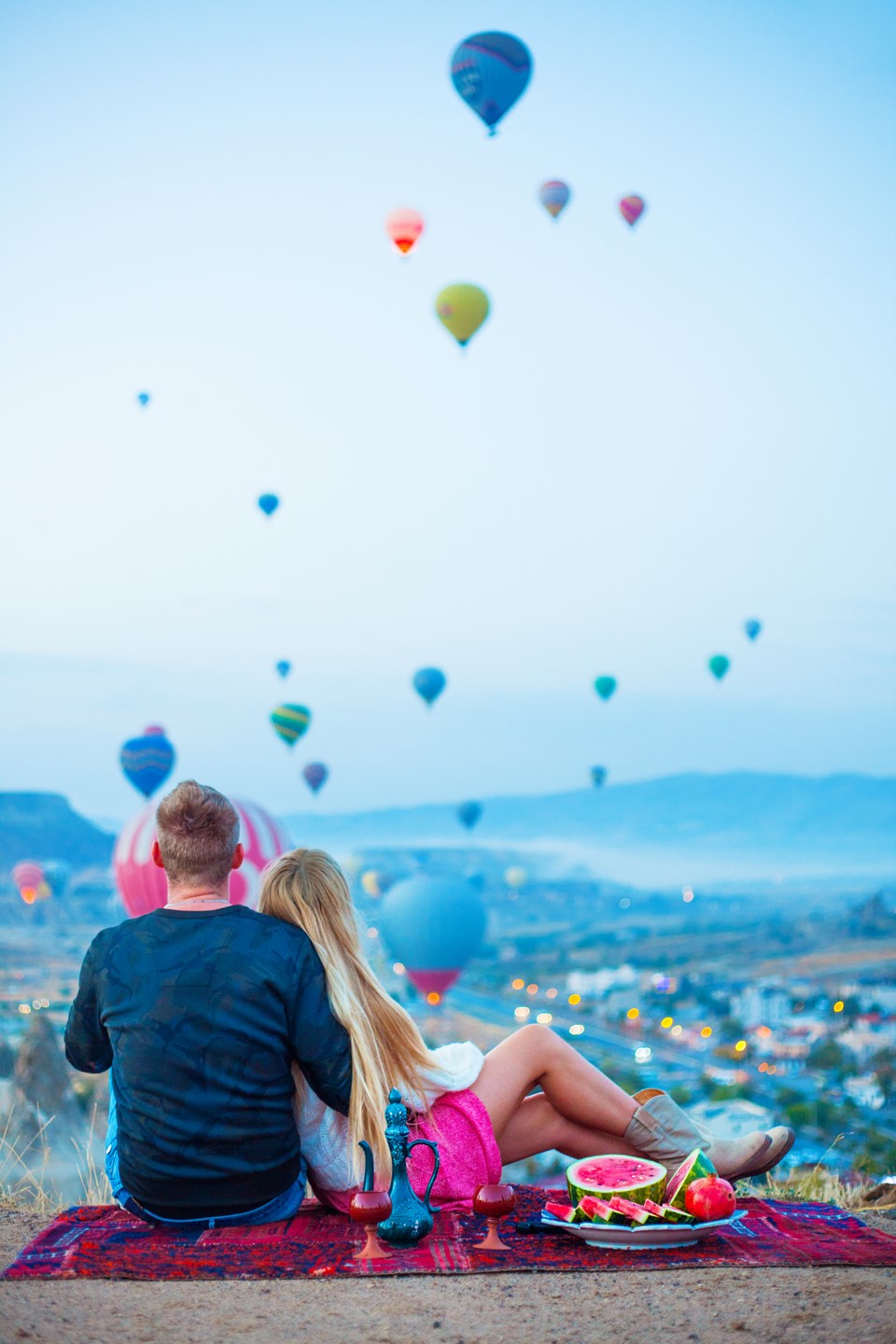
Cappadocia, Turkey
How To Get To Cappadocia
Cappadocia isn’t a town as many people think, but it is an entire region. Within this region are towns such as Goreme (the most popular tourist spot), Uchisar, Urgup, and Ortahisar. Two airports serve Cappadocia; Kayseri Airport is the main airport and takes just over an hour to reach Goreme Town and Nevsehir Kapadokya Airport, closer to Goreme, about 20-minutes. The big difference here is that Kayseri is a bigger airport, with more flight options and often has cheaper flights. From Kayseri or Nevsehir, you need to pre-book your shuttle, they will pick you up from your hotel, or they will be waiting with a sign with your name on it at the airport, and you can have a private car transfer you from the airport to your hotel.
Transportation In Cappadocia
One of the best ways to get around Cappadocia while in turkey is to hire a driver that will allow you to create a customized itinerary. That way you can visit all the spots you are interested in. To hire a private car with a driver/guide, you can book online, or if you are a bigger group, it can be cheaper to hire a van in Cappadocia, which also comes with a driver.
You can rent a mountain bike or a scooter/moped if you want to explore some attractions a bit further away or venture over to Uchisar. Renting an ATV is also a good option given the rough terrain in Cappadocia to help you explore the region’s natural wonders and rock formations. There is also a Quad-Bike Safari Tour that takes you through Sword, Love, and Rose Valley during the golden hour.
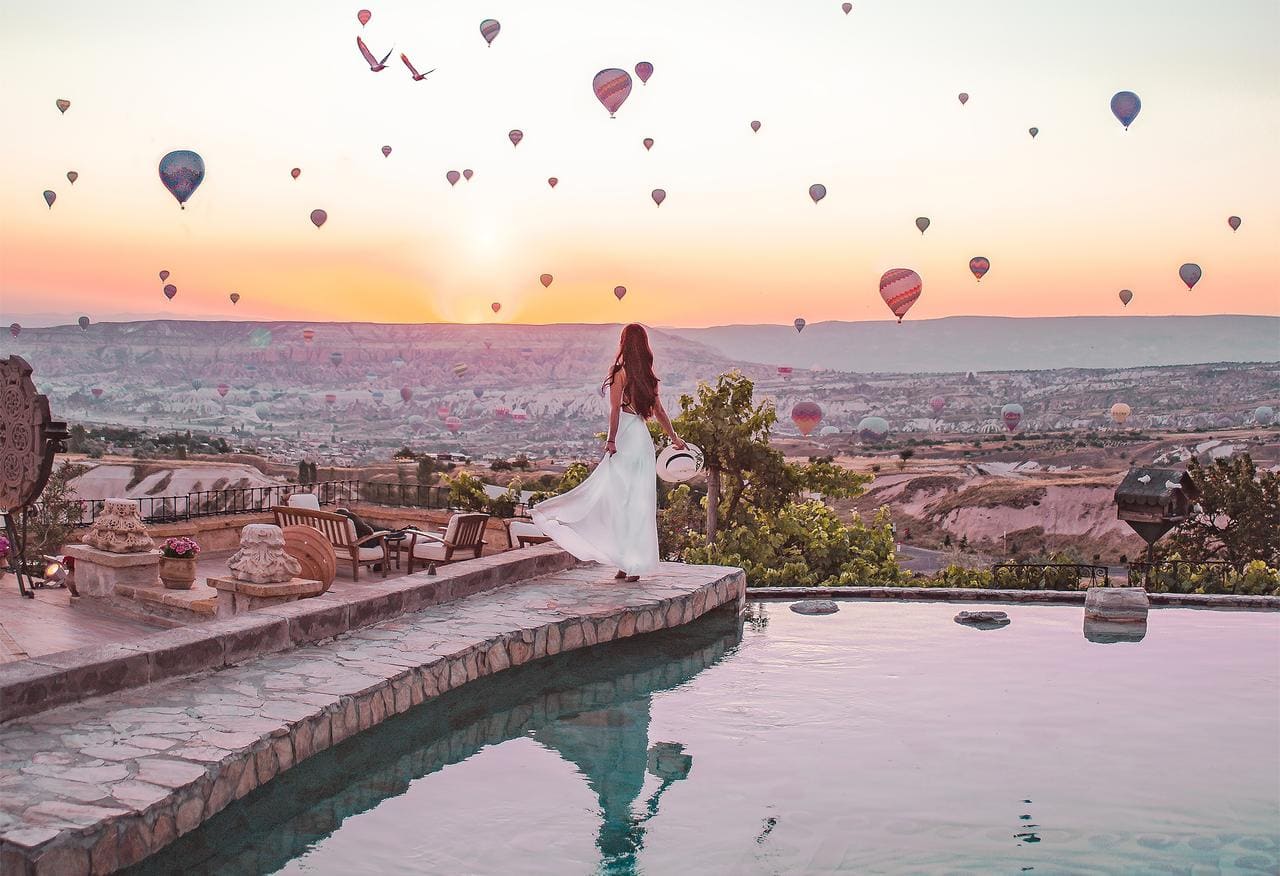
Cappadocia, Turkey
Where To Stay In Goreme, Cappadocia
When in Cappadocia, you must make sure you are staying in the best hotels available to have a good rest and enjoy the Cappadocia’s beauty. Below are three of the best hotels to rest and also enjoy your stay in:
- Design Cave Suites Cappadocia in Goreme is within walking distance to all attractions in the area. The rooftop garden is perfect for sunrise balloon watching, and the Buffet breakfast spread is amazing, as well as the cave style room designs.
- Local Cave House Hotel is the best Cave Hotel, with a Pool with classic Cappadocia rock formations in the background and traditional cave rooms.
- Sultan Cave Suites is a Cave Hotel with Best Roof View in Cappadocia, and its rooftop area for sunrise viewing is exceptional. There, you can lay back on pillows and carpets and watch the hot-air balloons fly above.
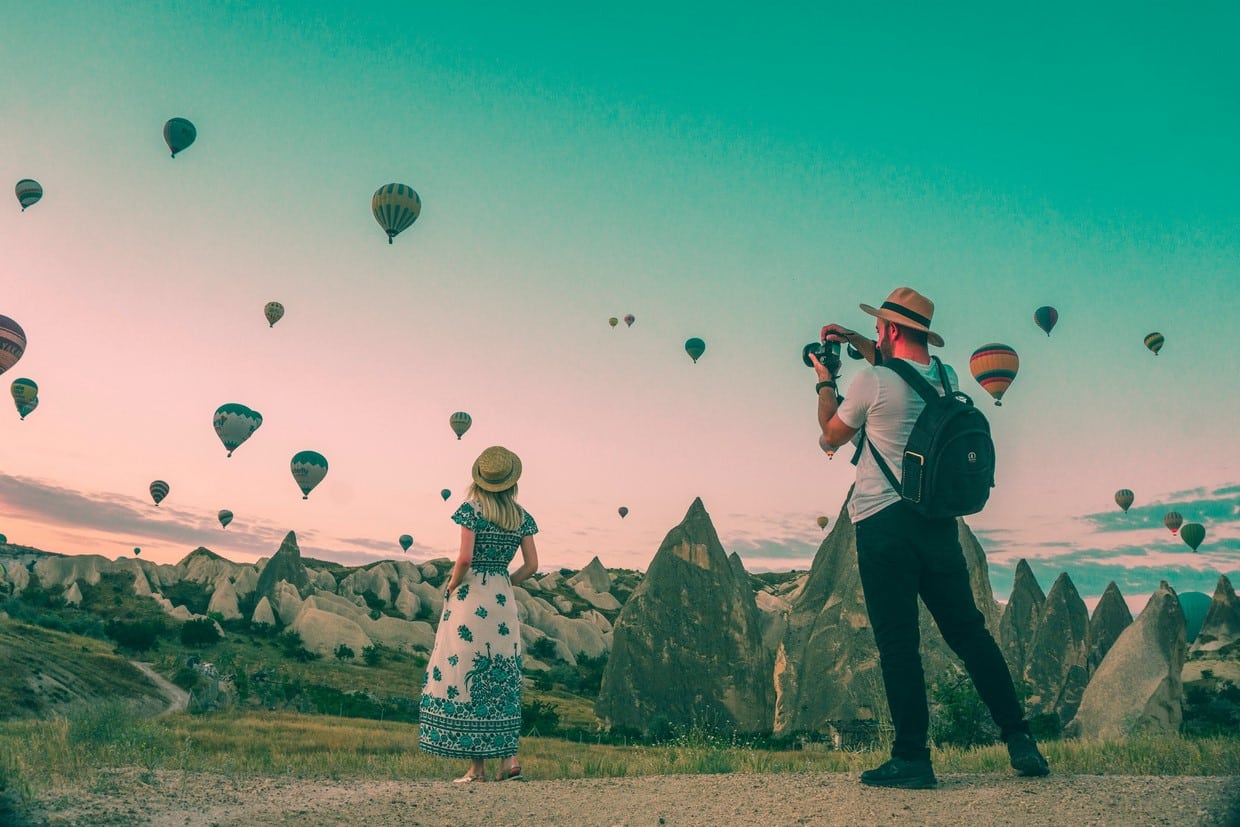
Cappadocia, Turkey
Where and what to eat
Food has always been a gateway to the heart and soul of a nation; a great way to become familiar with a city or a country’s culture. It has also been a big concern when visiting a new place because often finding places that will serve you a portion of good food. You can also have a good time being there is a trial and error process, here we have the list of top three restaurants in turkey in locations close to Cappadocia to save you from trouble.
Sakli Konak Restaurant
Sakli Konak Restaurant in Uchisar is well known in Cappadocia for its amazing food and Service. While there, we would recommend you try their apricot and green salad, Manti, Sorma, and Souffleit. Take note that it is best to reserve a table in advance since the restaurant is quite small.
Kebap Yerim in Avanos
Kebap Yerim in Avanos is one you could enjoy while in turkey and visiting Cappadocia. Aside from the good food and a satisfying service this restaurant is close to the seaside where you can take a stroll after a good meal and make sure you try their Ali Nazik, Chicken Guvec, mixed grill kebab and last but not least, their Testi Kebap
Cappadocian Cuisine Restaurant
Cappadocian Cuisine Restaurant in Goreme is a Vegetarian Friendly, with Vegan and Gluten-Free Options. This restaurant is a family-run spot where you will get a friendly service alongside a great home-cooked meal. As a traditional restaurant in Cappadocia, it is recommended to taste their traditional Cappadocian foods and especially the Lentil soup, meatballs, Turkish ravioli, and the lamb kabab pot.
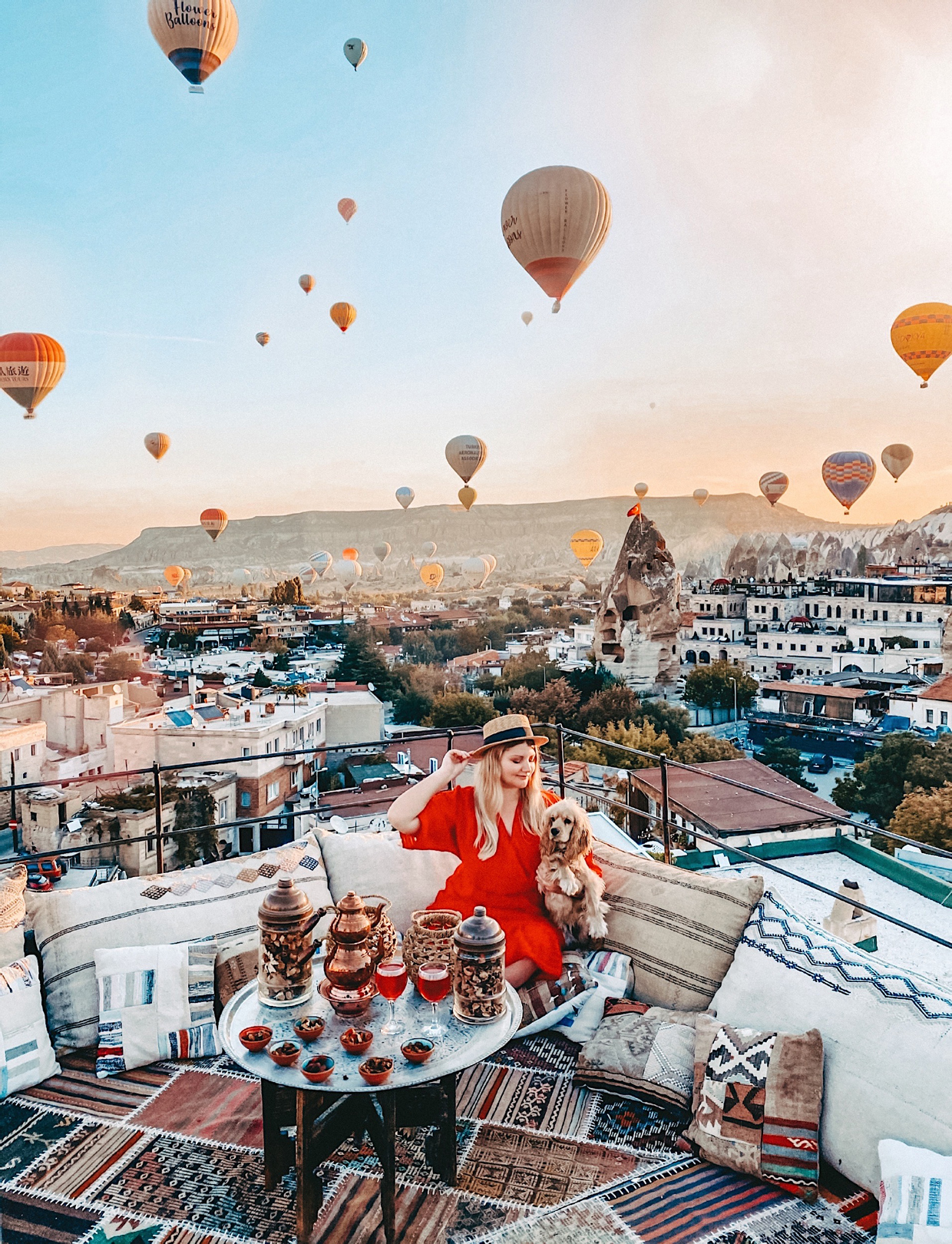
Cappadocia, Turkey
Things to See, Things to do
Cappadocia is a popular tourist destination, as it has many areas with unique geological, historical, and cultural features. Touristic Cappadocia includes 4 cities: Nevsehir, Kayseri, Aksaray, and Nigde. Therefore, it is important to know which locations are best to visit and what activities to partake in so that you could have the best time while in Cappadocia, turkey. Here we present you with a shortlist of these locations and activities available to you so that you can use your time wisely and get the best of what Turkey has to offer in Cappadocia.
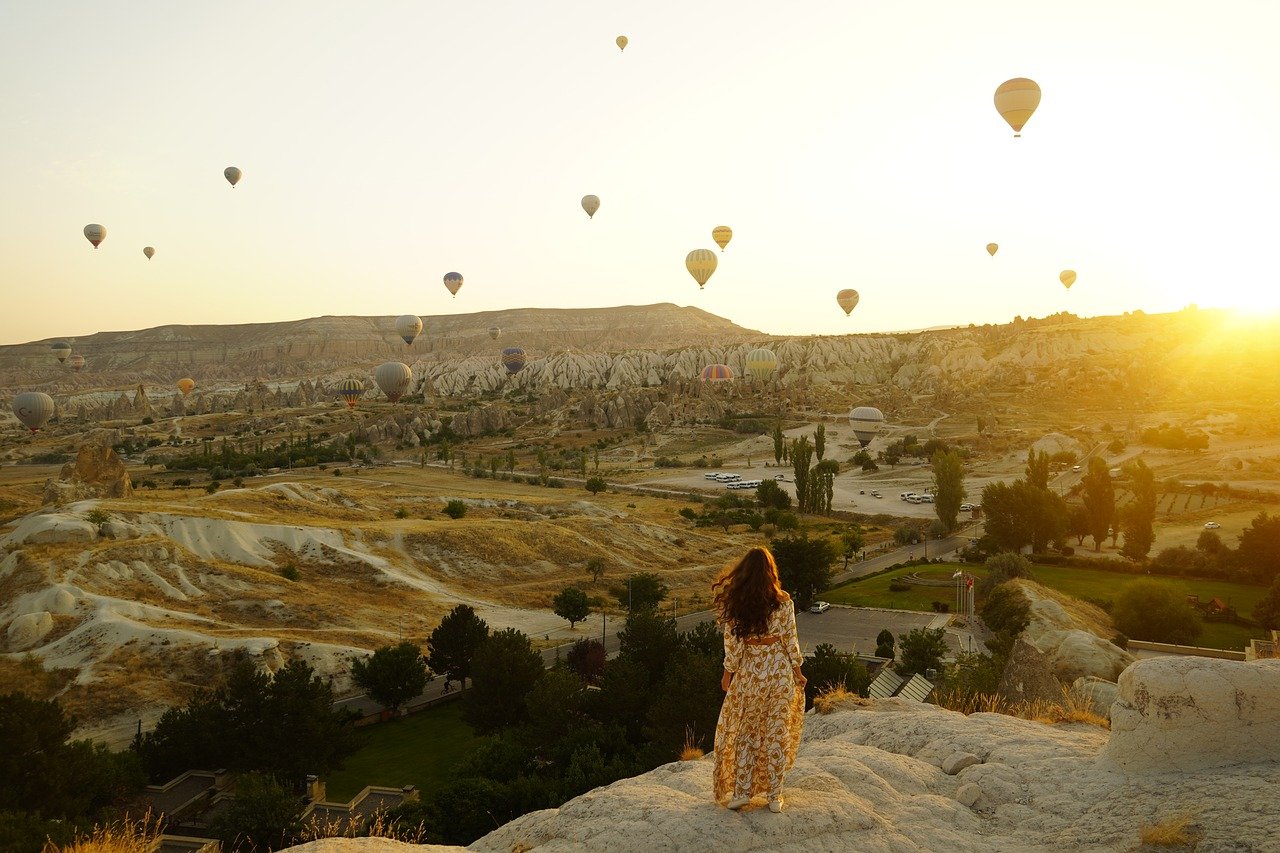
Cappadocia, Turkey
Flying In A Hot Air Balloon At Sunrise, Multi-Day Track
The Cappadocia hot air balloons are one of the most common travel bucket list items in the world. As you seamlessly float above the historic cave dwellings of Goreme Town with over 100 other balloons at sunrise, it creates a scene right out of a fairytale. Every year nearly half a million tourists enjoy hot air ballooning in Cappadocia, making this region the number one hot air balloon destination globally.
Another activity you might like in Cappadocia, If you enjoy participating in a marathon or even watching one, is a multiday track running ultramarathon of desert concept, called Runfire Cappadocia Ultramarathon, which is held annually in July since 2012. The race tours 244 km (152 miles) in six days through several places across Cappadocia, reaching out to Lake Tuz. and as well as a rewarding exercise is also a great way to see the natural beauties that make Cappadocia one of the top tourist locations in turkey.
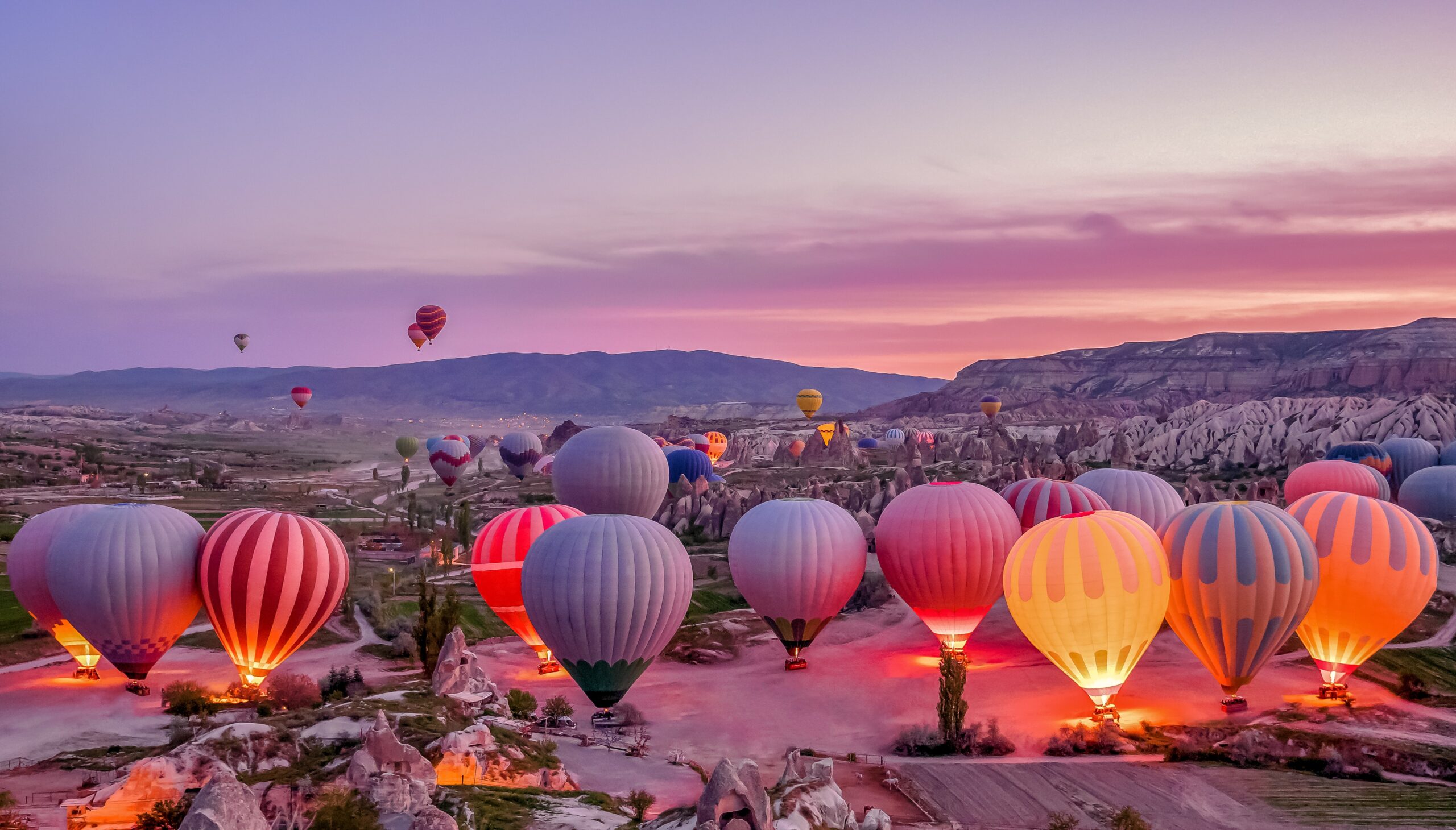
Cappadocia, Turkey
Love Valley Taill To Uchisar Castle, Pasabag Valley
Love Valley is set just outside of Goreme, and you can hike all the way through to Uchisar Castle; it is a relatively flat, peaceful walk. It’s truly one of the unique places to visit in Cappadocia, turkey. The final section of the valley is marvelous, with waving sandstones in beautiful, stark white surroundings. You can continue walking up to Uchisar Castle at the end of the valley, as it is one of Cappadocia’s best viewpoints.
Pasabag Valley is one of Goreme’s most popular spots, Cappadocia, with its magnificent fairy chimneys and cave dwellings. The fairy chimneys truly are quite amazing. Often a rock, sits atop of the chimney, balancing its way through storms and heavy winds. You’ll find many cave dwellings among the valley, which are often double and triple stories, and you can explore each story if you wish to.
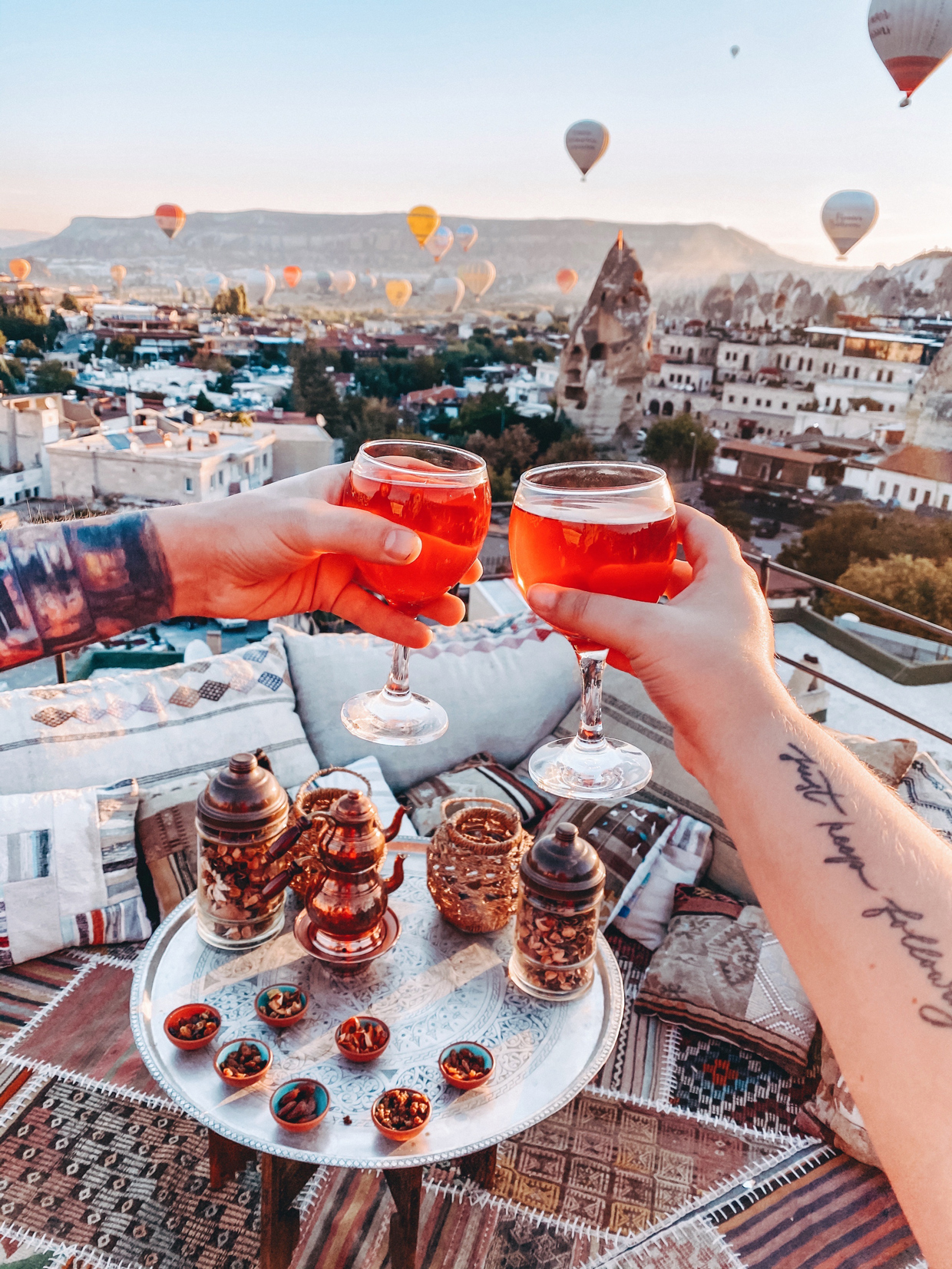
Cappadocia, Turkey
Goreme and Zeleve Open-Air Museum
The Goreme Open-Air Museum is one of the most popular attractions and historic sites in Cappadocia with an audio-tour, guiding you through the ancient paintings, churches, and cave houses from centuries ago. The Goreme Open-Air Museum is very close to Goreme’s city center, the most popular town in Cappadocia. With more than 30 stops along the tour, the audio guide explains many of the region’s history and facts and the people who lived in Cappadocia in the cave houses.
The Zelve Open-Air Museum is an incredible site that once housed one of the largest communities in Cappadocia. In this incredible cave town, you can walk amongst historic dwellings, churches, and religious chambers, as well as the town square. There’s so much more to see in this place you can immerse yourself in the scenery and spend hours, fascinated by the history and architecture.
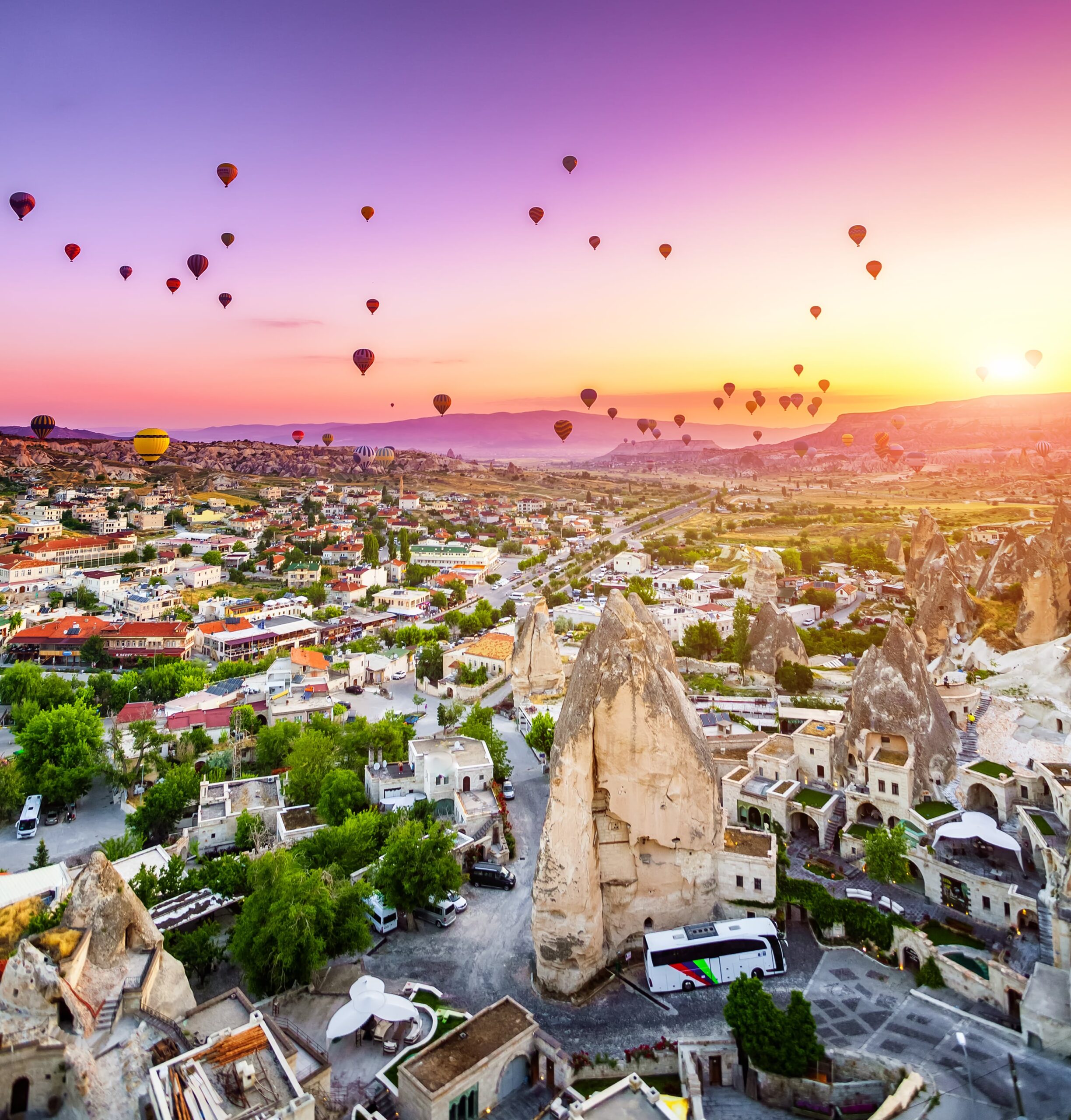
Cappadocia, Turkey
The Ihlara Valley
The Ihlara Valley is an incredible site with a river running down the valley for 16km within the volcanic rock. It is near the province of Aksaray, and it is considered part of the southern Cappadocia region. It’s a great spot for a relaxing hike midst beautiful and enticing greenery as well as being a hub for cave churches, of which you will find many along the trail.
Along the route, you will come across 16 churches of the 105 in the area that is open to visitors with paintings and carvings inside. Once there, the sounds of the forest as you walk beneath tree branches, climb over rocks, and stroll through the grass field openings, adorned with colorful wildflowers, is quite an enchanting experience. There’s also a waterfall you can swim in, which qualifies this valley as one of the top ten places to visit in Cappadocia.
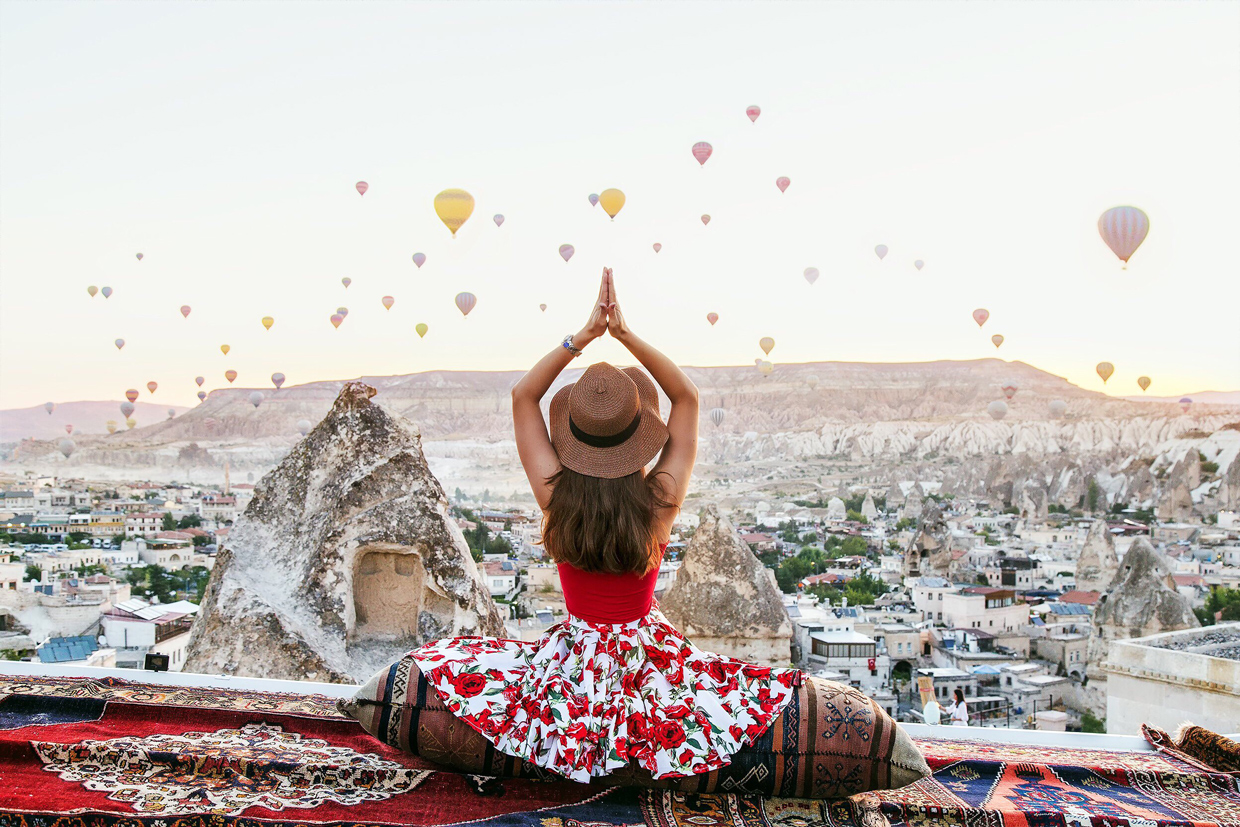
Cappadocia, Turkey
Lake Tuz (The Pink Salt Lake), Cavusin Castle
Lake Tuz is an incredible Salt Lake near Aksaray, just over an hour’s drive away from Cappadocia. The lake is most beautiful because of its vibrant pink color, and since it is not a crowded tourist spot, you can enjoy its beauty and even have a peaceful meditation by the lakeside. This spot isn’t specifically in Cappadocia but only a short drive away and well worth it.
Cavusin Castle has been built into the cliff’s side, and because of this, it’s just like an extension of the mountain, and only as you walk further towards the edge does it become more a building and less of a cliff. There are hundreds of rooms to explore, and from the top of the castle, you will have a view over Cavusin Village, Cavusin Valley, and all the way back to Cavusin Church and even Goreme.