
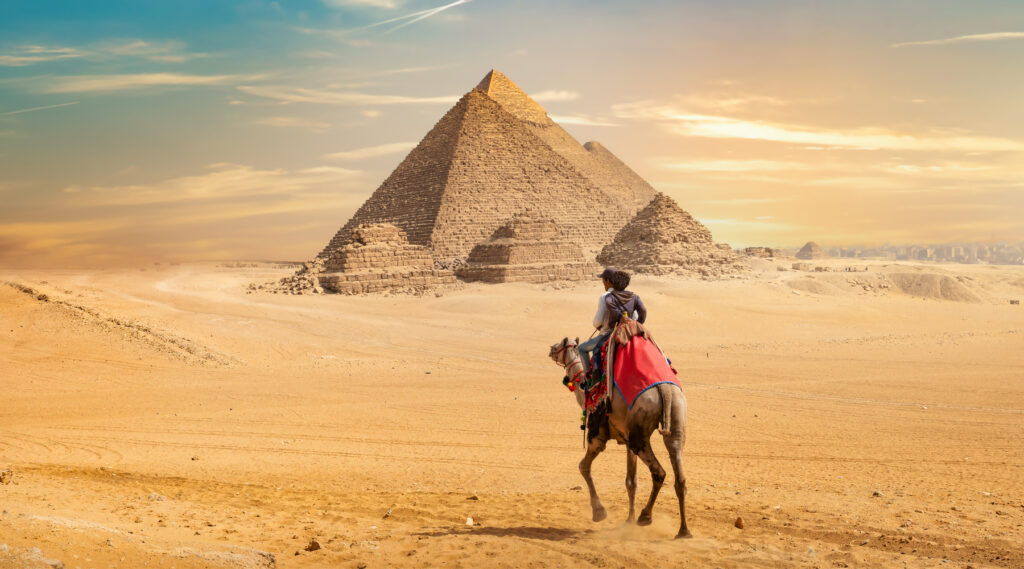
The Great Pyramid of Giza, also known as the Pyramid of Khufu, is one of the most extraordinary monuments ever built by humanity. Located on the Giza Plateau just outside Egypt‘s capital, Cairo, it is the oldest and only surviving Wonder of the Ancient World. Built more than 4,500 years ago, the pyramid still stands as a powerful symbol of ancient Egyptian engineering, spirituality, and royal ambition.
For travelers today, visiting the Pyramids of Giza is often the highlight of any trip to Egypt. Standing beside these colossal structures gives visitors a sense of scale that photos simply cannot capture. The complex includes three main pyramids, the mysterious Great Sphinx, ancient temples, tombs, and archaeological discoveries that continue to fascinate historians and archaeologists.
Despite centuries of research, many mysteries still surround the pyramids. Scholars continue to debate the exact construction techniques, the organization of the workforce, and the full meaning of the monuments within ancient Egyptian religious beliefs. What is certain, however, is that the Giza Pyramid Complex remains one of the most remarkable archaeological sites in the world.
If you are planning to visit the pyramids, understanding their history, layout, and practical travel tips can make your experience far more rewarding. This guide will walk you through the history of the pyramids, what you can see today, how to visit, and how to make the most of your time at this legendary site.
History of the Great Pyramid of Giza
The Giza Pyramid Complex was built during Egypt’s Fourth Dynasty of the Old Kingdom, a period known for its architectural innovation and powerful pharaohs. Construction began around 2580 BCE and continued for several decades as successive rulers expanded the complex.
The site includes three major pyramids built for three different pharaohs:
- The Great Pyramid of Khufu
- The Pyramid of Khafre
- The Pyramid of Menkaure
In addition to these pyramids, the complex contains temples, ceremonial causeways, royal cemeteries, and the famous Great Sphinx. Together, these monuments formed a massive royal funerary complex designed to ensure the pharaoh’s journey to the afterlife.
Ancient Egyptians believed that the pharaoh was a divine ruler who would continue to exist in the afterlife. The pyramids served not only as tombs but also as sacred monuments that connected the king with the gods and the cosmos.
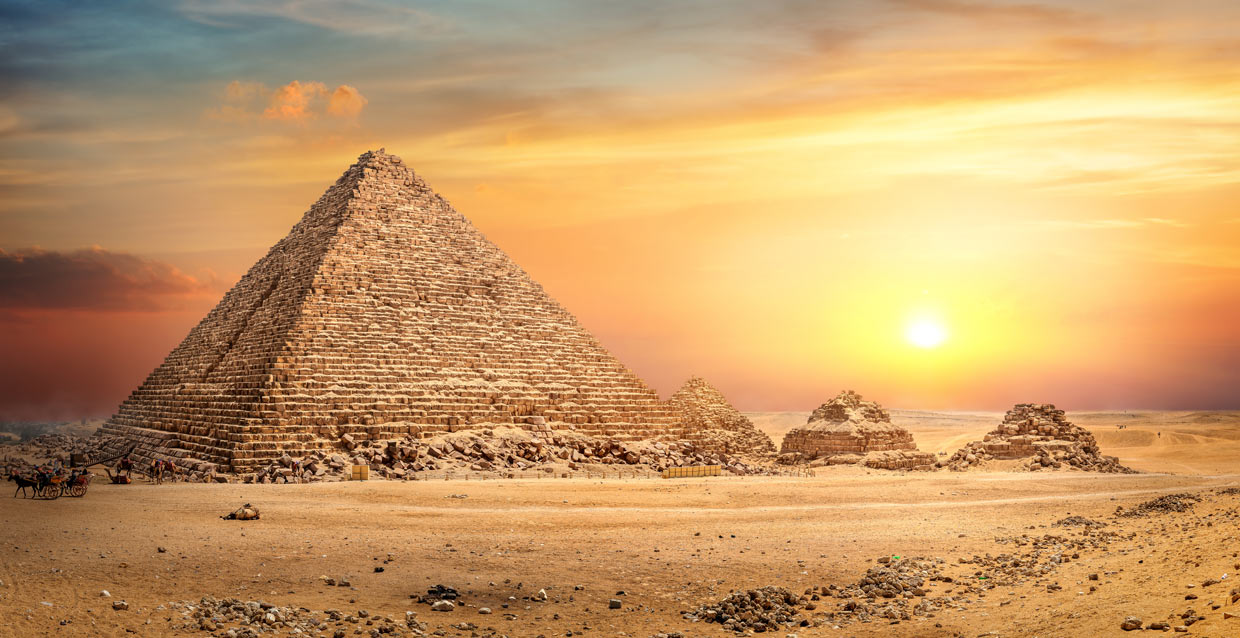
The Great Pyramid of Khufu
The Great Pyramid is the largest and most famous pyramid in Egypt. Built for Pharaoh Khufu around 2580–2560 BCE, it originally stood about 146 meters (481 feet) tall. Although erosion and the loss of its outer casing stones have reduced its height slightly, it remains the tallest pyramid ever built.
The structure contains an estimated 2.3 million stone blocks, each weighing between 2 and 30 tons. For thousands of years, it was the tallest man-made structure on Earth.
Contrary to popular myths, historians now believe that the pyramid was not built by slaves but by a highly organized workforce of skilled laborers, engineers, and seasonal workers. Archaeological discoveries near the site have revealed worker villages, bakeries, and medical facilities used during construction.
Inside the pyramid are several remarkable chambers, including the King’s Chamber, the Queen’s Chamber, and the famous Grand Gallery, a steep corridor that leads deep into the monument.
The Pyramid of Khafre
The second-largest pyramid at Giza belongs to Pharaoh Khafre, the son of Khufu. Built around 2570 BCE, it appears slightly taller than the Great Pyramid when viewed from certain angles because it sits on higher ground.
One of the most distinctive features of the Pyramid of Khafre is that some of its original smooth limestone casing stones are still visible near the top. These polished stones once covered all pyramids, giving them a bright white appearance that reflected sunlight and made them visible from great distances.
Khafre is also widely believed to have commissioned the Great Sphinx, the enormous limestone statue with the body of a lion and the head of a pharaoh.
The Pyramid of Menkaure
The third pyramid at Giza was built for Pharaoh Menkaure around 2510 BCE. Although much smaller than the other two pyramids, it still stands over 65 meters (213 feet) tall and was once partially covered with red granite.
Three smaller pyramids located nearby were built for queens associated with Menkaure. These structures, along with surrounding temples and tombs, formed an important part of the royal burial complex.
Layout and Architecture of the Giza Pyramid Complex
The Giza Plateau is far more than just three pyramids. The entire complex was carefully designed as a monumental funerary landscape that included temples, causeways, royal tombs, worker settlements, and ceremonial structures. Together, these elements formed one of the most sophisticated architectural projects of the ancient world.
Each pyramid complex generally consisted of several key components:
- The main pyramid where the pharaoh was buried
- Smaller pyramids built for queens and royal family members
- A mortuary temple used for rituals honoring the deceased king
- A long causeway connecting the pyramid to the valley temple
- A valley temple near the Nile where the king’s body was prepared for burial
- Cemeteries and mastaba tombs belonging to nobles, priests, and officials
The placement of these structures followed religious symbolism. Ancient Egyptians associated the western bank of the Nile with death and the afterlife because the sun set in the west. For this reason, royal tombs and pyramids were typically built on the west side of the river, while cities and temples for the living were located on the eastern bank.
Exterior Design and Casing Stones
Today, the pyramids appear rough and stepped, but this was not their original appearance. When they were first built, the pyramids were covered with highly polished white limestone casing stones. These stones were cut with remarkable precision and reflected sunlight, making the pyramids shine brilliantly across the desert landscape.
Over the centuries, earthquakes and later construction projects in Cairo caused many of these outer stones to be removed and reused. As a result, most of the smooth casing has disappeared, though a small section remains visible near the top of the Pyramid of Khafre.
Each pyramid also had a carefully constructed causeway connecting the mortuary temple beside the pyramid to the valley temple near the Nile. These causeways were often decorated with relief carvings and played an important role in funeral ceremonies.
Inside the Great Pyramid
Many visitors are surprised to learn that the interior of the pyramids is relatively simple compared to Egyptian temples and tombs. Unlike later royal tombs in the Valley of the Kings, the pyramid chambers contain very little decoration.
The most famous internal features of the Great Pyramid include:
- The Descending Passage, which leads downward toward an unfinished underground chamber
- The Ascending Passage, which climbs upward into the pyramid
- The Grand Gallery, a tall and narrow corridor that rises dramatically toward the upper chambers
- The Queen’s Chamber, located near the center of the pyramid
- The King’s Chamber, built of massive granite blocks and containing the pharaoh’s sarcophagus
The narrow passageways and steep corridors make visiting the interior a unique but physically demanding experience. Visitors must often walk through low tunnels and climb inclined passages to reach the central chambers.
Most of the treasures that were originally placed inside the pyramids were looted thousands of years ago. As a result, visitors today mainly see the architectural structure itself rather than artifacts.
The Great Sphinx of Giza
Located just east of the pyramids stands one of Egypt’s most iconic monuments: the Great Sphinx. Carved from a single limestone ridge, this colossal statue has the body of a lion and the head of a pharaoh.
The Sphinx measures about 73 meters (240 feet) long and 20 meters (66 feet) high, making it the largest monolithic statue in the ancient world. Most scholars believe it represents Pharaoh Khafre and was built to guard the pyramid complex.
The statue originally stood beside Khafre’s valley temple and likely played an important role in royal rituals. Over the centuries, the Sphinx was buried by desert sands several times before being fully excavated in modern times.
The Solar Boat Discovery
One of the most remarkable archaeological discoveries at Giza occurred in 1954, when archaeologists uncovered a large sealed pit beside the Great Pyramid. Inside the pit were the disassembled pieces of an ancient wooden boat.
The vessel, known as the Solar Boat or Khufu Ship, was carefully reconstructed from more than 1,200 individual parts. The boat measures over 40 meters long and is believed to have been used either in royal funeral ceremonies or symbolically to carry the king with the sun god Ra across the sky in the afterlife.
Today, the restored boat is preserved in a modern museum near the pyramid complex, where visitors can view this extraordinary artifact up close.
Archaeologists continue to make new discoveries around the Giza Plateau, including worker villages, burial tombs, and hidden chambers within the pyramids themselves. These findings continue to reshape our understanding of how the pyramids were built and how ancient Egyptian society functioned.
How to Get to the Pyramids of Giza
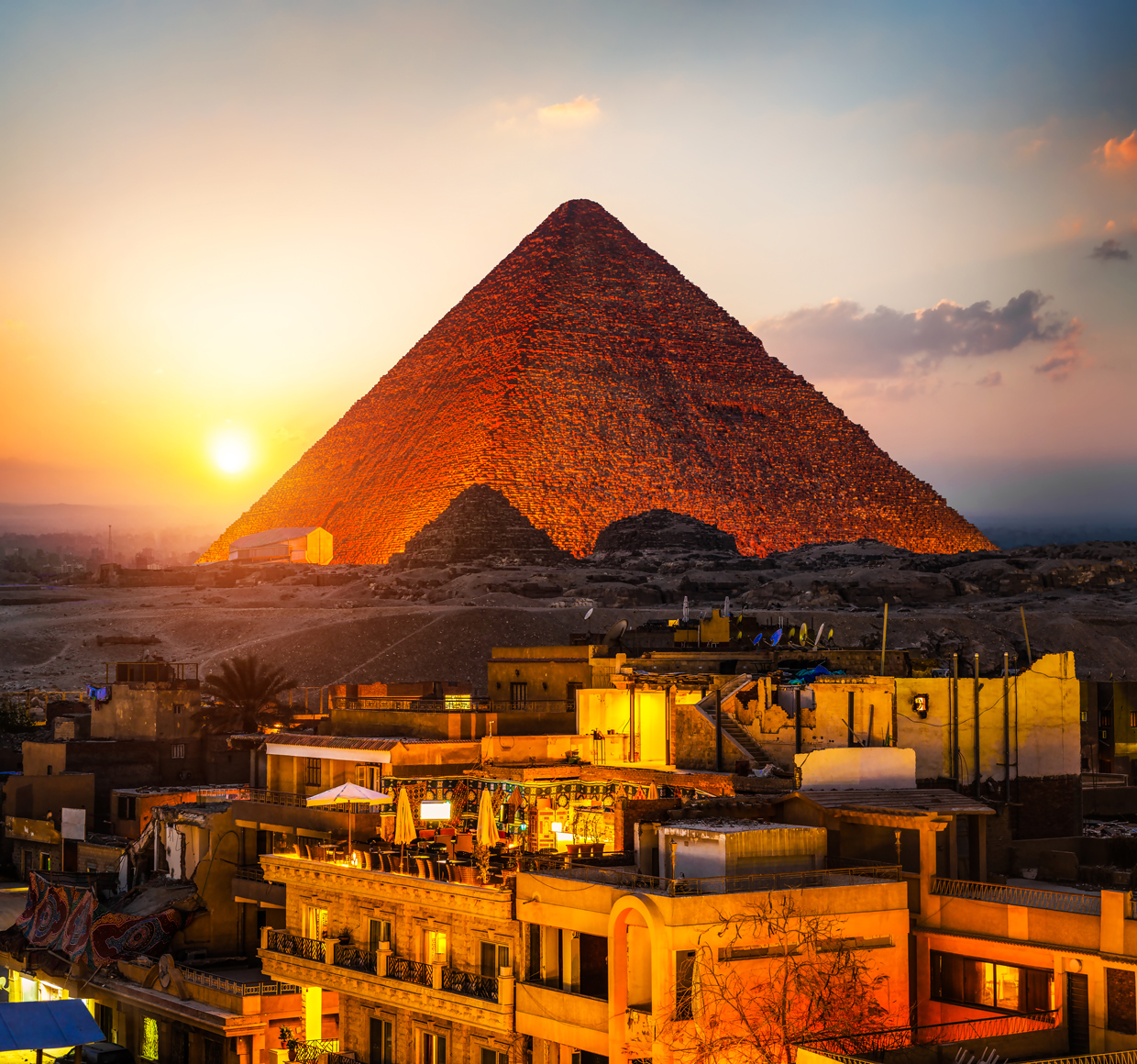
The Pyramids of Giza are located about 18 kilometers southwest of downtown Cairo, making them easily accessible for travelers staying in the Egyptian capital. Despite their desert setting, the pyramids are actually very close to the city and can be reached in less than an hour depending on traffic.
Most visitors travel to the pyramids as part of a guided tour, but it is also possible to visit independently using taxis, ride-hailing services, or public transportation.
Taxi or Ride-Hailing Apps
The easiest way to reach the pyramids is by taxi or ride-hailing apps such as Uber or Careem. These services are widely available in Cairo and provide a convenient and relatively affordable way to reach the Giza Plateau.
If you take a traditional taxi, always agree on the price before starting the ride. Traffic in Cairo can be unpredictable, so travel times may vary throughout the day.
Ride-hailing apps are often the simplest option for travelers because the price is calculated automatically, and you can track the route on your phone.
Metro and Taxi Combination
Travelers on a budget can take the Cairo Metro toward Giza and then continue the journey by taxi. The metro is inexpensive and relatively fast compared to surface traffic.
From the nearest metro station, you will still need a taxi or ride-hailing service to reach the pyramid complex entrance.
Guided Tours
Joining a guided tour is one of the most popular ways to explore the pyramids. Tours often include transportation, a professional guide, and visits to additional attractions such as the Great Sphinx or nearby museums.
Guides can also help explain the historical context of the monuments and help visitors navigate the large archaeological site more efficiently.
Many travelers combine their visit to the pyramids with other highlights in Cairo, including the Egyptian Museum or the newly opened Grand Egyptian Museum located close to the Giza Plateau.
Best Time to Visit the Pyramids
Egypt’s climate is generally warm throughout the year, but the most comfortable time to visit the pyramids is during the cooler months from October to April. During this period, daytime temperatures are more pleasant for walking around the large archaeological site.
The summer months between June and September can be extremely hot, with temperatures often exceeding 35°C (95°F). If visiting during the summer, it is highly recommended to arrive early in the morning.
The best time of day to visit the pyramids is shortly after opening time in the morning. Arriving early helps you avoid large tour groups and the strongest midday heat.
Late afternoon is another good time for photography because the sunlight creates dramatic shadows across the pyramids and desert landscape.
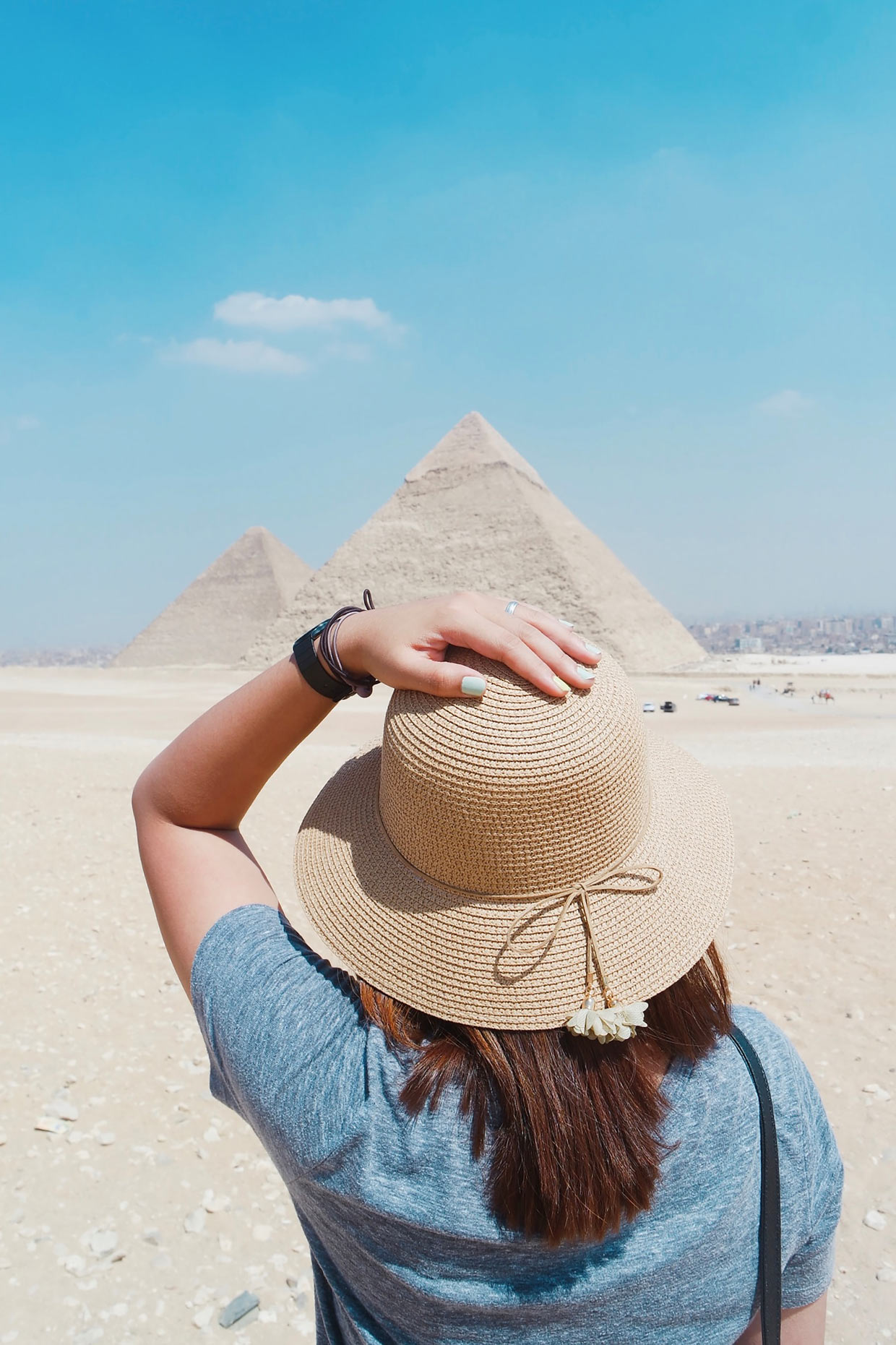
What to Wear When Visiting the Pyramids
The Giza Plateau is an open desert environment, which means visitors should be prepared for sun, heat, and wind. Comfortable and practical clothing will make your visit much more enjoyable.
- Wear lightweight and breathable clothing suitable for warm weather.
- Bring a hat or cap to protect yourself from the sun.
- Use sunscreen and sunglasses, especially during midday.
- Wear comfortable walking shoes since exploring the complex requires a lot of walking.
- Carry a bottle of water to stay hydrated.
While there is no strict dress code for tourists at the pyramids, modest clothing is generally appreciated when visiting cultural and historical sites in Egypt.
Traveler Information
Before visiting the Pyramids of Giza, it is helpful to know the location, opening hours, and ticket details. Keep in mind that different areas within the complex may require separate tickets.
| Location | |
|---|---|
| Address | Al Haram, Nazlet El-Semman, Giza Desert, Giza Governorate, Egypt (Get Direction) |
| Opening Hours | |
| Every Day | 08:00 – 17:00 |
| Entrance Fees (Approximate) | |
| Pyramid Complex | About 240 EGP |
| Great Pyramid Interior | Additional ticket required |
| Other Pyramids | Separate interior tickets available |
| Solar Boat Museum | Additional ticket required |
Best Photo Spots at the Pyramids of Giza
The Giza Plateau offers some of the most recognizable landscapes in the world, and there are several excellent viewpoints where visitors can capture unforgettable photos of the pyramids.
While the pyramids look impressive from almost anywhere within the complex, certain spots offer particularly dramatic views of all three pyramids together.
- The Panoramic Viewpoint – This famous viewpoint offers a wide desert view where all three pyramids appear aligned. It is one of the best locations for classic postcard-style photographs.
- Near the Great Sphinx – Standing close to the Sphinx provides a unique perspective with the pyramid of Khafre rising behind the statue.
- Desert Edge Viewpoints – Walking slightly away from the main entrance area toward the desert reveals beautiful angles with fewer crowds.
Photographers often prefer visiting during the early morning or late afternoon when the sunlight creates dramatic shadows and softer colors across the pyramids and the surrounding desert.
Camel and Horse Rides Around the Pyramids
Camel and horse rides are one of the most popular experiences for visitors exploring the Giza Plateau. These rides offer a traditional way to travel across the desert landscape and enjoy wider views of the pyramids.
Many local guides offer camel rides near the main entrance and around the panoramic viewpoint. Riding through the desert while the pyramids rise in the distance is a memorable experience and a favorite activity for many travelers.
If you decide to take a camel or horse ride, it is best to agree on the price before starting the ride and confirm the duration of the tour. This helps avoid misunderstandings and ensures a smooth experience.
For visitors who prefer not to ride animals, the entire site can also be explored on foot, although the distances between monuments can be quite large.
Tips for Visiting the Pyramids
Because the Pyramids of Giza attract millions of visitors each year, a few simple tips can help make your visit more enjoyable and stress-free.
- Arrive early in the morning to avoid the largest tour groups.
- Bring water and sunscreen since the site is exposed to direct sunlight.
- Wear comfortable shoes because the archaeological area is large and requires plenty of walking.
- Carry small cash for tickets, tips, or small purchases.
- Respect the monuments by following site rules and staying within designated visitor areas.
Visitors should also be aware that some unofficial guides or vendors may approach tourists near the entrance. Politely declining if you are not interested is perfectly acceptable.
Nearby Attractions Worth Visiting
The Giza Plateau is surrounded by several important cultural attractions, making it easy to combine the pyramids with other historical sites during the same day.
- The Grand Egyptian Museum – One of the largest archaeological museums in the world, located just minutes from the pyramids.
- The Egyptian Museum in Cairo – is famous for its vast collection of ancient Egyptian artifacts, including treasures from the tomb of Tutankhamun.
- Saqqara – Home to the Step Pyramid of Djoser, one of the earliest pyramid structures ever built.
- Memphis – The ancient capital of Egypt during the Old Kingdom period.
These sites together offer a deeper understanding of ancient Egyptian civilization and are often included in day tours departing from Cairo.
Why the Pyramids of Giza Still Fascinate the World
More than four thousand years after their construction, the Pyramids of Giza continue to inspire curiosity, admiration, and wonder. Their massive scale, precise engineering, and historical significance make them one of the most remarkable achievements of ancient human civilization.
Standing before these ancient monuments allows visitors to connect directly with a distant past that shaped the course of human history. The pyramids remain not only a symbol of ancient Egypt but also one of the greatest architectural achievements ever created.
Whether you are interested in history, archaeology, photography, or travel experiences, visiting the Pyramids of Giza is truly a once-in-a-lifetime experience that continues to captivate travelers from around the world.