 Elite
Elite
Private Luxor and Karnak Temple Half-Day Tour
Free Cancellation · Instant confirmation · Private tour

Entry tickets are sold separately from guided tours — compare options below, from skip-the-queue entry only to small-group tours with an Egyptologist guide included.
Elite
Free Cancellation · Instant confirmation · Private tour
 Elite
Elite
Free Cancellation · Instant confirmation · Private tour
 Elite
Elite
Instant confirmation · Pickup available
 Elite
Elite
Free Cancellation · Instant confirmation · Private tour
 Elite
Elite
Free Cancellation · Instant confirmation · Private tour
 Elite
Elite
Free Cancellation · Instant confirmation · Private tour
 Elite
Elite
Free Cancellation · Instant confirmation · Private tour
 Elite
Elite
Free Cancellation · Instant confirmation · Private tour
 Elite
Elite
Free Cancellation · Instant confirmation · Private tour
 Elite
Elite
Free Cancellation · Instant confirmation · Private tour
 Elite
Elite
Free Cancellation · Instant confirmation · Private tour
 Elite
Elite
Free Cancellation · Instant confirmation · Pickup available
 Elite
Elite
Free Cancellation · Instant confirmation · Private tour
 Elite
Elite
Free Cancellation · Instant confirmation · Private tour
 Elite
Elite
Free Cancellation · Instant confirmation · Pickup available
These tours go beyond a straight ticket: several combine Luxor Temple with nearby sites or add context most solo visitors miss, like the temple's Roman-era shrine and the mosque built into its walls.
 Elite
Elite
Free Cancellation · Instant confirmation · Private tour
 Elite
Elite
Free Cancellation · Instant confirmation · Pickup available
 Elite
Elite
Free Cancellation · Instant confirmation · Private tour
 Elite
Elite
Free Cancellation · Instant confirmation · Private tour
 Elite
Elite
Free Cancellation · Instant confirmation · Pickup available
 Elite
Elite
Free Cancellation · Instant confirmation · Pickup available
 Elite
Elite
Free Cancellation · Instant confirmation · Pickup available
 Elite
Elite
Free Cancellation · Instant confirmation · Pickup available
 Elite
Elite
Free Cancellation · Instant confirmation · Pickup available
 Elite
Elite
Free Cancellation · Instant confirmation · Pickup available
 Elite
Elite
Free Cancellation · Instant confirmation · Private tour
 Elite
Elite
Free Cancellation · Instant confirmation · Pickup available
 Elite
Elite
Free Cancellation · Instant confirmation · Private tour
 Elite
Elite
Free Cancellation · Instant confirmation · Private tour
 Elite
Elite
Free Cancellation · Instant confirmation · Private tour
 Elite
Elite
Free Cancellation · Instant confirmation · Private tour
 Elite
Elite
Free Cancellation · Instant confirmation · Private tour
 Elite
Elite
Free Cancellation · Instant confirmation · Private tour
 Elite
Elite
Free Cancellation · Instant confirmation · Pickup available
 Elite
Elite
Free Cancellation · Instant confirmation · Private tour
 Elite
Elite
Free Cancellation · Instant confirmation · Private tour
 Elite
Elite
Free Cancellation · Instant confirmation · Private tour
 Elite
Elite
Instant confirmation · Meet on location
Elite
Instant confirmation · Meet on location
 Elite
Elite
Free Cancellation · Instant confirmation · Pickup available
 Elite
Elite
Free Cancellation · Instant confirmation · Private tour
 Elite
Elite
Free Cancellation · Instant confirmation · Pickup available
 Elite
Elite
75% refund until 9 days before · Instant confirmation · Private tour
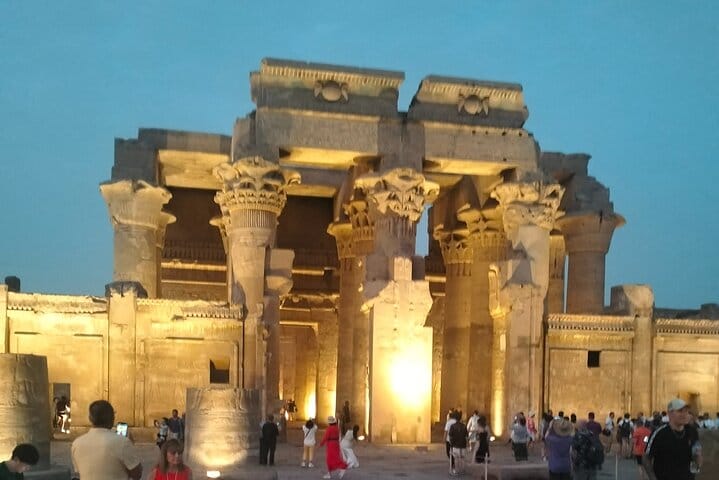
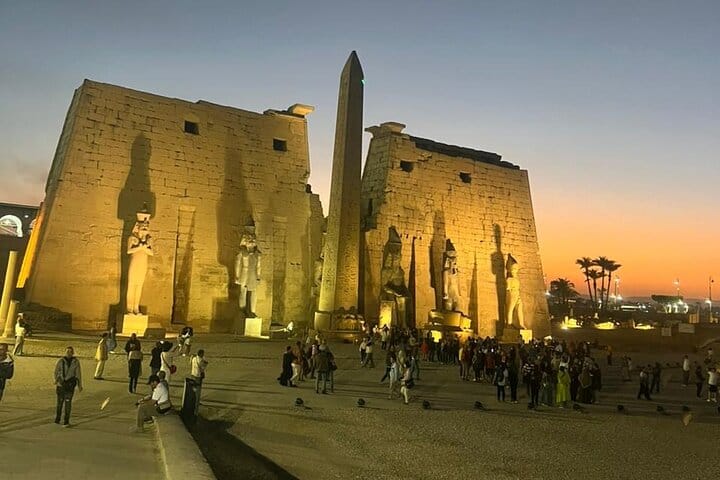
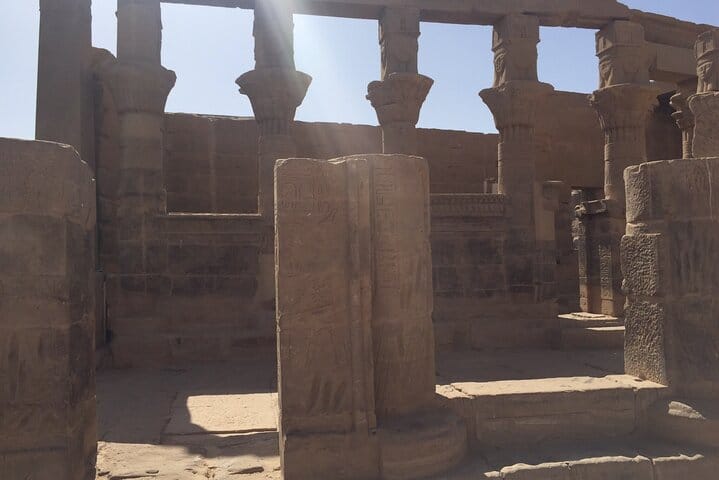
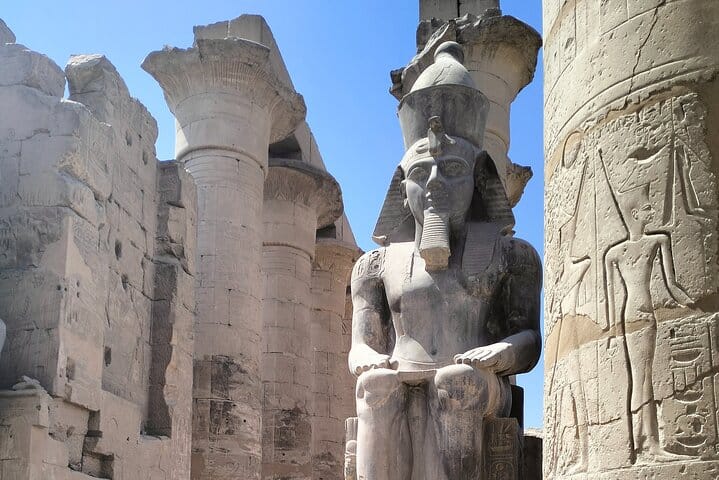
Luxor Temple rises directly from the east bank of the Nile in the heart of modern Luxor, built primarily by Pharaoh Amenhotep III around 1400 BCE and later extended by Ramesses II, who added the great pylon, the twin seated colossi at the entrance, and a pink granite obelisk — its twin has stood in Paris's Place de la Concorde since 1836. Unlike most Egyptian temples, Luxor wasn't a stand-alone shrine to a single god; it was built for the annual Opet Festival, when statues of the Theban triad Amun, Mut, and Khonsu were carried 2.7 km up the Avenue of Sphinxes from Karnak to be reunited here in a ritual renewing the pharaoh's divine power.
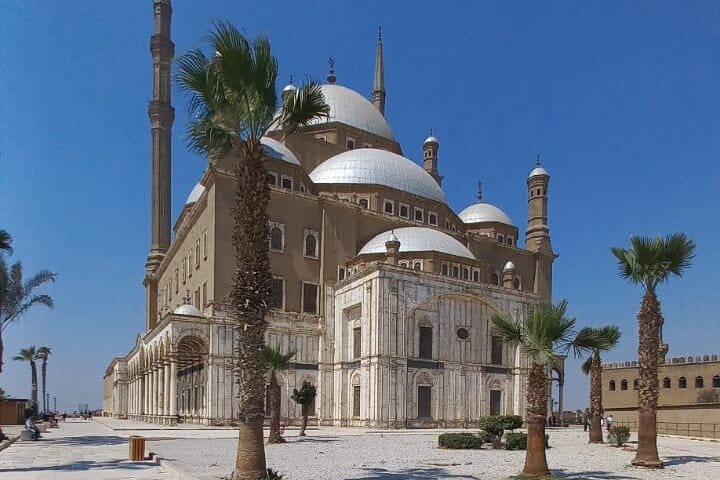
What sets Luxor Temple apart on a repeat visit is its layered history: a Roman legionary shrine still visible in the inner sanctuary, faded Coptic Christian frescoes under later plaster, and the 13th-century Abu Haggag Mosque, still active today, built directly onto part of the original temple platform. It's a rare working example of one faith's site of worship sitting on top of another's, unbroken across centuries. The temple is also one of the few major sites in Egypt open well after dark, when floodlighting turns its sandstone columns amber and the daytime crowds thin out considerably.
The Abu Haggag Mosque was built in the 13th century directly onto part of the temple's original stone platform, which by then was buried under centuries of Nile silt and town growth. Archaeologists deliberately left it in place during excavation, so it still functions as a working mosque today — one of the clearest examples in Egypt of a site used continuously across faiths.
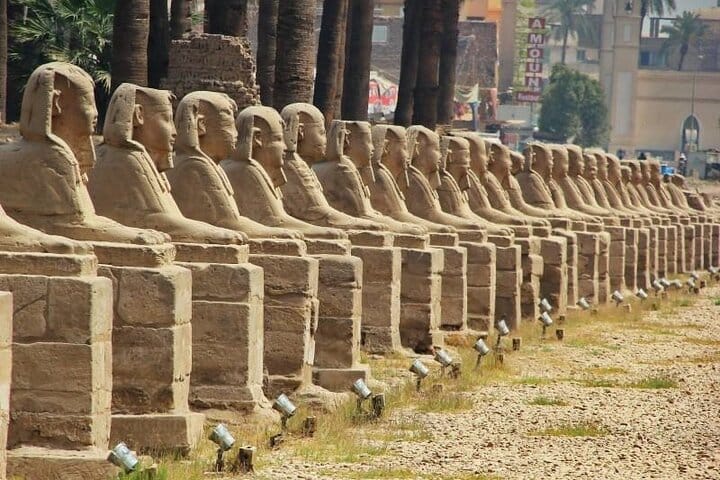
Yes. The 2.7 km avenue reopened fully in 2021 after decades of excavation and is walkable end to end in roughly 30–40 minutes, or you can cover it by horse-drawn caleche.
Most photographers and repeat visitors say the evening visit is the better one. The temple stays open into the night, its floodlighting is considered some of the best in Egypt, and crowds are noticeably thinner than during the morning rush.
Luxor Temple is smaller, sits within the town center, and was purpose-built for the Opet Festival procession. Karnak is a much larger complex built up over roughly 2,000 years. Most visitors pair the two on the same day.
It varies by operator — some guided tours bundle the entrance fee into the price, others meet you inside after you've bought your own ticket. Check each tour's inclusions before booking.
Around 90 minutes covers the main axis and colossi at a comfortable pace. Add 30–45 minutes if you're returning after dark or joining a guided tour that includes the mosque and inner sanctuary.