

 Elite
Elite
Mount Everest 15-Day Trekking Tour in Nepal
Free Cancellation · Instant confirmation · Private tour

On arrival our staff will transfer you to the respective Hotels and the staff will brief you about the expeditions.
While the company sorts out the expedition paperwork, you will be able to explore the fascinating medieval city. It is a wonderful mixture of crowded bazaars, Hindu and Buddhist temples, shrines and ancient, colonial and modern architecture. Swoyambhunath ( Monkey Temple) Situated on a hill, Swoyambhunath is both a Buddhist and a Hindu Temple. The origin of Kathmandu valley is closely linked to this temple. Also known as Monkey Temple, the sprawling tree-filled grounds of the temple is home to many monkeys.
Swoyambhunath ( Monkey Temple)
Situated on a hill, Swoyambhunath is both a Buddhist and a Hindu Temple. The origin of Kathmandu valley is closely linked to this temple. Also known as Monkey Temple, the sprawling tree-filled grounds of the temple is home to many monkeys.
Pashupatinath Temple
Pashupatinath Temple is one of the holiest Hindu shrines in the world. Dedicated to Lord Shiva, the temple lies 5 kms east of the city center. The richly-ornamented pagoda houses the sacred Linga, or phallic symbol, of Lord Shiva.
Boudhanath Stupa
Boudhanath Stupa is an important Buddhist pilgrimage site. The white domed stupa stands on a giant mandala. Built during the 5th century, Boudhanath is an important centre of Tibetan Buddhism. Legend has it that the bones of Kasyapa Buddha(one of Buddha’s incarnations) lies at the base of this stupa.
Bhaktapur Durbar Square
Bhaktapur Durbar Square lies in Bhaktapur, one of the three medieval cities in Kathmandu Valley. The royal square, which was built by the Malla royals, houses some of the best examples of ancient Newari art and architecture. The five-tiered pagoda temple Nyatapola, Palace of 55 Windows, Vatsala Temple, Bhairavnath Temple, Duttaraya Temple, Pujari Math, Golden Gate etc are all cultural treasures of this beautifully preserved UNESCO World Heritage Site.
This is the last chance to sort out equipment and forgotten items. Will spend part of the day packing loads for the journey to base camp and finalize all plans. This is your last day before the trip starts, enjoy it!
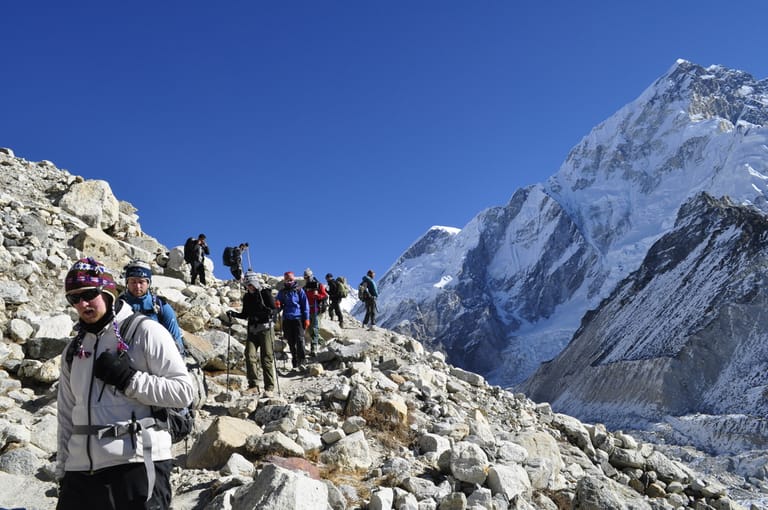
Make way to Kodari and across the Friendship Bridge into Tibet. Depending how long the journey takes on the first day we might stay in Zhangmu or Nylam. Will spend days acclimatizing along the way to base camp as we pass through Tingri and Xegar.
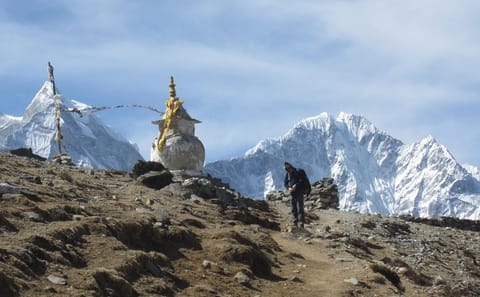
Arrive at Everest Base camp. On the way passing over the Pang La (16,400 ft/ 5,000 m) which gives great views of the route and the entire North East Face of Everest. The road then descends to the foot of the Rongbuk valley and before it reaches base camp with a stop at the Rongbuk Monastery.
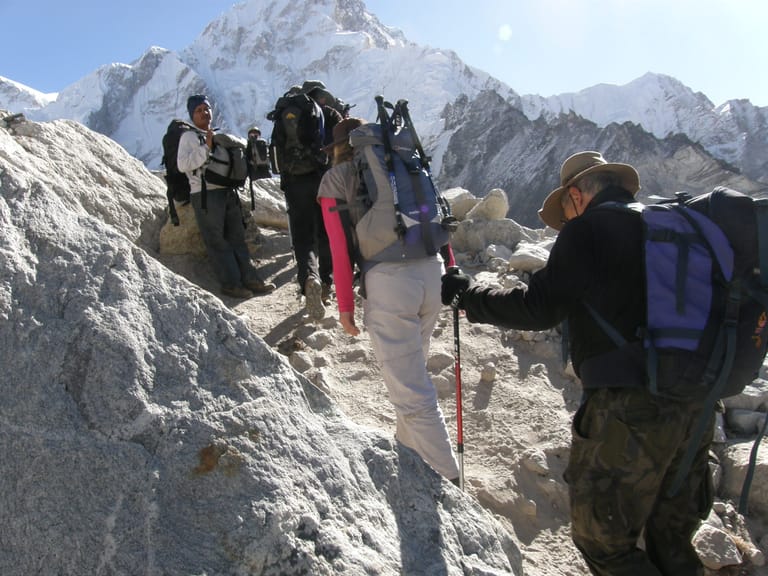
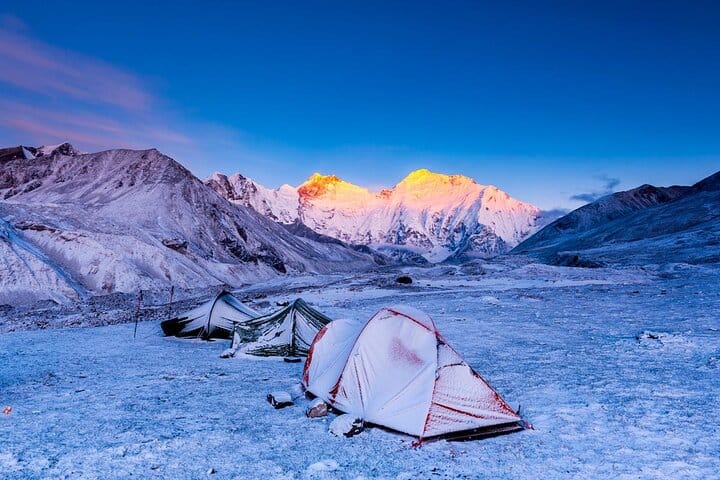
Pack loads for the yaks to go to advanced base camp, which is 22 km up the valley, requiring two days to reach. There are easy walks to do back to the Monastery and towards the mountain, but rest is the key to acclimatization at this point.
There are fantastic views of the North Face of Everest if the clouds permit and then later in the day before reaching intermediate camp. Will make camp by the river at the half way point, then set off early in the morning with the yaks on the second day to allow plenty time in the afternoon to set up a rudimentary camp for the evening, of course to be finished the next day.
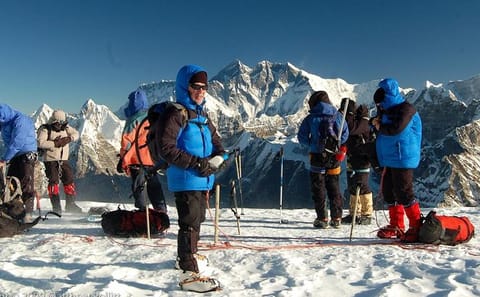
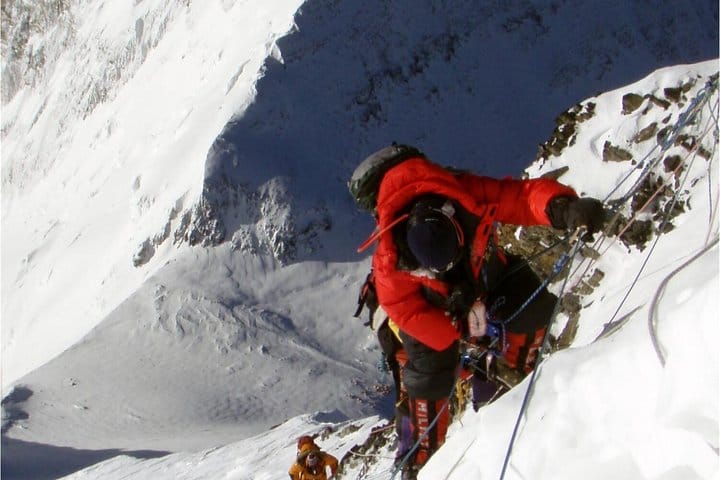
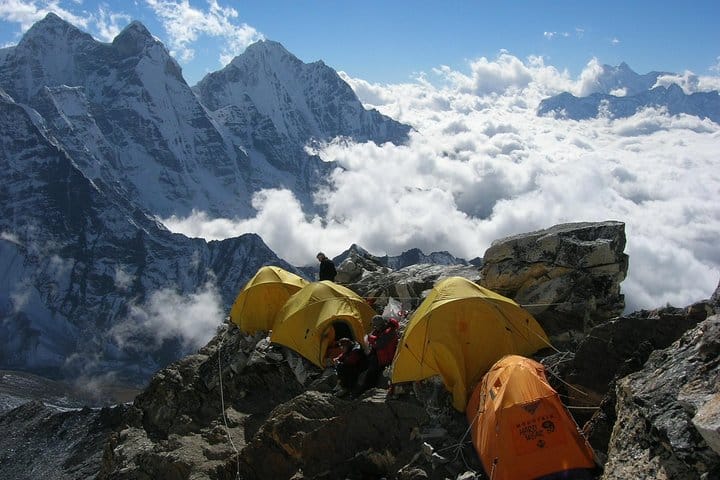
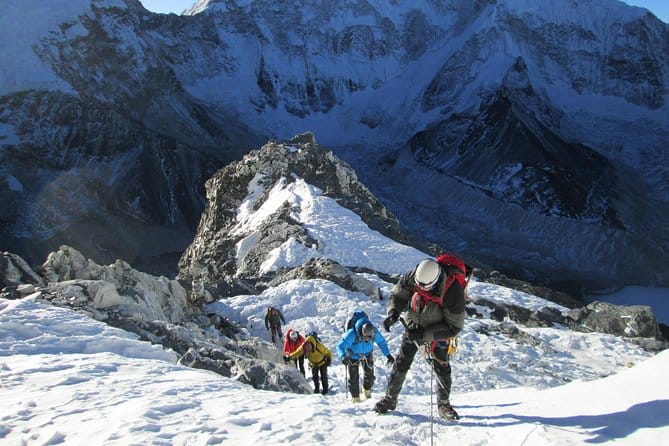
20 Days Reserved for the summit top, from ABC follow the moraine towards the North Col. and cross the glacier easily to its foot. About 1,000 ft / 300 m of fairly deep snow climbing leads to the Col at 7,066 m. The Col forms a fairly wide ridge which has ample room for tents. This will be Camp I. To the south, the Col rises to become the North Ridge. This is straight-forward snow climbing, eventually steeping into rocky shelves and short buttresses. A second camp will be placed at around 7,700 m.
The route to the North East Ridge leading from the top of the North Ridge to the summit will depend on conditions prevailing at the time. We will either follow the North Ridge in it's entirely to the crest of the North-North-East Ridge or make a rising traverse to the right to reach the ridge at a higher point. Last camp will be placed at around 8,300 m.
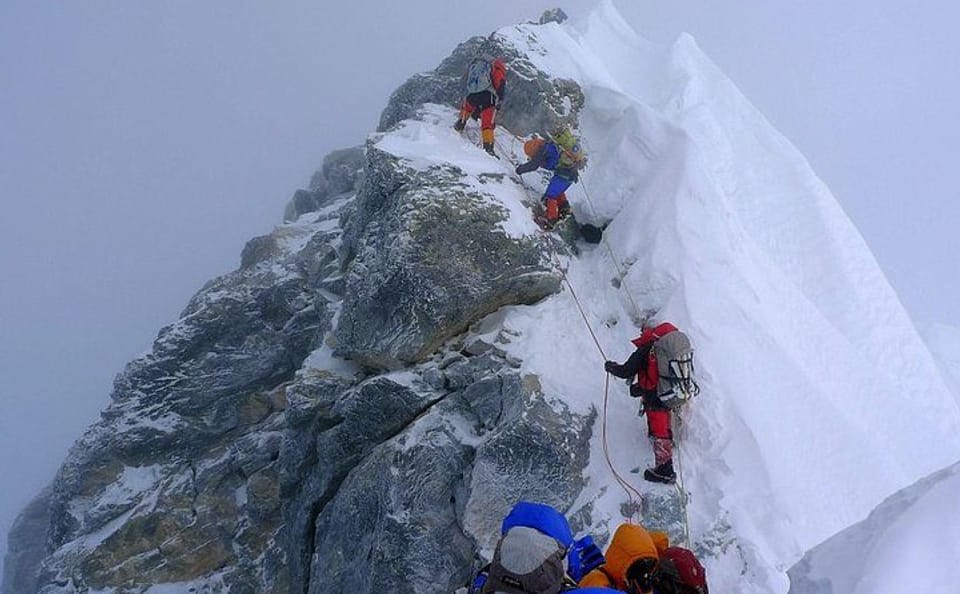
The final section of the climb takes in the notorious first and second steps. These are short, but abrupt rises on the North-East Ridge, which will provide testing climbing at extreme altitude! It was on the second step that Mallory and Irvine were last seen before they disappeared in 1924. Once this has been ascended, the ridge leads more easily to the summit.
All loads must be carried down at this time, this includes garbage.
Start to organize departure from Everest.
Prepare every thing for an early departure the next morning.
Drive as far as possible, if conditions are good and everybody is willing, it is possible in one long day to reach Kathmandu, or sleep in Zhangmu.
Leisure day in Kathmandu after the long expeditions and for paperwork.
Visit temples or finish up shopping, or just relax. In the evening, enjoy a complimentary farewell dinner at a local Nepali restaurant with cultural program.
Our Airport Representative will drop you at the airport on time for your return flight .
Fully refundable until 1 day before start
Non-refundable after 1 day before start
Elite
Free Cancellation · Instant confirmation · Private tour
 Elite
Elite
Free Cancellation · Instant confirmation · Meet on location or pickup
Free Cancellation · Instant confirmation · Private tour
Free Cancellation · Instant confirmation · Private tour
Free Cancellation · Instant confirmation · Private tour
Free Cancellation · Instant confirmation · Private tour
Free Cancellation · Instant confirmation · Min age 16+
Free Cancellation · Instant confirmation · Min age 14+
Our assistant finds tours and checks live dates and prices, and answers your questions.