

Traditional Calligraphy and Chinese Characters Class in Chengdu
Free Cancellation · Instant confirmation · Meet on location

Arrival in Lhasa, Adapt to the Altitude
Tashi Delek! Welcome to Lhasa, the capital of the Tibet Autonomous Region. In Tibetan, Lhasa means "holy land" or "land of Buddha," a sacred city in the hearts of Tibetans and a paradise for travelers. With the opening of the Qinghai-Tibet Railway, Lhasa is no longer out of reach. The hustle and bustle and crowds are not Lhasa's true face; let's explore its mysterious charm together.
Upon arrival at Lhasa Gonggar International Airport or Lhasa Railway Station, our guide will present you with a hada (a ceremonial scarf) and offer warm blessings (Friendly reminder: Please inform us of your mode of transportation and arrival time in advance). We will then escort you to your hotel in Lhasa city (Friendly reminder: The airport is located approximately 60 kilometers southeast of the city center, a 1-1.5 hour drive). After checking in, we suggest you use the remaining time to rest and relax, acclimatizing to Lhasa's high altitude. Allowing your body to fully acclimatize before embarking on your wonderful Tibetan journey is crucial.
【Friendly Reminder】
According to regulations, foreign and Taiwanese tourists must be accompanied by a licensed tour guide upon arrival or departure from Lhasa. The travel agency will inform you of the hotel check-in process in advance so you can easily check in at the front desk. If you do not receive a notification, please contact the travel agency staff promptly (see the tour confirmation letter) for assistance. The tour guide will notify you of the meeting time for the next day by phone or SMS before 10 PM.
【Altitude Sickness Reminder】
Get plenty of rest and maintain a calm mindset – this is the best way to prevent altitude sickness.
Avoid strenuous exercise on the day of arrival in Lhasa and do not shower that evening to prevent catching a cold.
Do not drink alcohol; drink plenty of warm water, eat fruit, and avoid overeating.
If needed, you can prepare herbal remedies such as Rhodiola rosea, ginseng lozenges, and altitude sickness medication or oxygen supplements in advance to help your body adapt.
Please always follow the advice of the tour guide and staff. If you feel unwell, immediately inform the tour guide and seek medical attention.
[Tibetan Cultural Experience] While in Lhasa, you can experience traditional Tibetan handicrafts (Tibetan incense making, woodblock printing, and learning Tibetan script). Visit the Tibetan Cultural Experience Center to learn how fragrant Tibetan incense is made, and even participate in the process yourself – a completely different experience from buying incense. A knowledgeable teacher will explain the origins of Tibetan script and help you write blessings or your Tibetan name. You can also try traditional woodblock printing. The incense you make, the printed items, and the Tibetan script written by the teacher are all souvenirs to take home from your trip to Tibet.
[Sera Monastery] As one of the six major monasteries of the Gelug school of Tibetan Buddhism, Sera Monastery, along with Drepung Monastery and Ganden Monastery, is known as one of the three great monasteries of Lhasa. The monastery houses tens of thousands of Vajra Buddha statues, the most famous of which, the "Hayagriva" Vajra statue, is located in the protector deity hall of Jizha Cang. Locals will stick their heads into a small shrine and touch the base of the statue. Besides the solemnity of the temples, Sera Monastery has another unique feature: the monks' debates. In the center of the debate area, monks are debating knowledge, some clapping loudly to urge their opponents to answer, others using the power of their prayer beads to gain the upper hand. Standing in the debate area, one is immersed in the lively sounds. Although visitors cannot understand their Zen teachings, they can truly feel the faith and power of Tibetan Buddhism. The debates usually begin at 3:00 PM.
【Friendly Reminder】
If the day of the trip is a Sunday, only the temple visit will be conducted; there will be no debates. Thank you for your understanding!
If the temple holds special events such as religious ceremonies or hosts specific guests on weekdays, the debates may be cancelled. Thank you for your understanding!
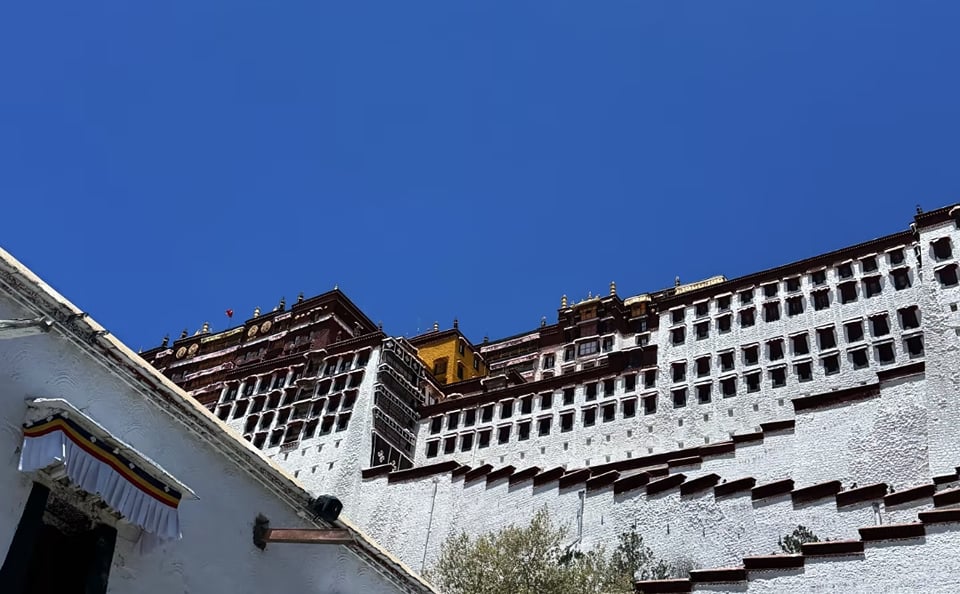
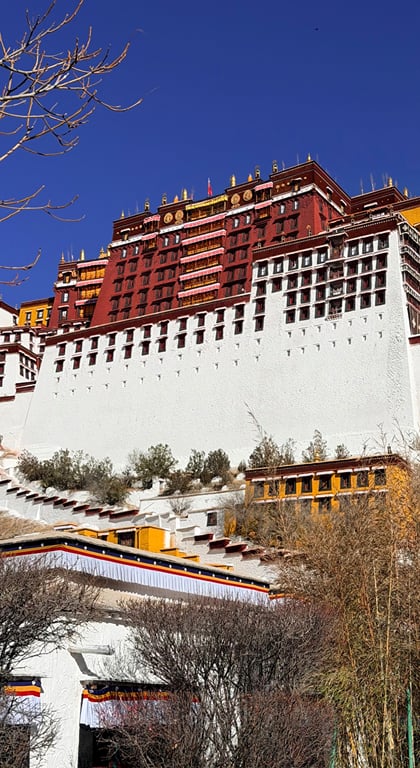
Potala Palace (approx. 1 hour visit) A sacred temple in the snowy land built by Songtsen Gampo, the palace is filled with golden Buddhas, stupas, murals, and scriptures, permeated with the aroma of yak butter, showcasing the atmosphere of ancient Tibet.
Ticketing Information: Real-name reservation is required. Entry is by original ID card/passport, etc. Incorrect document information will result in denied entry and non-refundable tickets. Reservations cannot be made again within 7 days of the initial reservation; the visitor is responsible for any consequences.
Visiting time slots are randomly assigned by the system and cannot be selected. The order of visits may differ from the itinerary.
During peak season, slots are limited. Groups may be split, with different time slots/dates, different guides, or group entry with other tourists. This is normal; please cooperate with your guide's arrangements.
Closed on Mondays. The itinerary will be adjusted; please consult sales before departure for confirmation.
Jokhang Temple (approx. 1 hour visit) A blend of Tibetan, Han, Nepalese, and Indian architectural styles. Pilgrims prostrate themselves before its entrance year-round, and butter lamps burn day and night. A sacred site of Tibetan faith.
Ticketing Information: Real-name reservations are required. Tickets for the following day can be booked daily from 7:00 AM to 11:59 PM via the "Jokhang Temple Reservation" mini-program. Places are limited; please follow your tour guide's instructions. We apologize for any inconvenience caused by temporary closures due to large-scale religious ceremonies.
Meals: Complimentary Lhasa-style welcome meal (Tibetan/Nepalese cuisine).
Scenery Along the Way
Traveling along the Yarlung Tsangpo River valley, Provincial Highway 101 offers a wide view of the river, while Provincial Highway 307 provides scenic views halfway up the mountain, showcasing the magnificent valley.
Gambala Mountain: A superb viewpoint for Yamdrok Lake, its azure waters are breathtakingly beautiful, a scene impossible to capture in a photograph; be sure to negotiate prices beforehand for taking photos with Tibetan yaks on the mountain.
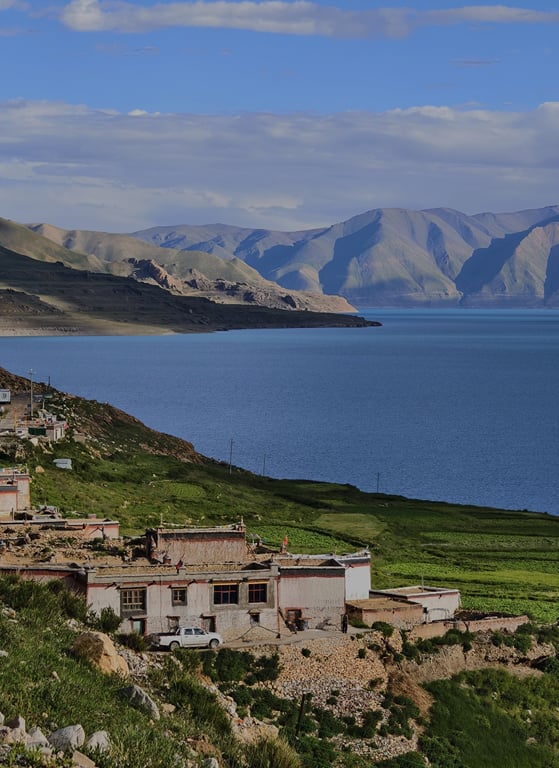
Yamdrok Lake: One of Tibet's three holy freshwater lakes, at an altitude of 4441 meters, it covers an area of 638 km² with a 250 km shoreline, and is known as the "Goddess's Turquoise Earring." The turquoise waters reflect snow-capped mountains, and Tibetan villages with grazing cattle and sheep create a soothing landscape.
Karola Glacier: Located at the border of Langkazi and Gyantse, backed by the Nyainqêntanglha Mountains, the glacier extends right up to the roadside, its black and white glaciers creating a striking contrast, resembling a giant Thangka painting under the sunlight; a filming location for movies such as *Red River Valley*.
Accommodation: Overnight stay in Shigatse, meaning "the best manor" in Tibetan. It is the second largest city in Tibet, the political, religious, and cultural center of the Tsang region, and the former residence of the Panchen Lamas, boasting a rich religious atmosphere.
Dining: Complimentary lunch of a specialty hot pot at a restaurant with a view of Yamdrok Lake.
Important Notes: Foreign and Taiwanese tourists, in addition to their Tibet Entry Permit, need to register at the Shigatse Entry-Exit Administration Bureau. The itinerary may be slightly adjusted; please cooperate with your tour guide.
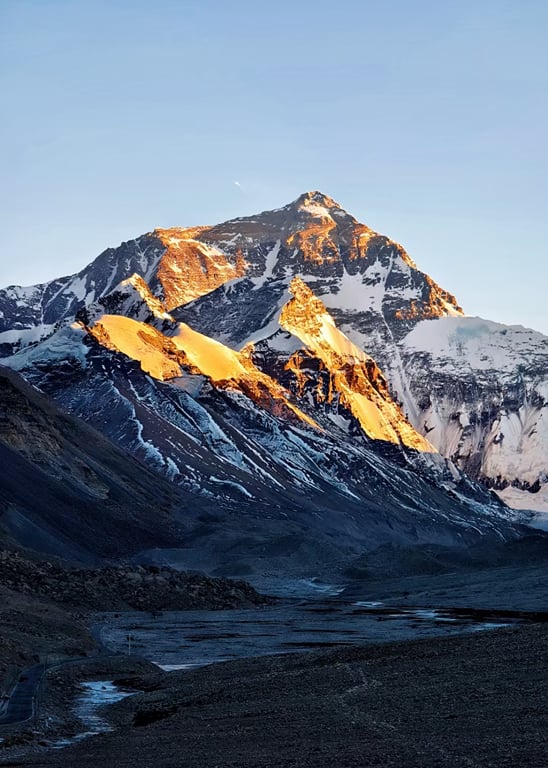
【Gawula Pass & Everest Viewpoint】 After traversing the famous 108 hairpin bends on the Everest route, you'll reach the Gawula Pass at an altitude of 5210 meters. Here, you'll find a rare viewing platform overlooking five 8000-meter peaks. On a clear day, Everest, Lhotse, Makalu, Cho Oyu, and Shishapangma stretch out in a magnificent, majestic panorama.
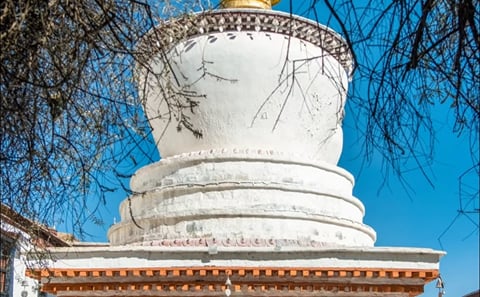
【Rongbuk Monastery】 Located at the foot of Everest, at an altitude of 5154 meters, Rongbuk Monastery is the world's highest Nyingma school Tibetan Buddhist monastery where monks and nuns reside together. The old monastery preserves relics of Guru Rinpoche's meditation, while the new monastery offers a superb vantage point for panoramic views of Everest, showcasing its pyramid-like peak. The mani stones and white stupas in front of the monastery provide classic foregrounds for photographing Everest, creating a serene and sacred atmosphere.
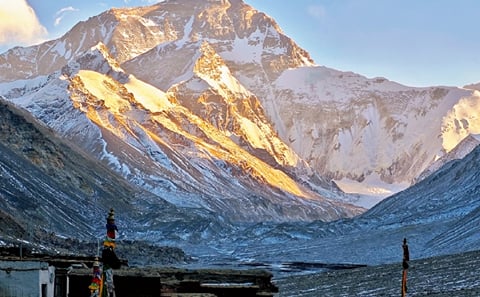
【Everest Base Camp】 Located at an altitude of 5200 meters, Everest Base Camp is the best spot for ordinary tourists to get up close to the mountain, only 19 kilometers away as the crow flies. The campsite primarily consists of tented guesthouses, staffed with dedicated personnel, offering a direct view of the majestic and sacred world's highest peak, Mount Everest, allowing for an immersive and awe-inspiring experience at the summit of the snow-covered plateau.
【Mount Everest】 At 8848 meters above sea level, Mount Everest is located in the Himalayas on the China-Nepal border, and is the world's highest peak. The journey along the stunning border highway offers panoramic views of Kangchenjunga, Lhotse, and other snow-capped mountains, their summits perpetually covered in snow and glaciers, creating a magnificent and awe-inspiring landscape.
【Important Notes】
1. Access to the base camp requires a transfer to an eco-friendly shuttle bus in Everest Town. Tour buses and drivers cannot accompany you; please bring your own belongings and prepare for your high-altitude accommodation in advance.
2. Overnight stay at the rebuilt tented camp on Everest Town will include an upgraded double room with a restaurant. However, shared bathrooms are still available. Due to the challenges of transporting supplies at high altitudes, accommodation and meals are basic; your understanding is appreciated.
3. During the winter when the campsite is closed, accommodation will be provided at guesthouses with private bathrooms in Everest Town. The Mount Everest region has a high altitude and low temperature, with nighttime temperatures as low as 0-8°C in summer. It is essential to take precautions against the cold and altitude sickness. Warm clothing can be rented on-site.
【Gyatsola Pass - Summit】 At an altitude of 5248 meters, it is the pass of the Mount Everest National Nature Reserve and the highest point on the China-Nepal Highway. Standing on the viewing platform, a huge sign for the reserve comes into view, and countless prayer flags flutter in the wind. On a clear day, you can not only see Mount Everest at 8848.86 meters, but also Cho Oyu, Lhotse, and Makalu, all over 8,000 meters high. The fact that four peaks over 8,000 meters can be seen together at the same pass is extremely rare, even among highways along National Highway 318 and around the world.
Tashilhunpo Monastery, also known as "Auspicious Mount Meru Monastery," is the largest monastery in the Shigatse region. It is considered one of the six major monasteries of the Gelug school, alongside Drepung, Sera, and Ganden monasteries in Lhasa, Kumbum Monastery in Qinghai, and Labrang Monastery in Gansu. It was founded in 1447 by Gendun Drup, a disciple of Tsongkhapa, the First Dalai Lama. At its peak, Tashilhunpo Monastery had over 3,000 rooms, more than 5,000 monks, over 50 subordinate monasteries, and over 30 estates and pastures. From the Fourth Panchen Lama onwards, subsequent Panchen Lamas have resided at this monastery. Today, Tashilhunpo Monastery comprises 4 colleges (Zhacang), 56 prayer halls, over 3,600 rooms, more than 800 monks, and covers a total area of 300,000 square meters.
Highlights:
1. Revered as the supreme monastery of Tsang, it is the residence of the Panchen Lamas and the largest monastery in the Tsang region, considered one of the four great monasteries of Tibet, along with the three major monasteries of Lhasa.
2. The Jampa Buddha Hall houses a bronze Buddha statue, made with 231,400 jin of brass and 6,700 taels of gold. The eyebrows alone are adorned with over 1,400 diamonds and pearls of various sizes.
3. The monastery also houses an exquisitely crafted stupa containing the relics of the Panchen Lama, crafted using countless materials including gold, silver, copper, silk, coral, pearls, agate, and turquoise.
【Friendly Reminder】 Depending on the actual situation, the travel agency may arrange for a day trip from Shigatse to Damxung for overnight stay, followed by a return trip to Lhasa after visiting Namtso Lake the next day, without reducing the number of attractions visited. Your understanding is appreciated.
【Namtso】 After crossing the Nagqu La Pass at an altitude of 5190 meters, we arrived at Namtso, the "Heavenly Lake," the highest of Tibet's three holy lakes. At an altitude of 4718 meters, it is the highest saltwater lake in the world and the second largest in my country. To the south lies the Nyainqêntanglha Mountains, perpetually covered in snow, while to the north and west are high-altitude hills. The vast lakeshore is surrounded by grasslands, lush with vegetation. The lake water has a high salinity, and the surrounding area is rich in wildlife, including yaks and goats. The lake is home to many wildfowl and produces fine-scaled and scaleless fish. The clear water reflects the surrounding snow-capped mountains, creating a beautiful landscape, like a sparkling pearl set in the vast Qiangtang grassland.
【Friendly Reminder】 Winter weather is harsh, and Namtso Lake is at a high altitude. Every winter, heavy snow can close the mountain passes. If heavy snow closes the passes, the itinerary will be adjusted as follows:
1) If you learn one day in advance that Namtso Lake is closed, the itinerary will be adjusted to: D08 Lhasa → Ganden Monastery (light trek along the pilgrimage route) → Lhasa
2) If you have already departed for Namtso Lake and are notified at the last minute that it is closed, the itinerary will be adjusted to: D08 Lhasa → Tsurphu Monastery → Lhasa
After breakfast, airport or train station transfer will be arranged according to your flight schedule, concluding your pleasant trip. The city center is approximately a 1-hour drive from the airport; it is recommended to book flights departing after 10:00 AM.
【Friendly Reminder】
According to regulations, foreign and Taiwanese tourists arriving in or departing Lhasa must be accompanied by a licensed tour guide.
The tour guide will confirm your departure information with you in advance. Please be sure to provide accurate flight itineraries or train ticket reservations so that the travel agency can reasonably arrange a unified free pick-up and drop-off service for the group.
Fully refundable until 1 day before start
Non-refundable after 1 day before start
Free Cancellation · Instant confirmation · Meet on location
Free Cancellation · Instant confirmation · Private tour
Free Cancellation · Instant confirmation · Private tour
Free Cancellation · Instant confirmation · Private tour
Free Cancellation · Instant confirmation · Private tour
Free Cancellation · Instant confirmation · Pickup available
Free Cancellation · Instant confirmation · Pickup available
Free Cancellation · Instant confirmation · Pickup available
Our assistant finds tours and checks live dates and prices, and answers your questions.