

Traditional Calligraphy and Chinese Characters Class in Chengdu
Free Cancellation · Instant confirmation · Meet on location

Tashi Delek! Welcome to Lhasa, the capital of the Tibet Autonomous Region. In Tibetan, Lhasa means "holy land" or "land of Buddha," a sacred city in the hearts of Tibetans and a paradise for travelers. With the opening of the Qinghai-Tibet Railway, Lhasa is no longer out of reach. The hustle and bustle and crowds are not Lhasa's true face; let's explore its mysterious charm together.
Upon arrival at Lhasa Gonggar International Airport or Lhasa Railway Station, our guide will present you with a hada (a ceremonial scarf) and offer warm blessings (please inform us of your mode of transportation and arrival time in advance). We will then escort you to your hotel in Lhasa city (please note: the airport is located approximately 60 kilometers southeast of the city center, a 1-1.5 hour drive). After checking in, we suggest you use the remaining time to rest and relax, acclimatizing to Lhasa's high altitude. Allowing your body to fully adapt to the high-altitude environment before embarking on your wonderful Tibetan journey is crucial.
【Friendly Reminder】
According to regulations, foreign and Taiwanese tourists must be accompanied by a licensed tour guide upon arrival or departure from Lhasa. The travel agency will inform you of the hotel check-in process in advance so you can easily check in at the front desk. If you do not receive a notification, please contact the travel agency staff promptly (see the tour confirmation letter) for assistance. The tour guide will notify you of the meeting time for the next day by phone or SMS before 10 PM.
【Altitude Sickness Reminder】
Get plenty of rest and maintain a calm mindset – this is the best way to prevent altitude sickness.
Avoid strenuous exercise on the day of arrival in Lhasa and do not shower that evening to prevent catching a cold.
Do not drink alcohol; drink plenty of warm water, eat fruit, and avoid overeating.
If needed, you can prepare herbal remedies such as Rhodiola rosea, ginseng lozenges, and altitude sickness medication or oxygen supplements in advance to help your body adapt.
Please always follow the advice of the tour guide and staff. If you feel unwell, immediately inform the tour guide and seek medical attention.
[Tibetan Cultural Experience] While in Lhasa, you can experience traditional Tibetan handicrafts (Tibetan incense making, woodblock printing, and learning Tibetan script). Visit the Tibetan Cultural Experience Center to learn how fragrant Tibetan incense is made, and even participate in the process yourself – a completely different experience from buying incense. A knowledgeable teacher will explain the origins of Tibetan script and help you write blessings or your Tibetan name. You can also try traditional woodblock printing. The incense you make, the printed items, and the Tibetan script written by the teacher are all souvenirs to take home from your trip to Tibet.
[Sera Monastery] As one of the six major monasteries of the Gelug school of Tibetan Buddhism, Sera Monastery, along with Drepung Monastery and Ganden Monastery, is known as one of the three great monasteries of Lhasa. The monastery houses tens of thousands of Vajra Buddha statues, the most famous of which, the "Hayagriva" Vajra statue, is located in the protector deity hall of Jizha Cang. Locals will stick their heads into a small shrine and touch the base of the statue. Besides the solemnity of the temples, Sera Monastery has another unique feature: the monks' debates. In the center of the debate area, monks are debating knowledge, some clapping loudly to urge their opponents to answer, others using the power of their prayer beads to gain the upper hand. Standing in the debate area, one is immersed in the lively sounds. Although visitors cannot understand their Zen teachings, they can truly feel the faith and power of Tibetan Buddhism. The debates usually begin at 3:00 PM.
【Friendly Reminder】 If the tour is on a Sunday, only the temple visit will be included; there will be no debates. Thank you for your understanding!
If the temple holds special events such as religious ceremonies or hosts specific guests on weekdays, the debates may be cancelled. Thank you for your understanding!
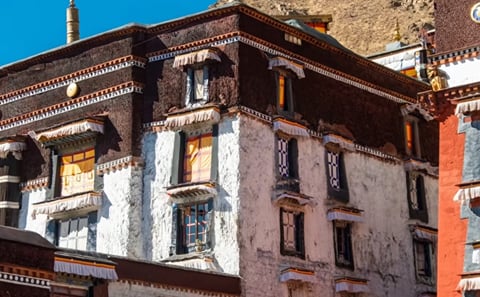
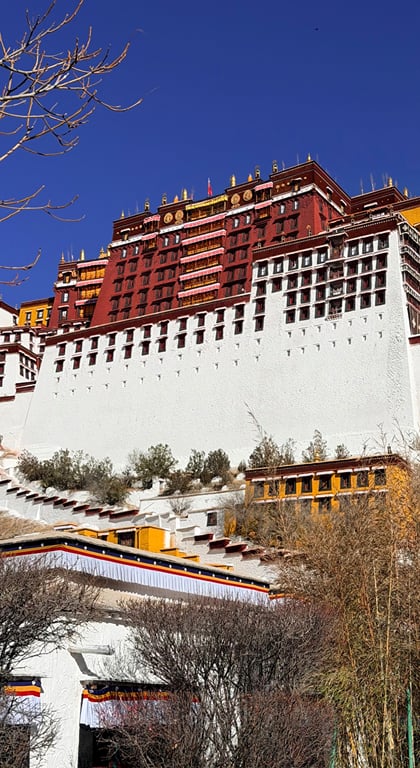
【Potala Palace】(Visit limit: 1 hour) Songtsen Gampo spent half his life conquering Tibet and the other half building magnificent palaces and temples. Wandering among the resplendent halls, stupas, palaces, and corridors, with dim lighting, low-hanging curtains, and the pervasive aroma of yak butter, feels like stepping into an ancient dream, irresistibly drawn into the scriptures, statues, murals, and distant legends.
【Potala Palace Ticket Booking Instructions】:
Potala Palace tickets are booked in advance using real names. Valid identification (ID card, household registration book, Taiwan Compatriot Certificate, or passport) is required for booking. Once booked, tickets cannot be booked again within 7 days of the visit date. If a visitor is unable to enter the Potala Palace due to incorrect information provided, the travel agency will not be held responsible. Visitors must bring their original valid identification document before the visit. If the name or ID number does not match the actual document used, entry will be denied. Ticket fees are non-refundable once purchased. Thank you for your understanding.
Potala Palace visiting times are randomly assigned by the Potala Palace Administration via computer; specific visiting times cannot be specified. Your understanding is appreciated. The actual tour itinerary may differ from the suggested itinerary.
During peak season, Potala Palace visits are limited. Each travel agency in Tibet has a limited number of group booking slots per day. To ensure smooth visits for tourists, travel agencies will use different channels to resolve issues. Due to the special requirements of different ticketing channels, please follow the guide's arrangements. The following are normal arrangements:
1) Each group may be split into multiple smaller groups (it may be necessary to separate group members or tourists who booked together, resulting in them being combined with other unfamiliar group members for the visit).
2) Each smaller group will visit at different times/dates.
3) Each smaller group will be accompanied by a different guide.
Potala Palace is closed on Mondays. If a Monday falls on a Monday, the group tour itinerary will be adjusted. Please confirm the final itinerary with your sales representative.
【Jokhang Temple】(Approximately 1 hour visit) Jokhang Temple blends Tibetan, Tang, Nepalese, and Indian architectural styles, becoming a timeless classic of Tibetan religious architecture. Incense smoke curls perpetually before the temple, and the devout prostrations of pilgrims have left deep imprints on the bluestone floor in front of the gate, each a full-length prostration. Thousands of butter lamps burn eternally, bearing the marks of time and pilgrims. Here, worship of the divine knows no bounds. [Jokhang Temple Ticket Booking Instructions]: Jokhang Temple tickets require real-name reservation. Tickets for the following day are available daily from 7:00 AM to 11:59 PM via the WeChat mini-program "Jokhang Temple Reservation," on a first-come, first-served basis. Therefore, ticket reservations must be made one day in advance. Please make your reservations under the guidance of your tour guide. Day and night.
Jokhang Temple is a religious temple, not a purely tourist attraction. Please understand that it may be closed due to important religious events or other special circumstances.
A special meal is included on the day of the visit: a Lhasa-style welcome meal (Tibetan or Nepalese cuisine).
After setting off, the route winds through the Yarlung Tsangpo River valley, offering panoramic views of the river. The Yarlung Tsangpo River along Provincial Highway 101 is the widest section of the river near Lhasa. Driving along the valley onto Provincial Highway 307, you'll reach a mountainside where you can enjoy a breathtaking and expansive view of the Yarlung Tsangpo River.
【Gambala Mountain】Offers the best vantage point to see the most beautiful side of Yamdrok Lake. The bluest sky and the bluest lake are both here. Here, you'll understand the meaning of "angels' tears in heaven, Yamdrok Lake's blue on earth." However, many photographers say, "No matter how many times I photograph Yamdrok Lake, I can never capture its true beauty..." Many Tibetans on Gambala Mountain can provide yaks for photography; please agree on the price beforehand to avoid unnecessary trouble.
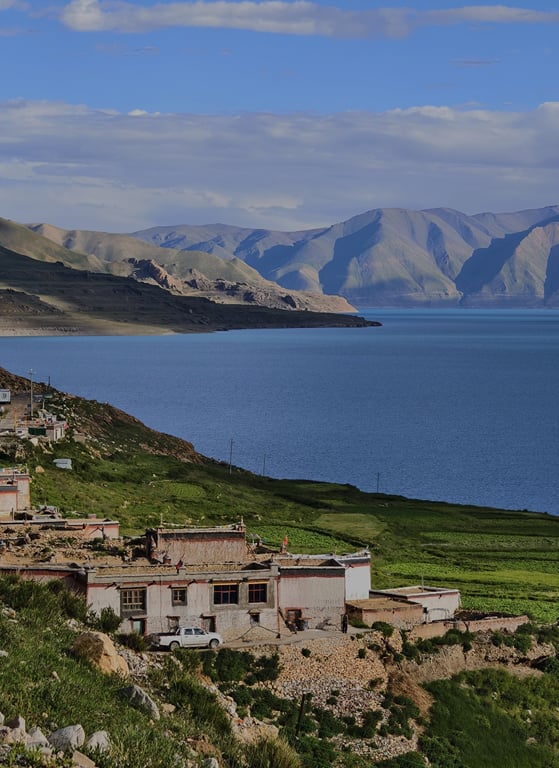
【Yamdrok Lake】is one of the three holy lakes of Tibet, a freshwater lake with crystal-clear, sweet water that is drinkable. The azure lake merges seamlessly with the distant snow-capped mountains, complemented by the colorful mountain ranges on both sides, distinctive Tibetan villages, and grazing cattle and sheep, creating a breathtaking and invigorating journey. Yamdrok Lake covers an area of 638 square kilometers, with a surface elevation of 4441 meters and a shoreline of 250 kilometers. This lake is also believed to be a turquoise earring left behind by a goddess. Standing atop the 4950-meter-high Gambala Mountain and looking south, Yamdrok Lake resembles a sapphire embedded among the peaks, its azure surface smooth as a mirror, reflecting the clear blue sky.
【Karola Glacier】 This glacier is truly magnificent. Located at the border of Langkazi County and Gyantse County, it is backed by Nyainqêntanglha Mountain, one of the four highest peaks in Tibet. The massive glacier stretches from the misty mountaintop to just a few hundred meters from the roadside. Although the glacier's overall appearance is layered in black and white due to years of dust from the road, the upper part, under the sunlight, resembles a giant thangka hanging on the mountainside, shimmering brilliantly. Its fame stems from the fact that several films, including *Red River Valley*, *The Battle of Gyantse*, and *The Ballad of Yunshui*, were filmed here.
A complimentary special lunch is included on the day: a hot pot at the Yamdrok Lake View Restaurant.
【Friendly Reminder】 Except for those with Tibet Entry Permits, foreign and Taiwanese tourists must register at the Shigatse Entry-Exit Administration Office. Tour guides may adjust the itinerary as needed; please follow the guide's instructions and cooperate actively.
【Gawula Pass & Everest Viewpoint】 Following the 108 hairpin bends of the Everest Road, you'll reach the Gawula Pass at an altitude of 5210 meters, serving as the Everest Viewpoint. This is one of the few viewpoints in the world offering simultaneous views of five peaks over 8000 meters. On a clear day, Mount Everest, Lhotse, Makalu, Cho Oyu, and Shishapangma—the five 8000-meter peaks—stand in a majestic line.
【Rongbuk Monastery & Sacred Site】 Located at the foot of Everest, at the end of the Rongbuk Glacier, at an altitude of approximately 5154 meters, it is the highest monastery in the world. Belonging to the Nyingma school of Tibetan Buddhism, it is a place where monks and nuns coexist. The monastery consists of two parts: the old monastery, closer to Everest, contains relics such as the meditation cave of Guru Rinpoche (Padmasambhava). The new monastery offers an exceptional vantage point for viewing Everest; looking south from the monastery, the mountain resembles a giant pyramid, towering majestically and awe-inspiringly. The mani stones and white stupas at the temple entrance are often used as foreground elements for photographing Mount Everest, serene and sacred.
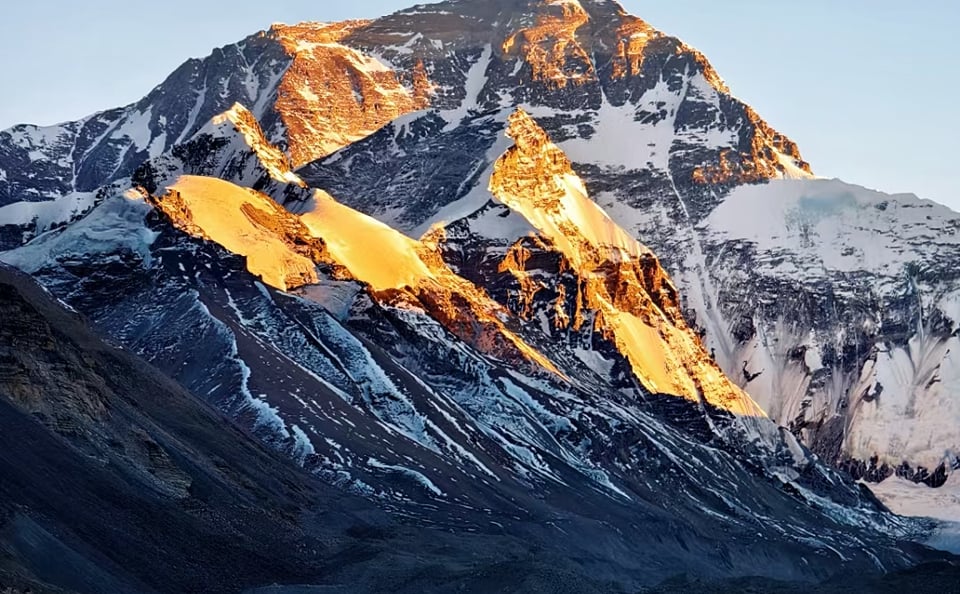
【Everest Base Camp - The Summit】 At an altitude of 5200 meters, this is the closest point on Mount Everest accessible to the average person. The base camp is surrounded by tent hotels and guarded by armed police. Standing here, the straight-line distance to Everest is only 19 kilometers, allowing you to experience its majestic and imposing presence up close. Like a giant, it stands between heaven and earth, radiating a breathtaking charm, its unique aura deeply imprinted on the hearts of every visitor.
【Mount Everest】 Travel along the most beautiful border highway, viewing magnificent snow-capped mountains. Along the way, you can see the world's third highest peak, Kangchenjunga, the world's fourth highest, Lhotse, and Rimana. Mount Everest, at 8848 meters, is the world's highest peak, located in the central Himalayas on the border between China and Nepal. Its summit is perpetually snow-capped, with glaciers hanging in the distance, its silver peaks towering high, creating an incredibly unique and spectacular landscape.
【Friendly Reminder】
Tourists need to transfer from Everest Town (50km from Everest Base Camp) to the Everest Base Camp shuttle bus, and then return to Everest Town the next day. Drivers and tour buses cannot accompany you. Please bring your personal belongings and be prepared to stay overnight at Everest Base Camp.
Accommodation that night is in tents at the Everest Camp: Rebuilt in 2025, with the addition of a restaurant and upgrades from multi-person to double rooms, but still consisting of large tents and shared bathrooms. Conditions are limited, especially at high altitudes where transporting supplies is difficult and basic meals are limited. Your understanding is appreciated.
Due to the cold weather in winter, if the Everest tent camp is closed, the entire group will be booked at a guesthouse in Everest Town (with private bathroom). Accommodation and meals are basic, and the altitude and temperature are low. Please take precautions against the cold. Be careful and prevent altitude sickness. Summer night temperatures are around 0-8 degrees Celsius; please bring warm clothing. Down jackets can also be rented at base camp.
Wake up to the crisp morning air at EBC. Take a quiet moment to embrace the majesty of Mount Everest and the surrounding Himalayas. If you wish, begin your day with some gentle yoga or meditation to refresh both body and mind, or enjoy a peaceful walk around the base camp for close-up views of this extraordinary landscape.
Tip:
ü If weather permits, you can enjoy the Golden Summit view - one of the most breathtaking sights on Earth. The best seasons are spring (April-May) and autumn (September-November), when the skies are usually clear. You'll need to rise early and take a short hike to the viewing point to see the snow-capped peaks glowing golden in the morning light.
After a memorable morning at Everest Base Camp, start your return journey to Shigatse City. En route, make a stop at Gyatso La Pass (5,248 m) - the highest point along the Sino-Nepal Friendship Highway and part of the Mount Everest National Nature Reserve. From the viewing platform, admire the towering peaks of Mount Everest (8,848.86 m), Cho Oyu, Lhotse, and Makalu, all rising above 8,000 meters. The colorful prayer flags fluttering in the wind add a touch of sacred beauty to this spectacular panorama - a perfect spot for photos.
Continue your scenic drive back to Shigatse, check into your hotel, and enjoy a relaxing evening with a warm shower after the day’s adventure. Overnight in Shigatse.
This morning, visit Tashilhunpo Monastery, the spiritual heart of Shigatse.
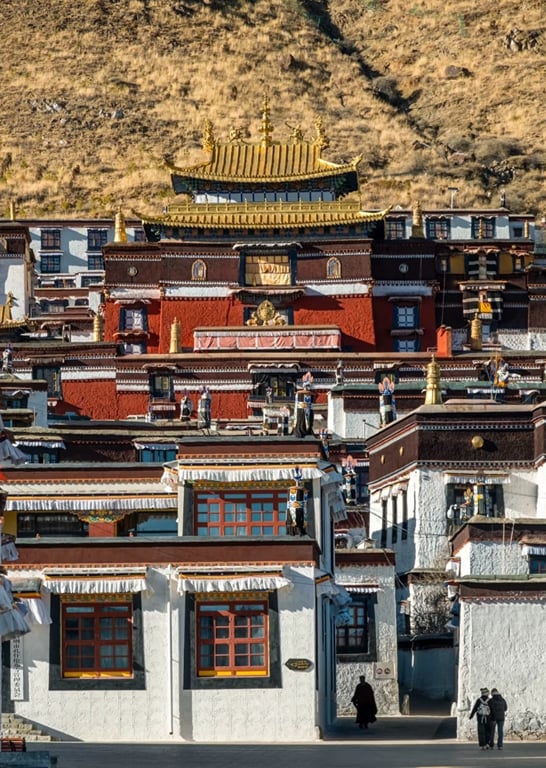
Founded in 1447 by Gyalwa Gedun Drup, the 1st Dalai Lama and a disciple of Tsongkhapa, Tashilhunpo Monastery is the largest monastery in Tibet’s Tsang region and one of the six great Gelug monasteries alongside Drepung, Sera, Ganden, Labrang, and Ta’er. It has long been the traditional seat of the Panchen Lamas, the second-highest incarnation lineage in Tibetan Buddhism after the Dalai Lama.
At its height, the monastery housed over 5,000 monks and included more than 3,000 rooms, 50 affiliated temples, and 30 manors and pastures. Today, you can still sense its grandeur as you explore its vast complex of prayer halls, courtyards, and golden roofs glinting under the sun.
Highlights of Tashilhunpo Monastery:
ü Admire the Maitreya (Future Buddha) Chapel, which enshrines a magnificent bronze statue of the Maitreya Buddha - made with over 115 tons of copper, 250 kg of gold, and adorned with more than 1,400 precious jewels including diamonds and pearls.
ü Pay respect to the sacred stupas (reliquary chortens) of successive Panchen Lamas, exquisitely crafted with gold, silver, coral, pearls, turquoise, and silk.
ü Enjoy a panoramic view of Shigatse city and the serene monastic life, where monks in crimson robes chant sutras echoing through the halls.
After visiting Tashilhunpo Monastery, drive back to Lhasa along the scenic Friendship Highway, following the Yarlung Tsangpo River. The journey takes about 4.5-5 hours (270 km). Upon arrival, check into your hotel and relax for the night.
Overnight in Lhasa.
After breakfast, it’s time to say goodbye to the holy city of Lhasa. Your guide and driver will escort you to Lhasa Gonggar Airport or Lhasa Railway Station. Take your flight or train to next destination or go home.
Travel Tips:
The drive from downtown Lhasa to the airport takes about 1 hour, so we recommend booking flights departing after 10:00 AM.
Please share your flight or train schedule with us in advance to ensure a smooth transfer.
Kindly provide accurate flight or train booking details so that we can arrange the group’s complimentary shared transfer efficiently.
Thank you for choosing us! We hope to see you on your next journey!
Fully refundable until 1 day before start
Non-refundable after 1 day before start
Free Cancellation · Instant confirmation · Meet on location
Free Cancellation · Instant confirmation · Private tour
Free Cancellation · Instant confirmation · Private tour
Free Cancellation · Instant confirmation · Private tour
Free Cancellation · Instant confirmation · Private tour
Free Cancellation · Instant confirmation · Pickup available
Free Cancellation · Instant confirmation · Pickup available
Free Cancellation · Instant confirmation · Pickup available
Our assistant finds tours and checks live dates and prices, and answers your questions.