Tibet: 5 Days-Lhasa & Sacred Lakes Discovery Trip

5 days Free CancellationMin 2 participantsPickup availableInstant confirmationGuided by 71ASIA TOURS

Why we love it?

This 5-day tour offers an immersive experience of Lhasa and its surrounding sacred sites, blending Tibetan Buddhist culture with the region’s striking high-altitude landscapes. In Lhasa, you will explore the Potala Palace, Jokhang Temple, and Barkhor Street, alongside a visit to Sera Monastery where you can witness traditional monk debates on most days. The itinerary includes a day trip to Yamdrok Lake, renowned for its turquoise waters and framed by snow-capped mountains, with a stop at the tranquil Shazhuling Monastery, known for its enshrined mummified figure of Palden Lhamo. Daily hotel breakfasts and one authentic Tibetan or Nepalese specialty meal are included, while airport or train station transfers simplify your arrival and departure. This tour suits travelers interested in cultural heritage, scenic plateau views, and a measured pace to acclimate to Tibet’s altitude.

Inclusions

  • I. Transportation
  • Standard tourist buses (7–26 seats) are used; if there are fewer than 4 participants joining the tour in Lhasa, the travel agency will arrange a taxi for transfers at no extra cost.
  • Vehicles and tour guides for group tours are subject to change; due to limited infrastructure in Tibet, the condition and age of buses may not match those in other regions of China.
  • Most buses on the plateau lack air conditioning or do not use it; using A/C can reduce vehicle speed, and the temperature difference increases the risk of catching a cold.
  • Speedlimits apply to certain road sections, requiring stops and waiting times; the bus will pick up other tourists along the way, so please be punctual. Vehicle types are assigned based on the number of passengers. No refunds are provided if a traveler withdraws from the tour midway.
  • Luggage is limited to one 26-inch suitcase and one carry-on bag per person; excess luggage must be stored at the Lhasa hotel to prevent engine strain.
  • II. Accommodation
  • Standard twin rooms are provided throughout the trip; double-bed rooms and extra beds are not available, and breakfast is not included.
  • Solo travelers may be assigned a triple room, paired with a roommate, or required to pay a single supplement; hotels are assigned centrally and cannot be specified by the traveler.
  • III. Dining
  • Breakfast is included at the hotel, along with one complimentary meal featuring local Lhasa cuisine (Tibetan or Nepalese style; no refund if forfeited); all other main meals are at the traveler's own expense. No refunds for missed meals; travelers may bring their own snacks. The tour guide may switch the complimentary meal between lunch and dinner, but the total number of meals remains unchanged.
  • IV. Tour Guide Services
  • Guides speaking Chinese, English, or both are provided; bilingual guides accompany groups with both Chinese and international tourists. Tour guides and vehicles may change during the itinerary.
  • V. Attraction Tickets
  • Admission tickets for the first entry to Sera Monastery, Potala Palace, Jokhang Temple, Yamdrok Lake, Shazhuling Monastery, and the Tibetan culture experience are included, and visits to all these sites are scheduled. If visits are impossible due to force majeure, alternative attractions will be arranged through consultation.
  • Low-season rates are calculated based on winter ticket discounts; no price adjustments (refunds or additional charges) will be made. Tickets for Potala Palace and Jokhang Temple require real-name reservation; please cooperate with the tour guide's arrangements.
  • VI. Complimentary Transfers (Valid only on the start and end dates of the itinerary)
  • Gonggar Airport: Free pickup (08:00–22:00) and drop-off (08:30–22:30); transfers outside these hours are at the traveler's own expense. Lhasa Railway Station: Free pickup and drop-off.
  • Separate charges apply for early arrivals or late departures. Transfers may be shared with other travelers arriving/departing around the same time, with a maximum waiting period of 2 hours; travelers may alternatively arrange a private transfer at their own expense by notifying the agency in advance. Staff will confirm transfer times one day prior.
  • VII. Complimentary Supplies
  • One portable oxygen canister per person; two 300ml bottles of mineral water daily; additional emergency oxygen canisters provided.
  • VIII. Tibet Entry Permit Processing
  • The travel agency assists in obtaining necessary documents, including the Tibet Entry Permit, Travel Permit, and Military Area Permit.

Exclusions

  • Single Room Supplement: Hotels default to double occupancy (except for dormitory rooms). A single room supplement will apply if a single room is required.
  • Room Loss: Due to full payment, any room charges incurred due to changes in the itinerary are the responsibility of the traveler.
  • Personal Expenses: Laundry, telephone, fax, pay TV, beverages, snacks, tobacco, alcohol, and other personal expenses within the hotel.
  • Unforeseen Circumstances: Due to force majeure and reasons beyond the control of the travel agency (such as natural disasters, war, strikes, epidemics, etc.), or special circumstances such as airline flight issues or insufficient participants, the travel agency reserves the right to cancel or change the itinerary. Any additional costs incurred will be charged by the travel agency.
  • Round-trip Transportation: Round-trip transportation costs to and from Tibet, such as airfare or train tickets, are not included in the tour price. If the travel agency is required to book these tickets, an additional fee will be charged.

Itinerary

Pickup from Lhasa Kongga International Airport

Day 1
  • Day 1: Arrival in Lhasa, Acclimatization / Lhasa (Altitude: 3650m)

    Tashi Delek! Welcome to Lhasa, the capital of the Tibet Autonomous Region. In Tibetan, Lhasa means "holy land" or "land of Buddha," a sacred city in the hearts of Tibetans and a paradise for travelers. With the opening of the Qinghai-Tibet Railway, Lhasa is no longer out of reach. The hustle and bustle and crowds are not Lhasa's true face; let's explore its mysterious charm together.

    Upon arrival at Lhasa Gonggar International Airport or Lhasa Railway Station, our guide will present you with a hada (a ceremonial scarf) and offer warm blessings (Friendly reminder: Please inform us of your mode of transportation and arrival time in advance). We will then escort you to your hotel in Lhasa city (Friendly reminder: The airport is located approximately 60 kilometers southeast of the city center, a 1-1.5 hour drive). After check-in, we suggest you use the remaining time to rest and relax, acclimatizing to Lhasa's high altitude. Allowing your body to fully acclimatize before embarking on your wonderful Tibetan journey is crucial.

    【Friendly Reminder】

     According to regulations, foreign and Taiwanese tourists must be accompanied by a licensed tour guide upon arrival or departure from Lhasa. The travel agency will inform you of the hotel check-in process in advance so you can easily check in at the front desk. If you do not receive a notification, please contact the travel agency staff promptly for assistance. The tour guide will notify you of the meeting time for the next day by phone or SMS before 10 PM.

    【Altitude Sickness Reminder】

     Get plenty of rest and maintain a calm mindset – this is the best way to prevent altitude sickness.

     Avoid strenuous exercise on the day of arrival in Lhasa and do not shower that evening to prevent catching a cold.

     Do not drink alcohol; drink plenty of warm water, eat fruit, and avoid overeating.

     If needed, you can prepare herbal remedies such as Rhodiola rosea, ginseng lozenges, and altitude sickness medication or oxygen supplements in advance to help your body adapt.

     Please always follow the advice of the tour guide and staff. If you feel unwell, immediately inform the tour guide and seek medical attention.

Day 2

Day 2: Lhasa City Tour: Tibetan Culture Experience, Sera Monastery (No debate on Sundays)

  • Day 2: Lhasa City Tour: Tibetan Culture Experience, Sera Monastery (No debate on Sunday)

    Hotel (breakfast included) Lhasa (Altitude: 3650m)

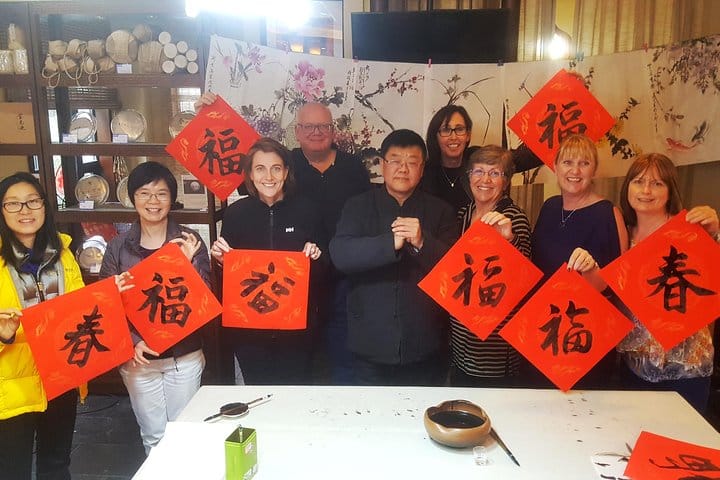
    【Tibetan Culture Experience】 While in Lhasa, you can experience traditional Tibetan handicrafts (Tibetan incense making, woodblock printing, learning Tibetan script). Visit the Tibetan Culture Experience Center to learn how fragrant Tibetan incense is made, and even participate in the process yourself – a completely different experience from buying incense. A knowledgeable teacher will explain the origins of Tibetan script and help you write blessings or your Tibetan name. You can also experience traditional woodblock printing. The incense you make, the printed items, and the Tibetan script written by the teacher are all souvenirs to take home from your Tibet trip.

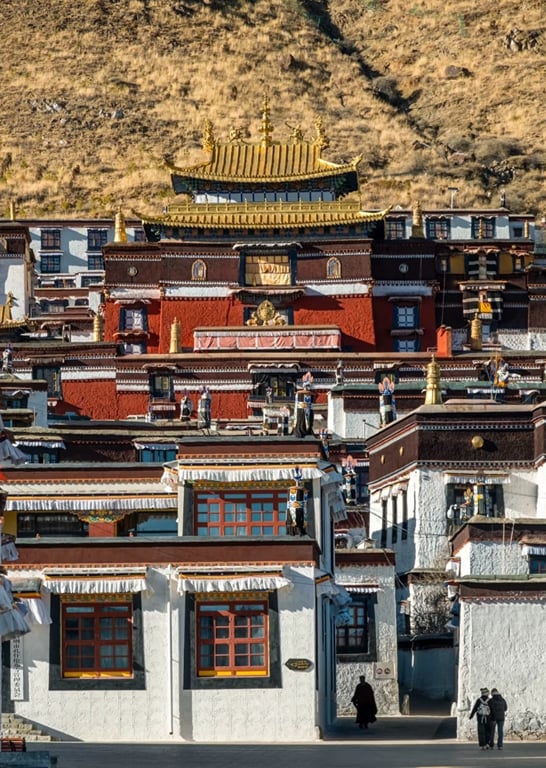
    【Sera Monastery】 As one of the six major monasteries of the Gelug school of Tibetan Buddhism, Sera Monastery, along with Drepung Monastery and Ganden Monastery, is known as one of the three great monasteries of Lhasa. The monastery houses tens of thousands of Vajra Buddha statues, the most famous of which, the "Hayagriva" statue, is located in the protector deity hall of Jizha Cang. Locals would stick their heads into a small shrine and touch the base of the statue. Besides the solemnity of the monastery, Sera Monastery is also known for its monks' debates. In the center of the debate area, monks debate knowledge, some clapping loudly to urge their opponents to answer, others using prayer beads to draw strength and gain the upper hand. Standing in the debate area, one is immersed in the lively sounds. Although tourists cannot understand their Zen teachings, they can truly feel the faith and power of Tibetan Buddhism. Debates usually begin at 3:00 PM.

    【Friendly Reminder】

     If the itinerary falls on a Sunday, only a monastery visit will be conducted; no debates will be held. Thank you for your understanding!

     If the monastery holds special events such as Dharma assemblies or hosts specific individuals on weekdays, the debate activities may be cancelled. Thank you for your understanding!

Day 3

Day 3: Lhasa City Tour: Potala Palace, Jokhang Temple, Barkhor Street

  • Day 3: Lhasa City Tour: Potala Palace, Jokhang Temple, Barkhor Street. Breakfast included at the hotel. Specialty meal*1. Lhasa (Altitude: 3650m)

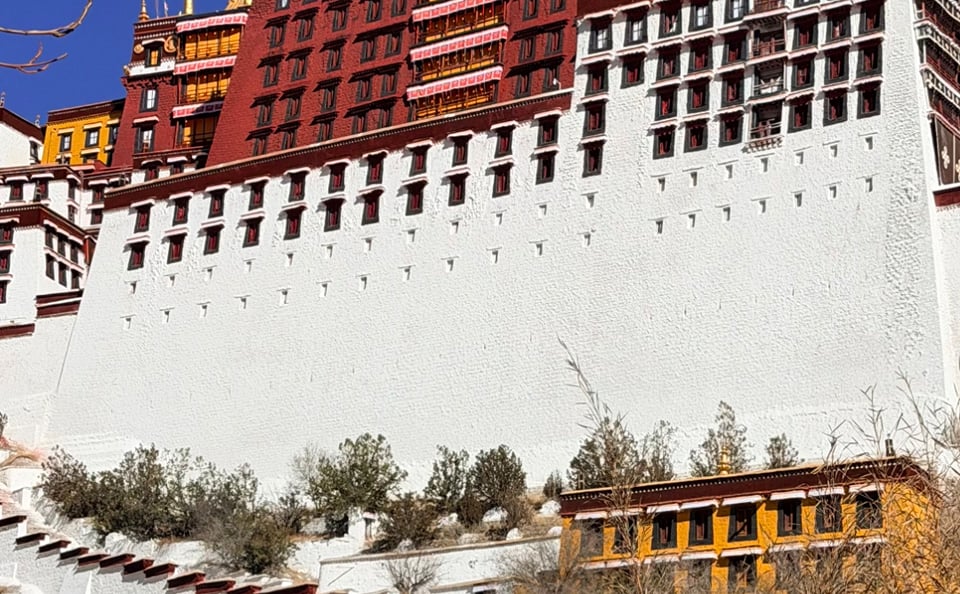
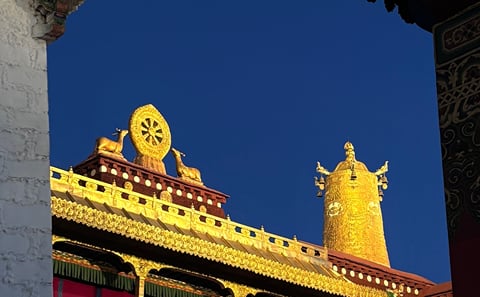
    【Potala Palace】(Maximum 1 hour visit) Songtsen Gampo spent half his life conquering Tibet and the other half building magnificent palaces and temples. Wandering among the resplendent halls, stupas, palaces, and corridors, with dim lighting, low-hanging curtains, and the pervasive aroma of yak butter, it feels like stepping into an ancient dream, irresistibly lost in the scriptures, statues, murals, and distant legends.

    【Potala Palace Ticket Booking Instructions】:

     Potala Palace tickets are booked in advance with real names. Valid identification (ID card, household registration book, Taiwan Compatriot Certificate, or passport) is required for booking. Once booked, tickets cannot be booked again within 7 days from the date of the visit. The travel agency will not be held responsible for any consequences arising from incorrect information provided by the visitor that prevents entry to the Potala Palace. Before visiting, tourists must bring their original valid identification documents. If the name or ID number does not match the actual document used, entry will be denied. Ticket fees are non-refundable once purchased. Thank you for your understanding!

     Visiting times for the Potala Palace are randomly assigned by the Potala Palace Administration via computer; specific times cannot be specified. Please understand that the actual tour itinerary may differ from the suggested itinerary.

     During peak season, Potala Palace visits are limited. Each travel agency in Tibet has a limited number of group booking slots per day. To ensure smooth visits for tourists, travel agencies will use different channels to resolve issues. Due to the special requirements of different ticketing channels, please follow your tour guide's arrangements. The following are normal arrangements:

    1) Each group may be split into multiple smaller groups (it may be necessary to separate group members or tourists who booked together, resulting in them being combined with other unfamiliar group members for entry).

    2) Each smaller group will visit at different times/dates.

    3) Each smaller group will be accompanied by a different tour guide.

     The Potala Palace is closed on Mondays. If a Monday falls on a closed day, the group tour itinerary will be adjusted. Please confirm the final itinerary with your sales representative.

    【Jokhang Temple】(Approximately 1 hour visit) Jokhang Temple blends Tibetan, Tang Dynasty, Nepalese, and Indian architectural styles, becoming a timeless classic of Tibetan religious architecture. Incense burns perpetually in front of the temple, and the deep imprints of prostrations left by devout pilgrims on the bluestone floor. Thousands of butter lamps burn eternally, bearing the marks of time and pilgrims. Here, worship knows no day or night.

    【Jokhang Temple Ticket Booking Instructions】:

     Jokhang Temple tickets require real-name reservation. Tickets for the following day are available daily from 7:00 AM to 11:59 PM via the WeChat mini-program "Jokhang Temple Reservation," on a first-come, first-served basis. Therefore, tickets must be booked one day in advance. Please make your reservation under the guidance of your tour guide.

     Jokhang Temple is a religious temple, not a purely tourist attraction. We apologize for any inconvenience caused by important religious events or other special circumstances that prevent it from being open to the public.

    A complimentary special meal will be provided on the day: a Lhasa-style welcome meal (Tibetan or Nepalese cuisine).

Day 4
  • Day 4: Lhasa → Yamdrok Lake → Xiazhulin Monastery → Lhasa (approx. 240km, 4.5hrs drive) Hotel: Breakfast included. Lhasa (Altitude: 3650m)

    After departure, the route follows the Yarlung Tsangpo River valley, offering panoramic views of the river. The Yarlung Tsangpo River along Provincial Highway 101 is the widest river near Lhasa. Driving along the valley onto Provincial Highway 307, you'll reach a mountainside where you can enjoy a breathtaking and expansive view of the Yarlung Tsangpo River.

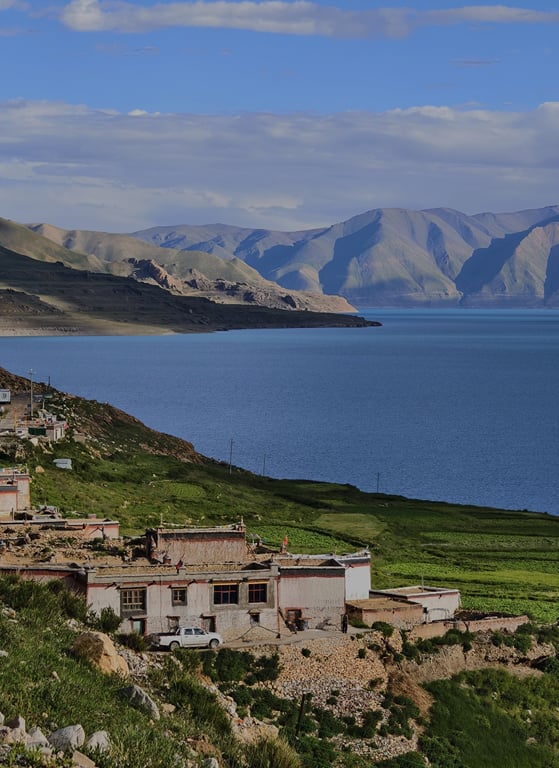
    【Gambala Mountain】 The best vantage point to see the most beautiful side of Yamdrok Lake, the bluest sky, the bluest lake—all here. Here, you'll understand the meaning of "angels' tears in heaven, Yamdrok Lake's blue on earth." However, many photographers say, "No matter how many times I photograph Yamdrok Lake, I can never capture its true beauty..." Many Tibetans on Gambala Mountain can provide yaks for photography; please agree on the price beforehand to avoid unnecessary trouble.

    【Yamdrok Lake】 One of the three holy lakes of Tibet, this freshwater lake boasts crystal-clear waters, as white as mutton fat, and its sweetness makes it drinkable. The azure waters merge seamlessly with the distant snow-capped mountains, complemented by the colorful mountain ranges on both sides, distinctive Tibetan villages, and grazing cattle and sheep, creating a breathtaking and invigorating journey. Yamdrok Lake covers an area of ​​638 square kilometers, with an altitude of 4441 meters and a shoreline of 250 kilometers. It is also believed to be a turquoise earring left behind by a goddess. Standing atop the 4950-meter-high Gangbala Mountain and looking south, Yamdrok Lake resembles a sapphire set amidst the peaks, its azure surface smooth as a mirror, reflecting the clear blue sky.

    【Shazhuling Monastery】 Compared to other popular ancient monasteries, Shazhuling Monastery, offering panoramic views of the Yarlung Tsangpo River, is remarkably tranquil. The monastery is most famous for its enshrined mummified body of Palden Lhamo, who is said to have passed away a thousand years ago at the age of twelve. After her passing, her body naturally shrank to only one elbow's height, adopting the posture of Tara, with one eye even slightly open, as if half-asleep. Legend has it that she was the true incarnation of Green Tara manifesting as Palden Lhamo, and was later enshrined in this temple.

Day 5
  • Day 5: Departure from Lhasa (Lhasa city center to airport: approximately 70km, 1 hour drive) Hotel: Breakfast included.

    After breakfast, airport/train station transfer will be arranged according to your flight schedule, concluding your pleasant trip. The city center is approximately a 1-hour drive from the airport; it is recommended to choose a flight departing after 10:00 AM.

    【Friendly Reminder】

     According to regulations, foreign and Taiwanese tourists arriving in or departing from Lhasa must be accompanied by a licensed tour guide;

     The tour guide will confirm your departure information with you in advance. Please be sure to provide accurate flight itinerary or train ticket reservation so that the travel agency can reasonably arrange a unified free pick-up and drop-off service for the group.

Please Note

  • Regarding gratuities (price does not include driver and guide gratuities): It is recommended that each tourist tip 60 RMB per day (guide: 30 RMB/day, driver: 30 RMB/day).The Potala Palace is closed on Mondays. If a Monday falls on a Monday, the tour itinerary will be adjusted. Please confirm the final itinerary with the sales representative.Tour Notes:The travel agency reserves the right to adjust the itinerary and order of visits based on current circumstances, provided that all included attractions are visited.
  • Both Chinese and foreign tourists are welcome to join our group tour. Taiwanese and foreign tourists need to apply for a Tibet Entry Permit in advance.
  • Hotel Notes (This is a fixed group tour product):
  • We do not accept requests for specific hotels (i.e., hotels listed by the tourists). Our agency reserves the right to the final interpretation of hotel selection. Hotel arrangements by the tourists themselves are not accepted.
  • As the Potala Palace and Jokhang Temple require real-name reservations, please ensure you bring your original valid identification documents, follow the guide's instructions, and strictly adhere to the reservation time for entry.
  • 【Friendly Reminder for Traveling to Tibet】 Tibet, a charming tourist destination combining history, culture, ethnic customs, snowy scenery, and Tibetan Buddhism, is increasingly favored by tourists from all over the world. However, the following points must be noted before traveling to Tibet:
  • Tibet is a high-altitude region. Tourists and their guardians should fully understand the risks of traveling to high altitudes. Tourists with illnesses that preclude travel to high altitudes should not join the tour (such as significant heart, lung, brain, liver, or kidney diseases, as well as severe anemia, high blood pressure, severe colds, etc.). The travel agency has fulfilled its obligation to remind travelers of these conditions, and this should not be concealed during registration.
  • Get plenty of sleep 2-3 days before traveling to Tibet. Avoid staying up too late to prevent increased discomfort upon arrival. Tourists with psychological concerns can take Nodikang or Gaoyuan'an, or Rhodiola rosea 6-7 days in advance (during the high temperatures of July and August, if discomfort occurs after taking these medications, reduce or stop taking them). On the day of arrival in Tibet, Gaoyuan'an or Rhodiola rosea can be continued without side effects. For severe cases, intravenous fluids and oxygen therapy can be administered at a hospital to alleviate altitude sickness as quickly as possible. Most tourists acclimatize to Tibet within 1-1.5 days of arrival. Altitude sickness is caused by oxygen deficiency, and the most common symptoms include headache, dizziness, nausea, vomiting, and insomnia. The most significant factor is psychological, so tourists are advised to relax and not be afraid.
  • On the day of arrival in Tibet, rest quietly in your hotel. Avoid showering at night to prevent catching a cold, which could lead to pulmonary edema or worsen altitude sickness due to oxygen deficiency. Even tourists without adverse reactions should avoid strenuous exercise, alcohol, and smoking to ensure a smooth completion of the rest of the trip.
  • At high altitudes, speak softly and walk slowly. If you are not experiencing adverse reactions, drink plenty of water and eat plenty of fruit. Eat only until you are 70% full to avoid putting extra strain on your digestive system. Carry some high-energy snacks (such as chocolate, beef jerky, biscuits, etc.) with you, as high altitude consumes energy and you need to replenish it in time. Tourists who are in a sub-healthy state or have hidden ailments should bring some American ginseng to keep in their mouths to maintain energy and immunity.
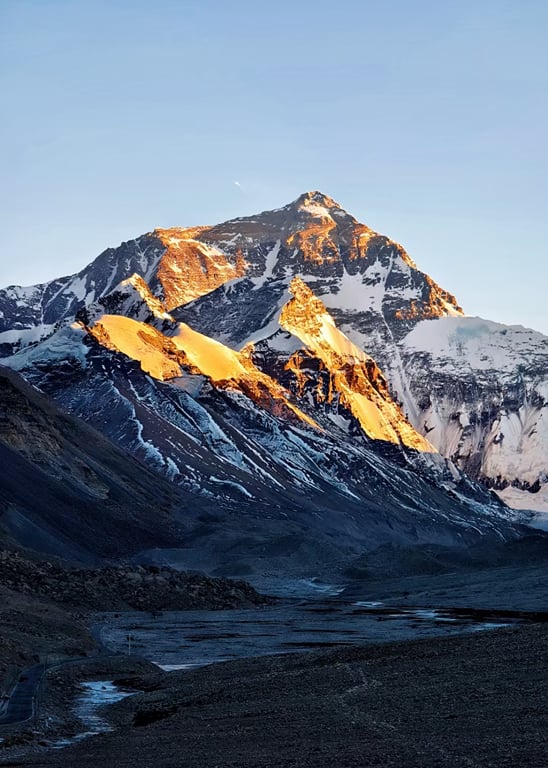
  • The temperature difference between day and night in Tibet is significant, reaching around 13 degrees Celsius. You must bring a thick coat or sweater, especially in high-altitude areas (such as Tingri and Mount Everest), where nighttime temperatures drop to around 0-5 degrees Celsius in August. Down jackets, thermal underwear, and other warm clothing are essential. Power outages are common in remote areas after midnight; tourists on adventure routes need to bring their own flashlights and toilet paper.
  • Due to the vastness of Tibet, transportation between areas is mostly by local tourist buses. On some routes, the travel time may be longer than the sightseeing time. Please be prepared for this before departure and don't be impatient. May the beautiful scenery along the way help you forget your fatigue.
  • Traveling in Tibet is a long and arduous journey, with significant climate differences that may cause travelers to experience acclimatization issues. Travelers should bring necessary medications and common remedies such as bandages, cold medicine, or gastrointestinal medication.
  • Tibet's economic development lags behind that of mainland China, and local infrastructure needs improvement. Hotels, vehicles, and restaurants are not as readily available. Please be prepared and understanding.
  • Tibet uses Beijing time, but there is a two-hour time difference. Therefore, daily routines are also two hours later than in mainland China. Travelers need to adjust accordingly, especially regarding waking up and meals, which are also done on "Tibetan time." Please be aware of the difference.
  • While the Tibetan people are simple and honest, some differences may still exist in today's rapidly developing economy. If you are taking photos, please agree on the price with the photographers beforehand. Never negotiate the price after taking the photo to avoid unnecessary conflicts.
  • Please pay attention to safety and remember not to leave the group or change the itinerary without permission. When going out at night, please travel in groups and be sure to return to the hotel before 12:00 AM to avoid affecting the next day's itinerary.
  • Tibet has strong sunlight and a particularly dry climate; sunscreen, sunglasses, lip balm, and sun hats are essential.
  • Tibet is predominantly inhabited by Tibetans; please respect local customs. When visiting temples, please walk clockwise. Photography, hats, and miniskirts are not allowed inside temples. Avoid discussing political issues with Tibetans, and do not eat dog meat, monkey meat, horse meat, or donkey meat. If Tibetans offer tea or alcohol, try to accept it; if you cannot, politely explain and ask for their forgiveness. Do not take the offered khata (ceremonial scarf) to toilets or other unclean places; keep it safe. Because Tibetan temples and attractions are managed by the management committee and not by the tourism bureau, they may close early or open late. Please be understanding if you encounter such situations.

Know Before You Go

  • Passport required
  • Dress code applies

Cancellation Policy

Fully refundable until 1 day before start

Non-refundable after 1 day before start

From $2,460.42 Per 2 adults