

Private Full-Day Tour of Giza Pyramids and Cairo Highlights
Free Cancellation · Instant confirmation · Private tour

Giza
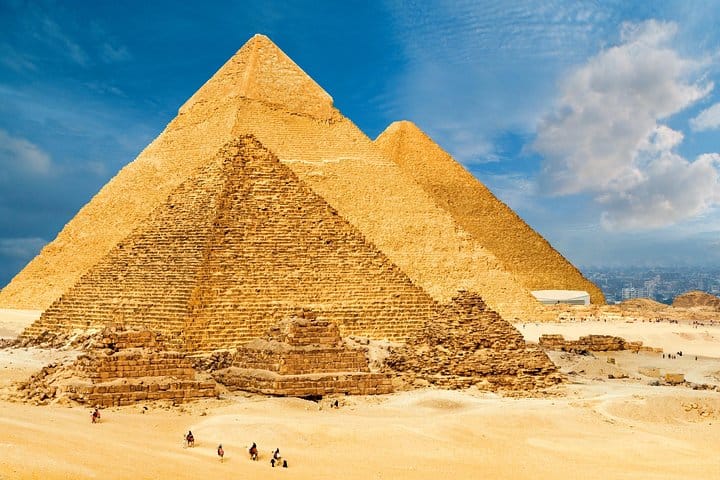
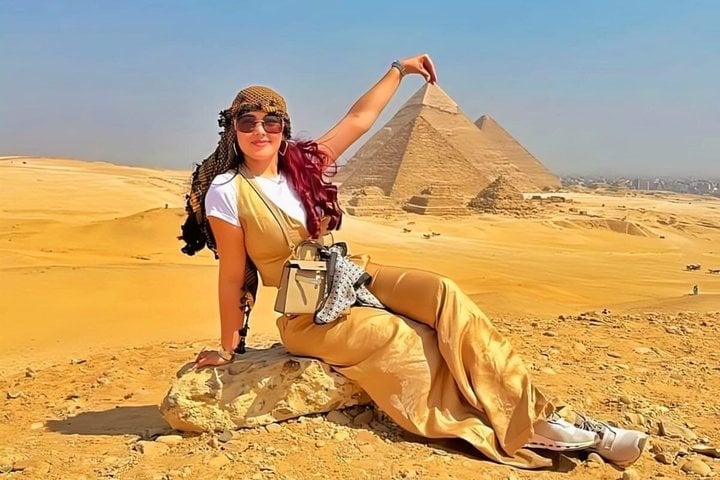
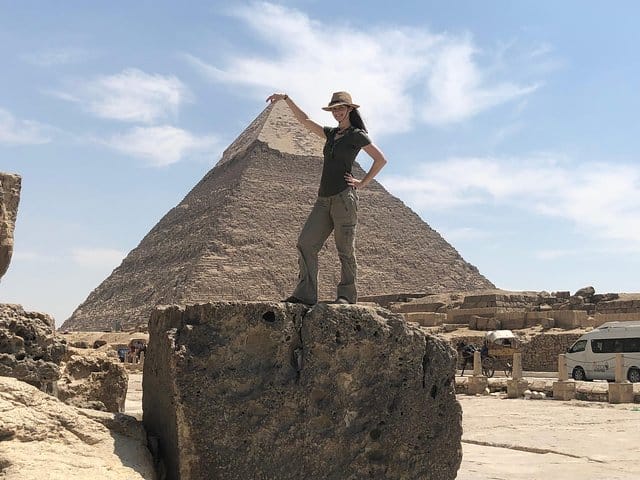
The pyramids of Giza and the Great Sphinx are among the most popular tourist destinations in the world, and indeed already were even in Roman times. Each of these spectacular structures served as the final resting place of a king of the 4th Dynasty (c.2613–2494 BC). The Great Pyramid of Giza was built for king Khufu (c.2589–2566 BC), and the other two for Khafre and Menkaure, his son and grandson. Khufu’s pyramid is both the oldest and largest of the three, and the first building to exceed it in height would not be built for another 3,800 years!
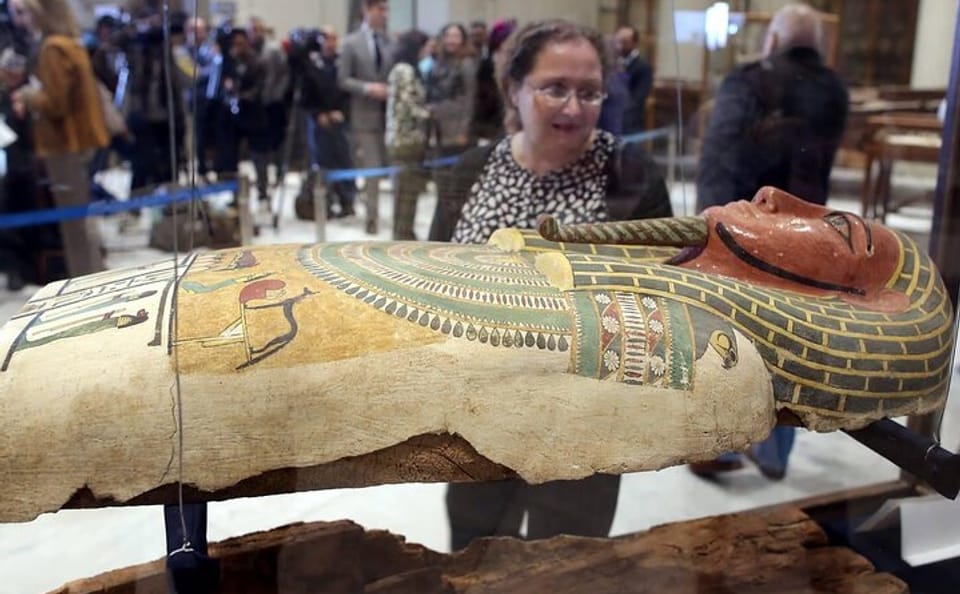
The NMEC is the first of its kind in Egypt and the Arab world. It presents the full range of the richness and diversity of Egyptian civilization throughout the ages, from prehistoric times to the present day by focusing on its continuity and stability as demonstrated by its tangible and intangible heritage. The museum’s exceptional collection includes the royal mummies, which are exhibited in a new interactive display using 21st century cutting-edge technology to go beneath the wrappings and reveal their secrets, in addition to shedding light on the rituals and religious beliefs surrounding mummification in ancient Egypt.
Highlights
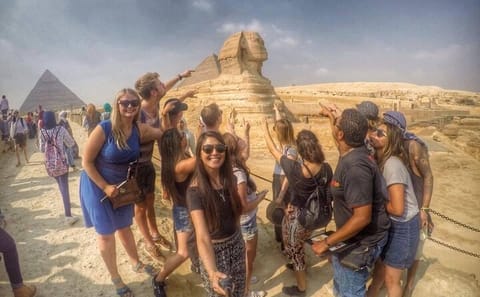
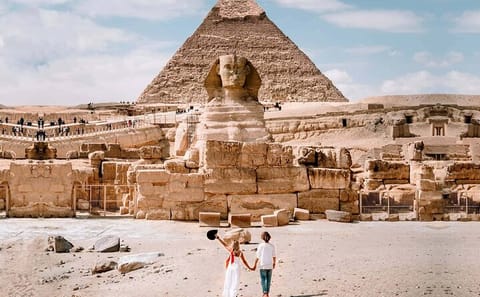
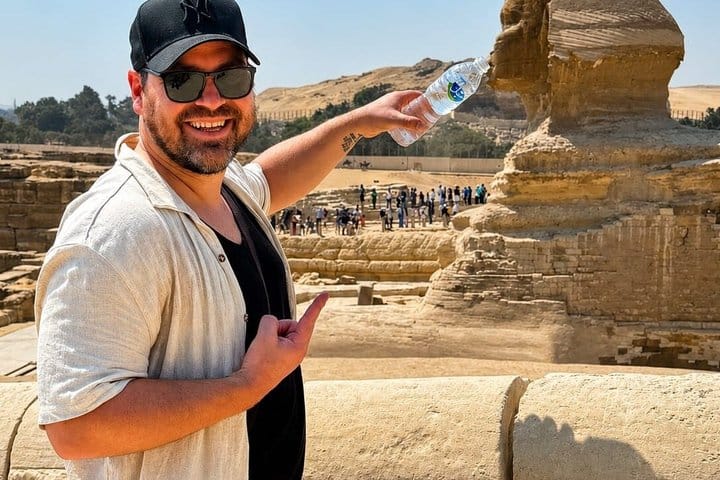
Great Sphinx of Giza, colossal limestone statue of a recumbent sphinx located in Giza, Egypt, that likely dates from the reign of King Khafre (c. 2575–c. 2465 BCE) and depicts his face. It is one of Egypt’s most famous landmarks and is arguably the best-known example of sphinx art
The Great Sphinx is among the world’s largest sculptures, measuring some 240 feet (73 metres) long and 66 feet (20 metres) high. It features a lion’s body and a human head adorned with a royal headdress. The statue was carved from a single piece of limestone, and pigment residue suggests that the entire Great Sphinx was painted. According to some estimates, it would have taken about three years for 100 workers, using stone hammers and copper chisels, to finish the statue.
Located in the Islamic district of Cairo, Khan El Khalili bazaar was originally built to serve as a mausoleum for the Fatimid royal family, and was at that time a part of the Great Eastern Fatimid Palace which was built in 970 CE.
By the 14th century when the first Mamluk sultan ruled the country, Egypt had been ravaged by the Black Death. Nonetheless, it continued to act as a major trade center, and as a result, several commercial properties were constructed. By 1389 the original Fatimid cemetery had been destroyed in order to make way for a large caravanserai.
The original caravanserai can still be seen at Khan El Khalili to this day although most shoppers have little interest in the colorful history of this charismatic bazaar. Instead, most locals are only interested in securing the best possible deals, in a place where haggling is the order of the day
Fully refundable until 1 day before start
Non-refundable after 1 day before start
Free Cancellation · Instant confirmation · Private tour
Free Cancellation · Instant confirmation · Private tour
Free Cancellation · Instant confirmation · Private tour
 Elite
Elite
Free Cancellation · Instant confirmation · Private tour
Our assistant finds tours and checks live dates and prices, and answers your questions.