

 Elite
Elite
Karnak Temple Private Full-Day Tour in Luxor
Free Cancellation · Instant confirmation · Private tour

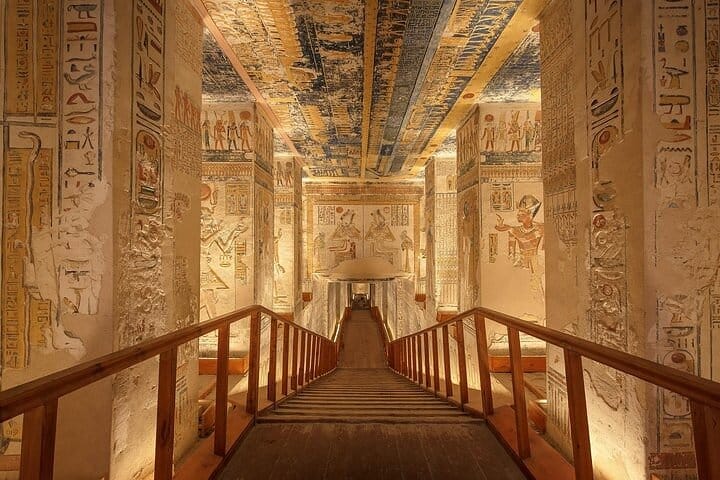
First you will be transported to the Necropolis of Thebes, the Valley of the Kings on the West Bank of Luxor. This ancient necropolis is a must-see for Luxor travelers. There you visit four royal tombs, including the Tomb of Ramses, the Tomb of Horemheb, the Tomb of Merenptah and of course the Tomb of King Tut. The tomb of Tutankhamen is the only tomb in Valley of the Kings that was discovered nearly intact in 1922. The discoverer of his tomb was Howard Carter. Tut's famous golden mask is on display at the Egyptian Museum in Cairo, but here you have the opportunity to be amazed at the royal mummy of the young king
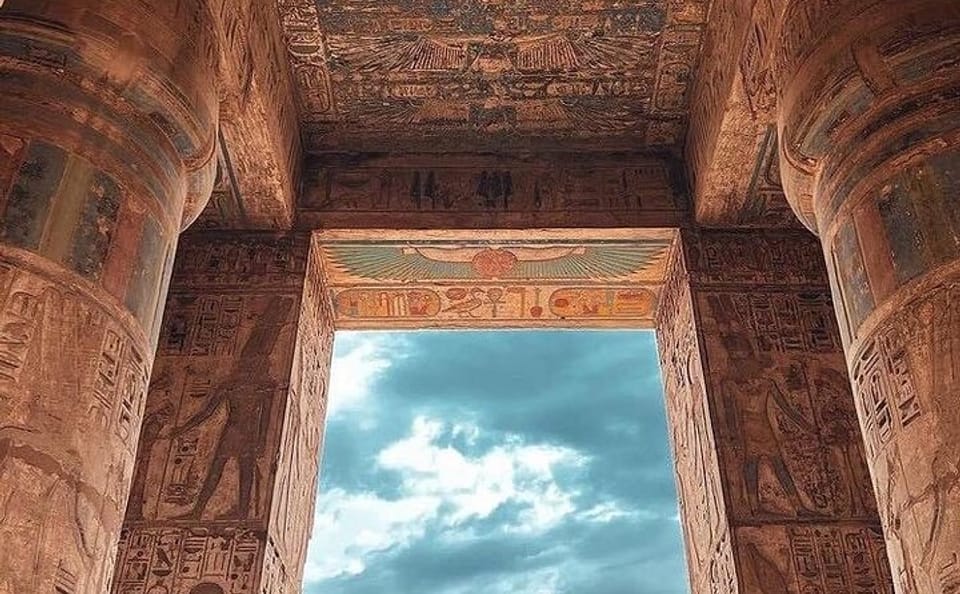
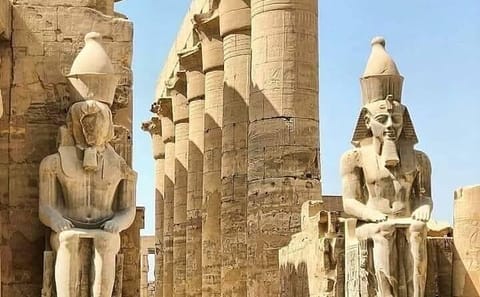
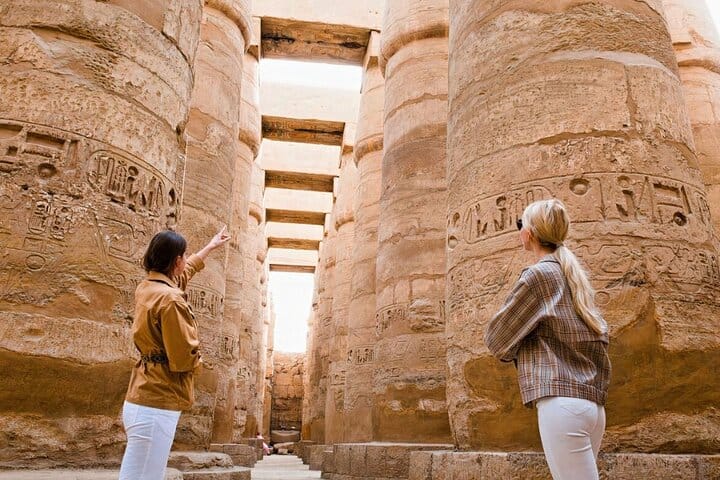
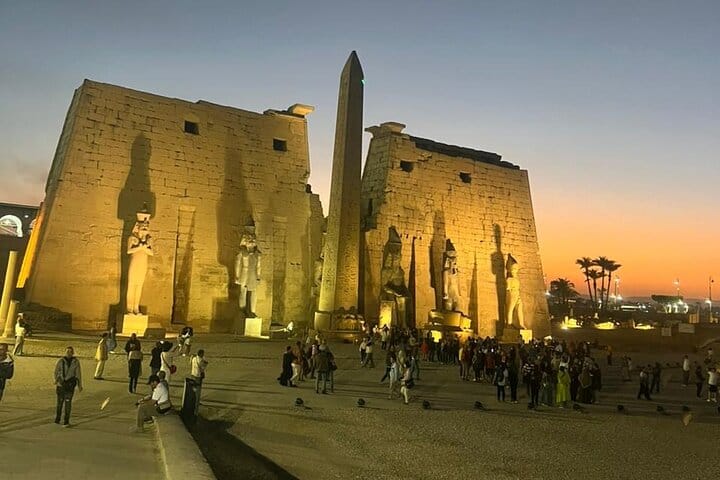
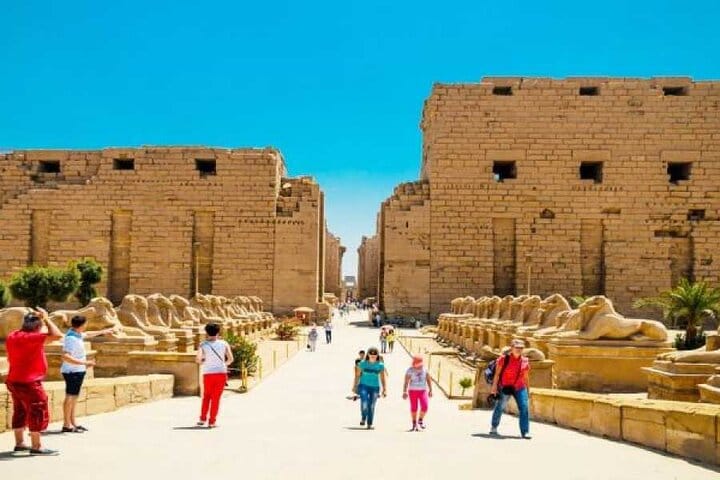
The Karnak Temple Complex, commonly known as Karnak comprises a vast mix of decayed temples, pylons, chapels, and other buildings near Luxor, Egypt
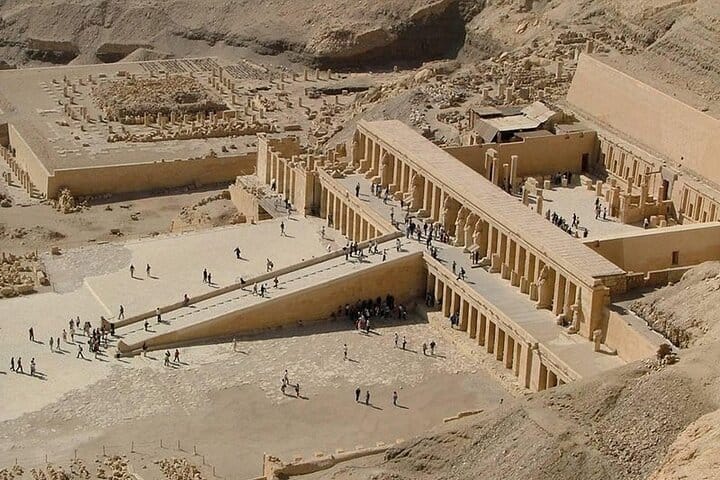
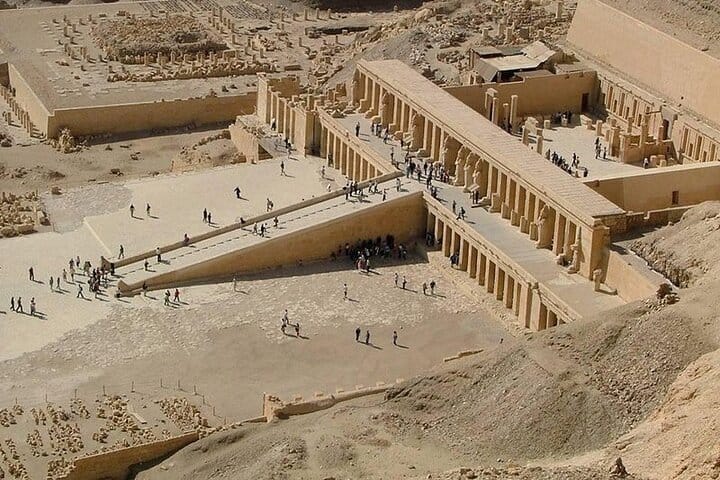
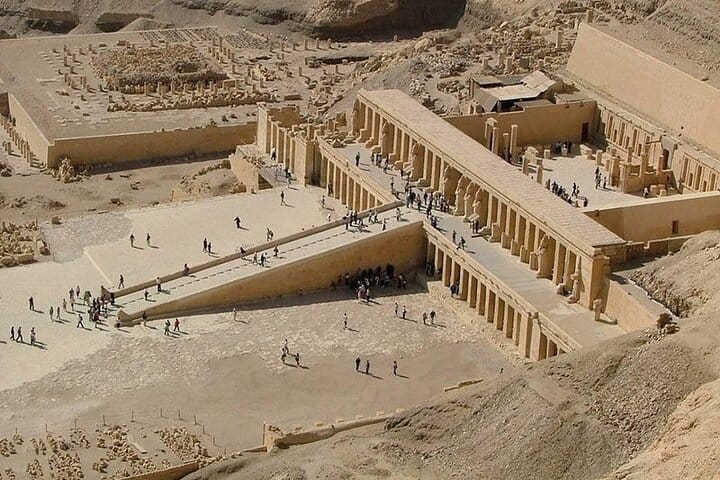
The mortuary temple of Hatshepsut (Egyptian: Ḏsr-ḏsrw meaning "Holy of Holies") is a mortuary temple built during the reign of Pharaoh Hatshepsut of the Eighteenth Dynasty of Egypt.[b] Located opposite the city of Luxor, it is considered to be a masterpiece of ancient architecture.[c] Its three massive terraces rise above the desert floor and into the cliffs of Deir el-Bahari. Her tomb, KV20, lies inside the same massif capped by El Qurn, a pyramid for her mortuary complex. At the edge of the desert, 1 km (0.62 mi) east, connected to the complex by a causeway lies the accompanying valley temple. Across the river Nile, the whole structure points towards the monumental Eighth Pylon, Hatshepsut's most recognizable addition to the Temple of Karnak and the site from which the procession of the Beautiful Festival of the Valley departed. The temple's twin functions are identified by its axes: its main east-west axis served to receive the barque of Amun-Re at the climax of the festival.
The Colossi of Memnon (Arabic: el-Colossat or es-Salamat) are two massive stone statues of the Pharaoh Amenhotep III, which stand at the front of the ruined Mortuary Temple of Amenhotep III, the largest temple in the Theban Necropolis.
Fully refundable until 1 day before start
Non-refundable after 1 day before start
Elite
Free Cancellation · Instant confirmation · Private tour
Free Cancellation · Instant confirmation · Private tour
Free Cancellation · Instant confirmation · Private tour
 Elite
Elite
Free Cancellation · Instant confirmation · Private tour
 Elite
Elite
Free Cancellation · Instant confirmation · Private tour
 Elite
Elite
Free Cancellation · Instant confirmation · Private tour
 Elite
Elite
Free Cancellation · Instant confirmation · Private tour
 Elite
Elite
Free Cancellation · Instant confirmation · Private tour
Our assistant finds tours and checks live dates and prices, and answers your questions.