

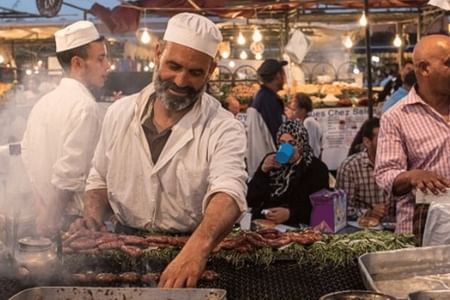
Marrakech Street Food & Night Market Tour
Why we love it?
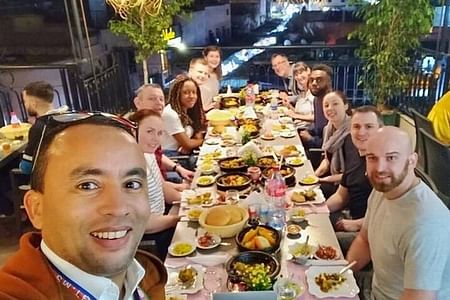
The Marrakech Street Food & Night Market Tour offers a culinary exploration of Morocco's vibrant food scene over a duration of 3 hours and 30 minutes. Participants will sample traditional dishes such as Harira, a hearty soup that holds cultural significance, particularly during Ramadan, and Babbouche, land snails slow-cooked in a flavorful broth. The tour also features the spleen, a unique dish typically stuffed with minced meat, rice, and spices. This experience is ideal for food enthusiasts and adventurous eaters looking to immerse themselves in the local culture through its diverse flavors and cooking techniques. What sets this tour apart is the combination of street food tastings and the lively atmosphere of Marrakech's night market, providing a genuine taste of Moroccan culinary heritage.
Inclusions
- The spleen (usually beef, but sometimes lamb or camel) is stuffed with a savory mixture of minced meat (beef, lamb, or camel), rice, spices, and herbs.
- Harira is not just a soup; it's a traditional, hearty meal that is essential to Moroccan culture, particularly during the holy month of Ramadan when it is used to break the daily fast.
- Babbouche (Snails in Broth) The Preparation: The snails are small land snails (often Helix Aspersa) that are cleaned meticulously and then slow-cooked for several hours in a large, bubbling cauldron.
- selection of delicate Moroccan sweets and cookies is always served alongside the tea. These are typically almond-based and flavored with aromatic ingredients like orange blossom water, honey.
Itinerary
Taste the Moroccan Harira
The Harira found at the bustling food stalls of Jemaa el-Fna in Marrakesh is a quintessential Moroccan culinary experience and much more than just a bowl of soup.
Appearance and Texture
Harira is a rich, thick, and velvety soup. Its name, derived from the Arabic word for "silk" (harir), alludes to its smooth texture. It has a beautiful, earthy red-orange color due to its tomato base. The thickness is achieved by adding a flour-and-water slurry called tadwira near the end of the cooking process, resulting in a consistency that is substantial enough to feel like a meal in itself.
Ingredients and Flavor Profile
The soup is a fragrant and savory blend built around a few core ingredients:
Base: A rich, zesty broth made from tomatoes and tomato paste.
Legumes: It is packed with nourishing staples like lentils (often brown or green) and whole chickpeas.
Starches: Small amounts of broken vermicelli pasta or rice are typically added as a filler.
Herbs and Spices: The deep, complex flavor comes from a robust seasoning of warm spices such as ginger, turmeric (or saffron for color), cumin, and cinnamon, along with a generous blend of fresh, vibrant herbs like cilantro and parsley, and diced celery.
Protein: While traditional Harira may include small pieces of lamb or beef, the versions at the Jemaa el-Fna stalls are often vegetarian or meat-free, relying on the legumes for heartiness.
Traditional Accompaniments
Harira at the stalls is rarely eaten alone. It is traditionally served alongside sweet and savory elements to break up the rich flavor:
- Dates: Sweet, sticky dates are the most common pairing, enjoyed after a spoonful of soup to contrast the flavors.
- Chebakia: This is a sweet, crispy, flower-shaped Moroccan pastry fried and then dipped in honey and often sprinkled with sesame seeds.
- Lemon: A wedge of lemon is often provided for a final, essential squeeze, adding a bright, acidic spark that cuts through the soup’s richness.
Taste the snails with herbs
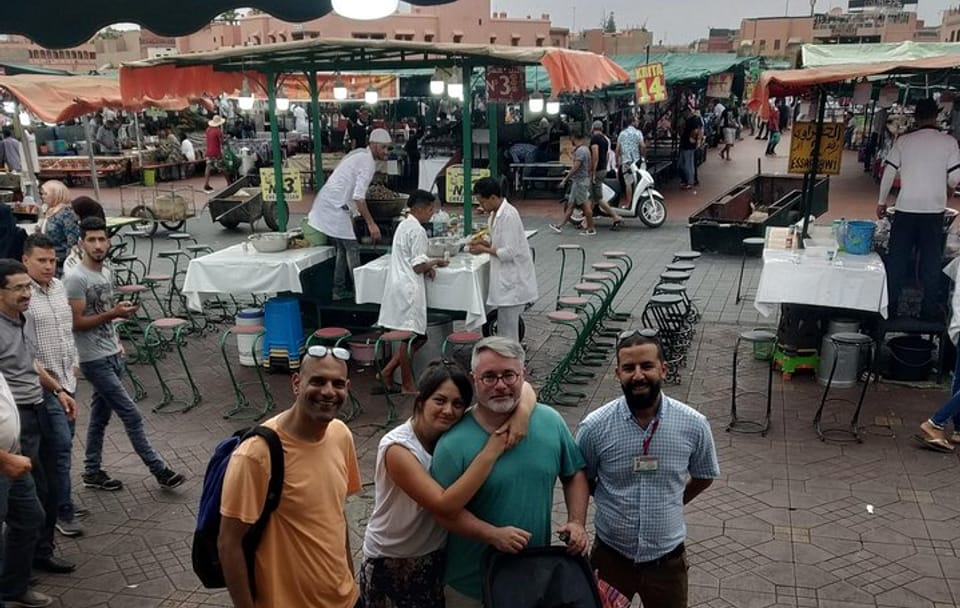
As the sun sets, the UNESCO World Heritage square transforms into a massive open-air restaurant, and the air becomes thick with the smells of spices, grilling meats, and the unique aroma of the snail stalls.
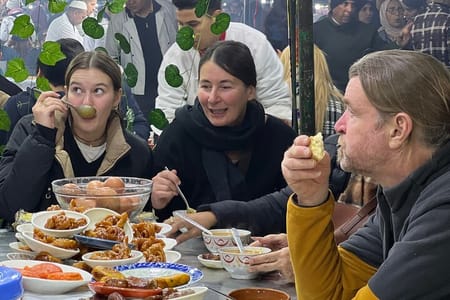
The snails are served piping hot in small, ceramic bowls, accompanied by a toothpick. The vendor may also provide a small side bowl of just the broth. The total cost is usually very inexpensive (around 5 Moroccan Dirhams for a small bowl).
The Ritual: To eat them, you use the toothpick to carefully extract the mollusk from its shell. You then sip the remaining, highly flavorful broth from the bowl.
The snails, known as Babbouche, are typically common garden land snails (Helix Aspersa). Unlike the French style (escargots) which use garlic and butter, the Moroccan preparation is a soup-like dish:
The Broth (The Star): The key to the dish is the intensely aromatic and complex broth in which the snails are simmered for several hours. This broth is made from a blend of over 15 to 35 different herbs and spices, often including:
Aniseed
Thyme
Mint (fresh and dried)
Licorice root
Green tea leaves
Caraway seeds
Chili (for a peppery kick)
The Broth: It is savory, deeply herbal, warm, and often described as having a peppery, slightly medicinal, and soothing taste. The licorice and aniseed often give it a distinct sweetness. Many Moroccans drink the broth as a restorative and digestive aid, especially during colder months.
The Snails: The snail meat itself is tender, soft, and slightly elastic—often compared to clams or squid in texture, but softer. It absorbs the rich, herbal flavors of the cooking broth, resulting in a mildly sweet and earthy taste.
Tasting the spleen experience
Tasting the stuffed spleen, or tehal, is a culinary adventure often sought out by adventurous eaters in Marrakech, particularly in the bustling street food areas. It's a dish deeply embedded in Moroccan tradition, often compared to the Scottish haggis, and it certainly offers a unique experience.
The Appearance and Aroma
The spleen is typically stuffed with a mix of ground meat (beef, lamb, or sometimes camel), rice, herbs, and a vibrant blend of Moroccan spices like cumin, paprika, garlic, and coriander. It is then slow-cooked or roasted.
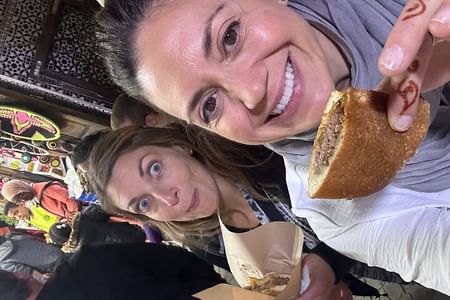
Appearance: When served, it might appear as a dark, irregular, and somewhat mysterious loaf or slice of meat. It's often cut into pieces and served hot, sometimes tucked into a fresh piece of Moroccan bread (Khobz or batbout) to make a spleen sandwich.
Aroma: The initial aroma is robust and meaty, dominated by the fragrant spices. You'll catch strong whiffs of cumin and other earthier notes, which mask any potentially strong "offal" smell, making it quite appetizing.
The Taste and Texture
The flavor profile is rich, savory, and complex, a true reflection of the slow-cooking process and the deep spice marinade.
Texture: The exterior, which is the spleen casing itself, can be a little tough or chewy, but the stuffing inside is generally tender and succulent. The rice and ground meat create a satisfying, crumbly, and dense interior.
Flavor: The dominant taste is meaty and earthy, with a distinct, deep flavor from the offal component. The spices are the key; they infuse the filling with warmth and aromatic complexity. Some may describe a slightly metallic or "irony" undertone, characteristic of organ meats, but this is usually balanced by the tangy addition of lemon juice and the pungency of the spices.
Moroccan Cookies & Royal Tea
Moroccan cookies, known as Dwaz Atay (meaning "what accompanies the tea"), are an integral part of tea-time and social gatherings. They are generally made from natural ingredients and are famous for their unique textures and rich flavors.
Kaab el Ghazal (Gazelle Horns): A true classic. Crescent-shaped, delicate pastry dough wrapped around a fragrant, sweet almond paste, often flavored with orange blossom water.
Fekkas: Moroccan-style biscotti, twice-baked, crunchy, and packed with almonds and raisins, often flavored with sesame and anise seeds. Perfect for dipping.
Ghriba: Simple, chewy, dome-shaped cookies, often featuring coconut or almonds, and sometimes cracked on top for a rustic look.
Briouats/M'hanncha: Cookies where a sweet almond or peanut filling is wrapped in delicate warka (similar to phyllo) pastry and then tossed in a honey-orange blossom water syrup.
Moroccan mint tea, or Atay, is more than just a drink; it is a profound symbol of hospitality, friendship, and ritual in the Maghreb. It is often jokingly referred to as "Berber Whiskey."
Key Characteristics:
Ingredients: The base is Gunpowder green tea, mixed with a generous amount of fresh spearmint leaves (Naanaa), and a substantial amount of sugar.
Flavor Profile: It is wonderfully sweet and intensely refreshing due to the spearmint. The green tea provides a mild, herbaceous backdrop.
The Ritual: The preparation and serving are ceremonial, traditionally performed by the head of the household.
The tea is poured from a height into small, decorative glasses, which aerates the tea and creates a light, desirable froth ("the turban") on top.
Guests are typically served at least three glasses, with each steep offering a slightly different flavor.
The Proverb: A famous Maghrebi proverb describes the three servings:
"The first glass is as gentle as life."
"The second is as strong as love."
"The third is as bitter as death.
Please Note
- Wheelchair accessible
- Not stroller accessible
- Infant seats unavailable
- Wheelchair accessible
Know Before You Go
- Animals or pets allowed
- Public transportation nearby
- Infants must sit on laps
Cancellation Policy
Fully refundable until 1 day before start
Non-refundable after 1 day before start