Karnak

Karnak Temple, Egypt
Walk the largest religious complex ever built — 2,000 years of pharaohs, one restored processional avenue, and the tallest standing obelisk in Egypt.
Location
East Bank, Luxor — 2.5 km north of Luxor Temple
Typical visit
2–3 hours (3–4 with the Open Air Museum)
Best time
6:00–8:00 AM at opening, or after 3:30 PM
Entrance fee
~600 EGP foreign adult (rate confirmed at booking)
Dedicated to
Amun-Re, king of the Egyptian gods
Built over
2,000+ years, 30+ pharaohs
Sound & Light Show
Separate ticket, nightly at 7:00, 8:15 & 9:30 PM
UNESCO status
Part of Ancient Thebes World Heritage Site (1979)

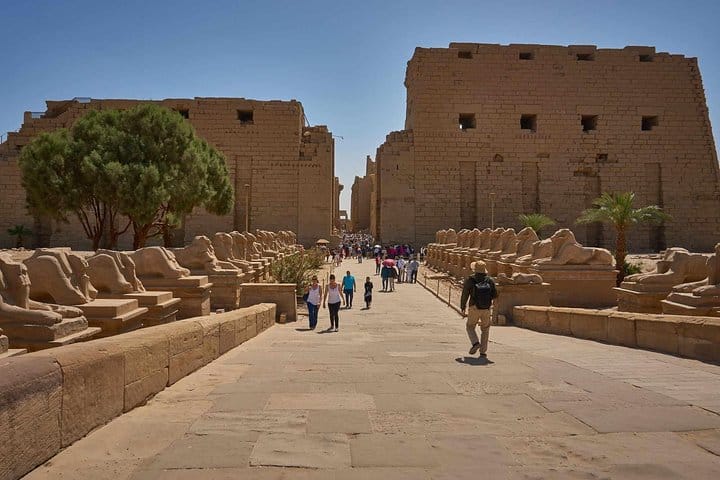
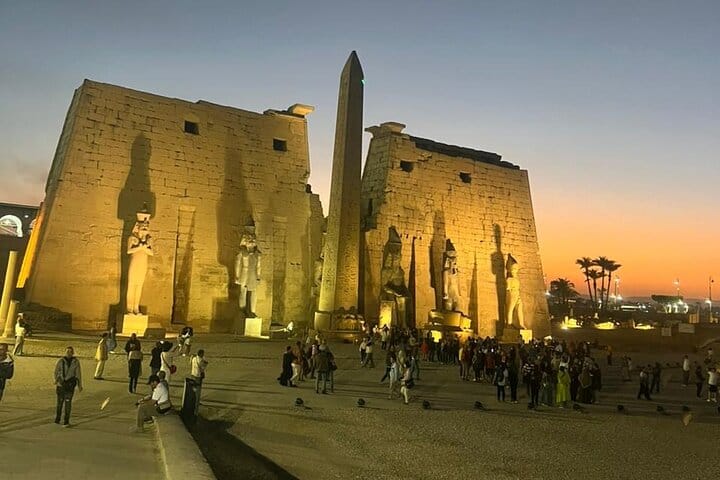
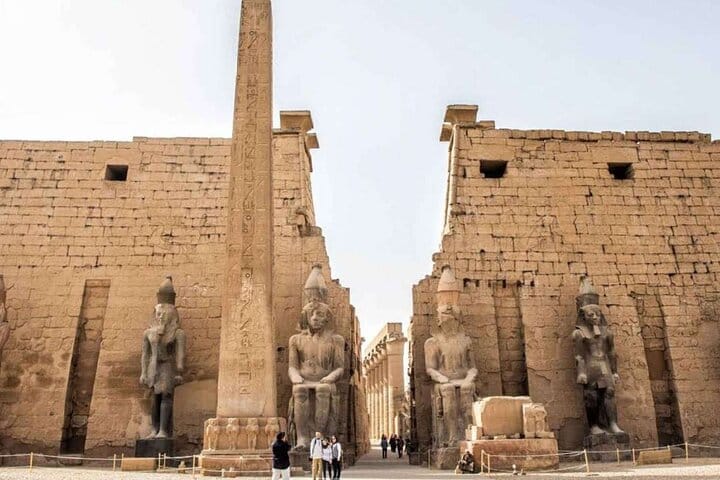
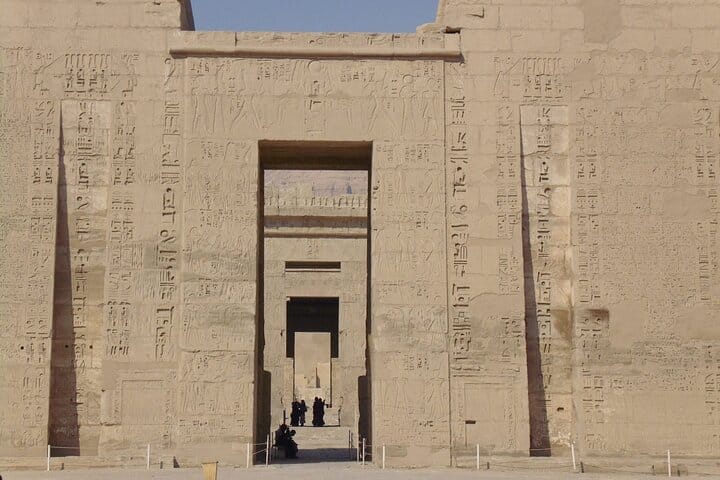
Karnak isn't a single temple — it's a walled religious city that Egyptian rulers kept building, dismantling, and rebuilding for more than 2,000 years, from the Middle Kingdom reign of Senusret I around 1970 BCE through the Ptolemaic period, with more than 30 pharaohs adding pylons, chapels, and courts in honor of Amun-Re. The result, on Luxor's East Bank, is the largest religious complex ever constructed: roughly 100 hectares in total, anchored by the 61-acre Precinct of Amun-Re that makes up almost the entire modern visitor route.

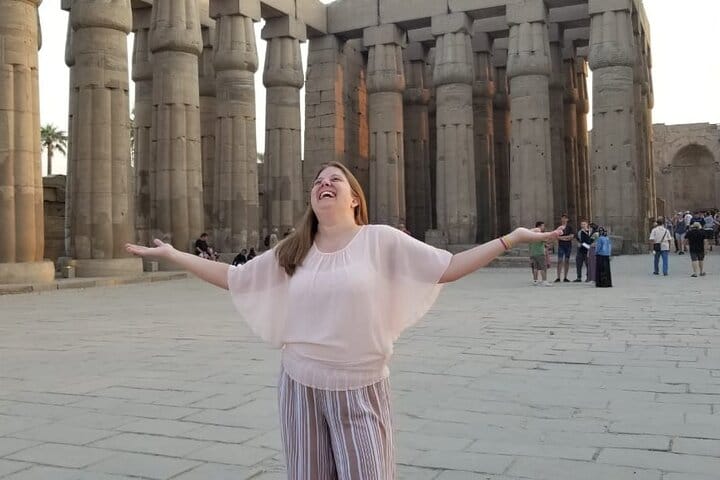
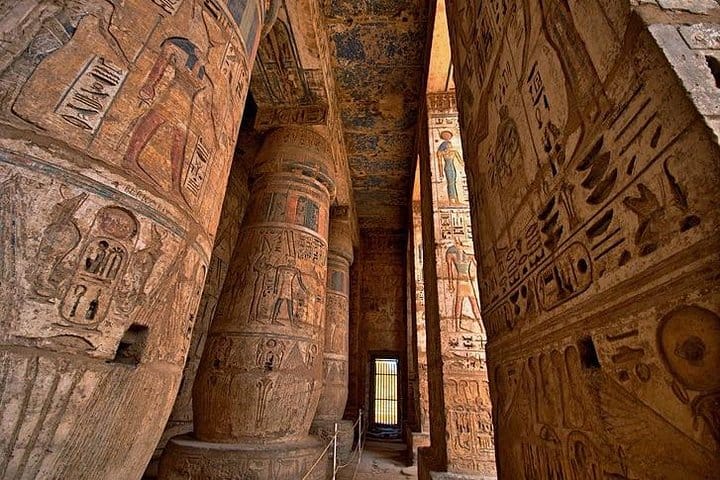
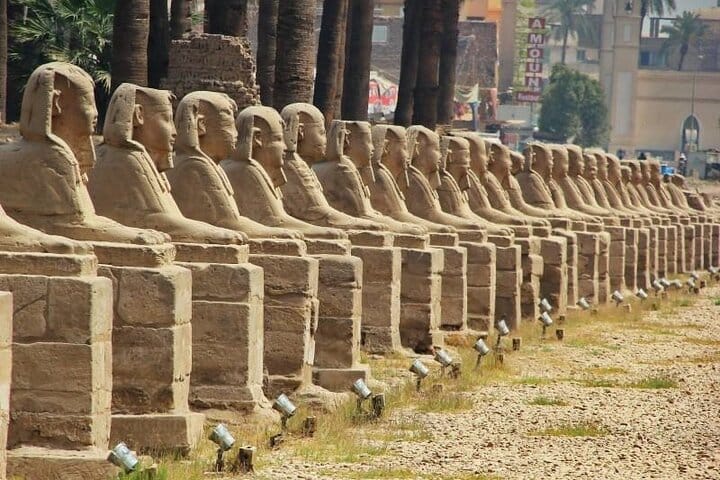
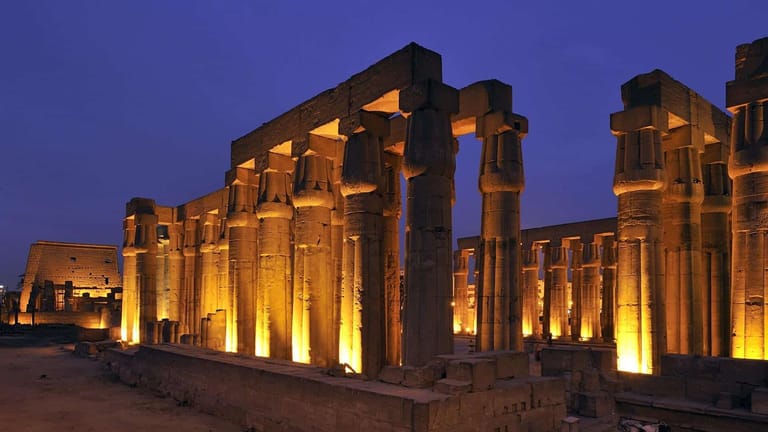
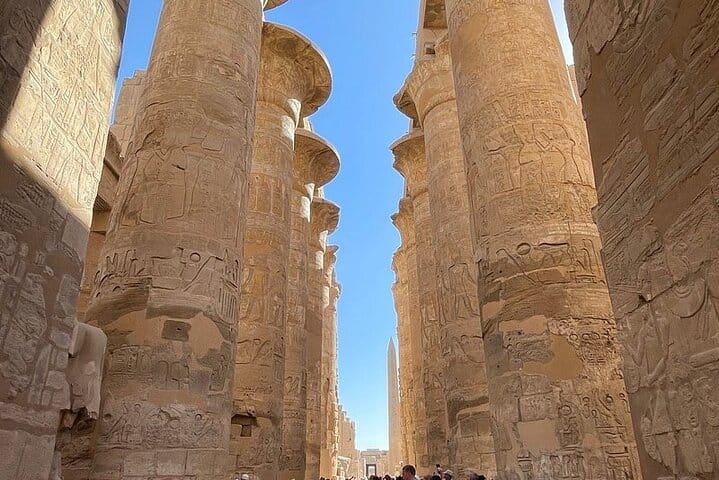
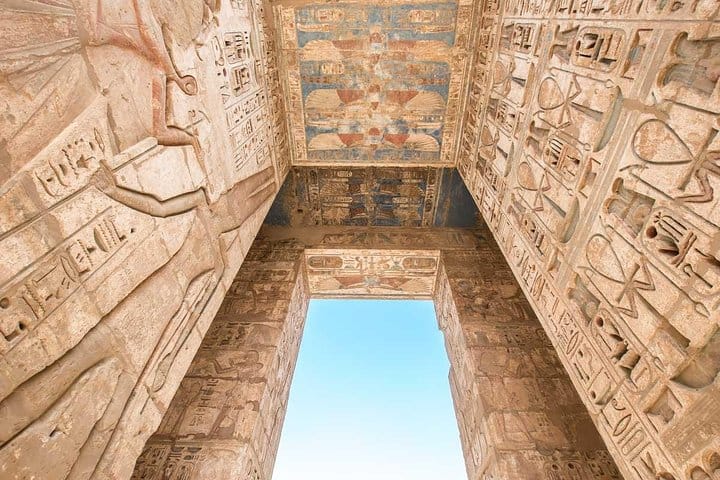
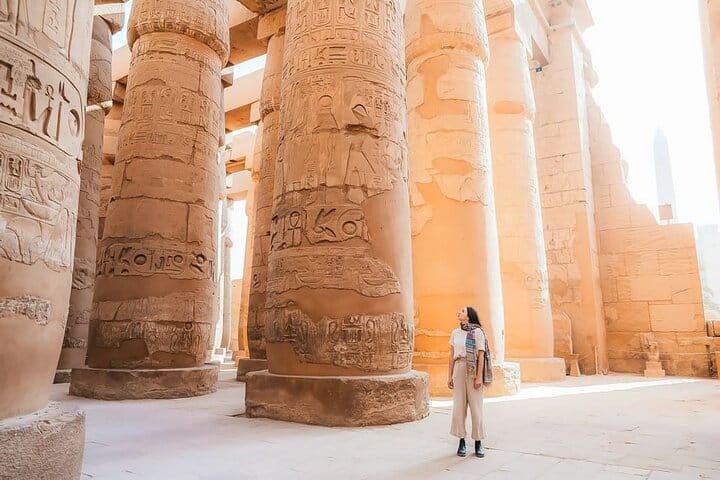
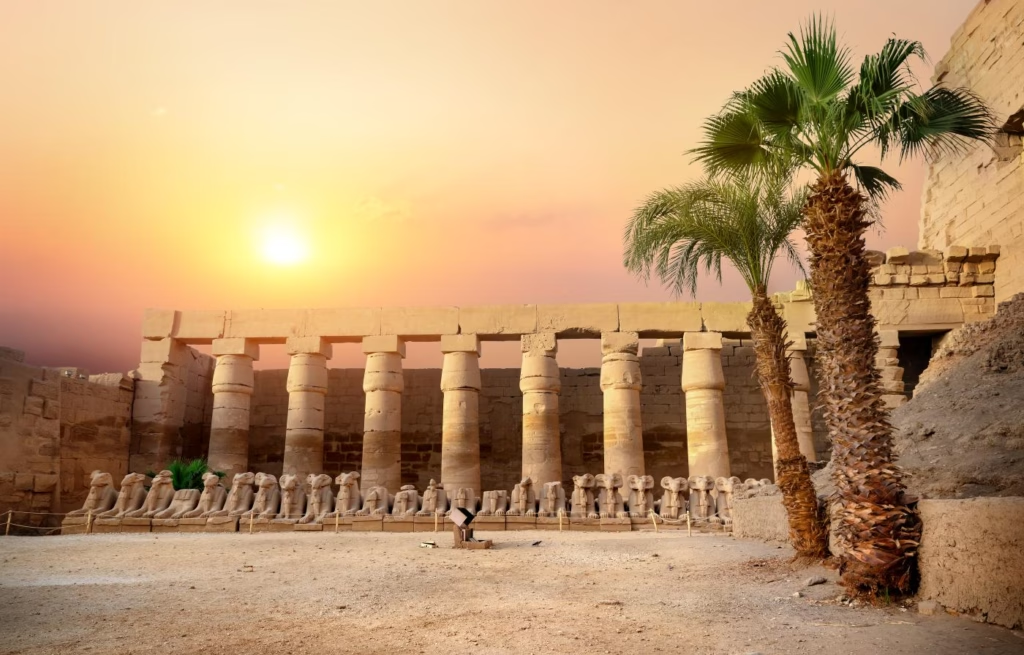
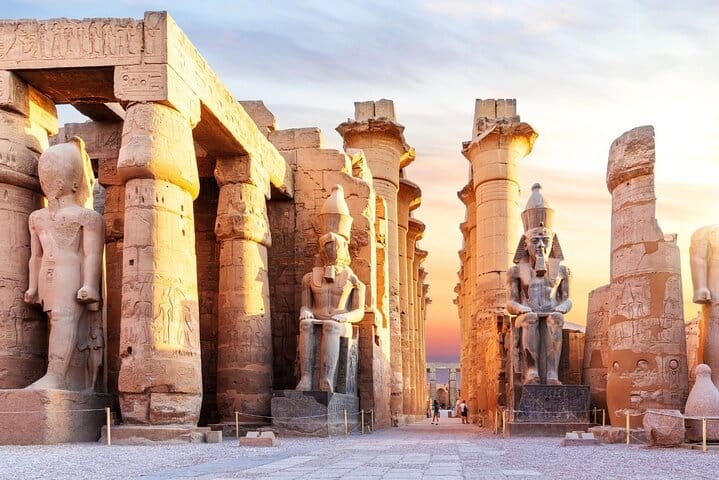
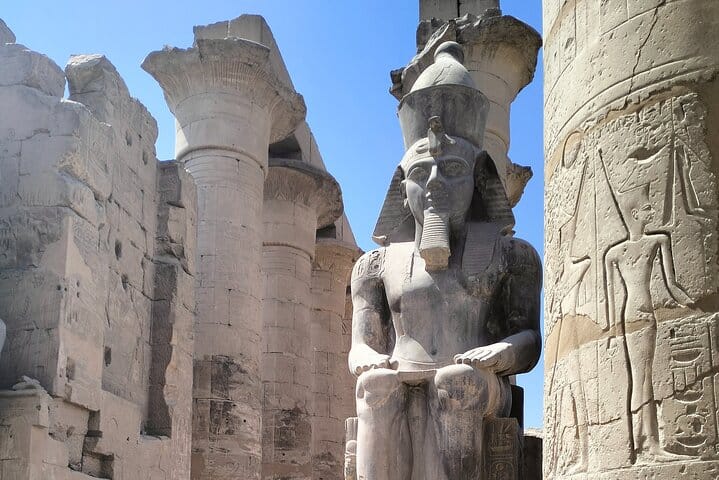
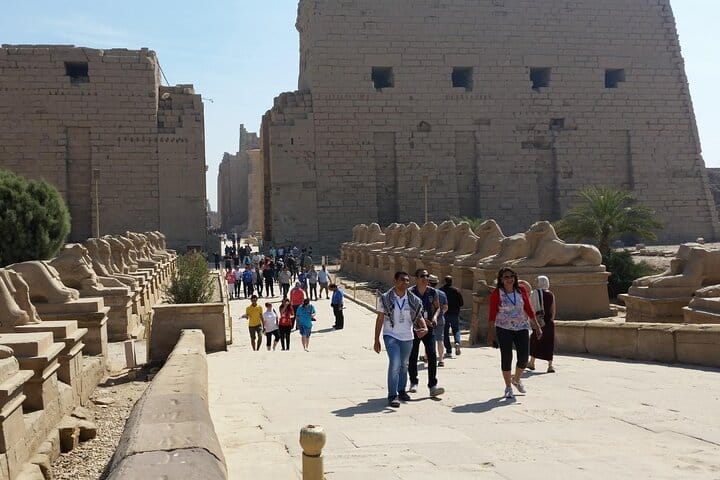
Nothing quite prepares first-time visitors for the Great Hypostyle Hall. Begun under Seti I and finished by his son Ramesses II in the 13th century BCE, its 134 sandstone columns fill more than 5,000 square meters — the twelve tallest, lining the central aisle, rise about 21 meters, roughly seven stories, and still carry traces of the paint that once covered every surface. Beyond the hall stands Hatshepsut's single-piece red granite obelisk, at around 29 meters the tallest surviving obelisk in Egypt; its twin was carried off to Rome by the emperor Constantine. Nearby, a still Sacred Lake once used for priestly purification is edged by a giant scarab statue that visitors traditionally circle for luck. A restored 2.7-kilometer Avenue of Sphinxes now reconnects Karnak to Luxor Temple, letting travelers walk the same processional route ancient priests used during the annual Opet Festival.

46 results
Sort by:
Filters
Booking
Experience
Minimum age
Guidance

Admission

Entry to the Precinct of Amun-Re is a standalone ticket — it is not bundled with Luxor Temple or with the Karnak Open Air Museum, so check each listing's inclusions before you book. The options below range from skip-the-line entry only to fully guided visits with a licensed Egyptologist; all prices shown reflect current admission plus any add-ons.

Tours & Activities

From sunrise access before the tour buses arrive to half-day trips that pair Karnak with Luxor Temple across the restored Avenue of Sphinxes, these tours are run by licensed local guides who know which halls to catch in early light and which to save for late afternoon, when the stone turns gold and the crowds thin out.

Plan your visit

  • Karnak is an open-air archaeological site, not an active place of worship — there's no religious dress code, but bring a hat, sunglasses, and at least 1 liter of water per person; shade is scarce after 9 AM.
  • The Karnak Open Air Museum, home to the reconstructed White Chapel of Senusret I and Red Chapel of Hatshepsut, requires a separate ticket at a separate booth near the First Pylon.
  • Standard camera use is included in the entry ticket; tripods and professional video gear require an extra on-site permit.
  • Wear closed, comfortable shoes — the route crosses uneven sand, gravel, and broken stone for most of its length.
  • Local tradition holds that walking three times around the Sacred Lake's scarab statue brings good luck; it's a popular, low-effort photo stop near the lake's northeast corner.
  • Planning to see Luxor Temple too? Ask your guide about walking the restored Avenue of Sphinxes (about 30–40 minutes on foot) instead of taking a taxi.

Frequently asked questions

Is Karnak Temple included in the same ticket as Luxor Temple?

No. Karnak, Luxor Temple, and the Karnak Open Air Museum each require separate tickets, though several tours bundle Karnak and Luxor Temple into one paid itinerary.

Do I need a guide to visit Karnak?

It's not required, but the site has almost no on-site signage explaining individual chapels and reliefs, so a guide — or a well-reviewed audio guide — adds real context for a complex this large.

Is the Sound and Light Show worth adding to my visit?

It's a separate evening ticket and a different experience from the daytime visit, with narration in rotating languages. Worthwhile if you have two nights in Luxor; skippable on a tight one-day stop.

Is Karnak wheelchair accessible?

The main path from the First Pylon through the Great Hypostyle Hall is relatively flat, but sand, loose gravel, and uneven stone in the outer precincts limit full accessibility.

How much time should I budget for Karnak?

Plan on 2–3 hours for the Precinct of Amun-Re route, plus 45–60 minutes more if you're adding the Open Air Museum.