Mortuary Temple of Hatshepsut

Hatshepsut Temple, Deir el Bahari, Theban Necropolis, Egypt
Walk the three cliffside terraces of ancient Egypt's most powerful female pharaoh, built to face Karnak across the Nile.

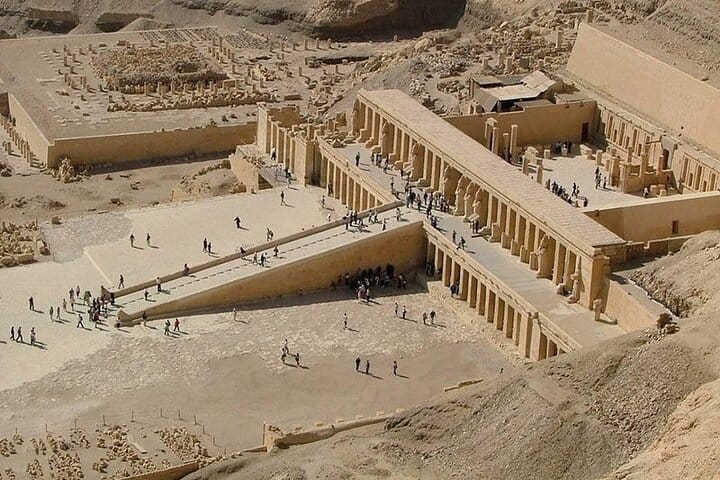
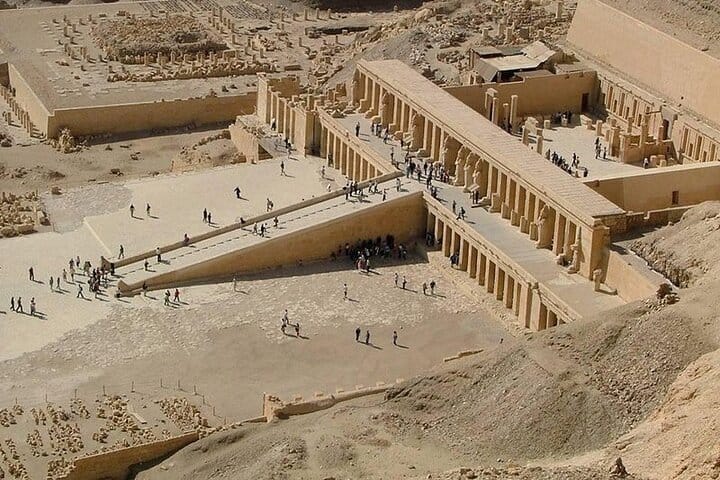
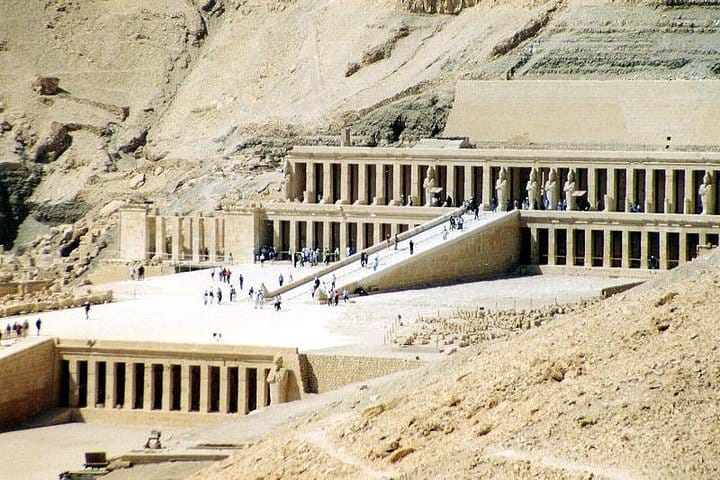
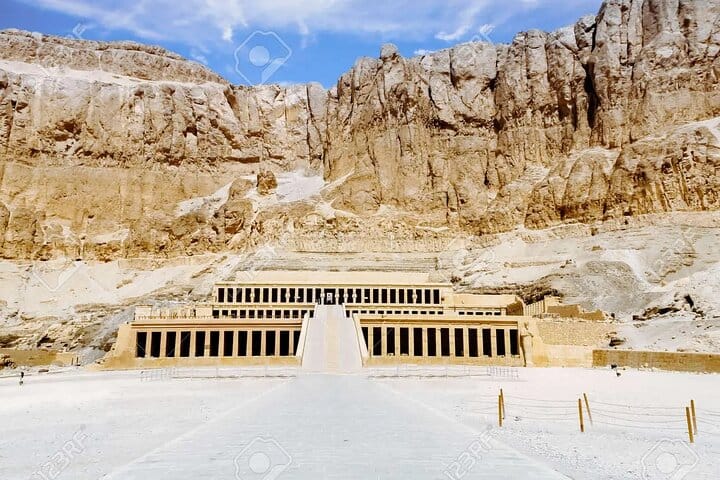
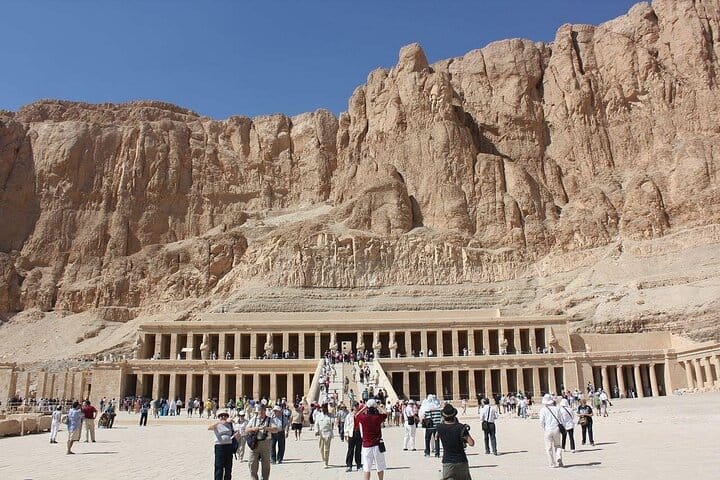
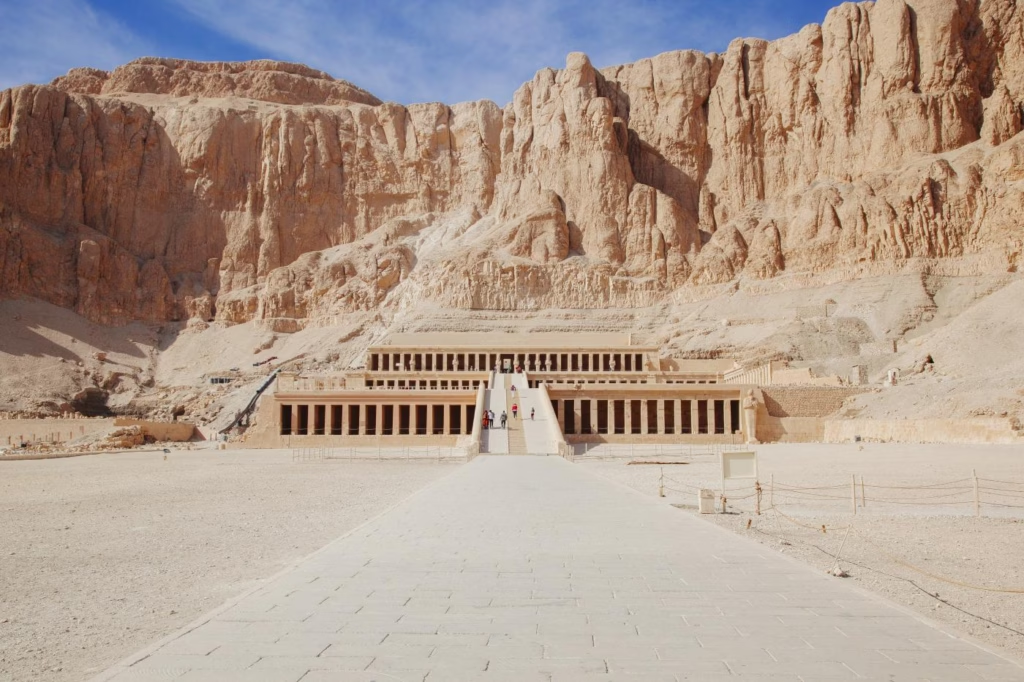
Carved directly into the limestone cliffs of Deir el-Bahari on Luxor's West Bank, the Mortuary Temple of Hatshepsut has stood since around 1473–1458 BCE, commissioned by Hatshepsut, one of only a handful of women to rule ancient Egypt as pharaoh in her own right. She called it Djeser-Djeseru, "Holy of Holies," and put her chief steward Senenmut in charge of the design: three colonnaded terraces stacked up the cliff face and linked by long central ramps, positioned on a direct sightline across the Nile to the temple of Amun at Karnak.

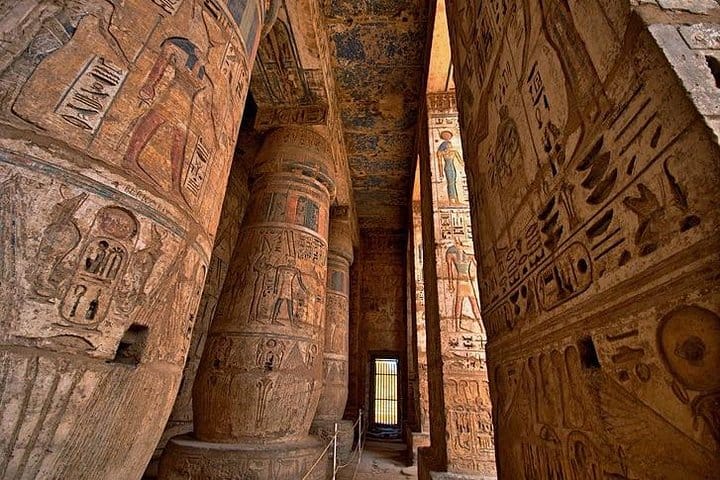
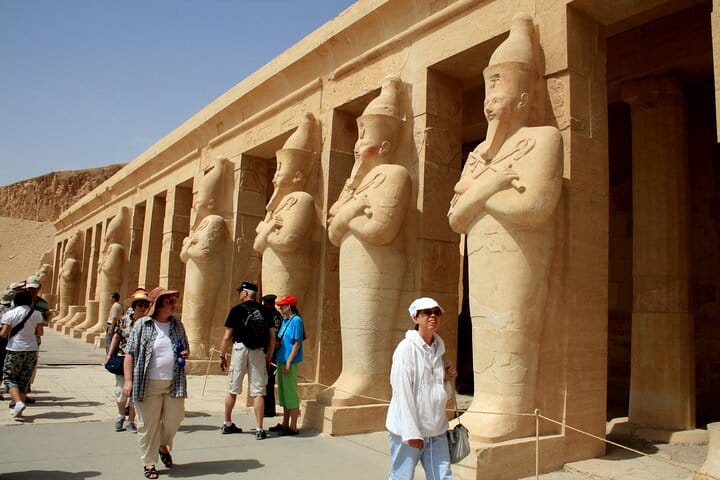
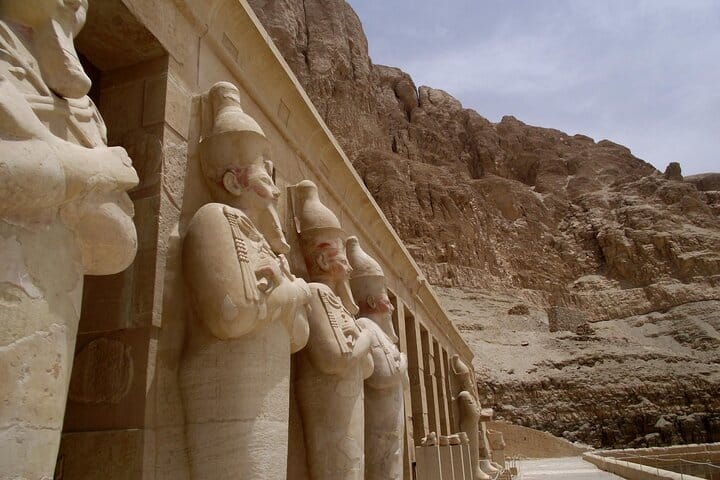
The middle terrace holds the temple's best-known reliefs — a detailed, near-complete record of Hatshepsut's trading expedition to the land of Punt, showing Egyptian ships, stilt-built Puntite houses, and cargoes of myrrh trees, ebony, and gold. Chapels dedicated to Hathor and Anubis flank the terraces, and mummiform statues of Hatshepsut as Osiris line the uppermost portico. Decades after her death, her successor Thutmose III had many of her images and cartouches chiseled away — damage still visible today, though much of what visitors see now comes from restoration carried out by a Polish-Egyptian mission working on site since 1961. It remains one of the few Theban monuments built to be seen from a distance, rather than approached through pylons and enclosed courts.

43 results
Sort by:
Filters
Booking
Experience
Minimum age
Guidance

Admission

Entry to the temple is ticketed separately from the Valley of the Kings, and camera or video use inside carries its own small fee. The options below range from entry-only tickets to guided visits that bundle transport and the rest of the West Bank in one trip.

Tours & Activities

Most travelers see the temple as part of a wider West Bank circuit rather than on its own. The tours below pair it with the Valley of the Kings, the Colossi of Memnon, or a private Egyptologist guide who can walk you through the Punt reliefs terrace by terrace.

Plan your visit

  • Arrive at opening (6am) if you can — tour buses cluster between 8 and 11am, and the open terraces offer no shade once the sun is up.
  • There's no shade anywhere on site, even in cooler months. Bring water, a hat, and sunscreen regardless of season.
  • Photography with a phone is generally included in the entry fee; cameras with detachable lenses or tripods usually require a separate paid permit at the gate.
  • The central ramps and upper-terrace stone are uneven in places — wear closed shoes with grip rather than sandals.
  • It's roughly a 10–15 minute walk from the ticket gate to the temple base; a shuttle cart covers the same stretch for a small fee if you'd rather save your energy for the ramps.
  • Spend most of your time on the middle terrace — the Punt expedition colonnade and the Hathor chapel with its cow-eared capitals hold the site's most detailed and best-preserved carving.
  • Ask your guide to point out where Hatshepsut's cartouches were chiseled out by Thutmose III; it's one of the more striking small details on the upper portico and easy to miss without someone flagging it.
  • On a West Bank day tour, this temple is usually the last stop after the Valley of the Kings — by then it's hotter, so pace your water and breaks accordingly.

Frequently asked questions

Do Temple of Hatshepsut tours include the entrance ticket?

Most guided West Bank tours bundle it in, but some list it as an extra paid on site. Check each tour's inclusions before booking, since ticket lines can back up by mid-morning.

How long should I plan for the visit?

Most travelers spend about 1 to 1.5 hours walking the three terraces. Add another 30 minutes if you want unhurried time at the Punt reliefs and the Hathor chapel.

Why are so many of Hatshepsut's images damaged or missing?

Years after her death, her successor Thutmose III ordered her cartouches and statues removed from the temple, a targeted erasure rather than natural wear. Much of the temple's current condition also reflects restoration work by a Polish-Egyptian mission active on site since 1961.

Is the temple accessible for wheelchairs or strollers?

Only partially. The lower terrace and forecourt are manageable, but the central ramps to the upper levels are steep with uneven ancient stone and no paved accessible route.

Can I combine this with the Valley of the Kings in one day?

Yes — it's the standard West Bank itinerary. Most tours visit the Valley of the Kings first, when tomb interiors offer relief from the heat, then Hatshepsut's temple, with the Colossi of Memnon as a brief final stop.

What makes the Punt reliefs significant?

They're the most complete surviving ancient Egyptian depiction of a foreign trade expedition, detailing ships, stilt-built houses, and the goods exchanged — a level of documentary detail not found at other Theban temples.