
Florence: Audio Guided Walking Tour (3:10 – 25 audio comments)
Why we love it?
The Florence: Audio Guided Walking Tour offers a self-paced exploration of the city's rich history and hidden gems over a duration of 3 hours and 10 minutes. Ideal for history enthusiasts and casual travelers alike, the tour includes 25 immersive audio comments that provide insights into historical landmarks, local anecdotes, and intriguing mysteries. Participants will visit key sites such as the Basilica of Santa Trinita, Tornabuoni Street, and Strozzi Palace, all while enjoying immediate access to the audio content without the need for tickets or equipment. This unique format allows visitors to discover Florence at their own leisure, making it a distinctive option for those looking to delve deeper into the city's cultural heritage.
Inclusions
- Immediate access to the audio-guided tour, no tickets or equipment to collect
- No deadline or expiration
- 25 immersive audio comments throughout the trip (historical comments, monuments, anecdotes, mysteries...)
- Text transcripts of all audio content
- Admire hidden gems that lie off the beaten path
- 3 languages available: French, English, Spanish
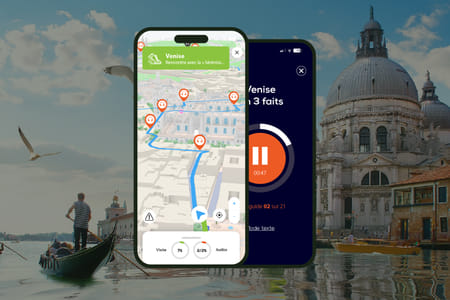
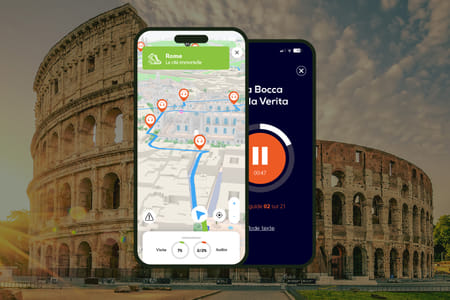
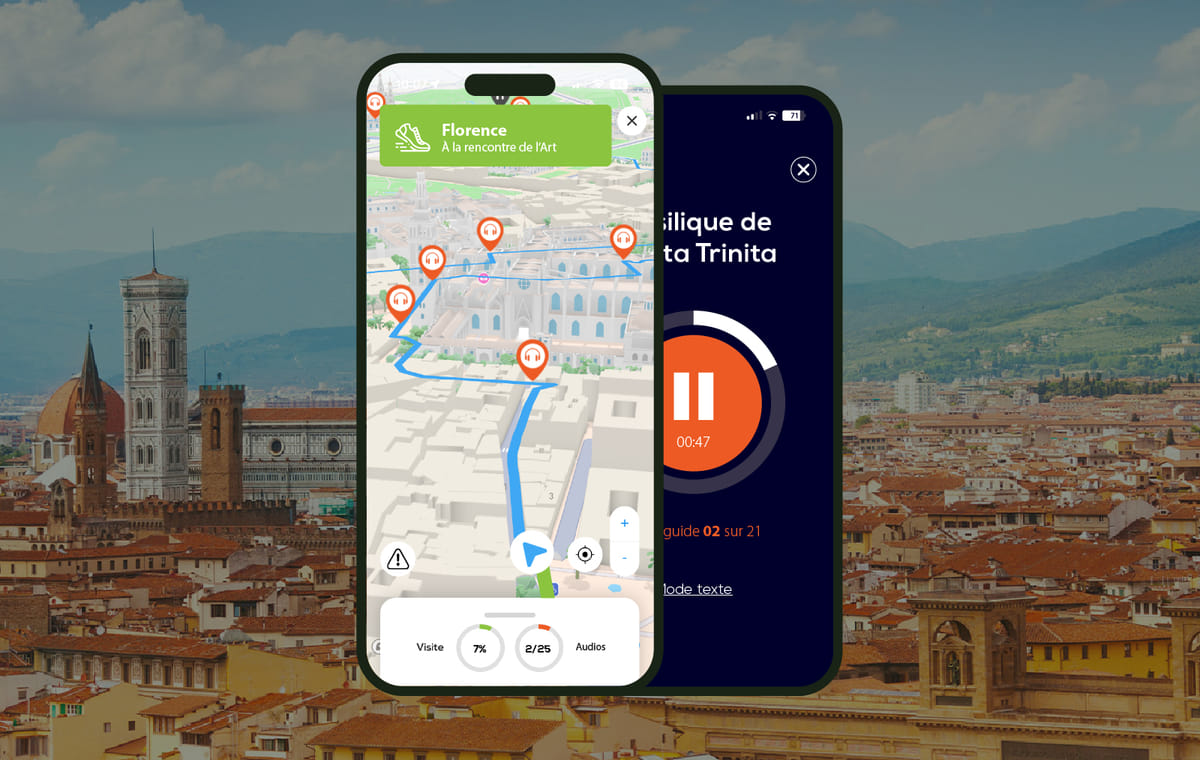
- Interactive navigation with real-time geolocation and 3D map to discover the most beautiful streets, squares and neighborhoods
- Recommendations for the best photo opportunities
- Offline mode (no data consumption during the visit)
Exclusions
- Admission fees to fee-paying establishments along the route if you want to make visits
- Headphones or earbuds (optional)
Itinerary
Basilica of Santa Trinita
Built in the 11th century and expanded in the 14th century, the Basilica of Santa Trinita was built in the Gothic style and quickly became the favorite church for the richest families.
Tornabuoni Street
Tornabuoni Street is one of the main streets of Florence, built on the site of the ancient Roman walls.
Strozzi Palace
Look up to your right! This palace was built in the 15th century for the banker Filippo Strozzi, who wanted an imposing and elegant building to illustrate all his power as a Florentine nobleman.
Saint Michael and Gaétan Church
Located on your right, the Church of Saint Michael and Gaétan is one of the most beautiful Baroque works in Florence.
Santa Maria Novella Basilica
It is to the Dominicans what the Basilica of Santa Croce is to the Franciscans.
Medici Chapels and San Lorenzo Basilica
As you have no doubt understood, it is impossible to visit Florence without talking about the famous Medici family who reigned there for centuries!
Ponte alle Grazie viewpoint
Crossing the Arno, a river that runs through Tuscany for 240 km, this bridge was built in 1237 and was named after the magistrate who governed the city at the time of its construction.
Santa Maria del Fiore Cathedral and St. John's Baptistery
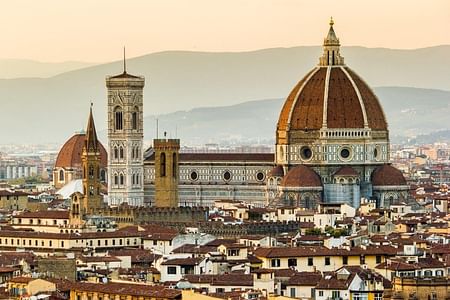
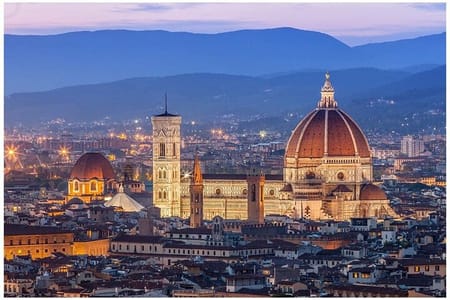
Impressive, this cathedral, isn't it? It stands out as one of the largest cathedrals in the world and its dimensions were obviously extraordinary for the time.
Giotto's Campanile
It was in 1298, only two years after the start of construction of the cathedral, that work began to raise Giotto's bell tower.
Place de la République
Republic Square is a historic square that was the heart of the city of Florentia in Roman times.
Orsanmichele Church
A true Florentine work from the 14th century, the church of Orsanmichele was built on an old wheat hall, then extended to make it a place of worship.
Bargello Palace
The Bargello Museum was installed in 1859 in this 13th century palace.
San Firenze Church
Formerly a convent, this building located on San Firenze Square now houses the seat of the court.
Basilica of Santa Croce
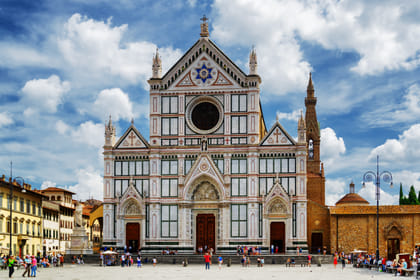
Here you are in front of the largest Franciscan church in the world!
San Niccolo Gate
A true relic of the 14th century, the San Niccolo Gate was an entrance into the city in the Middle Ages.
Michelangelo Esplanade
The best view of Florence is offered to you on the Michelangelo esplanade which dominates the south of the city!
Rose Garden
The Rose Garden is a panoramic garden that connects the Oltrarno district to the Michelangelo Esplanade.
San Miniato Gate
Here you pass under the San Miniato Gate, which dates from the 14th century.
Oltrarno district
Located on the left bank of the Arno, the Oltrarno district is quieter and less touristy than the neighborhoods on the right bank.
Pitti Palace
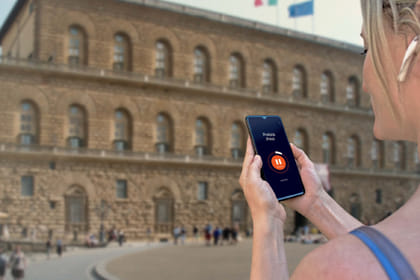
This imposing palace was built in 1458 by Brunelleschi, the brilliant architect who designed the dome of Florence Cathedral.
Basilica of Santa Maria del Santo Spirito
Does Filippo Brunelleschi mean anything to you? Yes, it is still to him that we owe this basilica, as is the case for many buildings in the city, in particular the Pitti Palace or the cathedral's dome.
Ponte Vecchio
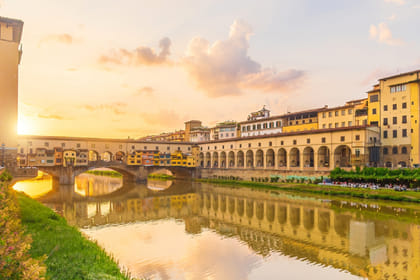
Emblem of the city, Ponte Vecchio is, in addition to being unique in its kind, the oldest stone bridge in Europe.
Galerie des Offices
Here you are at the entrance of the Uffizi Gallery, another testimony to the great power of the reigning family.
Palazzo Vecchio and Piazza della Signoria
Symbol of the city, the Palazzo Vecchio housed the seat of government of Florence after its construction.
Porcellino fountain
Although it represents a wild boar, this fountain is called the Porcellino Fountain, or piglet in French.
Please Note
- An internet connection is required to download the itinerary before the visit, organize yourself accordingly
- Always check local conditions before you leave
- Make sure your smartphone is sufficiently charged or carry an external battery.
- After booking, you will receive an email with instructions for installing the application (available for iPhone and Android) as well as the procedure for activating the circuit code
- The circuit is not suitable for people with reduced mobility (presence of stairs).
Cancellation Policy
Fully refundable until 1 day before start
Non-refundable after 1 day before start