A little north of Cha-Am district on Hat Chao Samran Beach stands one of Thailand’s most poetic royal residences. Maruekhathaiyawan Palace was commissioned by King Vajiravudh (Rama VI) after he grew dissatisfied with an earlier seaside palace nearby. Rather than abandoning the project entirely, the King ordered the original structure dismantled and reused its precious teak wood to build a new palace oriented toward the sea.
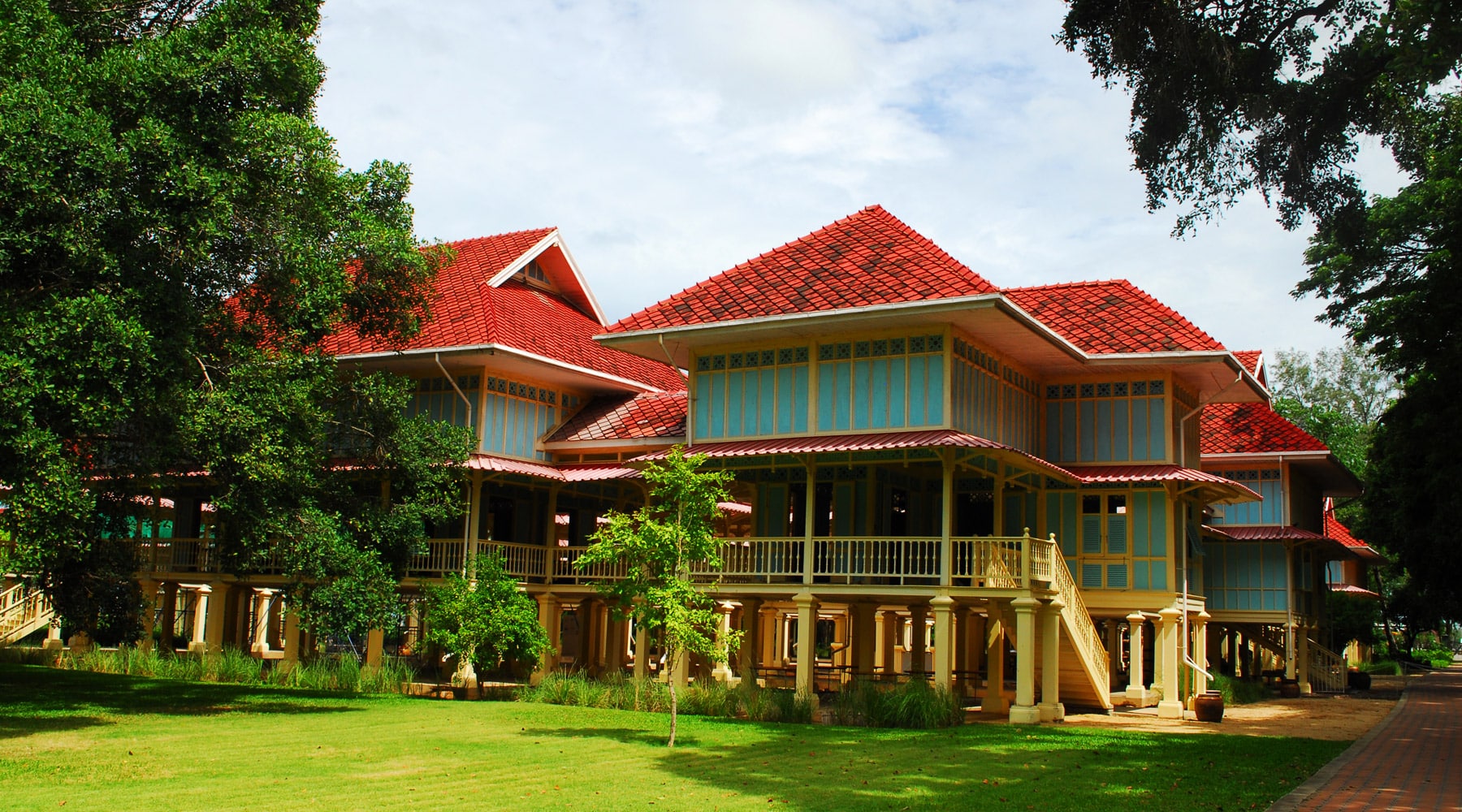
The location was chosen with great care. Cha-Am’s railway connection to Bangkok made travel convenient, while the surrounding coastal forests and steady sea breezes were believed to promote good health. At the time, this combination of accessibility, climate, and tranquility made the area one of the most desirable royal retreats in Thailand. (Photo by Thanate Tan via Flickr)
Built Entirely from Teak Wood
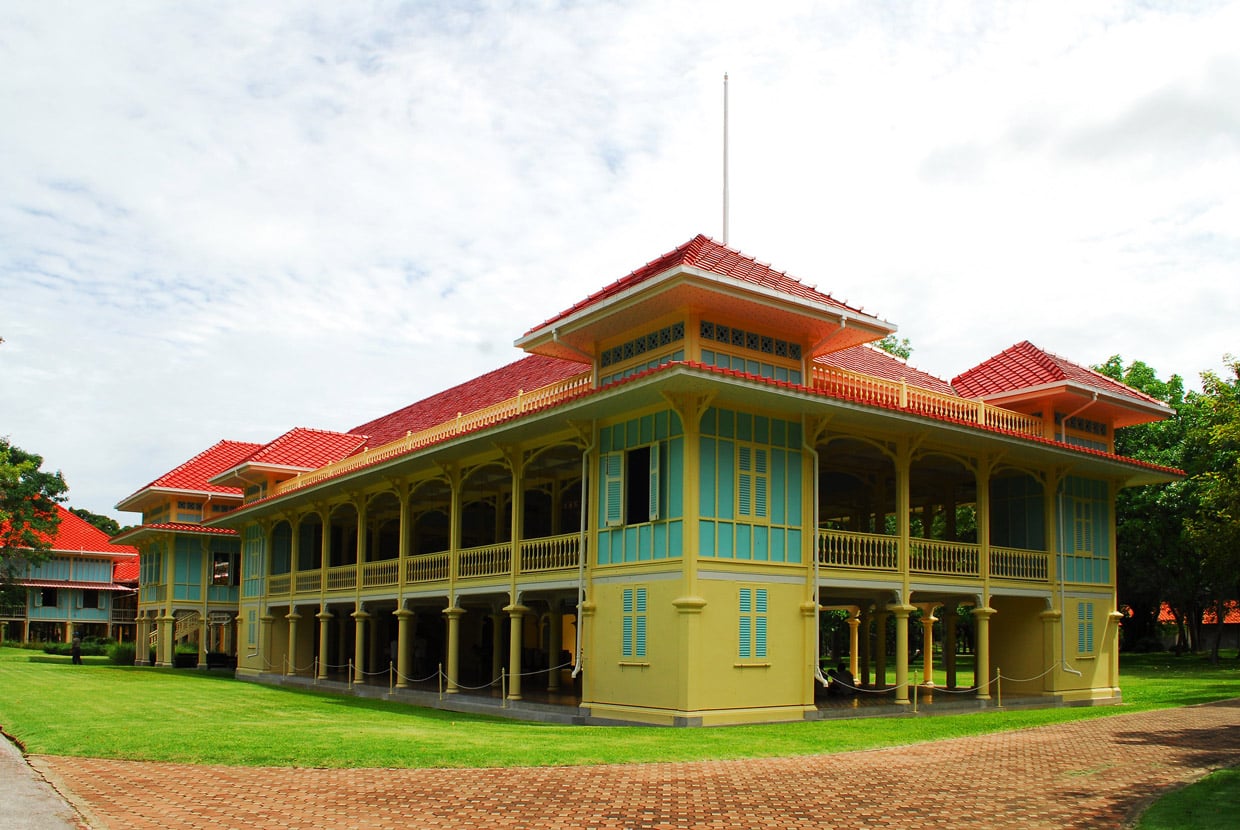
Maruekhathaiyawan Palace is constructed almost entirely from golden teak wood and elevated on hundreds of pillars above the ground. This raised design was both aesthetic and practical, allowing sea breezes to circulate freely while protecting the structure from humidity, insects, and seasonal flooding.
King Vajiravudh personally supervised much of the palace’s design, insisting on comfort, openness, and ventilation. Architectural details such as wide verandas, long covered corridors, and carved pillar niches filled with water were cleverly designed to prevent ants from reaching the living quarters.
The palace’s refined proportions and airy symmetry reveal a strong European influence. It is widely believed that Italian architect Ercole Manfredi contributed to refining the final design. His architectural sensibilities are evident in the palace’s understated elegance, which differs noticeably from more ornate traditional Thai palaces.
Also known as Mrigadayavan Palace, Maruekhathaiyawan served as one of King Rama VI’s favorite summer residences and remained in royal use until his death in 1925.
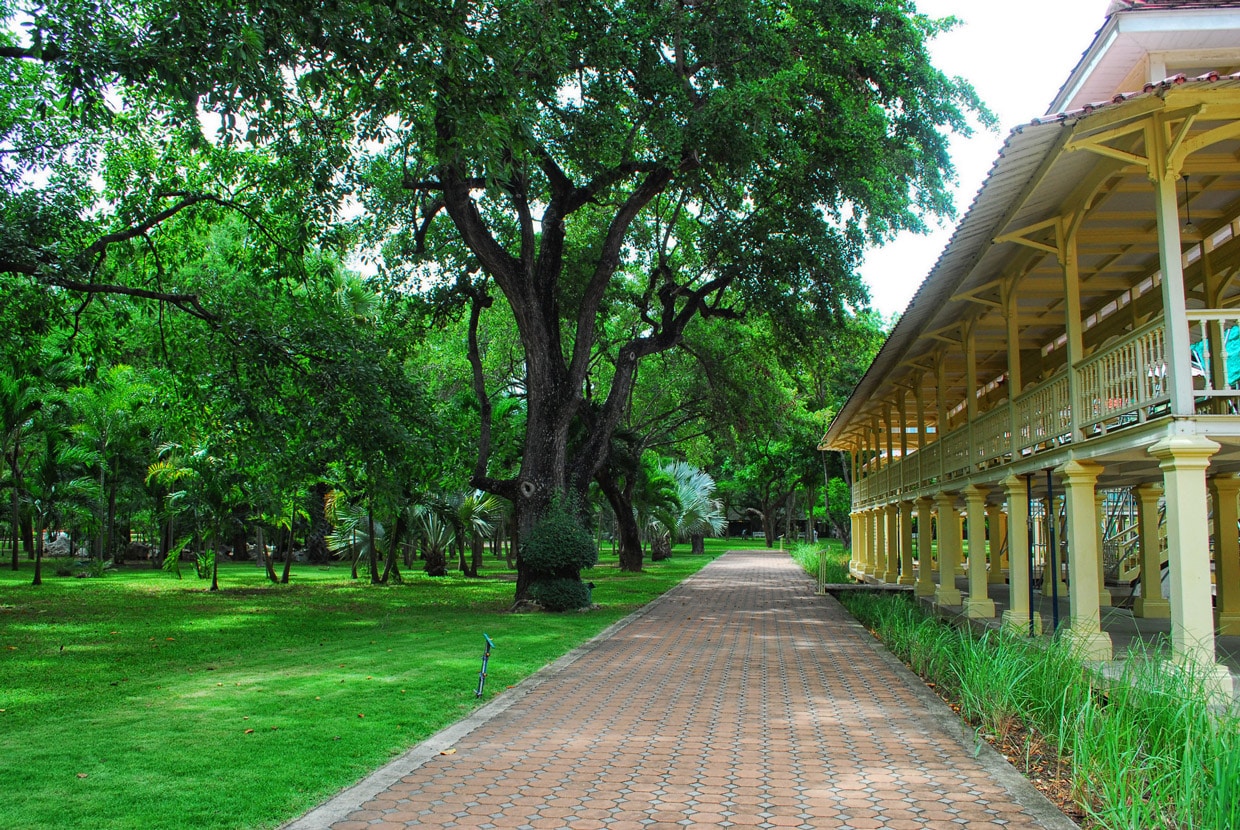
The Palace of Love and Hope
Maruekhathaiyawan Palace is often referred to as the “Palace of Love and Hope,” a name reflecting both its romantic seaside setting and the deeply personal role it played in King Vajiravudh’s life. Unlike grand ceremonial palaces, this residence was designed as a space for reflection, creativity, and emotional retreat.
The King’s Private Living Quarters
King Vajiravudh resided in the Phisarn Sakorn section of the palace, which contained his personal living chambers. These included bedrooms, bathrooms, dressing areas, a private dining room, and a study overlooking the sea.
Between 1920 and 1925, the King spent extended periods here writing plays, essays, and poetry. As one of Thailand’s most influential literary monarchs, he found inspiration in the calm coastal environment, often working at his desk while gazing out over the Gulf of Thailand.
The Living Quarters of the Queen
Queen Indrasakdi Sachi resided in the Samundra Biman section of the palace. This area included a living room, bedroom, wardrobe space, and private bathroom, with direct access to a bathing pavilion near the beach.
Designed with privacy and comfort in mind, the Queen’s quarters were more intimate in scale, offering a serene retreat closely connected to the sea.
The Sewakamart Section
The Sewakamart section served as the administrative and ceremonial center of the palace. Official functions, meetings, and theatrical performances were held here, reflecting King Vajiravudh’s deep interest in drama and literature.
During royal visits, furniture and furnishings were transported from Bangkok to fully equip the palace, ensuring it functioned as a complete royal residence rather than a seasonal pavilion.
From Abandonment to Restoration
After King Vajiravudh’s death in 1925, Maruekhathaiyawan Palace was largely abandoned. Without a permanent royal presence, the palace slowly deteriorated under the effects of coastal weather and time.
Recognizing its cultural and architectural importance, the Thai Fine Arts Department later undertook careful restoration work. The focus was on preserving original materials, layout, and atmosphere rather than modernizing the structure.
Today, visitors can still see several original belongings of King Rama VI, including his writing desk, bed, and personal furniture, offering rare insight into royal life in the early 20th century.
Ercole Manfredi and the European Influence
Italian architect Ercole Manfredi was part of a wave of European professionals working in Siam during the early 1900s. His influence at Maruekhathaiyawan Palace is evident in the structure’s symmetry, linear walkways, elevated terraces, and emphasis on natural light and airflow.
Rather than overwhelming Thai design traditions, Manfredi’s approach complemented them, resulting in a palace that feels both distinctly Thai and subtly European.
Ercole Manfredi’s Death Location
Ercole Manfredi spent most of his professional life in Bangkok, working closely with the royal court and state institutions. Historical accounts indicate that he died in Bangkok in the early 1920s, shortly before the death of King Vajiravudh.
Although his name is not widely recognized by casual visitors, Manfredi’s architectural legacy remains firmly embedded in Thailand’s royal and civic buildings. At Maruekhathaiyawan Palace, his influence continues to shape the visitor experience more than a century later.
The palace grounds today offer interconnected wooden walkways, panoramic sea views, and access to a preserved mangrove forest nature trail, making the site as rewarding outdoors as it is historically.
Opening Hours and Visitor Information (2026 Update)
The Opening Hours
As of 2026, Maruekhathaiyawan Palace is open to visitors six days a week, remaining closed on Wednesdays. Visiting hours are from 8:30 am to 4:30 pm, with tickets sold at the box office until 4:00 pm.
Visitors wishing to access the upper floors of the palace must remove their shoes. Cloth bags are provided at the entrance so shoes can be carried comfortably during the visit. This practice helps preserve the original teak flooring.
Dress Code, Photography, and Etiquette
Photography is not permitted inside the upper levels of the palace, though outdoor photography is allowed throughout the grounds. Visitors are expected to dress respectfully: short pants, short skirts, and sleeveless tops are not permitted inside the palace buildings.
Sarongs are available for purchase from nearby street vendors, typically costing between 20 and 30 Thai baht. Once finished with the visit, sarongs can be returned or kept as souvenirs.
Bicycle rentals are available near the palace entrance, allowing visitors to explore the wider grounds and the surrounding mangrove nature trail at a relaxed pace. This eco-friendly option is particularly popular during the cooler morning hours.
Why Maruekhathaiyawan Palace Is Still Worth Visiting
More than a century after its construction, Maruekhathaiyawan Palace remains one of Thailand’s most atmospheric royal sites. Unlike Bangkok’s grand palaces, this seaside retreat offers a deeply personal glimpse into the life, creativity, and emotions of King Rama VI.
Its elegant teak architecture, serene coastal setting, and rich historical layers, enhanced by the European influence of Ercole Manfredi, make it a compelling destination for travelers seeking culture beyond the usual tourist routes. For those exploring Cha-Am or Hua Hin, a visit here provides both historical insight and a peaceful escape.