
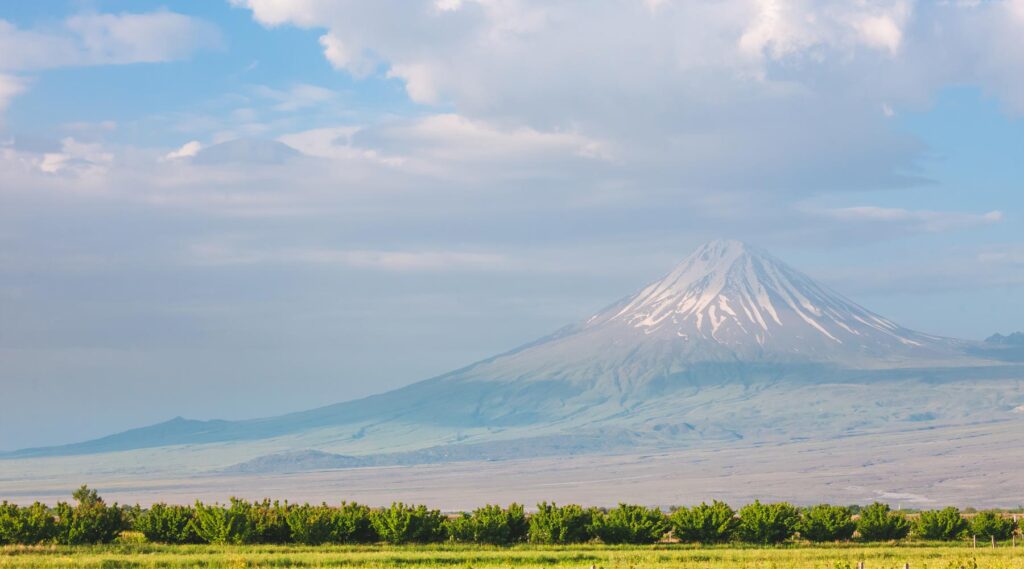
Located in the far eastern reaches of Turkey, Mount Ararat (Ağrı Dağı in Turkish) is a majestic snow-capped dormant compound volcano. It stands as a massive landmark where the borders of Turkey, Iran, and Armenia converge.
As Turkey’s highest peak and largest volcanic massif, it consists of two distinct cones. Due to its proximity to Armenia, the mountain is deeply woven into Armenian mythology and national identity, and it holds profound significance as the traditional resting place of Noah’s Ark in biblical accounts. For adventurers, climbing Mount Ararat or skiing its slopes offers one of the most exhilarating high-altitude experiences in Western Asia.
Location
Mount Ararat is situated in the Eastern Anatolia region of Turkey, positioned between Lake Van to the southwest and Lake Sevan in Armenia to the northeast. Rising abruptly from the Ararat Plain, the mountain creates a dramatic backdrop for a fertile agricultural region known for its temperate microclimate amidst the rugged highlands.
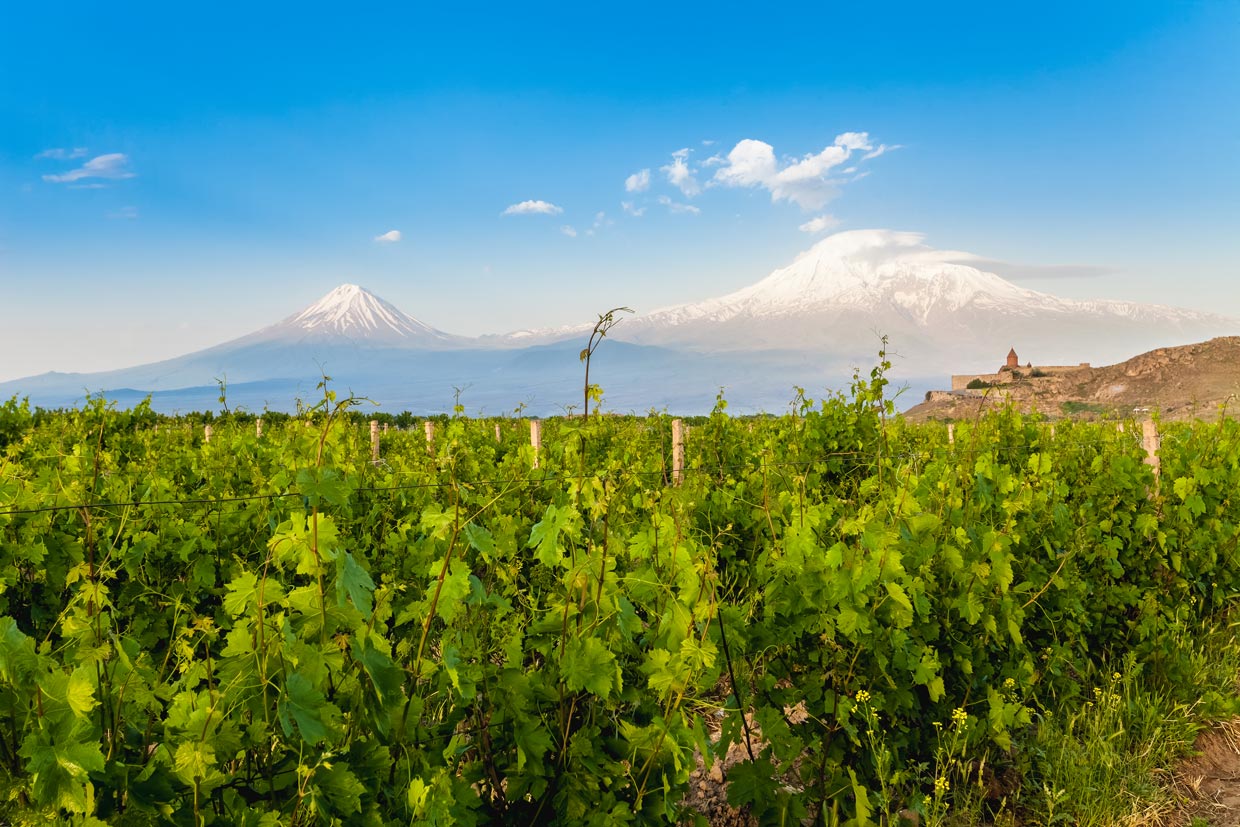
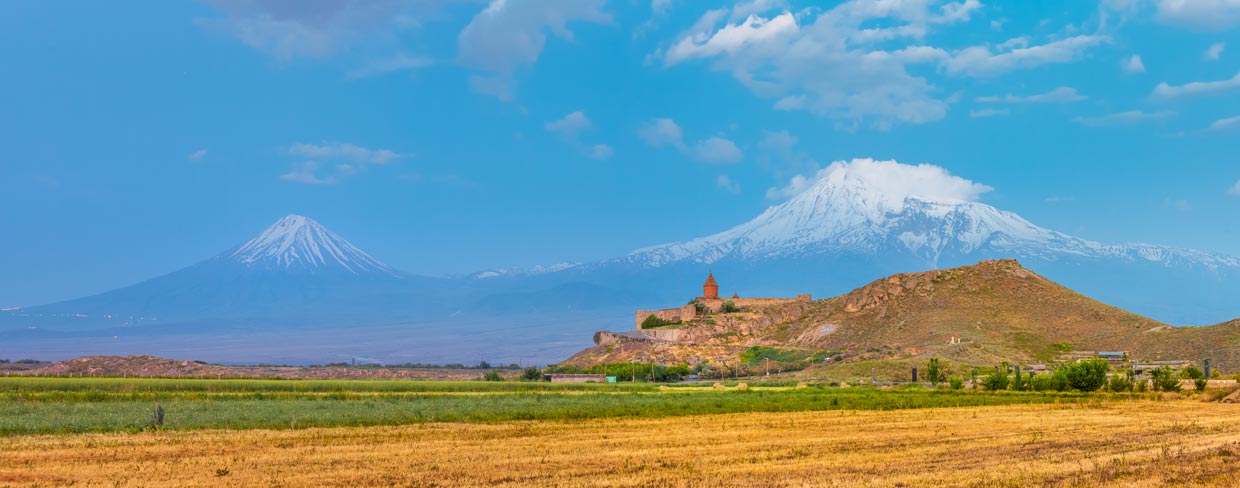
Geographically, the Ararat massif sits near the four-way border junction of Turkey, Armenia, Azerbaijan (the Nakhchivan enclave), and Iran. On a clear day, both Greater and Lesser Ararat offer a stunning silhouette visible from Yerevan, the capital of Armenia, located roughly 30 miles (50 km) away. The historic Khor Virap monastery in Armenia is famous for providing one of the most iconic and breathtaking viewpoints of the mountain peaks.
Greater Ararat and Lesser Ararat
The Ararat massif consists of two major peaks separated by a distance of about 7 miles (11 km). Greater Ararat is the highest point in Turkey, reaching an elevation of 16,854 feet (5,137 meters) above sea level. Its companion, Lesser Ararat (Küçük Ağrı), rises to approximately 12,782 feet (3,896 meters). Lesser Ararat is characterized by its nearly perfect symmetrical cone and ranks as the 6th highest peak in Turkey.
Both peaks are the result of ancient volcanic activity. While neither peak features a classic crater today, their slopes are marked by volcanic cones and fissures. The name “Ararat” is derived from the ancient Kingdom of Urartu (13th to 7th century B.C.), which dominated this highland region. The mountain was sacred to the Urartians and has remained a symbol of power and divinity for millennia.
The massive, ice-capped dome of Greater Ararat is a spectacular sight, especially in winter. The permanent snow line typically begins around 14,000 feet (4,267 meters), though this fluctuates with the seasons. Notably, Greater Ararat hosts an extensive system of glaciers on its northern and western slopes, which are among the largest in Turkey.
Between the elevations of 5,000 and 11,500 feet, the mountain provides lush alpine pastures. This is the traditional summer grazing ground for local Kurdish semi-nomadic shepherds and their flocks. While the lower slopes are largely treeless, scattered clusters of birch trees can be found on Lesser Ararat. Despite the heavy winter snowfall, the mountain’s volcanic soil is porous, meaning surface water and natural springs are surprisingly scarce at higher altitudes.
Climbing Mount Ararat
The ascent of Ararat is technically a “trekking peak,” but its high altitude requires physical fitness and acclimatization. The journey typically begins with a steady hike from the base to Camp 1 (Base Camp), located at 10,500 feet (3,200m). The trek covers approximately 2 miles and takes 3 to 5 hours. Modern Base Camps often provide basic amenities, including food service and sometimes even Wi-Fi, making the first night on the mountain relatively comfortable.
Camp 2 (High Camp) is situated at an elevation of roughly 13,780 feet (4,200m). This leg of the climb is steeper and more demanding, taking about 4 to 6 hours. Climbers usually reach High Camp by midday to allow for rest and hydration while enjoying the expansive views. To ensure a successful summit bid, most guides recommend a “summit push” beginning as early as 1:00 AM or 2:00 AM.
The final push to the summit is the most challenging. The last 200 to 300 meters involve crossing the permanent ice cap. While not a vertical climb, the use of crampons and ice axes is essential here for safety. Reaching the peak at sunrise is the ultimate reward, offering a 360-degree panorama of Turkey, Iran, and Armenia as the shadow of the mountain stretches across the plains below.
The descent can be taxing on the knees, especially under the intense high-altitude sun, so most groups take their time returning to Base Camp or the trailhead.
h2 class=”wp-block-heading”>Best Time to Visit
The ideal window for climbing Mount Ararat is the summer season, specifically from mid-June to mid-September. July and August offer the most stable weather and the clearest paths. During these months, the temperatures at the base are warm, though it remains freezing at the summit.
Winter climbing (October through March) is strictly for professional mountaineers with specialized equipment. The mountain is notorious for fierce winds, sudden snowstorms, and heavy fog during the colder months.
For winter sports enthusiasts, ski touring is a growing attraction on Ararat. The best time for ski mountaineering is usually March and April, when the snow pack is deepest and most stable. Since snow conditions vary significantly year-over-year, it is vital to coordinate with local experts before planning a ski expedition.
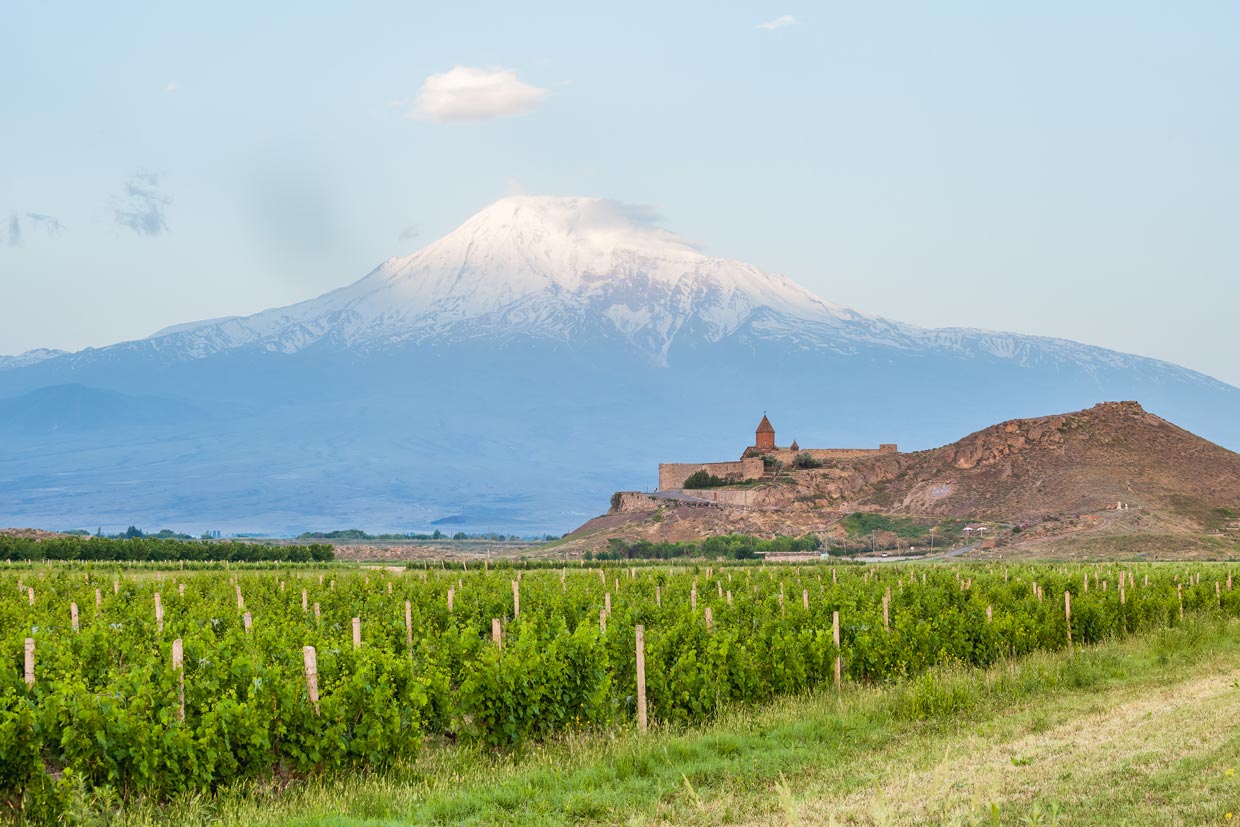
The snow-capped summit of Mount Ararat
Doğubayazıt: The Gateway City
Doğubayazıt is the closest city to Mount Ararat, located in the Ağrı Province near the Iranian border. Situated just 15 km from the mountain’s base, it serves as the primary hub for logistics, permits, and guides. The city offers a range of accommodations, from budget guest houses to comfortable hotels, and is home to the stunning Ishak Pasha Palace, a must-visit historical site.
Getting to the Mountain
From Doğubayazıt, most climbers take a 4×4 vehicle or minibus to the trailhead (usually at an elevation of 2,200m). The drive takes about 45 to 60 minutes. While the road becomes unpaved and rugged as you approach the mountain, it is manageable for most transport vehicles used by local tour operators.
History and Mythology
The Biblical Legacy
Mount Ararat is most famously known in the West as the “Mountains of Ararat” mentioned in the Book of Genesis, where Noah’s Ark is said to have come to rest after the Great Flood. For centuries, explorers and theologians have searched the peak for remains of the vessel. While some claim to have found wooden structures or anomalies in satellite imagery, no scientific consensus exists regarding the Ark’s physical presence.
The first recorded modern ascent was completed by Friedrich Parrot and Armenian writer Khachatur Abovian in 1829. Prior to this, many locals believed the summit was inaccessible and protected by divine will. In Armenian culture, the mountain is known as Masis and is considered the sacred home of the gods and the spirit of the nation.
Ancient Mesopotamian Traditions
Long before the biblical era, the Sumerians, Akkadians, and Assyrians looked toward these northern peaks with awe. In the Epic of Gilgamesh, the hero travels to Mount Mashu, which many scholars associate with the Ararat region. The mountains were often viewed as a boundary between the known world and the realm of the divine—a place so powerful that it remained undefeated by the great empires of the Mesopotamian plains.
Essential Tips for Visitors
If you are planning an expedition to the roof of Turkey, keep these recommendations from experienced climbers in mind:
- Official Permits: You must obtain a military climbing permit from the Turkish government. This process can take several weeks, so it is best to book through an agency that handles the paperwork for you.
- Local Guides: Climbing with a certified local guide is not only safer but often a legal requirement. They provide essential logistics, such as horses to carry your heavy gear to Camp 2.
- Gear: While technically a trek, the wind at the summit is biting. Bring high-quality layers, a down jacket, and windproof gear. Crampons are mandatory for the final glacier stretch.
- Sun Protection: The reflection of the sun off the glaciers is extremely intense. High-SPF sunscreen and Category 4 glacier sunglasses are vital to prevent snow blindness and burns.