
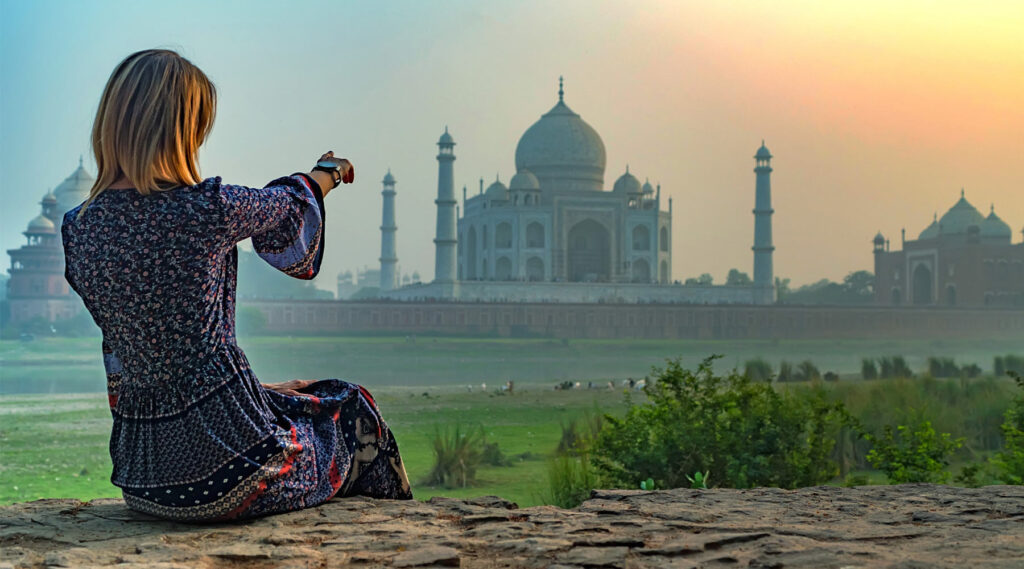
The Taj Mahal in India is one of the most recognizable landmarks in the world and a timeless symbol of love, power, and artistic perfection. Located in Agra, this white marble mausoleum was built during the height of the Mughal Empire and remains one of the most visited tourist attractions in Asia.
Declared a UNESCO World Heritage Site in 1983 and voted as one of the New 7 Wonders of the World, the Taj Mahal continues to fascinate travelers, historians, architects, and photographers alike. Its balance, scale, and detail represent the pinnacle of Mughal architecture, blending Persian, Islamic, and Indian design traditions into a single, harmonious masterpiece.
More than just a monument, the Taj Mahal tells a deeply human story of devotion, grief, ambition, and legacy, one that still resonates nearly four centuries after its construction.
History of the Taj Mahal
The Taj Mahal was commissioned in 1631 by Mughal Emperor Shah Jahan after the death of his beloved wife, Mumtaz Mahal. She died during childbirth while accompanying the emperor on a military campaign, leaving Shah Jahan devastated. Mumtaz Mahal was not only his favorite wife but also his closest confidante and advisor.
Determined to immortalize her memory, Shah Jahan ordered the construction of a mausoleum unlike anything the world had seen before. Construction began in 1632 and continued for almost 20 years, involving over 20,000 artisans, craftsmen, calligraphers, and laborers from across the Mughal Empire and Central Asia.
The project was overseen by Ustad Ahmad Lahauri, the chief architect of the imperial court, who combined influences from Timurid, Persian, and Indian architecture into a unified vision. While the main structure was completed in about a decade, the surrounding complex, gardens, mosques, gateways, and decorative elements required years of refinement.
The Taj Mahal stands not only as a tomb but as a carefully planned architectural ensemble designed to represent paradise on earth.
The Architectural Perfection of the Taj Mahal
The Taj Mahal complex covers approximately 42 acres (17 hectares) and follows the Charbagh garden layout, a classical Persian garden design divided into four symmetrical sections by water channels. These gardens symbolize the Islamic vision of heaven and serve as a visual lead-in to the mausoleum itself.
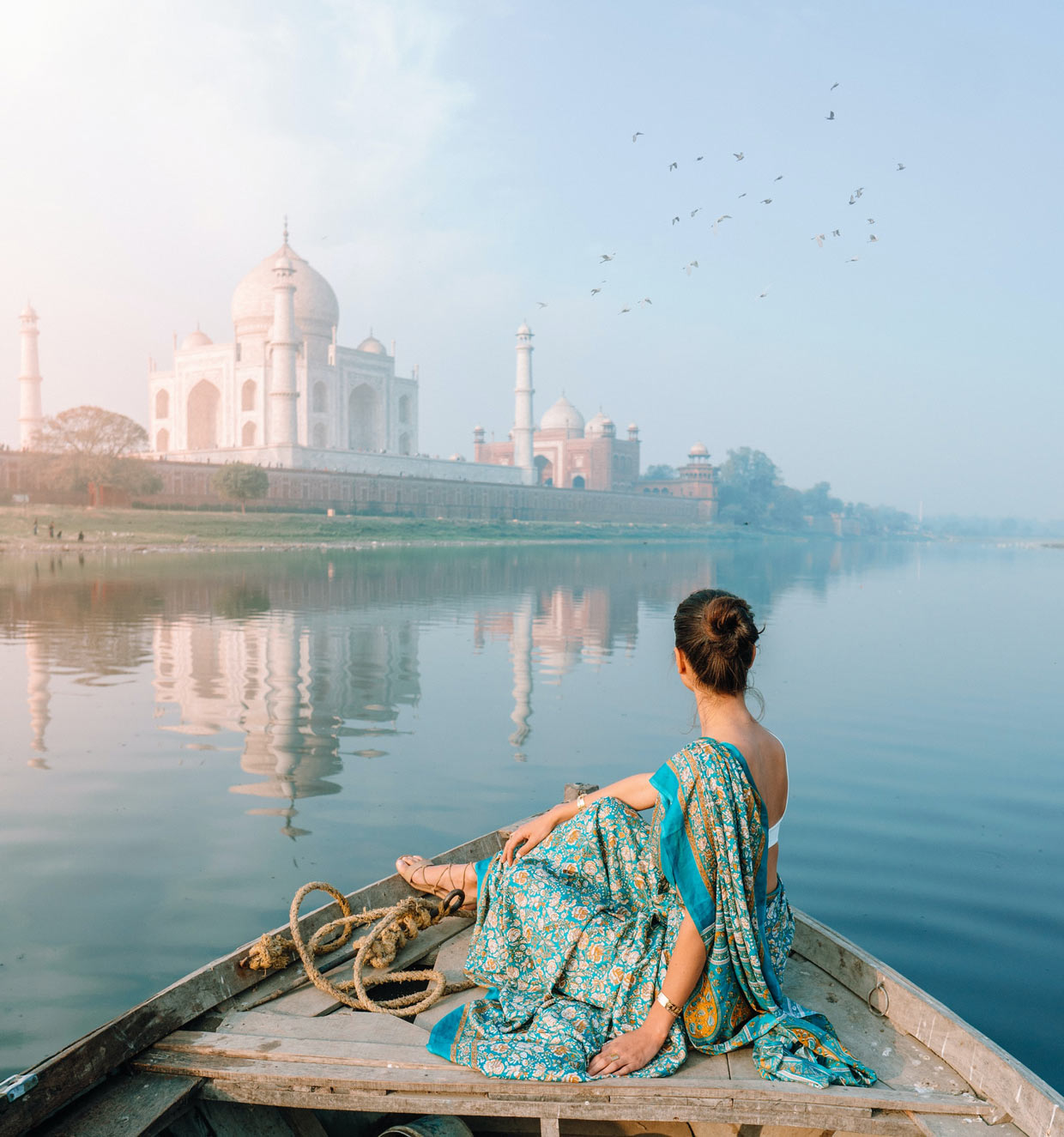
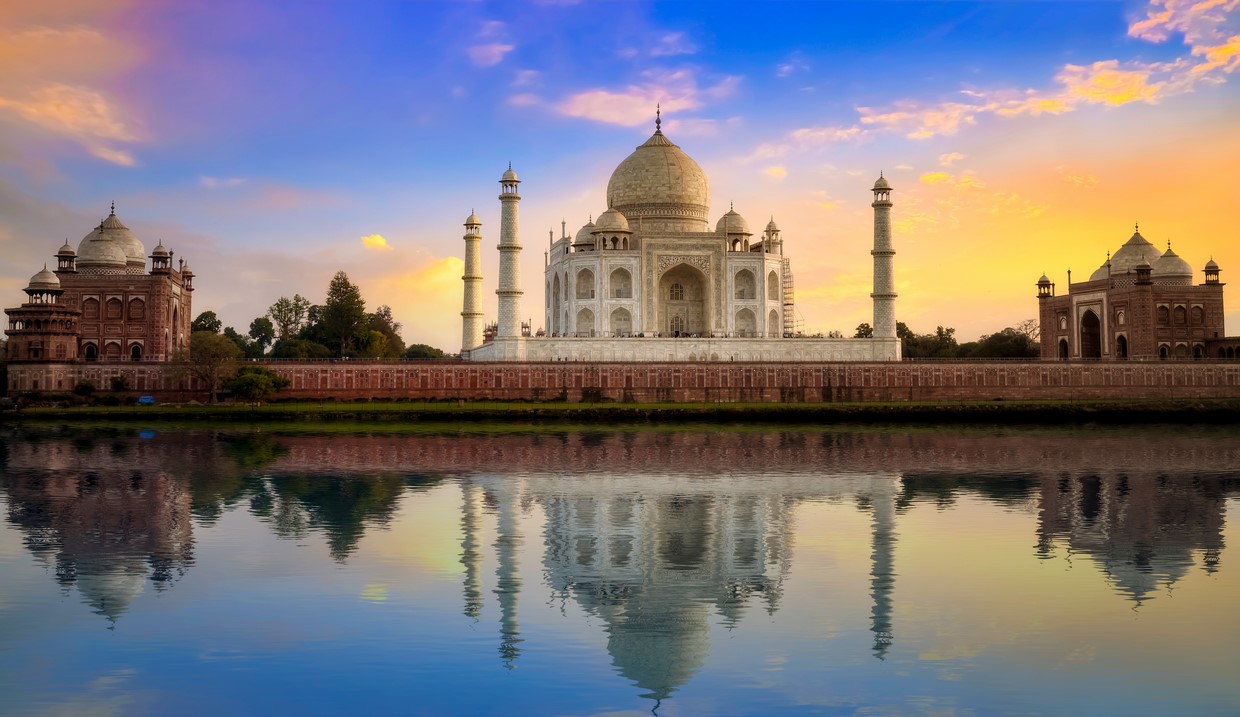
The mausoleum sits on a raised marble platform at the northern end of the garden, facing the Yamuna River. This positioning was deliberate, allowing the monument to reflect different colors throughout the day, soft pink at sunrise, brilliant white at midday, and golden hues at sunset.
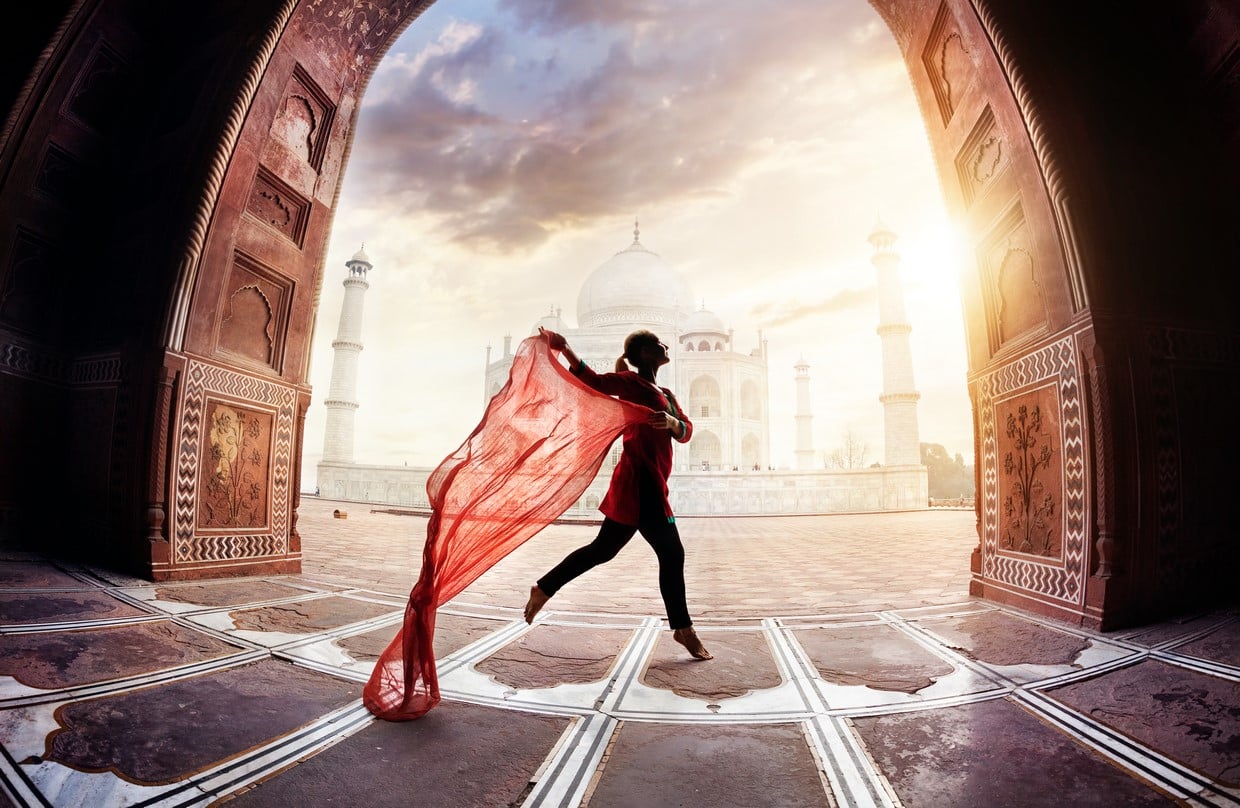
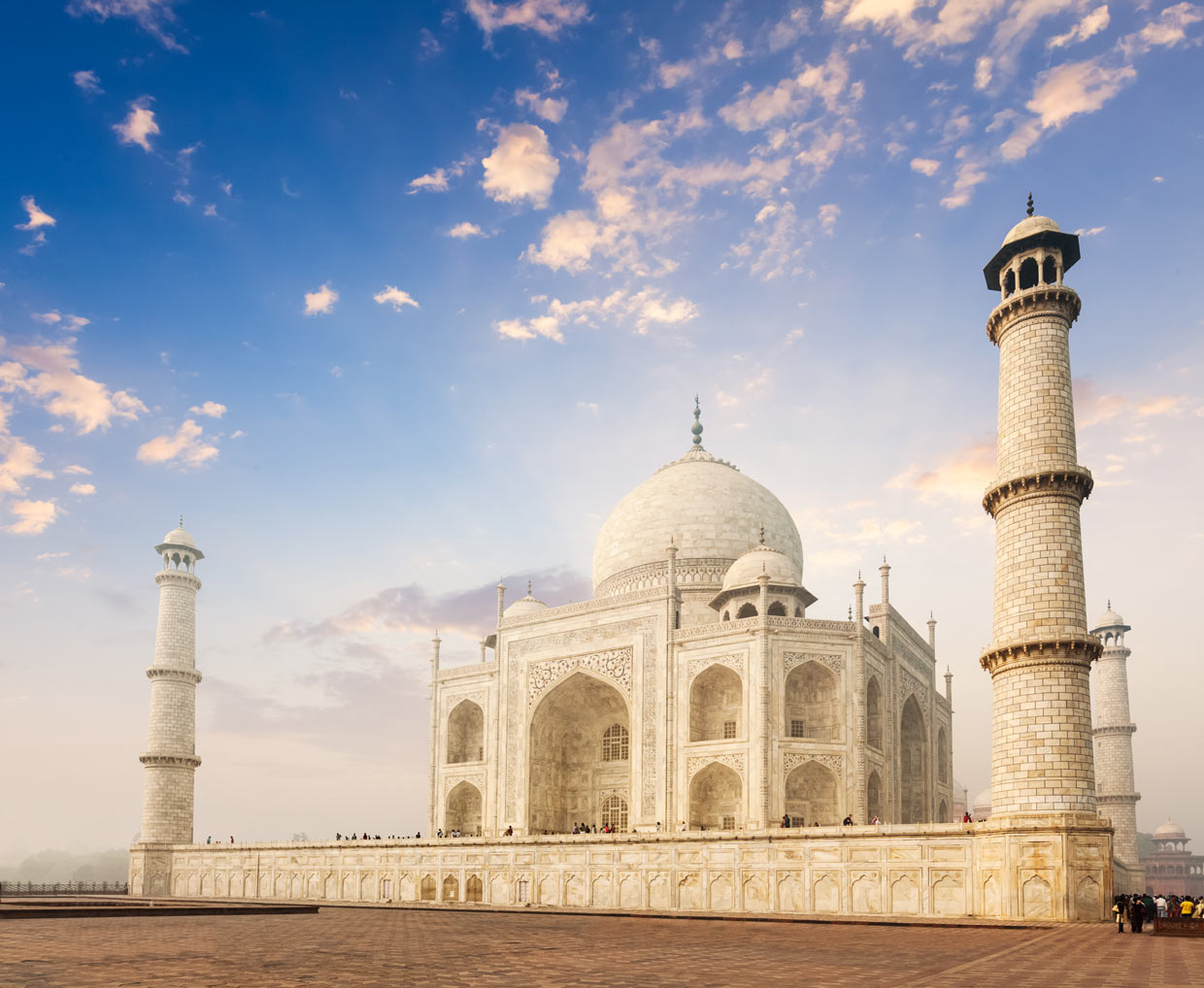
The main dome rises to a height of approximately 73 meters (240 feet) and is flanked by four smaller domes. Four minarets stand at each corner of the platform, slightly tilted outward to protect the central tomb in the event of an earthquake.
Every element of the structure was designed with intention, from the proportions of the arches to the scale of the calligraphy, which subtly increases in size as it rises to maintain visual balance from ground level.
Nearly 20 Years of Construction
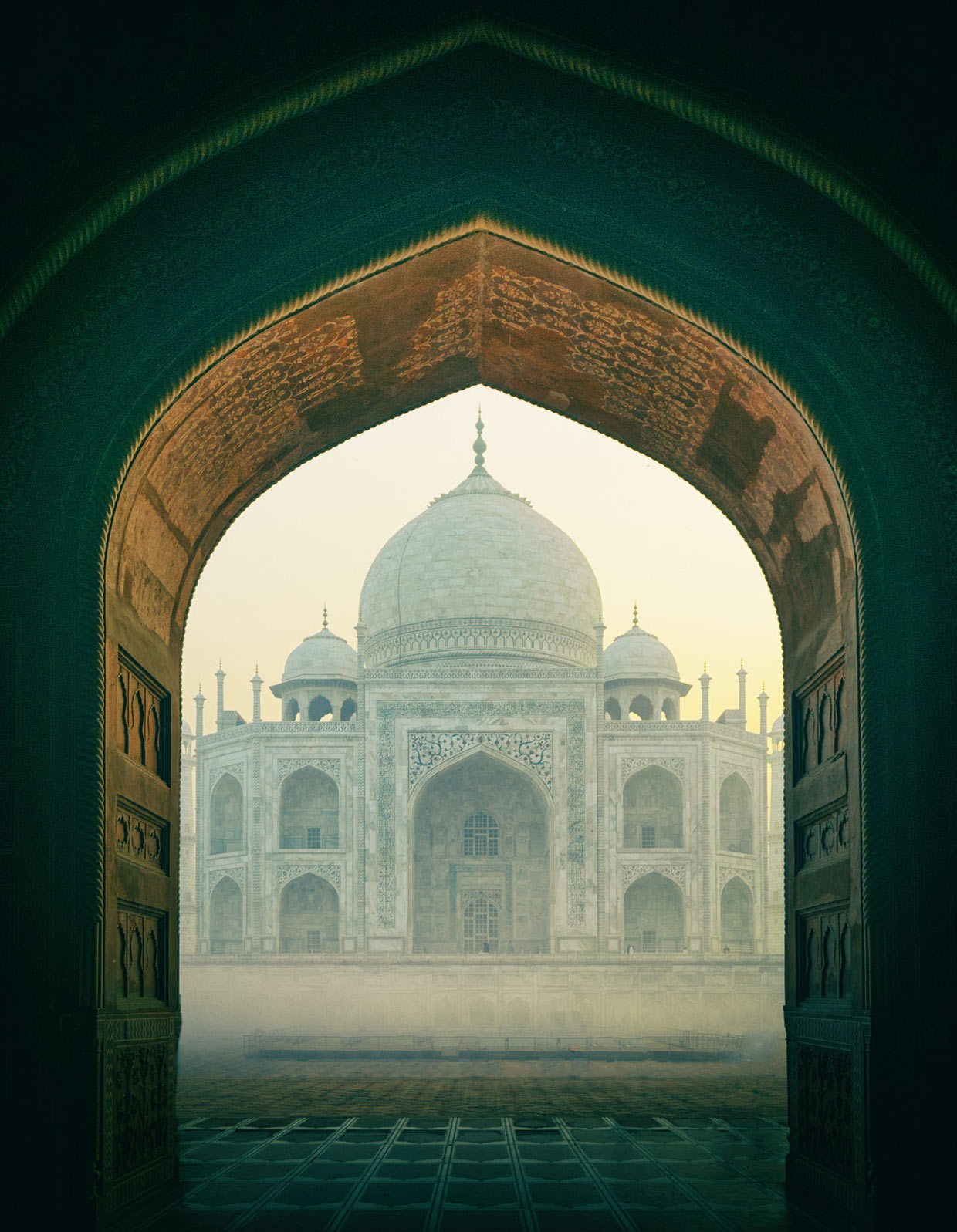
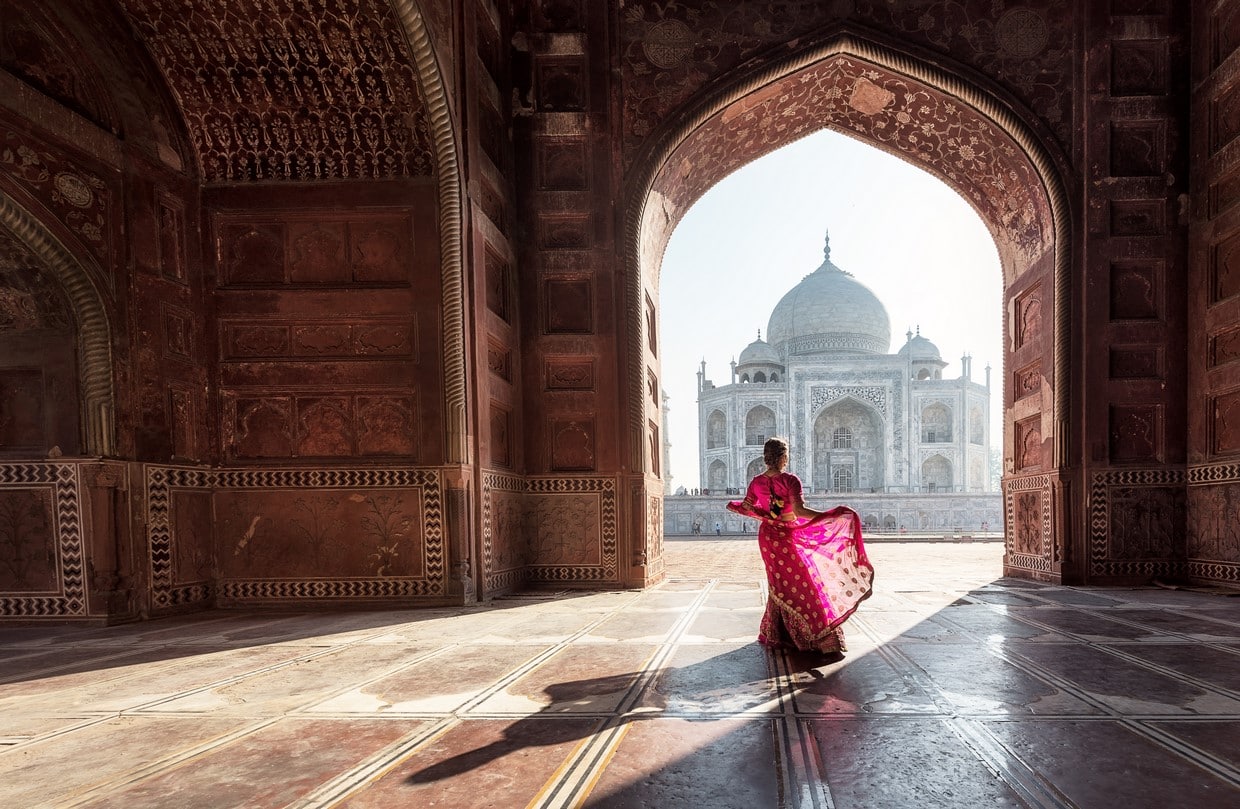
After the gardens were completed, construction focused on the central tomb chamber, followed by the surrounding mosque and its symmetrical counterpart on the eastern side. The mosque on the western side remains an active place of worship, while the eastern structure was built purely for architectural balance and symmetry.
The materials used in the Taj Mahal were sourced from across Asia. White marble came from Makrana in Rajasthan, while precious and semi-precious stones such as jade, jasper, turquoise, and lapis lazuli were imported from regions as far as Persia and Central Asia.
Elephants were used to transport heavy materials, and massive brick scaffolding surrounded the structure during construction. Unlike traditional bamboo scaffolding, this brick framework was dismantled slowly after completion.
Evolution of Mughal Tomb Architecture
The Taj Mahal did not emerge in isolation. It represents the culmination of decades of Mughal experimentation with monumental tombs. Earlier structures, such as Humayun’s Tomb in Delhi and Akbar’s Tomb in Sikandra, introduced key architectural concepts later perfected at the Taj Mahal.
These earlier mausoleums established the use of symmetry, garden layouts, elevated platforms, and domed chambers. Shah Jahan refined these ideas further, resulting in a level of harmony and precision unmatched by any earlier structure.
The Almost Perfect Symmetry of the Taj Mahal
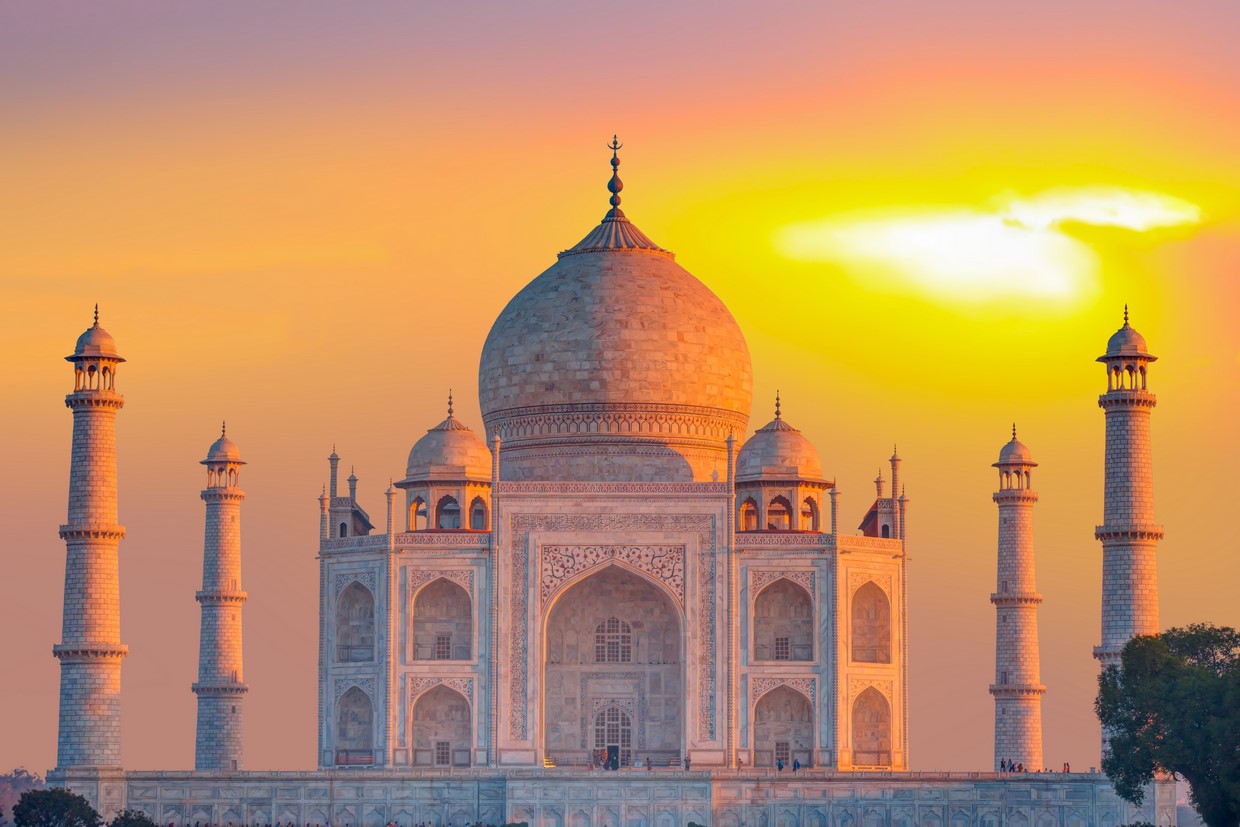
One of the Taj Mahal’s most remarkable features is its near-perfect symmetry. From the layout of the gardens to the placement of the minarets and auxiliary buildings, everything follows a strict geometric balance.
The only deliberate break in symmetry lies inside the main tomb chamber. Mumtaz Mahal’s cenotaph is placed at the center, while Shah Jahan’s cenotaph lies slightly to the west. This asymmetry occurred after Shah Jahan’s death, when he was buried beside his wife rather than in a separate structure.
This subtle imperfection humanizes the monument and reinforces its emotional core.
Legends and Myths Surrounding the Taj Mahal
Over the centuries, the Taj Mahal has inspired countless myths and legends, many of which persist today despite a lack of historical evidence.
The Black Taj Mahal Myth
One popular story suggests that Shah Jahan planned to build a second mausoleum made of black marble across the Yamuna River, intended as his own tomb. While archaeological remains known as the Mehtab Bagh exist on the opposite riverbank, no conclusive evidence supports the existence of a black marble Taj Mahal.
The Craftsmen Legend
Another widely repeated myth claims that the artisans who built the Taj Mahal were mutilated to prevent them from replicating the design. No historical records support this claim, and similar stories exist around many famous monuments worldwide.
Imprisonment of Shah Jahan
What is historically verified is that Shah Jahan was imprisoned by his son Aurangzeb in 1658. He spent his final years confined within Agra Fort, where he could see the Taj Mahal from his chambers. This tragic end adds another layer of poignancy to the monument’s story.
The Final Resting Place of Mumtaz Mahal and Shah Jahan
Inside the central mausoleum lies an octagonal chamber that forms the emotional heart of the Taj Mahal. Visitors entering this space encounter two exquisitely carved cenotaphs, one belonging to Mumtaz Mahal and the other to Shah Jahan. These ornate marble structures are symbolic and ceremonial rather than actual graves.
The real burial chambers of the emperor and his wife lie directly below, sealed off from public access. This separation follows Islamic burial traditions that emphasize simplicity and humility in death, contrasting with the grandeur of the monument above.
The chamber’s acoustics, symmetry, and delicately perforated marble screens create a serene and almost ethereal atmosphere, reinforcing the sense of reverence within the space.
Taj Mahal: Symbol of Love and Imperial Power
While the Taj Mahal is universally recognized as a monument to love, it also served a powerful political purpose. At the time of its construction, the Mughal Empire was at its peak, and the Taj Mahal functioned as a visual declaration of imperial wealth, artistic supremacy, and authority.
By sourcing the finest materials and attracting master artisans from across Asia, Shah Jahan demonstrated the empire’s vast reach and influence. The monument projected stability, divine favor, and cultural refinement, ensuring that Mughal power would be remembered long after the empire’s decline.
By modern estimates, the cost of constructing the Taj Mahal would exceed one billion US dollars today, making it one of the most expensive monuments ever built.
Architecture and Design of the Taj Mahal
The Taj Mahal’s architectural composition is defined by balance and clarity. The central onion-shaped dome dominates the skyline, while four smaller domes and four minarets frame the structure without overpowering it.
The minarets are slightly angled outward to protect the main tomb in the event of structural failure, a remarkable example of early engineering foresight. Large iwans, or vaulted arches, frame each side of the mausoleum, ensuring visual consistency from every angle.
The calligraphy adorning the entrances consists of Quranic verses in elegant black marble inlay. The lettering increases in size as it ascends, maintaining uniform appearance when viewed from ground level.
The Pietra Dura Inlay Work
One of the most admired aspects of the Taj Mahal is its intricate pietra dura inlay work. This decorative technique involves embedding finely cut semi-precious stones into marble to create floral and geometric patterns.
Stones such as jade, agate, turquoise, lapis lazuli, and carnelian were sourced from across Asia and meticulously shaped to fit into marble recesses with astonishing precision. Many of these floral motifs were inspired by Persian botanical illustrations and symbolize eternity and paradise.
The inlay work is most prominent in the tomb chamber, but careful observers will notice similar detailing throughout the complex.
Materials and Labor Behind the Taj Mahal
More than 20,000 laborers, artisans, and craftsmen contributed to the Taj Mahal’s construction. Skilled workers came from India, Persia, Central Asia, and the Ottoman Empire, each bringing specialized techniques.
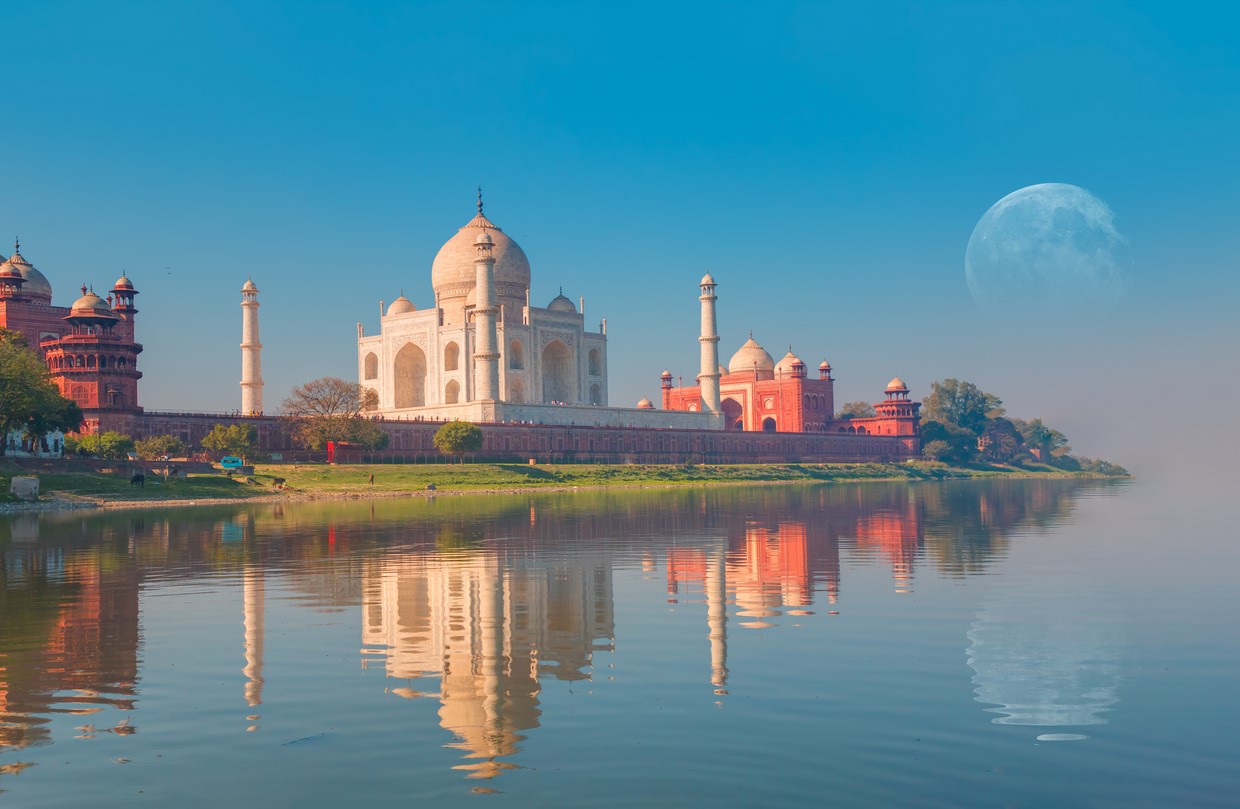
White Makrana marble forms the monument’s exterior, chosen for its durability and luminosity. Red sandstone was used in surrounding structures, creating a striking contrast that further emphasizes the mausoleum’s brilliance.
The foundation required innovative engineering due to the proximity of the Yamuna River. The site was excavated and reinforced to prevent water seepage and structural instability, ensuring the monument’s survival over centuries.
Renovation, Conservation, and Environmental Protection
Despite surviving wars and centuries of political change, the Taj Mahal has faced significant threats from pollution, environmental degradation, and mass tourism.
In the late 19th and early 20th centuries, discoloration caused by industrial pollution prompted restoration efforts. A traditional clay-based treatment was applied to the marble to absorb pollutants and restore its whiteness, a method still used today.
In recent decades, stricter environmental regulations have been introduced. Heavy industries and vehicular traffic are restricted within the Taj Trapezium Zone, and electric transport has largely replaced fuel-powered vehicles near the site.
Ongoing conservation efforts in 2026 focus on managing visitor numbers, reducing air pollution, and preserving the Yamuna River ecosystem to ensure the monument’s longevity for future generations.
The Taj Mahal Experience Today
Visiting the Taj Mahal is not just about viewing a monument but experiencing a carefully curated cultural site. Visitor pathways, security measures, and interpretive signage have been improved in recent years to enhance accessibility and reduce congestion.
Audio guides and official licensed guides are available in multiple languages, offering deeper insight into the monument’s history and design. Digital ticketing and timed entry systems help manage crowds, especially during peak seasons.
Visitor Guide to the Taj Mahal (2026)
Planning a visit to the Taj Mahal requires some preparation to make the most of your experience. From choosing the right entrance to understanding ticket categories and timing, small details can significantly improve your visit.
Whether you are visiting independently or as part of a guided tour in India, knowing what to expect helps you avoid crowds, long lines, and unnecessary stress.
| Travel Guide | |
|---|---|
| Address | Dharmapuri, Forest Colony, Tajganj, Agra, Uttar Pradesh 282001, India (Get Direction) |
| Opening Hours | |
| Day Visit | Sunrise to sunset (timings vary seasonally) |
| Night Visit | Usually 20:30 to 00:30 on select full moon nights |
| Entrance Fees (2026) | |
| Foreign Adults | ₹1,100 + ₹200 mausoleum fee |
| SAARC & BIMSTEC Nationals | ₹540 + ₹200 mausoleum fee |
| Indian Citizens | ₹50 + ₹200 mausoleum fee |
| Children (under 15) | Free |
| Night Visit (Foreign Adults) | ₹750 |
| Night Visit (Indian Citizens) | ₹520 |
Best Time to Visit the Taj Mahal
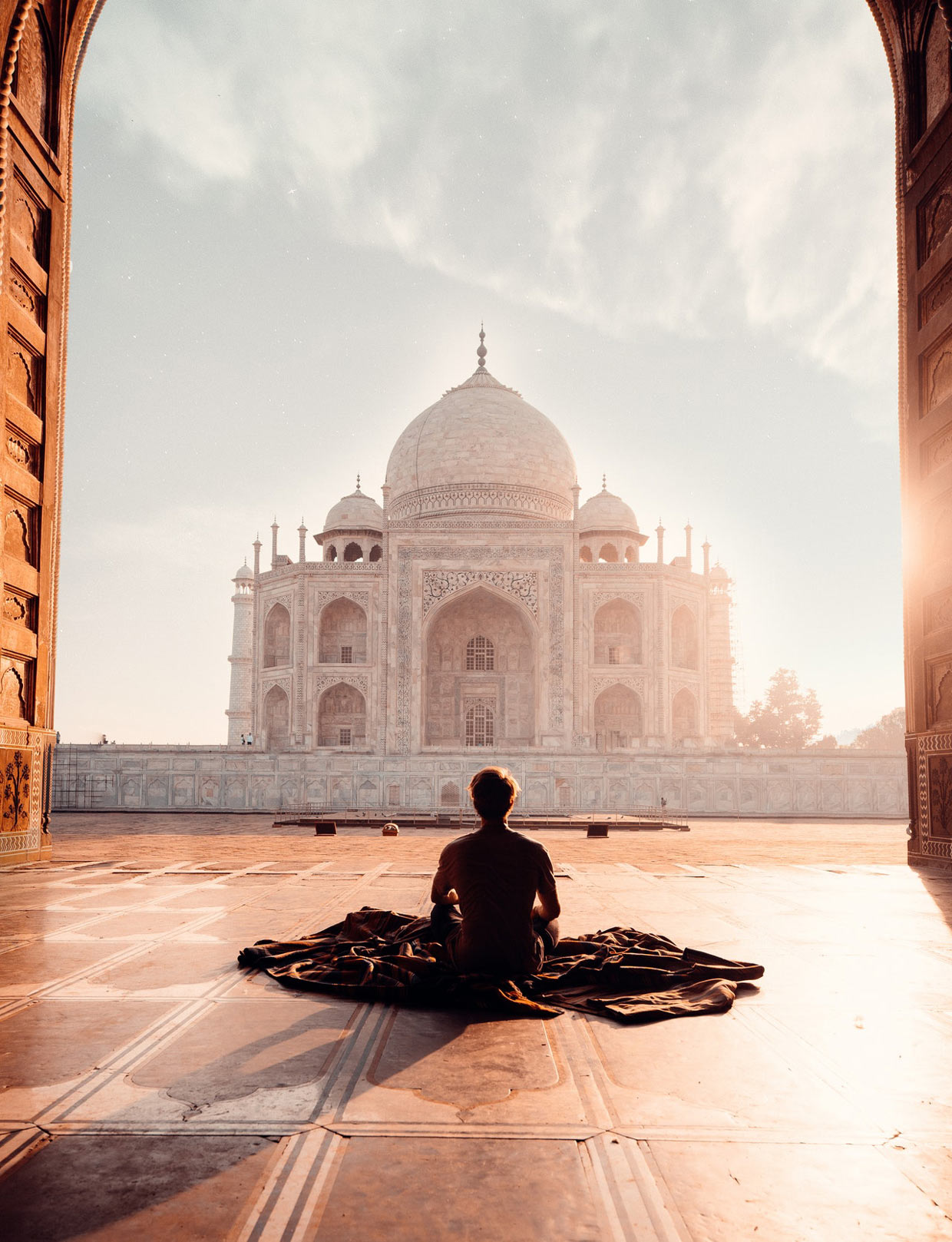
The best months to visit the Taj Mahal are October to March, when temperatures are cooler and visibility is clearer. Early morning visits, especially at sunrise, offer the best lighting, fewer crowds, and a quieter atmosphere.
Avoid visiting during peak summer months (May to June) due to extreme heat and haze. Fridays are closed for general visitors due to mosque prayers.
Night Visits and Full Moon Viewing
Night viewing of the Taj Mahal is available on five nights each month: the full moon night, two nights before, and two nights after. Tickets must be booked in advance, and visitor numbers are limited.
This experience offers a unique perspective as the marble reflects moonlight, creating a soft, almost surreal glow.
How to Reach the Taj Mahal
Agra is well connected by road and rail, with the most common route being from New Delhi.
By Train: Approximately 3 hours from Delhi; frequent daily services.
By Bus: Regular departures from Anand Vihar Terminal; slightly longer travel time.
By Car: Around 4 hours via the Yamuna Expressway.
Vehicles are not permitted close to the monument, so visitors must use electric shuttles or walk from designated parking zones.
How Long to Spend at the Taj Mahal
A typical visit takes between 2 to 3 hours, including time for security checks, garden walks, and interior viewing. Photography enthusiasts and first-time visitors may want additional time.
Opening of eastern and western gates begins approximately 30 minutes before sunrise and closes 30 minutes before sunset.
Important Notes
- The Taj Mahal is closed every Friday.
- The southern gate functions only as an exit.
- Night visit tickets are limited and sell out quickly.
- Seasonal timings vary slightly throughout the year.
Entrances and Ticket Gates
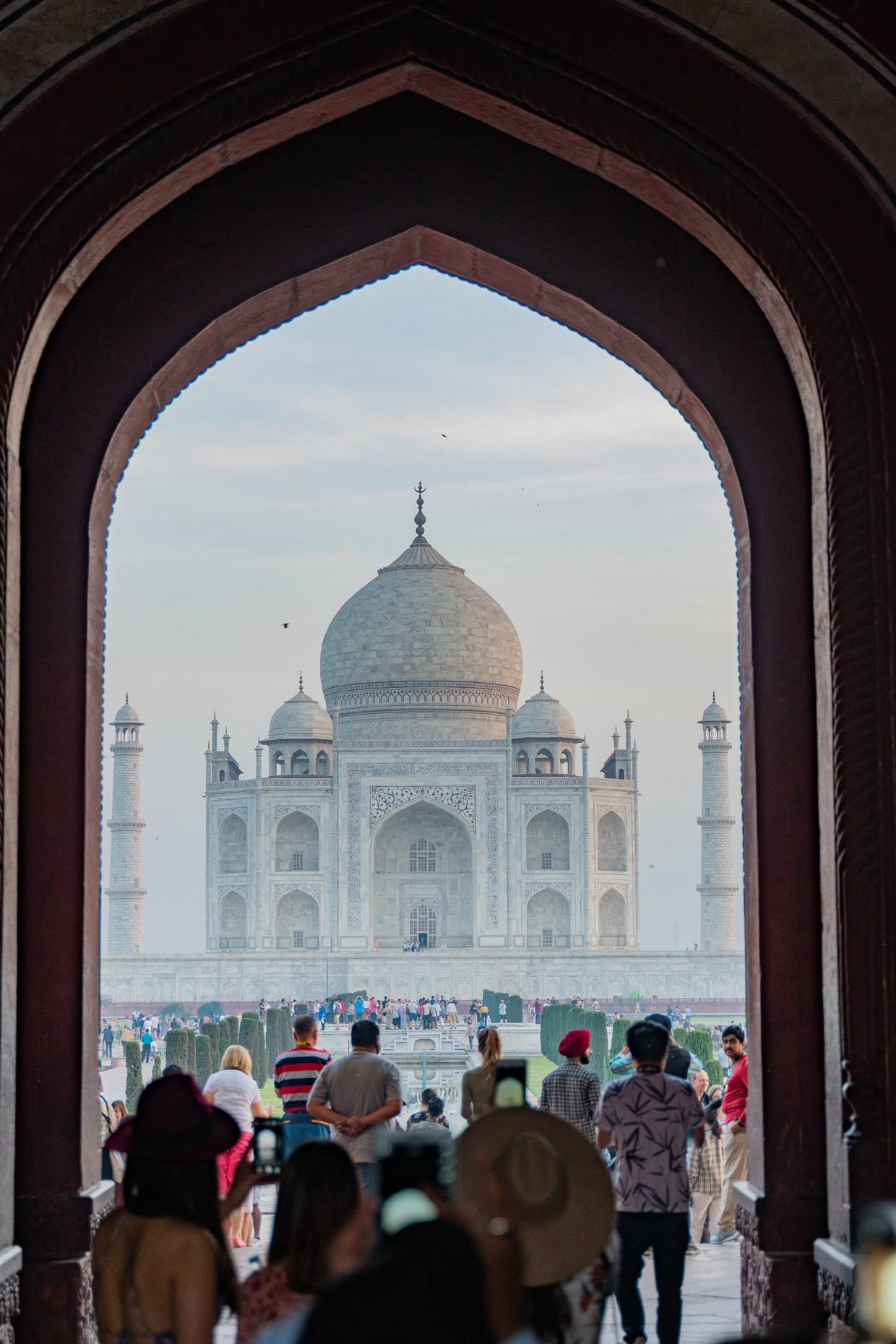
East Gate: Preferred by tourists; closer to hotels and less crowded.
West Gate: Main ceremonial entrance; busier and used more by locals.
South Gate: Exit only.
Arriving early is highly recommended regardless of entrance.
Where to Stay in Agra
Hotels near the East Gate are ideal for travelers focused on visiting the Taj Mahal efficiently. Budget travelers can find affordable accommodation near the West Gate, while luxury hotels offer panoramic views from farther distances.
Many travelers choose to include Agra as part of a broader itinerary, such as the Golden Triangle or multi-city India tours available through Tripways.
Rules for Visiting the Taj Mahal
- Modest clothing is required; shoulders and legs should be covered.
- No food, smoking, or chewing gum inside the complex.
- Large bags, drones, tripods, and most electronics are prohibited.
- Photography inside the main mausoleum is not allowed.
- Phones should be on silent mode.
- Touching or damaging surfaces is strictly prohibited.
Additional Travel Tips
- Official audio guides and licensed guides are recommended.
- Beware of unofficial guides and overcharging taxis.
- Expect security checks similar to those at airports.
- Sunrise visits offer the best photography opportunities.
- Boat rides and viewpoints across the Yamuna River provide alternative perspectives.
Why the Taj Mahal Remains Timeless
The Taj Mahal endures because it speaks to universal emotions while representing human achievement at its highest level. It is at once intimate and monumental, spiritual and political, artistic and technical.
For travelers exploring India, a visit to the Taj Mahal is not simply a sightseeing stop but an encounter with history, craftsmanship, and emotion that leaves a lasting impression.