

Thracian Kings Tour: Discover Bulgaria's Ancient Treasures
Free Cancellation · Instant confirmation · Pickup available

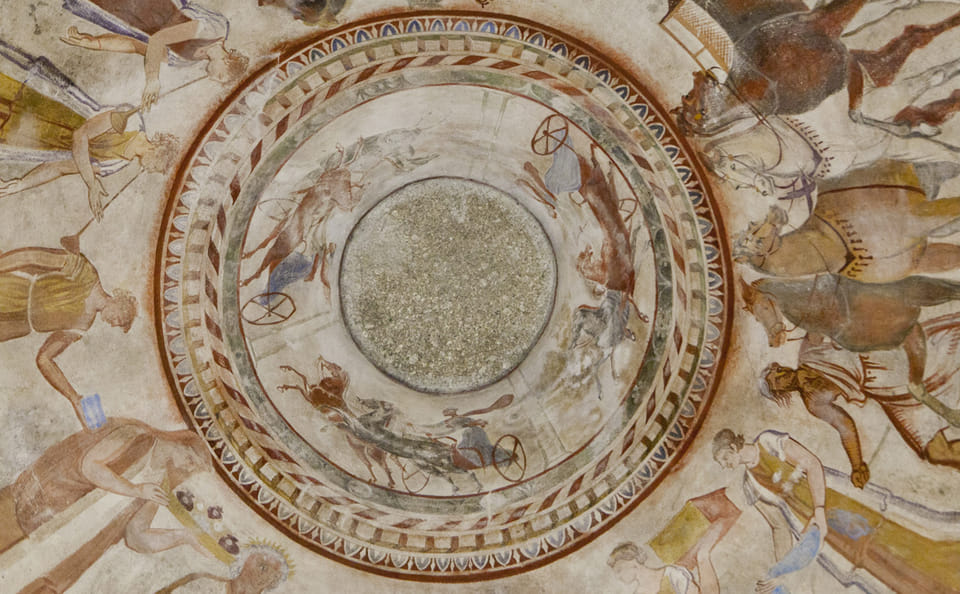
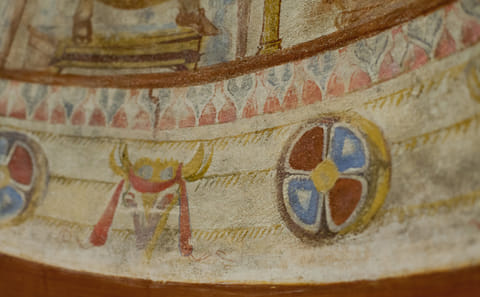
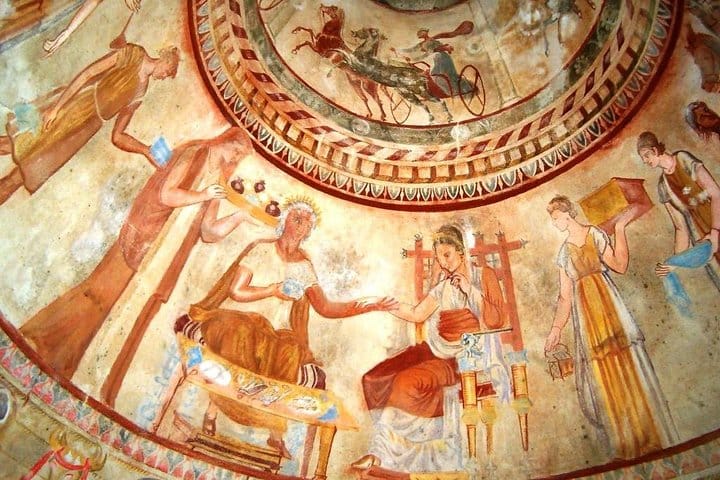
Discovered in 1944, this tomb dates from the Hellenistic period, around the end of the 4th century BC. It is located near Seutopolis, the capital city of the Thracian king Seutes III, and is part of a large Thracian necropolis. The tholos has a narrow corridor and a round burial chamber, both decorated with murals representing Thracian burial rituals and culture. These paintings are Bulgaria’s best-preserved artistic masterpieces from the Hellenistic period.
Goliama Kosmatka mound has been filled up as a sacred hill in the first half of the V century BC. Most likely, in the second half of the century, a monumental temple was built, consisting of a representative facade and three premises - a rectangular one with gable cover, a round one with a domed cover and a sarcophagus-like chamber made of a granite block weighing 60 tons.
At the beginning of the III century BC in the central chamber a ritual burial of a Thracian aristocrat was performed, and in the first chamber - a horse sacrifice. So the building has changed its function, becoming a tomb.
The inventory is extremely valuable, depicting personal and burial gifts - a golden crown, a golden cup / kylikes /, a set of gold ornaments for horse trappings , arms – gold-plated iron sword with sheath, bronze greaves, spear gads, parts of a shield, vessels of bronze and alabaster. Particularly fascinating are the following three objects - a bronze helmet, a silver jug and a silver cup, where the name of ΣΕΥΘΟΥ / Seuthes / can be deciphered.
After the funeral ceremony, the entrances to the chambers were built in, and adjoined to the facade – a 13 - meter passage was constructed with stone walls and a wooden roof. In sealing off the installation, it was burned down and filled up with the sliding mound-bar. 7 m south of the entrance there is a head of a bronze statue – an exquisite masterpiece of the Hellenic sculpture.
Having found four bronze coins of Seuthes III in the beginning of the passage, the exclusive resemblance of the features of the bronze head to the coin images of this Thracian ruler, and the three inscribed funeral items bearing his name, has made the discoverer of the sepulchre Dr. G. Kitov assume that this is the tomb of the founder of the Thracian town of Seuthopolis and Odrysian ruler - Seuthes III.
The wall paintings from Ostrusha are precisely executed in blue, yellow, red and green with shades, they were a masterpiece of ancient Thracian fine art, and according to Georgi Kitov, their artistic value is undeniably greater than those depicted and perfectly preserved in the Kazanlak tomb.
Fully refundable until 1 day before start
Non-refundable after 1 day before start
Free Cancellation · Instant confirmation · Pickup available
Free Cancellation · Instant confirmation · Pickup available
Free Cancellation · Instant confirmation · Pickup available
Free Cancellation · Instant confirmation · Pickup available
Free Cancellation · Instant confirmation · Pickup available
Free Cancellation · Instant confirmation · Pickup available
Free Cancellation · Instant confirmation · Pickup available
Free Cancellation · Instant confirmation · Pickup available
Our assistant finds tours and checks live dates and prices, and answers your questions.