

Luxor Valley of the Kings Day Tour from Hurghada by Bus
Free Cancellation · Instant confirmation · Pickup available

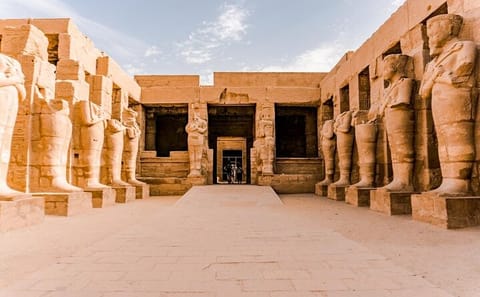
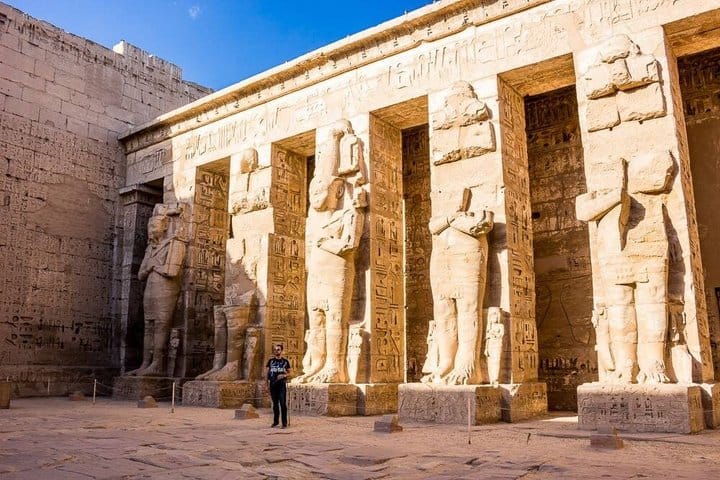
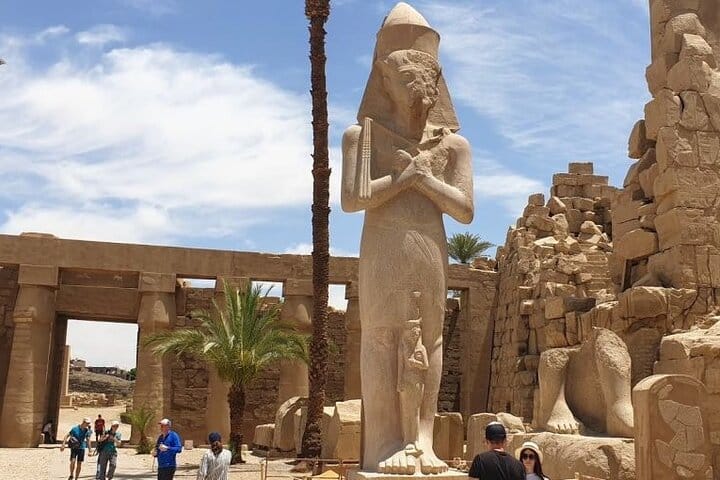
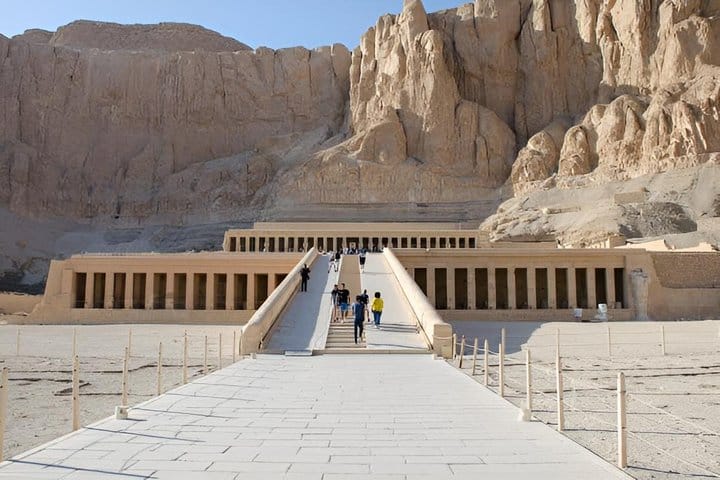
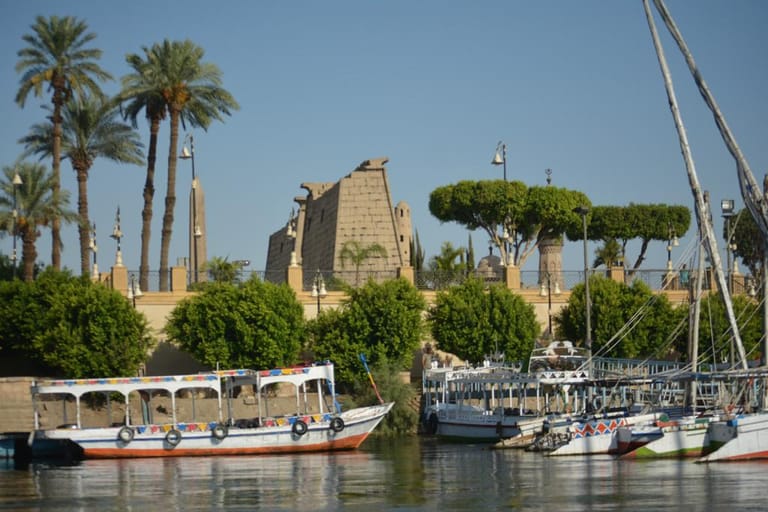
The Valley of the Queens (Arabic: وادي الملكات Wādī al Malekāt) is a site in Egypt, where the wives of pharaohs were buried in ancient times. It was known then as Ta-Set-Neferu, meaning "the place of beauty". It was most famous for being the burial site of many wives of Pharaohs. Pharaohs themselves were buried in The Valley of the Kings. Visit the Temple of Karnak and admire the columned halls, the chapels, and the sacred lake of the UNESCO World Heritage Site. Enjoy lunch at a selected restaurant in Luxor before heading to the other bank of the Nile River with a Feluka. Here you will explore the City of the Dead and the Colossi of Memnon. Admire the only remains of the Temple of Amenhotep III and visit the Valley of the Queens. Be inspired by the stunning architecture and discover the Temple of Hatshepsut, the great queen of all times who ruler of ancient Egypt. Finally, as your day winds down, you will be transferred back to land and returned to your hotel.
Hatchepsut; Egyptian "Foremost of Noble Ladies";[5] 1507–1458 BC) was the fifth pharaoh of the Eighteenth Dynasty of Egypt. She was the second historically-confirmed female pharaoh, the first being Sobekneferu.[6] (Various other women may have also ruled as pharaohs regnant or at least regents before Hatshepsut, as early as Neithhotep around 1600 years prior.)
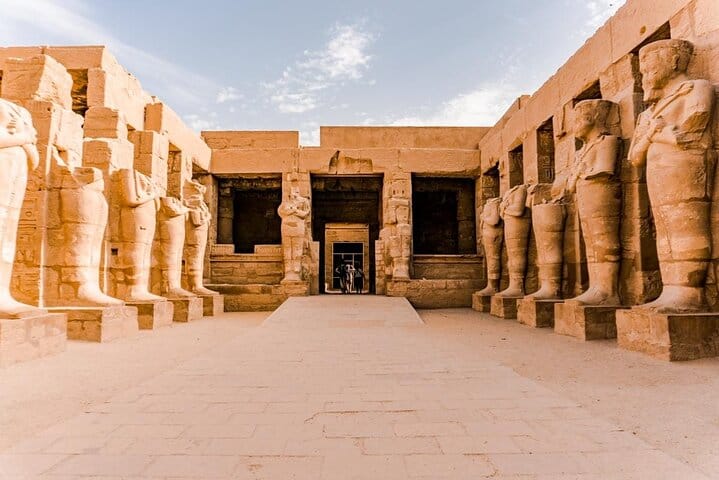
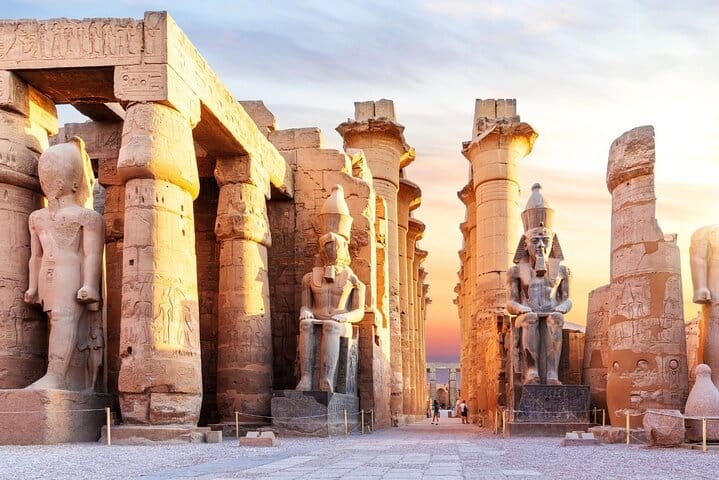
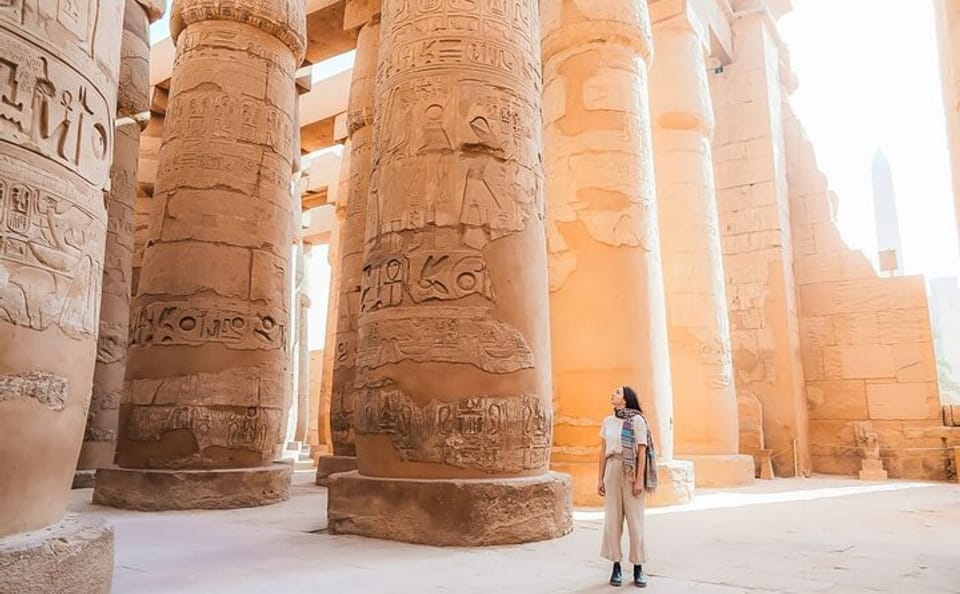
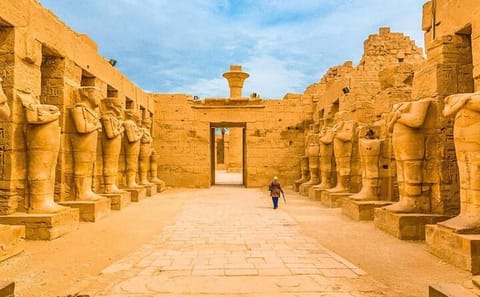
The Karnak Temple Complex, commonly known as Karnak (/ˈkɑːr.næk/,[1] from Arabic Khurnak meaning "fortified village"), comprises a vast mix of decayed temples, chapels, pylons, and other buildings near Luxor, in Egypt. Construction at the complex began during the reign of Senusret I in the Middle Kingdom (around [ ] BC) and continued into the Ptolemaic period (305 - 30 BC), although most of the extant buildings date from the New Kingdom. The area around Karnak was the ancient Egyptian Ipet-isut ("The Most Selected of Places") and the main place of worship of the eighteenth dynasty Theban Triad with the god Amun as its head. It is part of the monumental city of Thebes. The Karnak complex gives its name to the nearby, and partly surrounded, modern village of El-Karnak, 2.5 kilometres (1.6 miles) north of Luxor.
The Colossi of Memnon (Arabic: el-Colossat or es-Salamat) are two massive stone statues of the Pharaoh Amenhotep III, who reigned in Egypt during the Dynasty XVIII. Since 1350 BCE, they have stood in the Theban Necropolis, located west of the River Nile from the modern city of Luxor.
Fully refundable until 1 day before start
Free Cancellation · Instant confirmation · Pickup available
Free Cancellation · Instant confirmation · Pickup available
Free Cancellation · Instant confirmation · Pickup available
50% refund until 1 day before · Instant confirmation · Private tour
Our assistant finds tours and checks live dates and prices, and answers your questions.