

Private 5-Hour Cultural Tour of Munich's Key Attractions
Free Cancellation · Instant confirmation · Private tour

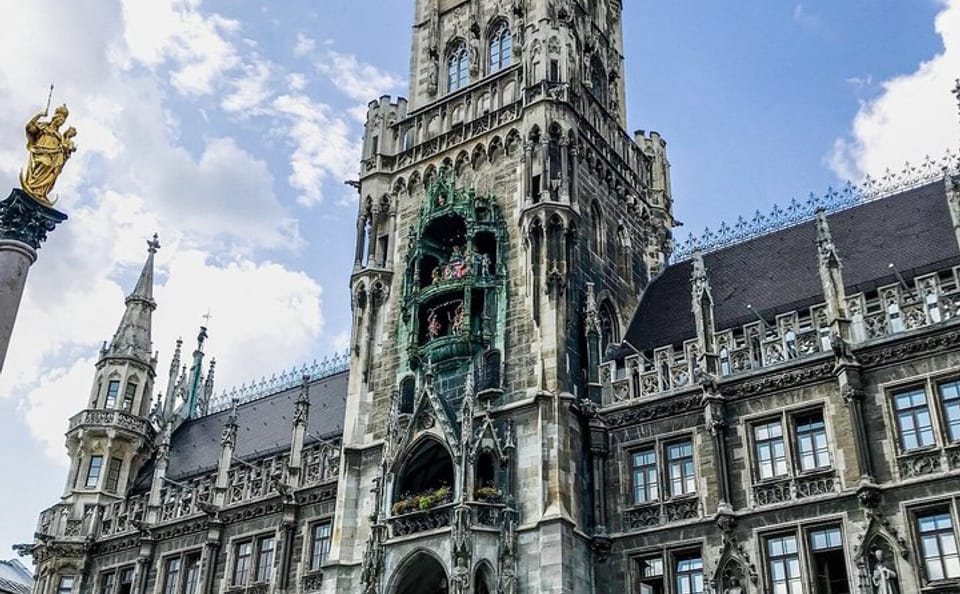
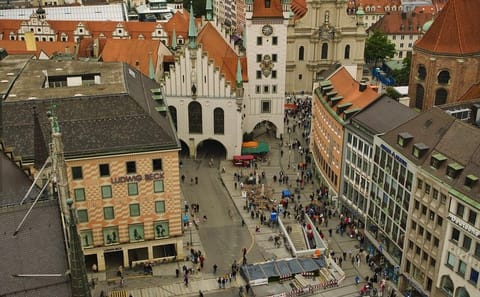
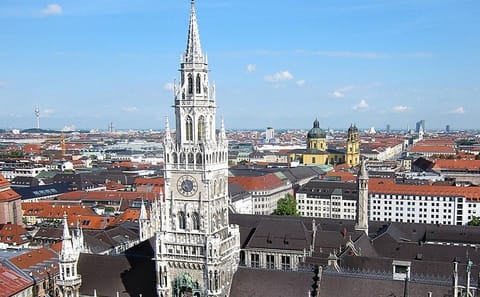
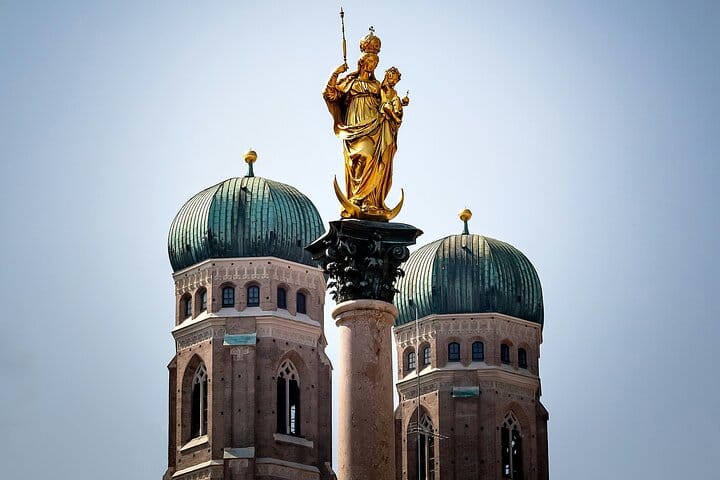
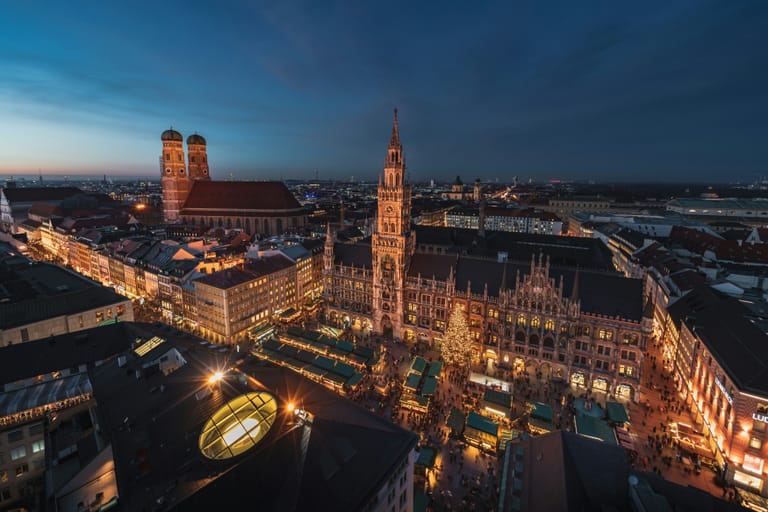
Firsty you will visit The Marienplatz which was named after the Mariensäule. The Marienplatz is dominated by the New City Hall on the northside, and the Old City Hall On the east side.
Next you will be visiting The Rathaus-Glockenspiel of Munich which is a tourist attraction in Marienplatz, the heart of Munich. The top half of the Glockenspiel tells the story of the marriage of the local Duke Wilhelm V (who also founded the world famous Hofbräuhaus) to Renata of Lorraine. In honour of the happy couple there is a joust with life-sized knights on horseback representing Bavaria (in white and blue) and Lothringen (in red and white).
You will then visit The Frauenkirche. Its church towers are widely visible because of local height limits.
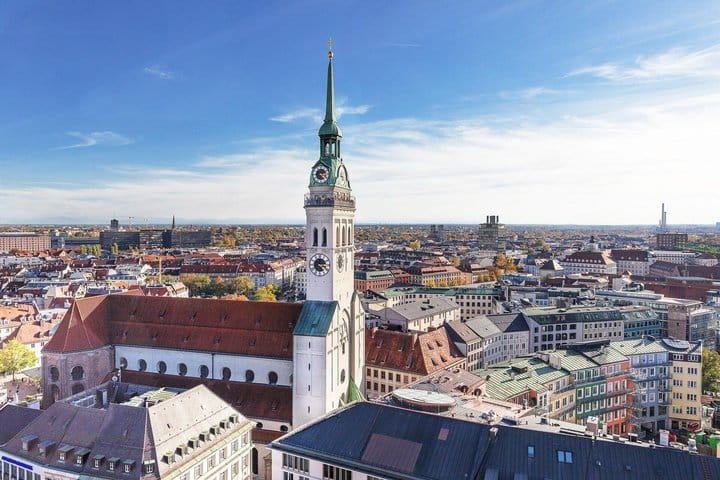
Next is the St. Peters Church where, before the foundation of Munich as a city in 1158, there had been a pre-Merovingian church on this site. At the end of the 12th century a new church in the Bavarian Romanesque style was consecrated, and expanded in Gothic style
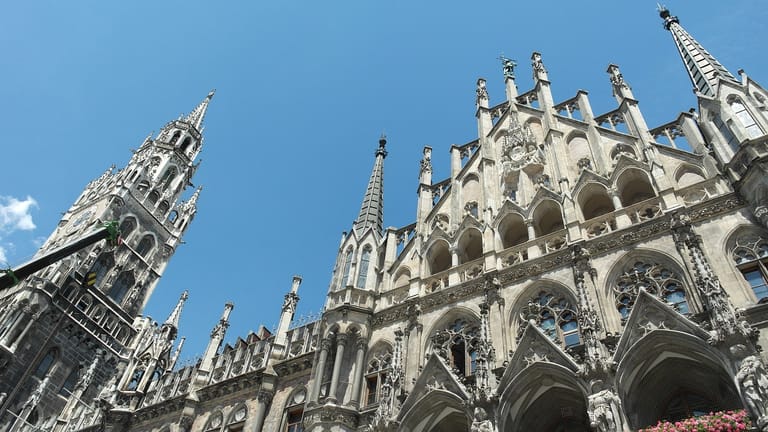
Then you will visit The New Town Hall at the northern part of Marienplatz. In 1874 the municipality had left the Old Town Hall for its new domicile.
The Viktualienmarkt is a daily food market and a square in the center of the city. Most stalls and shops are open during the official opening hours (Monday to Saturday 8am until 8pm). There are special opening hours for flower shops, bakeries and restaurants.
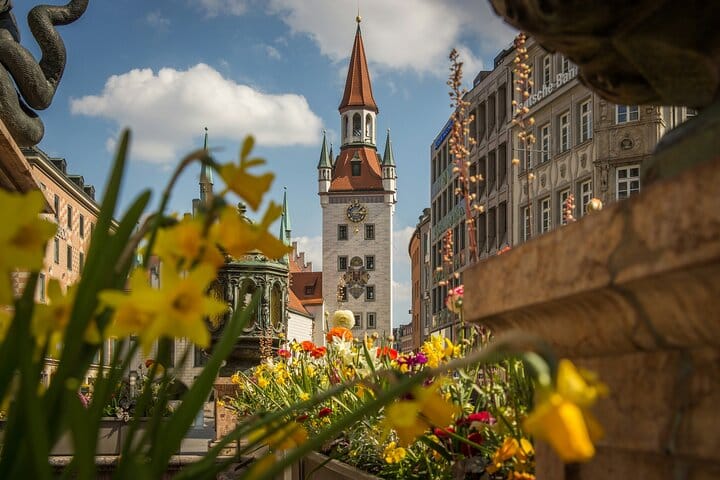
Next will be The Isartor at the Isartorplatz which is one of the four main gates of the medieval city wall. It served as a fortification for the defense and is the most easterly of Munich's three remaining Gothic town gates. The gate is located close to the Isar and was named after the river.
Last but not the least is the tour to the Hofbräuhaus am Platzl that is a beer hall in originally built in 1589. The building was completely remodeled in 1897. All of the rooms except the historic beer hall ("Schwemme") were destroyed in the World War II bombings.
Marienplatz
Non-refundable booking
Free Cancellation · Instant confirmation · Private tour
Free Cancellation · Instant confirmation · Meet on location
Free Cancellation · Instant confirmation · Private tour
Free Cancellation · Instant confirmation · Meet on location
Instant confirmation · Private tour · Meet on location
Instant confirmation · Private tour · Meet on location
Instant confirmation · Private tour · Meet on location
 Temporarily unavailable
Instant confirmation · Private tour · Meet on location
Our assistant finds tours and checks live dates and prices, and answers your questions.