

Private Walking Tour of Warsaw's History and Culture
Free Cancellation · Instant confirmation · Meet on location

This Warsaw WWII private tour follows a clear chronological structure. It begins in central Warsaw, where wartime scars remain visible in the urban landscape. Your guide explains the international situation of the late 1930s, the German invasion of Poland in 1939, and the Soviet occupation of eastern Poland.
A major focus is the tragedy of Warsaw’s Jewish population. Before the war, Warsaw was home to nearly 300,000 Jews. In 1940, Nazi Germany created the Warsaw Ghetto, imprisoning hundreds of thousands of people in extreme conditions. You will visit preserved fragments of the Ghetto Wall, including locations where original boundaries ran between buildings.
A few fragments of the Ghetto Wall running between the properties are preserved, as well as the walls of the pre-war buildings that marked the border of the ghetto. The three best-known parts of the wall are located in the former small ghetto, although some are periodically not accessible: the guide takes you to one of them.
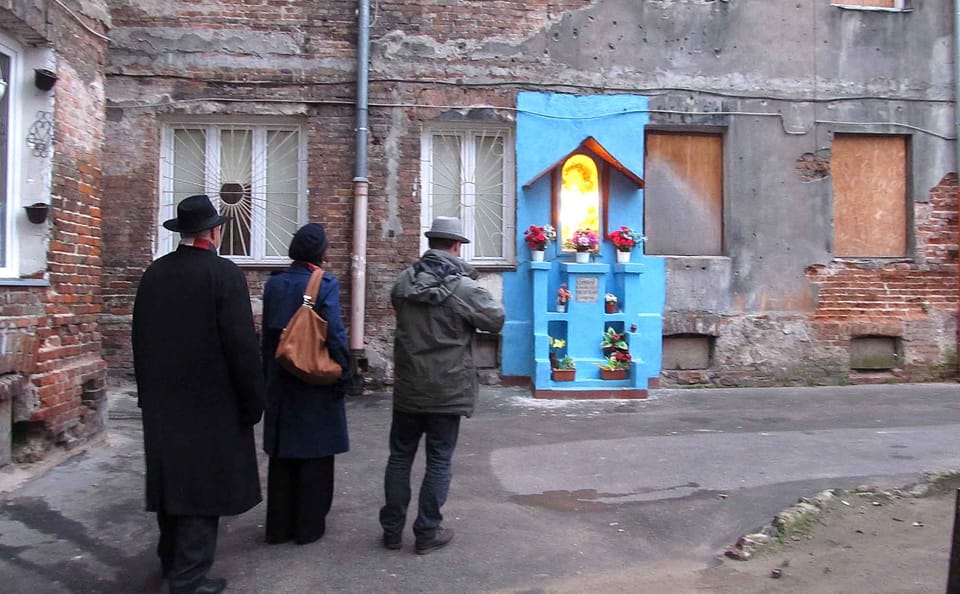
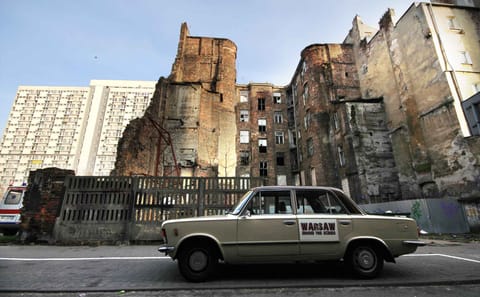
At Waliców Street, see a ruined tenement house—left intentionally unrestored—as one of the last physical remnants of the ghetto.
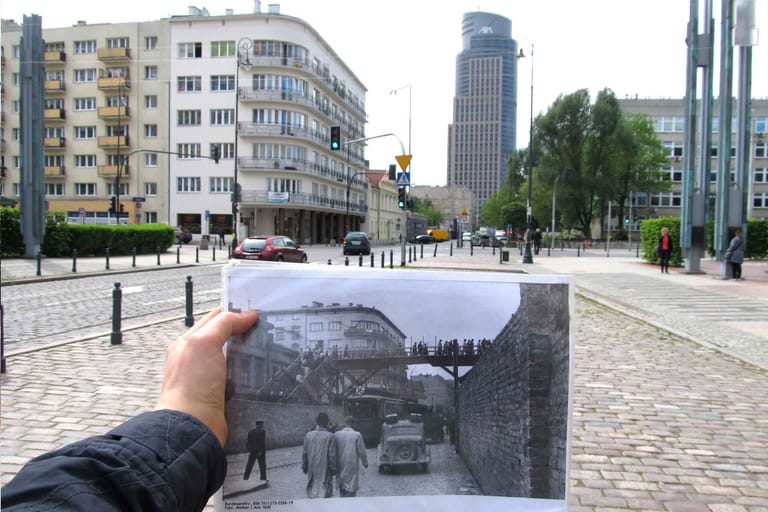
Nearby, learn about the famous wooden ghetto bridge over Chłodna Street, built high above traffic to connect the two sealed parts of the ghetto.
The next stop is the Muranów district. Again, the first impression is that it is just a regular neighbourhood filled with squared blocks of flats. But there is much more from the past to be discovered with the help of a guide.
Continue to Muranów, a district built entirely on wartime rubble. Visit the area around the Monument to the Ghetto Heroes and the POLIN Museum, close to the site of the first armed clashes of the 1943 Ghetto Uprising.
The tour also covers Soviet crimes against Polish citizens, including deportations to Siberia and the Katyń massacres, commemorated at the Monument to the Fallen and Murdered in the East.
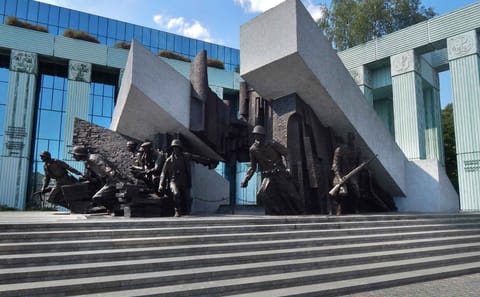
The final chapter focuses on the Warsaw Uprising of 1944, the city’s last attempt to regain independence. After its defeat, Nazi forces deliberately destroyed most of Warsaw. The Soviet army entered the ruins in January 1945, marking the beginning of communist rule in Poland.
Fully refundable until 1 day before start
Non-refundable after 1 day before start
Free Cancellation · Instant confirmation · Meet on location
Instant confirmation · Private tour · Meet on location
Free Cancellation · Instant confirmation · Private tour
Free Cancellation · Instant confirmation · Meet on location
Free Cancellation · Instant confirmation · Private tour
Free Cancellation · Instant confirmation · Private tour
Free Cancellation · Instant confirmation · Private tour
Free Cancellation · Instant confirmation · Private tour
Our assistant finds tours and checks live dates and prices, and answers your questions.