Over Day Trip from Sharm El Sheikh to Luxor by Plane

From $304 16 hours Bella Trips Egypt, Luxor Pickup available

Why we love it?

The Over Day Trip from Sharm El Sheikh to Luxor by Plane offers a comprehensive exploration of Egypt's ancient wonders in a single day. Lasting 16 hours, this tour is ideal for travelers seeking a quick yet immersive experience of Luxor's iconic sites, including the Karnak Open Air Museum, Luxor Temple, and the Valley of the Kings. Participants will enjoy comfortable transportation in an air-conditioned vehicle, ensuring a pleasant journey between attractions. The distinctiveness of this tour lies in its efficient use of time, allowing visitors to witness the grandeur of ancient Egyptian civilization without the need for an extended stay.

Inclusions

  • 2 Ways flight tickets.
  • All Transportaion With Air-conditioned Vilche.
  • Entry/Admission - Karnak Open Air Museum & Luxor Temple.
  • Entry/Admission - Valley of the Kings.
  • Entry/Admission - Colossi of Memnon.
  • Experienced guide specializing in Egyptology.
  • Lunch.

Exclusions

  • Taxes and fees 10 EUR per person

Itinerary

Step 1

The Distance from Sharm el Sheikh to Luxor (Round-trip)

Upon arrival

our guide will be there to meet and assist you in Luxor.

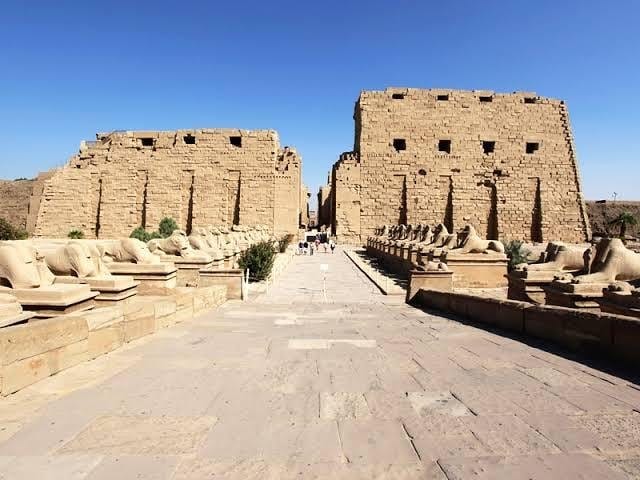
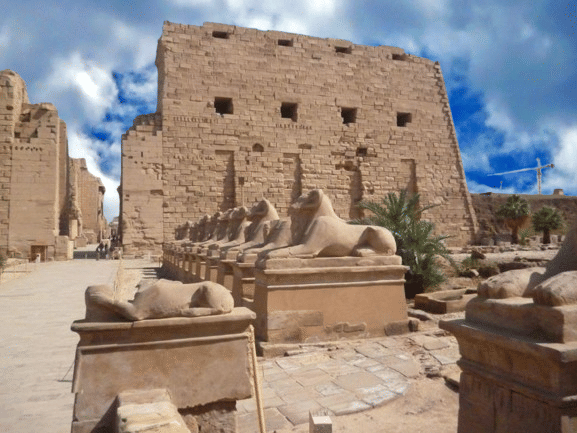
Commence your day with a tour to explore the Karnak Temples, an extraordinary testament to ancient worship. Dedicated to the Gods Amon, Mut, and Khonsu, this site was built from the early Middle Kingdom through the Graeco-Roman era.

Step 3

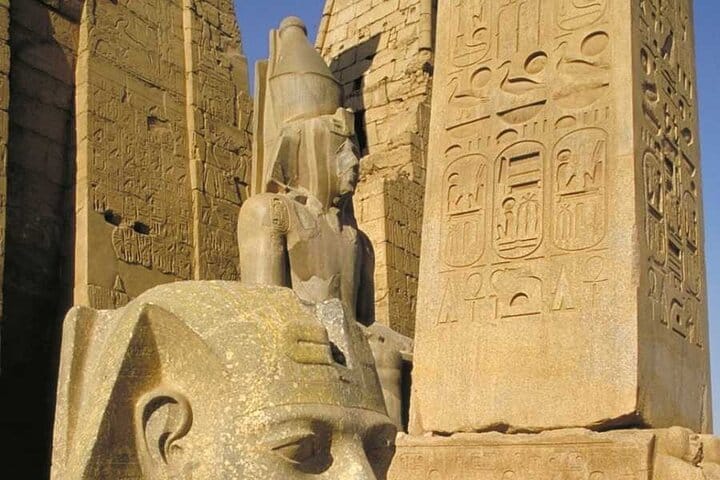
The Luxor Temple is a stunning architectural marvel that stands as a testament to ancient Egypt's grandeur and cultural richness. Located on the east bank of the Nile River, it is a colossal structure dedicated to the Theban Triad—Amun, his consort Mut, and their son Khonsu.

This temple was mainly constructed during the reign of Amenhotep III and completed by Tutankhamun and Ramesses II.

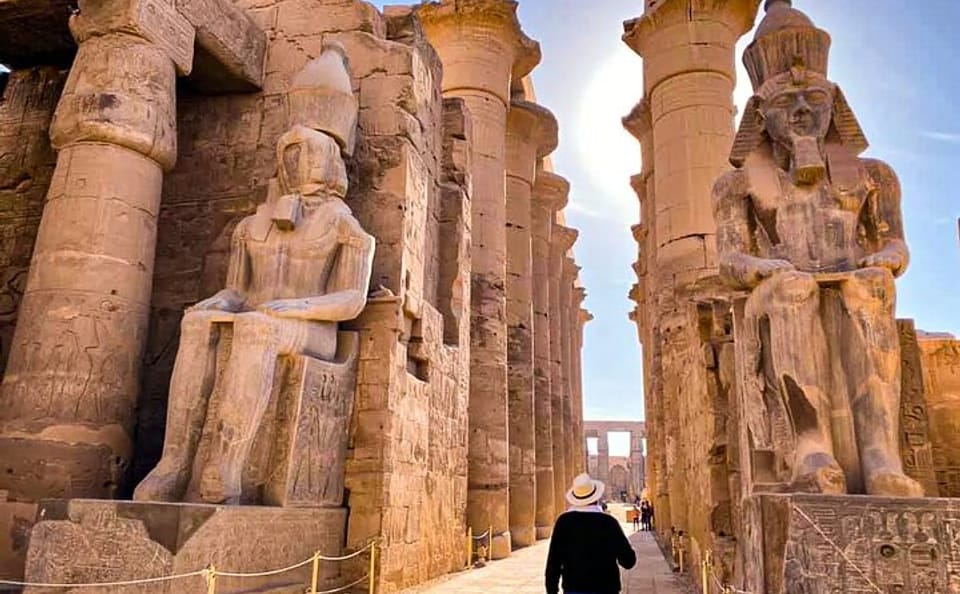
Its grand entrance, the first pylon, leads into a vast courtyard surrounded by colossal statues and intricately adorned columns. The temple is adorned with remarkable hieroglyphs and intricate wall carvings, depicting historical events and religious ceremonies. The annual Opet Festival, a significant celebration in ancient Egypt, was held at this temple, adding to its historical and cultural significance. The Luxor Temple continues to stand as an enduring symbol of Egypt's ancient splendor and spiritual devotion.

Step 4

After having your lunch at a local restaurant, we will introduce to the Valley of the Kings:

The Valley of the Kings is an awe-inspiring necropolis in Egypt, known for housing the elaborate tombs of numerous pharaohs from the New Kingdom period.

Nestled on the west bank of the Nile near Luxor, this ancient burial site served as the final resting place for powerful rulers like Tutankhamun, Ramses the Great, and Seti I.

These pharaohs were entombed in richly adorned and intricately decorated chambers within the valley's rock-cut tombs.

The elaborate hieroglyphs, vivid paintings, and detailed carvings within the chambers depict religious scenes, passages from the Book of the Dead, and significant aspects of the pharaoh's life and journey to the afterlife. Despite being subjected to looting and natural decay over the centuries, the Valley of the Kings remains an iconic symbol of Egypt's historical wealth and the remarkable craftsmanship of its artisans.

The Colossi of Memnon

situated in Luxor, Egypt, are colossal twin statues that stand as the remnants of the mortuary temple of Amenhotep III.

These massive statues, depicting the pharaoh seated in a regal position, once guarded the entrance to the temple. Carved from single blocks of quartzite sandstone, each statue stands about 60 feet tall and captivates visitors with their grandeur.

The statues were originally part of a larger temple complex, but only these two statues survived the test of time. The name "Memnon" comes from the Greek name for Amenhotep, and the site earned fame in ancient times due to a supposed "singing" sound that emanated from one of the statues at dawn, a phenomenon likely caused by changes in temperature. Though damaged by natural disasters and ancient conflicts, the Colossi of Memnon remain an iconic symbol of ancient Egyptian artistry and architectural prowess.

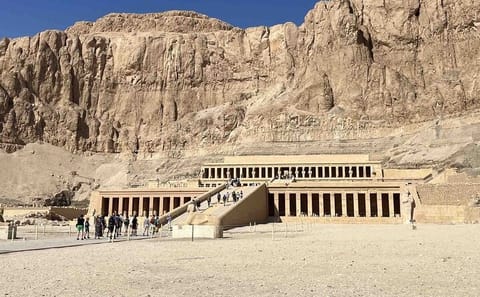
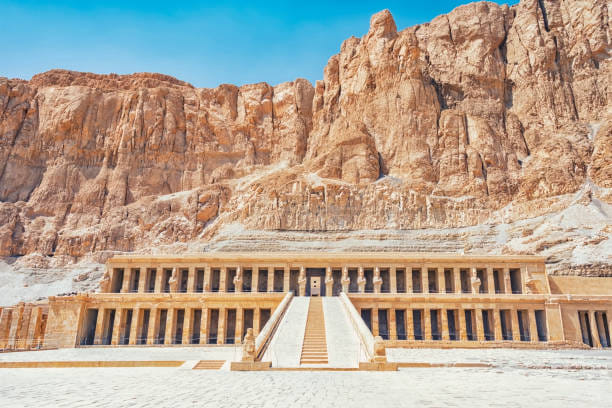
The Mortuary Temple of Hatshepsut

located near Luxor in Egypt, stands as a testament to the architectural and artistic brilliance of the ancient Egyptians.

Commissioned by Queen Hatshepsut, one of the few female pharaohs, this impressive structure was designed as a grand memorial and a sanctuary dedicated to the gods. Carved into the cliffs of Deir el-Bahari, the temple's design is characterized by three colonnaded terraces that ascend against the rocky backdrop. The complex was adorned with vibrant murals and relief carvings, depicting the queen's divine birth, her rule, and various religious scenes.

The temple also served as a funerary monument, housing the queen's tomb. Despite facing vandalism and attempts to erase her legacy after her death, the Mortuary Temple of Hatshepsut endures as a striking example of ancient Egyptian architecture and a tribute to the remarkable reign of Queen Hatshepsut.

Please Note

  • Not wheelchair accessible
  • Not stroller accessible
  • Not suitable for pets
  • Infant seats unavailable
  • Kindly note that the pickup point for most of the hotels from the main Road Entrance!
  • The driver will follow up with the traveler by his/her room number.

Know Before You Go

  • Public transportation nearby
  • Infants must sit on laps
  • Passport required

Sign In / Register

Login
Register
Forgot Password?