 Elite
Discover Bhutan 5-Day Cultural Tour
Free Cancellation · Instant confirmation · Private tour

Airport Reception:
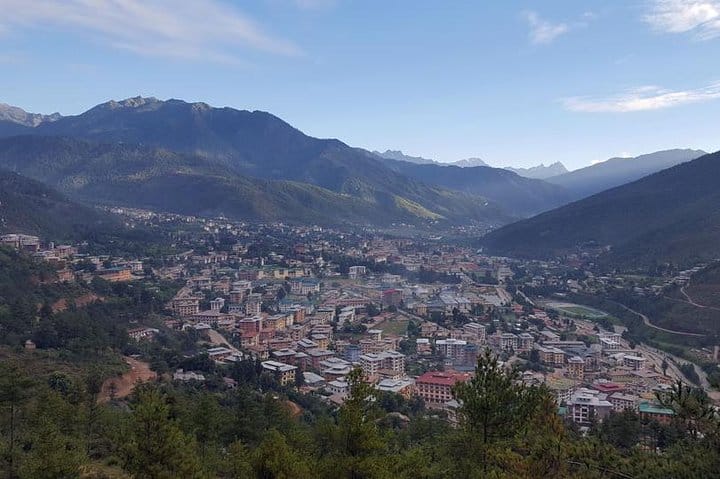
As you exit Paro International Airport, the only international airport in Bhutan, you'll be greeted by the crisp, fresh air and possibly a view of the surrounding Himalayan peaks. Your guide, typically dressed in traditional Bhutanese attire, will welcome you. Scenic Drive: Shortly after your arrival, you'll embark on a 1-hour drive to Thimphu, the capital city of Bhutan. The journey covers approximately 54 kilometers and offers a picturesque introduction to the landscapes of Bhutan. You'll drive along the Paro Chu (river) and then the Thimphu Chu, enjoying views of terraced fields, traditional houses, and the daily lives of local people. Check-In: Upon arrival in Thimphu, you'll check into your pre-arranged hotel. Depending on the time of arrival, you might have some leisure time to relax or explore the town.
After spending your first night in Thimphu, you will embark on a sightseeing tour of the Thimphu city followed by a scenic drive to Punakha. Here's how the day might unfold:
Tashichho Dzong is one of Bhutan's most iconic landmarks, set on the banks of the Wang Chhu River in Thimphu, serving as both the seat of Bhutan's civil government and the summer residence of the Je Khenpo, the country's chief abbot. Built in traditional Bhutanese style—with whitewashed walls, ornate wooden windows, and sloping roofs constructed without nails—the dzong houses courtyards, temples, and administrative offices adorned with intricately painted murals, and comes alive each year during the vibrant Thimphu Tsechu festival, making it a must-visit for its blend of spirituality, governance, and architectural beauty.
The National Memorial Chorten, built in 1974 in memory of Bhutan's third king, Jigme Dorji Wangchuck, is one of Thimphu's most significant landmarks, serving not to house relics but as a monument to world peace and prosperity. Known for its whitewashed structure, golden spires, and intricate murals, the chorten remains one of the city's most spiritually active sites, with locals regularly circumambulating it, spinning prayer wheels, and offering prayers—offering visitors a meaningful window into Bhutanese devotion and daily life.
The Buddha Dordenma Statue, one of the largest Buddha statues in the world at 51.5 meters, sits on a hilltop overlooking Thimphu valley and was built to commemorate the 60th anniversary of the fourth king's reign while fulfilling an ancient prophecy of peace. Cast in bronze and gilded in gold, its base houses a temple with over 100,000 smaller gilded Buddha statues, making it an active pilgrimage site as well as a striking symbol of Bhutan's Buddhist heritage, offering sweeping valley views especially memorable at sunset.
Dochula Pass: As you leave Thimphu, you'll cross the Dochula Pass, which, on a clear day, offers one of the most spectacular views of the Bhutanese Himalayan range. The pass is also known for its 108 chortens, built as a memorial by the Queen Mother to honor the Bhutanese soldiers.
Lunch: You may stop for lunch at a restaurant near Dochula Pass or somewhere along the way to Punakha, enjoying the local cuisine
Continue your journey through the vibrant landscapes of Bhutan towards the fertility temple known as Chimi Lhakhang. This temple is dedicated to Lama Drukpa Kunley, the "Divine Madman," known for his unconventional approach to Buddhism. It's a short hike through fields and villages to get there.
Also known as Pungthang Dewachen Phodrang (Palace of Great Happiness), this dzong is among the most beautiful in Bhutan, situated at the confluence of the Pho Chu and Mo Chu rivers. It's known for its intricate woodwork and historical significance.
Visit one of the longest suspension bridges in Bhutan, offering
spectacular views of the river and valley. It's an exhilarating experience walking across as you enjoy the surrounding natural beauty.
Suspension Bridge: Visit one of the longest suspension bridges in Bhutan, offering spectacular views of the river and valley. It's an exhilarating experience walking across as you enjoy the surrounding natural beauty.
Lunch: Before Departure
Enjoy a meal in Punakha before your journey back to Paro. This might be at a local restaurant where you can enjoy one last taste of the local cuisine in the Punakha Valley.
On the way, you'll once again pass through Dochula Pass. If the weather is clear, you might stop for another chance to see the Himalayan mountain range.
Explore Paro in Evening and overnight in Paro in 3 star Hotel
Early Start:
You'll typically start early in the morning to avoid the midday sun and crowds. After breakfast, you'll drive to the base of the monastery.
The Hike:
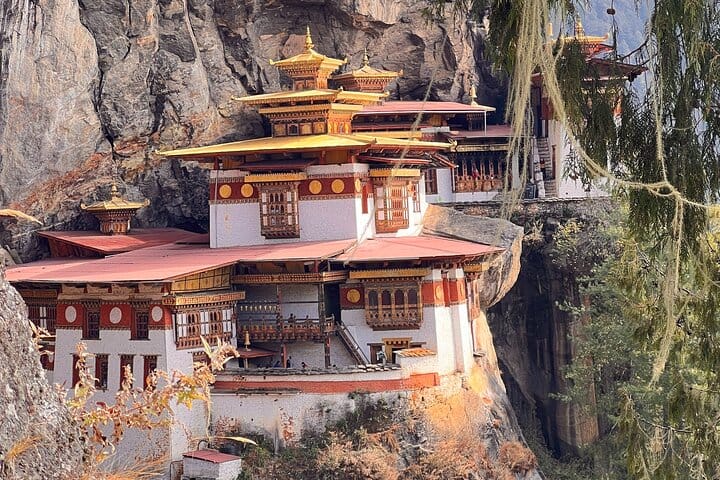
The hike to Tiger's Nest Monastery takes about 4-5 hours for a round trip, depending on your pace. The trail is well-maintained but steep in parts, with an elevation gain of about 900 meters. It's a challenging yet rewarding hike, with stunning views along the way.
Rest Stops:
There are several places to rest along the route, including a cafeteria located about halfway up, where you can enjoy refreshments and a view of the monastery.
At the Monastery: Once you reach Tiger's Nest, you'll have time to explore the various shrines and temples within the complex, soaking in the serenity and spiritual ambiance. Remember to dress modestly and remove your shoes before entering the temples
The hike to Tiger's Nest Monastery takes about 4-5 hours for a round trip, depending on your pace. The trail is well-maintained but steep in parts, with an elevation gain of about 900 meters. It's a challenging yet rewarding hike, with stunning views along the way.
Descent:
After exploring the monastery, you'll hike back down to the base. The descent is generally quicker but can be hard on the knees.
Lunch:
Once back at the base, you'll likely have lunch at the cafeteria or head to a nearby restaurant to refuel after the hike.Visit the Paro Dzong, also known as the Fortress on a Heap of Jewels. It's an excellent example of Bhutanese architecture and provides insight into Bhutan's historical and religious heritage.
Rinpung Dzong:
Visit the Paro Dzong, also known as the Fortress on a Heap of Jewels. It's an excellent example of Bhutanese architecture and provides insight into Bhutan's historical and religious heritage.
National Museum:
If time permits, visit the National Museum of Bhutan, housed in the ancient watchtower above Rinpung Dzong. It contains a rich collection of artifacts, art, and textiles representing Bhutan's culture.
Rinpung Dzong
You'll be departing from the beautiful land of Bhutan. Here's what typically happens on the departure day.
Morning: Preparation
Breakfast: Have an early breakfast at your hotel, depending on your flight time.
Packing: Ensure all your belongings are packed, and you haven't left anything behind. It's also a good time to double-check that you have all your travel documents ready.
Transfer to Paro International Airport
Hotel Checkout:
After breakfast and final packing, you'll check out of the hotel. The hotel staff or your guide will likely assist you with your luggage.
Drive to Airport: Your guide will arrange the transfer to Paro International Airport. The drive is usually short, but it's always good to leave early to avoid any last-minute rush or unexpected delays.
At the Airport
Fully refundable until 2 days before start
Non-refundable after 2 days before start
Elite
Free Cancellation · Instant confirmation · Private tour
 Elite
Free Cancellation · Instant confirmation · Pickup available
 Elite
Free Cancellation · Instant confirmation · Min age 12+
50% refund until 7 days before · Instant confirmation · Meet on location or pickup
Our assistant finds tours and checks live dates and prices, and answers your questions.