
Private Retro Minibus Tour of Communist Warsaw's Historic Landmarks

$293
Duration
3 hours
Difficulty
Reviews
(3)
4.8 /5
Previous
Next

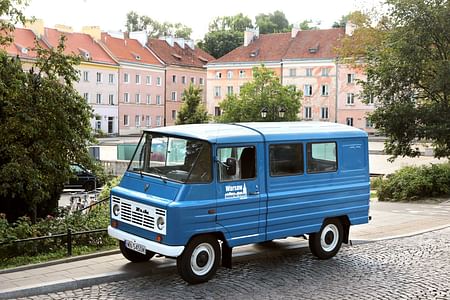
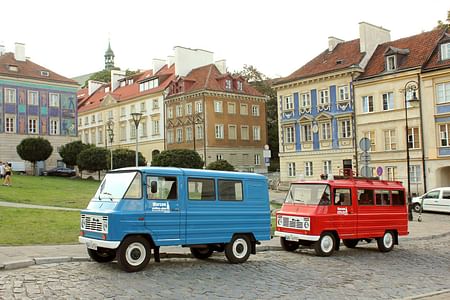
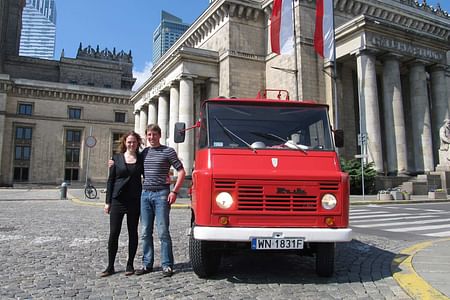
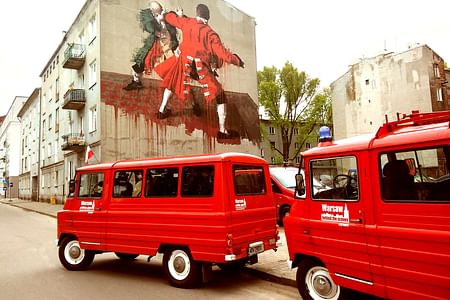
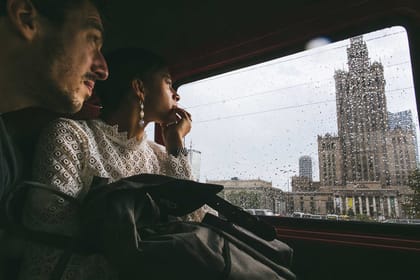
This private Communist Warsaw tour begins with hotel pickup in an authentic Żuk minibus, a vehicle produced in communist Poland and an essential part of the experience. Simple design, raw functionality, and unmistakable character place you directly inside the reality of the era.

Each stop reveals a different chapter of Warsaw under communism, from the end of World War II and the massive postwar reconstruction, through the realities of the 1960s and 1970s, to the breakthrough of Poland’s first free elections on June 4, 1989. Learn how people survived in a centrally planned economy, where shortages were everyday reality, and discover visible relics of communism still present in the city.

The route includes key landmarks such as the Palace of Culture and Science, Constitution Square, the former Communist Party headquarters, and other symbolic locations connected with Poland’s socialist and Cold War history.

HIGHLIGHTS

  • Discover the hidden realities of communist Poland
  • Hear stories that shaped modern Poland and postwar Europe
  • Learn how people survived in a centrally planned economy
  • Understand daily life behind the Iron Curtain
  • Learn about key figures such as John Paul II, Lech Wałęsa, and Ronald Reagan
  • Search for visible relics of communism in Warsaw
  • Travel by an authentic Żuk retro minibus from the communist era

Inclusions

  • Hotel/apartment Pickup and drop-off within a 3 km radius of the city center
  • English speaking guide
  • Transport by retro communist minibus

Exclusions

  • Food and drinks
  • Tip or gratuity

Tour Plan

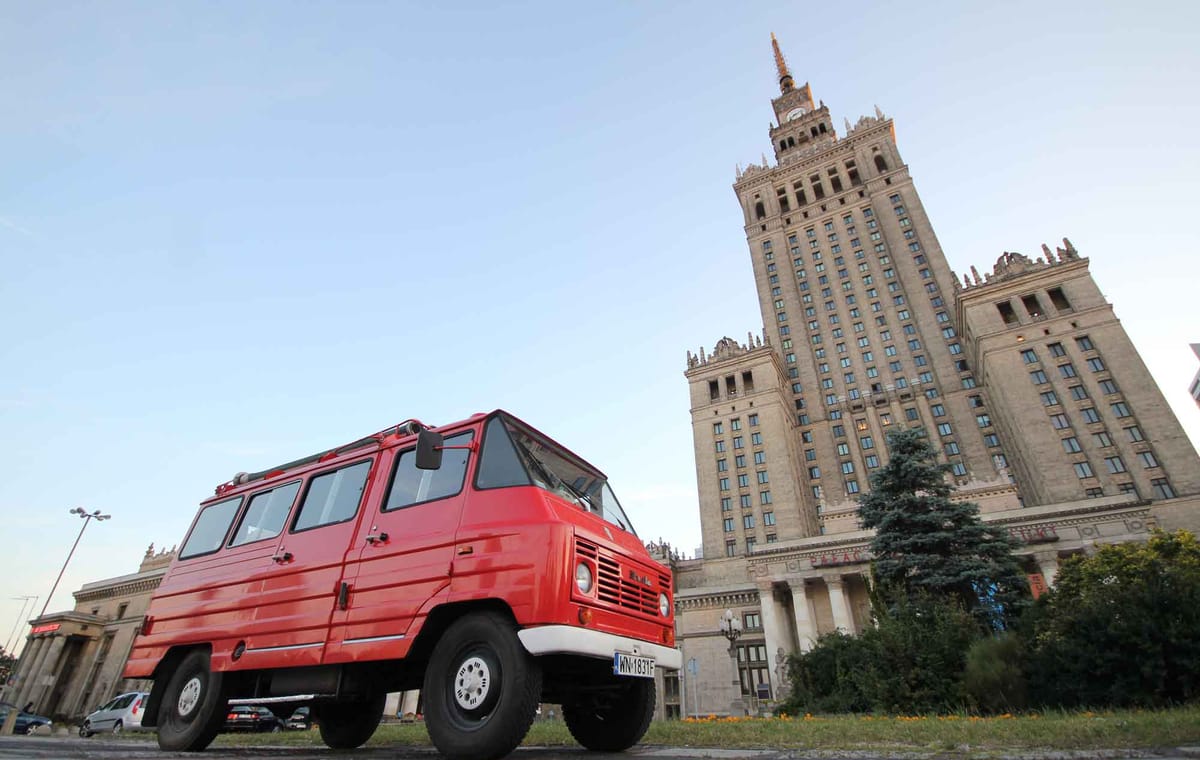
Palace of Culture and Science
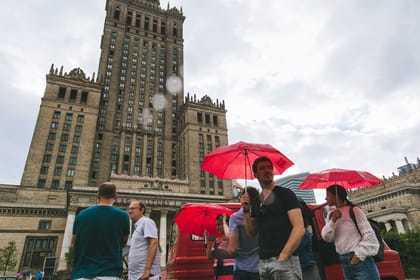
The first stop is a monumental Palace of Culture and Science, the undisputed symbol of Warsaw. It was built in 1952-1955 as a gift from the Soviet Union to the people of Poland. Varsovians still commonly use nicknames to refer to the Palace, notably "Beijing", "clown", and "nightmarish dream of a drunk confectioner".

Muranów district
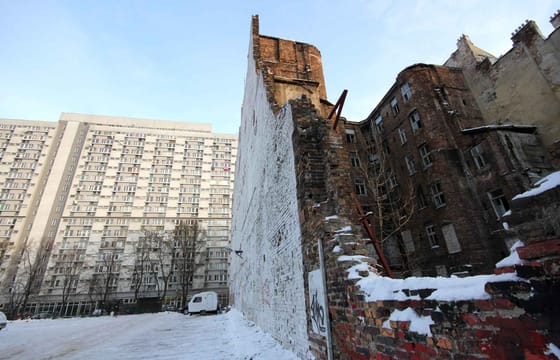
Warsaw, before WWII, was a typical European city shaped by capitalism. Thousands of victorian era tenement houses covered the city centre, pushing the proletariat out of the central districts. So when those people got power in 1945, they wanted an act of revenge. So did the modernist architects. One of their first achievements is the Muranów district, a green and spacious neighbourhood built in the late 1940s.

Old Town (pass by)
One of the most impressive achievements of the post-war reconstruction of Warsaw is the Old Town, with the speedway passing under it through the tunnel. This hi-tech piece of engineering came into being with the help of constructors of the Moscow underground rail system. You pass it on the way to Praga district.

Praga district
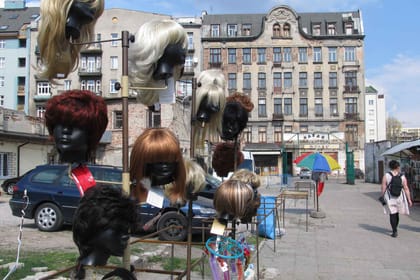
Praga district brings one into the post-WWII gloomy reality of neglected buildings and suspicious businesses made behind dark gates. Unfortunately, the government did not want to invest a penny in refurbishing the post-bourgeoisie architecture, so Praga rolled into its slow decline until the new shiny blocks of flats were about to be built on its ashes. Surprisingly, this fate became an excellent opportunity to carry on outlawed activities like money exchange, distribution of “Western” music or purchasing a pair of jeans.

Socialist Realism
Praga district brings one into the post-WWII gloomy reality of neglected buildings and suspicious businesses made behind dark gates. Unfortunately, the government did not want to invest a penny in refurbishing the post-bourgeoisie architecture, so Praga rolled into its slow decline until the new shiny blocks of flats were about to be built on its ashes. Surprisingly, this fate became an excellent opportunity to carry on outlawed activities like money exchange, distribution of “Western” music or purchasing a pair of jeans.

Itinerary

Expand All
Palace of Culture and Science

The tour begins at the Palace of Culture and Science, the most recognizable symbol of communist Warsaw. Built between 1952 and 1955 as a “gift” from the Soviet Union, the Palace still dominates the city skyline. Locals have long given it ironic nicknames, reflecting mixed feelings toward this monumental structure.

Muranów district

Before World War II, Warsaw was a typical European city shaped by capitalism, with dense tenement housing in the city center. After 1945, the new communist authorities and modernist architects saw reconstruction as a chance to reshape society. One of their earliest projects was Muranów, a green, spacious district built in the late 1940s on the ruins of the former Jewish Ghetto—an ambitious attempt to create a new socialist urban ideal.

Old Town (pass by)

One of the most impressive technical achievements of postwar Warsaw is the rebuilt Old Town, beneath which a major traffic route was constructed using expertise from engineers involved in the Moscow metro. You’ll pass through this area on the way to the Praga district.

Praga district

Praga offers a glimpse into the darker side of communist reality. Neglected for decades and largely ignored by government investment, the district became a center of informal and illegal activity. Behind its courtyards and gates, people exchanged foreign currency, traded Western music, and searched for goods unavailable elsewhere—turning decline into an opportunity for survival.

Socialist Realism

The final part of the tour explores Warsaw’s government district, where prewar modernist buildings meet the monumental style of socialist realism. Ironically, the leader of communist Poland reportedly refused to move into the new party headquarters, claiming it looked too much like a capitalist bank rather than the office of a workers’ party.

Meeting / Pickup

Pick-up only: Customers must be picked up from selected pick-up locations.

What to Bring

  • Clothes suitable for actual weather.

Please Note

  • This tour can be booked instantly online for adults and children over 150 cm (4 ft 9 in). If you wish to book the tour for a child under 150 cm, please contact the tour operator in advance to check the availability of seat boosters, which are mandatory under Polish law.
  • Each minibus accommodates up to 8 passengers, and a fleet of 5 minibuses is available.
  • The vehicles are used primarily for transfers between locations, with walking segments at each stop. Please wear comfortable clothing and suitable footwear.
  • Please note that classic vintage minibuses are not equipped with air conditioning, and some do not have seat belts (which is permitted for historic vehicles). All vehicles are equipped with heating for the winter season.

Cancellation Policy

  • We will charge a cancellation fee of 100% if booking is cancelled 1 day or less before the event
Destinations
Language

Reviews

4.8/5
Wonderful
3 verified reviews
Location (4.67/5)
Amenities (5/5)
Services (4.67/5)
Price (4.67/5)
Rooms (5/5)

3 Comments

  1. 5

    • Location
    • Amenities
    • Services
    • Price
    • Rooms

    We hopped into a charming retro minibus for this private adventure, making it a fun and immersive way to see the city’s communist-era landmarks. The guide shared fascinating stories that really brought the history alive, surpassing our expectations on many levels. The only minor hiccup was that the bus could have been a bit more comfortable; otherwise, it was a fantastic way to spend three hours diving into the past.

  2. 4.8

    • Location
    • Amenities
    • Services
    • Price
    • Rooms

    Cruising through Warsaw’s historic streets in a private minibus was a fantastic way for our family to soak in the communist-era landmarks.

  3. 4.6

    • Location
    • Amenities
    • Services
    • Price
    • Rooms

    Exploring the historic landmarks of Warsaw in Poland in a retro minibus was a unique way to dive into the city’s communist past. Our guide was full of fascinating stories, especially when we visited the Palace of Culture and Science; it really felt like stepping back in time. We loved the private setting, as it allowed us to ask questions and soak in the details without any rush. One minor suggestion would be to add a short stop for local snacks, as we were ready to taste some traditional treats after our tour. Overall, this experience was enjoyable and gave us a deeper appreciation for Warsaw’s rich history.

Comments are closed.

Login

Sign In / Register

Login
Register
Forgot Password?