


Aix-en-Provence: Audio Guided Walking Tour (2:20 – 24 audio comments)
Why we love it?
The Aix-en-Provence Audio Guided Walking Tour offers a self-paced exploration of this historic French city, lasting approximately 2 hours and 20 minutes. Ideal for history enthusiasts and casual travelers alike, the tour features 24 audio comments that provide insights into the city's monuments, hidden gems, and intriguing anecdotes. Notably, participants can enjoy immediate access to the audio content without the need for tickets or equipment, allowing for a seamless experience. Key stops include the Palace of Justice, Madeleine Church, and Richelme Square, making this tour a distinctive way to uncover the rich heritage and charm of Aix-en-Provence at one's own leisure.
Inclusions
- Immediate access to the audio-guided tour, no tickets or equipment to collect
- No deadline or expiration
- 24 immersive audio comments throughout the trip (historical comments, monuments, anecdotes, mysteries...)
- Text transcripts of all audio content
- Admire hidden gems that lie off the beaten path
- 3 languages available: French, English, Spanish
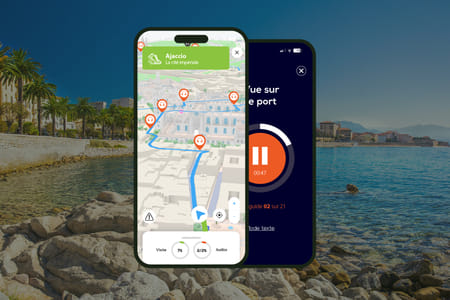
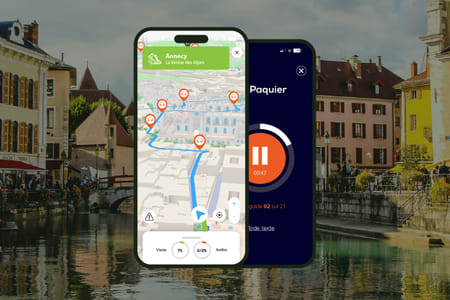
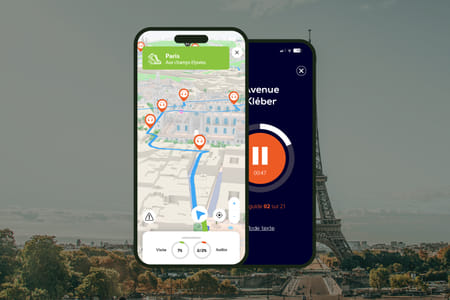
- Interactive navigation with real-time geolocation and 3D map to discover the most beautiful streets, squares and neighborhoods
- Recommendations for the best photo opportunities
- Offline mode (no data consumption during the visit)
Exclusions
- Admission fees to fee-paying establishments along the route if you want to make visits
- Headphones or earbuds (optional)
Itinerary
Palace of Justice
This is the pretty square in Verdun. Here we enter another district of the city, designed before that of Mazarin. It was in fact developed from 1583, in order to extend the city, which grew considerably in previous centuries.
Madeleine Church
Before talking about the Church of the Madeleine, let's focus for a moment on the square where it is located, the Place des Prêchers. It owes its name to the former convent that was not far away.
Richelme Square
This small square located not far from the Town Hall houses twice a week the Provençal market in Aix where fruits, vegetables, cheeses and other typical local products adorn the stalls that are displayed there.
Place de l'Hôtel de Ville
Here you arrive at the Town Hall Square, where the Clock Tower already stands in front of you.
Carders' Forum
On your left is the Cardiners' Forum, one of the city's main squares. Do not hesitate to take a short detour to discover it.
Old Aix Museum
On your left is a building that contains the Vieil-Aix Museum. It is located in the former private mansion Estienne de Saint-Jean, built in the 17th century, certainly by Pierre Puget.
Tapestry Museum
Let's look to the right now: at the end of the square, we see a building classified as Historic Monuments, the former Palace of the Archbishops. Get closer to observe it.
Saint-Sauveur Cathedral
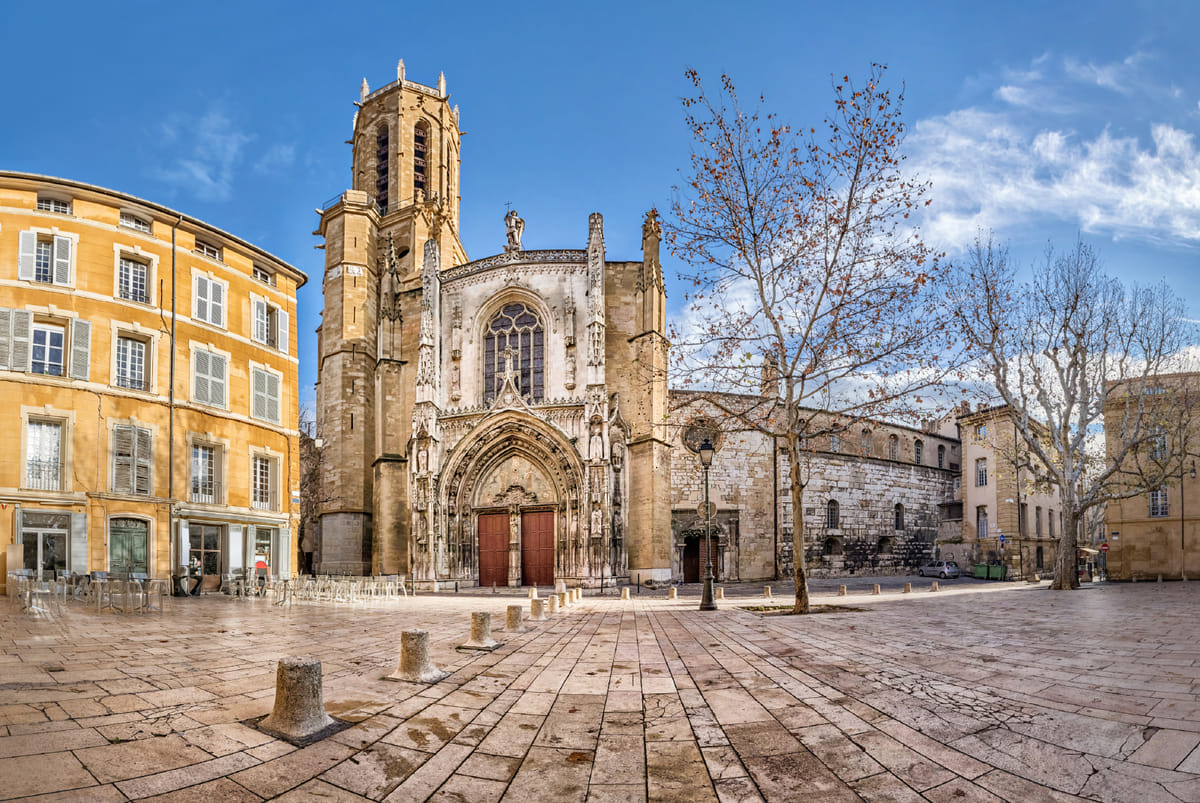
Here you are in front of the astonishing Saint-Sauveur Cathedral. It is built on the site of the ancient Roman forum, the main square of the ancient city, called Aquae Sextiae.
Monument Joseph Sec
Take a look to your right. Here you are in front of a funerary monument built by Joseph Sec, a bourgeois from Aix in the 18th century, who was a Jacobin, penitent gray, wood merchant and master carpenter.
Tourreluque
A true testimony to the city's medieval past, this tower is the only rempart of the rampart that surrounded Aix-en-Provence in the Middle Ages.
Emile Zola
On your right is a small street that is nothing exceptional at first glance, but which is one of the places where the famous Emile Zola lived during his life.
Pavillon de Vendôme
Behind you stands the imposing Pavillon de Vendôme. We owe this superb building to the Duke of Vendôme, Louis de Mercoeur, governor of Provence, who wanted, in 1664, to build a building for the woman he was madly in love with, Lucretia de Forbin Solliès.
Sextius Baths
If there is one thing that characterizes the city of Aix-en-Provence, it is water! The city has in fact been famous for its warm waters, and has been since Antiquity.
Place des Tanneurs
Here you are on the pretty little Place des Tanneurs. In its center, there is a fountain, of course. Get a little closer to observe it.
Fontaine de la Rotonde
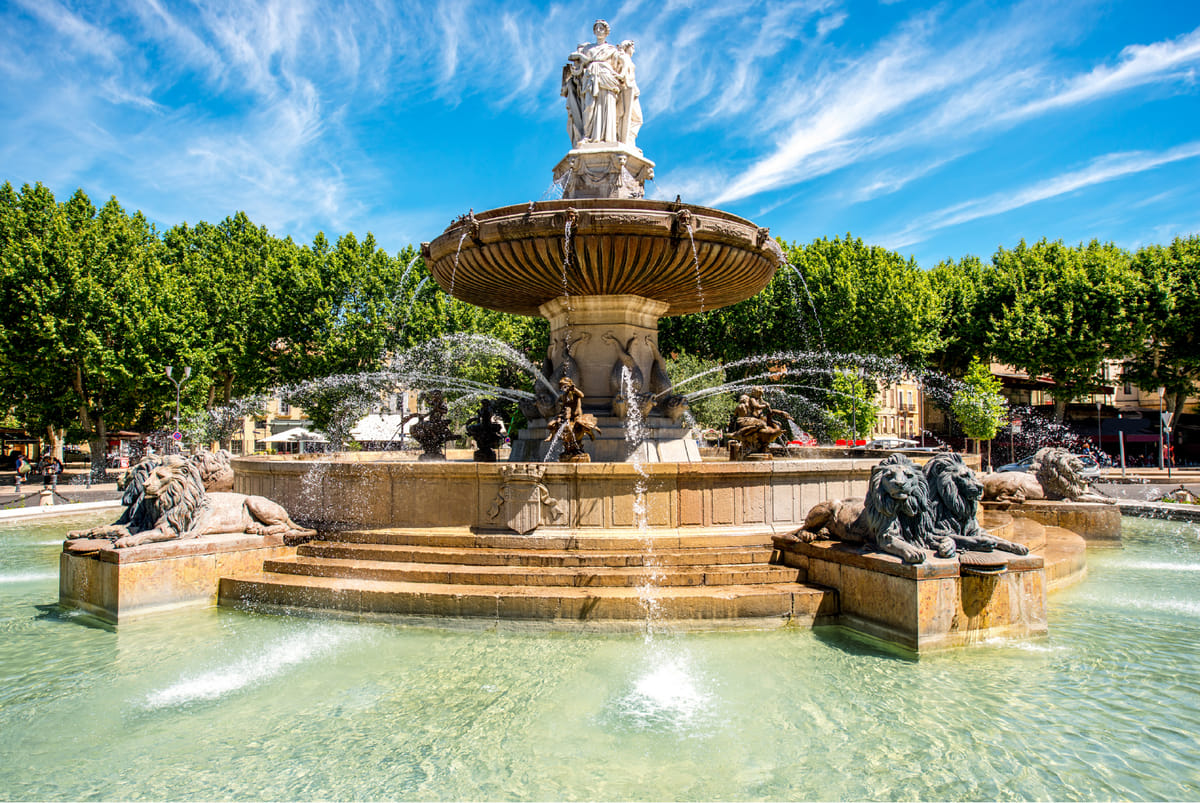
Here you are on the Place du Général-de-Gaulle, where you can see the most famous fountain in Aix: the Fontaine de la Rotonde.
Cours Mirabeau
The Cours Mirabeau is one of the most popular places in Aix-en-Provence. It was built in the 17th century, in place of the ramparts. An esplanade was then created to be a place for the Aix nobility to stroll.
Hotel de Caumont
You are in front of the Hotel de Caumont, one of the most beautiful private mansions in the city. It was built between 1715 and 1742 by George Vallon, at the request of François de Rolland, president of the Court of Auditors.
Fountain of the Four Dolphins
Here is the Place des Quatre Dauphins, where there is a fountain of the same name, built by Jean-Claude Rambot and Pierre Pavillon in the 17th century.
Quartier Mazarin
The Mazarin district appeared during the 17th century. It was born from the desire of Michel Mazarin, archbishop of the city, and brother of the prime minister of Louis XIV, to extend the city to the south in order to enlarge it.
Saint-Jean-de-Malte Church and Granet Museum
The Saint-Jean-de-Malte church already existed before the formation of the Mazarin district. It is in fact the very first Gothic church in Provence.
Place Forbin
Place Forbin marks the end of Cours Mirabeau. It was developed at the same time as this one to become one of the city's central squares.
Mossy fountain
This very particular fountain is called the Hot Water Fountain, or more commonly the Mossy Fountain. Can you see why?
Albertas Square
Here you are in Albertas Square. It is another fountain that we see here, and this one deserves a little more attention than the others.
Boyer D'Eguilles Hotel
It is another mansion that you have in front of you, the Hotel Boyer d'Eguilles.
Please Note
- An internet connection is required to download the itinerary before the visit, organize yourself accordingly
- Always check local conditions before you leave
- Make sure your smartphone is sufficiently charged or carry an external battery.
- After booking, you will receive an email with instructions for installing the application (available for iPhone and Android) as well as the procedure for activating the circuit code
- The circuit is not suitable for people with reduced mobility (presence of stairs).
Cancellation Policy
Fully refundable until 1 day before start
Non-refundable after 1 day before start