 Elite
Elite
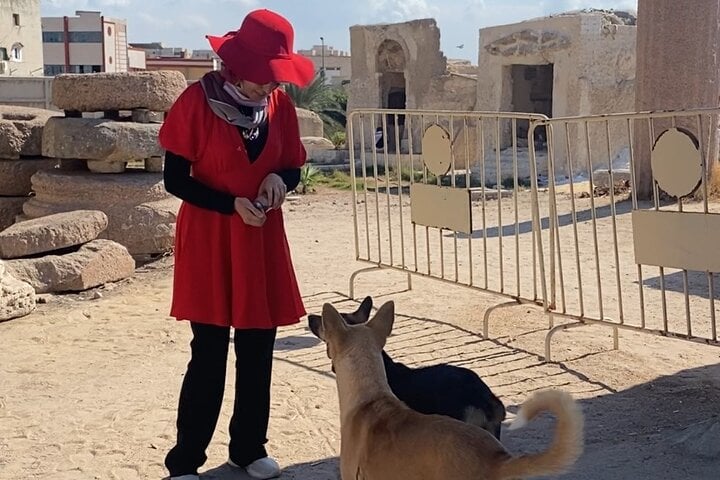
Alexandria Private tour from Cairo-10%to stray animals of Egypt
Free Cancellation · Instant confirmation · Private tour

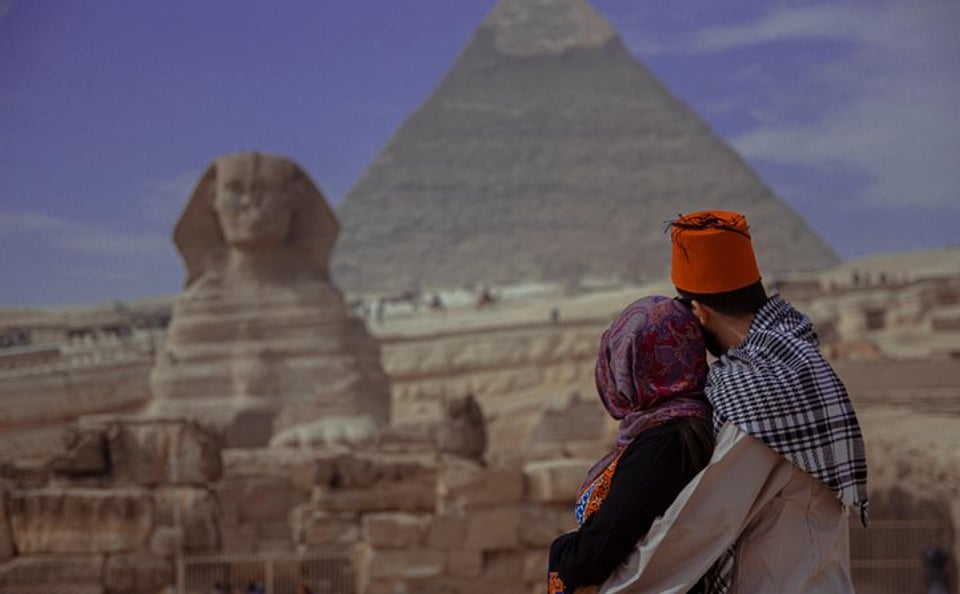
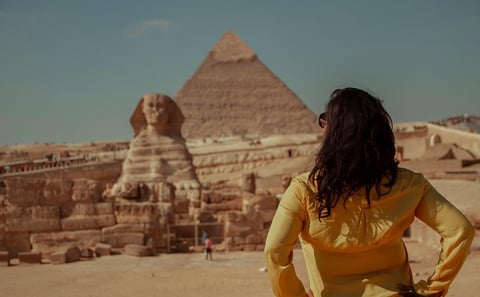
The Great Sphinx lies on the east side of the complex. Current consensus among Egyptologists is that the head of the Great Sphinx is that of Khafre. Along with these major monuments are a number of smaller satellite edifices, known as "queens" pyramids, causeways and valley pyramids
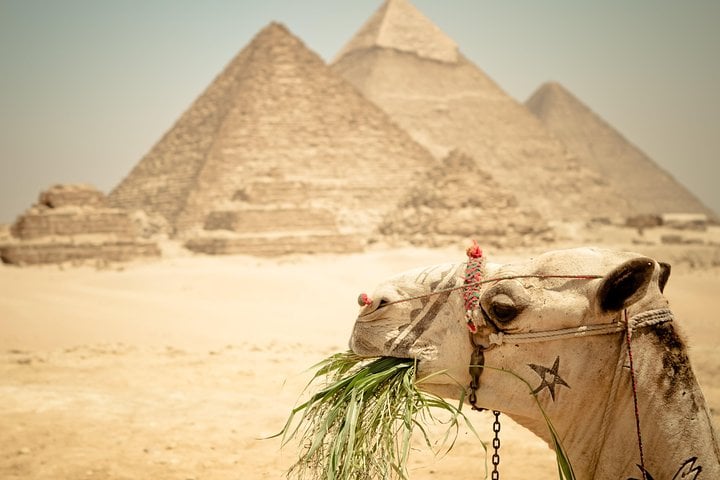
The Giza pyramid complex, also called the Giza Necropolis, is the site on the Giza Plateau in Greater Cairo, Egypt that includes the Great Pyramid of Giza, the Pyramid of Khafre, and the Pyramid of Menkaure, along with their associated pyramid complexes and the Great Sphinx of Giza. All were built during the Fourth Dynasty of the Old Kingdom of Ancient Egypt. The site also includes several cemeteries and the remains of a workers' village.
The site is at the edges of the Western Desert, approximately 9 km (5 mi) west of the Nile River in the city of Giza, and about 13 km (8 mi) southwest of the city centre of Cairo.
The Great Pyramid and the Pyramid of Khafre are the largest pyramids built in ancient Egypt, and they have historically been common as emblems of ancient Egypt in the Western imagination.
The Great Pyramid of Giza (also known as the Pyramid of Khufu or the Pyramid of Cheops) is the oldest and largest of the three pyramids in the Giza pyramid complex bordering present-day Giza in Greater Cairo, Egypt. It is the oldest of the Seven Wonders of the Ancient World, and the only one to remain largely intact.
there is possibility to enter the great pyramid of Cheops but this requires additional tickets cab be bought on spot
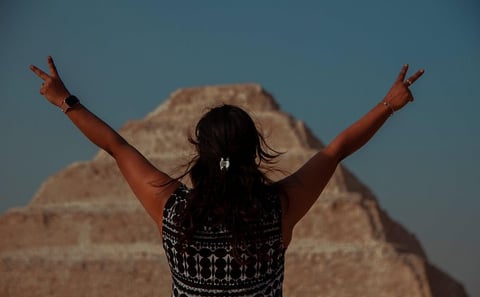
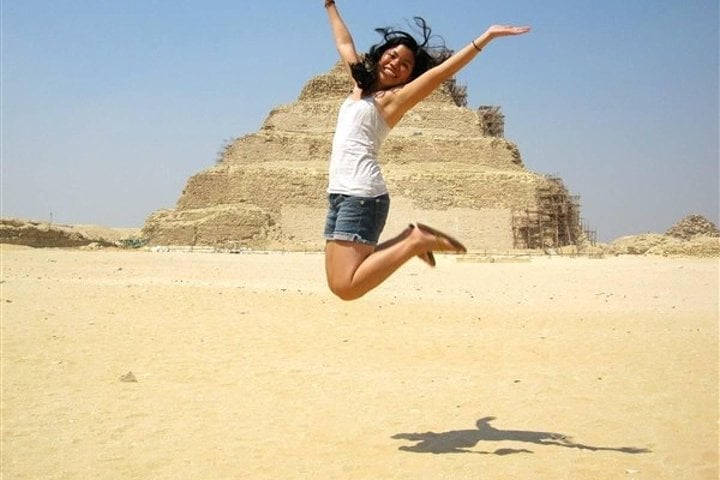
Saqqara (Arabic: سقارة, Egyptian Arabic pronunciation: [sɑʔˈʔɑːɾɑ]), also spelled Sakkara or Saccara in English /səˈkɑːrə/, is a vast, ancient burial ground in Egypt, serving as the necropolis for the Ancient Egyptian capital, Memphis.[1] Saqqara features numerous pyramids, including the world-famous Step pyramid of Djoser, sometimes referred to as the Step Tomb due to its rectangular base, as well as a number of mastabas (Arabic word meaning 'bench'). Located some 30 km (19 mi) south of modern-day Cairo, Saqqara covers an area of around 7 by 1.5 km (4.35 by 0.93 mi).
At Saqqara, the oldest complete stone building complex known in history was built; Djoser's step pyramid, built during the Third Dynasty. Another 16 Egyptian kings built pyramids at Saqqara, which are now in various states of preservation or dilapidation. High officials added private funeral monuments to this necropolis during the entire pharaonic period. It remained an important
Memphis (Arabic: مَنْف Manf pronounced [mænf]; Bohairic Coptic: ⲙⲉⲙϥⲓ; Greek: Μέμφις) was the ancient capital of Inebu-hedj, the first nome of Lower Egypt. Its ruins are located near the town of Mit Rahina, 20 km (12 mi) south of Giza in Greater Cairo, Egypt.
According to legend, as related by Manetho, the city was founded by the Pharaoh Menes. It was the Capital of ancient Egypt during the Old Kingdom and remained an important city throughout ancient Egyptian history.[2][3][4] It occupied a strategic position at the mouth of the Nile Delta, and was home to bustling activity. Its principal port, Peru-nefer, featured a high density of workshops, factories, and warehouses that distributed food and merchandise throughout the ancient kingdom. During its golden age, Memphis thrived as a regional centre for commerce, trade, and religion.
Cairo Hotel
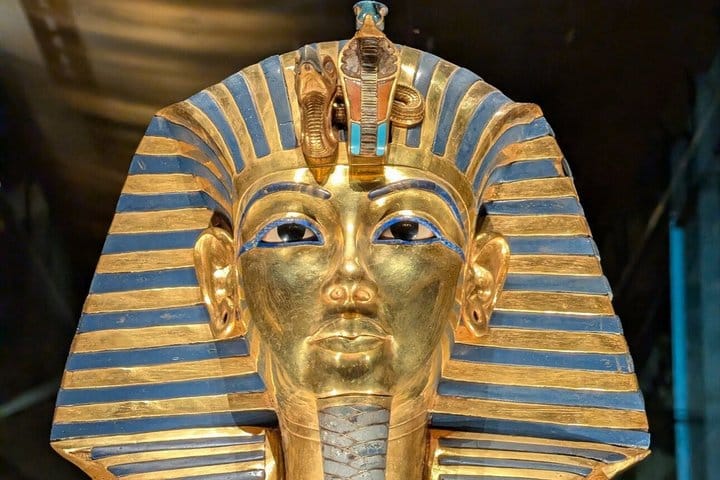
The Museum of Egyptian Antiquities, known commonly as the Egyptian Museum or Museum of Cairo, in Cairo, Egypt, is home to an extensive collection of ancient Egyptian antiquities. It has 120,000 items, with a representative amount on display, the remainder in storerooms. Built in 1901 by the Italian construction company Garozzo-Zaffarani to a design by the French architect Marcel Dourgnon, the edifice is one of the largest museums in the region. As of March 2019, the museum is open to the public. In 2020 the museum is due to be superseded by the new Grand Egyptian Museum at Giza.
The Citadel of Cairo or Citadel of Saladin (Arabic: قلعة صلاح الدين Qalaʿat Salāḥ ad-Dīn) is a medieval Islamic-era fortification in Cairo, Egypt, built by Salah ad-Din (Saladin) and further developed by subsequent Egyptian rulers. It was the seat of government in Egypt and the residence of its rulers for nearly 700 years from the 13th to the 19th centuries. Its location on a promontory of the Mokattam hills near the center of Cairo commands a strategic position overlooking the city and dominating its skyline. At the time of its construction, it was among the most impressive and ambitious military fortification projects of its time.[1] It is now a preserved historic site, including mosques and museums.
In addition to the initial Ayyubid-era construction begun by Saladin in 1176, the Citadel underwent major development during the Mamluk Sultanate that followed, culminating with the construction projects of Sultan al-Nasir Muhammad in the 14th century. In the
Khan el-Khalili (Arabic: خان الخليلي) is a famous bazaar and souq (or souk) in the historic center of Cairo, Egypt. The bazaar district is one of Cairo's main attractions for tourists and Egyptians alike. It is also home to many Egyptian artisans and workshops involved in the production of traditional crafts and souvenirs.
Cairo Hotel
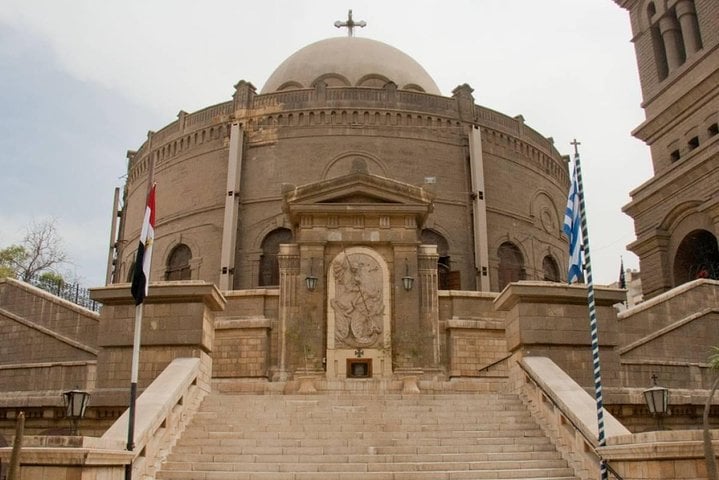
Cairo's day tours to Christian and Islamic Sights starts at 8:00 am Pickup from your hotel in Cairo By Emo Tours guide to Start your full day tour visiting Old Cairo that known as Christian Coptic Cairo which is Among the most important locations visited by the Holy Family where the spiritual impact of their presence is most felt still, There you will be able to visit and Enter the Church of Abu-Sergah and St. Barbara, the hanging church, and the old jewish synagogue – Ben Ezra Synagogue.
Then continue your day tour to Islamic Cairo that was founded in 641 A.D By the First Muslam leader Amr Ibn Elas Over there in Islamic Cairo you will be able to Visit and Enter the Following Mosques `Masjid` Amr Ibn Elas Mosque that was built in 642 A.D By the Muslim leader Amr Ibn Elas at El FUSTAT area
then followed by a visit to the Most and Biggest mosques in Cairo which is El Sultan Hassan Mosque that also known as `Madrasa El Sultan Hassan` that was founded by Sultan Hassan in 1356 A.D The Mosque-Madrassa of Sultan Hassan is a massive Mamluk era mosque and madrassa located near The Citadel in Cairo.
Then followed by another big famous Mosque Which is Al-Rifa’i Mosque The building is located opposite the Mosque-Madrassa of Sultan Hassan, which dates from around 1361, and was architecturally conceived as a complement to the older structure.
and Enter the Church of Abu-Sergah and St. Barbara, the hanging church, and the old jewish synagogue – Ben Ezra Synagogue.
Then continue your day tour to Islamic Cairo that was founded in 641 A.D By the First Muslam leader Amr Ibn Elas Over there in Islamic Cairo you will be able to Visit and Enter the Following Mosques `Masjid` Amr Ibn Elas Mosque that was built in 642 A.D By the Muslim leader Amr Ibn Elas at El FUSTAT area
then followed by a visit to the Most and Biggest mosques in Cairo which is El Sultan Hassan Mosque that also known as `Madrasa El Sultan Hassan` that was founded by Sultan Hassan in 1356 A.D The Mosque-Madrassa of Sultan Hassan is a massive Mamluk era mosque and madrassa located near The Citadel in Cairo.
Then followed by another big famous Mosque Which is Al-Rifa’i Mosque The building is located opposite the Mosque-Madrassa of Sultan Hassan, which dates from around 1361, and was architecturally conceived as a complement to the older structure.
Fully refundable until 1 day before start
Non-refundable after 1 day before start
Elite
Free Cancellation · Instant confirmation · Private tour
Free Cancellation · Instant confirmation · Private tour
Free Cancellation · Instant confirmation · Meet on location or pickup

Free Cancellation · Instant confirmation · Private tour
Free Cancellation · Instant confirmation · Private tour
Free Cancellation · Instant confirmation · Private tour
Free Cancellation · Instant confirmation · Private tour
Free Cancellation · Instant confirmation · Private tour