

 Elite
Elite
Giza Pyramids and Great Sphinx Half-Day VIP Private Tour
Free Cancellation · Instant confirmation · Private tour

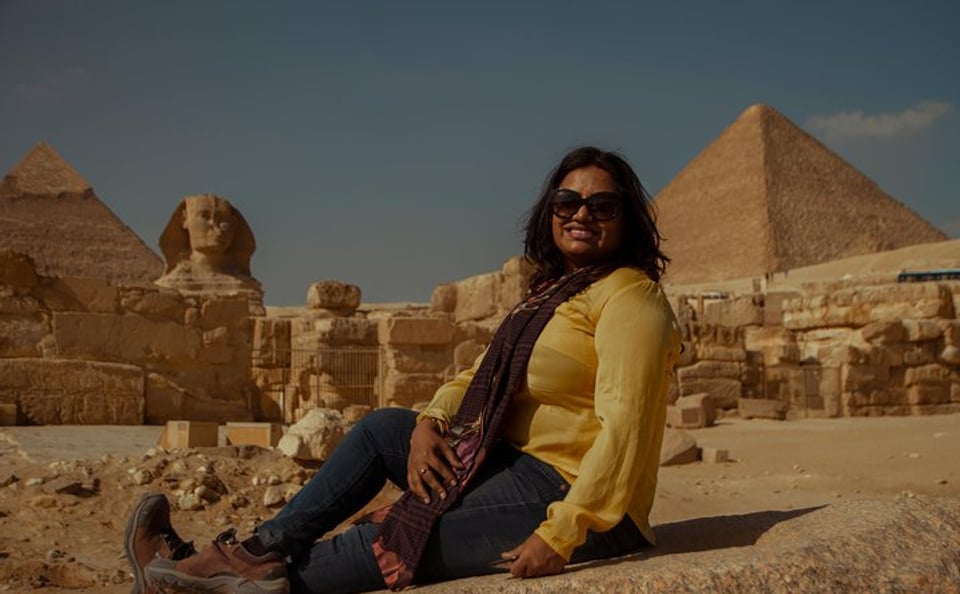
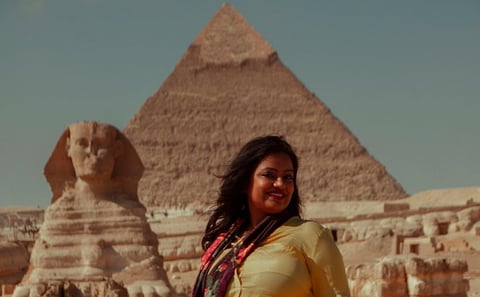
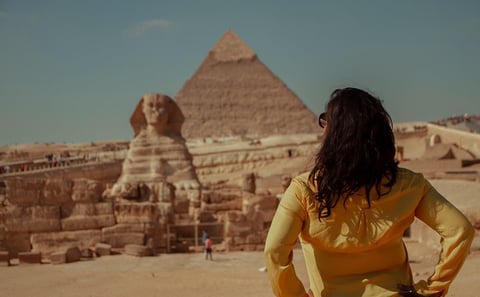
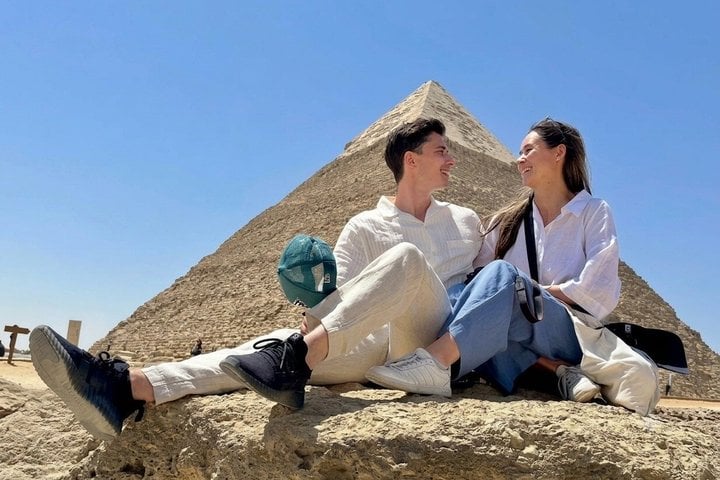
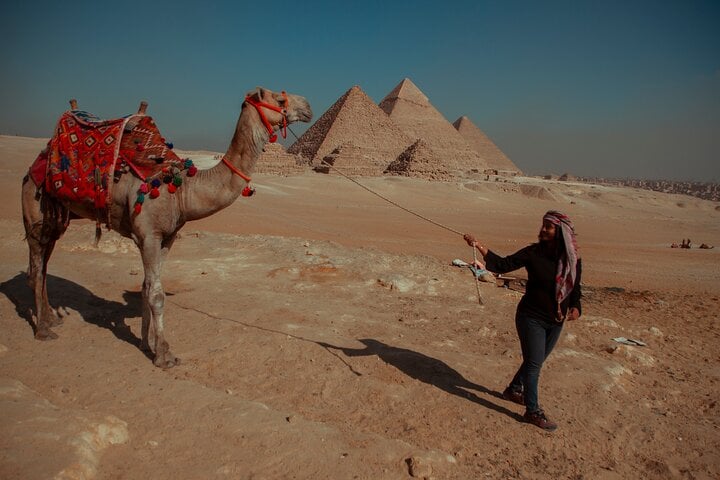
The Giza pyramid complex, also called the Giza Necropolis, is the site on the Giza Plateau in Greater Cairo, Egypt that includes the Great Pyramid of Giza, the Pyramid of Khafre, and the Pyramid of Menkaure, along with their associated pyramid complexes and the Great Sphinx of Giza. All were built during the Fourth Dynasty of the Old Kingdom of Ancient Egypt. The site also includes several cemeteries and the remains of a workers' village.
The site is at the edges of the Western Desert, approximately 9 km (5 mi) west of the Nile River in the city of Giza, and about 13 km (8 mi) southwest of the city centre of Cairo.
The Great Pyramid and the Pyramid of Khafre are the largest pyramids built in ancient Egypt, and they have historically been common as emblems of ancient Egypt in the Western imagination. They were popularized in Hellenistic times, when the Great Pyramid was listed by Antipater of Sidon as one of the Seven Wonders of the World.
Khufu's pyramid complex consists of a valley temple, now buried beneath the village of Nazlet el-Samman; diabase paving and nummulitic limestone walls have been found but the site has not been excavated.[4][5] The valley temple was connected to a causeway which was largely destroyed when the village was constructed.
Khafre's pyramid complex consists of a valley temple, the Sphinx temple, a causeway, a mortuary temple and the king's pyramid. The valley temple yielded several statues of Khafre. Several were found in a well in the floor of the temple by Mariette in 1860. Others were found during successive excavations by Sieglin (1909–10), Junker, Reisner,
Menkaure's pyramid complex consists of a valley temple, a causeway, a mortuary temple, and the king's pyramid. The valley temple once contained several statues of Menkaure. During the 5th Dynasty, a smaller ante-temple was added on to the valley temple. The mortuary temple also yielded several statues of Menkaure.
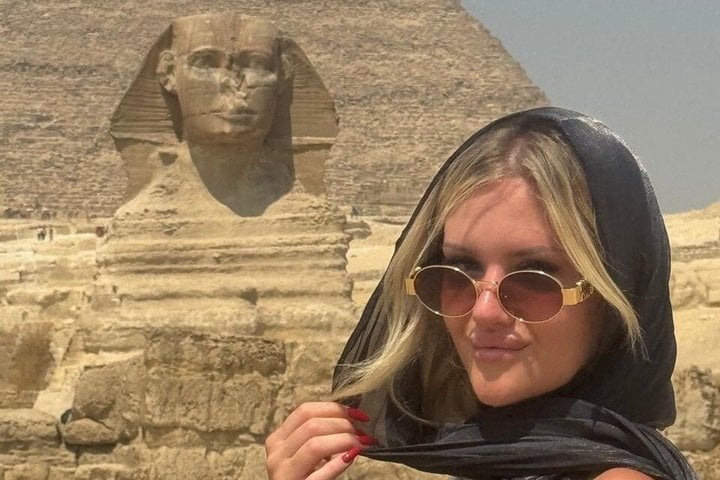
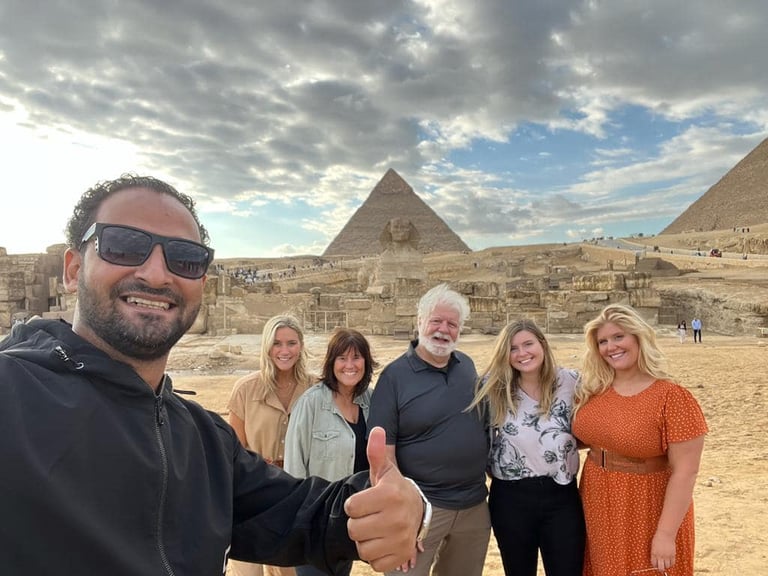
The Great Sphinx of Giza, commonly referred to as the Sphinx of Giza or just the Sphinx, is a limestone statue of a reclining sphinx, a mythical creature with the body of a lion and the head of a human.Facing directly from West to East, it stands on the Giza Plateau on the west bank of the Nile in Giza, Egypt. The face of the Sphinx is generally believed to represent the pharaoh Khafre.
Cut from the bedrock, the original shape of the Sphinx has been restored with layers of blocks.It measures 73 m (240 ft) long from paw to tail, 20 m (66 ft) high from the base to the top of the head and 19 m (62 ft) wide at its rear haunches. It is the oldest known monumental sculpture in Egypt and is commonly believed to have been built by ancient Egyptians of the Old Kingdom during the reign of the pharaoh Khafre (c. 2558–2532 BC).
The Museum of Egyptian Antiquities, known commonly as the Egyptian Museum or Museum of Cairo, in Cairo, Egypt, is home to an extensive collection of ancient Egyptian antiquities. It has 120,000 items, with a representative amount on display, the remainder in storerooms. Built in 1901 by the Italian construction company Garozzo-Zaffarani to a design by the French architect Marcel Dourgnon, the edifice is one of the largest museums in the region. As of March 2019, the museum is open to the public. In 2020 the museum is due to be superseded by the new Grand Egyptian Museum at Giza.
Khan el-Khalili (Arabic: خان الخليلي) is a famous bazaar and souq (or souk) in the historic center of Cairo, Egypt. The bazaar district is one of Cairo's main attractions for tourists and Egyptians alike. It is also home to many Egyptian artisans and workshops involved in the production of traditional crafts and souvenirs.
Fully refundable until 1 day before start
Non-refundable after 1 day before start
Elite
Free Cancellation · Instant confirmation · Private tour
 Elite
Elite
Free Cancellation · Instant confirmation · Private tour
 Elite
Elite
Free Cancellation · Instant confirmation · Private tour
Free Cancellation · Instant confirmation · Private tour

Free Cancellation · Instant confirmation · Private tour
Free Cancellation · Instant confirmation · Private tour
Free Cancellation · Instant confirmation · Private tour
Free Cancellation · Instant confirmation · Private tour
Our assistant finds tours and checks live dates and prices, and answers your questions.