Private Gyeongju Tour of UNESCO Heritage Sites
Free Cancellation · Instant confirmation · Private tour

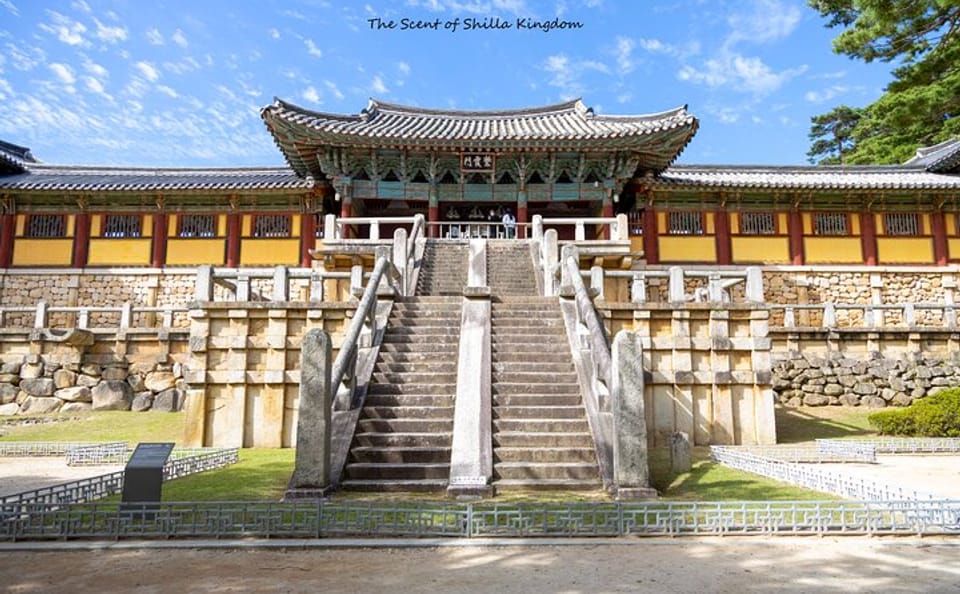
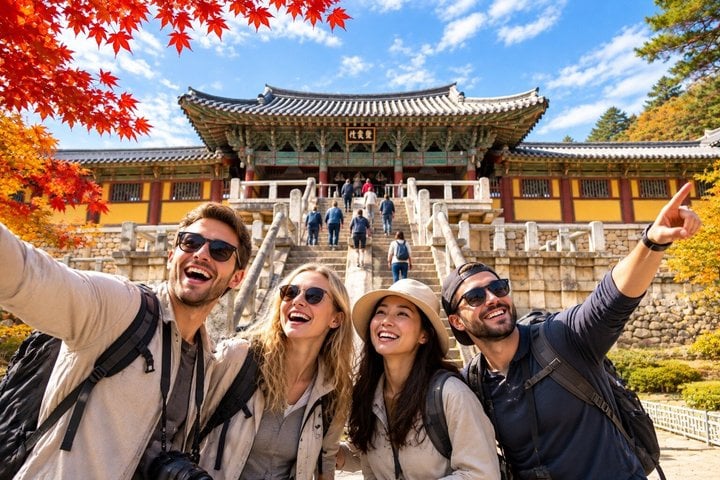
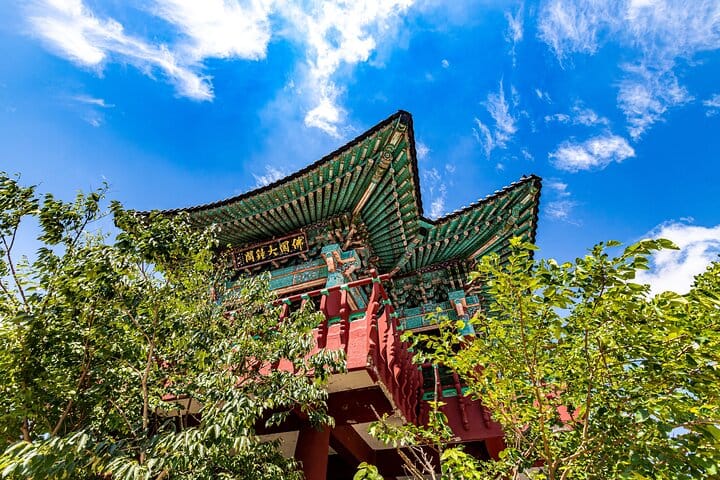
Visit Bulguksa which is designated as a UNESCO World Heritage site for being “a masterpiece of Buddhist art in the Far East.” If you are in the temple, you will see blooming cherry blossoms in spring and colorful foliage in fall.
In the Seokguram Grotto, you can see statues of devas, bodhisattvas and disciples sculpted on the surrounding walls.
After that, you will have Tteokgalbi(grilled short rib patties) for lunch.
From the center of Gyeongju, a city that breaths of history, you run to the east. After 40 minutes, you come to an expensive view of the East Sea. There are more attractions in Gyeongju aside from the cultural and historical sites that you are familiar with.
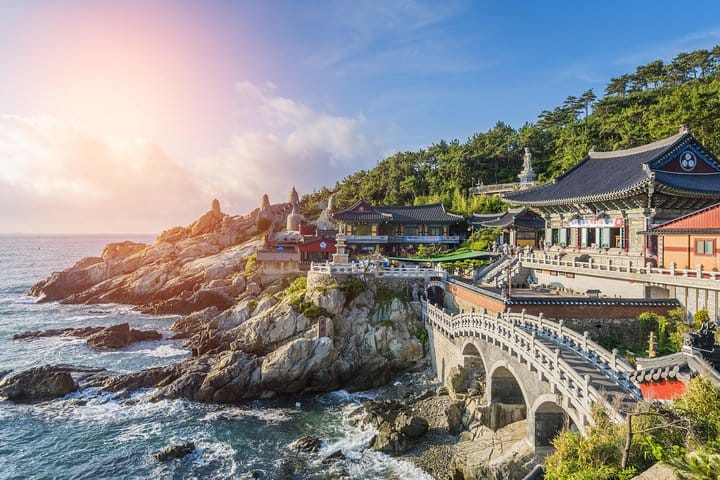
There are so many enjoyable things to do in Gampohang Port. You can be happy with a plate of raw flounder, sit on a bench in the new marine park near the seawall of Gampohang and wonder where the end of the sea would be, and also take a photo of ‘Haegukgil road’ in Gampo Kkakji Trail or the scenery of thrashing waves in the sea wind here and there from the village.
Next visit is spending time at the Songdaemal Lighthouse. In addition to the lighthouse itself, modeled after the Three-story Stone Pagoda in the Gameunsa Temple Site, you can see the beautiful ‘Gampohang Port’ in one look. It is also a famous spot to watch the sunrise. Be the first to welcome the sun in the morning at Gampohang Port and the Songdaemal Lighthouse.
The coast in front of Igyeondae Observatory is where you can view the underwater tomb of King Munmu, which is a tombstone that looks at the same things as the observatory.
Gameunsaji Temple Site was built by King Munmu (AD 661-681), the king of Silla who unified Baekje and Goguryeo in the late 7th century. The purpose of the temple site was to pray for help and guidance from Buddha against Japanese invasion. Unfortunately, King Munmu passed away before the completion of the temple, and left a will to be cremated and buried in the East Sea so that he may reincarnate as a sea dragon in order to protect the country. As he wished, King Munmu's ashes were scattered at Daewangam of the East Sea. The temple was completed and was named by his son, King Sinmun (AD 681-692) in respect and appreciation for his father.
Gameunsaji The three-story stone pagoda at the temple site is a reminent of the early period of unified Silla, assembled with several parts which rise up to 13.4m high, known to be Silla's highest three-story pagoda.
A little rocky islet approx. 200m from the shore at Bonggil-ri is the Underwater Tomb of King Munmu (661-681 A.D.), who unified the three kingdoms and became the 30th ruler of the Silla Kingdom. The king gave specific instructions to be buried in the East Sea after his death so that he would become a dragon and protect Silla from Japanese intruders. The rocky island, about 200 meters in circumference, is divided by a cross-shaped waterway, forming a pool at the center, at the bottom of which is a granite stone 3.6 meters long, 2.9 meters wide and 0.9 meters thick. Legend has it that the remains of King Munmu’s cremated body are buried under this rock. Historians still debate whether the ashes of the King Munmu were scattered or stored in an urn and placed under the rock.
Treasure had been discovered in 2012 when nearby troops withdrew. ‘Fan-shaped Columnar Joints,’ designated as a Natural Monument No. 536. The 1.7 km-long ‘Columnar Joints Padosori Trail’ has been created where you can see various types of columnar joints in a fan shapes, slanted shapes, flat shapes, rising shapes, etc.
The ‘Columnar Joints Observatory’ was built last year in October in a nearby plaza so that visitors can view various types of columnar joints that were made by waves over time. In the observatory, there are various exhibition articles about various geological sources including Yangnam Columnar Joints. A geological commentator is also there to give explanations of the natural formations.
Fully refundable until 1 day before start
Non-refundable after 1 day before start
Free Cancellation · Instant confirmation · Private tour
Free Cancellation · Instant confirmation · Private tour
Free Cancellation · Instant confirmation · Meet on location or pickup
Free Cancellation · Instant confirmation · Private tour
Free Cancellation · Instant confirmation · Private tour
Free Cancellation · Instant confirmation · Private tour
Free Cancellation · Instant confirmation · Private tour
Free Cancellation · Instant confirmation · Pickup available
Our assistant finds tours and checks live dates and prices, and answers your questions.