Full Day Sightseeing Tour in Rio de Janeiro
Free Cancellation · Instant confirmation · Meet on location or pickup

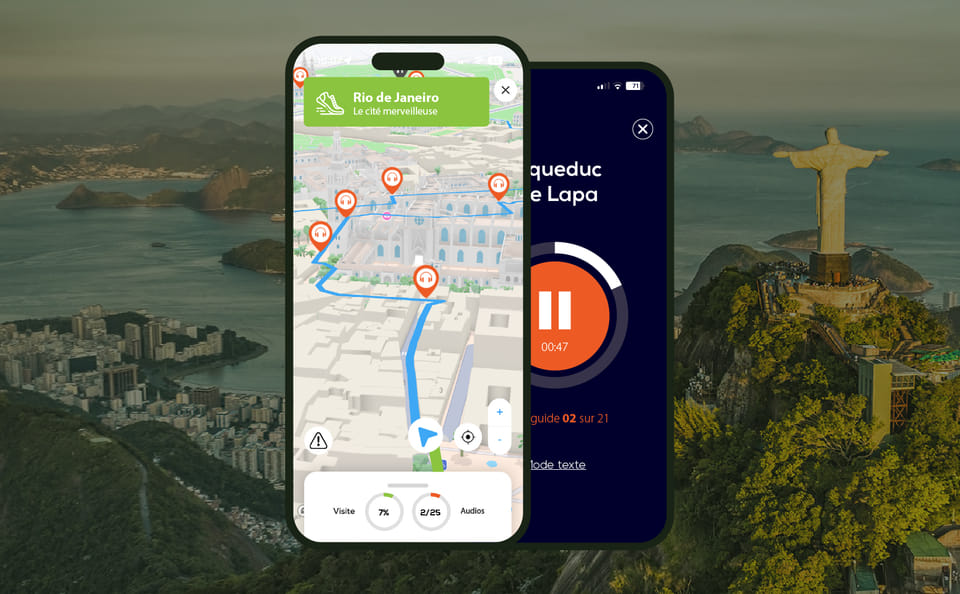
Vous arrivez devant les fameux Arcos de Lapa. Emblème du quartier devenu un autre symbole de Rio, au même titre que le Corcovado, Copacabana ou l’escalier Selaron.
Le palais rose et blanc que vous voyez devant vous est le palais maçonnique de Lavradio. Il a été classé et protégé en 1972 par l’Inepac, l’Institut d’Etat du Patrimoine Culture, pour l’importance historique de la Franc-Maçonnerie pendant la période impériale au Brésil.
Alors, vous ne vous attendiez certainement pas à trouver une cathédrale en forme de pyramide lors de votre visite du Rio historique. Et pourtant, la Cathédrale de Saint-Sébastien est bien une représentation avant-gardiste rappelant les pyramides précolombiennes.
Cette belle façade, richement sculptée, est celle du cabinet royal de lecture portugais. Cette bibliothèque est répertoriée par l’Institut d’État du Patrimoine culturel et a été élue quatrième plus belle bibliothèque au monde par le Times magazine.
Voyez ce beau café d’époque sur votre droite. Il s’agit de la confiserie Colombo, une véritable institution à Rio. On se croirait dans le Paris de la Belle Époque ! Ce café a été fondé en 1894 par des immigrants portugais.
Ce gros bâtiment, en face de vous sur la gauche, est le centre culturel Banco do Brasil. Avec un nom pareil, vous l’avez compris, cet édifice néoclassique était, à la base, dédié au monde des finances !
Vous voilà face à la belle église baroque Notre-Dame de Candelaria. Son histoire commence avec une légende. Au XVIIe siècle, un bateau nommé Candelaria essuie une tempête sur la mer et évite de justesse un naufrage.
Vous remontez à présent l'avenida Rio Branco, l’avenue de la rivière blanche en français. Anciennement nommée Avenue centrale, elle est la principale réforme urbaine menée par le maire Pereira Passos au début du XXe siècle.
Vous avez ici, l’entrée du monastère de São Bento, ou Saint-Benoît en français. N’hésitez pas à mettre l’audio guide sur pause et à monter le visiter.
Vous arrivez sur la praça Mauá, entièrement remodelée pour les Jeux Olympiques. À la naissance de la ville, l’endroit s’appelait “Largo da prainha”, c'est-à-dire, le patio de la petite plage, en référence à la très belle crique qui s’ouvrait en contrebas.
Mais ce qui attire l'œil sur cette place, c’est bien évidemment cet incroyable musée que vous voyez au bord de la baie. Il s’agit du Museu do Amanhã, le Musée de demain, LA pièce maîtresse du grand projet de redynamisation du quartier Porto Maravilha.
C’est en s'éloignant un peu du musée, et en l’admirant ainsi, se détachant tout blanc sur les eaux turquoise de la baie, que l’on prend conscience de toute la singularité du bâtiment.
Toute cette promenade aménagée qui vous permet de rejoindre la place du XV novembre en longeant la baie de Guanabara, s’inscrit également dans le processus de transformation de la zone urbaine portuaire.
Cette étrange sculpture qui rappelle les jeux d’enfants soufflant sur des moulins à vent, n’est autre que la flamme olympique de Rio 2016. Après la cérémonie d’ouverture qui a eu lieu au stade du Maracana, la flamme a été transportée jusqu’à cette place.
Cette petite rue pavée que vous empruntez à présent s’appelle la Travessa do Comércio et conserve tout le charme du Rio colonial avec ses anciennes maisons de pierres et ses trottoirs étroits.
Vous voilà en plein cœur du quartier historique de Rio de Janeiro, sur la place du 15 novembre. Sachez que le 15 novembre est une date importante au Brésil puisqu’il s’agit de la proclamation de la République.
Le grand bâtiment blanc qui prend tout le côté de la place, sobre et modeste, fut pourtant la résidence des empereurs Dom Pedro I et II. Il a été construit au XVIIIe siècle, initialement prévu pour servir de résidence aux gouverneurs de la capitainerie de Rio de Janeiro.
Juste à côté du Palais impérial, vous avez le Palais Tiradentes. C’est le siège de l’Assemblée législative. Le Brésil est un pays fédéral, comme les États-Unis, l’Australie ou encore l’Allemagne, la Suisse ou l’Inde.
Vous arrivez sur la place Carioca, l’une des plus populaires de la ville pour son importante station de métro desservant plusieurs lignes. Elle a beau être moderne et voir passer des centaines de cadres en costumes, d’employés et de vendeurs ambulants, elle abrite également des éléments de l’époque du Brésil colonial.
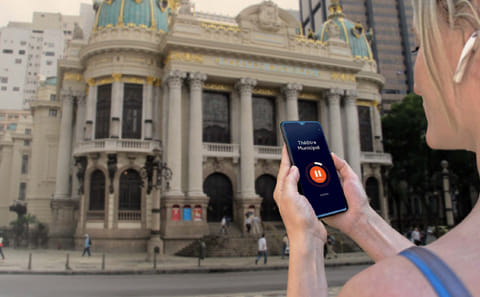
Vous arrivez face au beau théâtre municipal de Rio. S’il vous dit vaguement quelque chose, c’est tout simplement parce qu’il a été construit sur le modèle de l’Opéra Garnier à Paris.
Ici, vous avez, sur votre gauche, la bibliothèque nationale de Rio. Son architecture présentant un style éclectique, mêlant des éléments néoclassique et art nouveau, se veut volontairement impressionnante.
Toute cette zone, dans laquelle vous vous trouvez, se nomme aujourd’hui Cinelandia. Tout le monde vous dira d'ailleurs que vous êtes sur la place Cinelândia, alors que son vrai nom est place Floriano Peixoto, en l’honneur du deuxième président de la République du Brésil, dont vous avez vu la statue en face de la bibliothèque.
Il dénote ce théâtre Riachuelo, avec son style arabe au milieu de constructions modernes du centre. Ce style architectural néo-mauresque est plutôt rare dans la ville.
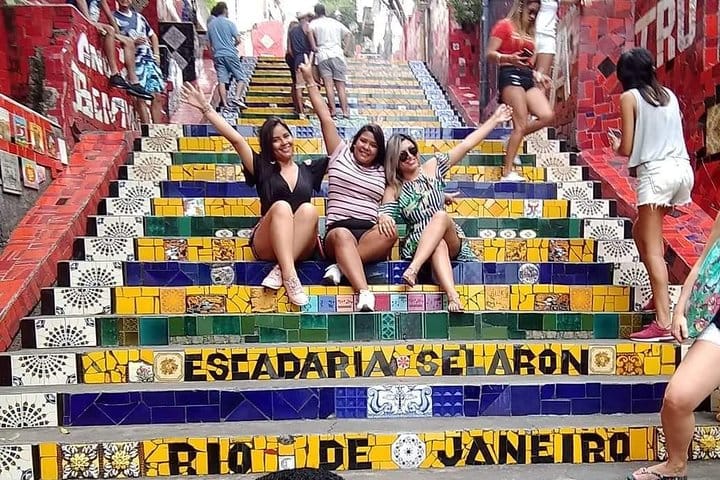
Le voilà enfin, le fameux escalier coloré que vous attendiez tous ! Vous en aviez certainement vu des images avant de venir et pour une fois c’est aussi beau en vrai qu’en photo !
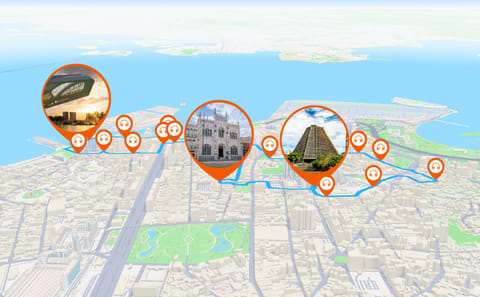
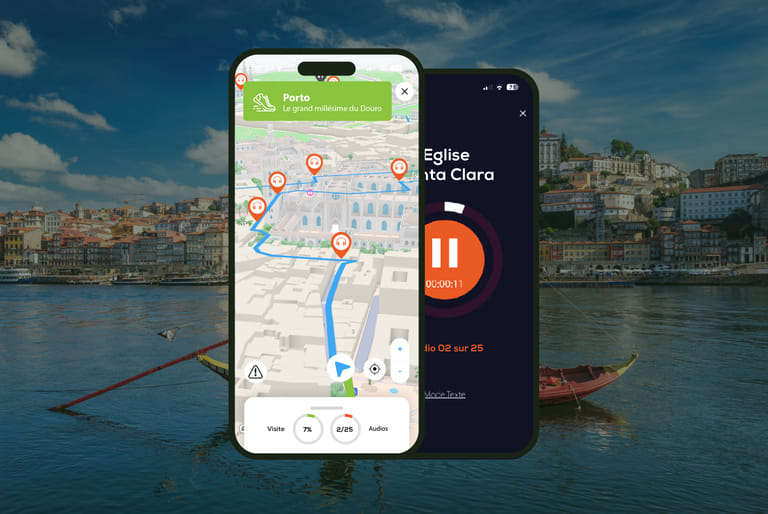
Nous construisons nos circuits sous forme de boucle afin que vous puissiez démarrer facilement la visite au point le plus proche de vous, le guidage s’adaptera automatiquement. Si vous êtes à proximité, nous vous conseillons un point de départ idéal.
Fully refundable until 1 day before start
Non-refundable after 1 day before start
Free Cancellation · Instant confirmation · Meet on location or pickup
Free Cancellation · Instant confirmation · Meet on location or pickup
Free Cancellation · Instant confirmation · Meet on location or pickup
Free Cancellation · Instant confirmation · Pickup available
Instant confirmation · Private tour · Meet on location
Free Cancellation · Instant confirmation · Private tour
Free Cancellation · Instant confirmation · Private tour
Free Cancellation · Instant confirmation · Private tour
Our assistant finds tours and checks live dates and prices, and answers your questions.