Private Walking Tour of Porto's Historic Attractions
Free Cancellation · Instant confirmation · Meet on location

Si l’on devait faire une skyline de Porto, nul doute que ce site incontournable en ferait partie. Implanté dans le paysage, le Pont Dom Luís est cette structure métallique qui relie les trésors de Porto, aux célèbres caves à vins de Vila Nova de Gaia.
Que ceux qui n’ont jamais succombé à un petit verre de Porto, lèvent la main. Ah oui, ne bougez pas, on vous voit ! Bien sûr que non, on plaisante !
Qui dit un peu d’escalade, dit bien souvent une vue dégagée à la clé. Et oui, on ne vous a pas fait monter pour une histoire d’exercice. Regardez plutôt un peu le spot photo que l’on vous a déniché.
Toute en longueur doit normalement se dresser devant vous, celle que l’on appelle la muraille Fernandina. Bien qu’on soit loin des mesures interminables de celle de Chine, cette portion de fortification gothique est une belle trace du passé de Porto.
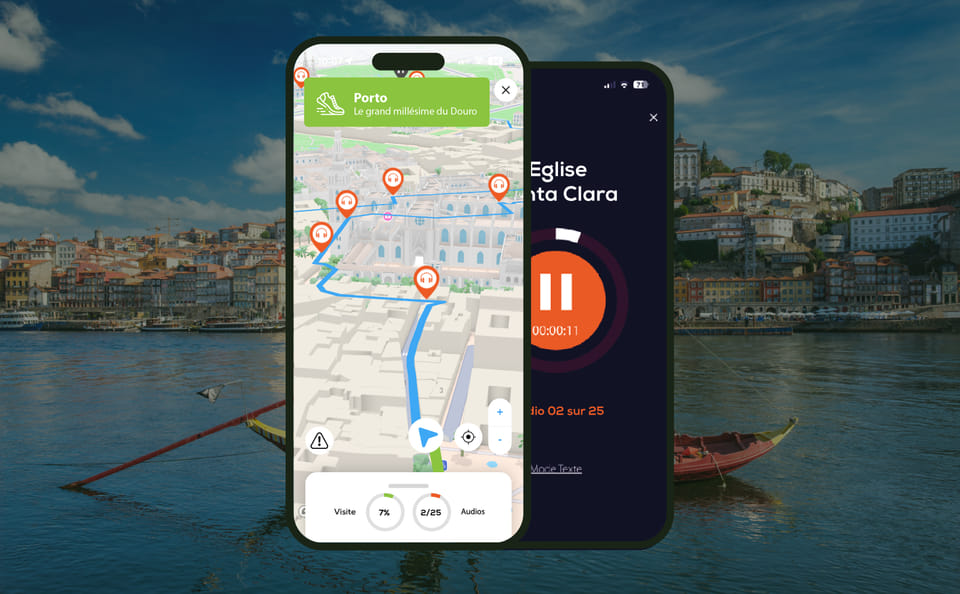
C’est dans cette ruelle discrète que se cache l’un des trésors les plus précieux de Porto. L'église Santa Clara, à l’inverse de beaucoup de ses "semblables", révèle son potentiel bien plus par ce qu’elle renferme, que par son esthétique extérieure.
Inauguré en 1798, le théâtre national São João visait principalement à doter la 2e plus grande ville du pays d’un opéra.
Peut-être pas l’attraction la plus célèbre de Porto, l'église de Saint Ildefonso est assurément un agréable élément de décor sur le trajet. Construit entre 1709 et 1739, cet édifice religieux met à l’honneur l’art de l’azulejo.
En vous amenant aux abords de cette grande adresse de Porto, c’est un voyage dans le temps que nous vous proposons de vivre, alors accrochez-vous !
Bien connue des adeptes du shopping, la rue Sainte-Catherine est l’artère la plus commerciale du centre de Porto. Ses premières origines remontent en 1662, et sa longueur de 1500 mètres n’est seulement atteinte qu’en 1784, après un dernier prolongement en direction de la place Marquês de Pombal.
Perdue au milieu de l’agitation et des enseignes en tout genre, c’est l’une des plus ravissantes églises de Porto qui percute notre regard. Installée à cet endroit depuis le début du XVIIIe siècle, la chapelle des Âmes nous laisse béats par ses façades si artistiques.
Vous voilà aux abords du marché Bolhão, l’une des adresses incontournables de Porto, classé monument historique en 2006.
À votre avis, à quel bâtiment emblématique de toute ville avons-nous à faire ? Pour vous aider, il ne s’agit ni d’un palais de justice, ni d’un théâtre, ni d’un musée. Alors, une petite idée ?
Ce n’est pas parce que l’on vous emmène voir une gare, qu’on souhaite vous envoyer vers une autre destination. Bien au contraire, on vous garde avec nous ! Toute visite à Porto ne peut se faire sans un arrêt à la gare de São Bento, qui use déjà de son charme par son aspect extérieur.
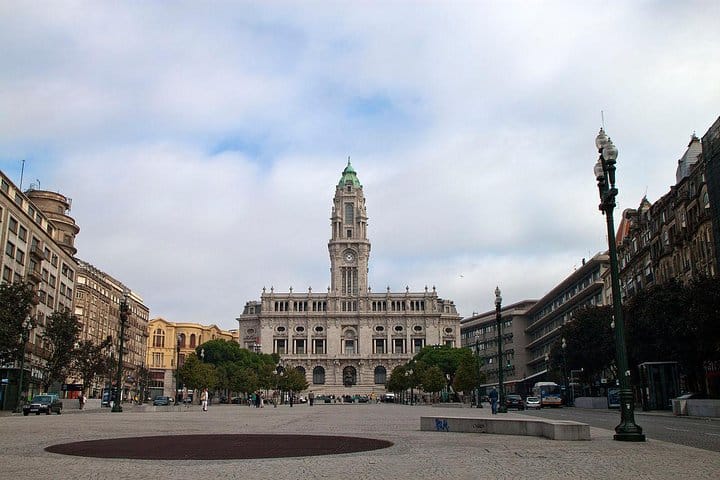
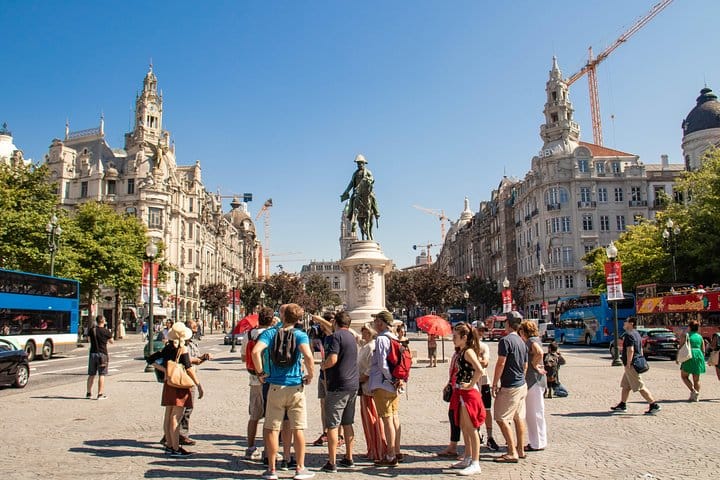
À toute ville sa place et Porto ne fait pas exception. Reliant l’ancien Porto à sa partie la plus récente, la Place de la liberté est un point de passage incontournable dans la découverte des lieux.
Serré entre deux bâtisses, ce petit bout de façade néo-gothique de couleur blanche n’est pas une église, mais bel et bien une librairie, ou plutôt LA librairie Lello & Irmão.
Pour éviter toute confusion, l’église que l’on cherche à vous faire connaître est celle de droite, et non pas celle de gauche collée au clocher.
C’est au détour de cette place, et de ces jardins paisibles, qu'apparaît cette intimidante bâtisse, dont la couleur jaune solaire trompe les apparences.
Implantée dans le paysage de Porto, cette tour de 76 mètres, soit la plus haute du pays, est un immanquable dans notre visite.
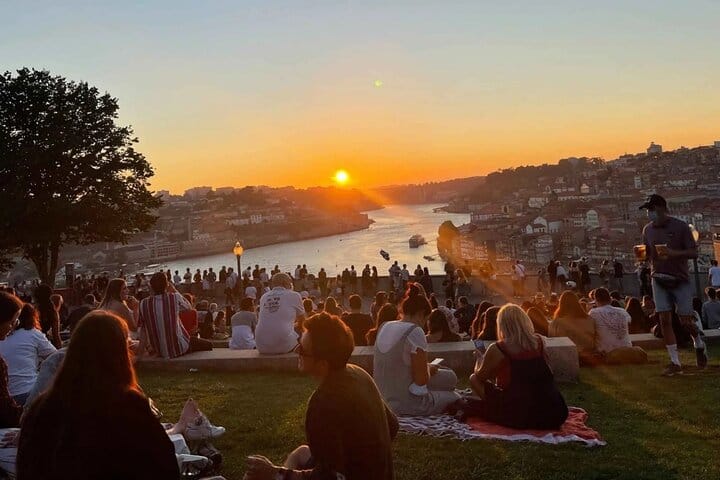
C’est dans ce type d’endroits cachés que Porto prend des aires de carte postale. Depuis ce belvédère, c’est l’ensemble de la vieille ville, et plus encore, qui se trouve sous vos pieds.
Quelle belle structure en fer rouge avons-nous là. Construit en 1885, sous la demande de la mairie, le Marché Ferreira Borges a été pensé dans le but de remplacer l’ancien marché de Ribeira.
Vous voilà aux portes d’un autre édifice religieux réputé de Porto. Construite courant XIVe siècle, sous l’ordre religieux des Franciscains, l’église Saint-François est un combiné de 3 styles architecturaux : le roman et le gothique, dans ce qui s’apparente à sa structure et le baroque pour sa décoration intérieure.
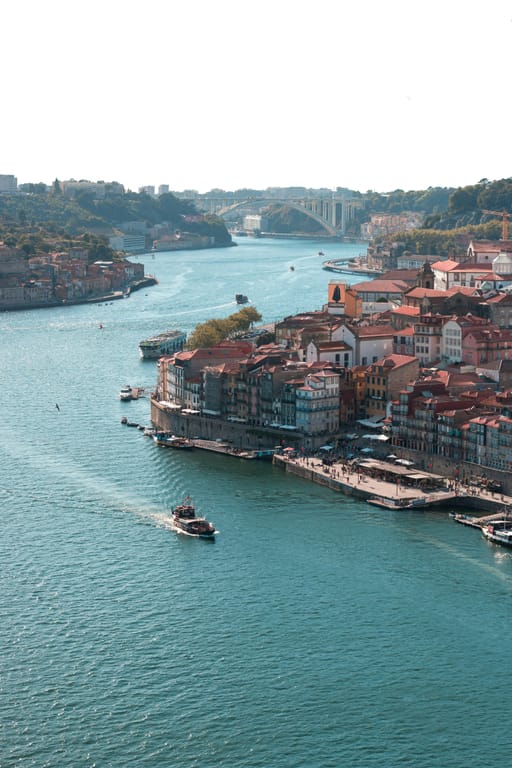
C’est comme poser sur les eaux du Douro que ce point de vue imprenable vous reçoit. Ici, tout se joue en deux étapes. Dans un premier temps, on s’imprègne tranquillement du lieu.
Vous les sentez ces vibrations qui viennent jusqu'à vous, ce sont celles du quartier Ribeira, le cœur historique de Porto. Que ce soit les locaux ou les visiteurs d’un jour, tout le monde aime ce quartier pour son côté authentique.
En face à face avec la Sé de Porto, autrement dit la cathédrale de la ville, vous devez normalement croiser une colonne de pierre torsadée, appelée “pelourinho” en portugais.
Posée sur les hauteurs de la ville, la Sé, ou cathédrale de Porto, se fait désirer. Édifiée au XIIe siècle, et plusieurs fois reconstruite au cours de son histoire, elle présente un ensemble architectural harmonieux, et pourtant très hétérogène.
La petite place sur laquelle vous arrivez vous met nez à nez avec une nouvelle église, plus sobre que celles que vous avez pu voir jusque-là. Il s’agit de l’église de Saint-Laurent, aussi connu sous le nom de l’église des Grillons.
Vous passez sur votre droite le palais de la Bourse de Porto. Ce grand bâtiment néoclassique fut construit au XIXe siècle sur le site de l’ancien couvent des Franciscains, détruit par un incendie. Le nouveau bâtiment est aussi immense qu’imposant.
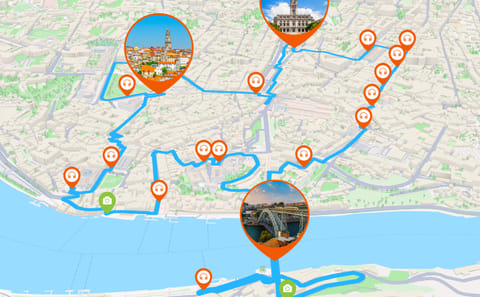
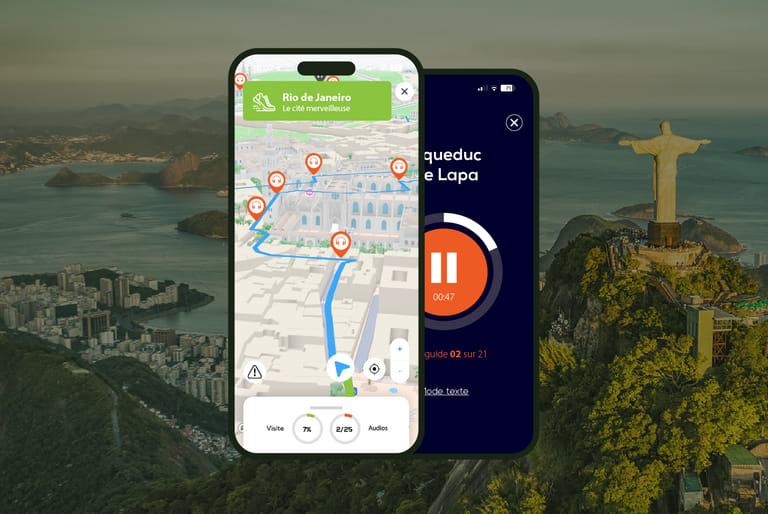
Nos circuits sont en boucle pour vous permettre de commencer la visite où vous le souhaitez. Le guidage s’adapte automatiquement. Point de départ conseillé : En face de l’entrée de la gare São Bento.
Non-refundable booking
Free Cancellation · Instant confirmation · Meet on location
Free Cancellation · Instant confirmation · Private tour
Free Cancellation · Instant confirmation · Meet on location
Free Cancellation · Instant confirmation · Meet on location
Free Cancellation · Instant confirmation · Private tour
Free Cancellation · Instant confirmation · Private tour
Free Cancellation · Instant confirmation · Private tour
Free Cancellation · Instant confirmation · Private tour