Private Guided Walking Tour of Budapest's Historic Landmarks
Free Cancellation · Instant confirmation · Private tour

Aux antipodes de l’image que l’on se fait naturellement d’un édifice religieux, l’église troglodyte de Notre-Dame-des-Hongrois mérite facilement une visite de courtoisie. Situé à l’intérieur d’une grotte, à l’image du célèbre sanctuaire de Lourdes, ce petit lieu de culte catholique est un endroit vraiment surprenant.
Dans le prestigieux quartier de Buda, les anciens palais sont rois. On en compte encore plusieurs dizaines, fièrement debout, et chacun d’eux rappelle le souvenir des grandes familles nobles et princières qui vivaient autrefois sur ces terres.
Perchée à 235 mètres au sommet du mont Gellért, la citadelle de Budapest domine la ville et le Danube depuis plus d’un siècle et demi. Construite entre 1851 et 1854 sur ordre de l’empereur François-Joseph, cette forteresse longue de 220 mètres servait avant tout à...
Avec une telle ouverture sur le Danube, difficile de ne pas s’interroger sur cette silhouette monumentale. Et comme on l’aperçoit de dos, dominant la ville depuis les hauteurs, la curiosité est encore plus grande.
Bienvenue sur la rive ouest du Danube, à Buda ! Vous voici dans l'âme historique de Budapest, perchée majestueusement sur ses collines verdoyantes. Regardez autour de vous : ces rues pavées, ces façades baroques, ce relief ondulé... Vous êtes dans un véritable livre
Quoi de plus souverain que cette arche ornementale pour marquer l’entrée du palais de Budavár. On l’appelle la porte Habsbourg. C’est dans son allure à la fois si travaillée et imposante, du début du XXe siècle, que cette structure nous fait succomber à ses charmes.
Compte tenu du look, du nom et de la position géographique, le doute est levé, nous sommes bien en présence de l’un des monuments les plus importants de Budapest. Creusons ensemble pour en savoir un peu plus.
C’est dans la rue Szentháromság utca, s’ouvrant sur votre gauche, que se loge la très raffinée Ruszwurm Confectionery. Sa façade, certes sans artifices, est facilement repérable de loin grâce à cette couleur vert pistache, qui fait déjà preuve de gourmandise en soi.
Riche de 800 ans d’histoire, l’église Notre-Dame-de-l’Assomption, plus communément appelée l’église Saint-Matthias, n’a pour ainsi dire manqué aucun événement considérable qui a touché de près ou de loin Budapest.
Véritable attraction touristique de Budapest, le bastion des pêcheurs remplit davantage une fonction décorative qu’historique. Terminée en 1902, après deux décennies de travaux, cette promenade, presque tout droit sortie d’un conte de fées, est un hommage aux ancêtres du peuple hongrois, appelés les Magyars.
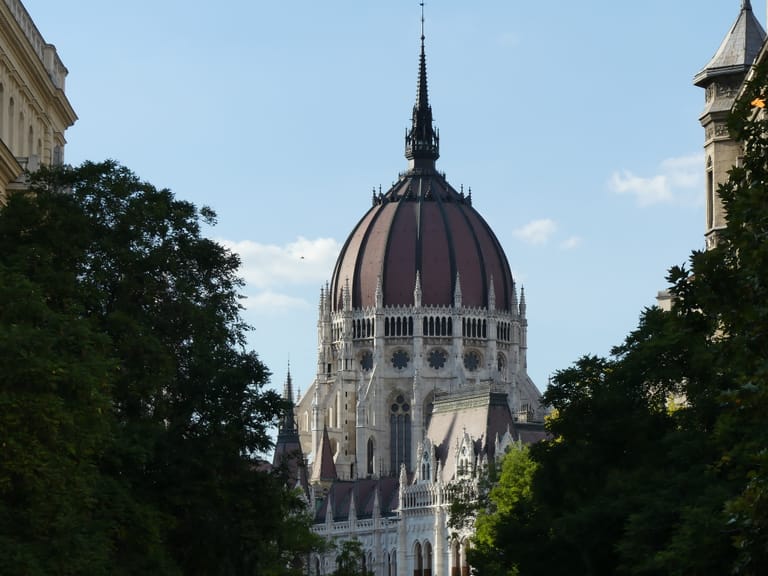
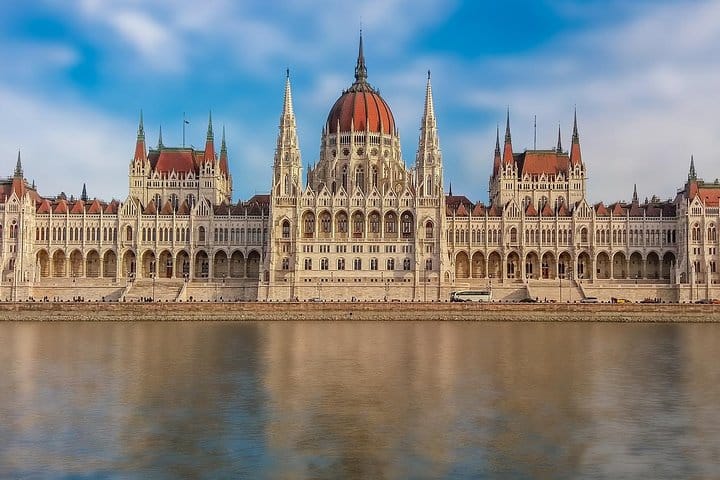
En plus de son attrait touristique évident, le Bastion des Pêcheurs vous offre une vue royale sur l’un des monuments les plus emblématiques de la ville : le Parlement de Budapest. Des bâtiments aussi longs, aussi majestueux, posés en bord de Danube, il n’y en a pas deux.
Visiter Budapest, c’est partir à la rencontre d’une ville pleine de surprises. Et pour vraiment l’apprécier, mieux vaut garder l’esprit curieux et l’œil attentif. L’exploration, ici, prend tout son sens.
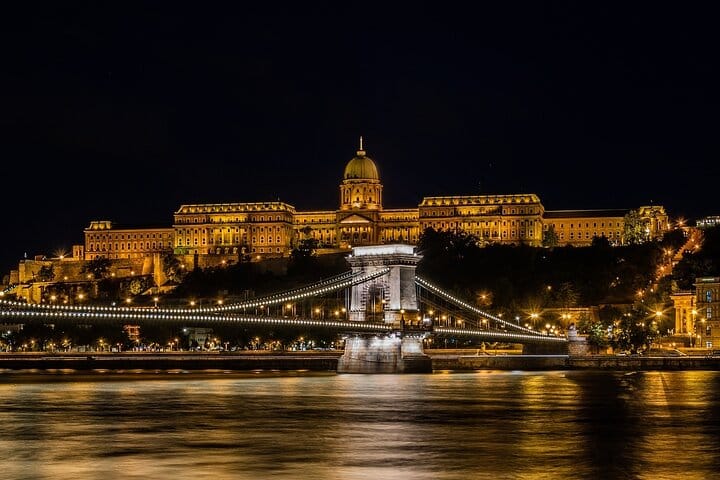
Le pont des Chaînes, ou pont Széchenyi, est l’un des symboles les plus forts de Budapest. Premier pont permanent à relier Buda et Pest, il a été inauguré en 1849, à une époque où la traversée du Danube se faisait encore en bateau ou, en hiver, à pied sur la glace.
Vous arrivez sur la place Széchenyi… ou peut-être avez-vous déjà entendu parler de la place Roosevelt ? Pas d’inquiétude, il ne s’agit pas d’un piège. En réalité, Roosevelt a précédé Széchenyi. En 1947, la place est renommée en l’honneur du 32e président des États-Unis
Contrairement à beaucoup d’autres grands édifices religieux d’Europe, la basilique Saint-Étienne est relativement récente, avec une inauguration qui remonte à 1905. Une toute jeune existence, qui n'entache en rien la place qu’occupe le site dans le cœur de Budapest.
Étirée sur une longueur totale de 2310 mètres, l’avenue Andrássy est l’une des rues principales et historiques de Budapest. Sans cesse traversée depuis sa construction en 1872, elle rend hommage à Gyula Andrássy.
Perdu entre traditions et modernité, entre mémoire et renouveau, le quartier juif de Budapest oscille entre passé douloureux et vie contemporaine foisonnante.
Bavaroise d’origine, puis autrichienne par son mariage, Elisabeth d’Autriche, ou “Sissi” pour les plus intimes, aimait être partout à la fois, sauf auprès de sa cour royale à Vienne.
Avec ses 53 mètres de long et 26 de large, la Grande synagogue de Budapest impose le respect. C’est la plus grande d’Europe, et la deuxième au monde, juste derrière celle de Jérusalem.
Parallèle au Danube, la rue Vaci Utca est probablement l’une des rues les plus connues et fréquentées de Budapest. Sans elle, une flânerie dans le centre n’aurait pas le même piquant.
À Budapest, c’est le Danube qui trace la frontière entre les différentes facettes de la ville. Une séparation à la fois géographique… et sociale. Il en a toujours été ainsi, ou presque.
Surplombé d’une immense porte d’accès, ce bâtiment, qui a tout l’air d’être une gare ferroviaire, est en réalité les halles centrales de la ville. Au XIXe siècle, les temps sont durs pour Budapest. La nourriture a du mal à être acheminée, l’état de conservation des aliments n’est pas terrible et les maladies infectieuses se propagent.
Regardez cette façade monumentale qui se dévoile sur votre gauche,avec son entrée sculptée, ses coupoles vert-de-gris, et ses beaux balcons… Vous êtes devant l’un des joyaux de Budapest : les Thermes Gellért. Difficile de faire plus emblématique.
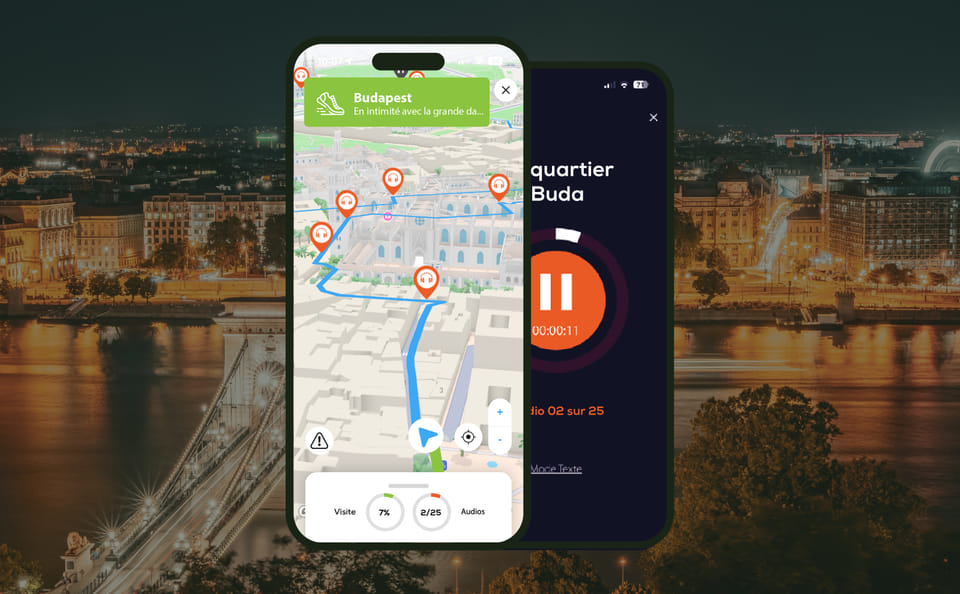
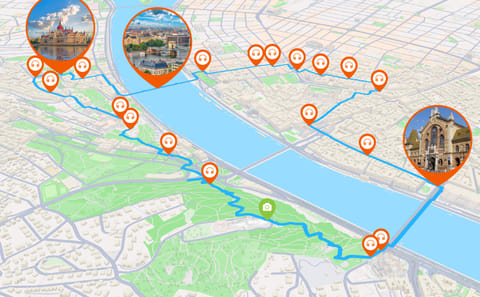
Nous construisons nos circuits sous forme de boucle afin que vous puissiez démarrer facilement la visite au point le plus proche de vous, le guidage s’adaptera automatiquement. Si vous êtes à proximité, nous vous conseillons un point de départ idéal.
Fully refundable until 1 day before start
Non-refundable after 1 day before start
Free Cancellation · Instant confirmation · Private tour
Free Cancellation · Instant confirmation · Private tour
Free Cancellation · Instant confirmation · Meet on location
Instant confirmation · Private tour · Meet on location
Free Cancellation · Instant confirmation · Private tour
Free Cancellation · Instant confirmation · Private tour
Free Cancellation · Instant confirmation · Private tour
Free Cancellation · Instant confirmation · Private tour
Our assistant finds tours and checks live dates and prices, and answers your questions.