Private 3-Hour Walking Tour of Berlin's Historic Sites
Free Cancellation · Instant confirmation · Private tour

Les constructions monumentales dans ce quartier se suivent et se ressemblent. Ici, vous avez l’entrée du musée historique allemand, connu sous le nom de Zeughaus qui signifie Arsenal.
Vous avez en face de vous un ensemble de résidences royales datant du XVIIIe siècle : le palais du Kronprintz et le palais des princesses, aujourd’hui le café de l’Opéra.
La célèbre avenue Unter den Linden, signifiant littéralement “sous les tilleuls”, s’étend de la porte de Brandebourg au pont du château que vous avez derrière vous.
Vous voilà sur l’une des plus belles places de la capitale, rebaptisée en 1947, en l’honneur de l’un des fondateurs du parti socialiste démocrate ouvrier allemand : August Bebel.
Voilà un magnifique symbole de tolérance religieuse. La cathédrale Sainte-Edwige, que vous avez sous les yeux, est le siège épiscopal del'archevêché de Berlin et l’un des lieux de culte catholiques les plus importants d’Allemagne.
Vous voilà sur la Gendarmenmarkt, la place du marché des gendarmes en français. Grandiose et harmonieuse, elle est décrite comme la plus belle de la capitale. Certains disent même qu’elle est la plus belle place au nord des Alpes!
Vous l’avez remarqué, l’un des intérêts majeurs de cette place réside dans la ressemblance entre les deux églises qui l’équilibrent. Pourtant, elles n’ont pas été construites en même temps.
Puisque vous allez descendre, sur plusieurs centaines de mètres, la rue Charlotte, j’en profite pour vous parler un peu de la reine cachée derrière ce nom.
Vous voyez ici, à l’angle de la rue, la belle façade art nouveau du palais Michaelsen.
Ce pâté de maisons ultra coloré, qui tranche franchement avec le reste du quartier, est l'œuvre de l’architecte italien Aldo Rossi : le quartier Schützenstraße.
On passerait à côté sans le voir, tant le mémorial de Peter Fechter est sobre. Et pourtant, il est l’une des victimes les plus célèbres du Mur, sinon la plus symbolique.
Le voilà, le fameux Checkpoint Charlie. Il fait partie de ces images que vous aviez probablement déjà en tête avant d’arriver à Berlin.
Vous avez sur votre droite, le projet The Wall, Asisi Panorama Berlin qui vous propose de revivre, grâce à des centaines de photographies retouchées et mises à l’échelle, le quotidien des Berlinois dans les années 80.
Vous arrivez à l’emplacement de l’ancien siège de la Gestapo et des SS, dont les ruines furent rasées après la guerre.
Vous avez certainement entendu parler de la Potsdamer Platz de Berlin, considéré, du moins à une époque, comme la version allemande de Times Square.
Avant d’en apprendre un peu plus sur le mémorial aux Juifs assassinés d'Europe, que vous voyez devant vous, je voulais vous dire un mot sur Hitler.
Préparez-vous mentalement parce que le mémorial aux Juifs assassinés d’Europe est lourd en émotions.
Vous êtes sur l’immense place Alexander, l’un des lieux les plus emblématiques de Berlin. Elle a été nommée ainsi en 1805, pour la venue du Tsar Alexandre Ier de Russie, lors de sa visite au roi de Prusse.
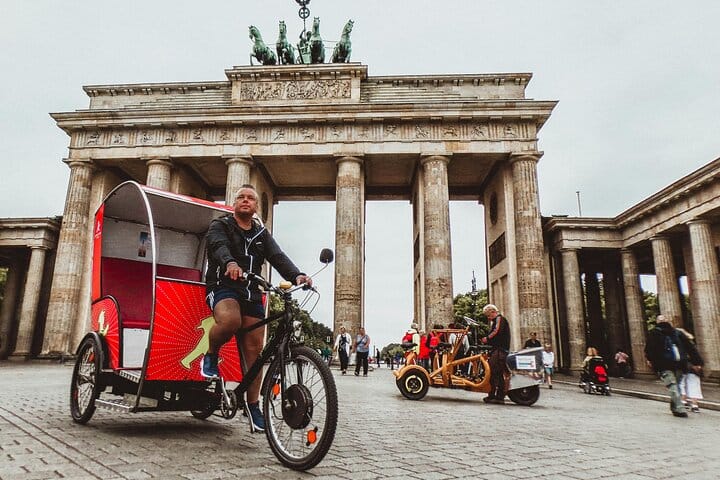
Comme la plupart des autres visiteurs, si vous êtes venus jusqu’ici c’est avant tout pour voir la magnifique Porte de Brandebourg, symbole de la réunification allemande et dernière porte historique encore là aujourd’hui !
Soyez préparés, lors de votre visite à Berlin, à rencontrer de nombreux mémoriaux dédiés aux diverses communautés persécutées par le régime nazi.
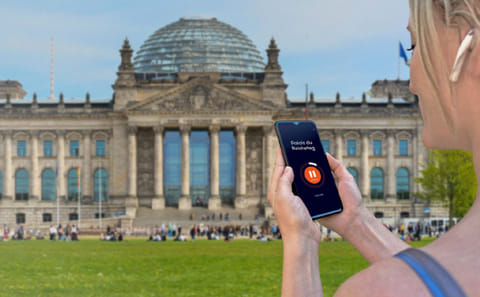
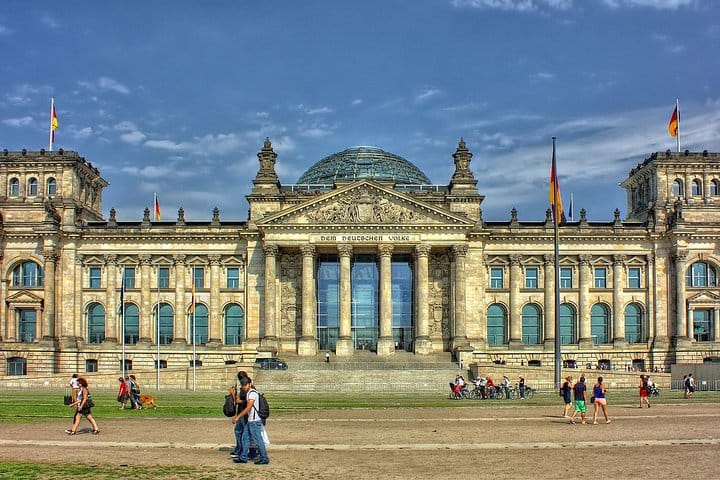
Alors voilà un bâtiment chargé d’histoire. Le Palais du Reichstag a joué un rôle important dans l’histoire de Berlin.
Les croix blanches que vous découvrez sur les rambardes sont là en commémoration des personnes qui ont perdu la vie en essayant de franchir le mur.
Le beau bâtiment à l’architecture ultra moderne que vous voyez sur l’autre rive fait partie du complexe parlementaire du gouvernement fédéral allemand.
La Spree, qui sépare en deux la capitale allemande, incarne à elle seule l’histoire tumultueuse de la ville qu’elle traverse. C’est sur ses bords que la première cité a été créée au XIIIe siècle, et elle servit plus tard de frontière naturelle entre Berlin-Est et Berlin-Ouest.
Vous arrivez au Tränenpalast, au Palais des larmes en français, lieu hautement symbolique de la division allemande. Après la construction du mur de Berlin, la gare de Friedrichstrasse s’est retrouvée entièrement dans le secteur soviétique.
Le beau bâtiment que vous voyez de l’autre côté de la rue avec ses grandes colonnes ioniques et ses innombrables moulures est l’une des rares grandes salles de divertissement du début du XXe siècle, encore présentes à Berlin.
L’imposant bâtiment que vous longez sur le côté gauche et qui semble prendre la totalité du pâté de maisons est la bibliothèque d’État de Berlin.
Si vous vous posiez la question, sachez que la statue du cavalier que vous voyez au centre de la rue est celle du roi Frédéric II de Prusse, alias Frédéric le Grand.
Vous voilà tout entouré de beaux édifices d’époque, normal, vous arrivez dans le quartier de l’université d’Humboldt, entourée de la bibliothèque d'État et de l’Institut des sciences.
Approchez-vous de ce temple à colonnade et regardez à l’intérieur. Il s’agit d’un émouvant monument commémoratif en souvenir des victimes de guerre.
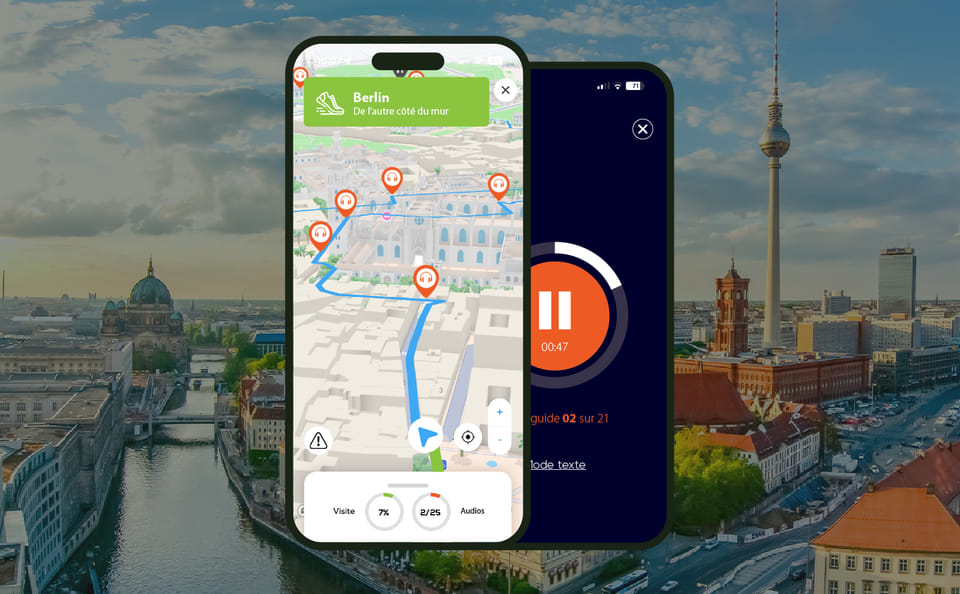
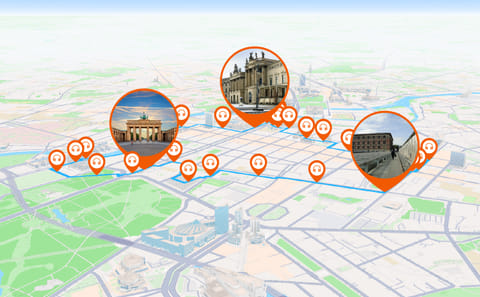
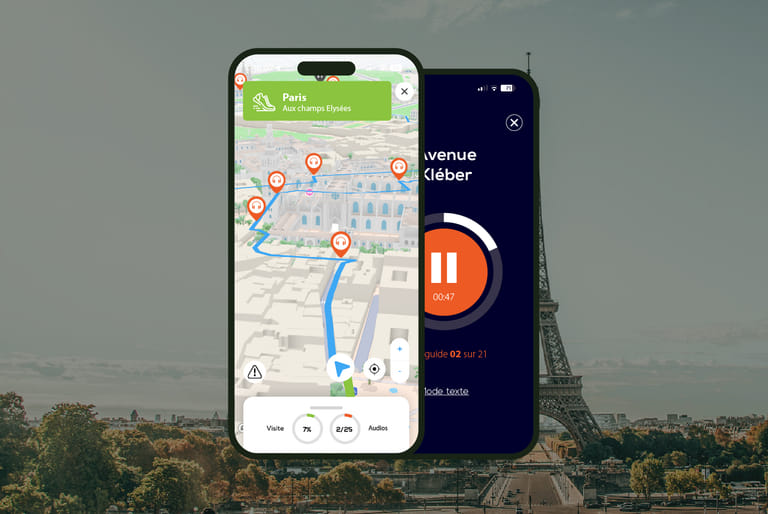
Nous construisons nos circuits sous forme de boucle afin que vous puissiez démarrer facilement la visite au point le plus proche de vous, le guidage s’adaptera automatiquement. Si vous êtes à proximité, nous vous conseillons un point de départ idéal.
Fully refundable until 1 day before start
Non-refundable after 1 day before start
Free Cancellation · Instant confirmation · Private tour
Instant confirmation · Private tour · Meet on location
Free Cancellation · Instant confirmation · Private tour
Free Cancellation · Instant confirmation · Private tour
Free Cancellation · Instant confirmation · Private tour
Free Cancellation · Instant confirmation · Private tour
Free Cancellation · Instant confirmation · Private tour
Free Cancellation · Instant confirmation · Private tour
Our assistant finds tours and checks live dates and prices, and answers your questions.