


Nairobi Highlights Walking Tour: Explore Culture and Landmarks
Free Cancellation · Instant confirmation · Pickup available

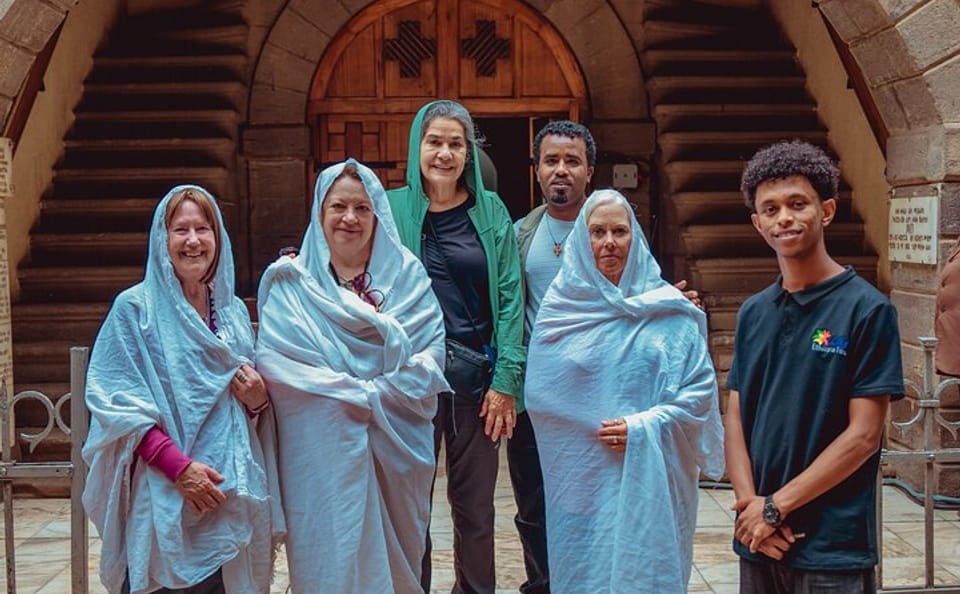
Commissioned by Empress Zewditu in 1916, this magnificent church stands as both an active house of worship and the royal mausoleum of three of Ethiopia's most revered imperial figures: Emperor Menelik II, his consort Empress Taytu Betul, and Empress Zewditu herself.
Inside, the church's walls come alive with vibrant murals rendered in the bold, expressive style of Ethiopian Orthodox art. Biblical narratives and the faces of revered saints gaze down from every surface, offering a vivid window into one of the world's oldest continuous Christian traditions a faith that has shaped Ethiopia's identity for nearly two millennia.
What to Expect:The imperial burial crypt of Emperor Menelik II, Empress Taytu, and Empress Zewditu.
Striking Ethiopian Orthodox church architecture with a distinctive octagonal design.
Richly decorated interior murals depicting biblical scenes and Ethiopian saints.
An atmosphere of quiet reverence within the heart of a busy capital city.
The opportunity to witness authentic Orthodox worship and centuries-old traditions.Practical Information:
Modest dress is required out of respect for this active place of worship. Shoulders and knees should be covered; women may be asked to cover their hair. A small entrance fee applies and supports the upkeep of the church and grounds. Photography policies may vary — always ask permission before photographing worshippers or the crypt area.
Best For: History enthusiasts, cultural travelers, Ethiopian heritage seekers, religious tourism & photography.
Ethiopia is often called the "Cradle of Mankind," and the National Museum of Ethiopia provides the evidence that earns that title. Housed in a multi-story building near Addis Ababa University on King George VI Street, this is not simply a repository of ancient objects it is the story of humanity itself, told through bones, thrones, manuscripts, and masterworks spanning millions of years.
The museum's most celebrated resident is undoubtedly "Lucy" (Australopithecus afarensis), known locally as Dink'inesh — meaning "you are marvellous." Discovered in 1974, this 3.2-million-year-old hominid skeleton revolutionised our understanding of human evolution.
Free English-speaking guides are available on-site, making the museum accessible and engaging for tourists, families, and historians alike.
What to Expect:"Lucy" (Dink'inesh), the 3.2-million-year-old Australopithecus afarensis skeleton that reshaped the science of human evolution, displayed as a high-quality cast.
"Selam," a 3.3-million-year-old fossil child of the same species, discovered between 2000 and 2004.
Emperor Haile Selassie's ornate wooden throne and pre-Aksumite stone tablets with Sabaean script.
A floor dedicated to African art history, from 14th-century works through to contemporary canvas paintings, including Afewerk Tekle's "African Heritage".
Ethnographic displays presenting the cultural diversity of Ethiopia's peoples, including traditional weapons, jewelry, clothing, and musical instruments.
Free English-speaking guides available on-site.Practical Information:
The museum is open Tuesday to Sunday, 9:00 AM to 5:00 PM, and is closed on Mondays and public holidays. Foreign nationals are charged a modest entrance fee, while students and locals
At an elevation of 3,200 meter above sea level, Mount Entoto towers above Addis Ababa, offering a great panoramic view of the city through a forest of towering eucalyptus trees. But this mountain is far more than a viewpoint. It is the ground on which modern Ethiopia was born the original seat of imperial power, the crowning place of a great emperor, and the home of one of Addis Ababa's oldest and most sacred churches.
Entoto Maryam (St. Mary) Church, nestled on the slopes of Mount Entoto, is one of the oldest churches in Addis Ababa, dating back to 1877. It was here that Menelik was crowned Emperor of Ethiopia in November 1889 a defining moment in the history of the continent's only nation to successfully resist European colonisation. The church's octagonal form is pleasing to the eye, adorned with pastel railings, painted glass panels, and wooden carvings cut into the shape of crosses, while its stone walls are composed of individually chiseled blocks. The interior, divided into three concentric chambers, carries the quiet gravity of a place that has witnessed history.
Beside the church stands a museum that brings the imperial era vividly to life. Inside are the personal belongings of Emperor Menelik II and Empress Taitu traditional clothing, crowns, jewels, and even a royal bed. One particularly noteworthy piece is a mirror presented to Empress Taitu by Queen Victoria. Also on display are a gold-tinted clock gifted to Menelik from France, an Icon of St. Mary given by Russia, a Negarit communication drum once used to call troops to war, and a robe worn by Menelik at his coronation. Beyond the museum, visitors can explore the remains of Menelik's former palace and see the first eucalyptus tree ever imported to Ethiopia from Australia a tree whose descendants now blanket the entire mountain.
The journey up to Entoto is itself part of the experience. The winding road passes through dense forest, the air grows cool and pine-scented, and the noise of the city fades away entirely. The road leading up to the church is quiet and serene, and the forest environment is deeply relaxing. At the summit, the full sweep of Addis Ababa unfolds below a vast, sprawling city that began, in a very real sense, right where you are standing.
The church is also famous for its Holy Water, widely believed by the faithful to carry miraculous healing powers. On any given morning, devoted worshippers can be seen gathered at the site seeking blessing and treatment a reminder that Entoto remains as spiritually alive today as it was in the age of emperors.
What to Expect:Panoramic views of Addis Ababa from 3,200 metres above sea level.
Entoto Maryam Church, the site of Emperor Menelik II's 1889 coronation, with its distinctive octagonal architecture and richly carved exterior.
An on-site imperial museum housing the personal belongings of Emperor Menelik II and Empress Taitu, including crowns, royal garments, and a mirror gifted by Queen Victoria.
The ruins of Menelik's original palace and Ethiopia's first eucalyptus tree, imported from Australia.
A serene eucalyptus forest setting ideal for walking and reflection.
Active Ethiopian Orthodox worship, including access to the church's sacred Holy Water.Practical Information:
The church interior is generally only accessible during Sunday Mass; visitors are welcome to explore the grounds, museum, and palace at any time. Modest dress is required. Photography is permitted on the grounds but not inside the museum. Arriving early in the morning is highly recommended for the clearest views and the most peaceful atmosphere.
Best For: History enthusiasts, culture travelers, photography, nature walks, spiritual tourism, first-time visitors to Addis Ababa
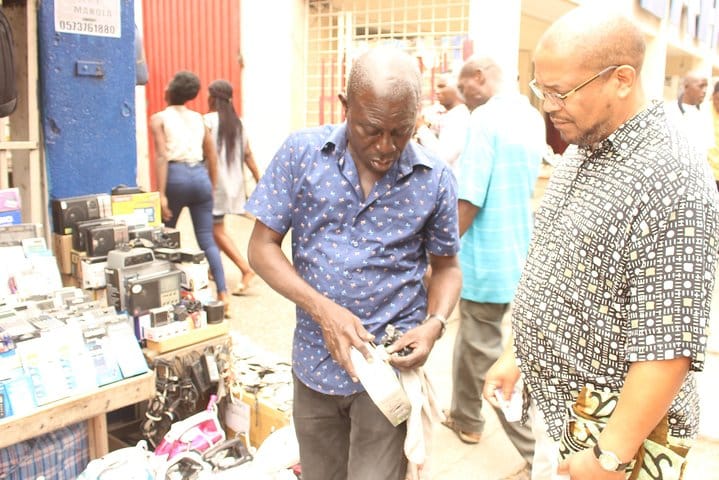
There is nowhere in Africa quite like Merkato. Covering several square miles and employing an estimated 13,000 people across 7,100 business entities, this is not merely a market it is an entire world unto itself, where the commerce, culture, and daily rhythm of Addis Ababa converge in one magnificent, chaotic, utterly alive space.
Merkato's origins date back to the 1930s, during the Italian occupation of Ethiopia. The market was established as a response to the Italians' segregation policies, which restricted Ethiopians from accessing the city's main market. To cater to the local population, a new market area was designated in the west of the city and what began as an act of exclusion became, over the decades, one of Africa's most extraordinary commercial and cultural institutions. Today, Merkato is a microcosm of Ethiopia's diverse cultures and economies a place where you can feel the pulse of the nation, reflected in the exchange of goods and the interactions of people from all walks of life.
Within Merkato's labyrinthine alleyways it is possible to purchase almost anything from cheap electronics to exotic fruits. There is no map for getting around this miles-wide trading centre; the only way to distinguish your location is to notice the product being sold. Spices, papayas, mangos, pomegranates, lamb, beef, carved crafts, jewellery, teff, and over one hundred coffee merchants selling their regional varieties are crammed into the narrow streets of the Addis Ketema district. Incense mingles with petrol fumes and the pungent scent of spices, while donkeys move freely alongside buses and trucks unloading countless bundles of supplies, and shoppers weave between them thick as flies.
The spice market is one of the highlights, where freshly ground spices like berbere, mitmita, and shiro are sold by weight alongside local honey and traditional tej (honey wine). Ethiopia is the birthplace of coffee, and Merkato makes that heritage tangible as you walk through, you may be invited to join locals in sharing a freshly brewed cup of buna, a sign of hospitality and friendship that turns a shopping trip into a genuine human encounter.
Underneath the apparent chaos lies a careful organisation, with sections dedicated to specific goods textiles, grains, spices, livestock, recycled materials, gold, and more. Addis Mercato merchants either operate from permanent tin shacks or sit on small three-legged stools and burlap mats, with piles of grains, vegetables, herbs, and spices spread before them. Visiting with a knowledgeable local guide transforms the experience entirely unlocking stories, introductions, and hidden corners that no first-time visitor could find alone.
What to Expect:Africa's largest open-air market, covering several square miles with over 7,100 business entities.
A dedicated spice market selling freshly ground berbere, mitmita, shiro, local honey, and traditional tej.
Ethiopia's most prominent coffee trading hub, where locally grown beans from across the country are bought and sold.
Sections for textiles, gold and jewelry, livestock, fresh produce, traditional crafts, and everyday goods.
An authentic glimpse into everyday Ethiopian life where the traditional and the modern come together.
The possibility of being invited to a spontaneous coffee ceremony the ultimate sign of Ethiopian welcome.Practical Information:
Wear comfortable shoes, as most of the market is explored on foot. Morning visits are recommended for the most activity and the freshest produce.
Best For: Culture lovers, foodies, photography, immersive local experiences, souvenir shopping, first-time visitors to Ethiopia
By the time you arrive at Piazza, you have already lived a full day.
You stood in the cool mountain air of Entoto and looked out over a city that an emperor built from nothing. You walked the underground crypt where that same emperor rests in eternal silence. You came face to face with Lucy three million years of human story compressed into a handful of fragile bones. You plunged into the beautiful chaos of Merkato and emerged on the other side, breathless and wide-eyed, carrying the scent of spice and incense on your clothes.
Now it is time to sit or rather, stand and let Ethiopia offer you one final, perfect gift.
Established in 1953, Tomoca became the first roasting company in Ethiopia to meticulously roast quality, highland-grown Arabica coffee originating from Kaffa the very birthplace of coffee itself. The name ToMoCa comes from the Italian words Torrefazione Moderna Café, meaning "modern coffee roasting" a reminder that even here, in this most Ethiopian of experiences, history has left its fingerprints. The Italians came, and eventually left, but they left behind their espresso machines. Ethiopia, characteristically, took what was useful and made it entirely its own.
Best For: The perfect closing chapter to a full-day Addis Ababa tour
Fully refundable until 1 day before start
Non-refundable after 1 day before start
Free Cancellation · Instant confirmation · Pickup available
Free Cancellation · Instant confirmation · Pickup available
 Elite
Elite
Free Cancellation · Instant confirmation · Pickup available
Free Cancellation · Instant confirmation · Private tour

Free Cancellation · Instant confirmation · Private tour
Free Cancellation · Instant confirmation · Min age 18+
Free Cancellation · Instant confirmation · Pickup available
Free Cancellation · Instant confirmation · Meet on location or pickup
Our assistant finds tours and checks live dates and prices, and answers your questions.