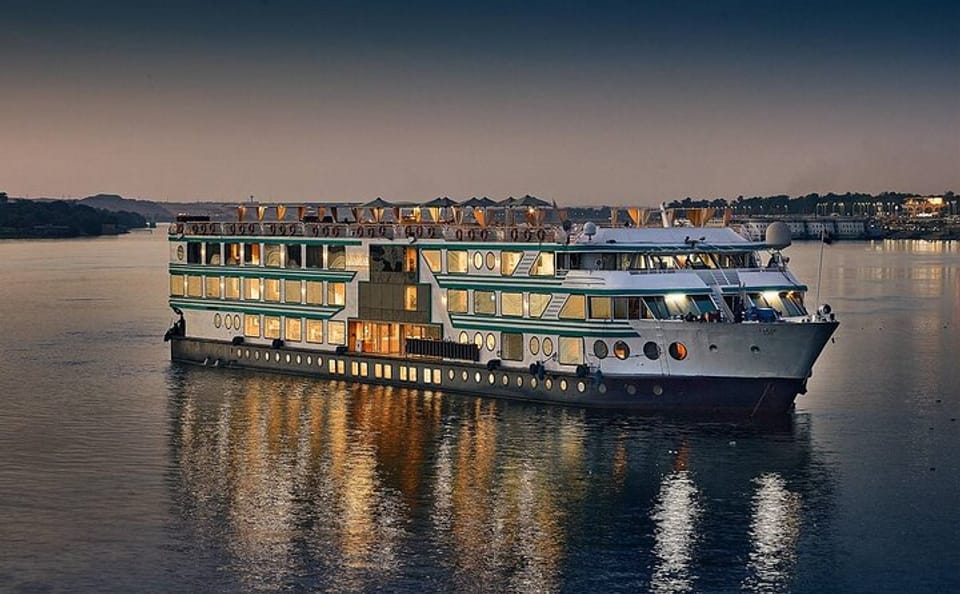



4-Day Nile Cruise from Aswan to Luxor with Abu Simbel Visit
Free Cancellation · Instant confirmation · Private tour

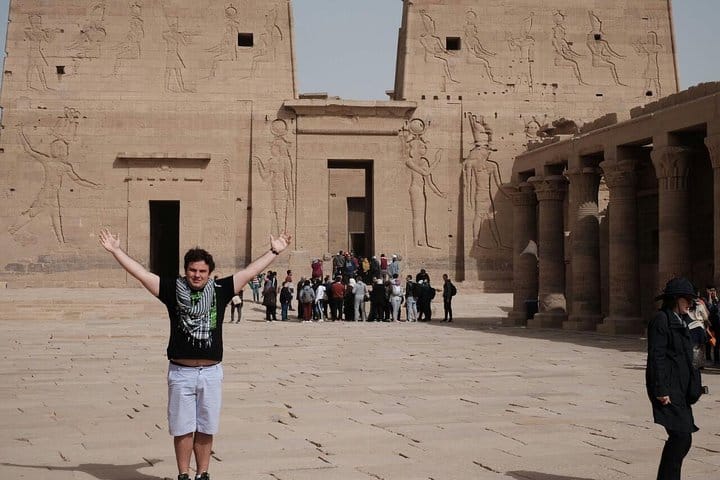
On arrival in Aswan, meet your local tour representative for the start of your tour. 1-Visit the High Dam 2- Philae Temple. Overnight in Aswan with opportunity to disembark. Enjoy lunch on board, as well as afternoon tea, dinner, and an evening disco party
The monuments of Philae include many structures dating predominantly to the Ptolemaic Period (332–30 BC). The most prominent of these is a temple begun by Ptolemy II Philadelphus (285–246 BC), which he dedicated to Isis, the mother of Horus, the god of kingship. A scene in the mammisi, or birth room, where the birth of Horus was celebrated, depicts Isis suckling her son Horus in the marshes.
High Dam is considered the greatest and largest engineering project of the twentieth century from an architectural and engineering point of view, superior to other giant global projects.
The High Dam was built to protect Egypt from the high floods that were occurred in Egypt and drowning large areas in it, and to conserve water that was wasted in the Mediterranean.
Importance of High dam project
The Egyptians realized the importance of the Nile since ancient times, so annual storage projects were established such as the Aswan reservoir and the Jebel Awliya reservoir on the Nile to control the changing river flow, and barrages were built on the Nile to organize irrigation on the various rivers.
However, the annual storage was only a partial remedy for controlling the Nile and controlling it.
The Unfinished Obelisk was discovered in the early twentieth century after it had been covered by sand for thousands of years. It remains as you see it today in one of the Aswan quarries, famous for its supply of hard and high-quality stone. Believed to have been commissioned by Hatshepsut (c. 1473–1458 BC) for the temple of Amun in Karnak, work was abandoned because of flaws in the stone and the presence of multiple fissures. Had it been finished, it would have weighed 1168 tonnes, and stood at a height of around 42 metres,
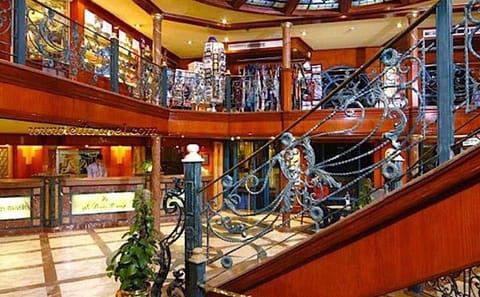
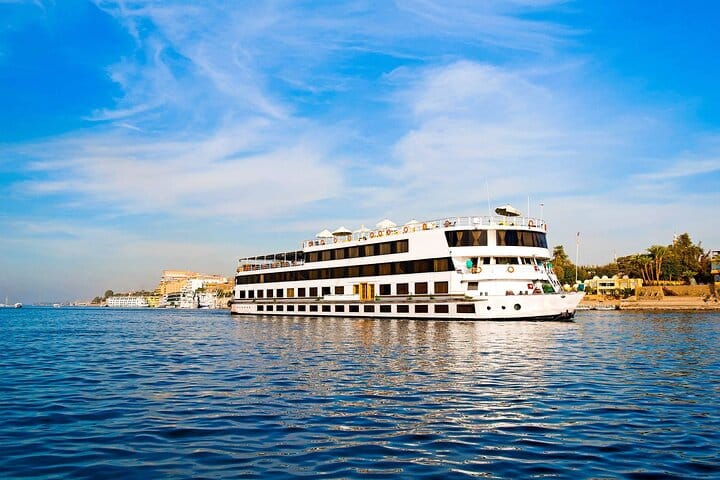
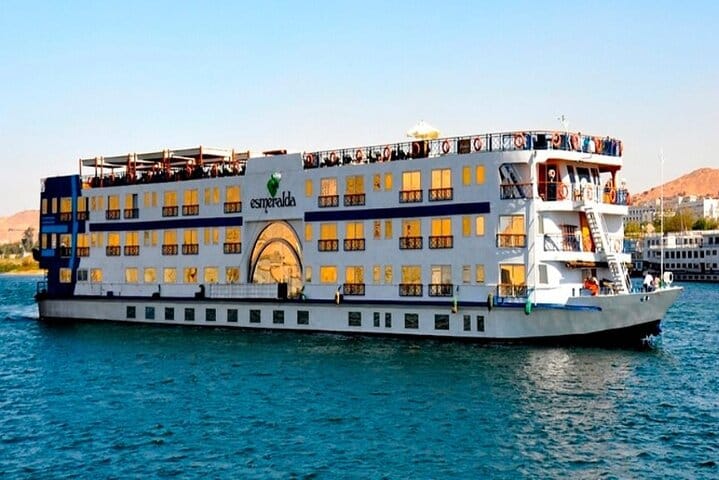
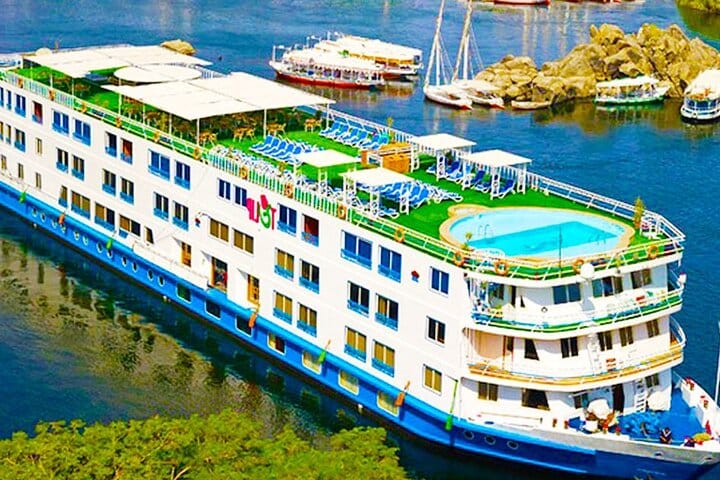
Over night in deluxe Nile Cruise
temple was built with such precision that on two days a year, the 22nd of February and 22nd of October, the sun’s rays enter the temple, cross the main hall, and illuminate the innermost statues.
Another rock-cut temple to the north, known as the Small Temple, is dedicated to the goddess Hathor and Ramesses II’s Great Royal Wife, Queen Nefertari. On the façade of the Small Temple, her colossi are the same size as those of her husband, a very rare example of such display.
The two temples were moved from their original location in 1968 after the Aswan High Dam was built, as it threatened to submerge them. The relocation was completed thanks to an international effort led by UNESCO, and the temple was admitted into its list of World Heritage Sites in 1979.
Selling to kom mobo for three hours from Aswan in the afternoon
The temple has a unique design. Because it is dedicated to two gods, it has two parallel axial passages running through its columned halls, terminating in two sanctuaries, one for each. The southern axis (on the right) is Sobek’s, and the northern (on the left) Harwer’s.
Sobek was a god of fertility associated with water, the inundation, and vegetation, worshipped here alongside his wife the goddess of love and motherhood Hathor and their son the moon god Khonsu. The god of kingship Horus is the son of Osiris and Isis and, as Harwer, he is in adulthood, victorious over Seth, the murderer of his father. He was worshipped here alongside his wife "Ta senet nefret" ‘The Perfect Companion’ and their son "Pa neb tawy" ‘The Lord of the Two Lands’.
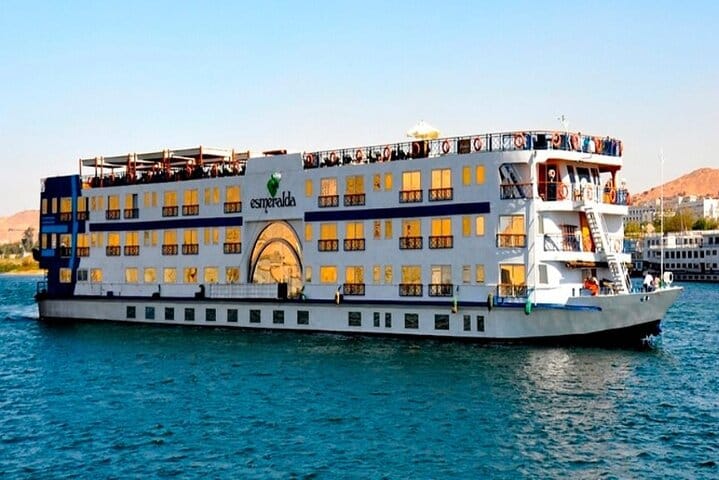
Overnight on deluxe 5 stars Nile Cruise
The temple remained buried under layers of settlement debris for millennia, which is why its architectural and decorative elements have survived so well. In 1860 the French archaeologist Auguste Mariette uncovered and restored parts of the temple.
The temple is fronted by two massive pylons that bear scenes of Ptolemy XII conquering his enemies and worshiping deities. Two large granite statues of the falcon-god Horus stand before the pylons. Once through the pylons you enter into a large Peristyle court lined with columns decorated with floral capitals.
Beyond this court are two Hypostyle Halls, the first illustrates the temple’s foundation with the king engaged in worship, the second holds scenes of Horus’ journey in a sacred bark accompanied by the goddess Hathor. From the second Hypostyle Hall is the Transverse Hall, then the Sanctuary of the temple.
In the afternoon we will arrive to Luxor and visit Luxor Temple, Ipet-resyt “Southern Sanctuary” to the ancient Egyptians, was so called because of its location within ancient Thebes (modern Luxor). It is located around three kilometers to the south of Karnak Temple, to which it was once linked with a processional way bordered with sphinxes. The oldest evidence for this temple dates to the Eighteenth Dynasty (c.1550–1295 BC).
Ipet-resyt, unlike most other ancient Egyptian temples, is not laid out on an east-west axis, but is oriented towards Karnak. This is because Luxor Temple was the main venue for one the most important of ancient Egyptian religious celebrations, when the cult images of Amun, his wife Mut, and their son, the lunar god Khonsu, were taken from their temples in Karnak, and transported in a grand procession to Luxor Temple so they could visit the god that resides there, Amenemopet. This was the Opet Festival.
Overnight on deluxe 5 stars Nile Cruise
The powerful kings of the New Kingdom were laid to rest under the shadow of a pyramid-shaped peak rising out of the cliffs surrounding the valley. The selection of even the specific valley in which the royal tombs were excavated was not left to chance. The pyramid was a symbol of rebirth and thus eternal life, and the presence of a natural pyramid was seen as a sign of the divine. This entire area, and the peak itself, was sacred to a funerary aspect of the goddess Hathor: the “Mistress of the West”.
Hatshepsut (c.1473–1458 BC), the queen who became pharaoh, built a magnificent temple at Deir al-Bahari, on the west back of Luxor. It lies directly across the Nile from Karnak Temple, the main sanctuary of the god Amun. Hatshepsut’s temple, Djeser-djeseru “the Holy of Holies” was designed by the chief steward of Amun, Senenmut.
Ipet-resyt, unlike most other ancient Egyptian temples, is not laid out on an east-west axis, but is oriented towards Karnak. This is because Luxor Temple was the main venue for one the most important of ancient Egyptian religious celebrations, when the cult images of Amun, his wife Mut, and their son, the lunar god Khonsu, were taken from their temples in Karnak, and transported in a grand procession to Luxor Temple so they could visit the god that resides there, Amenemopet. This was the Opet Festival.
Fully refundable until 2 days before start
Non-refundable after 2 days before start
Free Cancellation · Instant confirmation · Private tour
Free Cancellation · Instant confirmation · Private tour
Free Cancellation · Instant confirmation · Private tour
Free Cancellation · Instant confirmation · Pickup available
 Elite
Elite
Free Cancellation · Instant confirmation · Private tour
 Elite
Elite
Free Cancellation · Instant confirmation · Private tour
 Elite
Elite
Free Cancellation · Instant confirmation · Private tour
 Elite
Elite
Free Cancellation · Instant confirmation · Pickup available
Our assistant finds tours and checks live dates and prices, and answers your questions.