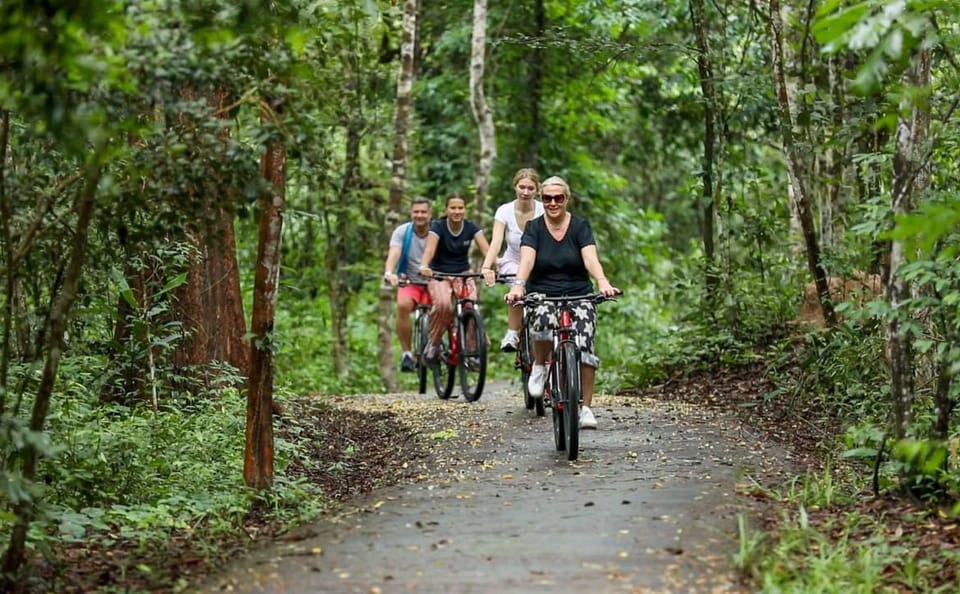
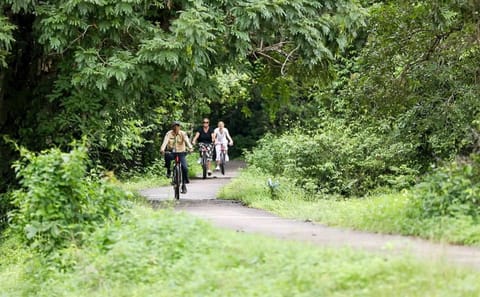



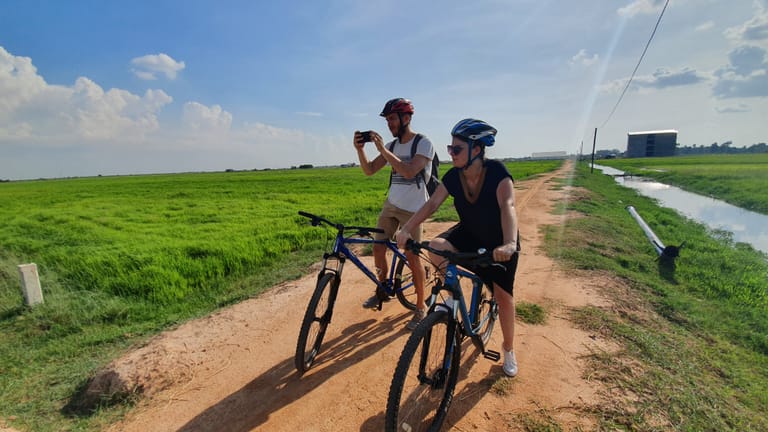
Siem Reap Local Village Cycling Tour (Local Experience)
50% refund until 2 days before · Instant confirmation · Private tour

Our tour guide and bike are ready at your hotel parking and start the bike from your hotel to Angkor Park.
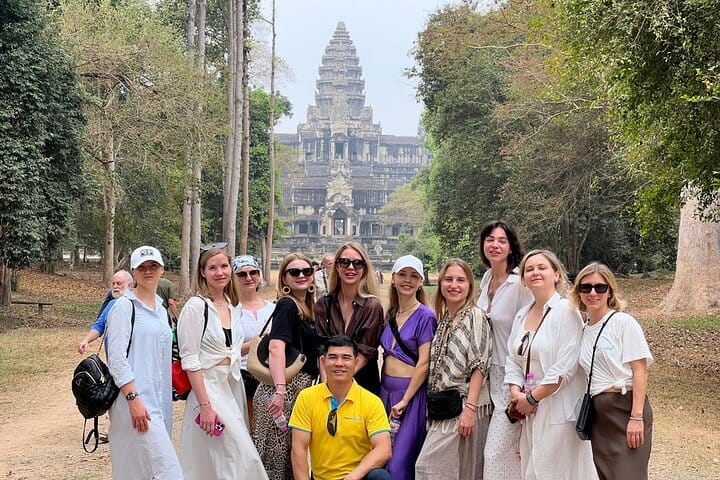
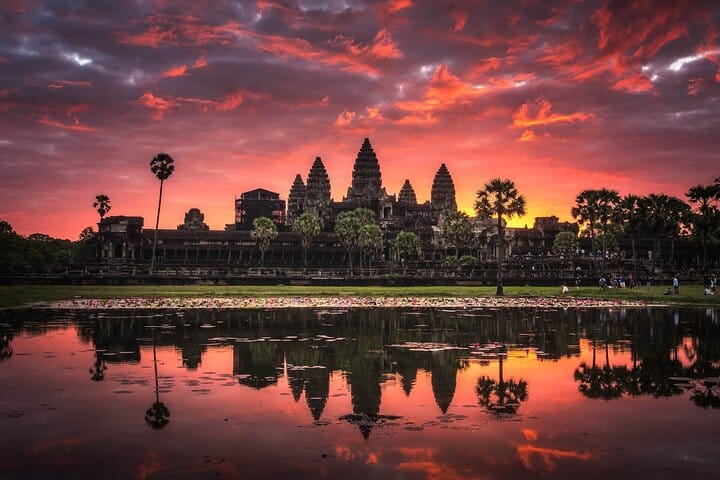
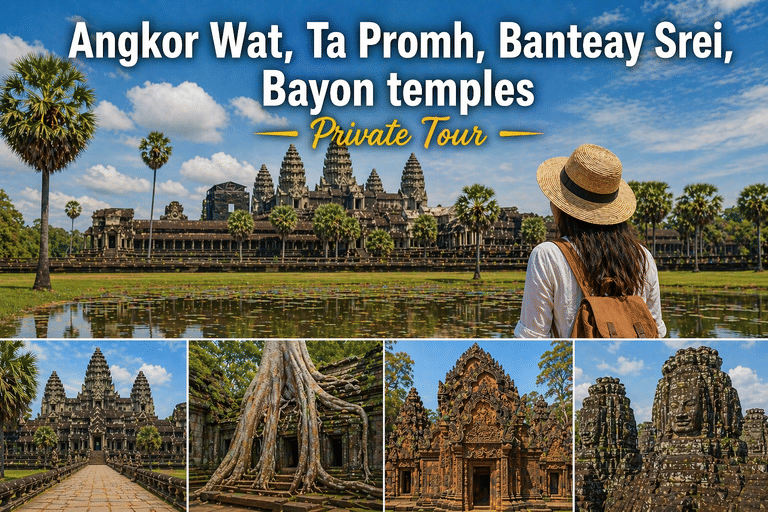
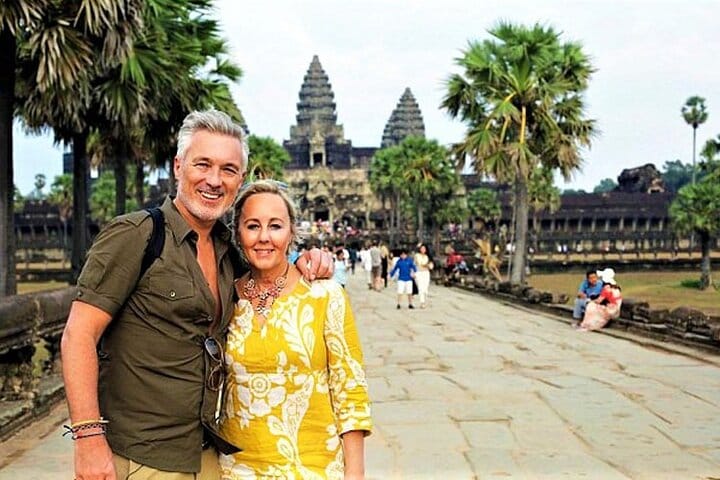
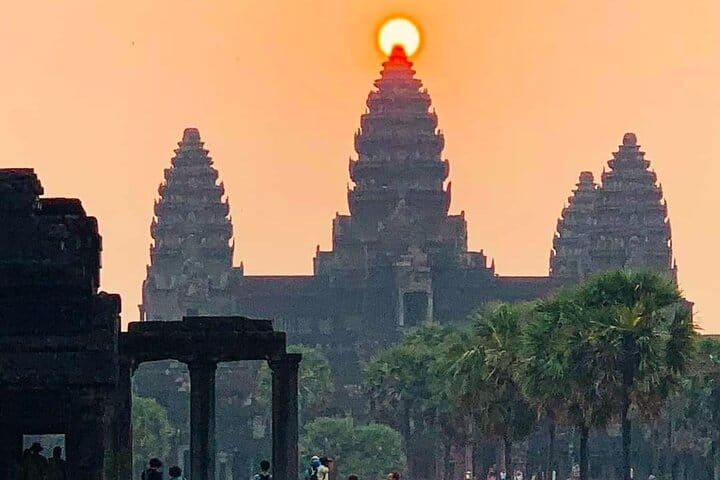
Angkor Wat, the largest monument of the Angkor group and the best preserved, is an architectural masterpiece. Its perfection in composition, balance, proportions, relief's and sculpture make it one of the finest monuments in the world. It is generally accepted that Angkor Wat was a funerary temple for King Suryavarman II and oriented to the west to conform to the symbolism between the setting sun and death. The bas-reliefs, designed for viewing from left to right in the order of Hindu funereal ritual, support this function.
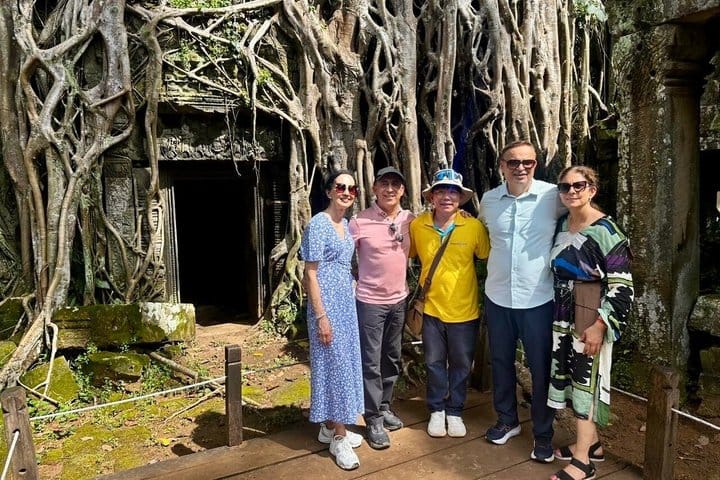
Ta Prohm is the undisputed capital of the kingdom of the Trees. It has been left untouched by archaeologists except for the clearing of a path for visitors and structural strengthening to stave off further deterioration. Because of its natural state, it is possible to experience at this temple the wonder of the early explorers when they came upon these monuments in the middle of the nineteenth century. Shrouded in dense jungle the temple of Ta Prohm is ethereal in aspect and conjures up a romantic aura. Fig, banyan and kapok trees spread their gigantic roots over stones, probing walls and terraces apart, as their branches and leaves intertwine to form a roof over the structures. Trunks of trees twist amongst stone pillars. The strange, haunted charm of the place entwines itself about you as you go, as inescapably as the roots have wound themselves about the walls and towers.
Ta Nei is a late 12th century stone temple in Angkor, Cambodia. Built during the reign of King Jayavarman VII, it is near the northwest corner of the East Baray, a large holy reservoir. It was dedicated to the Buddha
The Bayon temple was built nearly 100 years after Angkor Wat. The basic structure and earliest part of the temple ate not known. Since it was located at the Centre of a royal city it seems possible that the Bayon would have originally been a temple-mountain conforming to the symbolism of a microcosm of Mount Meru. The middle part of the temple was extended during the second phase of building. The Bayon of today belong to the third and last phase of the art style. The Smiling Face at Bayon, the architectural scale and composition of the Bayon exude grandness in every aspects. Its elements juxtapose each other to create balance and harmony and there are more then 200 large faces carved on the 54 tower give this temple its majestic character. The faces with slightly curving lips, eyes placed in shadow by the lowered lids utter not a word and yet force you to guess much.
The south gate of Angkor Thom is most popular with visitors, as it has been fully restored and many of the heads remain in place. The gate is on the main road into Angkor Thom from Angkor Wat.
Fully refundable until 2 days before start
Non-refundable after 2 days before start
50% refund until 2 days before · Instant confirmation · Private tour
Free Cancellation · Instant confirmation · Pickup available
Free Cancellation · Instant confirmation · Private tour
Free Cancellation · Instant confirmation · Private tour
 Elite
Elite
Free Cancellation · Instant confirmation · Private tour
 Elite
Elite
Free Cancellation · Instant confirmation · Private tour
 Elite
Elite
Free Cancellation · Instant confirmation · Private tour
 Elite
Elite
Free Cancellation · Instant confirmation · Private tour
Our assistant finds tours and checks live dates and prices, and answers your questions.