

Private Half-Day Tour of Athens and the Acropolis
Free Cancellation · Instant confirmation · Private tour

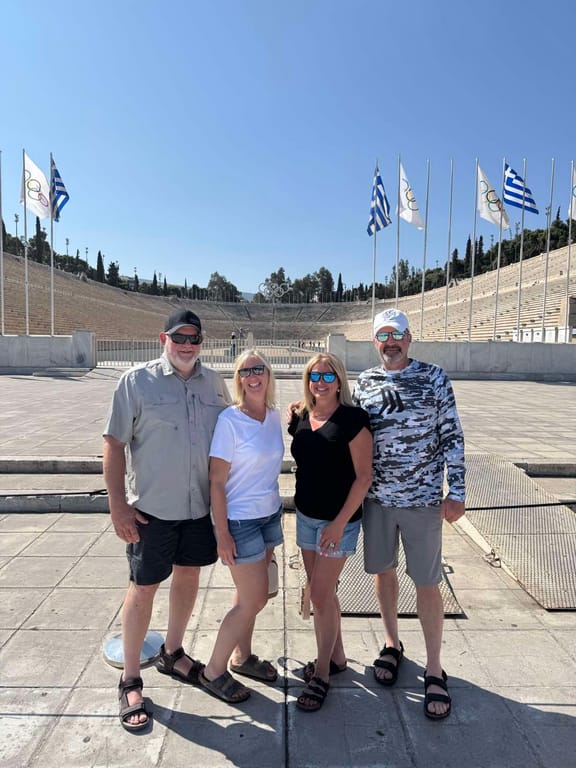
Panathenaic Stadium or else known as Kallimarmaro stadium – the oldest in operation stadium of the world, where the Olympics Games have been held three times. It is the only major stadium in the world built entirely of white marble.
Like the Acropolis, the temple of Olympian Zeus has been a distinctive Athenian landmark since time immemorial. The Pillars of Olympian Zeus, the outdoor ancient temple of Athena. The Temple of Olympian Zeus is a half-complete temple dedicated to Zeus, chief of Olympian Gods. It’s impressive history and destruction make the site interesting to study and its size a popular tourist attraction. It’s surrounded by other monuments, such as the Kallimarmaro stadium, the Hadrian’s Arch, and Zappeion Megaron. It’s within walking distance from the Athens center, 500 m east of the Acropolis and south from the Syntagma Square.
The Hellenic Parliament is the Parliament of Greece, an imposing building located in the Parliament House (Old Royal Palace), overlooking Constitution Square in Athens. The Greek Parliament, the old Palace of king Othon which is located in Syntagma Square and the Unknown Soldier Monument which is guarded 24 hours a day by the Presidential Guard.
Once the most luxurious public building in the city, Hadrian’s Library was erected around AD 132. It has an internal courtyard and pool bordered by 100 columns.
The National and Kapodistrian University of Athens (NKUA) is an integral part of the modern Greek intellectual tradition, life, and international presence. It successfully combines an old established name and authority with dynamic development and creative participation in modern letters and science. It is the oldest University in the country, founded by the Royal Decree of 22 April 1837 under the name “Othonian University”, as the first king of modern Greece, Otto of Bavaria, was its founder. Initially, it consisted of four Schools (of Theology, Law, Medicine, and Philosophy, the latter still comprising at that time Mathematics and Applied Sciences) with a total of 52 students. Its first seat was a neo-classical house on the north slope of the Akropolis hill, originally the home of the architect Stamatis Kleanthis (today the Museum of the University’s History is housed there).
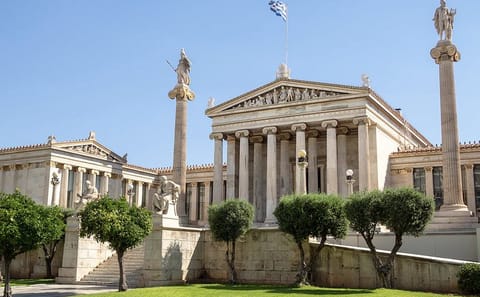
The Academy was founded by Plato in ca. 387 BC in Athens. Aristotle studied there for twenty years (367 BC – 347 BC) before founding his own school, the Lykeion. The Academy persisted throughout the Hellenistic period as a skeptical school, until coming to an end after the death of Philo of Larissa in 83 BC. The Academy has been cited by historians as the first higher learning institution in the Western world.
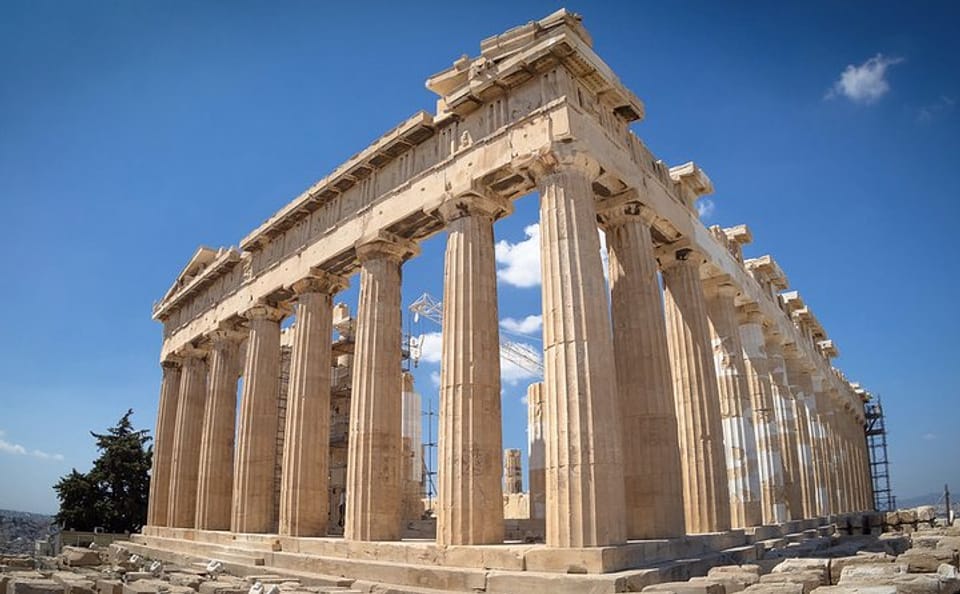
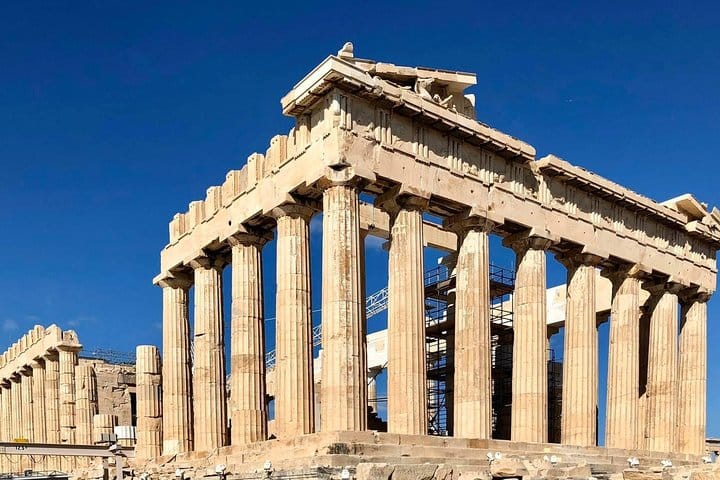
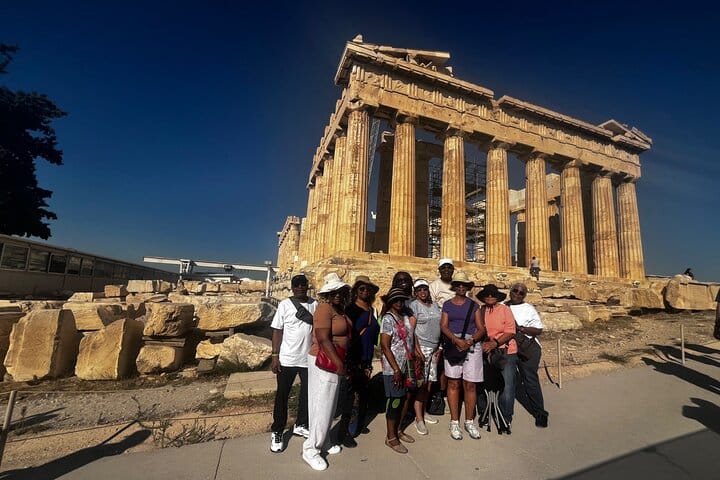
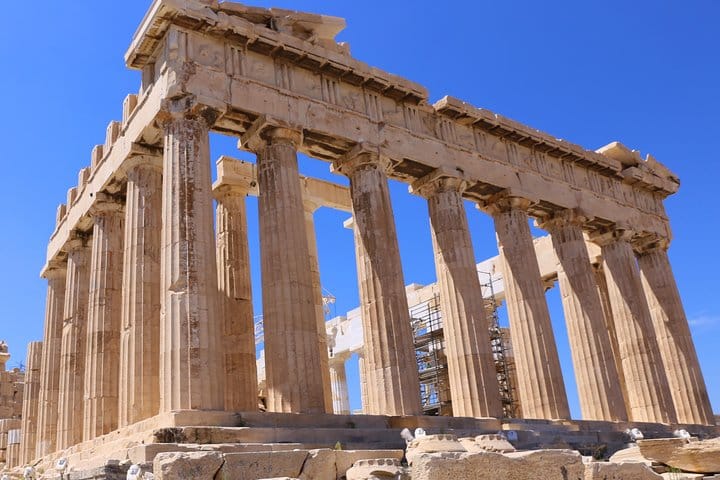
The Parthenon is a temple on the Athenian Acropolis, Greece, dedicated to the Greek goddess Athena, whom the people of Athens considered their patron. Its construction began in 447 BC and was completed in 438 BC, although decorations of the Parthenon continued until 432 BC. It is the most important surviving building of Classical Greece, generally considered to be the culmination of the development of the Doric order. Its decorative sculptures are considered some of the high points of Greek art.
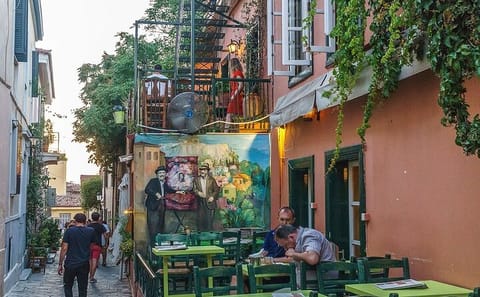
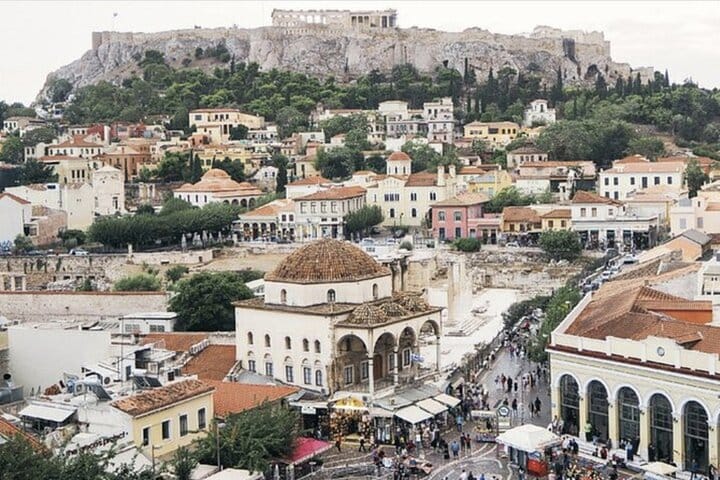
Plaka is the oldest and most charming district in Athens. It lies right below the Acropolis Winding medieval alleyways with romantic narrow steps, neoclassical mansions and houses with red tiles and balconies with colorful flowers characterize the neighborhood The Greek literature often called Plaka the neighborhood of the Gods Typical Greek taverns and street cafés serving ice-cold frappés are also characteristics of the area.
Fully refundable until 1 day before start
Non-refundable after 1 day before start
Free Cancellation · Instant confirmation · Private tour
 Elite
Elite
Free Cancellation · Instant confirmation · Private tour
 Elite
Elite
Cancellable until 1 day before · Instant confirmation · Pickup available
Free Cancellation · Instant confirmation · Private tour
 Elite
Elite
Free Cancellation · Instant confirmation · Private tour
 Elite
Elite
Free Cancellation · Instant confirmation · Private tour
 Elite
Elite
Free Cancellation · Instant confirmation · Private tour
 Elite
Elite
Free Cancellation · Instant confirmation · Private tour
Our assistant finds tours and checks live dates and prices, and answers your questions.