

Guided Day Trip from Tbilisi to Mtskheta and Gori
Free Cancellation · Instant confirmation · Meet on location

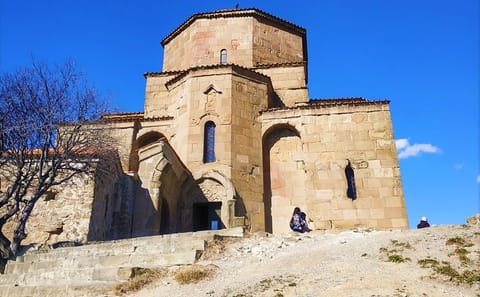
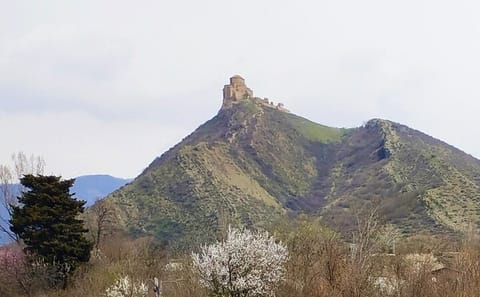
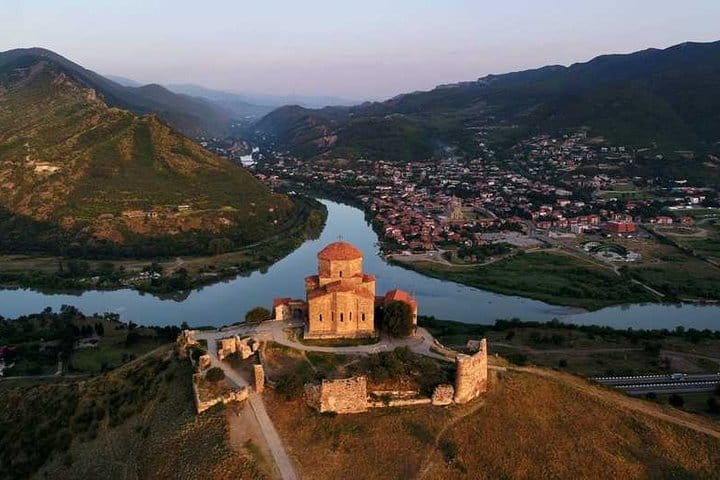
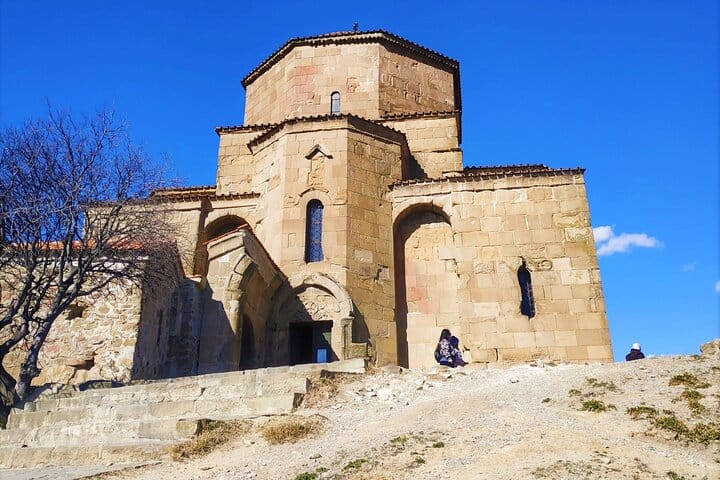
Jvari Monastery is the 6th century UNESCO site that survived almost unchanged. The church founded the Jvari type of church architecture, prevalent in Georgia and Armenia. In 4th century St. Nino, a female evangelist who converted King Mirian III to Christianity, erected a large wooden (or vine) cross on the site of a pagan temple. A small church was erected over the remnants of the wooden cross in 545 during the rule of Guaram I, and named the "Small Church of Jvari", which can still be seen to the north. "Great Church of Jvari" was built in 590- 605 by Guaram's son Erismtavari Stepanoz I.
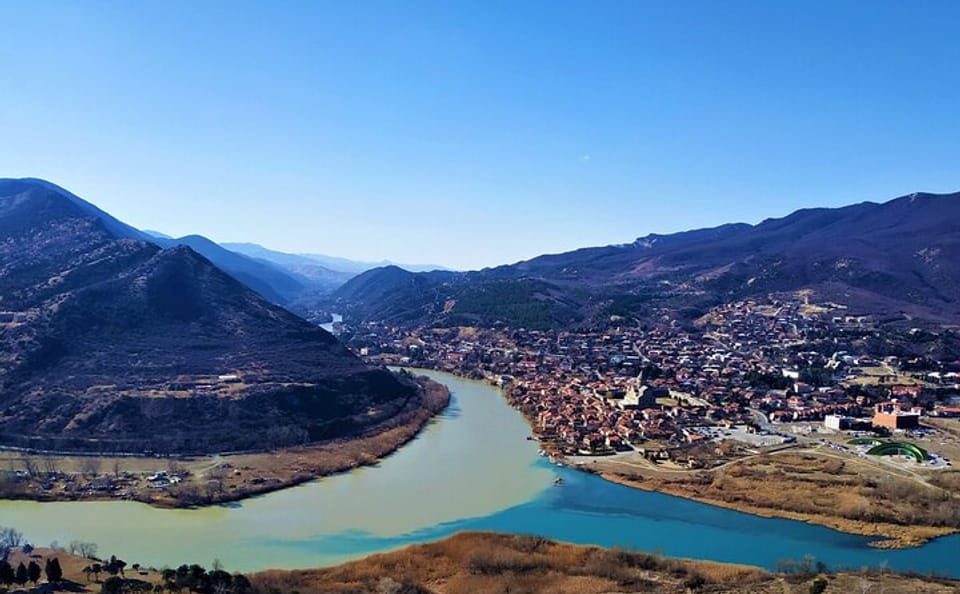
Svetitskhoveli Cathedral (the Cathedral of the Living Pillar) is the second largest church in Georgia known as the burial site of Christ's mantle and recognized by UNESCO. The present cross-in-square structure was completed in [ ] by architect Arsukisdze. In 4th century A.D. during the reign of Mirian III of Kartli (Iberia), St. Nino chose the confluence of the Mtkvari and Aragvi rivers as the place of the first Georgian Church. In the 1st century AD a Georgian Jew from Mtskheta named Elias was in Jerusalem when Jesus was crucified. Elias bought Jesus’ robe from a Roman soldier at Golgotha and brought it back to Georgia. Returning to his native city, he was met by his sister Sidonia who upon touching the robe immediately died from the emotions engendered by the sacred object. The robe could not be removed from her grasp, so she was buried with it. Later, from her grave grew an enormous cedar tree. Ordering the cedar chopped down to build the church, St. Nino had seven columns made from it for the church's foundation. The seventh column, however, had supernatural properties and rose by itself into the air. It returned to earth after St. Nino prayed the whole night. It was further said that from the seventh column a sacred liquid flowed that cured people of all diseases.
Samtavro Monastery was founded in the 4th century by the King Mirian III, when a small church was built here by Saint Nino. The main temple is stylistically dated to the first half of the 11th century and was probably built or rebuilt soon after Svetitskhoveli cathedral, by the King George I and Catholicos-Patriarch Melchizedek I. It is protected by UNESCO and combines Transfiguration Church and Nunnery of St. Nino.
Shio-Mgvime Monastery was founded by the 6th century monk Shio, one of the Thirteen Assyrian Fathers who came to Georgia as Christian missionaries. St. Shio spent his last years as a hermit in a deep cave. The earliest building the Monastery of St. John the Baptist – a cruciform church, very plain and strict in its design dates to 560s-580s. The church has an octagonal dome covered with a conic floor and once housed stone iconostasis now at the Art Museum of Georgia. The monastery was altered in the 11th and 18th centuries but retained its original architecture.
Fully refundable until 1 day before start
Non-refundable after 1 day before start
Free Cancellation · Instant confirmation · Meet on location
Free Cancellation · Instant confirmation · Meet on location
Free Cancellation · Instant confirmation · Private tour
Free Cancellation · Instant confirmation · Meet on location
Free Cancellation · Instant confirmation · Private tour
Free Cancellation · Instant confirmation · Private tour
Free Cancellation · Instant confirmation · Private tour
Free Cancellation · Instant confirmation · Private tour
Our assistant finds tours and checks live dates and prices, and answers your questions.