

Private Gyeongju Tour of UNESCO Heritage Sites
Free Cancellation · Instant confirmation · Private tour

ARRIVAL IN KOREA AND TRANSFER TO JEJU
Airport pickup by a driver and head to Gimpo Airport and Take a flight for Jeju Island
Meet a driver and head to Hotel in Jeju Island
Take a rest and Meals on your own.
Take a flight for Jeju Island
Meet a driver and head to Hotel in Jeju Island
Take a rest and Meals on your own.
a 3 star hotel
is regarded as having significant scientific and heritage value, owing to its excellent condition of preservation despite its age of formation (about 300,000 to 200,000 years ago).
Sangumburi Crator is crater of an extinct volcano and 100m deep.
Sangumburi (산굼부리) is a crater with a circumference of over 2 km, and has been designated as a Natural Monument. It is located on the southeast side of Jeju-si, and is a flat crater, about 650 meters wide, 100 meters deep, and 2,070 meters in circumference. If you look at the crater from above up, it looks like a man-made circular stadium. There is a variety of plant-life in the crater. On the north side, Nandaeseong vegetation such as red-thorn trees, and magnolia trees grow, along with the rare winter strawberries. On the south side of the crater, Ondaerim vegetation such as evergreens, maples, and mountain strawberry trees cover the area. Because so many different kinds of trees and plants grow in such a limited space, it attracts the attention of researchers as well.
smell the fresh sea air, touch the clear water and feel the soft black sand under your feet.
also called ‘Sunrise Peak’, is an archetypal tuff cone formed by hydrovolcanic eruptions upon a shallow seabed about 5,000 years ago
Dive show-female divers who dive into the ocean water to gather various shellfish, seaweed, etc, without using any underwater diving equipment.
Located at the foot of Halla Mountain on Jeju Island, Seongeup Folk Village is a small town that holds a vast amount of culture.
Cultural properties in the folk village have been handed down from generation to generation and include treasures such as residential houses, Confucian shrines and schools, ancient government offices, stone statues, large millstones (pulled by horses or ox), fortress ruins, and stone monuments. Among the cultural gems of the folk village are intangible cultural assets such as folk plays, native foods, local folk craftsmanship, and local dialect. Even the trees are an important part of the area’s heritage. Several zelkova and nettle trees that are hundreds of years old stand at the center of the village, preserving the dignified atmosphere of a bygone era.
The Seongeup Folk Village shows the unique culture of Jeju Island: the black lava rock walls, the straight but curvy alleys to block the wind, and the stone grandfather statues (Harubang), which have become a prime feature of the landscape. The local black-haired pigs and tongsi (pigsty / restroom) are especially well-known characteristics of Jeju folk culture. The Jeju black pork is said to be very nutritious.
Jeju Dongmun Traditional Market was established after the liberation in 1945. Due to a big fire that broke out in March 1954, the whole market and the nearby area was reduced to ashes. The market then moved to its current location and kept the original name. As one of the most popular traditional markets in Jeju, Dongmun has served countless customers, selling diverse items at inexpensive prices. As the representative traditional market of Jeju, the market is popular for fresh seafood.
a 3 star hotel
Trekking(3-4hour course)
Going up to the peak is upto tourists
Spanning 196 hectares, Halla Ecological (Eco) Forest on Yonggangsan Mountain is home to 288,000 trees representing 333 indigenous plant species. Having been designated as a conservation area, the forest provides plenty of great opportunities to observe and learn about Jeju's diversified ecosystem through various facilities including an observatory, plant nurseries, walking trails, etc.
Spirited Garden is the new name of Bunjae Arpia, renamed in 2007 to commemorate the 15th anniversary after opening and to renew the garden as an international garden. Hundreds of potted plants are located in Nature Garden with a theme of oreum and water. The history of the garden started in 1963 when Seong Beomyeong, a director, came to Jeju and cultivated the wasteland full of rocks. The garden came into the international spotlight as the beautiful garden was created from the wastelands by a single farmer. The garden has been visited by many honored public figures such as Jiang Zemin and Hu Jintao from China, Nakasone from Japan, Kim Yongsun from North Korea and others. Currently, about 400 planted trees are on display. Also, visitors can see various facilities including stone walls and stone towers stacked with Jeju volcanic stones, the largest artificial waterfalls in Jeju, and a pond meeting the waterfalls with large-sized carp.
enjoy high quality teas and the observatory provides good landscape of green tea fields
is a place where Sanbangsan Mountain stretches into the ocean and it looks as if a dragon’s head is going underwater.
is the result of violent volcanic activity some 700,000 to 800,000 years ago and is in fact a huge body of lava.
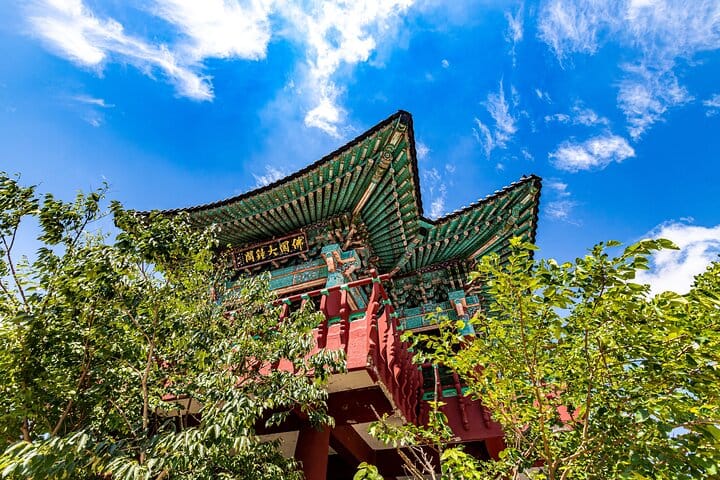
The architectural style of Yakcheonsa Temple is reminiscent of that of Buddhist temples of the early Joseon Dynasty. Measuring an impressive 30m high and spanning a total area of 3,305 meters squared, it is the largest temple in the East.
Upon entering Yakcheonsa Temple, guests will be greeted by a 5m-tall statue of Vairocana, the tallest of such statues in Korea, on a 4m high pedestal. The walls on both the right and left have been sculpted into large altar portraits of Buddha and in front of the Dharma Hall is a giant Buddhist temple bell, weighing 18 tons. Beloved for its size and grandeur, the temple consists of a main temple (2,652 meters squared) and a 3-story residential structure for the Buddhist monks.
Other notable sites are the Gulbeopdang (the Dharma Hall, built inside a natural cave), the Samseonggak Shrine, and the Sarira Pagoda. Yakcheonsa Temple is not only popular among Buddhists but is also a well sought after tourist destination.
a 3 star hotel
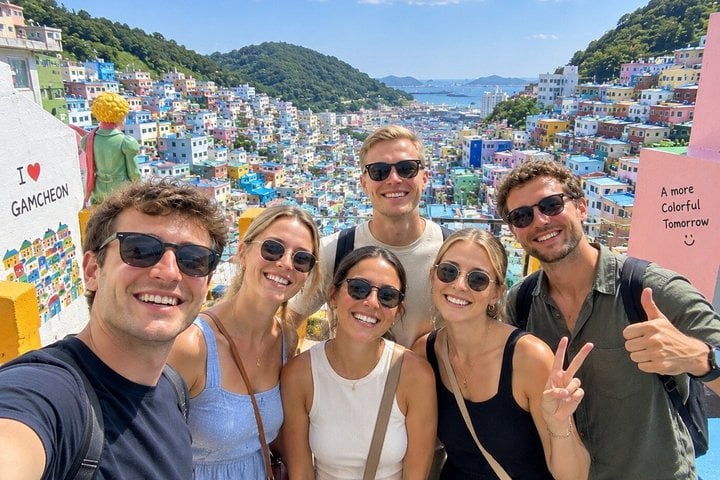
Gamcheon Culture Villiage is formed by houses built in staircase-fashion on the foothills of a coastal mountain, earning this village the nickname "Machu Picchu of Busan." Many alleys that cut through this community are vibrantly decorated with murals and sculptures created by the residents.
Haedong Yonggungsa Temple is situated on the coast of the north-eastern portion of Busan. This superb attraction offers visitors the rare find of a temple along the shore line; most temples in Korea are located in the mountains. Haedong Yonggungsa Temple was first built in 1376 by the great Buddhist teacher known as Naong during the Goryeo Dynasty. Haesu Gwaneum Daebul (Seawater Great Goddess Buddha), Daeungjeon Main Sanctuary, Yongwangdang Shrine, Gulbeop Buddhist Sanctum (enclosed in a cave), and a three-story pagoda with four lions can all be seen looking out over the ocean.
The 72.5m long and 20m high observatory in the shape of a blue dragon stretches out impressively over the ocean. Visitors are able to see the ocean under their feet from the transparent glass floor for the thrilling experience of walking on the sea.
is a burial ground for United Nations Command (UNC) casualties of the Korean War. It contains 2,300 graves and is the only United Nations cemetery in the world.
Busan Tower is a symbol of Busan that stands proudly 69 m above sea level at a height of 120 m. The top of the tower is modeled after the baldaquin of Dabotap Pagoda in Bulguksa Temple, Gyeongju.
Busan's Bupyeong Market is also known as Kkangtong (tin can) Market. It earned that funny name when it had a variety of imported canned goods from the United States for the US forces stationed in Korea during the Korean War. It was also known as "Dottegi (bustling plea) Market." All foreign products found in the country at that time were supplied from this market. Due to its vast property and many rare goods that were hard to find anywhere else during the time, it was also referred as "Gukje (International) Market." Nowadays, the market has reduced in size as many foreign products are freely imported, but the reputation and potential still remain. Some imported goods including liquor, clothes, ornaments, accessories, fashion items and electronic goods are still sold here.
A night market opens from 19:30-24:00 at the public parking lot and at Arcade 2 of the market . Along the 110m-long street market are 11 kiosks selling Korean food, 6 kiosks selling international food such as Japanese and Filipino foods, and 13 vendors selling clothes and accessories. The entrance of the market greets visitors with bright LED lights and fun performances. A magic show and a guitar performance take place twice a day by the entrance of the market and the at the four-way intersection inside the market.
a 3 star hotel
Cheomseongdae is the oldest existing astronomical observatory in Asia.
Constructed during the reign of Queen Seon-deok (r. 632-647), it was used to observe stars in order to forecast the weather. This stone structure is a beautiful combination of straight lines and curves, and was designated as National Treasure No.31 on December 20th, 1962.
Cheomseongdae was built in a cylinder shape with stones 30cm in diameter. 362 stones were piled up to make 27 levels. Roughly 4.16m up from the bottom there is a 1㎡ square entrance and a space to hang a ladder under it.
The inside is filled with soil up to the 12th level, and the 19th, 20th, 25th, and 26th levels all have long rocks hanging on two areas, shaped as the Chinese letter '井' (jeong).
It stands 9.17m high and the base stone on each side measures 5.35m.
The Vernal Equinox, Autumnal Equinox, Winter Solstice, Summer Solstice and the 24 solar terms (also known as the astronomical solar year) were determined by observating of stars. The pavilion stone is believed to have been used as a standard of deciding directions, north, south, east and west. The 362 stones used to build Cheomseongdae represented the 362 days in a lunar year.
Gyeongju Donggung Palace and Wolji Pond were the secondary palace site which was used for the palace of the Crown Prince along with other subsidiary buildings. It was also a banquet site for important national event and important visitors. After the fall of Silla, the site was abandoned and forgotten. The pond was referred to as "Anapji" during the Goryeo and Joseon period. In the 1980s, pottery fragment with letters “Wolji” (a pond that reflects the moon) carved onto it was found, revealing the true name of the pond. After the discovery, the site was renamed to the current Donggung Palace and Wolji Pond.
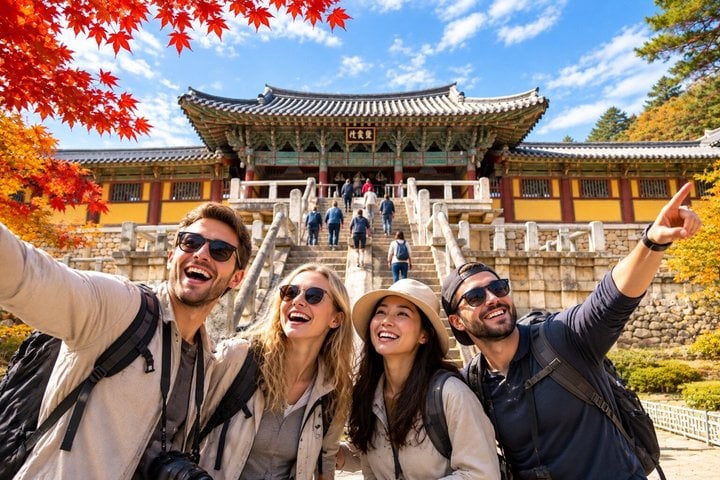
Seokguram, located on Tohamsan Mountain, is the representative stone temple of Korea. The official name of Seokguram, National Treasure No. 24, is Seokguram Seokgul. Designated as a World Cultural Heritage Site by UNESCO in 1995, it is an artificial stone temple made of granite. The construction was started by Kim Dae-Seong (700-774) in 751 during the reign of King Gyeong-Deok (742-765) of the Silla Kingdom (57 BC - AD 935) and it was finished twenty-four years later in 774, during the reign of King Hye-Gong (765-780).
Seokguram is known to have been built at the same time as Bulguksa Temple. According to the history book Samgukyusa of the Goryeo Dynasty (the country that unified the Korean peninsula at the end of the Silla Kingdom, 918-1392), Kim Dae-Seong had Bulguksa Temple built for his parents in his current life, and Seokguram Grotto for the parents of his former life.
Inside the round-shaped main hall are the Bonjon Statue, Bodhi-sattva and his disciples. The Bonjon figure wearing a generous smile is seated on the stage engraved with a lotus flower design. The rounded ceiling looks like a half-moon or a bow and has a lotus flower decorated cover on it. The view of the sunrise is quite beautiful and many people hike the mountain at daybreak.
BULGUKSA TEMPLESTAY - Unesco World Heritage Breathing in the Millennial air - Overnight program - One night / over 3 people (minimum)- Bulguksa Tour, Tea time with a monk, Morning ceremony and Meditation, Listening to four Dharma instruments, 108 Prostrations with making prayer beads or Making Lotus flower lantern, Circling around the Pagodas, Temple meals
a 3 star hotel
Andong Hahoe Doenjang Village is located by the crossroad of Hahoe Village and Byeongsanseowon Confucian Academy in Pungcheon-myeon, Andong-si. The village is built purely of red clay and the villagers are devoted to preserving the 600 year-long tradition of doenjang (fermented soybean paste) making.
Over 3,000 large jars used for storing doenjang will greet visitors at the village entrance. Highlights of the village include a red clay storage room capable of storing around 100 tons of soybeans, a giant iron pot for boiling up to 100 kilograms of beans at once, and a large glass drying room used for hanging meju (fermented soybean blocks) to dry. Using these features, doenjang is made by boiling domestically produced soybeans and shaping them into blocks of meju, which are then left to ferment and dry for 2 to 3 months.
The village facilities are comprised of an exhibition center at the entrance, a production center, and two drying rooms. The exhibition center invites visitors to sample various fermented soybean condiments and displays all the products made in this village. The drying rooms are specially designed to allow maximum sunlight and ventilation. Finally, the production center preserves the traditional methods of making doenjang such as boiling soybeans in a giant iron pot and fermenting meju in a ondolbang (a room with the Korean floor heating system).
Hahoe Mask Museum is located in Andong Hahoe Village, which is both a UNESCO World Heritage Site and Important Folklore Material No. 122. Hahoe Village is a representative traditional Korean folk town and is the home of the Hahoe Mask (National Treasure No. 121) and the Byeolsin Gut Mask Dance (Important Intangible Cultural Properties No. 69). The museum not only displays Hahoe masks, but also other traditional masks from all over the world.
The museum consists of five permanant exhibition halls and one special exhibition hall, housing a wide range of masks from all over the world along with Hahoe masks. The museum also offers activity programs such as wearing a mask, mask trick art, photo zone, and more.
Buyongdae is a cliff about 64 meters high situated where the Taebaek Mountain Range ends. From the summit, one can get a bird’s eye view of the Hahoe Village in Andong. The name was taken from an ancient history of China. Meaning lotus, the name Buyongdae is said to be given for Hahoe Village’s configuration like a lotus flower. Thus, one can get the best view of the village from the cliff. Located near Buyongdae are Ogyeonjeongsa House, Gyeomamjeongsa House, and Hwacheon Seowon Academy.
a 3 star hotel
JSA/DMZ
Panmunjeom is located in the Demilitarized Zone (DMZ), 50 km north of Seoul and 10 km east from the city of Gaeseong, a city which now belongs to North Korea. This area is most notably known for the peace talks that were held here on October 25, 1951 and on July 27, 1953 when the Armistice Agreement was signed. It is now beyond the jurisdiction of both the North and South.
The conference center in Panmunjeom is surrounded by the Joint Security Area (JSA) and measures 800 meters in diameter. It is the only portion of the Demilitarized Zone (DMZ) where North and South Korean forces stand face-to-face. It was used as a filming location of the movie "JSA (Joint Security Area)." It was also the site of military negotiations between North Korea and the United Nations Command (UNC). It has now become one of the most visited tourist sites of the DMZ.
You will see North Korea from Dora observatory and visit 3rd invasion tunnel, Dorasan station, Unification village.
a 3 star hotel
Bukhansan Mountain was officially designated as a national park in 1983. The Bukhansan National Park covers both Bukhansan and Dobongsan Mountains, and spans the total area of 80.699㎢. At the top of Bukhansan Mountain are Baegundae Terrace (836.5m), Insubong Peak (810.5m) and Mangyeongdae Terrace (799.5m), which gave the mountain the nickname "Samgaksan" or the "three-horned mountain". The mountain had other names: Sambongsan (mountain with three peaks), Hwasan (flower mountain), and Buaak (mountain shaped like a person giving a baby a piggyback ride). The current name, Bukhansan, was given as the Bukhansanseong Fortress was built under King Sukjong of Joseon Dynasty.
The Yongsan Dragon Hill Spa is a charcoal sauna permeated with an oak fragrance created by traditional heating techniques.
The jjimjil-bang and spa facilities offer sweating rooms/sauna, an open-air bath, seawater bath, salt room, swimming pool, and health center. The main hall of Yongsan Dragon Hill Spa boasts a Chinese-style design and a luxurious interior that has been used as a filming location for various Korean television broadcasts.
Majang Meat Market is the largest meat market in Korea. It is equipped with Korea’s most modern and cleanest facilities. The butchers here are proud of the market's size and hygienic facilities.
The market sells fresh meat arriving every hour from all over the country and from overseas. The prices are overtly marked for each meat along with the country and place of origin. For the market's efforts to provide quality products, the market is recognized by the Korean Medical Association (KMA).
Traders are able to trade easily thanks to the market's state of the art systems. At Majang Meat market, high quality meats are available at up to 30% less than at supermarket chains.
a 3 star hotel
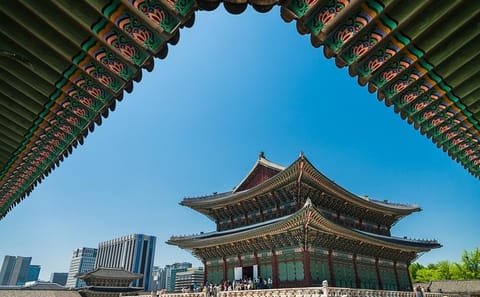
Built in 1395, Gyeongbokgung Palace is also commonly referred to as the Northern Palace because its location is furthest north when compared to the neighboring palaces of Changdeokgung (Eastern Palace) and Gyeonghuigung (Western Palace) Palace. Gyeongbokgung Palace is arguably the most beautiful, and remains the largest of all five palaces.
The premises were once destroyed by fire during the Imjin War (Japanese Invasions, [ ]). However, all of the palace buildings were later restored under the leadership of Heungseondaewongun during the reign of King Gojong ([ ]).
Remarkably, the most representative edifices of the Joseon Dynasty, Gyeonghoeru Pavilion and Hyangwonjeong Pond have remained relatively intact. Woldae and the sculptures of Geunjeongjeon (The Royal Audience Chamber) represent past sculptures of contemporary art.
The National Palace Museum of Korea is located south of Heungnyemun Gate, and the National Folk Museum is located on the eastern side within Hyangwonjeong.
Insa-dong, located in the heart of the city, is an important place where old but precious and traditional goods are on display. There is one main road in Insa-dong with alleys on each side. Within these alleys are galleries and traditional restaurants, teahouses, and cafes.
The galleries are the heartbeat of Insa-dong. There are about 100 galleries in the area and you can see every example of traditional Korean fine art from paintings to sculptures. The most famous galleries are Hakgojae Gallery, which functions as the center of folk art, Gana Art Gallery, which promotes many promising artists, and Gana Art Center.
The teahouses and restaurants are the perfect complement to the galleries. At first they might be hard to find, but if you take the time to stroll around the twisting alleyways, the window shopping in itself can be very entertaining. The shops in Insa-dong are very popular among all age groups, because each one is unique.
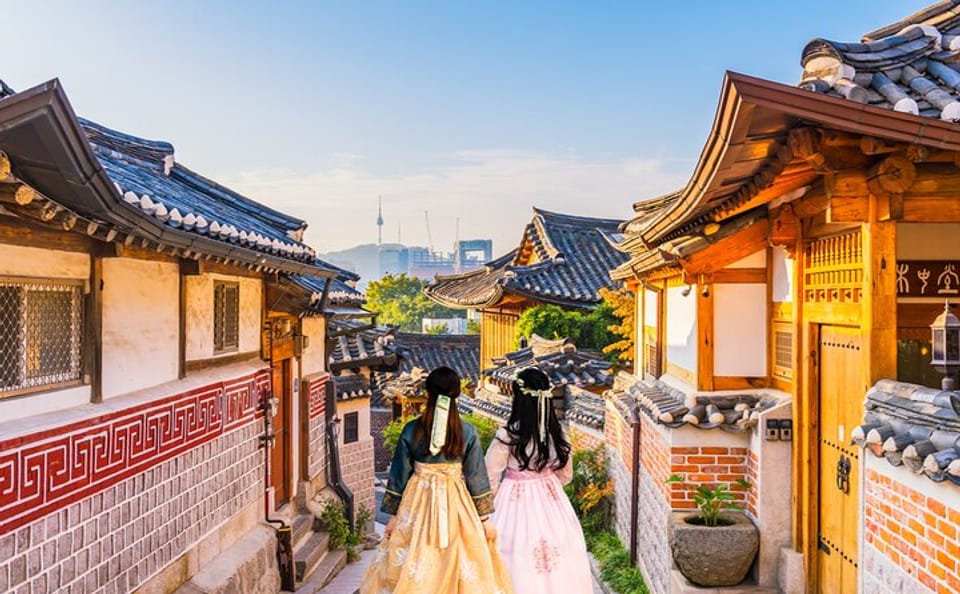
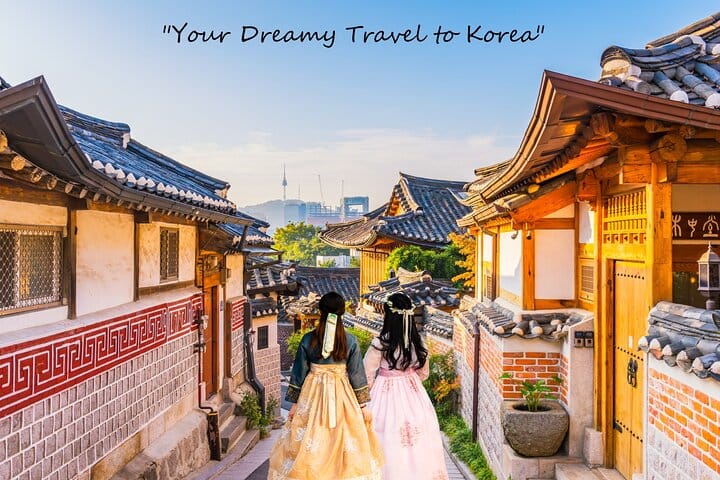
Surrounded by Gyeongbokgung Palace, Changdeokgung Palace and Jongmyo Shrine, Bukchon Hanok Village is home to hundreds of traditional houses, called hanok, that date back to the Joseon Dynasty. The name Bukchon, which literally translates to "northern village," came about as the neighborhood lies north of two significant Seoul landmarks, Cheonggyecheon Stream and Jongno. Today, many of these hanoks operate as cultural centers, guesthouses, restaurants and tea houses, providing visitors with an opportunity to experience, learn and immerse themselves in traditional Korean culture.
Jongmyo Shrine was a primary place of worship for kings throughout Joseon Dynasty. The memorial service, called Jongmyo Jaerye, is said to be the oldest complete ceremony in the world, and was carried out in obedience to the king’s order. The ceremony was designated as a UNESCO World Cultural Heritage site in December 9, 1995, for its well-preserved ancient customs, such as memorial services and traditional music, which is National Intangible Cultural Asset No.56.
During the Joseon Dynasty, it was held when the season changes and the twelfth month of the lunar year, but was stopped during the Japanese colonial period. Now, it is annually reenacted on the first Sunday of May. Jongmyo Jaeryeak, the musical part of the ceremony, is produced by instruments, songs, and dances that originated over 500 years ago. In May, the Korean Royal Palace Culture Festival is to be held with a variety of other cultural heritage festivals.
Gwangjang Market was the first permanent market in Korea and continues to thrive as a popular tourist destination today. The second floor of the market is filled with silk, satin, and linen bed-sheet stores, which are the largest and most famous in Seoul.
Many of the stores in the area even have their own factories supplying fabrics to the Namdaemun Market, Pyoung Hwa Market, and even to some department stores. Even though the goods are not brand-name products, the wide selection of high quality goods at inexpensive prices makes it an enjoyable shopping experience.
Namsan Seoul Tower was the first tower-type tourism spot in Korea. The top of the tower is at almost 480m above sea level, including Namsan Mountain (243m) and the tower’s own height (236.7m), making it one of the tallest towers in the Orient. It is comprised of Seoul Tower Plaza, recently opened to public access after 40 years, and N Seoul Tower, operated by CJ Foodville since 2005. The tower was first established as a broadcast tower to send out TV and radio signals in 1969. As of now, it has become one of the representative landmarks and multi-cultural venues in Seoul.
Myeong-dong is one of the primary shopping districts in Seoul. The two main streets meet in the center of the block with one beginning from Myeong-dong Subway Station (Seoul Subway Line No. 4) and the other from Lotte Department Store at Euljiro. Many brand name shops and department stores line the streets and alleys. Common products for sale include clothes, shoes, and accessories. Unlike Namdaemun or Dongdaemun, many designer brands are sold in Myeong-dong. In addition, several major department stores have branches here, including Lotte Department Store, Shinsegae Department Store, Myeong-dong Migliore, Noon Square and M Plaza. The department stores carry many premium labels and other fashionable goods at reasonable prices.
Myeong-dong also has family restaurants, fast food, plus Korean, Western and Japanese dining options. Many restaurants in Myeong-dong specialize in dongaseu (pork cutlet) and kalguksu (noodle soup). Other businesses in the area include hair salons, banks and theaters.
a 3 star hotel
Transfer to Airport
sending service to airport by a driver
gimpo airport
Non-refundable booking
Free Cancellation · Instant confirmation · Private tour
Free Cancellation · Instant confirmation · Meet on location
Free Cancellation · Instant confirmation · Private tour
Free Cancellation · Instant confirmation · Private tour
Instant confirmation · Meet on location
Free Cancellation · Instant confirmation · Private tour
Free Cancellation · Instant confirmation · Pickup available
Free Cancellation · Instant confirmation · Private tour
Our assistant finds tours and checks live dates and prices, and answers your questions.