


Istanbul Old City Full-Day Guided Tour of Historic Landmarks
Free Cancellation · Instant confirmation · Pickup available

Known today as Sultanahmet Square, the Hippodrome of Constantinople was once the dynamic center of public life in the Byzantine capital. This historic area functioned as an important venue for entertainment, ceremonies, and social gatherings during the Roman and Byzantine periods.
Several remarkable monuments still stand in the square, including the Obelisk of Theodosius, the ancient Serpent Column, and the Column of Constantine. These iconic structures reflect the power, culture, and architectural legacy of past empires.
Now a lively open-air historical site, the Hippodrome is a key highlight of any Old City sightseeing tour, offering visitors the chance to walk among ancient landmarks while experiencing the unique atmosphere of this world-famous square.
Commonly called the Blue Mosque, the Sultan Ahmed Mosque is one of the most impressive landmarks of the Old City. Constructed in the early 17th century under the reign of Sultan Ahmed I, this masterpiece of Ottoman architecture continues to attract visitors from around the world.
Distinguished by its six elegant minarets and a spacious courtyard, the mosque’s interior is decorated with thousands of hand-painted İznik tiles, creating a striking visual atmosphere. As an active place of worship and a major sightseeing stop, it remains an essential highlight of any Istanbul Old City tour and a defining feature of the city’s historic skyline.
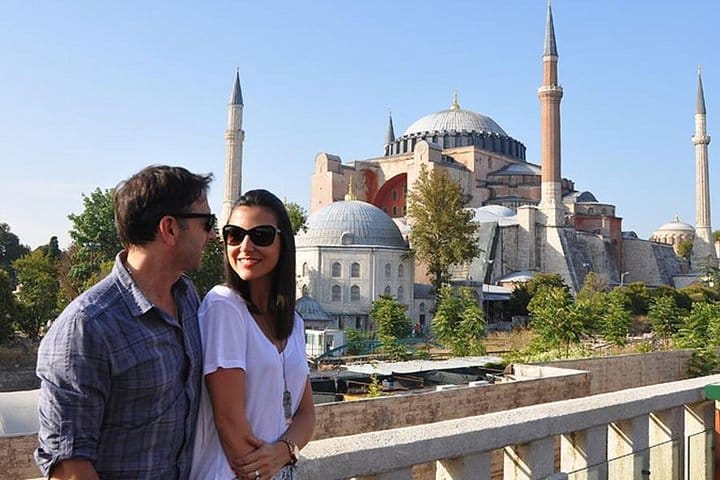
Known in Turkish as Ayasofya, Hagia Sophia stands as one of the most extraordinary monuments of the Old City. Built in the 6th century during the Byzantine era, it was once the largest church of its time and later served as an imperial mosque under Ottoman rule.
Famous for its vast central dome and remarkable mosaics, the structure reflects a unique blend of architectural traditions. Today functioning as a mosque, Hagia Sophia is also part of the UNESCO World Heritage area and remains a must-see landmark, drawing visitors worldwide with its scale, artistic value, and historical importance.
The German Fountain is an elegant, gazebo-shaped monument located at the northern edge of Sultanahmet Square, near the former Hippodrome area. It was gifted by the German government to mark Emperor Wilhelm II’s visit to the Ottoman capital at the end of the 19th century.
Distinguished by its distinctive design and historical background, the fountain represents a symbol of diplomatic friendship and remains a notable stop on Old City walking tours, adding a unique European touch to this historic setting.
The Grand Bazaar (Kapalıçarşı) is one of Istanbul’s top attractions and a must-visit stop for anyone exploring the Old City. This historic covered market, founded in the 15th century, features thousands of shops offering Turkish carpets, jewelry, ceramics, spices, leather goods, and handmade souvenirs. With its atmospheric corridors, domed architecture, and lively trading culture, the Grand Bazaar delivers an authentic shopping experience and a true taste of Istanbul’s rich heritage.
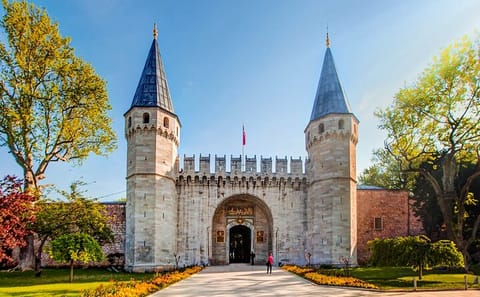
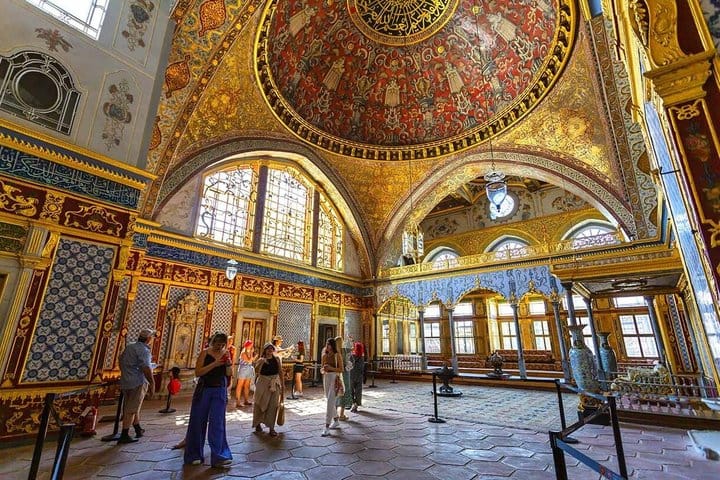
Topkapi Palace is one of Istanbul’s most important historical landmarks and a key symbol of the Ottoman Empire. Serving as the residence of Ottoman sultans for nearly four centuries, this impressive palace complex features elegant courtyards, richly decorated halls, and remarkable collections of imperial treasures. Highlights include the Imperial Harem, the sacred relics, and the Treasury, home to world-famous artifacts such as the Spoonmaker’s Diamond. Today, as a UNESCO World Heritage Site, Topkapi Palace offers visitors an immersive journey into royal life and Ottoman history, making it a must-see attraction in Istanbul’s Old City.
The Million Stone is a lesser-known yet historically significant monument located in Istanbul’s Old City, near Sultanahmet Square. Dating back to the Roman period, this ancient milestone once marked the point from which distances to all major cities of the Byzantine Empire were measured. As part of the former Great Palace of Constantinople, the Million Stone symbolized the center of the Eastern Roman world. Today, its remains offer visitors a fascinating glimpse into Istanbul’s Roman and Byzantine past, making it a meaningful stop for history enthusiasts exploring the Historic Peninsula.
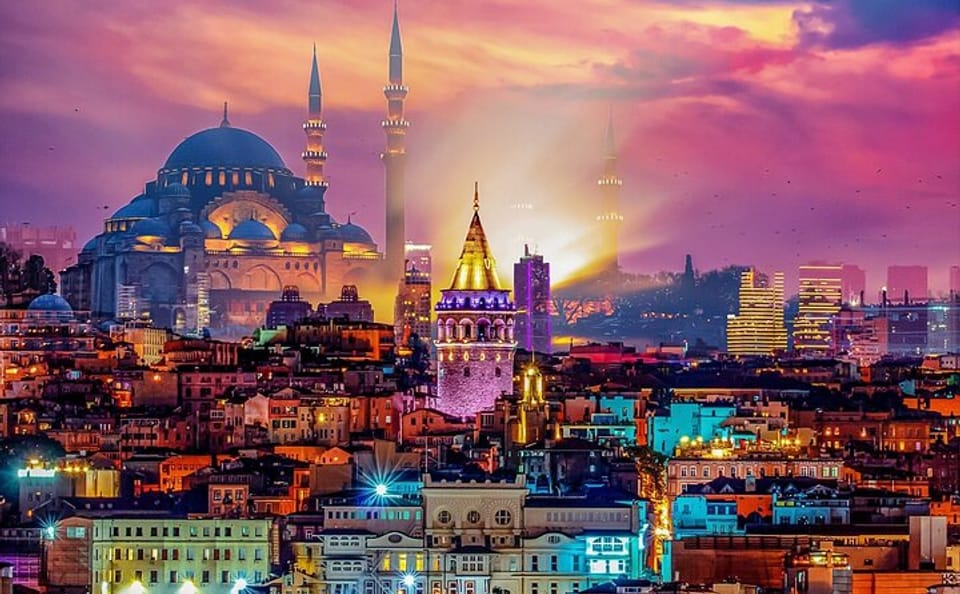
The Historic Peninsula of Istanbul is the cultural and historical heart of the city, home to many of its most iconic landmarks. Once the center of the Roman, Byzantine, and Ottoman Empires, this UNESCO-listed area features world-famous sites such as Hagia Sophia, Topkapi Palace, the Blue Mosque, and the Grand Bazaar. With its ancient streets, monumental architecture, and layered history spanning thousands of years, the Historic Peninsula offers visitors an unforgettable journey through Istanbul’s rich and diverse past.
Fully refundable until 1 day before start
Non-refundable after 1 day before start
Free Cancellation · Instant confirmation · Pickup available
Free Cancellation · Instant confirmation · Pickup available

Free Cancellation · Instant confirmation · Meet on location or pickup
Free Cancellation · Instant confirmation · Private tour
Free Cancellation · Instant confirmation · Pickup available
Free Cancellation · Instant confirmation · Pickup available
Free Cancellation · Instant confirmation · Pickup available
Free Cancellation · Instant confirmation · Pickup available
Our assistant finds tours and checks live dates and prices, and answers your questions.