

Full-Day Cultural Tour of Fujairah City from Dubai
Free Cancellation · Instant confirmation · Pickup available

It is the second-largest mosque in the country after the Sheikh Zayed Grand Mosque in Abu Dhabi. Built in a traditional Ottoman architectural style, the mosque features six elegant minarets, a large central dome, and several smaller domes that give it a majestic appearance.
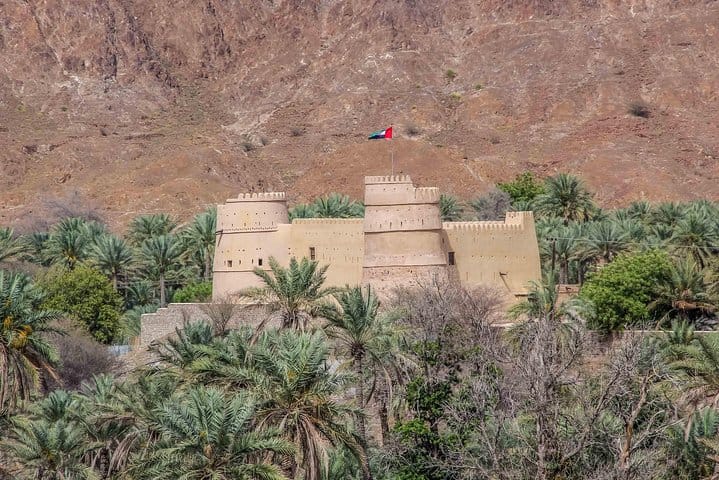
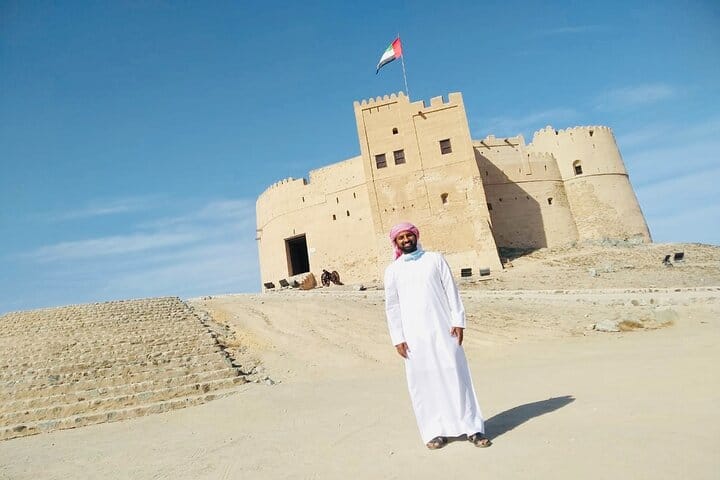
The fort’s original construction is dated to the 16th century (around 1500‑1550), based on radiocarbon analysis.
Through its history, the fort has had multiple functions: defensive stronghold, ruler’s court, prison, even a place used for fermenting date syrup.
It was occupied by the Wahhabists between 1808‑1810.
In 1925, the British naval forces bombarded the fort, destroying three of its towers during an action related to anti‑slavery enforcement. After that damage, the fort was more or less abandoned until restoration.
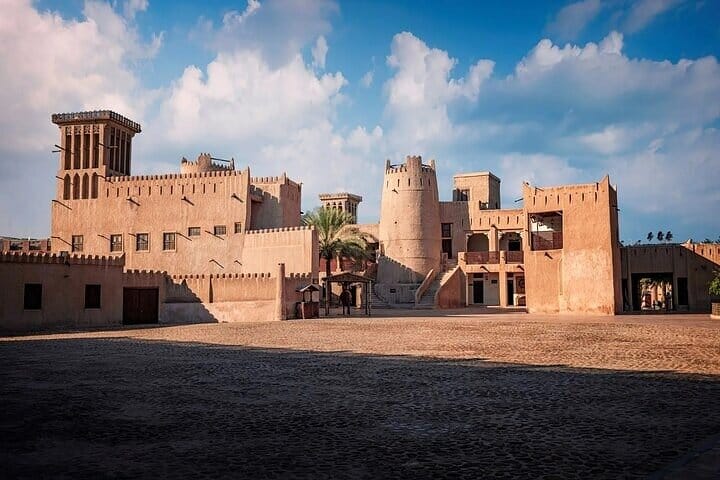
The museum has several galleries/halls, broadly divided into Heritage and Antiquities:
Heritage Halls:
Traditional occupations: agriculture, fishing, weaving, trade, pottery.
Weapons, costumes, household utensils.
A model of an old house (made with palm leaves) and a display of a spice shop / souq.
Antiquities Halls:
Artefacts from archaeological sites like Al Badiyah, Dibba,
Items such as arrowheads, vessels, beads (e.g. carnelian), tools, jewellery.
One rare piece: an ostrich egg dating back around 2,500 BC
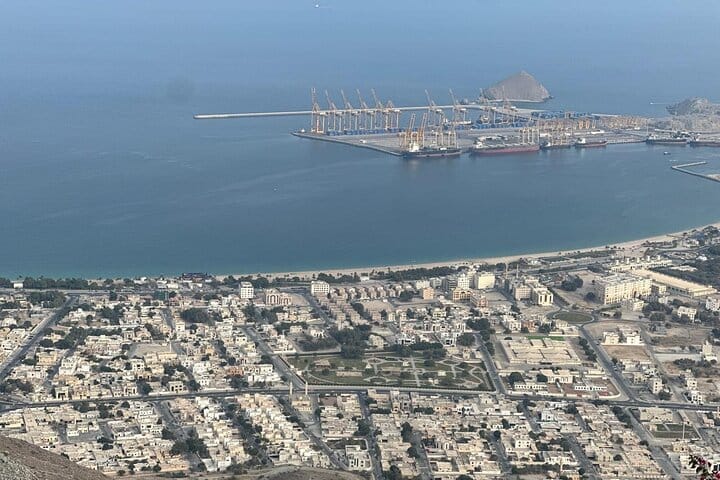
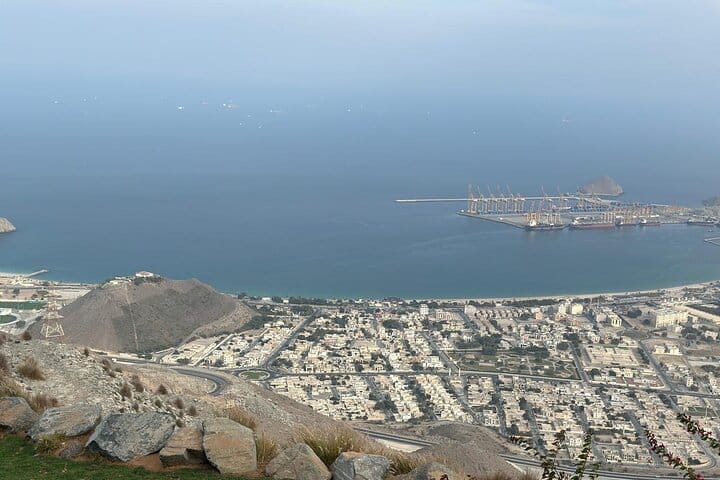
It lies on the east coast, by the Gulf of Oman.
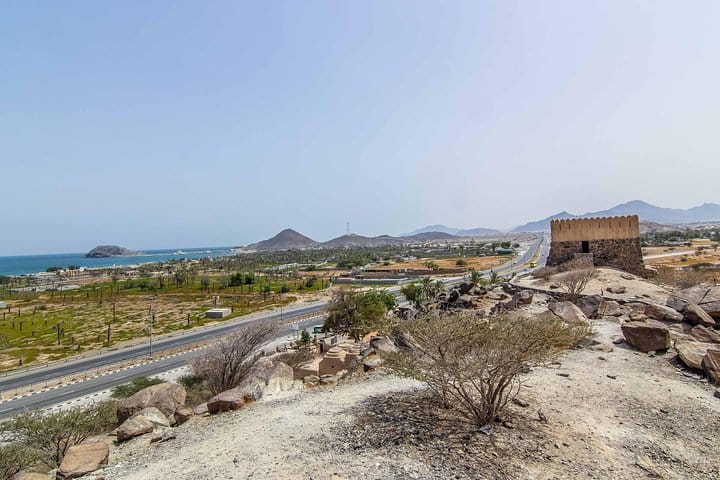
The mosque is believed to date from the mid‑15th century (around 1446 CE) based on archaeological studies
It’s a small, square building with an area of about 53 m².
• Built using local materials: stone, mud bricks, plaster; no wood used in the roof.
• The roof has four domes, unequal in size, supported by a single central pillar inside.
• It has a mihrab (prayer niche indicating direction of Mecca), a small minbar (pulpit), and openings/windows for light & ventilation.
• Walls are thick, with decorative carvings (dentate motif) and niches for lighting or storage of Qur’ans and books
Madha–Nahwa enclave complex, an exceptional border anomaly where Omani and Emirati territories intertwine in the HInside Madha lies Nahwa, a counter‑enclave belonging to the UAE (Emirate of Sharjah)—small and fully surrounded by Omani territory.
Nahwa includes Old Nahwa, New Nahwa, and Shis, and is home to about 40 houses, a clinic, school, and Sharjah police
The enclave’s small size and British-era border mapping make it one of only a couple of counter-enclave complexities worldwide Hajar Mountains.
Al Rafisah Dam holds the seasonal waters of Wadi Shie, which flows from the mountains down toward Khorfakkan on the Gulf of Oman. It was originally built during the 1980s as a flood-control and water storage structure
In recent years, the dam and surrounding area were transformed into a restored recreational spot featuring visitor facilities after the completion of the Sharjah–Khorfakkan highway
A 730 m long promenade, shaded by palm trees and lined with benches, winds alongside the lake and leads up toward the hilltop fortress of Al Hosn
Hiking enthusiasts can embark on the Al Rafisah Hiking Trail, which extends toward the Al Suhub Rest House at ~600 m elevation—a round trip
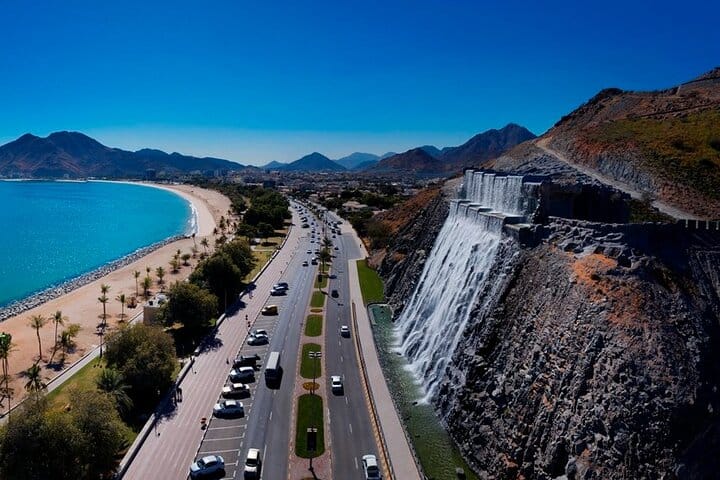
Khor Fakkan Waterfall is a striking man‑made attraction perched on the natural rock face above Khor Fakkan Corniche in Sharjah on the Gulf of Oman. Built in 2020 and inaugurated by the Ruler of Sharjah, it beautifully blends engineered design with the rugged terrain of the Hajar Mountains
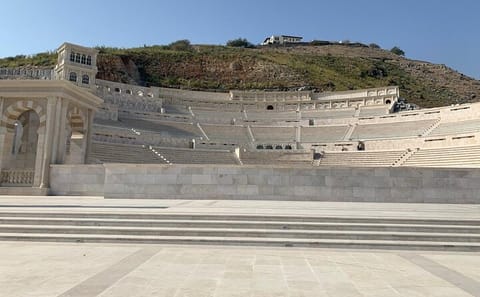
Khorfakkan Amphitheatre is a stunning cultural landmark overlooking the Gulf of Oman.
Inspired by ancient Roman design, it features grand stone arches and tiered seating.
The amphitheater hosts cultural events, performances, and community celebrations.
Set against mountains and sea, it reflects Khorfakkan’s rich heritage and beauty.
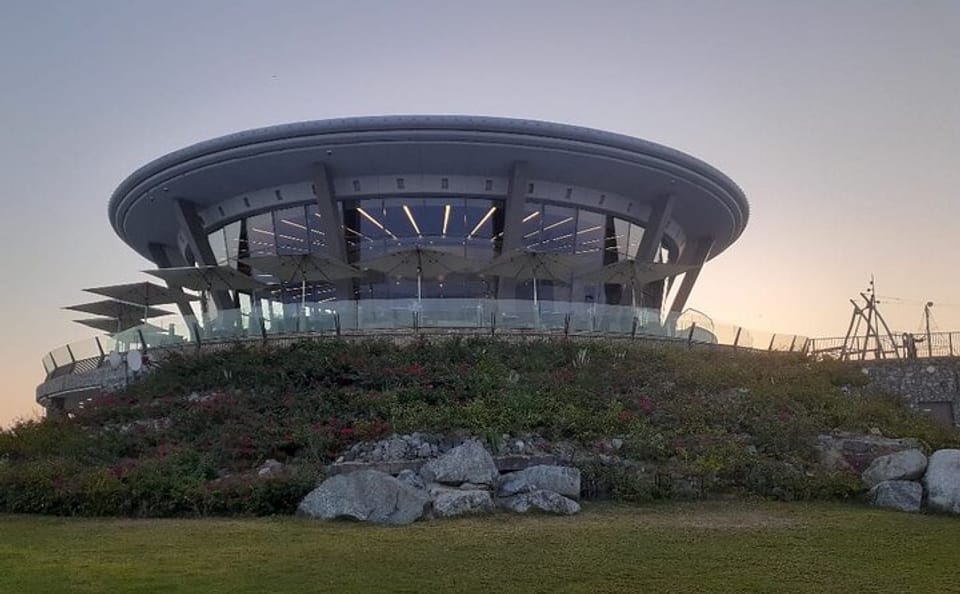
Al Suhub Rest House (also known as the Cloud Lounge) is a mountain‑top rest stop perched at approximately 580–600 m above sea level on the Khorfakkan mountain range in Sharjah.
The structure is a striking circular, saucer‑shaped building with a 30 m diameter, offering full 360° panoramic views of the sea and mountains.
Built over two levels totaling 2,788 m² — the ground floor houses a restaurant and café (indoor seating for ~88 guests, outdoor balcony for ~48), while the basement offers a multipurpose hall, prayer rooms, restrooms, and service
The larger complex spans about 10,250 m² and includes lush landscaping, with around 8,700 trees planted on the site.
The travelling time from Dubai to Fujairah two way is approximately 4 Hours
Fully refundable until 1 day before start
Non-refundable after 1 day before start
Free Cancellation · Instant confirmation · Pickup available
Free Cancellation · Instant confirmation · Private tour
Free Cancellation · Instant confirmation · Private tour
Free Cancellation · Instant confirmation · Pickup available
 Elite
Elite
Free Cancellation · Instant confirmation · Private tour
 Elite
Elite
Free Cancellation · Instant confirmation · Private tour
 Elite
Elite
Free Cancellation · Instant confirmation · Private tour
 Elite
Elite
Free Cancellation · Instant confirmation · Private tour
Our assistant finds tours and checks live dates and prices, and answers your questions.