

Kyoto Authentic Japanese Calligraphy in a Traditional Studio
Free Cancellation · Instant confirmation · Meet on location

Activities,1
➤In this plan, you will write a letter of resignation to prepare for death before going to war in the Warring States Period, when life and death were always next to each other.
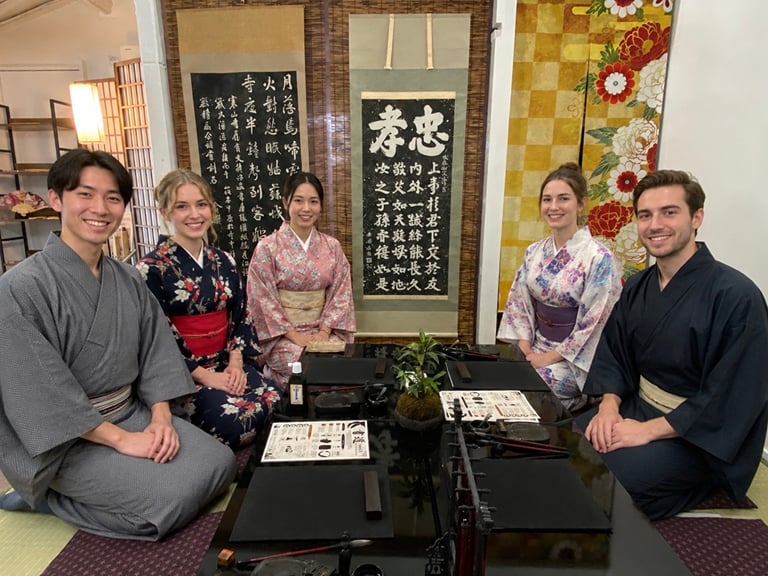
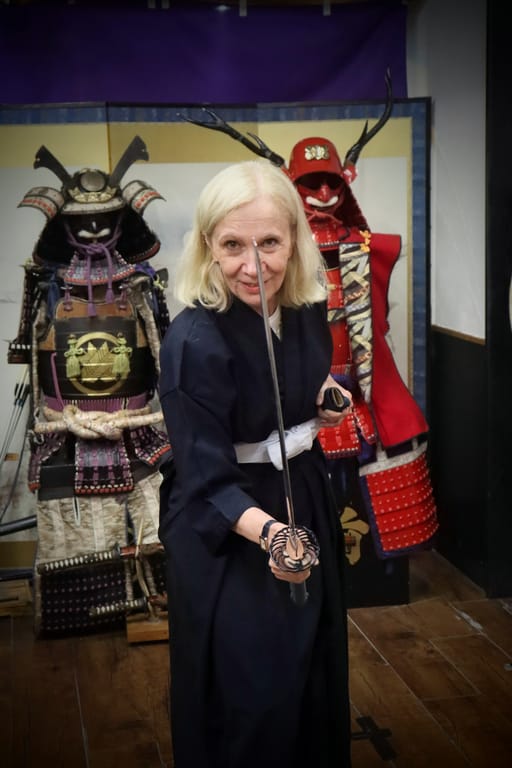
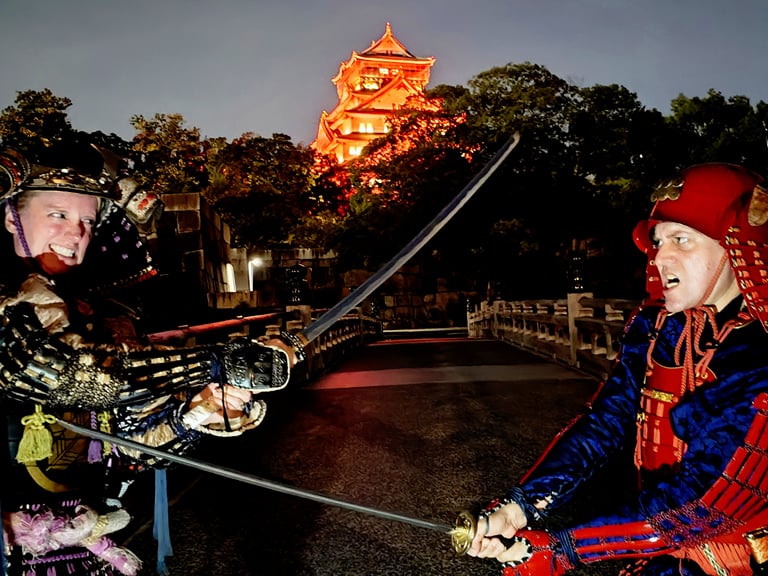
You will change into Hakama or Kimono like a Samurai, and perform the resignation in Japanese costume.
Activities,2
➤ Learning death poem
Resignation is literally a person's resignation from this world, or the words he writes to say goodbye to this world as he prepares to die. They are his last words,
They express his pride as a samurai, his readiness to die, and his thoughts about the world.
Activities,3
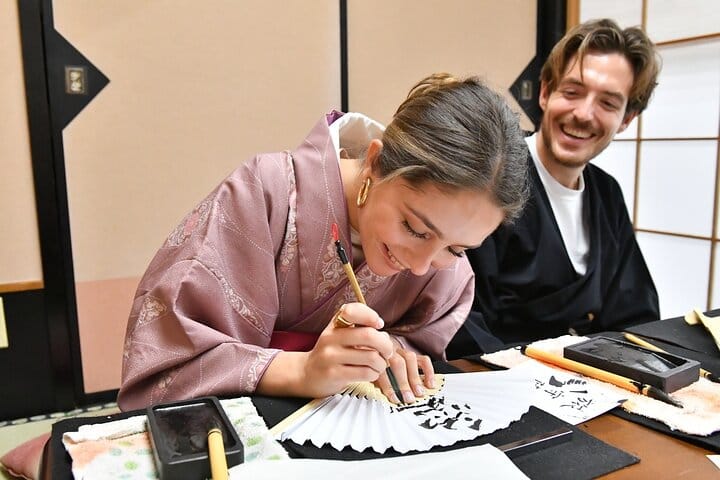
➤ Learning Calligraphy
Momentarily, you will gain an in-depth understanding of Japanese calligraphy, its attitude and culture, and learn how to use its tools.
― Learn and practice how to hold the brush and use the tools
― Learn and practice techniques brush movement and brush technique. "tome" "hane" and "harai".
― Kanji practice
Activity,4
➤ Surprise
The teacher will write the foreign names of the participants on wooden tags using the kanji characters they have chosen.
― Highlight 01 ―
Activity,5
➤Decide on the last character. Each kanji character has its own meaning, so please reflect on your life and think carefully about it.
➤Practice basic brush strokes and the stroke order of the chosen kanji.
Activities,6
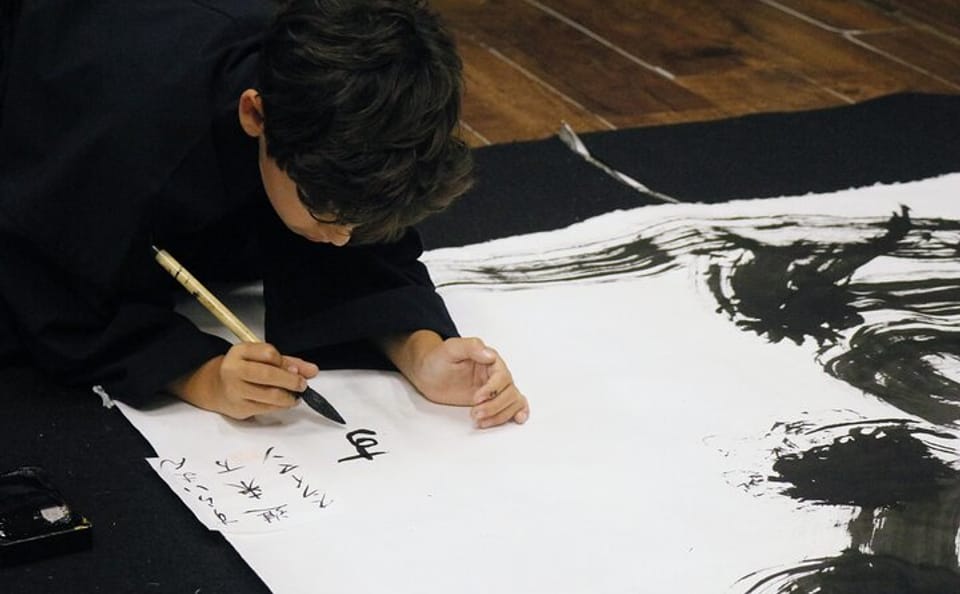
➤One character for resignation
Reflecting on your life so far, imagine a story about whom and what kind of feelings you would like to leave behind, and think about the character composition (design) of your last character in this world.
- Nothing is beautiful precisely because there is nothing. The Japanese have a unique sense of beauty called "blank spaces.
The Japanese have a unique sense of beauty called "beauty of the margins," in which the space is considered to be beautiful as well as the letter itself.
― Highlight 02 ―
Activities,7
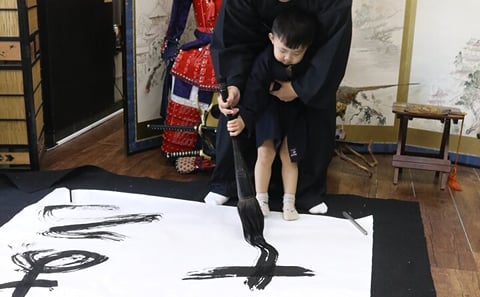
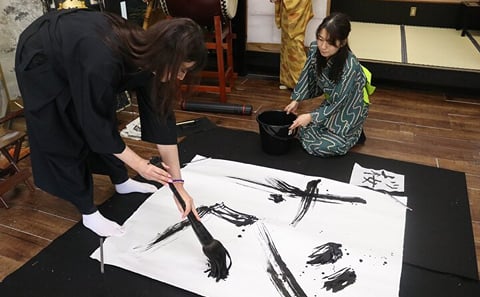
➤With an oversized brush, more than five times larger than usual, the artist puts his soul into creating a powerful, fragile, and beautiful single character on a 150cm x 150cm sheet of paper. By expressing the whole body dynamically, the artist can freely manipulate the oversized brush.
― Optional Wadaiko ―
Activities,8
➤ Japanese drum will add overwhelming power and presence, and its powerful tone will further enhance the expressive power of the calligraphy and make it more dynamic and expressive.
Both calligraphy and taiko are traditional cultures that have been handed down from generation to generation in Japan. By combining both, we will be able to convey the appeal of traditional culture to a wider audience.
Activities,9
➤ Expression of identity
By signing the work, the artist clearly indicates who wrote the last character of their life and identifies the owner.
― In Japanese calligraphy, the name is generally written on the left side of the work―
The signature clearly identifies the calligrapher and makes it clear for posterity who wrote the death poem.
Activities,10
➤ Photo Shoot
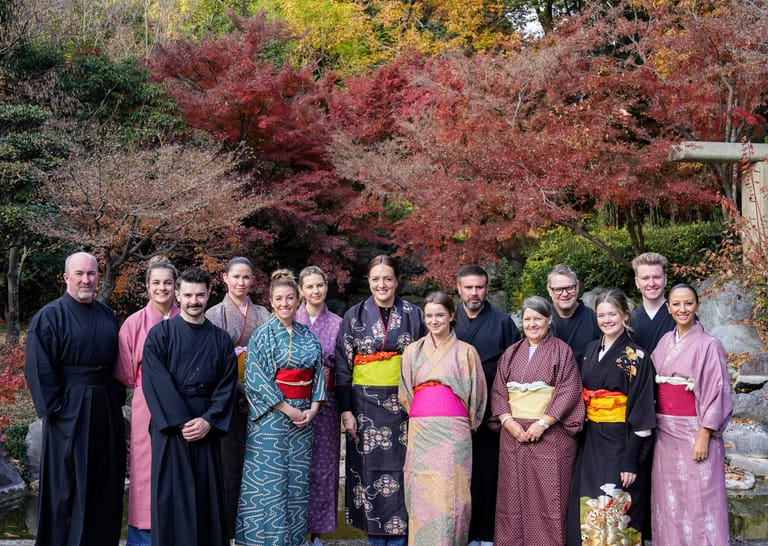
Capture your beautiful kimono outfit and artwork in a photo. You will be photographed dressed as a beautiful Yamato Nadeshiko or a brave samurai.
Photography service to capture serious figures during the activity. We will send you the photo data within both days.
Learning traditional culture while wearing a kimono is a great opportunity to deeply experience Japanese culture.
Wearing a kimono naturally blends in with many traditional cultural activities such as tea ceremony, flower arrangement, Japanese dance, koto music, and shamisen, enhancing the movements and atmosphere of these activities.
Wearing a kimono makes your movements and posture more beautiful and gives you a refined impression from the inside out, so take this opportunity to capture many photos.
➤Female-only option/Dressing and hair setting time: 30 min
Optional additional fee 3300yen
Since ancient times, children and adults alike have worn kimonos with "Nihongami" a traditional Japanese style that has been worn in Japan for centuries. There is a manner of wearing a kimono in which the wearer is not allowed to let his or her hair down. The traditional Japanese hairstyle has changed over time, each time reflecting functionality, fashions, and cultural backgrounds. In modern times, this is the case when participating in Shinto rituals and the hairstyle of maiko (apprentice geisha) in Kyoto. The "wagami" hairstyle is a more elegant alternative to the Japanese hairdo, and is usually worn with a kimono. Collected hair + Kanzashi Kanzashi are hair ornaments used in traditional Japanese hairstyles.
The updo gives a sense of cleanliness and good manners, and the single, dainty kanzashi gives a sense of dignity, gentleness, and inner beauty. Yes, to create the image of a Yamato Nadeshiko. It expresses understated and natural beauty, the gentleness that oozes from within, and the softness, grace, and strength that Japanese women are considered to possess.
➤ Surprise
The teacher will write the foreign names of the participants on wooden tags using the kanji characters they have chosen.
Each kanji character has its own meaning, so please learn about the meaning of the characters used in your name.
- For example -
JoJo ➤ 仗助
➤ Souvenir from the teacher
A calligraphy master will carefully write the kanji character that you attempted today on the surface of the bag, and you will receive a Samurai Honor original bag as a gift. This bag is not available for sale anywhere else.
Please take your work home with you in this bag
Calligraphy is a traditional culture that even small children can participate in and enjoy. In Japan, 6- to 8-year-olds are the most likely age group to start learning calligraphy.
A hanging scroll is a traditional Japanese decorative item featuring calligraphy or paintings on paper or fabric, mounted in a frame. After your calligraphy workshop, why not consider a hanging scroll as a souvenir for your parents? It’s the ultimate expression of Japanese culture.
You can display it alongside your calligraphy work in your home—it’s a truly unique Japanese item. If you’d like, a calligrapher can personally inscribe the scroll for you.
The ideas expressed through writing hold greater power than military might. Furthermore, if the mind is unsettled, handwriting becomes disordered. Since one’s posture and mental state while writing are directly reflected in the characters, samurai would calm their minds when picking up a brush and unify their thoughts before battle.
This is a special paid option designed to elevate the Samurai Calligraphy Plan into an even more exciting and unforgettable experience. In this program, all participating members will discuss and decide on a single “compound word” (such as a two-character or four-character idiom) that represents the team’s goals and current sentiments.
3 Key Highlights
* “Collaborative Work” Perfect for Team Building
The process of discussing and deciding on a single compound word as a group, then each person fulfilling their responsibility (one character) to complete a single work, dramatically strengthens team cohesion. It’s perfect for company retreats, inbound group tours, and creating memories with friends.
* Thrilling “Outdoor Entertainment” That Engages Passersby
By deliberately holding the event outdoors in front of a store—rather than in a closed indoor space—you can enjoy an extraordinary performance while taking in the atmosphere of the street and the gaze of the audience. The dynamic sight of participants wielding giant brushes makes for stunning photos and videos, and you can expect the event to go viral on social media.
* “The Spirit and Sense of Liberation of a Samurai,” Expressed with the Whole Body
Rather than writing neatly with just the wrist, the performer uses their entire body to wield the oversized brush, creating a sense of exhilaration and stress relief similar to martial arts or sports. Performing in traditional samurai hakama attire enhances the sense of immersion and self-liberation.
[Activity Details]
The setting is the outdoor space beneath the blue sky in front of the “Samurai’s Honor” store. A massive stand-up panel will be set up in front of each participant, with each person responsible for writing one character. Grasp the heavy, oversized brush firmly with both hands, dip it generously in ink, and you’re ready to go. At the leader’s signal, everyone will strike the panel with the brush simultaneously, with the intensity and spirit of a samurai.
The exhilarating sensation of dynamically writing characters using your entire body is something you’ll never experience in traditional calligraphy. As passersby instinctively stop in their tracks and cheer you on as spectators, the performance evokes the same sense of elation as when historical figures declared their aspirations on the battlefield.
The completed giant compound word is a one-of-a-kind work of art that embodies your team’s bond. Share the ultimate sense of accomplishment with your teammates in this outdoor performance, where even the splatters of ink become art.
SAMURAI HONOR
Fully refundable until 1 day before start
Free Cancellation · Instant confirmation · Meet on location

Free Cancellation · Instant confirmation · Private tour
Cancellable until 1 day before · Instant confirmation · Meet on location
Free Cancellation · Instant confirmation · Private tour
Free Cancellation · Instant confirmation · Meet on location
Free Cancellation · Instant confirmation · Meet on location
Instant confirmation · Private tour · Meet on location or pickup
Free Cancellation · Instant confirmation · Min age 12+
Our assistant finds tours and checks live dates and prices, and answers your questions.