Chongqing Private Guided Tour: Explore Key City Landmarks
Free Cancellation · Instant confirmation · Private tour

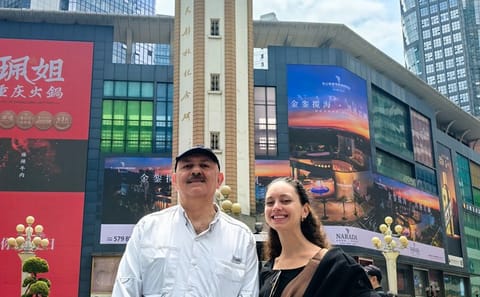
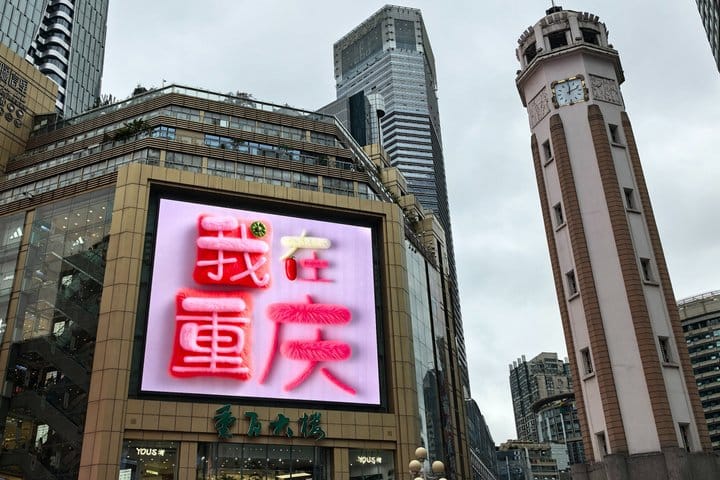
The Liberation Monument (解放碑 Jiěfàng Bēi) stands at the epicenter of Chongqing’s bustling downtown district. Originally built in 1945 as the "Monument of Victory in the Anti-Japanese War", it commemorates China’s resilience during WWII. Renamed in 1950 to honor the Communist liberation of Chongqing, it symbolizes both wartime sacrifice and postwar rebirth.
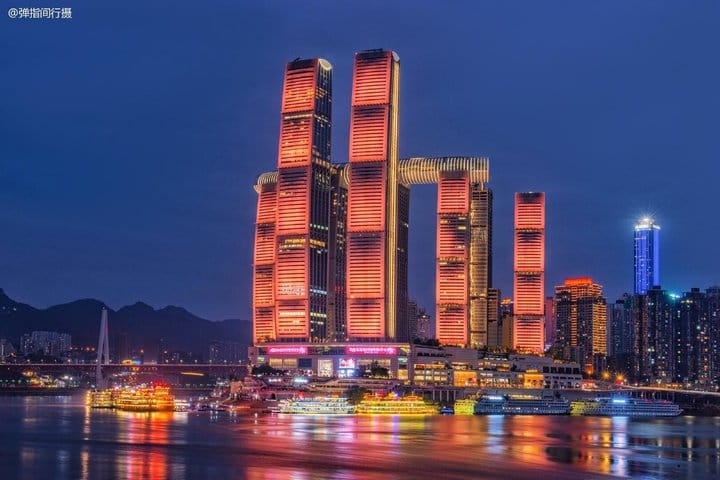
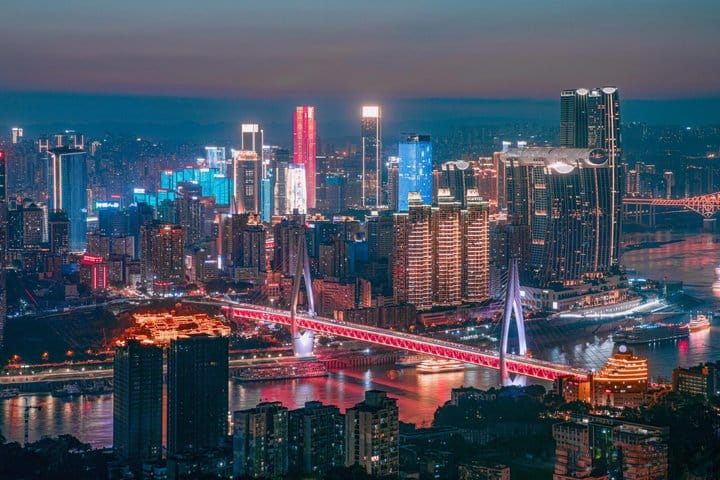
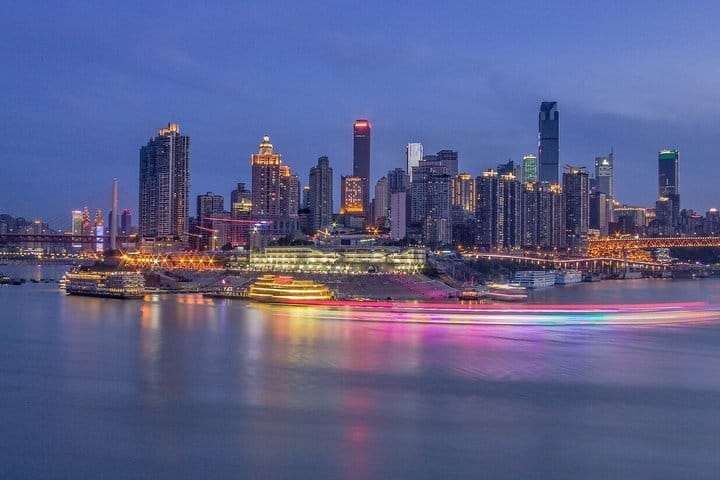
Chaotianmen (literally "Heaven-Facing Gate") is the symbolic gateway of Chongqing, situated at the tip of the Yuzhong Peninsula where the Yangtze River and Jialing River converge. For centuries, it served as the primary dock for imperial officials and merchants, evolving into a bustling hub of trade and transportation. Today, it blends ancient heritage with futuristic architecture, epitomizing Chongqing’s transformation into a modern megacity.
Design: By architect Moshe Safdie, this 1.12-million-m² complex resembles sailing ships ("Chaotian Sails"), honoring Chongqing’s port heritage. Its eight towers (up to 350m tall) include residences, offices, hotels, and Asia’s largest shopping mall.
Crystal Skywalk: A 300m-long, 250m-high glass observatory linking four towers, featuring:
Infinity pools, restaurants, and gardens.
Bird’s-eye views of the river confluence.
Public Spaces: Over 30,000m² of rooftop gardens and riverside promenades.
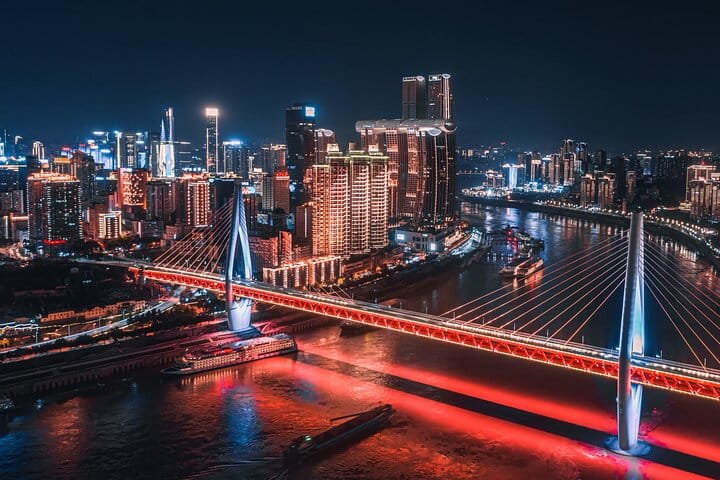
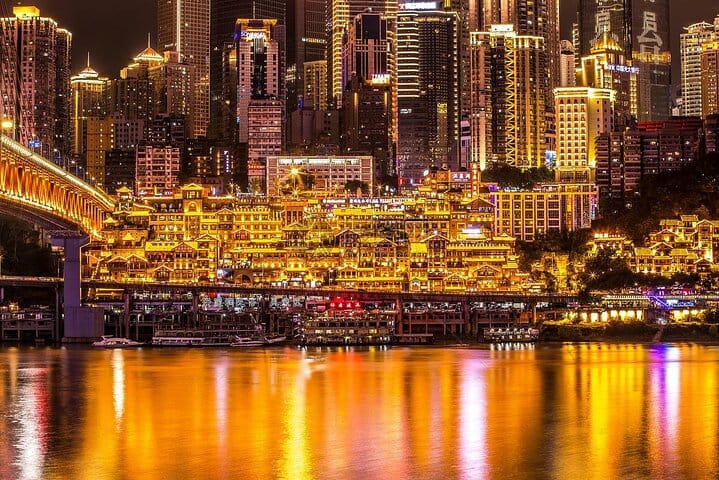
Hongya Cave (Chinese: 洪崖洞; pinyin: Hóngyá Dòng), also known as Hongyadong, is an 11-story stilt-building complex perched on a cliff overlooking the Jialing River in central Chongqing. Blending ancient Bayu architectural traditions with modern commercial vitality, it has become a symbol of the city’s cultural renaissance and a top tourist destination, drawing comparisons to the fantastical world of Hayao Miyazaki’s Spirited Away.
Huguang Guild Hall (湖广会馆 Húguǎng Huìguǎn), nestled on the banks of the Yangtze River in Yuzhong District, is China’s largest and best-preserved complex of Qing-dynasty regional guildhalls. Built between 1751–1759 (Qianlong era), it served as a cultural hub for migrants from Hunan, Hubei, Guangdong, and Guangxi during the "Fill Sichuan" (湖广填四川 Húguǎng tián Sìchuān) migration wave.
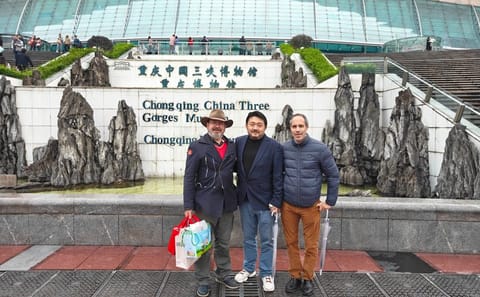
The Chongqing China Three Gorges Museum (重庆中国三峡博物馆), also known as Chongqing Museum, is one of China's largest thematic museums. Located opposite the Chongqing People's Hall in Yuzhong District, it serves as a cultural hub dedicated to preserving the heritage of the Three Gorges region and Chongqing’s 3,000-year history. Opened in 2005167, it replaced the former Chongqing Museum (founded in 1951) and houses over 180,000 artifacts, including ancient bronzes, Han Dynasty sculptures, ceramics, and wartime relics.
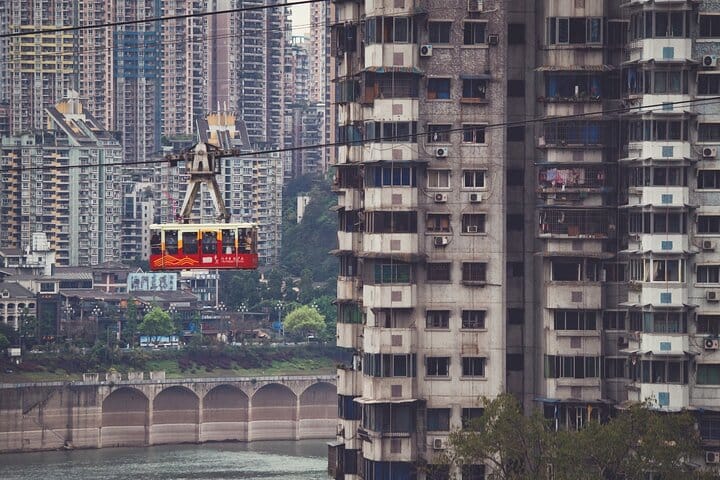
Liziba Station (Chinese: 李子坝站), part of Chongqing Rail Transit Line 2, is globally renowned for its surreal design: trains seamlessly pass through the 6th–8th floors of a 19-story residential-commercial building at 39 Liziba Zhengjie, Yuzhong District34. Opened in 2005, this engineering feat has become a symbol of Chongqing’s "8D魔幻城市" (8D Magic City) urban landscape.
Fully refundable until 1 day before start
Non-refundable after 1 day before start
Free Cancellation · Instant confirmation · Private tour
Free Cancellation · Instant confirmation · Private tour
Free Cancellation · Instant confirmation · Private tour
Free Cancellation · Instant confirmation · Private tour
Free Cancellation · Instant confirmation · Private tour
Free Cancellation · Instant confirmation · Private tour
Free Cancellation · Instant confirmation · Private tour
Free Cancellation · Instant confirmation · Private tour
Our assistant finds tours and checks live dates and prices, and answers your questions.