 Elite
Elite
Giza Pyramids and Sphinx Private Full-Day Guided Tour
Free Cancellation · Instant confirmation · Private tour

Every ticket below includes entry to the Sphinx viewing area and the Giza Plateau. Compare skip-the-line options and combo tickets that add pyramid interiors or the newly opened Grand Egyptian Museum.
Elite
Free Cancellation · Instant confirmation · Private tour
 Elite
Elite
Free Cancellation · Instant confirmation · Private tour
 Elite
Elite
Free Cancellation · Instant confirmation · Private tour
 Elite
Elite
Free Cancellation · Instant confirmation · Private tour
 Elite
Elite
Free Cancellation · Instant confirmation · Private tour
 Elite
Elite
Free Cancellation · Instant confirmation · Private tour
 Elite
Elite
Free Cancellation · Instant confirmation · Private tour
 Elite
Elite
Free Cancellation · Instant confirmation · Private tour
 Elite
Elite
Free Cancellation · Instant confirmation · Meet on location or pickup
 Elite
Elite
Free Cancellation · Instant confirmation · Private tour
 Elite
Elite
Free Cancellation · Instant confirmation · Private tour
 Elite
Elite
Free Cancellation · Instant confirmation · Private tour
 Elite
Elite
Free Cancellation · Instant confirmation · Private tour
 Elite
Elite
Free Cancellation · Instant confirmation · Private tour
 Elite
Elite
Free Cancellation · Instant confirmation · Private tour
 Elite
Elite
Free Cancellation · Instant confirmation · Private tour
 Elite
Elite
Free Cancellation · Instant confirmation · Pickup available
 Elite
Elite
Cancellable until 1 day before · Instant confirmation · Pickup available
 Elite
Elite
Free Cancellation · Instant confirmation · Private tour
 Elite
Elite
Free Cancellation · Instant confirmation · Private tour
 Elite
Elite
Free Cancellation · Instant confirmation · Private tour
 Elite
Elite
Free Cancellation · Instant confirmation · Pickup available
 Elite
Elite
Free Cancellation · Instant confirmation · Pickup available
 Elite
Elite
Instant confirmation · Meet on location
Beyond the entry ticket, these guided experiences add context you won't get standing in the general viewing crowd — including early-access and evening options for a Sphinx most day-trippers never see.
 Elite
Elite
Free Cancellation · Instant confirmation · Private tour
 Elite
Elite
Free Cancellation · Instant confirmation · Private tour
 Elite
Elite
Free Cancellation · Instant confirmation · Private tour
 Elite
Elite
Free Cancellation · Instant confirmation · Private tour
 Elite
Elite
Free Cancellation · Instant confirmation · Private tour
 Elite
Elite
Free Cancellation · Instant confirmation · Private tour
 Elite
Elite
Free Cancellation · Instant confirmation · Private tour
 Elite
Elite
Free Cancellation · Instant confirmation · Private tour
 Elite
Elite
Free Cancellation · Instant confirmation · Private tour
 Elite
Elite
Free Cancellation · Instant confirmation · Private tour
 Elite
Elite
Free Cancellation · Instant confirmation · Private tour
 Elite
Elite
Free Cancellation · Instant confirmation · Private tour
 Elite
Elite
Free Cancellation · Instant confirmation · Private tour
 Elite
Elite
Free Cancellation · Instant confirmation · Private tour
 Elite
Elite
Cancellable until 1 day before · Instant confirmation · Pickup available
 Elite
Elite
Cancellable until 1 day before · Instant confirmation · Pickup available
 Elite
Elite
Cancellable until 1 day before · Instant confirmation · Pickup available
 Elite
Elite
Cancellable until 1 day before · Instant confirmation · Pickup available
 Elite
Elite
Cancellable until 1 day before · Instant confirmation · Private tour
 Elite
Elite
Free Cancellation · Instant confirmation · Private tour
 Elite
Elite
Free Cancellation · Instant confirmation · Private tour
 Elite
Elite
Free Cancellation · Instant confirmation · Pickup available
 Elite
Elite
Free Cancellation · Instant confirmation · Private tour
 Elite
Elite
Free Cancellation · Instant confirmation · Private tour
 Elite
Elite
Instant confirmation · Meet on location
 Elite
Elite
Instant confirmation · Meet on location
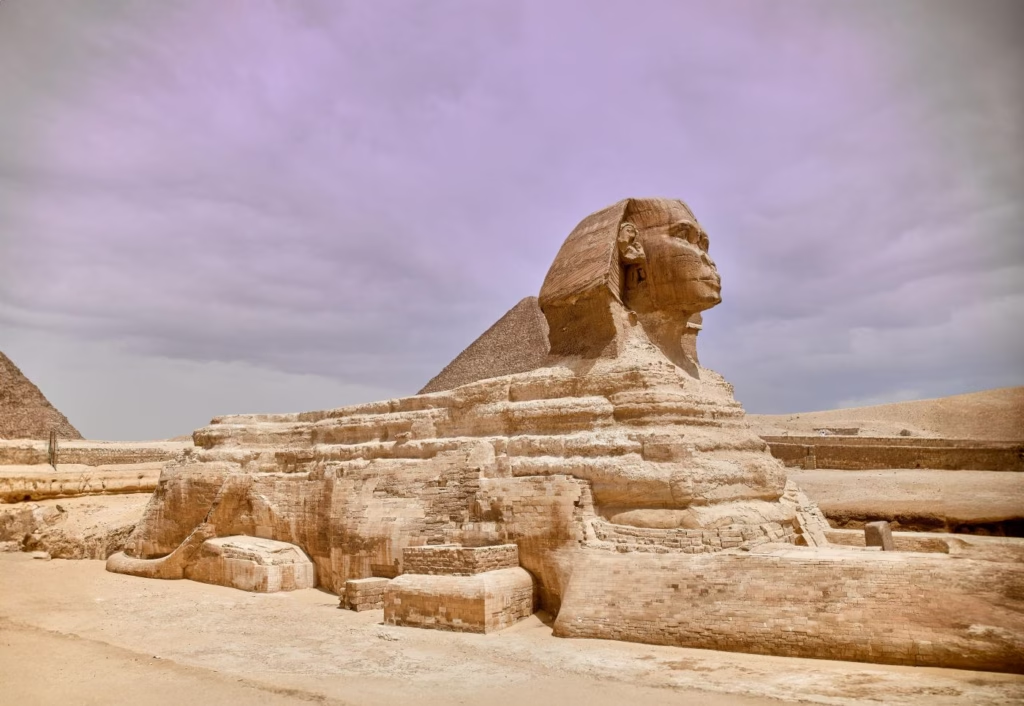
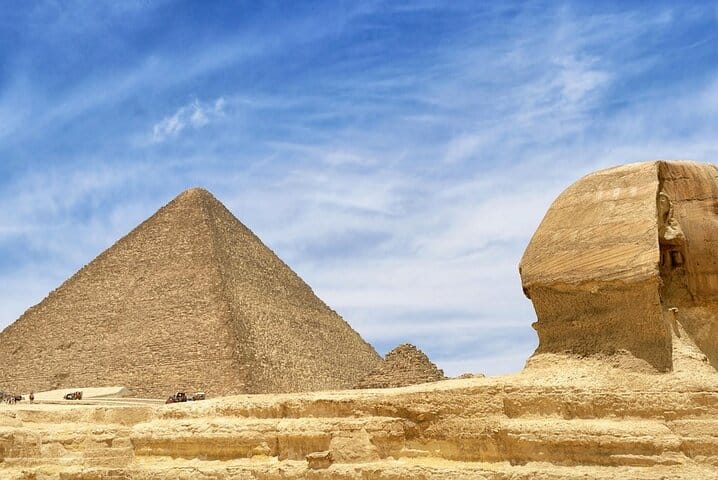
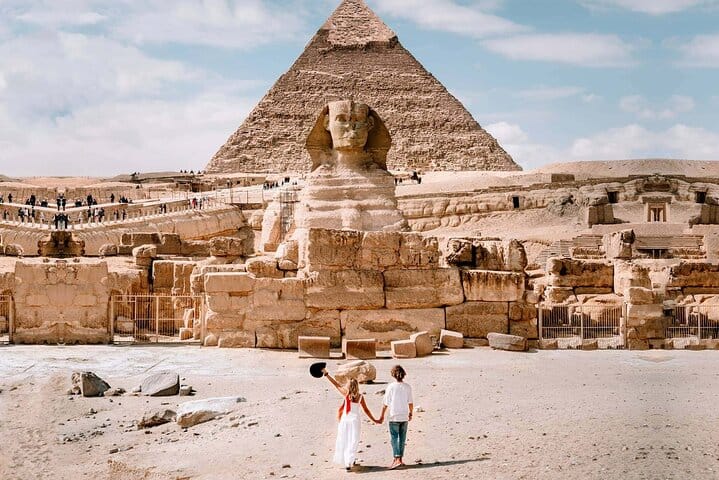
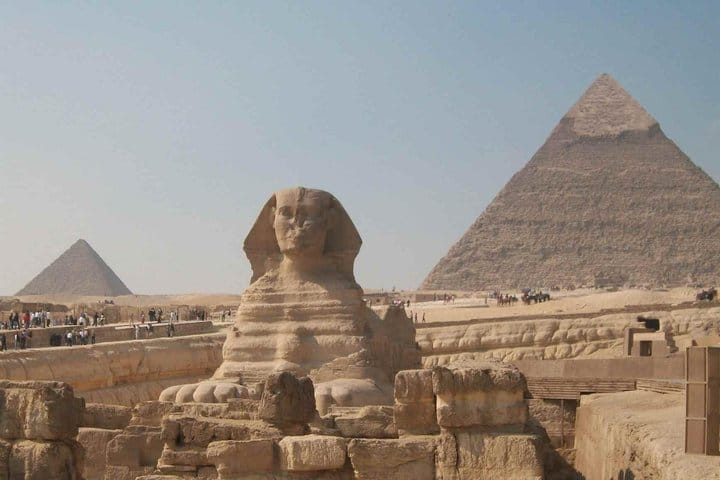
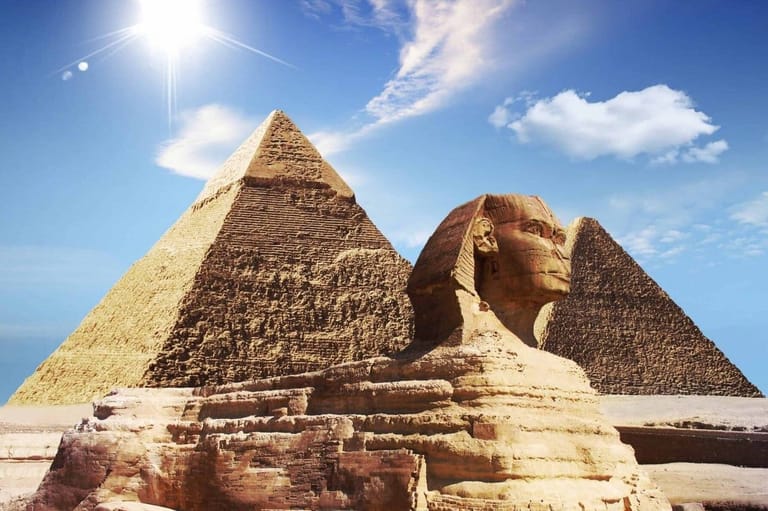
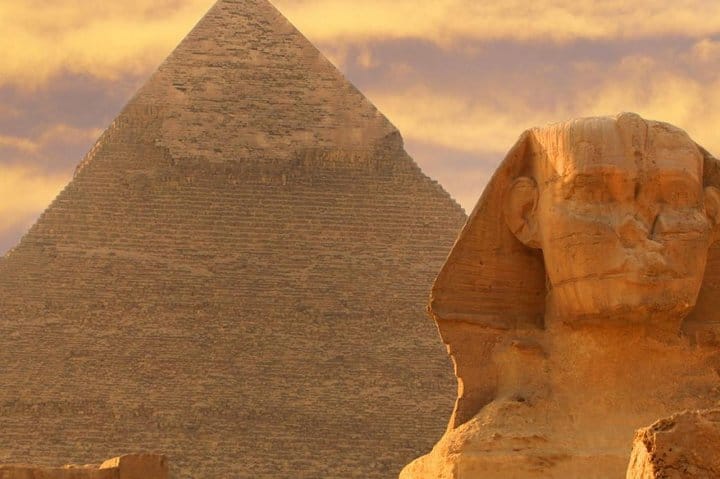
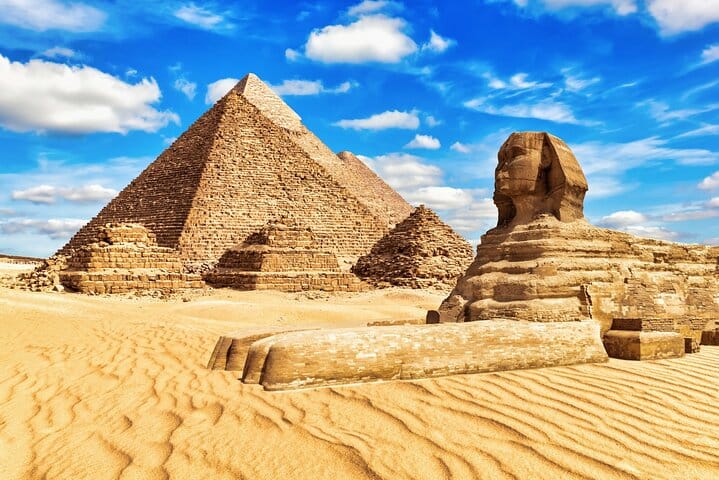
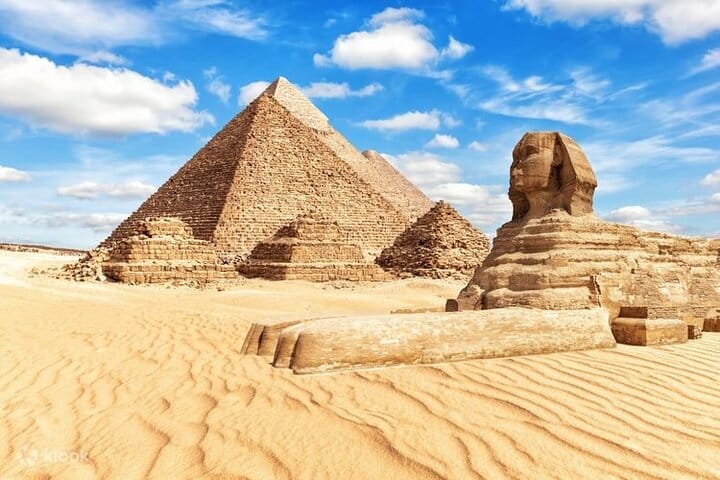
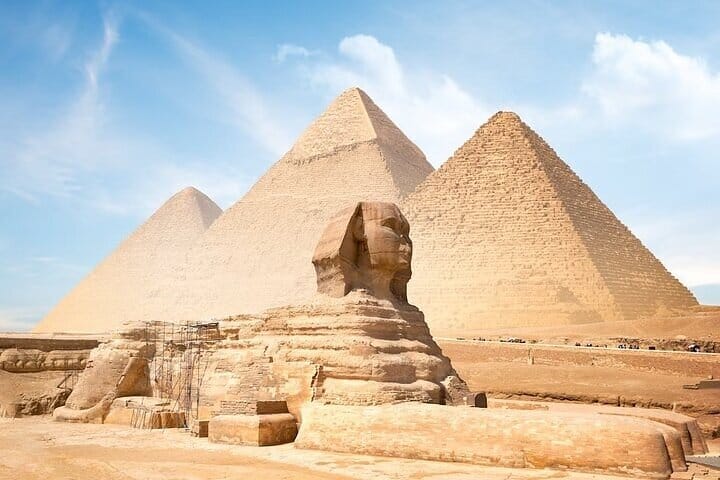
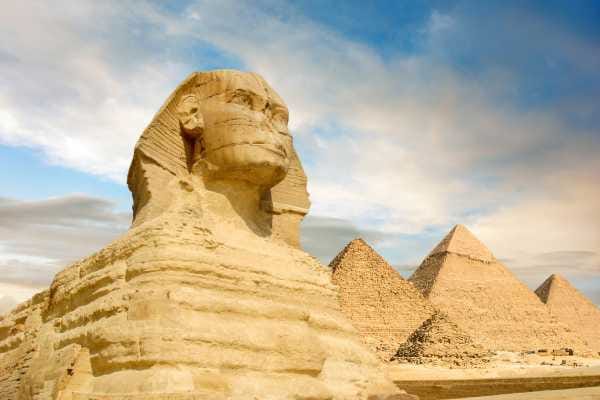
The Great Sphinx of Giza is the oldest known monumental sculpture in Egypt and the largest statue ever carved from a single piece of stone. Rather than being assembled from blocks, its 73.5-meter-long, 20-meter-high body was cut straight down out of a limestone ridge left behind when quarry workers removed stone for the causeway and valley temple of Pharaoh Khafre's pyramid complex. That physical link to Khafre's temple is the main reason most Egyptologists date the Sphinx to his reign, roughly 2558–2532 BCE, though a minority of scholars still argue it was commissioned by his father Khufu or his brother Djedefre.
Up close, 4,500 years of history show. The nose has been missing since at least the medieval period; tool marks on the face indicate deliberate removal, not cannon fire from Napoleon's troops, a myth historians have long dismissed. Faint traces of the original red pigment remain on the face, and hints of blue and yellow survive on the royal headdress. Between the paws sits a 3.6-meter granite stela erected by Thutmose IV around 1401 BCE, describing a dream in which the buried Sphinx promised him the throne if he dug it free of sand — sand that swallowed it again more than once before French archaeologist Émile Baraize completed the modern, full excavation in 1925.
Tool marks on the face show the nose was deliberately chiseled off, not destroyed by Napoleon's cannons — a popular myth historians have debunked. Who did it and when remains unconfirmed, with theories ranging from religious iconoclasm to later vandalism.
No. The general Giza Plateau admission covers the Sphinx and exterior access to all three pyramids. You only pay extra to enter a pyramid chamber, visit the Solar Boat exhibits, or attend the evening Sound and Light Show.
No. Visitors view it from a roped platform near Khafre's Valley Temple, roughly 20–30 meters away. Walking up to the statue itself isn't permitted, both for preservation and site security.
Most Egyptologists date it to the reign of Pharaoh Khafre, roughly 2558–2532 BCE, making it about 4,500 years old — though a minority of scholars attribute it to his father Khufu or his brother Djedefre instead.
Seeing the Sphinx itself takes about 30–45 minutes. Most travelers budget 2–3 hours for the full Giza Plateau, or a half day if pairing it with the Grand Egyptian Museum.
It's optional and separate from daytime admission. It's a good pick for night photography of the illuminated Sphinx and pyramids, though the narration is dated and some travelers find it more nostalgic than informative.