Reviews
No reviews yet

Venice: Audio Guided Walking Tour (3:30 - 26 audio commentaries)

$7
Duration
3 hours 30 minutes
Difficulty
Previous
Next

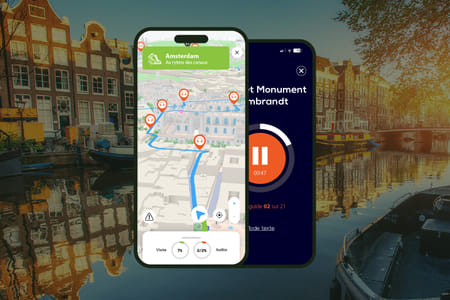
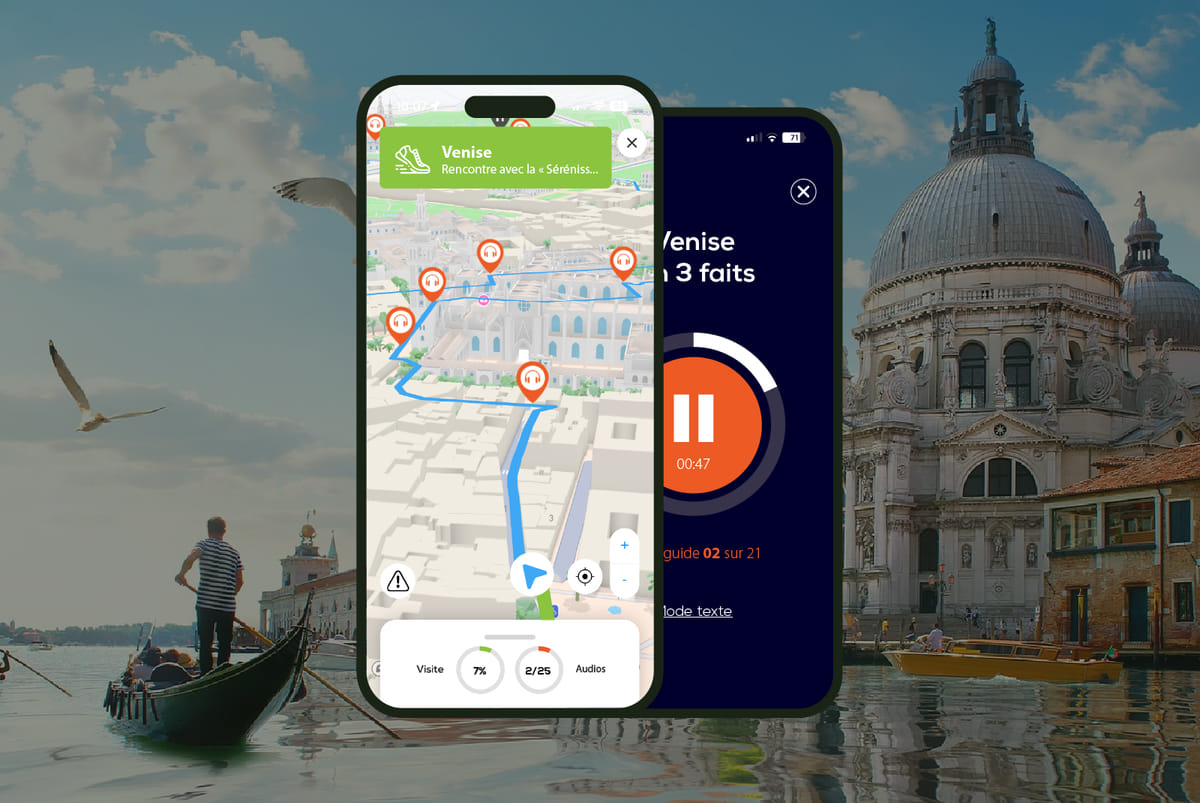
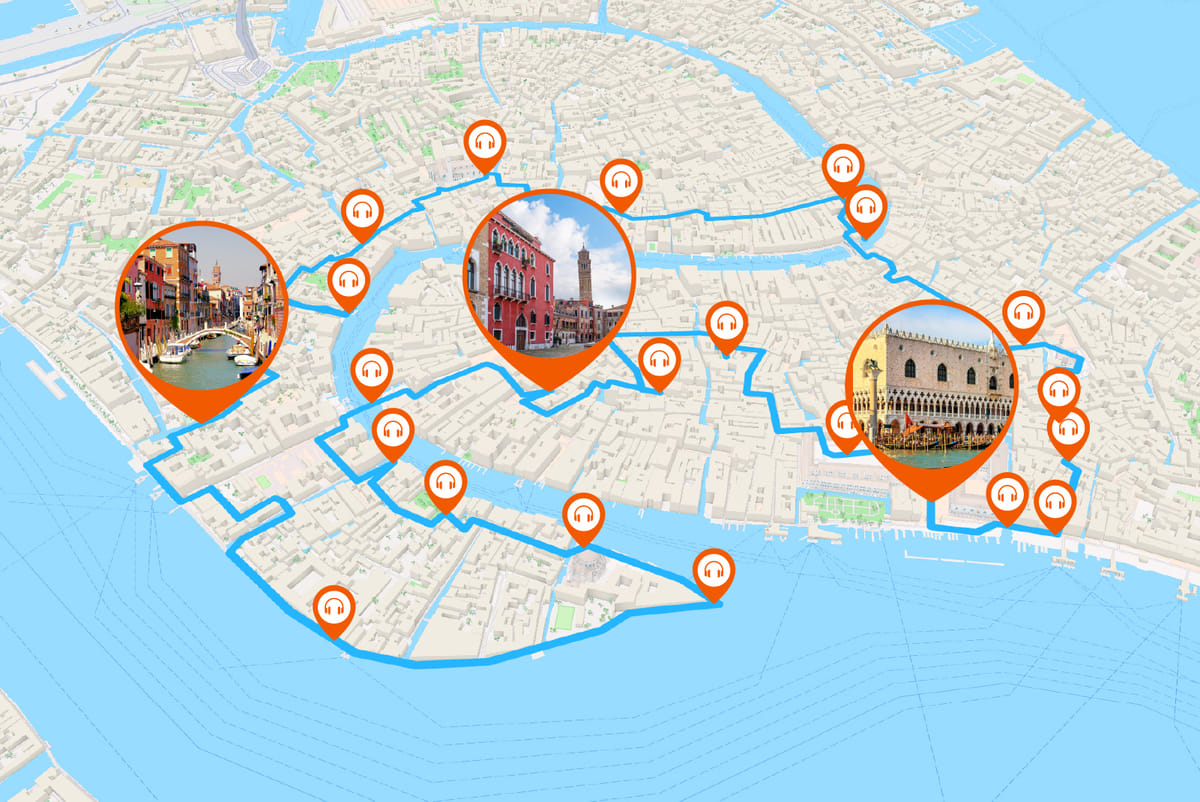
Experience Venice in a different way thanks to our unique audioguided tour and let yourself be surprised at every street, every bridge, every canal — or at every glance at the lagoon! At your own pace, without time constraints, dive into the heart of the Serenissima through a 7.6 km (approximately 3h30) route designed to reveal all the beauty, history and secrets of the city. Guided by an interactive 3D map and immersive audio commentary, you'll discover not only iconic sites, but also unobtrusive treasures, charming alleys, and unique atmospheres — far beyond classic itineraries.

From the splendid Basilica of Saint Mark, a jewel of Venetian art, to the famous Rialto Bridge on the Grand Canal, our tour takes you through the most beautiful neighborhoods, squares and canals of Venice. From the magnificence of the central square to the softness of the narrow streets, from the sumptuous palaces to the reflections of the gondolas on the water, through markets, unexpected corners and places steeped in history, each stage immerses you in the fascinating world of the city.

Everything is designed to make your discovery simple and pleasant: once downloaded, the application works without an internet connection. Follow your path without stress thanks to real-time geolocation and let yourself be guided by our 26 audio commentaries available in French, English and Spanish. You can share the adventure with friends and family — the content can be used on multiple devices.

Our tour is designed as a loop so that you can start from the point closest to you, or from our recommended starting point: a pier or a central platform. Thanks to our smooth and intuitive navigation, the tour remains flexible — you can take breaks to stroll, enjoy a drink, get lost in a callejón, or simply admire the reflection of the palaces at sunset. And for even more freedom, your access is unlimited: start the visit whenever you want, today or in several months.

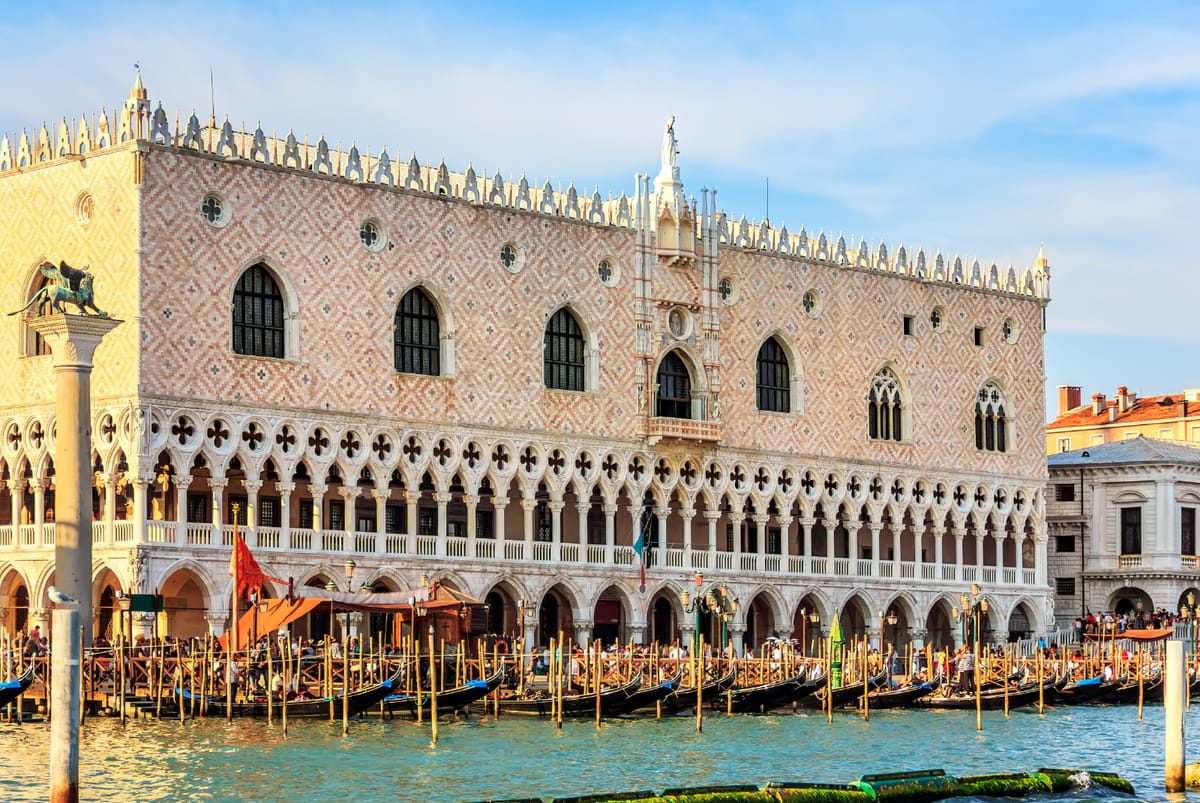
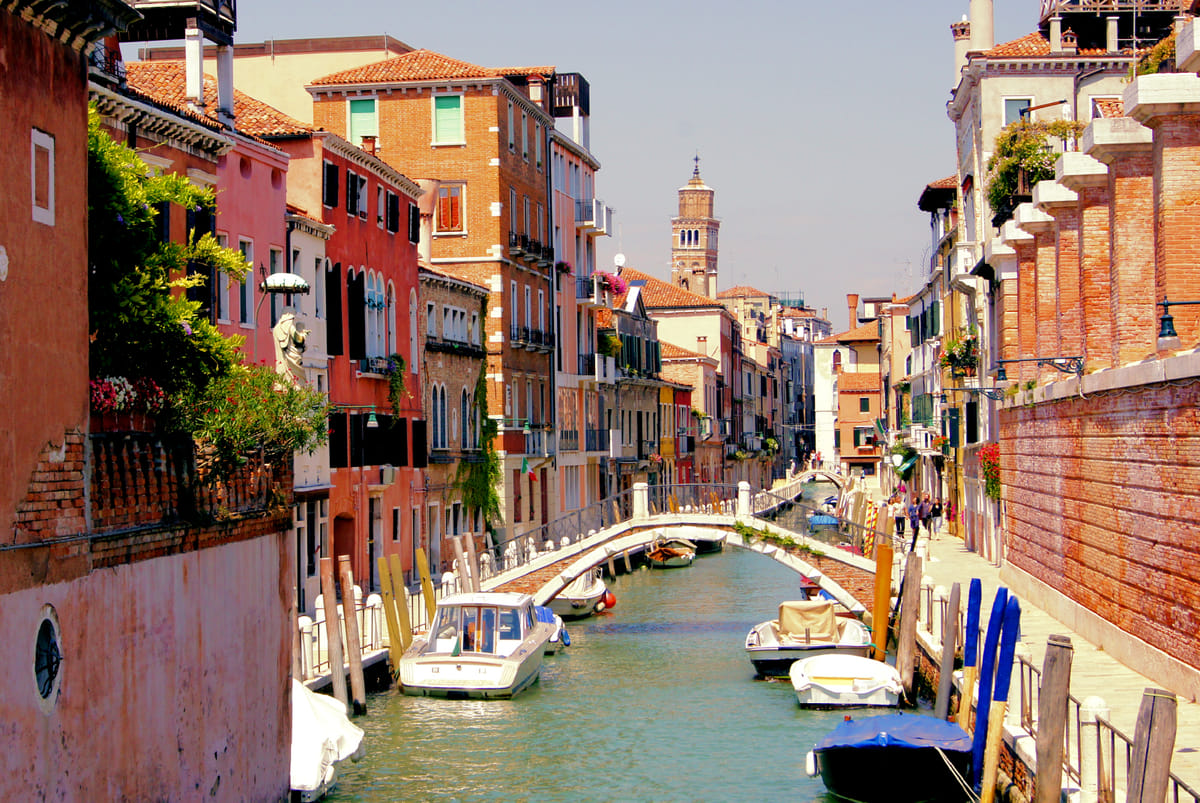
Some of the wonders you will discover include: St. Mark’s Basilica, the Doge’s Palace, the Rialto Bridge and Grand Canal, the historic San Polo district, the Rialto Market, the charming Campo Santa Maria Formosa, the mysterious Contarini del Bovolo Palace, the prestigious La Fenice Theatre, typical streets and canals, ancient bridges, historic Venetian palaces, and many other iconic sites — allowing you to experience Venice in all its richness, history, and aquatic magic.

Inclusions

    Immediate access to the audio-guided tour, no tickets or equipment to collect

    No deadline or expiration

    26 immersive audio comments along the way (historical comments, monuments, anecdotes, mysteries...)

    Text transcripts of all audio content

    Admire hidden gems that lie off the beaten path

    3 languages available: French, English, Spanish

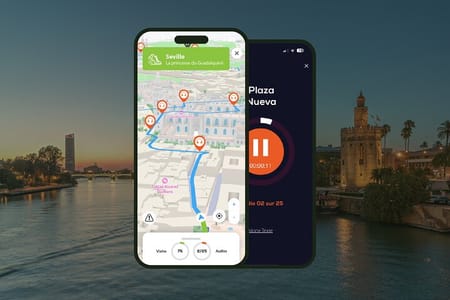
    Interactive navigation with real-time geolocation and 3D map to discover the most beautiful streets, squares and neighborhoods

    Recommendations for the best photo opportunities

    Offline mode (no data consumption during the visit)

Exclusions

    Admission fees to fee-paying establishments along the route if you want to make visits

    Headphones or earbuds (optional)

Tour Plan

Itinerary

Expand All
Saint Mark's Basilica

Here you are in front of the “mamma” of all the religious buildings in Venice. Historically in search of prestige, the city of the Doges aspired to the idea of being able to host a relic that would live up to its pretensions.

The Accademia bridge

We agree, from one bridge to another in Venice, the differences are not really striking. Except maybe with this one! Spanning the Grand Canal, like three other of its companions, the Accademia Bridge owes its existence to the Austrians.

The bridges of Venice

What would Venice be without its bridges? This is a question that more than one person has already asked themselves. The thing is that to find out, we would have to go back a hell of a long way in history. Venice, as we know it today, is very different from that of the past.

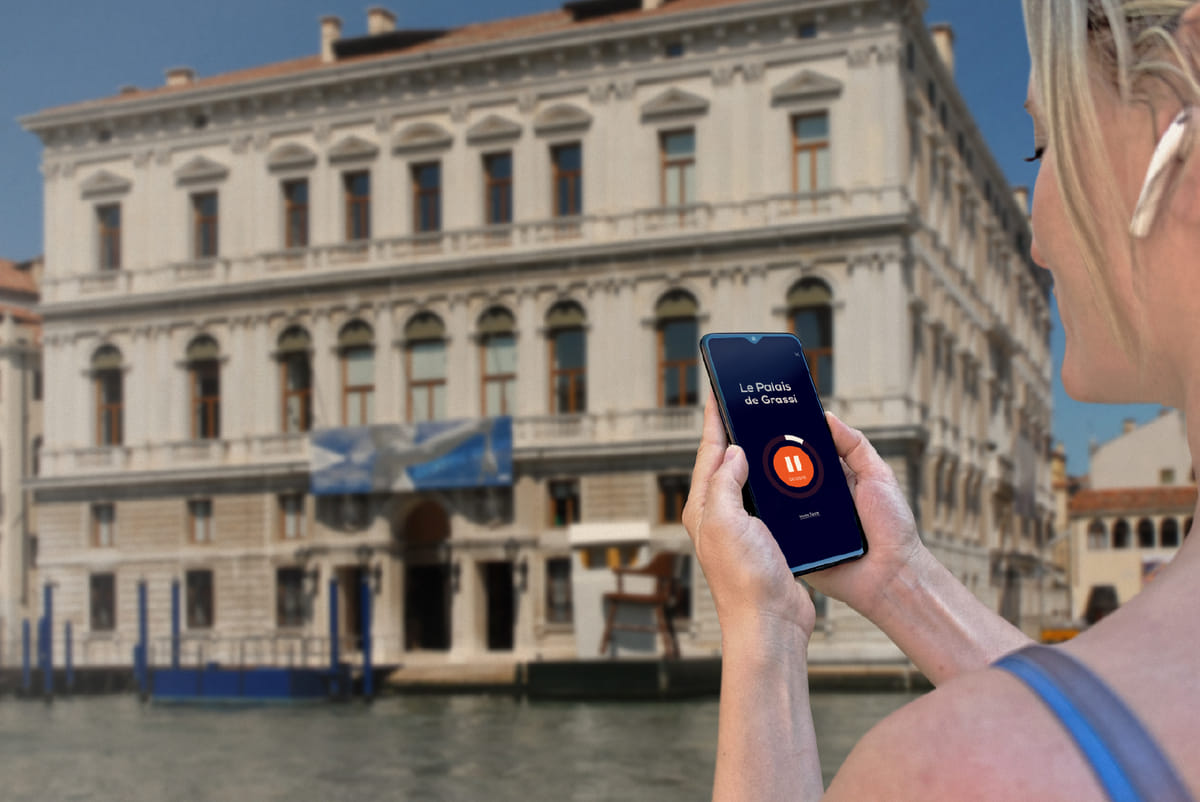
The Palace of Grassi

Now that you have arrived at the edge of the canal, turn your attention to the pier opposite and more precisely to the first 3-level building, to the left of the church tower. Built between 1748 and 1772 on behalf of a wealthy Venetian family, who will give it its name, the Grassi Palace has been a cultural address in Venice since 2005.

Ca' Foscari University

Formerly the home of Francesco Foscari, 65th Doge of Venice, the ancient palace on your right has always been linked to the world of education. In 1866, a Venetian Jew founded the city's Royal Higher School of Commerce there, whose final objective was to improve traders and prepare commercial science teachers for secondary institutes.

The Basilica dei Frari

The second largest building in Venice, the Basilica dei Frari, as we see it today, took over 100 years to build. In addition to its 70-meter high 14th-century bell tower, the monument has a simple exterior facade, made of brick and some elements of white and pink stone.

The San Polo neighborhood

In all, beautiful Venice has no less than six districts. And, without really knowing it, you are currently in one of the oldest, but above all the smallest of them: San Polo.

The Rialto Market

Full of color, and full of good smells, this is another typical Venetian stop that takes place right in front of you. In a sector where fabric trade, spice trade and other commodity trades were already concentrated, the Rialto Market has been part of Venice's identity since the 13th century.

Rialto bridge

A big star of tourist advertising in Venice, the Rialto Bridge is one of the most famous symbols of the city of the Doges. Except that before reaching this success, the monument went through a rather long and complicated history.

Campo Santa Maria Formosa

From a narrow alley to a curved bridge, it is common to cross squares in Venice. But be careful, in order not to risk offending the locals, you should know that there is only one real place in the city. Naturally, it is Saint Mark's Square.

Venice in 3 facts

Venice is one of those destinations where you like to stay more than once. We cannot say whether it is its romantic atmosphere or the peaceful waters of its lagoon that lulls us the most. But deep down, do you really know Venice?

The Bell Tower of San Giorgio

It is positioned facing the canal that normally, you should see the silhouette of a tower that soars into the sky. Located on the island of the same name, the San Giorgio Campanile is the third largest in its category in the whole city.

The Bridge of Sighs

Anyone who has ever been able to approach him will tell you that this Venetian figure is just as fascinating for its beauty, its history and all the legends that surround it. Built in the early 17th century, the Bridge of Sighs once served as a link between the Doge's Palace and the new prison on the other side.

The Doge's Palace

If there is one palace that surpasses all the others in Venice, it is by far the one on your right. Because of its prestigious past and its sublime architecture, the Doge's Palace remains one of the city's strongest symbols.

Le Campanile Saint-Marc

Affectionately called the “Patron of the House” by the Venetians, the Saint-Marc Campanile is an ancient symbol of the city. Its very first construction, ordered in 888 by the 17th Doge of Venice, could never be completed following a collapse of the ground, while the tower was under construction.

The Clock Tower

Located on the left side of Saint Mark's Square, the Clock Tower is a real gem of art and mechanics. It was built in the 15th century, under the order of the Senate of the Republic of Venice, to mark the passage from the largest square in the city of the Doges to the small shopping streets, on the other side, called the Merceries.

Saint Mark's Square

The only “big” square in Venice, Saint Mark's Square is in a way the heart of the city. Its construction began in the 9th century and its final general physiognomy was not completed until 1177.

The Contarini del Bovolo Palace

Lost in a labyrinth of cul-de-sac streets, the Contarini del Bovolo Palace is a small hidden treasure. Probably built in the 14th century, the building became famous when a branch of the Venetian Contarini family made it their residence.

La Fenice Theater

Who has never heard from a loved one, a friend, or an acquaintance that appearances should never be trusted. Incredible, but true, behind this discreet neoclassical facade lies one of the most beautiful lyrical stages in the world.

The Santo Stefano Campanile

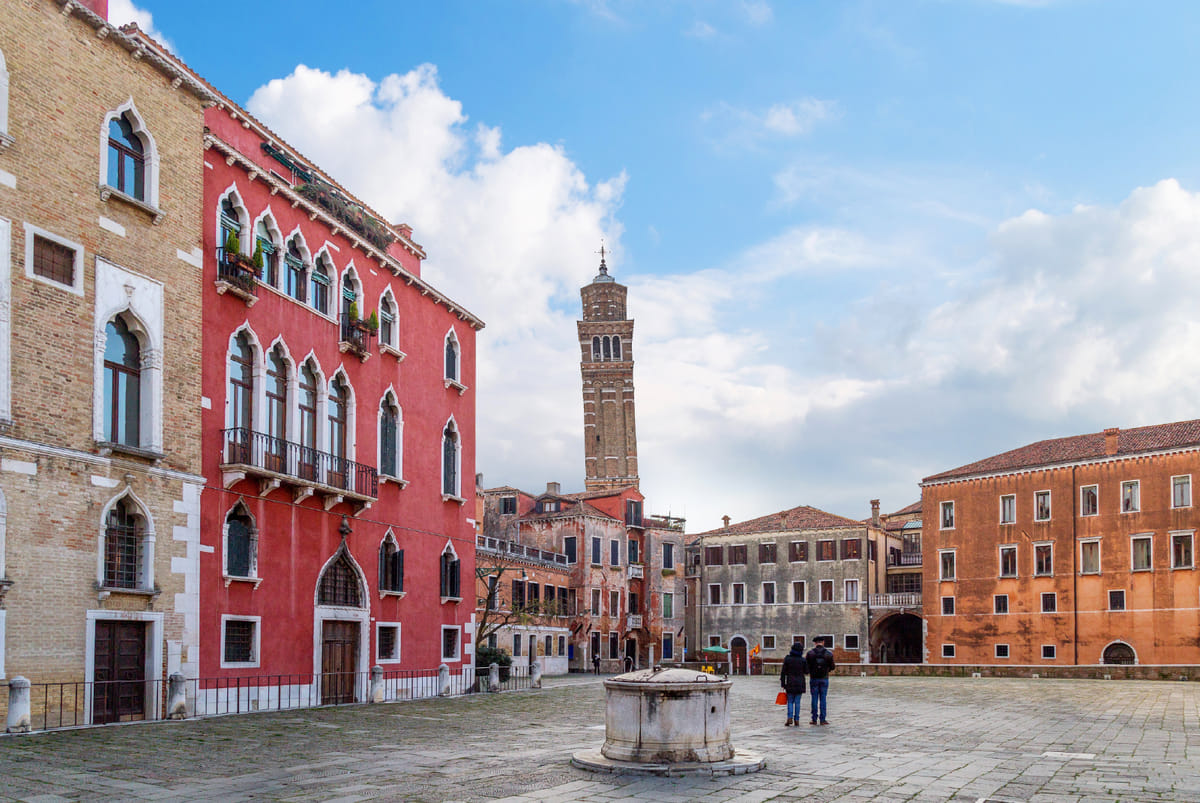
In the large family of bell towers that make up Venice, we present to you that of Santo Stefano and its 61 meters high. While its origins were evaluated in the 12th century, its current appearance is much more recent.

The Grand Canal

Similar to one of the most beautiful avenues in the world with its splendid churches and palaces, staggered like trees on the side of a road, the Grand Canal is often the first thing you discover in Venice.

Peggy Guggenheim Collection

Rather off the beaten path and tourist crowds, the Peggy Guggenheim Collection is one of the most important cultural addresses in Venice. In the 18th century, the site belonged to the powerful Venier dei Leoni family who, committed to building the most beautiful palace on the Grand Canal, did not finally see their wish come true.

The Basilica of Santa Maria della SaluteThe Basilica of Santa Maria della Salute

In Venice, you don't have to be in Saint Mark's Square to be an iconic monument. Located in the Dorsoduro district, and almost at the southern end of the Grand Canal, the Basilica of Santa Maria della Salute is a spatial and symbolic landmark for Venetians.

La Punta della Dogana

In addition to reaching the end of the Dorsoduro district, you have also arrived at the place that is called Punta della Dogana here. In the 15th century, boats had to dock there to be able to be checked by the customs office.

Zattere

A charming and fairly unknown place, the Zattere were the place where boats used to dock to drop off their wooden cargoes. And yes, we must not forget that in that period everything was built from this natural material.

The Dorsoduro neighborhood

Located in the southwest part of the city, the Dorsoduro district, which is translated as “Hard back”, takes its name from the firmer solidity of the land that composes it. If art galleries and universities make it artistic and cultural, Dorsoduro is rather known for being the “chic” area of Venice.

Meeting / Pickup

Meet on location: This experience has no pick-up service, customers have to make their way to our meeting point.

Please Note

An internet connection is required to download the itinerary before the visit, organize yourself accordingly

Always check local conditions before you leave

Make sure your smartphone is sufficiently charged or carry an external battery.

After booking, you will receive an email with instructions for installing the application (available for iPhone and Android) as well as the procedure for activating the circuit code

The circuit is not suitable for people with reduced mobility (presence of stairs).

Reviews

No reviews yet

Login

Sign In / Register

Login
Register
Forgot Password?