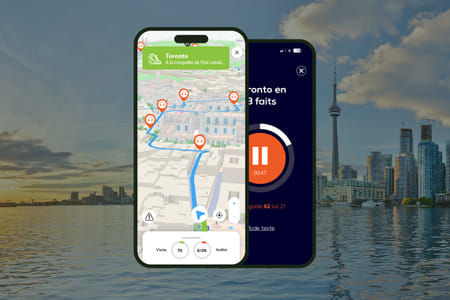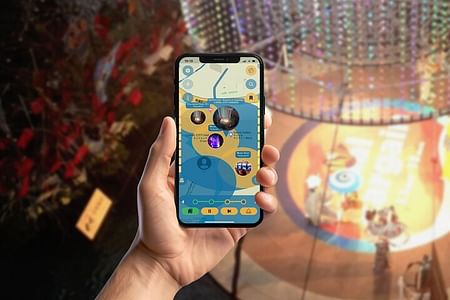
Experience Tokyo differently with our exclusive self-guided tour. At your own pace, without any time constraints, explore a route of approximately 6 km, designed to reveal Tokyo’s duality: deep Japanese traditions and dazzling modernity.
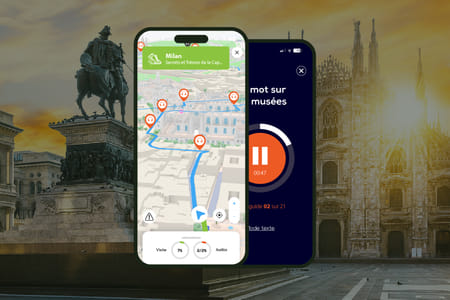
Guided by a 3D interactive map and immersive audio commentary, you will wander through the peaceful Ueno gardens, its temples, museums, alleys, shrines, and historic spaces. You will discover not only the main highlights but also hidden spots — off the classic tourist paths.
Once downloaded, the app works offline. Follow the route worry-free with real-time geolocation. Enjoy 19 audio commentaries in French, English, and Spanish.
The tour is designed as a loop: you can start from the point closest to you, or from our recommended starting point: Ueno Park. Navigation adapts to your choices and pauses. Your access remains unlimited: start your visit today or in several months.
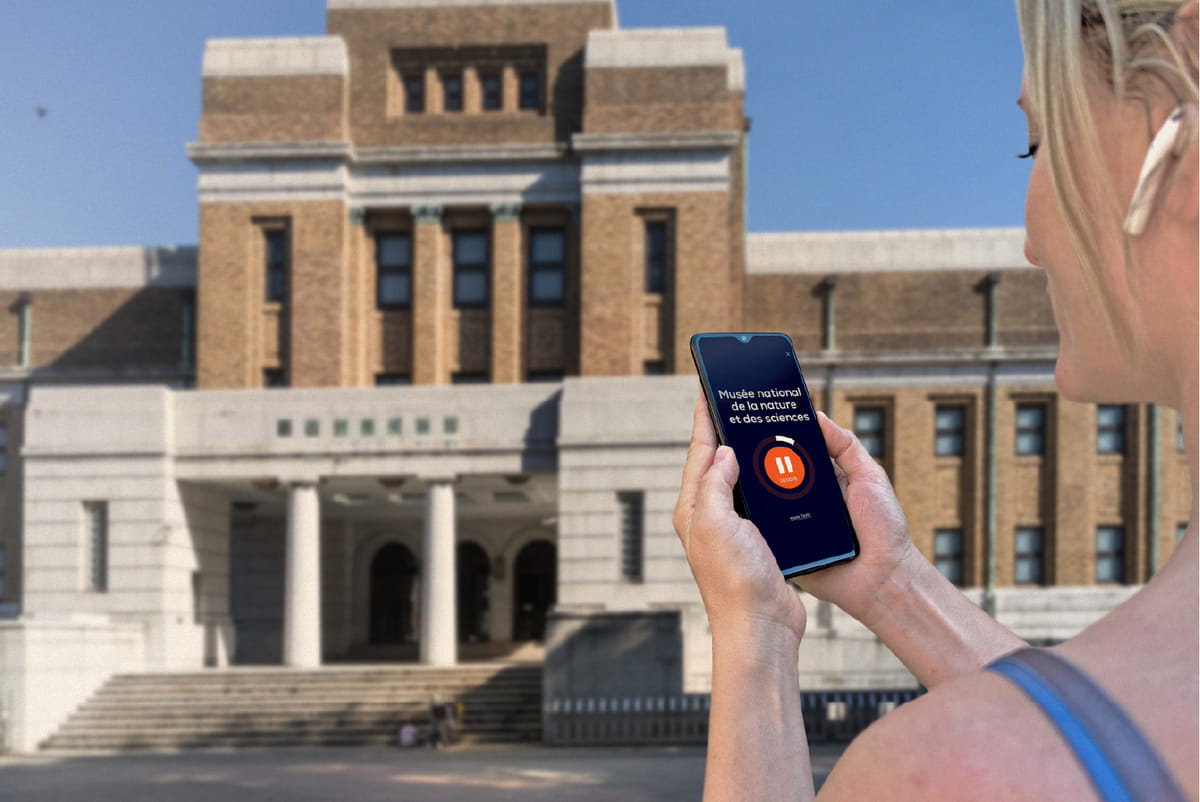
Here are some of the places you will pass through: Shinobazu Pond, Kannon-do Temple, Bentendo Temple, Ueno Park, Toshogu Shrine, Ueno Zoo, the National Museum of Tokyo, the National Museum of Nature and Science, the Museum of Western Art, Shitamachi Museum, the view of the sacred lotuses, Yanaka Cemetery, Tokyo University of the Arts, and many other iconic sites.
Tokyo: Audio Guided Walking Tour (2:15 - 19 audio reviews)
Inclusions
Immediate access to the audio-guided tour, no tickets or equipment to collect
No deadline or expiration
19 immersive audio comments throughout the trip (historical comments, monuments, anecdotes, mysteries...)
Text transcripts of all audio content
Admire hidden gems that lie off the beaten path
3 languages available: French, English, Spanish
Interactive navigation with real-time geolocation and 3D map to discover the most beautiful streets, squares and neighborhoods
Recommendations for the best photo opportunities
Offline mode (no data consumption during the visit)
Exclusions
Admission fees to fee-paying establishments along the route if you want to make visits
Headphones or earbuds (optional)
Tour Plan
Itinerary
You are on an alley that separates Shinobazu Pond, the main waterhole in Ueno Park, in two.
Built in 1631 by Tenkai, the founder of the Tendai sect, Kannon-do Temple is one of the oldest buildings in the city. Unlike many other monuments, it has survived time and has only undergone restorations to return it to its original condition.
This is the Bentendo Temple, located in the heart of the Shinobazu Pond. Moreover, the choice of its location was not left to chance. Built at the beginning of the 17th century, at the beginning of the Edo period, it is dedicated to Benzaiten, the goddess of wealth, happiness, wisdom and music.
As you have seen, this park is full of wonders to discover, which trace the past events and traditions of the city! But let's go back to its history together, to understand its importance and the enthusiasm it arouses among visitors from all over the world.
Here is a monument that pays tribute to Doctor Wani, a scholar who is said to have come from Korea to introduce Confucianism to Japan. But that's only one side of the story. Because we don't really know if it's true, and even if this character, the famous Doctor Wani, really existed.
If there's one statue you can't miss in Ueno Park, it's this one! Proudly sitting on his trusty steed, this man played such an important role for the country that he ended up there, in one of Tokyo's most famous parks, several meters high.
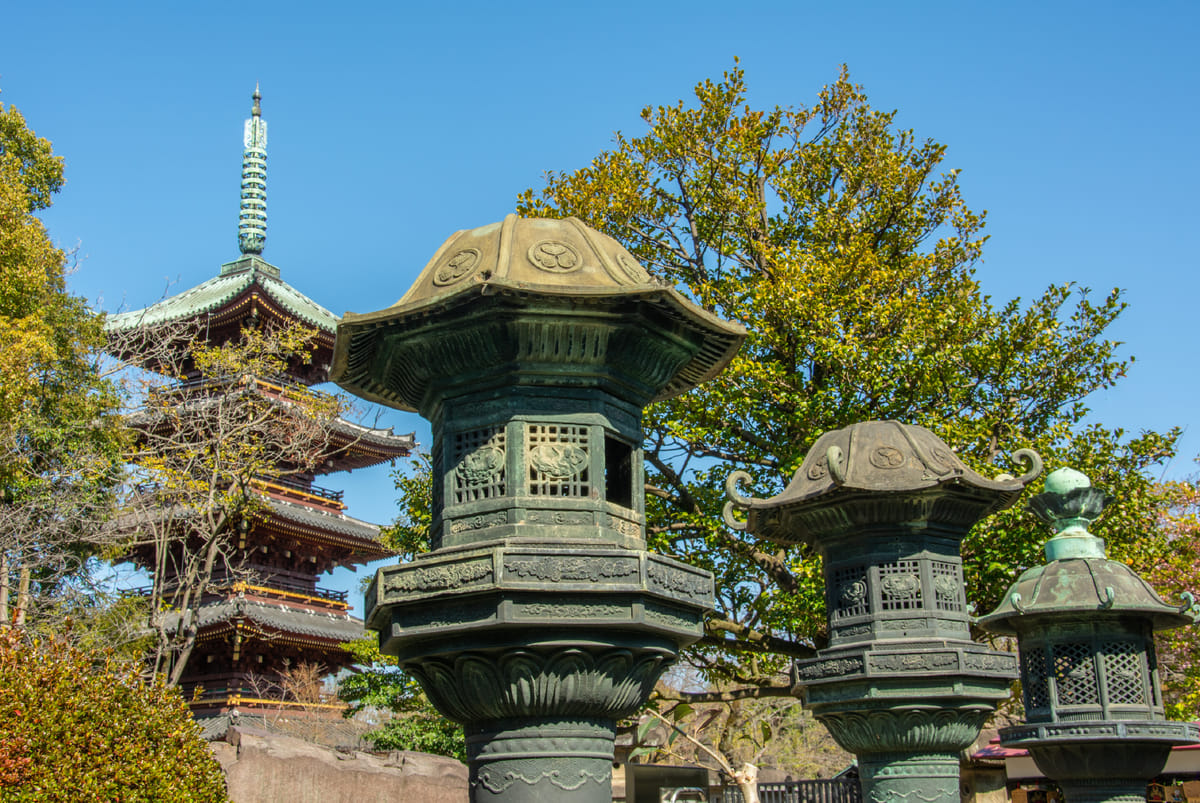
You have a Shinto shrine in front of you, called Ueno Tosho-gu. You should know that Tosho was the posthumous name of Tokugawa Ieyasu, the very first shogun of the Tokugawa shogunate, the great dynasty that ruled Japan between 1603 and 1868.
The Ueno Zoo is the oldest zoo in the country. It contains hundreds of different animal species from all over the world, but the real stars of this zoological park are undoubtedly the two pandas who have lived there since 2011, called Ri Ri and Shin Shin, and their little baby born in 2017, and their little baby born in 2017, which attracts crowds from all over the world.
Much more modern than the other monuments that can be seen in Ueno Park, this building is none other than the Tokyo Metropolitan Museum of Art. It is the first public art museum in the country.
The building on your left is characterized by a beautiful western style. It is the Sogakudo Concert Hall, the oldest hall of this style in Japan. When it was inaugurated in 1890, it belonged to the Tokyo School of Music, then it served for the city's University of the Arts until the 1970s.
Here you are in the heart of the campus of the Tokyo University of the Arts, the most prestigious art school in the country! And also the oldest... Officially, the University of the Arts was founded in 1949, but it actually includes the École des Beaux-Arts, which dates from 1885, and the École de Musique, created in 1879.
This visit is quite special, since it is a cemetery, but it is not just any cemetery: it is certainly one of the most beautiful cemeteries in Tokyo.
You should know that Ueno Park was built on an ancient religious complex, in this case, the largest and most important Buddhist temple in the capital.
Welcome to the building that houses the largest collection of art and archaeological objects in the country! Founded in 1872, it is also the oldest Japanese museum.
While Ueno Park allows you to take a short nature break in the heart of one of the most populated cities in the world, it also offers an excellent cultural offer thanks to the numerous museums it has.
For those who would not have succeeded in engaging with Japanese art, here is a museum that reveals works that we, as French people, all know! Monet, Renoir, Van Gogh and even Picasso decorate the walls of this extraordinary building that was built by Le Corbusier.
It is the most recent museum you can find in Ueno Park, since it opened in 1972. It is also the only private museum, it is managed by the Japan Art Association, the oldest art association in Japan.
The building in front of you is the Shitamachi Museum, a museum of popular arts and traditions in Tokyo. It is a very interesting site to learn about the history of the city, especially the so-called Edo period, during which Tokyo developed rapidly between 1603 and 1868.
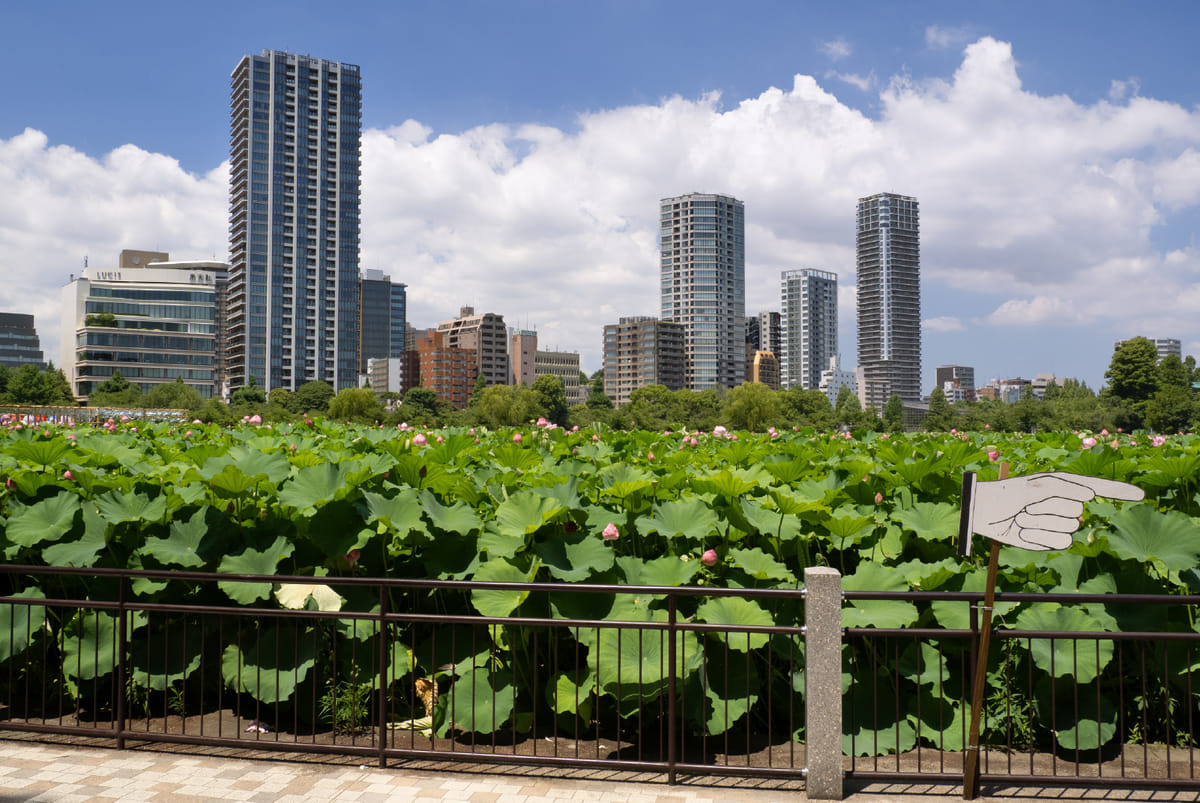
Here you are here in front of the Shinobazu pond and more precisely in one of the most interesting parts: this is where the lotuses come to bloom and spread their huge leaves every summer!
Meeting / Pickup
Please Note
An internet connection is required to download the itinerary before the visit, organize yourself accordingly
Always check local conditions before you leave
Make sure your smartphone is sufficiently charged or carry an external battery.
After booking, you will receive an email with instructions for installing the application (available for iPhone and Android) as well as the procedure for activating the circuit code
The circuit is not suitable for people with reduced mobility (presence of stairs).
Reviews
- • No Tax, No Fees
- • Instant Booking
- • Customizable Tours
- • Guaranteed Departures
- • Flexible Booking Options
- • Verified Local Operators
- • 24/7 Support