Rio de Janeiro: Audio Guided Walking Tour (3 hours - 24 audio reviews)

$7
Duration
3 hours
Difficulty
Reviews
No reviews yet
Previous
Next

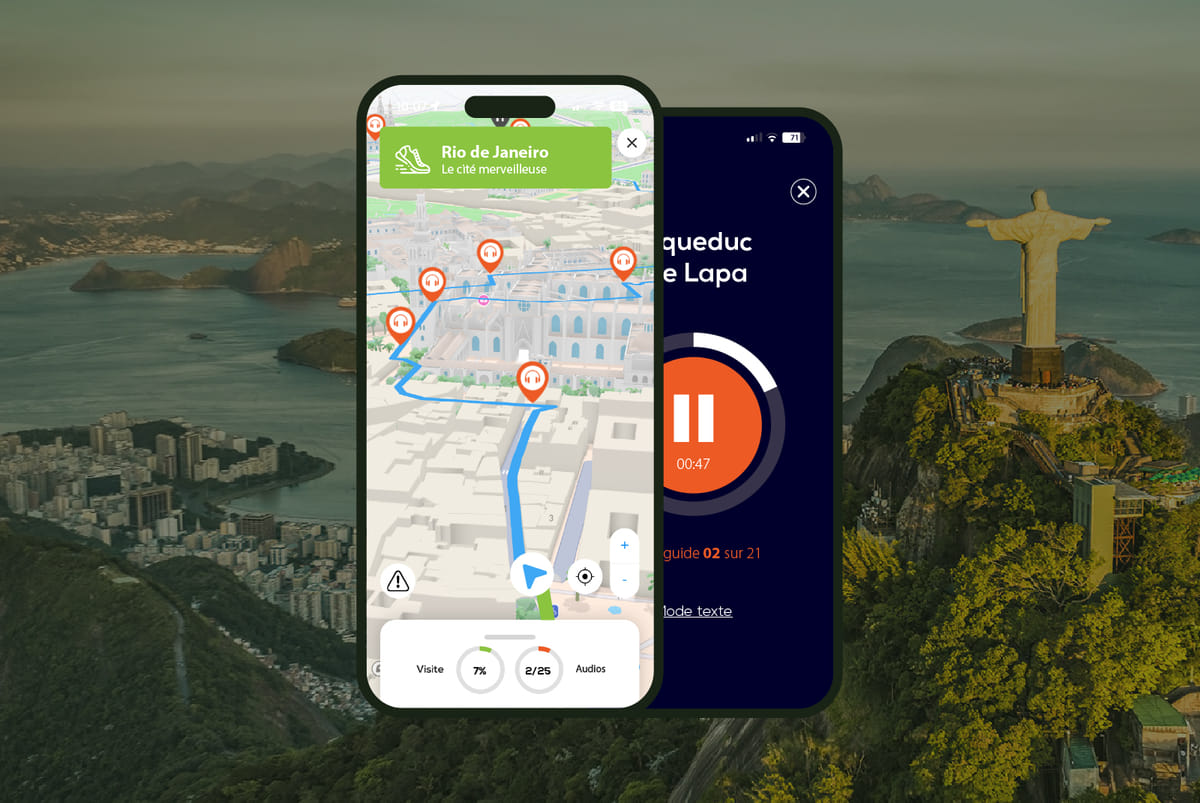
Experience Rio de Janeiro in a different way thanks to our exclusive audioguided tour and let yourself be carried away by the magic of the “Cidade Maravilhosa”. At your own pace, without time constraints, explore the city through an immersive journey designed to reveal its most beautiful panoramas, iconic monuments and unknown corners, between sea, mountains and vibrant Brazilian culture.

Guided by an interactive 3D map and captivating audio commentaries, you will cross the most emblematic places of Rio: from the mythical Sugarloaf to Corcovado and its Christ the Redeemer, from the legendary beaches of Copacabana and Ipanema to the charm of the bohemian neighborhood of Santa Teresa. Each stage reveals the soul of the city, between colonial heritage, samba rhythms and striking contrasts between nature and urbanity.

The application works without an internet connection once downloaded. Follow the route without stress thanks to real-time geolocation and take advantage of dozens of audio commentaries available in French, English and Spanish. Share the visit with friends and family: the content can be listened to simultaneously on multiple devices.

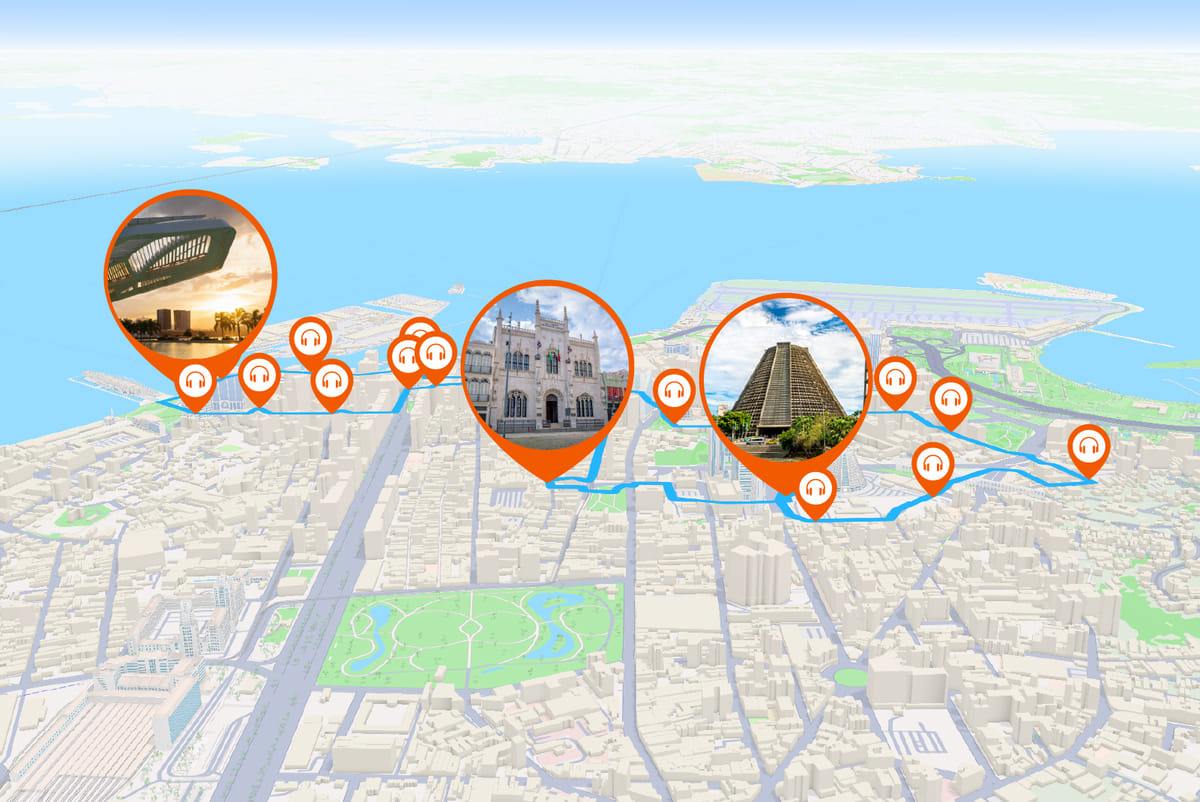
The circuit is designed as a flexible loop: start where you want, or from our recommended starting point, the Copacabana district. Thanks to smart navigation, you can enjoy a smooth and intuitive visit, whether you decide to take a break on the beach, climb to the top of Corcovado, or stroll through the colorful streets of Lapa. Your access is unlimited: start your discovery today or whenever you want.

Among the wonders you will explore: Sugarloaf Mountain, Corcovado, Copacabana and Ipanema beaches, the Botanical Garden, the Santa Teresa district, the Metropolitan Cathedral, the Selarón Steps, the Sambadrome Marquês de Sapucaí, the Lapa district, and many other iconic places that make the heart of Rio beat.
Inclusions

    Immediate access to the audio-guided tour, no tickets or equipment to collect

    No deadline or expiration

    24 immersive audio comments along the way (historical comments, monuments, anecdotes, mysteries...)

    Text transcripts of all audio content

    Admire hidden gems that lie off the beaten path

    3 languages available: French, English, Spanish

    Interactive navigation with real-time geolocation and 3D map to discover the most beautiful streets, squares and neighborhoods

    Recommendations for the best photo opportunities

    Offline mode (no data consumption during the visit)

Exclusions

    Admission fees to fee-paying establishments along the route if you want to make visits

    Headphones or earbuds (optional)

Tour Plan

Itinerary

Expand All
Lapa Aqueduct

You arrive in front of the famous Arcos de Lapa. Emblem of the neighborhood that has become another symbol of Rio, in the same way as Corcovado, Copacabana or the Selaron staircase.

Lavradio Palace

The pink and white palace you see in front of you is the Lavradio Masonic Palace. It was classified and protected in 1972 by INEPAC, the State Institute of Cultural Heritage, for the historical importance of Freemasonry during the imperial period in Brazil.

Saint Sebastian Cathedral

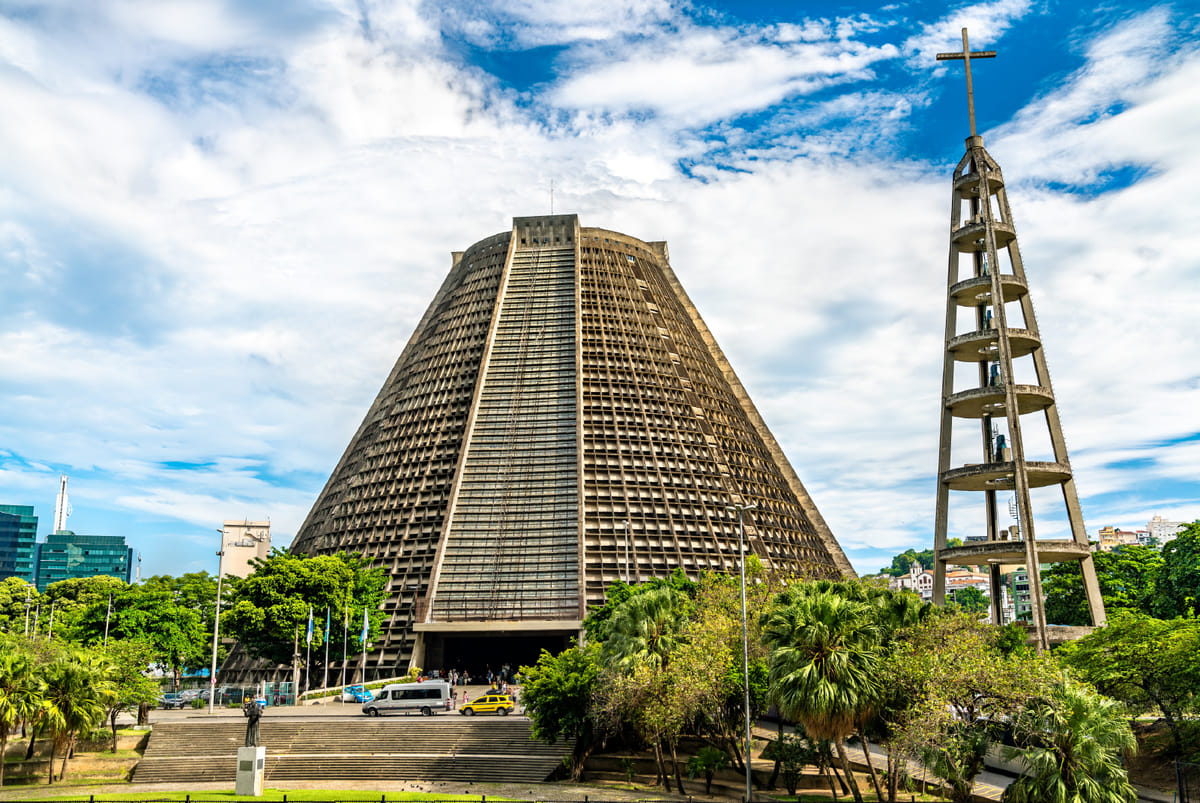
So, you certainly didn't expect to find a pyramid-shaped cathedral when you visited historic Rio. And yet, the Cathedral of San Sebastian is indeed an avant-garde representation recalling the pre-Columbian pyramids.

Royal Portuguese Reading Cabinet

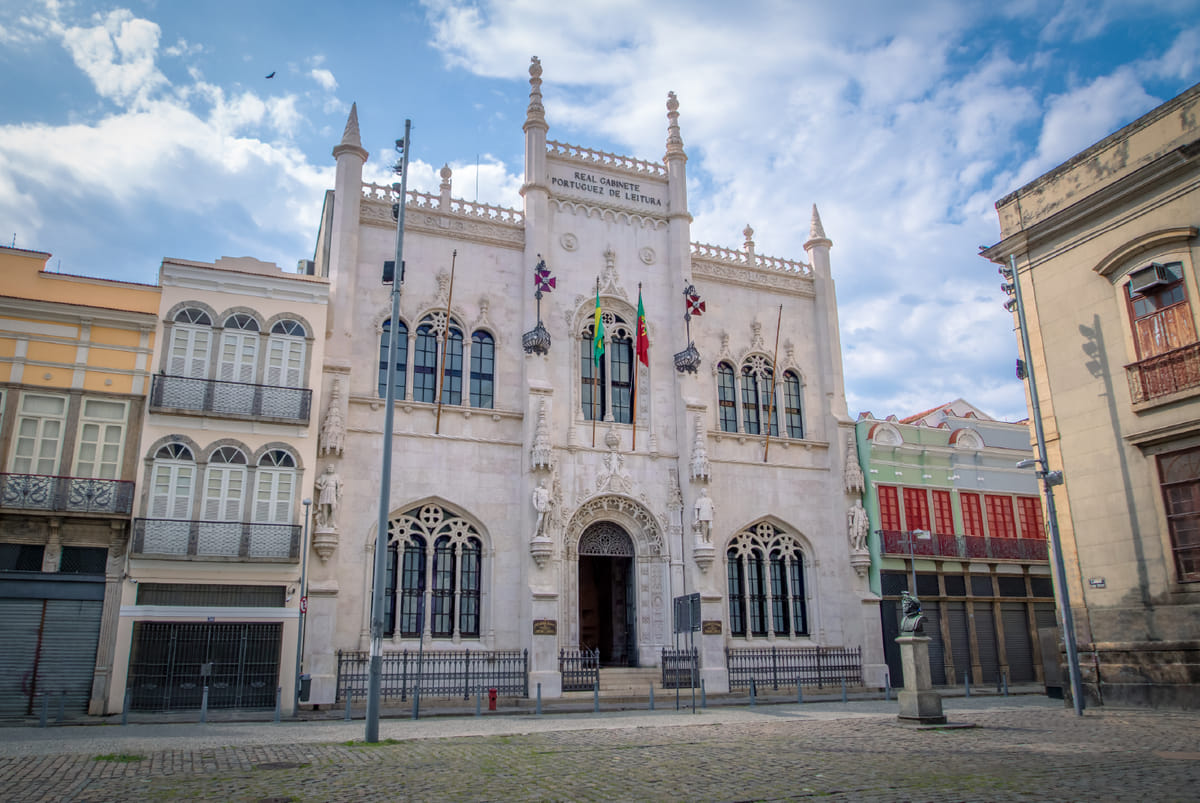
This beautiful facade, richly sculpted, is that of the royal Portuguese reading room. This library is listed by the State Institute of Cultural Heritage and was voted the fourth most beautiful library in the world by Times magazine.

Colombo Confectionery

See this beautiful vintage café on your right. This is the Colombo confectionery, a real institution in Rio. It's like being in the Paris of the Belle Époque! This café was founded in 1894 by Portuguese immigrants.

Banco do Brasil Cultural Center

This big building, in front of you on the left, is the Banco do Brasil Cultural Center. With a name like that, as you can see, this neoclassical building was originally dedicated to the world of finance!

Church of Our Lady of Candelaria

You are now facing the beautiful Baroque church of Our Lady of Candelaria. Its story starts with a legend. In the 17th century, a boat named Candelaria suffered a storm on the sea and narrowly avoided a shipwreck.

Rio Branco Avenue

You are now going up Avenida Rio Branco, the Avenue of the White River in French. Formerly called Central Avenue, it was the main urban reform carried out by Mayor Pereira Passos at the beginning of the 20th century.

São Bento Monastery

Here you have the entrance to the São Bento Monastery, or Saint-Bento in French. Do not hesitate to pause the audio guide and start the tour.

Mauá Square

You arrive at Praça Mauá, completely remodelled for the Olympic Games. When the city was born, the place was called “Largo da Prainha”, that is, the patio of the small beach, in reference to the very beautiful cove that opened below.

Museum of Tomorrow Musée de Demain

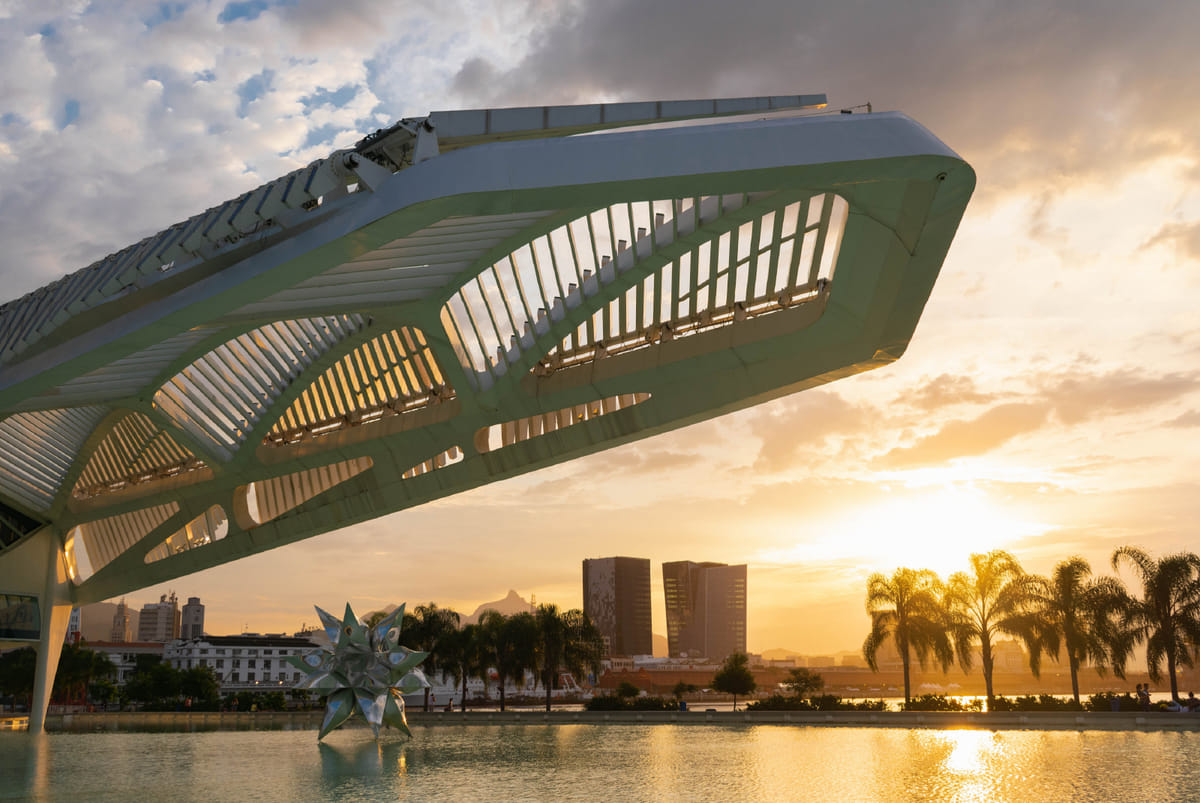
But what draws the eye to this square is of course this incredible museum that you see at the edge of the bay. It is the Museu do Amanhã, the Museum of Tomorrow, THE centrepiece of the major project to revitalize the Porto Maravilha district.

View of the bay and the museum

It is by moving a little away from the museum, and by admiring it in this way, standing out all white on the turquoise waters of the bay, that we become aware of all the uniqueness of the building.

Orla Conde Public Promenade

This entire landscaped promenade, which allows you to reach the 15th November Square along Guanabara Bay, is also part of the process of transformation of the urban port area.

The Olympic Flame

This strange sculpture, which recalls the games of children blowing on windmills, is none other than the Rio 2016 Olympic flame. After the opening ceremony, which took place at the Maracana stadium, the flame was carried to this square.

Travessa do Comércio

This small paved street that you are now taking is called Travessa do Comércio and maintains all the charm of colonial Rio with its ancient stone houses and narrow sidewalks.

The square on November 15

Here you are in the heart of the historic district of Rio de Janeiro, on November 15 Square. Note that November 15 is an important date in Brazil since it is the proclamation of the Republic.

Imperial Palace

The large white building that takes up the entire side of the square, simple and modest, was nevertheless the residence of the emperors Dom Pedro I and II. It was built in the 18th century, initially planned to serve as the residence of the governors of the captaincy of Rio de Janeiro.

Tiradentes Palace

Right next to the Imperial Palace, you have the Tiradentes Palace. It is the seat of the Legislative Assembly. Brazil is a federal country, like the United States, Australia or even Germany, Switzerland or India.

Place Carioca

You arrive at Carioca Square, one of the most popular in the city for its important metro station that serves several lines. Although it's modern and home to hundreds of costumed executives, employees, and street vendors, it's also home to elements from colonial Brazil.

Municipal Theater

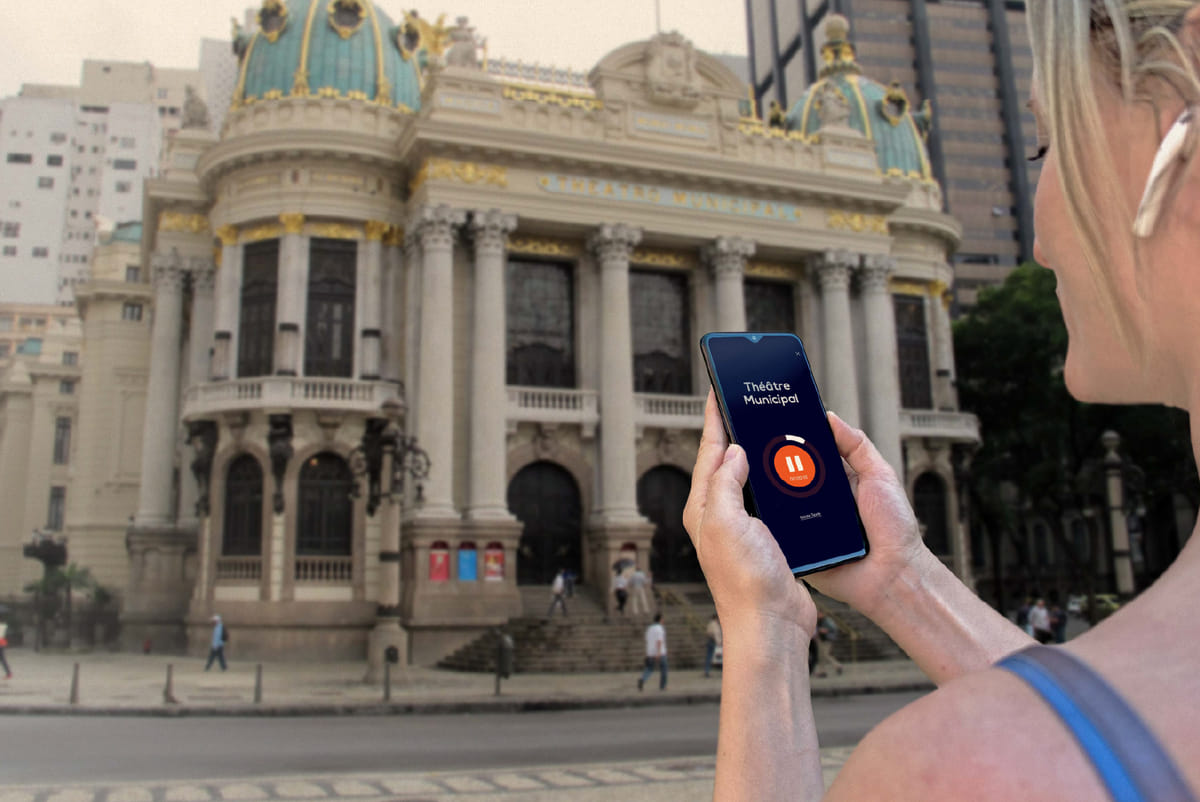
You arrive in front of the beautiful Municipal Theater of Rio. If it's vaguely telling you anything, it's simply because it was built on the model of the Opéra Garnier in Paris.

National library

Here you have, on your left, the National Library of Rio. Its architecture, presenting an eclectic style, combining neoclassical and art nouveau elements, is deliberately impressive.

Cinelândia

This whole area, in which you are located, is now called Cinelandia. Everyone will tell you that you are in Cinelândia Square, although its real name is Floriano Peixoto Square, in honor of the second President of the Republic of Brazil, whose statue you saw in front of the library you saw.

Riachuelo Theatre

It denotes this Riachuelo theater, with its Arabic style in the middle of modern buildings in the center. This Moorish revival architectural style is quite rare in the city.

Selarón staircase

There it is at last, the famous colored staircase that you have all been waiting for! You had certainly seen images of it before coming and for once it's as beautiful in real life as in photo!

Meeting / Pickup

Meet on location: This experience has no pick-up service, customers have to make their way to our meeting point.

Please Note

An internet connection is required to download the itinerary before the visit, organize yourself accordingly

Always check local conditions before you leave

Make sure your smartphone is sufficiently charged or carry an external battery.

After booking, you will receive an email with instructions for installing the application (available for iPhone and Android) as well as the procedure for activating the circuit code

The circuit is not suitable for people with reduced mobility (presence of stairs).

Destinations
Language
Operator

Reviews

No reviews yet

Login

Sign In / Register

Login
Register
Forgot Password?