Private Jewish History Tour of Warsaw by Retro Minibus with Pickup

$293
Duration
3 hours
Type
Difficulty
Reviews
(2)
4.5 /5

Before World War II, Warsaw was one of the largest and most important Jewish cities in the world, second only to New York. During the Nazi occupation, this vibrant community was almost completely destroyed. The Warsaw Jewish Ghetto was erased, and much of the city was reduced to rubble.

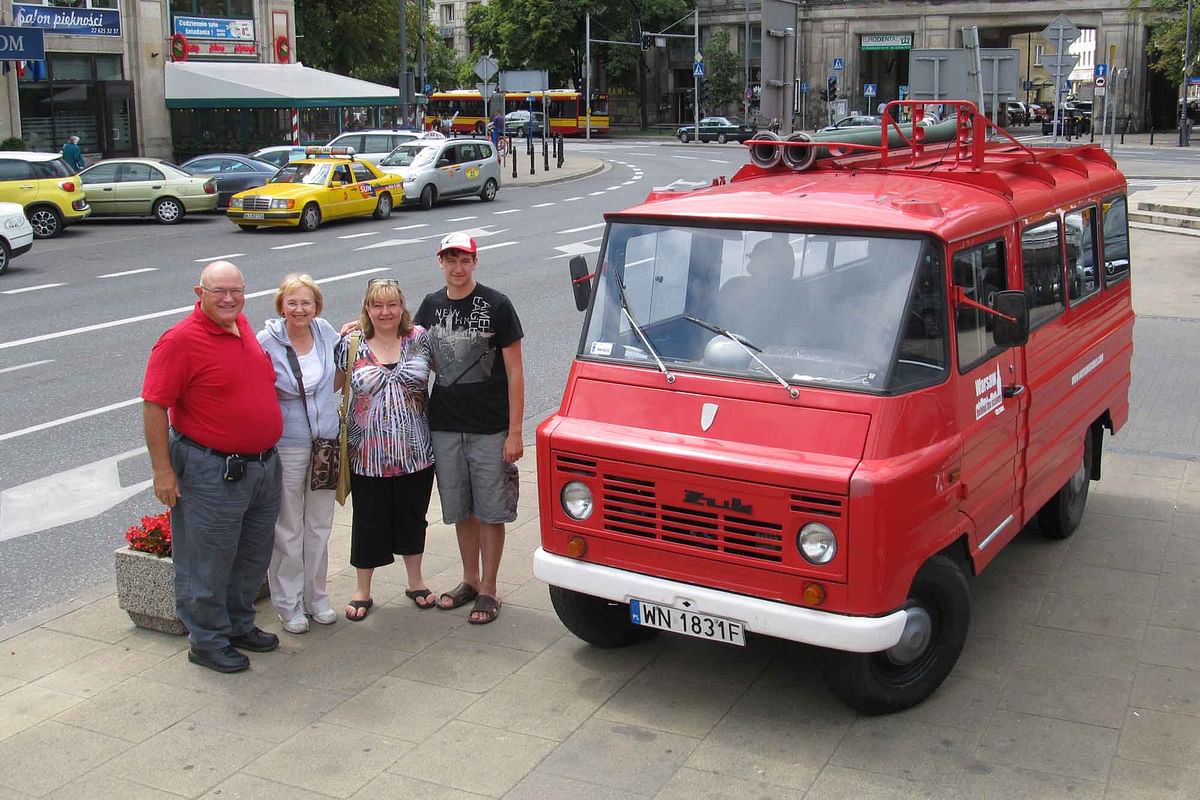
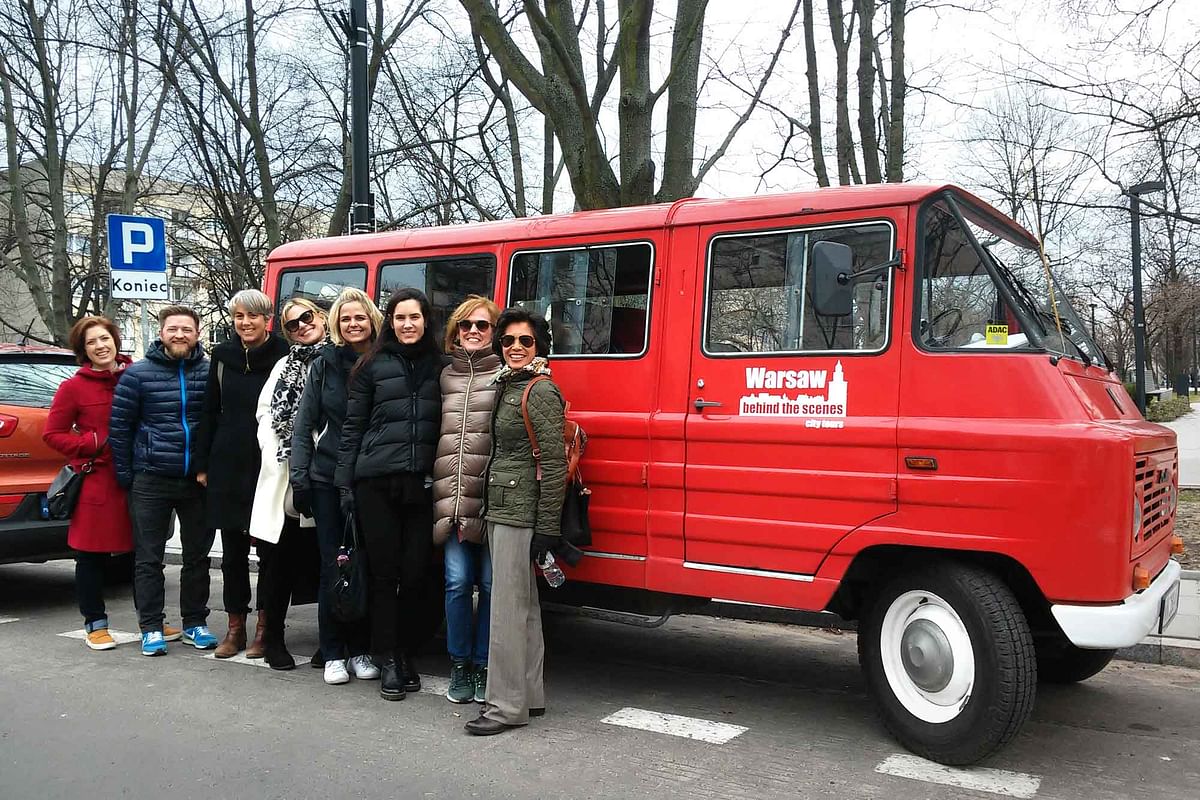
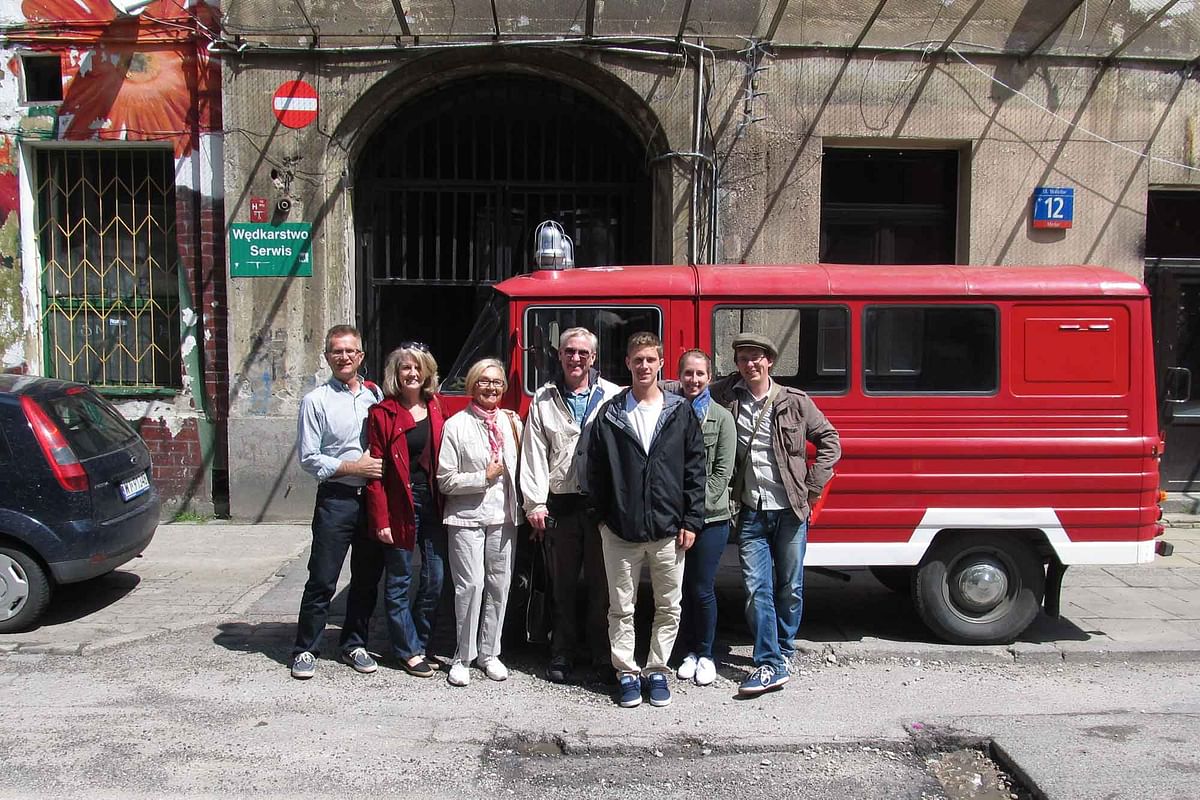
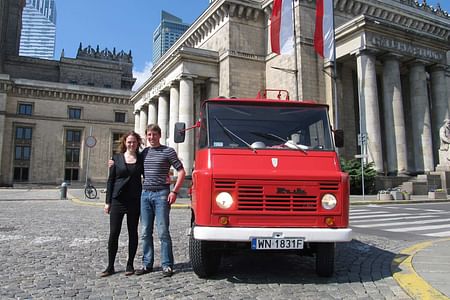
This private Warsaw Jewish Ghetto tour focuses on the history of World War II in Warsaw, including daily life under Nazi rule, mass deportations to extermination camps, and the 1943 Warsaw Ghetto Uprising. Traveling by retro Żuk minibus allows you to visit a wide range of historically significant sites that are difficult to reach on foot.

The route includes locations such as Grzybowski Square and Próżna Street, preserved fragments of the Ghetto Wall, Waliców Street, Mila 18, the POLIN Museum area, and the Umschlagplatz, the former deportation point to Treblinka.

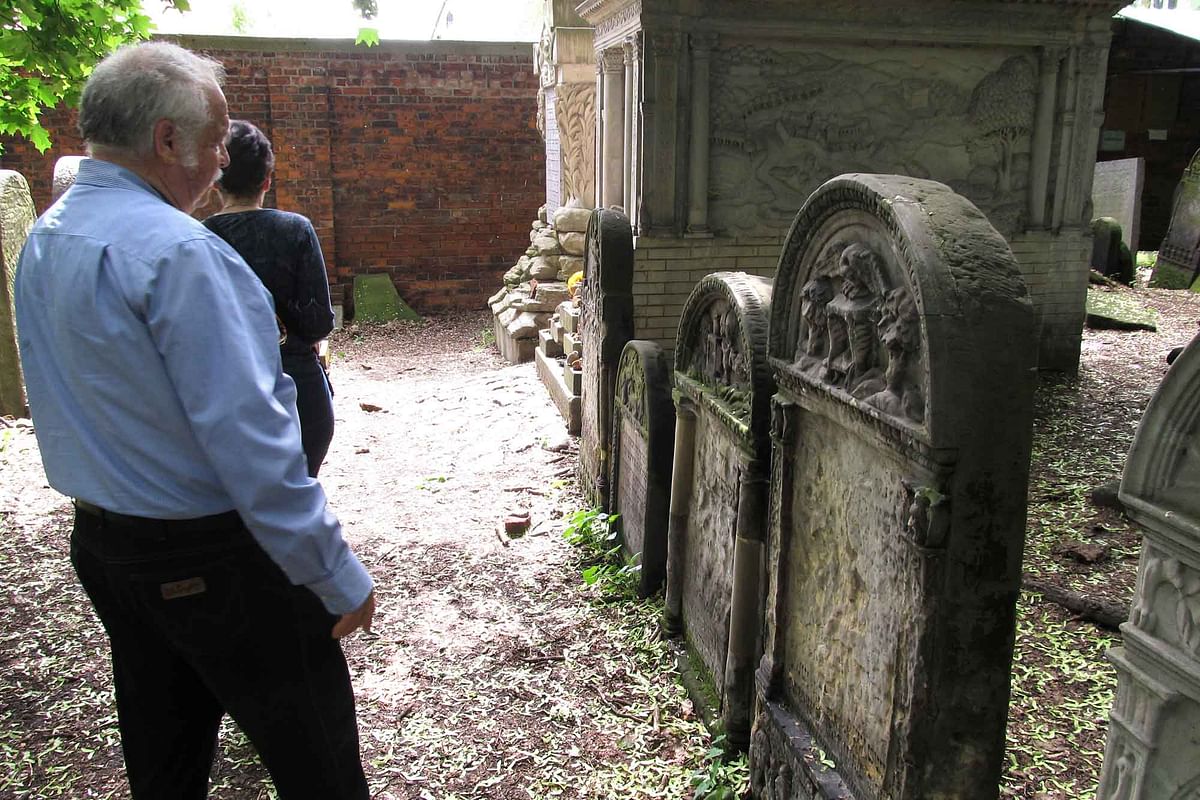
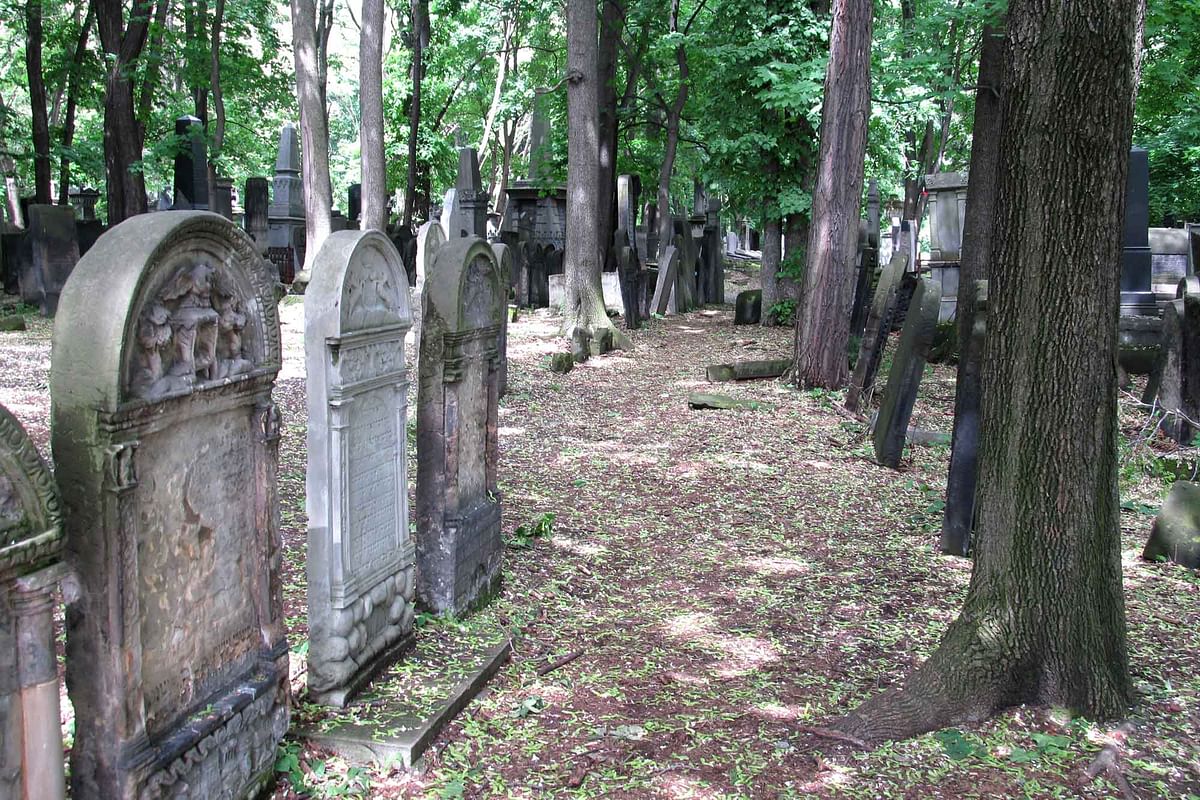
As this is a private and flexible tour, the itinerary can be adjusted to your interests. Visits to the synagogue and Jewish cemetery are optional. Throughout the experience, your knowledgeable local guide provides historical context and insight into one of the most tragic and defining chapters of Warsaw’s and Europe’s history.

HIGHLIGHTS

  • Learn about Jewish life and heritage in pre-war Warsaw
  • Explore key sites of the Warsaw Jewish Ghetto
  • Visit places connected with the 1943 Ghetto Uprising
  • See preserved fragments of the Ghetto Wall
  • Discover locations away from the usual tourist routes
  • Travel by iconic Żuk retro minibus

Inclusions

  • Hotel/apartment Pickup and drop-off within a 3 km radius of the city center
  • English speaking guide
  • Transport by retro communist minibus

Exclusions

  • Entrance fees to Synagogue and Cemetery (visits are optional)
  • Food and drinks
  • Tip or gratuity

Tour Plan

Monument to Janusz Korczak
After the hotel pickup, the tour starts at the memorial of Janusz Korczak. He was a Polish-Jewish educator, children's author, and pedagogue. After many years as director of an orphanage in Warsaw, he refused to escape and stayed with his orphans until their end in the Treblinka extermination camp.

Grzybowski Square
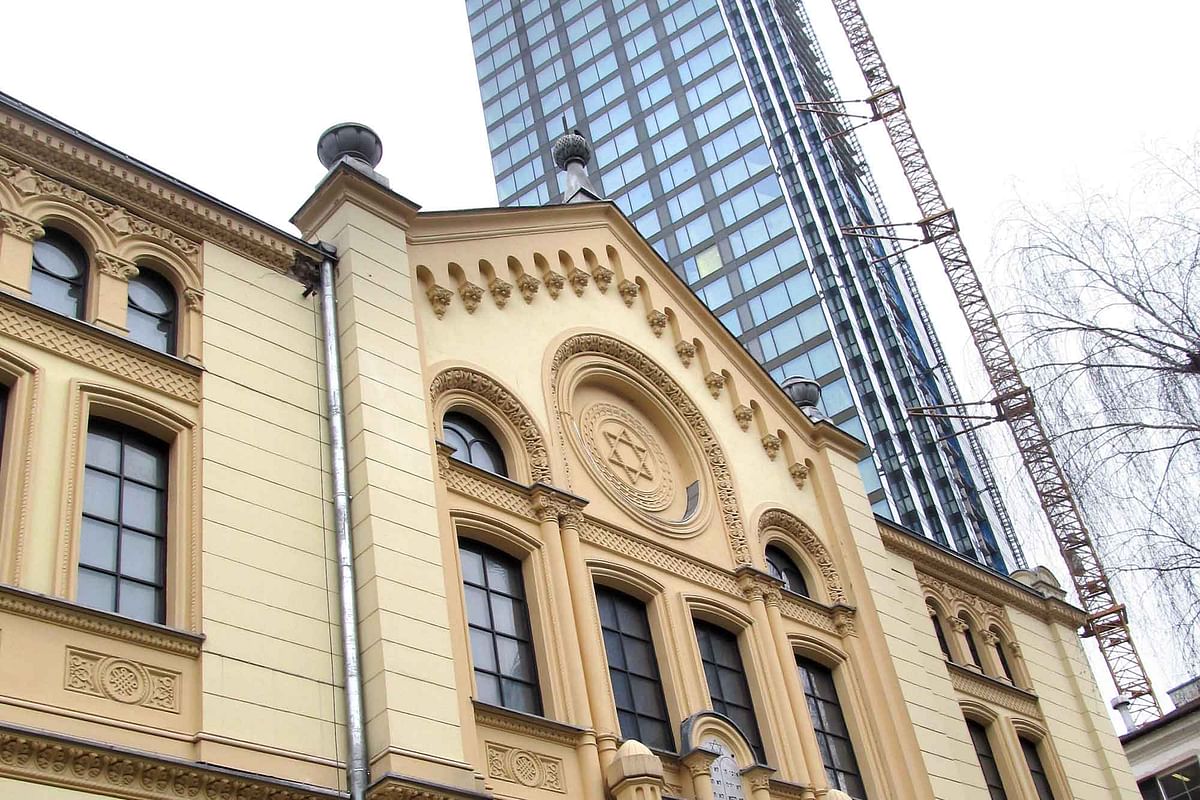
Next is the Grzybowski Square. It represents Warsaw in a Nutshell - the city which changed dramatically during the XXth Century, witnessed two World wars, two totalitarian systems, and, finally, notable changes and re-uniting Europe in the early XXIst Century. It was a Jewish part of Warsaw, and thanks to Próżna Street, one can still find traces of the past.

Prozna Street (Ulica Prozna)
Próżna Street is a historical street in Warsaw, Poland. It is the only former Warsaw Ghetto street featuring four tenement houses. The street is one of the few fragments of "Jewish Warsaw", in which the ambience of the old Jewish quarter is revived during the Festival of Jewish Culture – Singer’s Warsaw. The festival has been held annually every September in Próżna Street and Grzybowski Square since 2004.

Fragment of Ghetto Wall
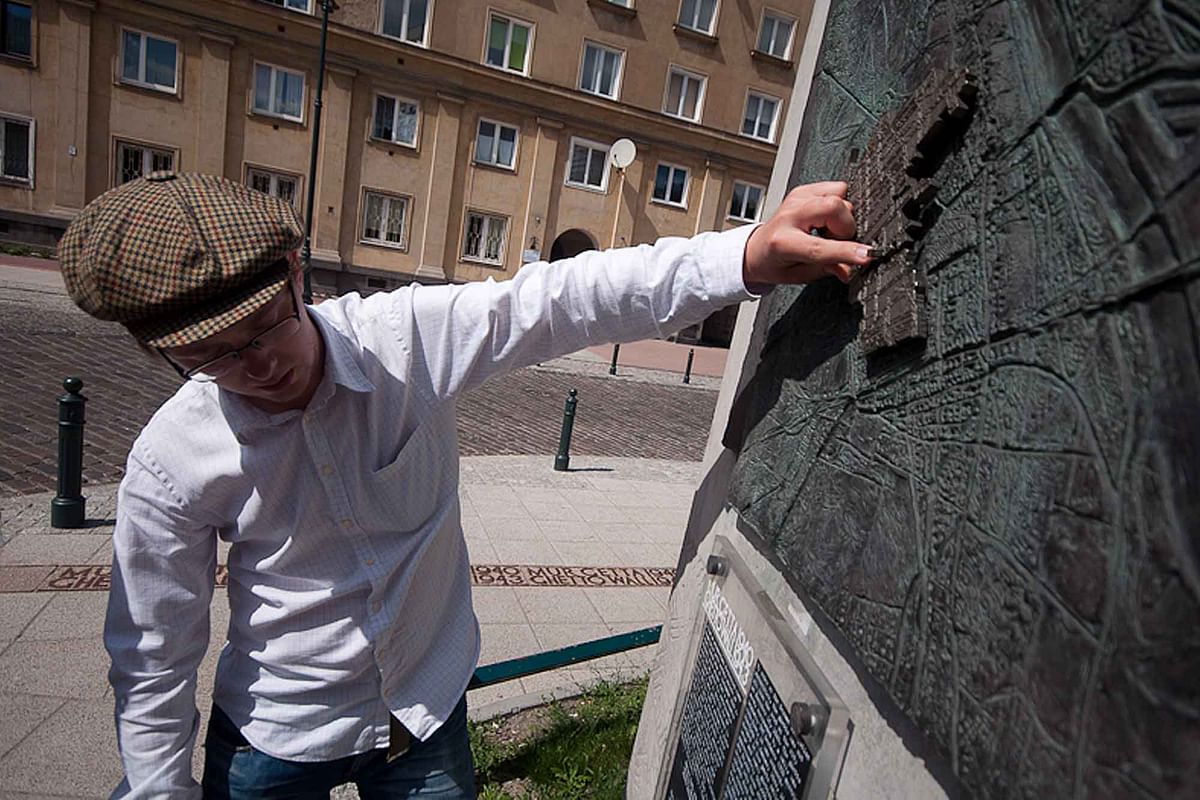
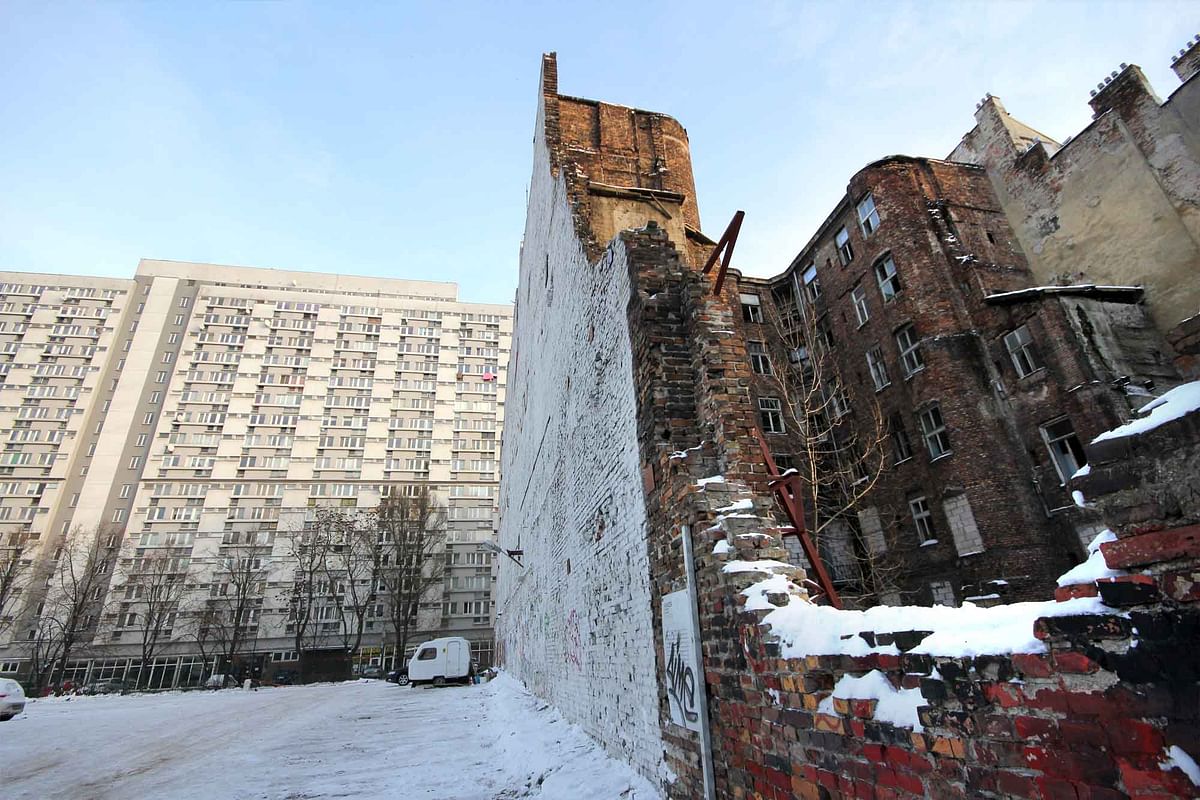
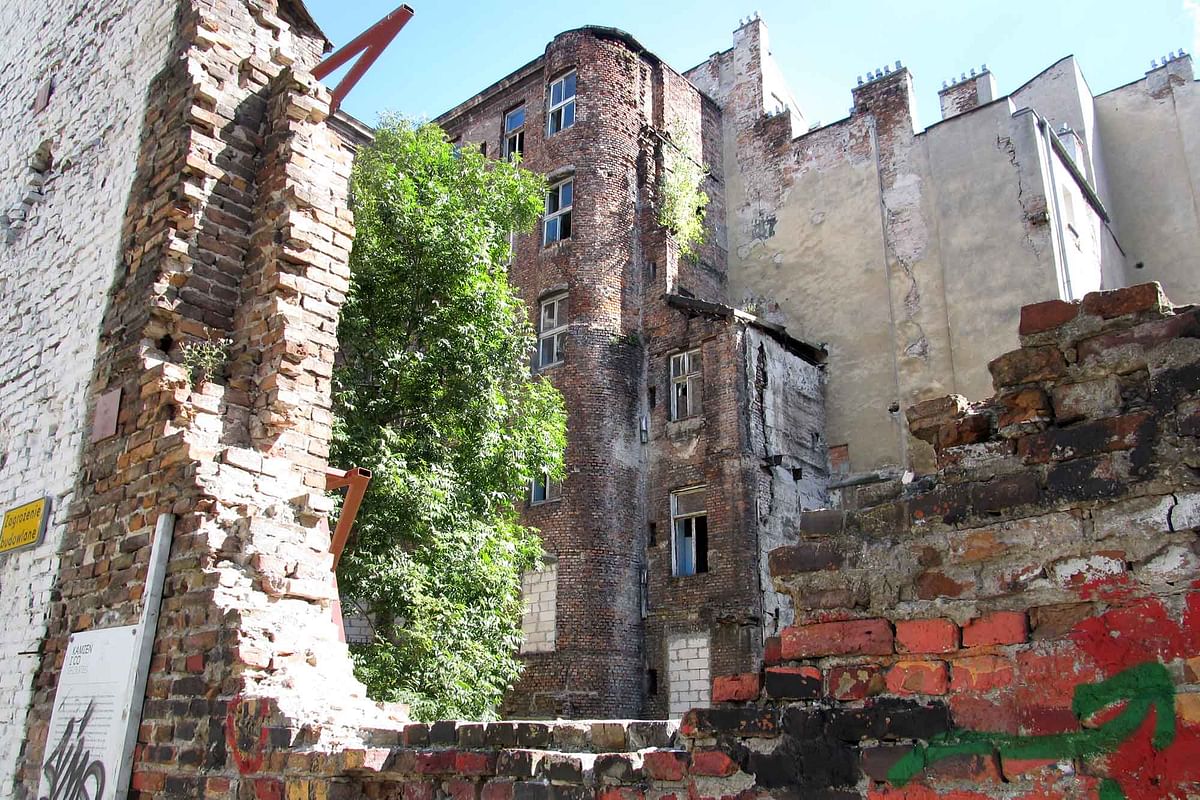
A few fragments of the Ghetto Wall running between the properties are preserved, as well as the walls of the pre-war buildings that marked the border of the ghetto. The three best-known parts of the wall are located in the former small ghetto, although some are periodically not accessible: the guide takes you to one of them.

Waliców 14
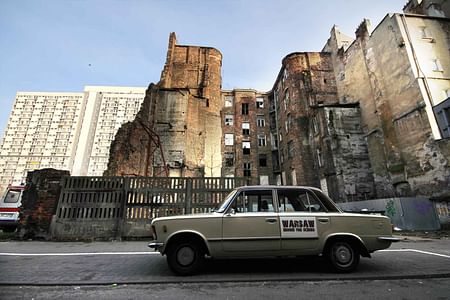
The Waliców Street tenement house is, as we say, the last ghost from the Ghetto since it remains a ruin. Also, a fragment of the Ghetto wall is preserved in the same place.

The Bridge over Chłodna
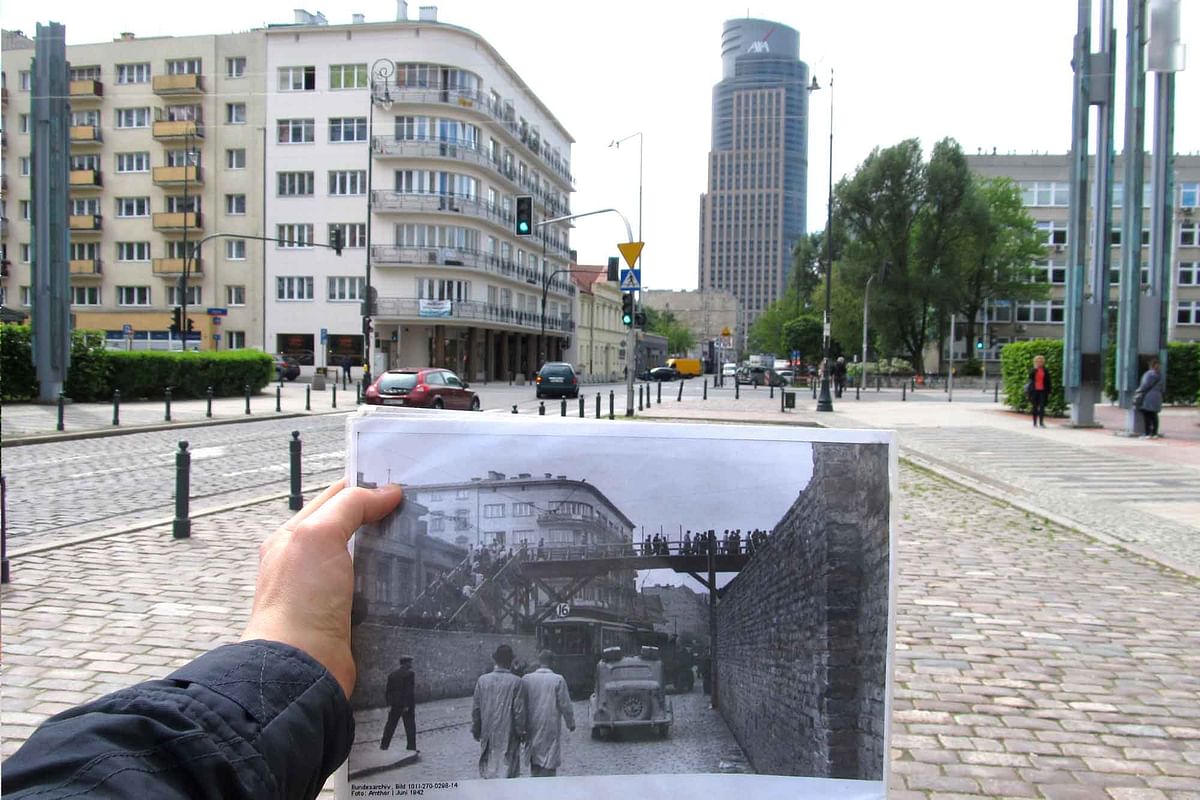
In 1941, the Ghetto was divided into two parts by Chłodna Street, used for East-West transfer traffic. The wooden bridge was built near the intersection of Chłodna and Żelazna streets to link two parts. It reached the third floor of the buildings, which allowed the “Aryan” trams, German military transports and cars to pass beneath it, as we can see in many photographs.

Muranów district
The next stop is the Muranów district. Again, the first impression is that it is just a regular neighbourhood filled with squared blocks of flats. But there is much more from the past to be discovered with the help of a guide.

Monument to the Ghetto Heroes
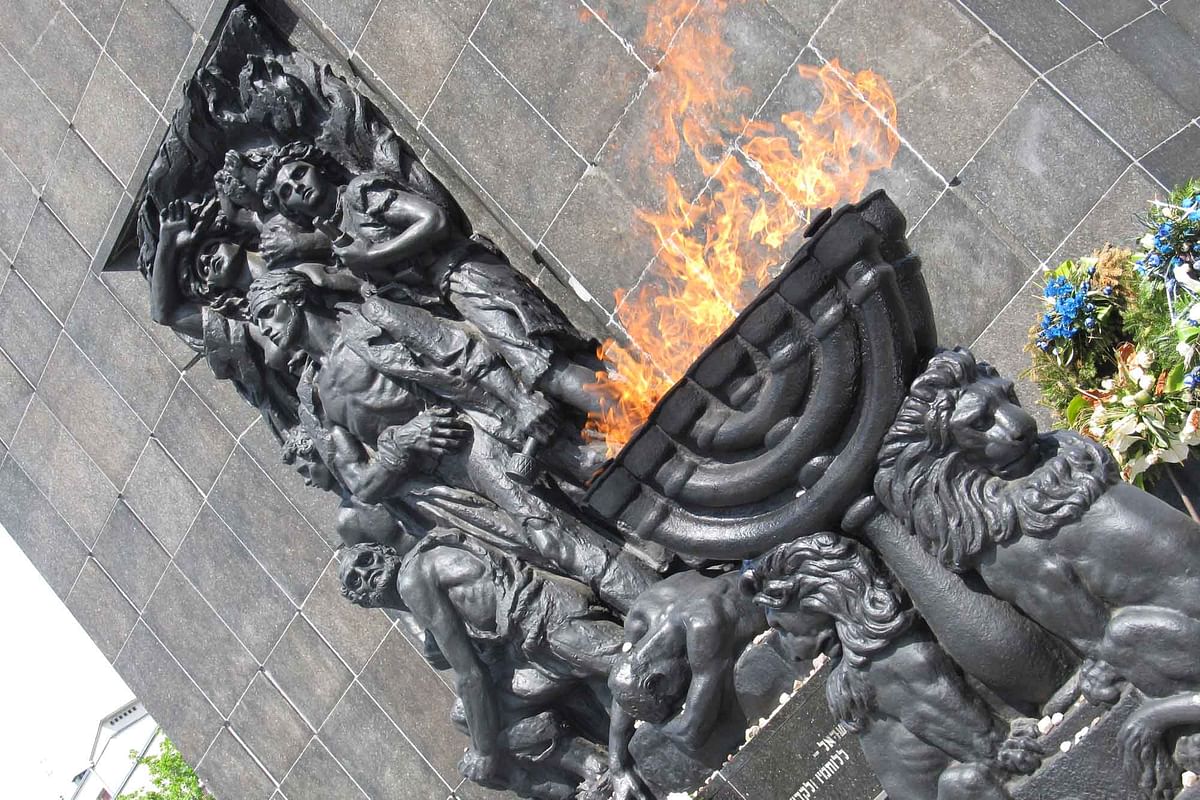
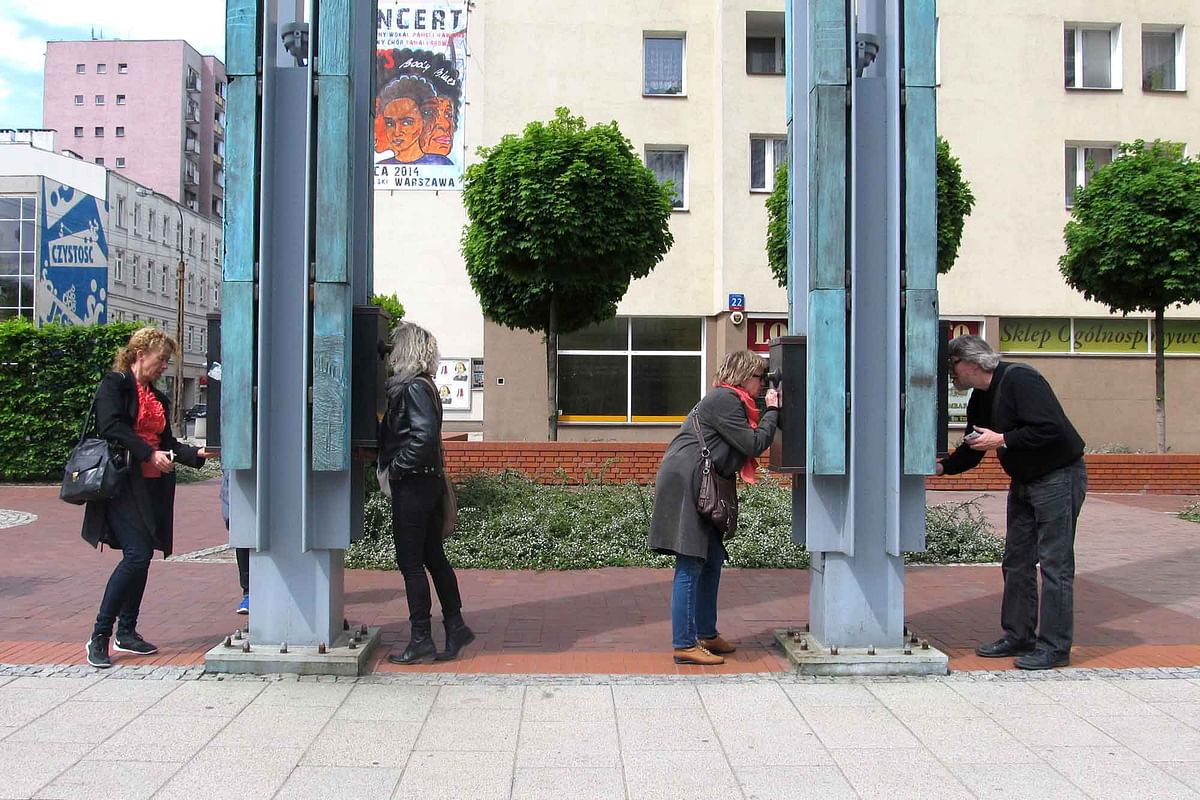
The Monument of the Ghetto Heroes and Polin Museum are two symbolic and essential places where your guide takes you. Both are located near the spot where the first armed clash of the 1943 uprising took place. Yet, at the same time, it is where Polish, Jewish and German nations reconciled through several events throughout the last 50 years.

Memorial at Mila 18
There are two more places to visit. First is 18 Mila Street, where the underworld smugglers constructed their hideout in 1943. On the 8th of May 1943, three weeks after the start of the Warsaw Ghetto Uprising, when the Nazis found the bunker, there were around 300 people inside. Few escaped, while the rest decided to commit suicide; their remains are buried in that basement.

Umschlagplatz
The last place visited on tour is also the scene which marks the end of the Jewish community in Warsaw. It is the Umschlagplatz, a train station where Nazis used to load Jews and transport them to the Treblinka extermination camp. Finally, in peace, one can uncover the memorial and buildings at Stawki Street, which witnessed those horrifying scenes in 1942.

Itinerary

Expand All
Monument to Janusz Korczak

After hotel pickup, the tour begins at the monument dedicated to Janusz Korczak, a Polish-Jewish educator and author. As the director of a Warsaw orphanage, he refused to abandon the children in his care and was deported with them to the Treblinka extermination camp.

Grzybowski Square

The next stop is Grzybowski Square, once part of Jewish Warsaw and today a symbol of the city’s turbulent 20th-century history.

Prozna Street (Ulica Prozna)

Próżna Street is the only street in Warsaw where pre-war Jewish tenement houses have survived. It remains a key place for commemorating Jewish culture and hosts events such as the annual Singer’s Warsaw Festival.

Fragment of Ghetto Wall

You will then visit preserved fragments of the Ghetto Wall, including sections incorporated into later buildings that once marked the boundaries of the ghetto. The three best-known parts of the wall are located in the former small ghetto, although some are periodically not accessible: the guide takes you to one of them.

Waliców 14

One of the most striking sites is the ruined tenement house on Waliców Street, often described as the last visible ghost of the ghetto, where another fragment of the wall can also be seen.

The Bridge over Chłodna

At Chłodna and Żelazna Streets, your guide explains the story of the famous wooden ghetto bridge that connected the two separated parts of the ghetto above active street traffic. Archival photographs help bring this extraordinary structure back to life.

Muranów district

The tour continues to Muranów, a postwar residential district built directly on the rubble of the destroyed ghetto.

Monument to the Ghetto Heroes

Here, you visit the Monument to the Ghetto Heroes and the area surrounding the POLIN Museum of the History of Polish Jews, close to the site of the first armed clashes of the 1943 uprising.

Memorial at Mila 18

At Mila 18, learn about the bunker used by Jewish resistance fighters. When discovered by the Nazis in May 1943, many of those hiding inside chose death rather than capture. Their remains are buried in the basement beneath the site.

Umschlagplatz

The tour concludes at the Umschlagplatz, the former deportation point where Jews were loaded onto trains bound for the Treblinka extermination camp. Today, the memorial at Stawki Street stands as a solemn reminder of the final chapter of Jewish life in wartime Warsaw.

Meeting / Pickup

Pick-up only: Customers must be picked up from selected pick-up locations.

What to Bring

  • Clothes suitable for actual weather.

Please Note

  • This tour can be booked instantly online for adults and children over 150 cm (4 ft 9 in). If you wish to book the tour for a child under 150 cm, please contact the tour operator in advance to check the availability of seat boosters, which are mandatory under Polish law.
  • Each minibus accommodates up to 8 passengers, and a fleet of 5 minibuses is available.
  • The vehicles are used primarily for transfers between locations, with walking segments at each stop. Please wear comfortable clothing and suitable footwear.
  • Please note that classic vintage minibuses are not equipped with air conditioning, and some do not have seat belts (which is permitted for historic vehicles). All vehicles are equipped with heating for the winter season.

Cancellation Policy

  • We will charge a cancellation fee of 100% if booking is cancelled 1 day or less before the event
Destinations
Language

Reviews

4.5/5
Wonderful
2 verified reviews
Location (5/5)
Amenities (4/5)
Services (4.5/5)
Price (5/5)
Rooms (4/5)

2 Comments

  1. 4.4

    • Location
    • Amenities
    • Services
    • Price
    • Rooms

    Exploring Jewish history in Warsaw by retro minibus was an eye-opening experience for our family. Our guide shared captivating stories that brought the past to life, especially when we visited the vibrant Praga district and its hidden gems. While the pick-up timing felt a bit rushed, the overall journey was enriching and memorable, leaving us with a deeper understanding of the city’s cultural tapestry.

  2. 4.6

    • Location
    • Amenities
    • Services
    • Price
    • Rooms

    Our pickup in that charming retro minibus set a delightful tone for the journey. We were captivated by the depth of history shared, especially at the poignant memorial that left us reflecting long after.

Comments are closed.

Login

Sign In / Register

Login
Register
Forgot Password?