Explore Jerusalem Private Guided Day Tour – From Amman / Dead Sea

$1,450
Duration
11 hours 30 minutes
Difficulty
Reviews
No reviews yet

This full-day tour gives you the rare chance to explore the spiritual heart of Jerusalem while enjoying the comfort and convenience of a private transfer from Amman or the Dead Sea. Instead of worrying about transportation or border procedures, you’ll be guided every step of the way, allowing you to focus on the experience itself.

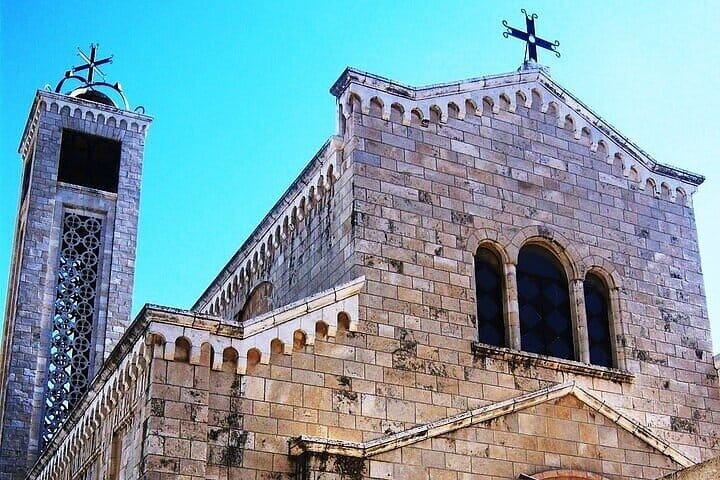
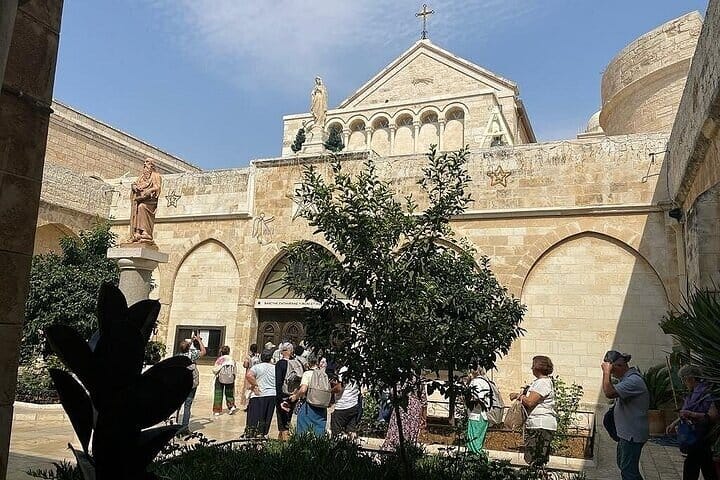
With your professional driver and local guide, you’ll walk through the pages of history—standing at the Mount of Olives for panoramic views, pausing in the peaceful Garden of Gethsemane, and entering the Old City through the Zion Gate. From touching the ancient stones of the Western Wall, to retracing the Via Dolorosa, and visiting the Church of the Holy Sepulchre, every stop connects you deeply with faith, culture, and history.

Unlike crowded group tours, this private journey ensures flexibility, personal attention, and a truly meaningful exploration of Jerusalem.
Inclusions

  • Private transportation in a modern, air-conditioned vehicle
  • Professional English-speaking driver throughout your trip
  • English-speaking Jerusalem guide and entry fees included
  • Complimentary onboard Wi-Fi and bottled water for your comfort

Exclusions

  • Supplement applies for pick-up or drop-off at locations outside the standard meeting points.
  • The inter-border shuttle bus service is not part of this package.

Tour Plan

Itinerary

Expand All
Stage 1

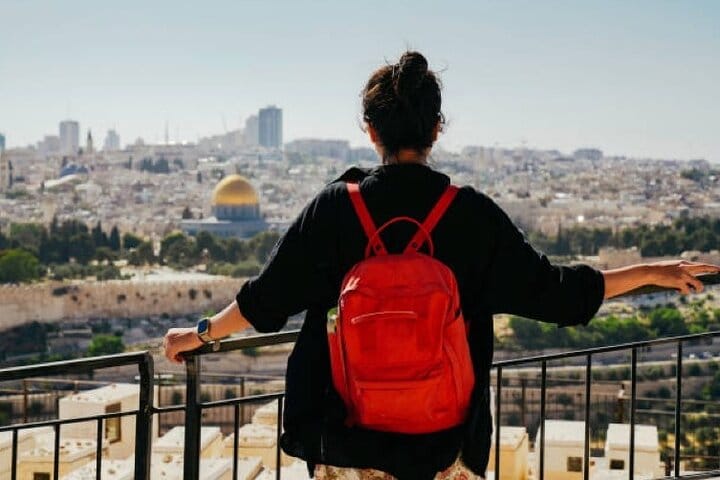
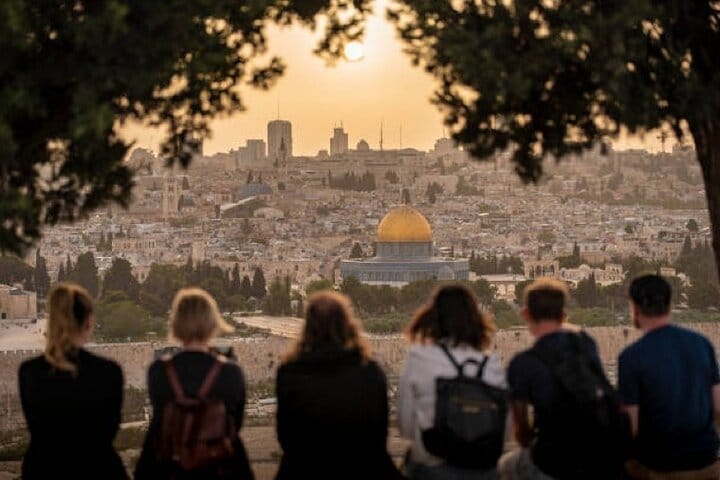
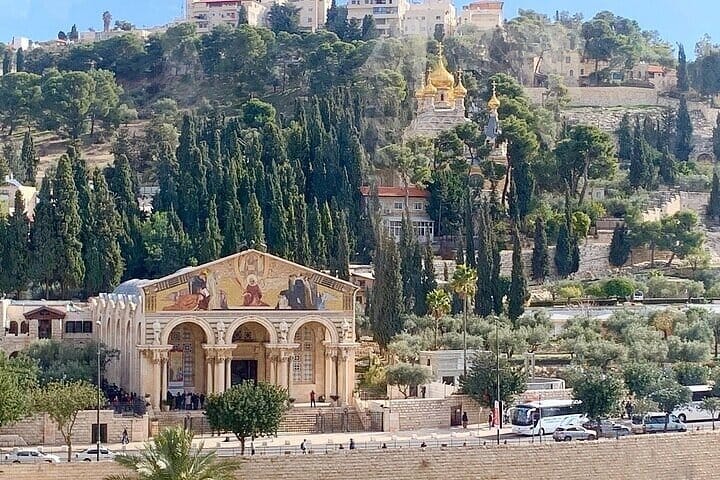
Overloaded with churches and home to the oldest continually used cemetery in the world, the Mount of Olives holds particular interest to religious pilgrim travelers to Jerusalem, but even the non-devout can appreciate the spectacular Old City panoramas from the peak. This sacred hill is believed to be the place where God will begin rising the dead on Judgement Day. For Christian believers, this is also where Jesus ascended to heaven after his crucifixion and subsequent resurrection. The Church of the Ascension on the top of the mount dates from 1910 and has the best views across Jerusalem. Walking down the slope, you come to the Church of the Pater Noster built next to the site where, according to tradition, Jesus instructed his disciples. Farther down, the Church of Dominus Flevit is claimed to be built over the site where Jesus wept for Jerusalem, and farther along is the onion-domed Russian Church of Mary Magdalene.

Stage 2

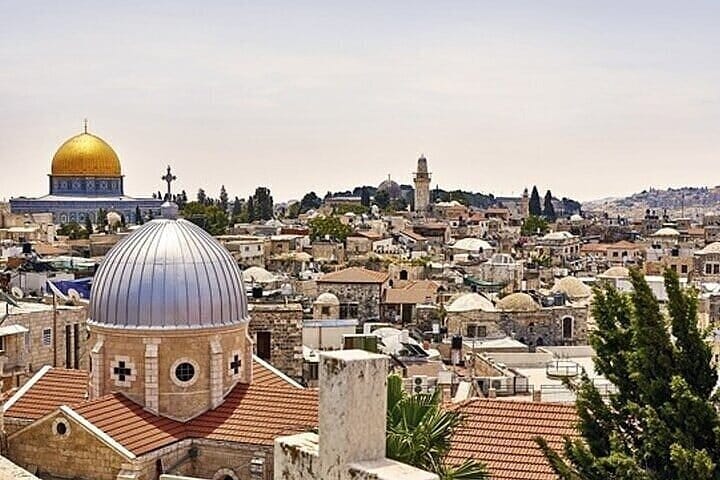
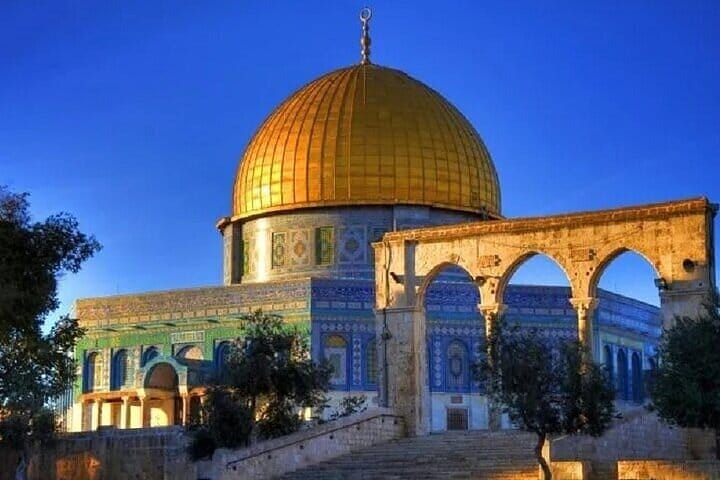
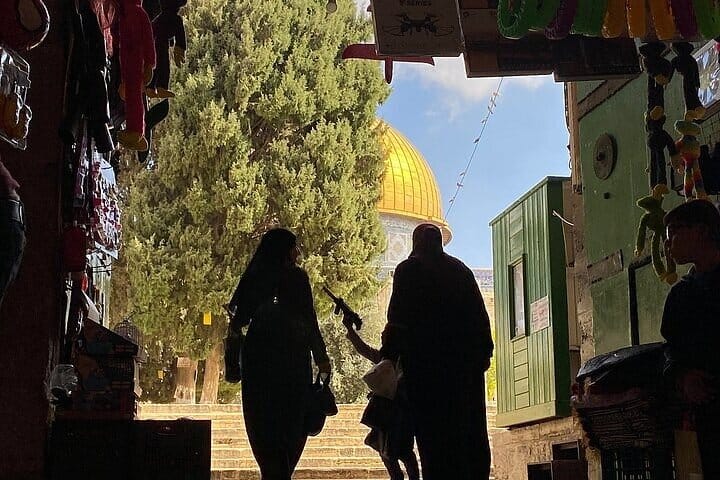
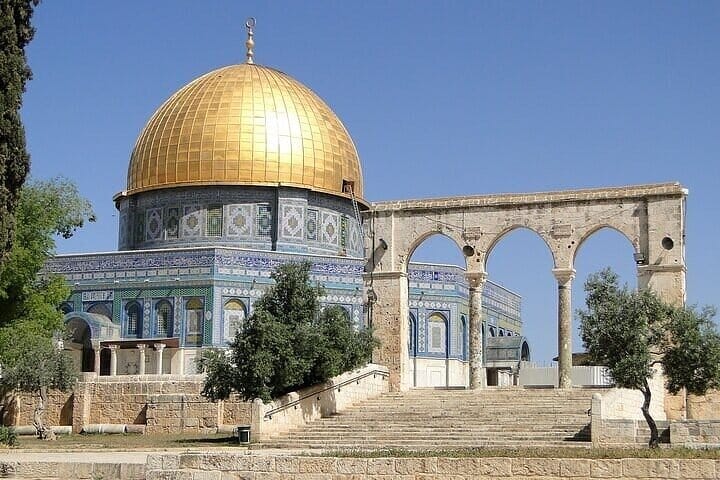
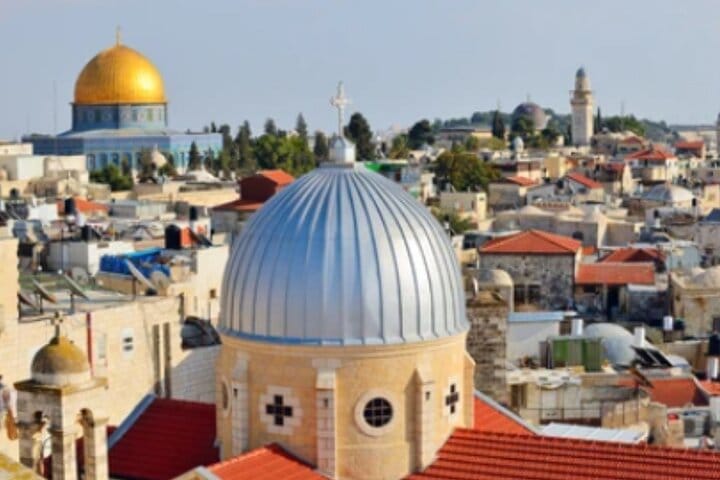
Follow in the footsteps of centuries of pilgrims, & enter one of the holiest sanctuaries on Earth. Lauded by both Jews and Muslims, this is the site where Abraham (father of all three monotheistic faiths) is said to have offered his son up as a sacrifice to God, where Solomon built the First Temple for the Ark of the Covenant, and where the Prophet Muhammad is said to have ascended to heaven during his early years of preaching Islam. Haram Al-Sharif is a place of deep significance (& contention over ownership) for those of faith. The wide plaza, above the old city, is centered around the glittering Dome of the Rock, which is Jerusalem's most iconic landmark. Beneath the golden dome is the sacred stone both Jews and Muslims believe to be where Abraham offered his son to God and where Muslims also believe the Prophet Muhammad began his journey to heaven. The southern side of the plaza is home to the Al-Aqsa Mosque. First established in 705 CE, it's among the oldest mosques in the world.

Stage 3

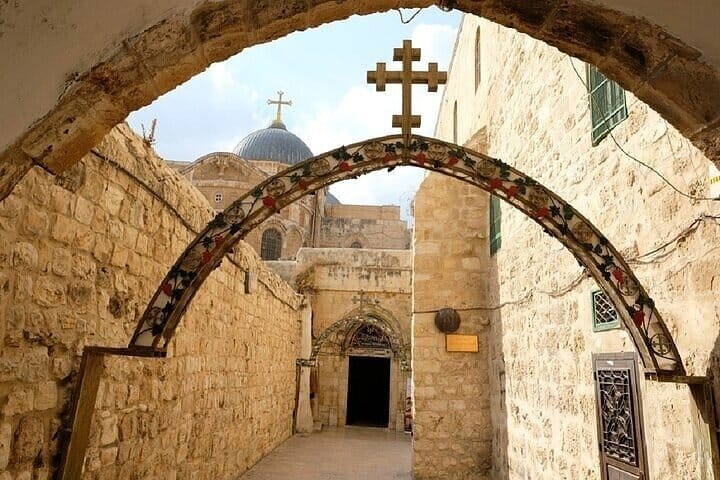
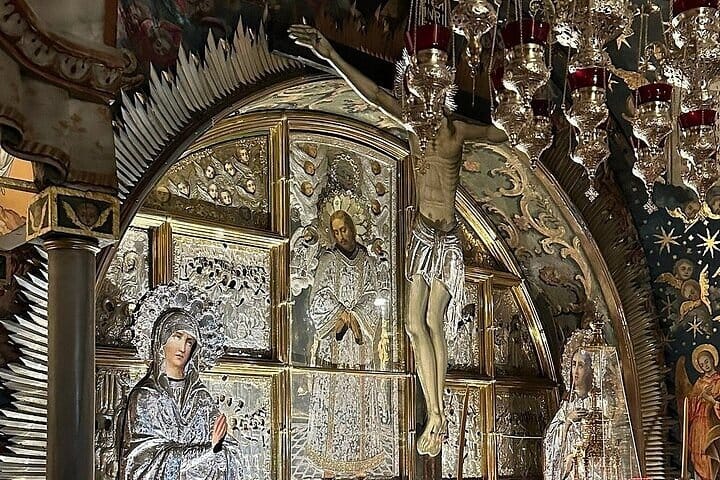
For Christian pilgrims, the Church of the Holy Sepulchre is Jerusalem's holiest site and is said to have been built on the site where Jesus was crucified. The site for the church was picked by Saint Helena–mother to Constantine the Great–during her tour of the Holy Land. She was the one to announce to the Byzantine world that this spot was the Calvary (or Golgotha) of the gospels. The original church (built in 335 CE) was destroyed by 1009, and the grand church you see now dates from the 11th century. Although often heaving with pilgrims from across the world, the church interior is an opulently beautiful piece of religious architecture. This is the ending point for the Via Dolorosa pilgrimage, and the last five Stations of the Cross are within the Church of the Holy Sepulchre itself. The interior contains various holy relics, and the quarters inside the church are owned by different Christian denominations.

Stage 4

For many Christian visitors, the Via Dolorosa (Way of Sorrow) is the highlight of a visit to Jerusalem. This walk follows the route of Jesus Christ after his condemnation as he bears his cross towards execution at Calvary. The walk is easily followed independently, but if you're here on a Friday, you can join the procession along this route led by the Italian Franciscan monks. The course of the Via Dolorosa is marked by the fourteen Stations of the Cross, some of which are based on the Gospels' accounts and some on tradition. The walk begins on Via Dolorosa Street (1st station, east of the intersection with Al-Wad Street) from where you follow the street west. Then proceed south onto Al-Wad Street and west onto Via Dolorosa Street again, through eight stations until you reach the 9th station at the Church of the Holy Sepulchre where the last five stations are.

Stage 5

The Citadel, popularly known as the Tower of David, actually has no connection with David, having been erected by King Herod to protect the palace he built in approximately 24 BCE. His original citadel had three towers named after his brother Phasael, his wife Mariamne, and his friend Hippicus. After Titus' conquest of the city in 70 CE, the Romans stationed a garrison here, but later the citadel fell into disrepair. It was successively rebuilt by the Crusaders, Egypt's Mamelukes, and the Ottomans, during their years of reign over Jerusalem. The building you now see was built in the 14th century on the foundations of the original Phasael Tower. Inside is the Tower of David Museum, which relays the story of Jerusalem. A permanent display of archaeological exhibits can be viewed, along with temporary exhibitions that explore facets of Jerusalem's culture and heritage. If you climb up to the citadel's rooftop, you are rewarded with one of the best Old City vistas in town.

Stage 6

Mount Zion (the small hill immediately south of the Old City's Zion Gate) is home to Jewish and Muslim shrines as well as a number of churches. Since the Byzantine Age, Mount Zion has been revered as the place where Christ celebrated the Last Supper and where the Virgin Mary spent the last years of her life, according to some Christian traditions (another tradition says her last days were spent in Ephesus in Turkey). For Jews, Mount Zion's importance stems from this being the place of King David's Tomb. If you climb up the stairs from the tomb's courtyard, you'll come to the Last Supper Room, which has served as both church and mosque throughout its long history. The Church of the Dormition nearby is where the Virgin is supposed to have died, while just to the east is the Church of St. Peter of Gallicantu where Peter is said to have denied Jesus.

Stage 7

The Old City fortifications date from the Ottoman period, and nine magnificent gates at junctions within the wall's length lead into the Old City. The Damascus Gate is one of the most famous. Lion's Gate (sometimes called St. Stephen's Gate) leads onto the Mount of Olives outside the city walls. Zion Gate is the main entry into the Jewish Quarter, while Jaffa Gate is the main passageway for the Christian Quarter. Walking the wall ramparts is a wonderful way to experience the Old City. There are two sections that can be walked on: Jaffa Gate heading north to Lion's Gate or Jaffa Gate heading south to Dung Gate.

Meeting / Pickup

Pick-up only: Customers must be picked up from selected pick-up locations.

Know Before You Go

  • Infant seats available
  • Stroller / pram accessible
  • Wheelchair accessible

Please Note

  • Infants must not sit on laps
  • Not suitable for pets
  • No public transportation nearby
  • Not wheelchair accessible
  • A Jordan Pass must be obtained before your travel date. For more information press: jordanpass.jo
  • Kindly provide your WhatsApp number to ensure smooth communication during pickup.
  • • The duration of transfers are approximate, the exact duration will depend on the time of day and traffic conditions
  • After meeting your driver in Amman City or at the Dead Sea, you will be transferred to King Hussein Bridge, where you will complete the necessary passport control and customs procedures. Next, you will continue by Shuttle Bus or VIP Car Service to the Israeli side at Allenby Bridge, where you will again complete passport and customs formalities. Once completed, your Israeli driver will be waiting for you in the arrival lobby—or just outside—holding a sign with your name for easy recognition.
Destinations
Language
Operator

Reviews

No reviews yet

Login

Sign In / Register

Login
Register
Forgot Password?