
Dublin: Audio Guided Walking Tour (3:45 - 20 audio reviews)

$7
Duration
3 hours 45 minutes
Difficulty
Reviews
No reviews yet
Previous
Next

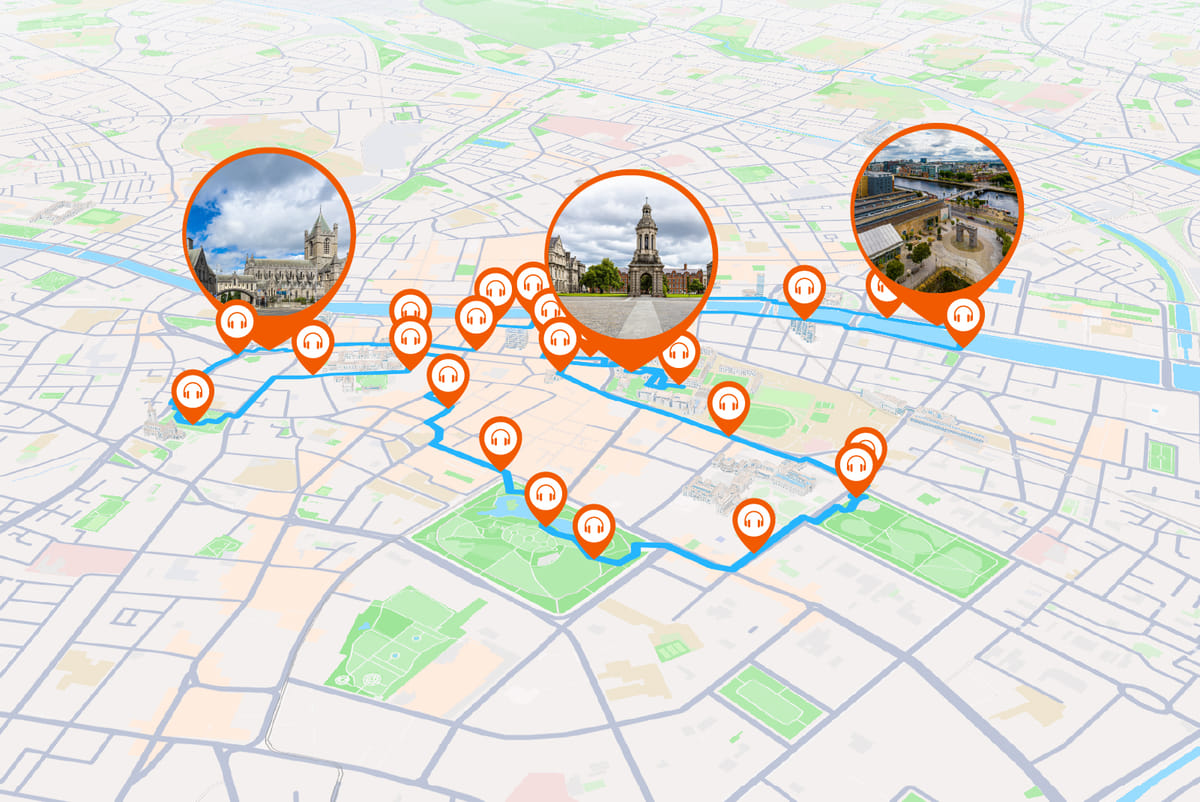
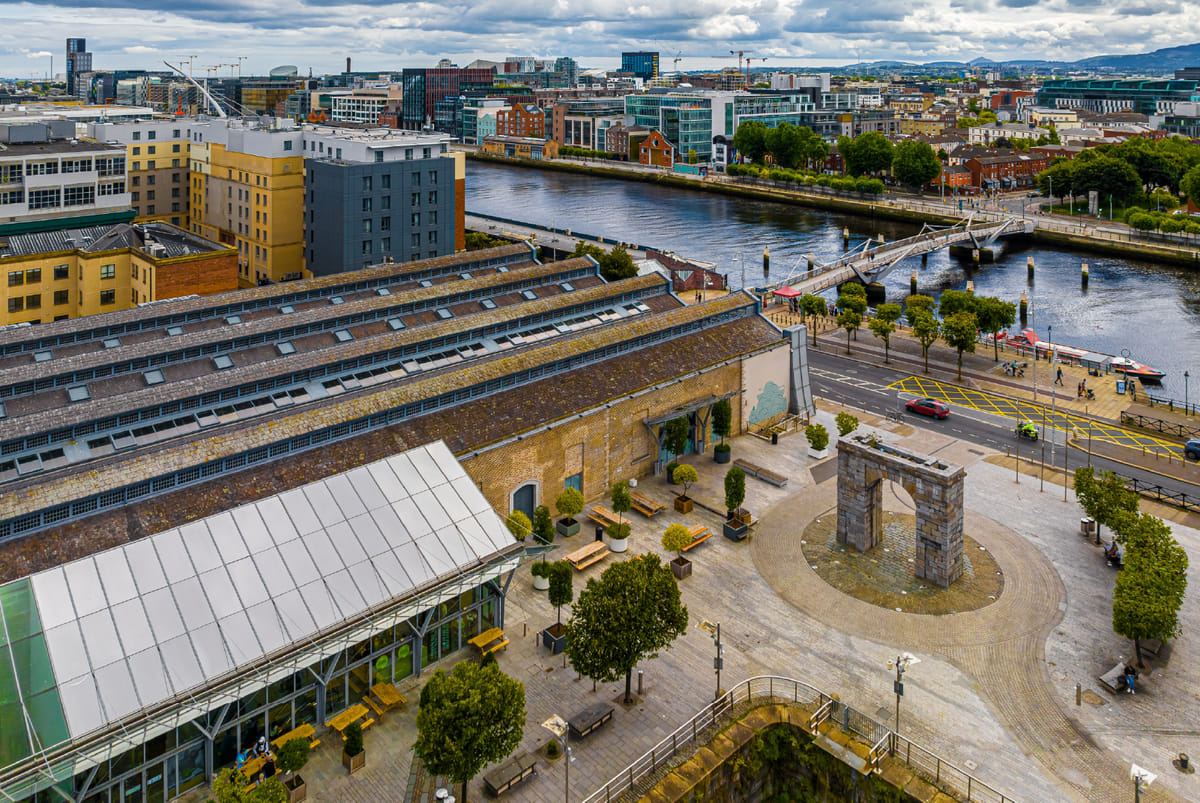
Experience Dublin in a different way thanks to our unique audio guided tour. At your own pace, without time constraints, explore the Irish capital via an itinerary designed to reveal both its emblems and its unusual details. Guided by an interactive 3D map and immersive audio commentary, you discover not only the major places, but also the alleys, facades and stories that shape the soul of Dublin.

From St Stephen's Green to the banks of the Liffey, the tour takes you through Georgian neighborhoods, literary areas, religious sites, and historic plazas. You'll cross the Trinity College campus, visit Christ Church and Saint Patrick's Cathedrals, walk along the Ha'penny Bridge, stroll through Temple Bar, and up to Dublin Castle: each step reveals a fragment of history, culture, and modernity.

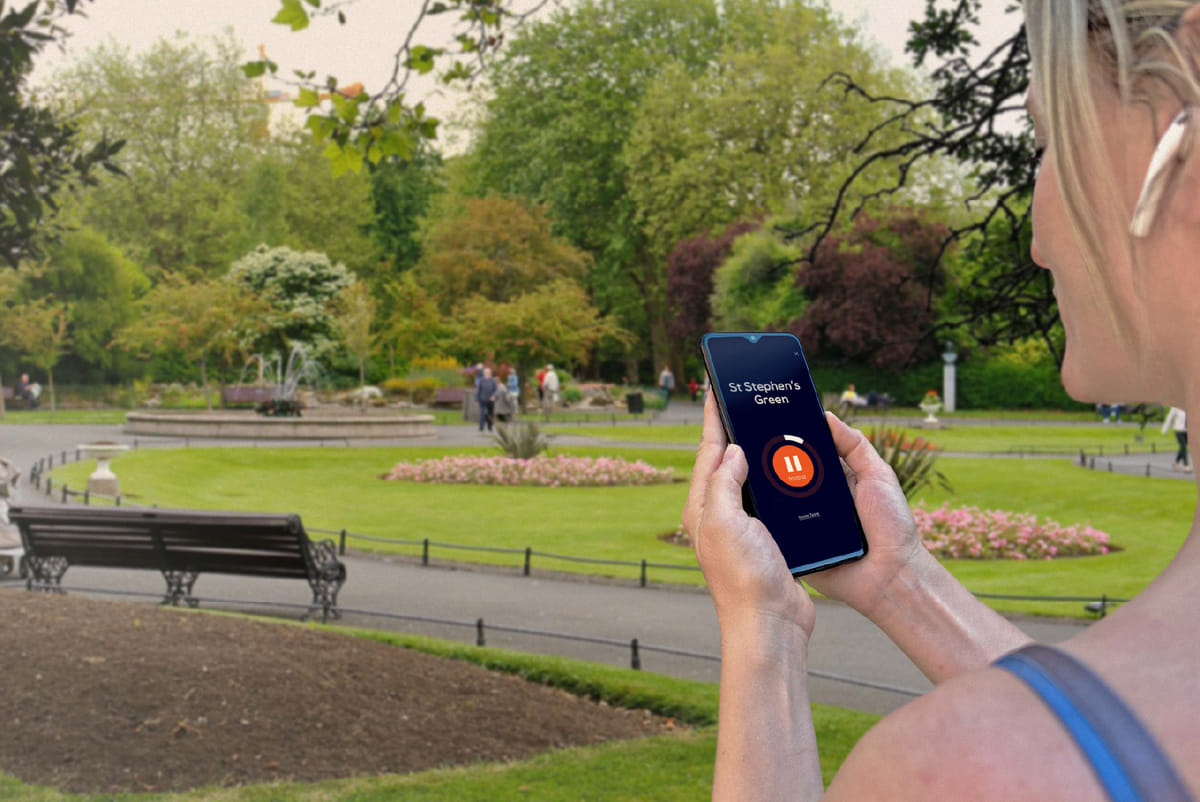
The application, once downloaded, works offline. Thanks to real-time geolocation, you can follow your route without hesitation. Audio commentary is available in French, English, and Spanish, and content can be shared across five devices simultaneously.

The tour is looped: start where you want or from our recommended starting point: St Stephen's Green. Thanks to intelligent navigation, the visit remains fluid even when stopping for a break, a museum or a photo. Your access is unlimited: start the visit now or at a later date.

You will discover: St Stephen’s Green, the Georgian houses of Merrion Square, Trinity College and its library, Christ Church and St. Patrick’s Cathedrals, Ha’penny Bridge, Dublin Castle, Temple Bar, the Molly Malone statue, the Famine Memorial, O’Connell Street, and many other historic sites.

Inclusions

    Immediate access to the audio-guided tour, no tickets or equipment to collect

    No deadline or expiration

    20 immersive audio comments throughout the trip (historical comments, monuments, anecdotes, mysteries...)

    Text transcripts of all audio content

    Admire hidden gems that lie off the beaten path

    3 languages available: French, English, Spanish

    Interactive navigation with real-time geolocation and 3D map to discover the most beautiful streets, squares and neighborhoods

    Recommendations for the best photo opportunities

    Offline mode (no data consumption during the visit)

Exclusions

    Admission fees to fee-paying establishments along the route if you want to make visits

    Headphones or earbuds (optional)

Tour Plan

Itinerary

Expand All
The Georgian houses in Merrion Square

A bit scattered around the city, like here at the gates of Merrion Square Park, Georgian-style houses are commonplace in Ireland, and even more so in Dublin. Characterized by their simple brick appearance and white windows, these tall 18th century bourgeois homes provide a great source of Irish humor.

St Stephen’s Green

Whether in winter or summer, St Stephen's Green has no better seasons to be enjoyed. A place of pasture, until 1663, this peripheral zone began to metamorphose the following year, when the government fenced off the 9-hectare plot to make it a park.

Stephen’s Green Shopping Centre

An ideal sanctuary for any self-respecting shopper, Stephen's Green Shopping Centre is an absolutely gigantic shopping center. Built on the site of the former Dandelion Market, where the band U2 gave their first concerts, this shopping mall opened its doors in 1988, with only 4 stores out of 78 operational, on its first day of activity.

George’s Street Arcade

A sublime example of Victorian architecture, with its characteristic red brick, George's Street Arcade has been a very popular place in Dublin since it opened in 1881. Like no other site in the city, this kind of covered market, with a commercial center trend, is the first of its kind to be built in the capital.

Dublin Castle

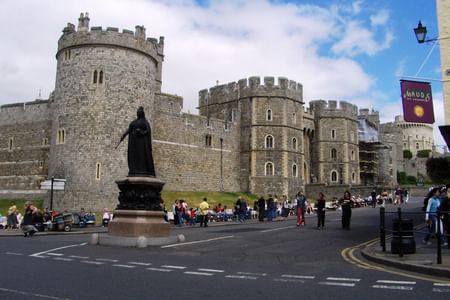
A jewel in the city center, Dublin Castle alone represents an important piece of Dublin's history. Built in 1204 on an ancient Viking fort, by King John of England, this ancient building was intended to symbolize British rule over Ireland, in other words the rule of the Anglo-Normans over the Irish people.

St. Patrick's Cathedral in Dublin

St. Patrick's Cathedral in Dublin, as we see it today, was built in the place of an ancient place of worship dating back to the 5th century. Irish stories say that this is the very place where Saint Patrick is said to have baptized several of his followers in a well, gradually leading Ireland to evangelism.

Dublinia Museum

Inevitable on your way, the Dublinia Museum is the perfect place to discover the city's medieval history. Very popular with tourists for its pleasant cultural offer, the site benefits from an old-fashioned neo-Gothic decor that immediately sets the tone.

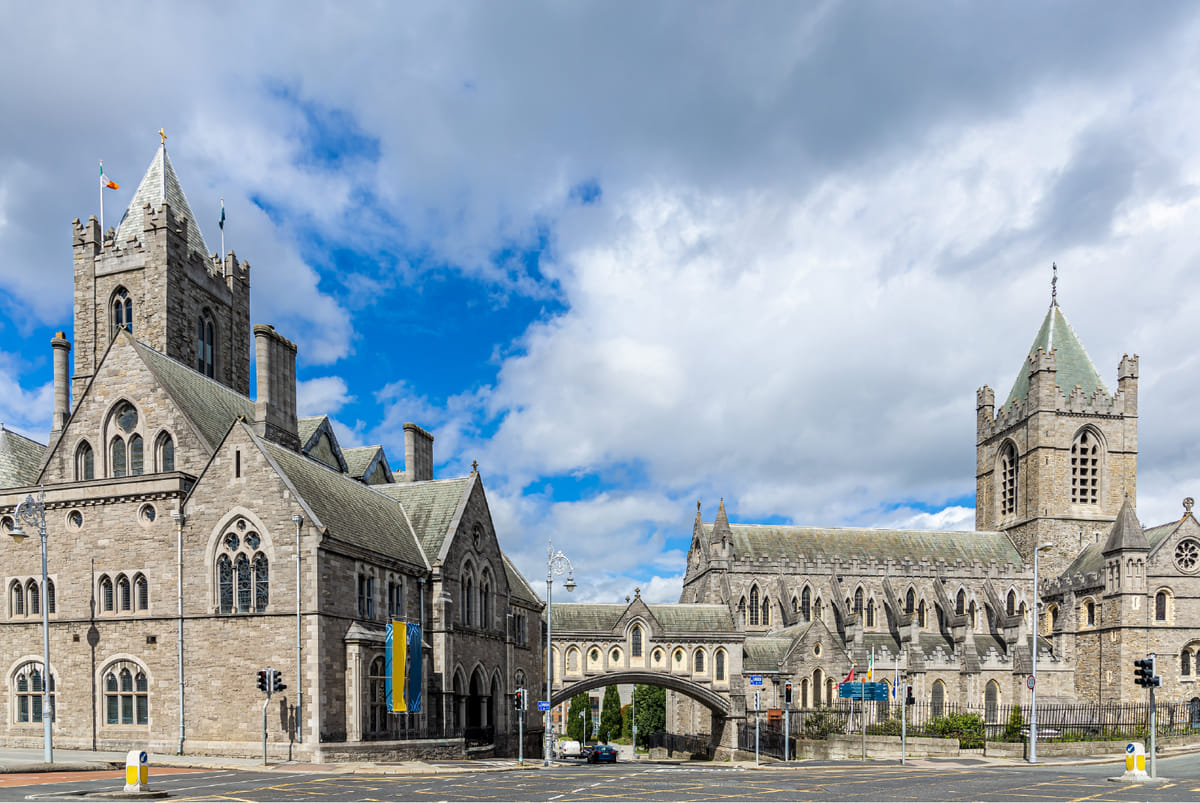
Christ Church Cathedral

An emblematic figure of the city's medieval heritage, Christ Church Cathedral is a monument that has become a must for history lovers. To set the scene, you must first know that the first wooden building was erected on the ground in 1038 by Sitric Silkenbeard, king of the Viking colony.

Temple Bar neighborhood

So popular and trendy in Dublin, the Temple Bar district is a must on our sightseeing itinerary. Very poorly known in the 1600s and occupied by artists and traders from 1800, the area became really prosperous in 1991, with the election of Dublin as European Capital of Culture.

Ha’penny Bridge

Crossed by the popular Liffey River, Dublin offers no less than 23 bridges to take us from one bank to the other. It is true that this gives us choices, even a bit too much... Fortunately, the Ha'penny bridge is there to save the day.

O'Connell Street and the Spire in Dublin

Equivalent to the French Champs-Élysées, O'Connell Street is the main artery of Dublin. Moreover, no matter what time you approach it during the day, this shopping and tourist street is often full of people.

The Famine Memorial

Neither overrun by crowds, nor especially massive, this memorial nevertheless counts enormously in the lives of Dubliners. Heavily affected by the Great Famine from 1845 to 1849, the Irish people experienced a climate of misery that was trying, but above all murderous.

The Jeanie Johnston boat

Docked along the city's north wharf, this magnificent three-masted vessel is the Jeanie Johnston. Risk of ruining your enthusiasm prematurely, it is good to warn you that no cruise approaching this naval figure will be offered to you, but rather a paid educational visit to one of the country's history pages.

Custom House

Stoic on the banks of the north bank of the Liffey, the Custom House is the most famous neoclassical building in the city. Designed by James Gandon, one of Dublin's most renowned architects, the building created a colossal construction site, requiring the participation of all available local workers.

The frescoes of the Bloom Hotel

More for its facades than for its certainly honorable services, the Bloom Hotel is a totally improvised stopping point in our itinerary. For those who did not know, Dublin is as inseparable from its Guinness beer as it is with its legends of Irish literature.

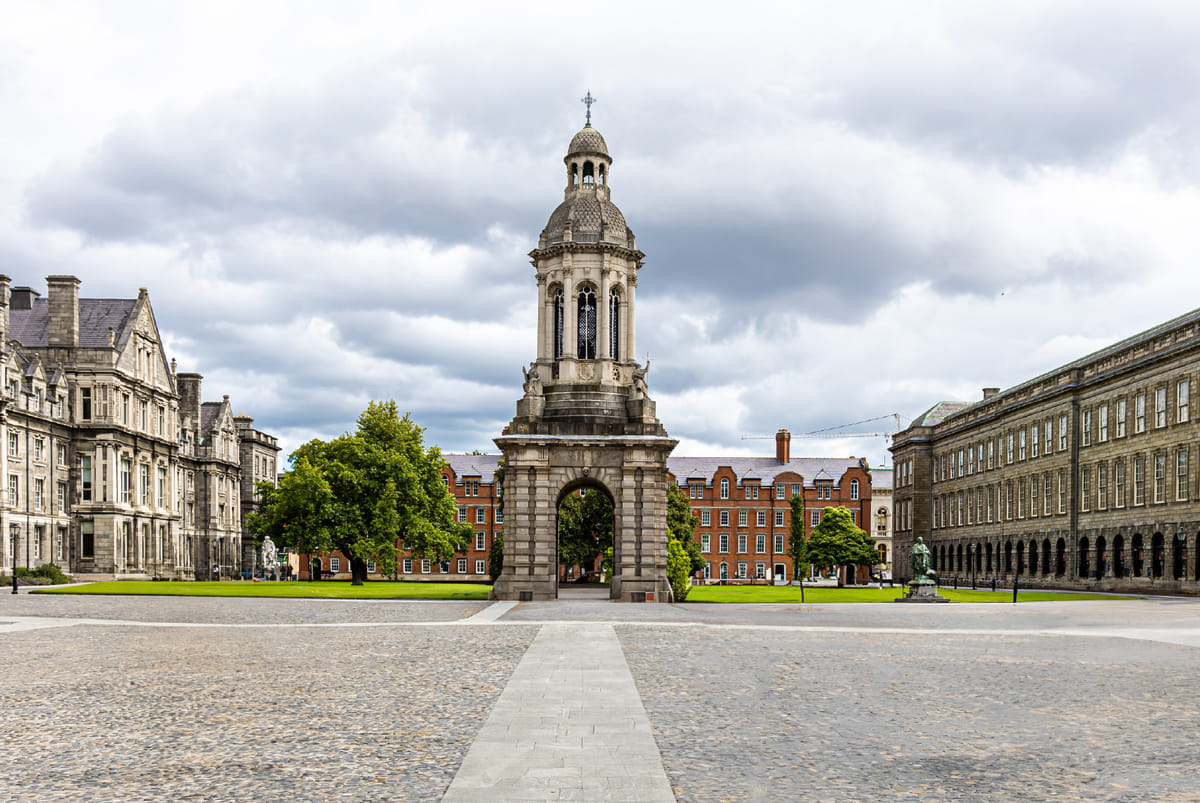
Trinity College

What would Dublin be without its prestigious Trinity College? Considered one of the best universities in Europe, and the oldest in the country, this place of education is a real institution.

Statue of Molly Malone

Lost in the middle of passers-by since 1988, this statue from another era is the subject of an important urban legend for the Irish people. While some would gladly start telling his story in song, as the city's unofficial anthem says, we opted for a quieter and less lyrical version. Don't be mad at us!

Dublin in 3 facts

A bit like a movie that you would need to watch several times, Dublin reveals its history and its particularities in successive touches. There are the obvious things we know about her, even before meeting her, like her ad collection and her beer empire.

Oscar Wilde's house

Apart from being one of the first houses in the neighborhood, built in an obviously Georgian style, this house is better known as having belonged to the family of the famous Irish writer, Oscar Wilde.

The Oscar Wilde statue

If Dublin lists a collection of statues bearing the image of personalities who have marked its history, the one before you is particularly successful. As big in size as in the career he has built, Oscar Wilde is a man with a strong connection to the city.

Meeting / Pickup

Meet on location: This experience has no pick-up service, customers have to make their way to our meeting point.

Please Note

An internet connection is required to download the itinerary before the visit, organize yourself accordingly

Always check local conditions before you leave

Make sure your smartphone is sufficiently charged or carry an external battery.

After booking, you will receive an email with instructions for installing the application (available for iPhone and Android) as well as the procedure for activating the circuit code

The circuit is not suitable for people with reduced mobility (presence of stairs).

Destinations
Language
Operator

Reviews

No reviews yet

Login

Sign In / Register

Login
Register
Forgot Password?