Carcassonne: Audio Guided Walking Tour (2.5 hours – 27 audio comments)
Why we love it?
The Carcassonne Audio Guided Walking Tour offers a self-paced exploration of this historic French city, lasting 2.5 hours and featuring 27 audio comments. Ideal for history enthusiasts and curious travelers alike, the tour allows participants to discover significant landmarks such as St. Michael's Cathedral and the Ambassador's House, as well as hidden gems off the typical tourist trail. With immediate access to the audio content and text transcripts available, visitors can immerse themselves in the rich history, intriguing anecdotes, and local mysteries of Carcassonne at their own convenience.
Inclusions
- Immediate access to the audio-guided tour, no tickets or equipment to collect
- No deadline or expiration
- 27 immersive audio comments along the way (historical comments, monuments, anecdotes, mysteries...)
- Text transcripts of all audio content
- Admire hidden gems that lie off the beaten path
- 3 languages available: French, English, Spanish
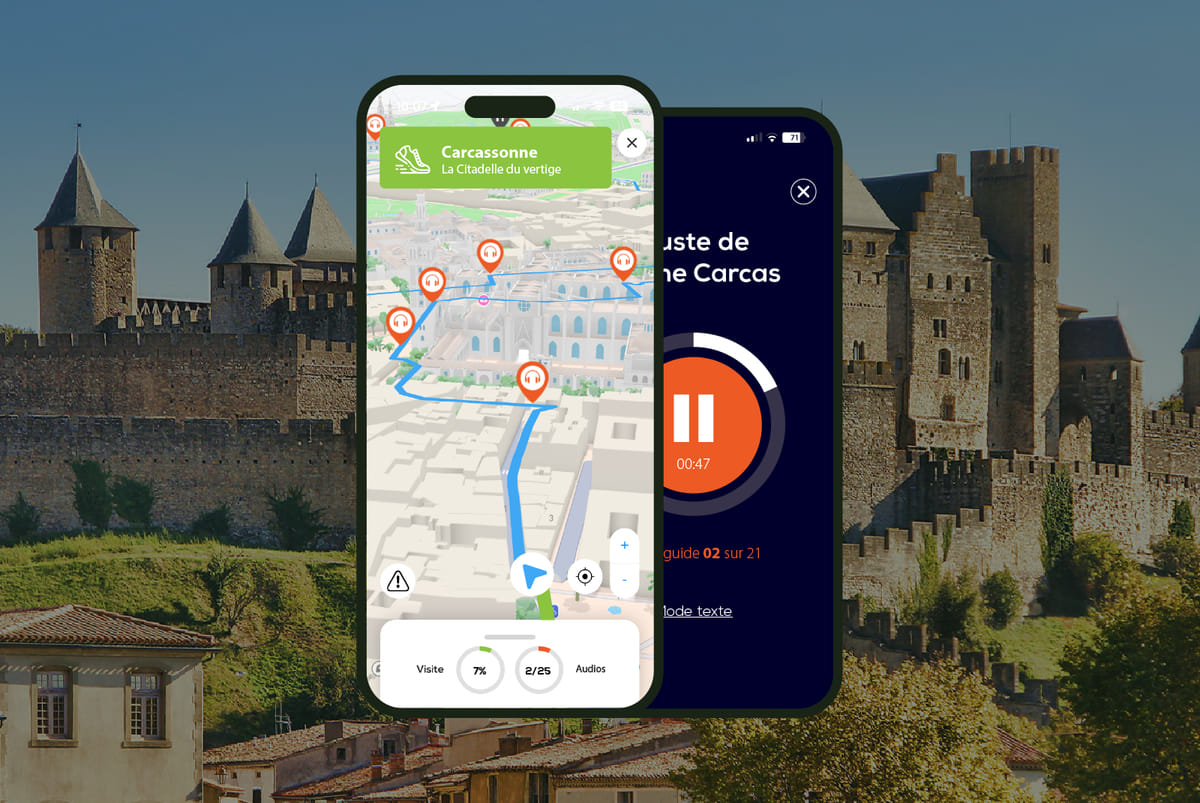
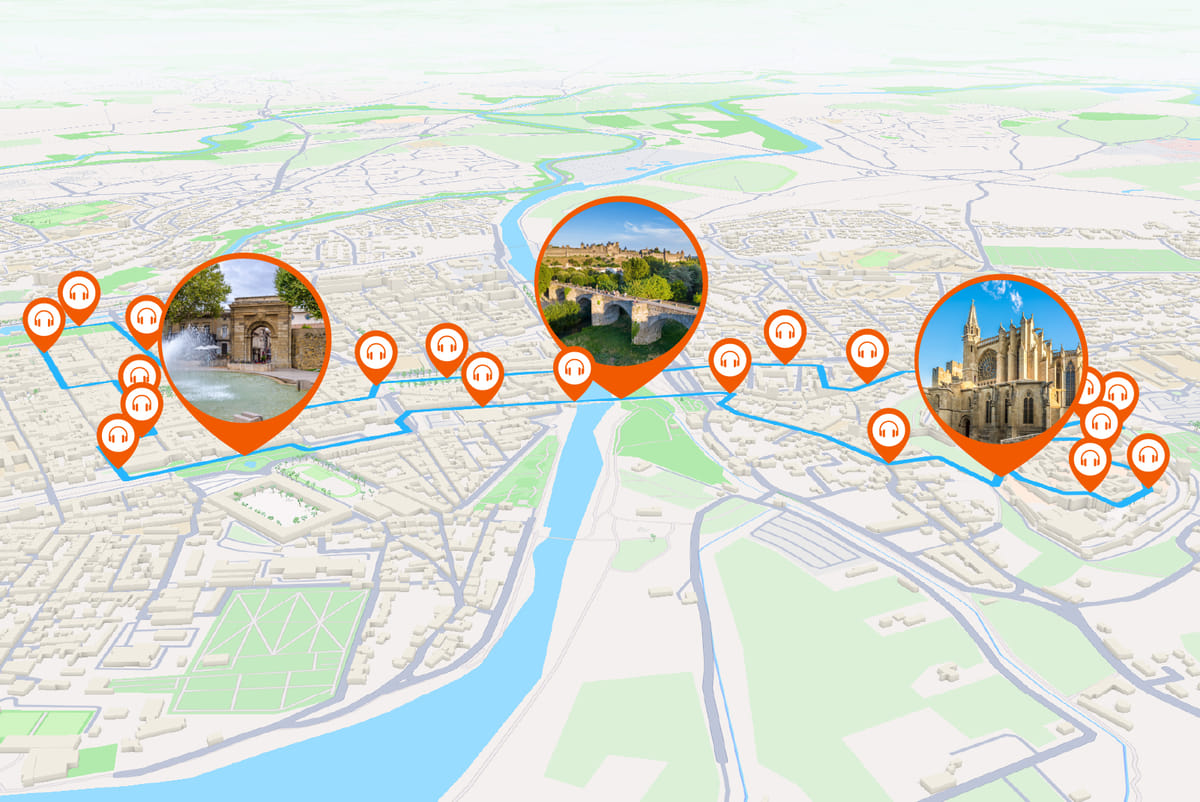
- Interactive navigation with real-time geolocation and 3D map to discover the most beautiful streets, squares and neighborhoods
- Recommendations for the best photo opportunities
- Offline mode (no data consumption during the visit)
Exclusions
- Admission fees to fee-paying establishments along the route if you want to make visits
- Headphones or earbuds (optional)
Itinerary
St. Michael's Cathedral
You have arrived in front of Saint-Michel Cathedral. It was she who dethroned the Saint-Nazaire Basilica, in the medieval city, in 1803, robbing it of the status of cathedral.
Ambassador's house
Here, we are going to turn left, but if you continue a little bit on Aimé Ramond Street, you will come across the Ambassador's House on your left, at number 50.
Halles
Here you are in front of a building that will interest more than one: the halls of Carcassonne. Built in the middle of the 18th century, this former grain hall was located on the Place du Pilori, the square where thieves were exposed to punish them.
Place Carnot
You are now on Place Carnot, the living heart of the city. Ideal for having a drink or trying local specialties at the restaurant, it is one of the liveliest places in Carcassonne.
Saint-Vincent Church
The Saint-Vincent church is particularly interesting because it allows you to climb to the top of the bell tower to enjoy a panoramic view of Carcassonne, in exchange for a few euros!
Bastion Saint-Martial
Take a look to your left: the wall that stands here is part of the Saint-Martial Bastion, built in the 16th century.
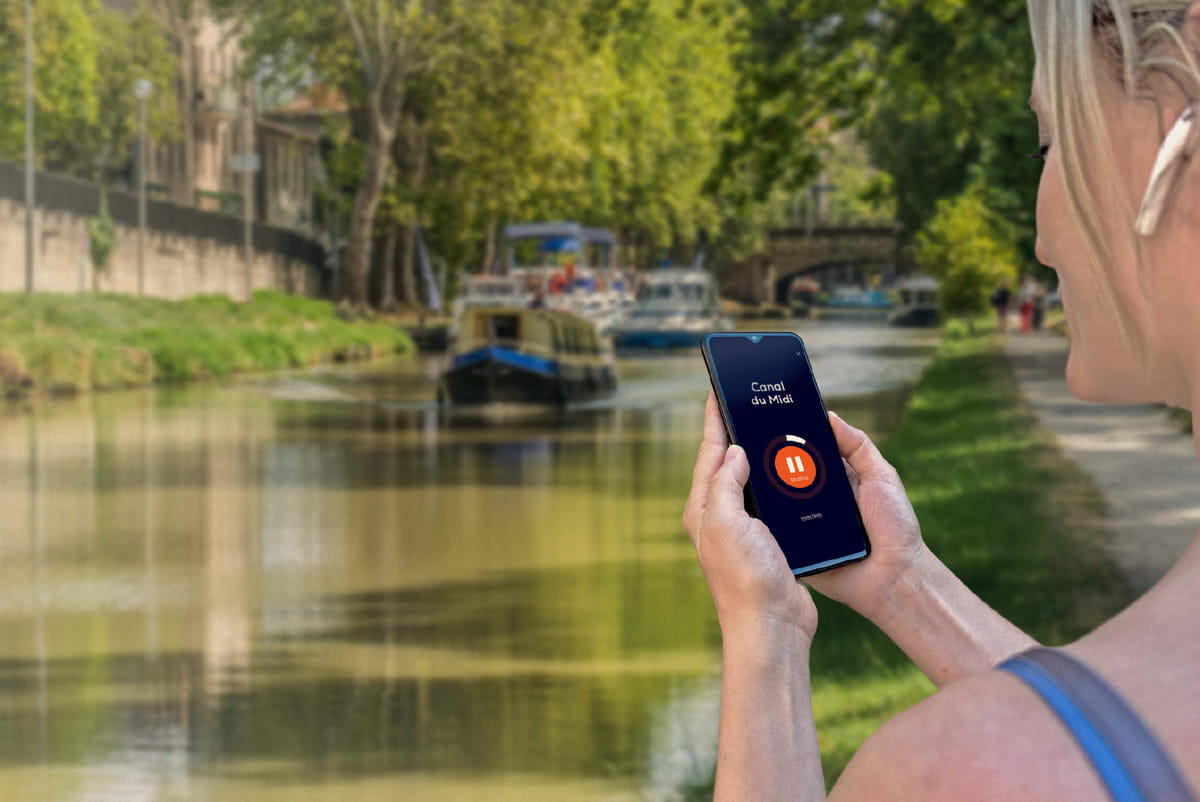
Canal du Midi
We are in André Chénier Square, named after this French poet and journalist who was guillotined in Paris in 1794, in the midst of the Revolution.
Carmelites Church
It was in the 13th century that this church was built in the heart of La Bastide, in 1297 exactly. Like most churches in the city, it follows an architecture based on the southern Gothic style
Rolland Hotel
Take a look to your left: you are in front of the Hotel de Rolland, the current City Hall of Carcassonne.
Museum of Fine Arts
The beautiful building you are in front of is the Museum of Fine Arts.
Square Gambetta
Facing the Museum of Fine Arts, Square Gambetta is a small peaceful place where it is pleasant to take a break. It was built in 1861 under the name Place du Charbon, then Place Sainte-Cécile.
View over the Medieval City
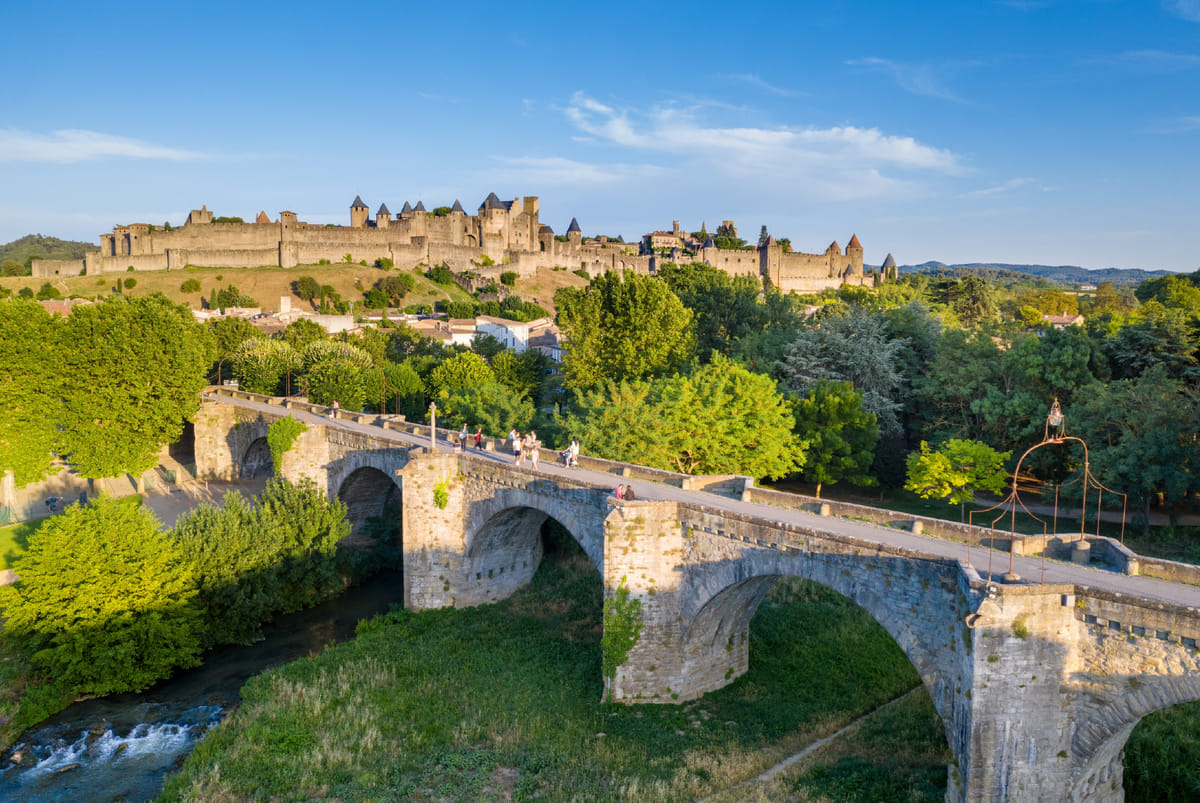
The Pont-Neuf, in opposition to the Pont-Vieux which is just opposite, was built in 1840 to allow a second access between the medieval city and the lower town.
Trivalle Street
Here you are on Trivalle Street, located in the oldest neighborhood in the city. At the foot of the city, it follows the route of the ancient Roman road that linked Narbonne to Toulouse
Our Lady of the Abbey
Behind this wall is Notre-Dame de l'Abbaye, an ancient monastery that comes straight from the Middle Ages.
Buste de Dame Carcas
Here you are in front of a statue of great importance for Carcassonne.
Narbonne Gate
You are in front of what is now the main entrance to the medieval city. The Narbonne Gate, which is actually located on the Narbonne side, is an impressive fortification that ensured the protection of the city.
Chateau Comtal
The large door in front of you corresponds to the entrance to the Count's Castle. It is a barbican, installed here to protect it.
Medieval city
With more than 2 million visitors per year, the medieval city of Carcassonne is one of the most visited sites in France.
The feudal system
Come on, let's embark on a short historical parenthesis. If you have already listened to the audioguide that tells the history of the city, you have understood that Carcassonne was a feudalism for several centuries.
Saint-Nazaire Basilica
The Basilica of Saint-Nazaire-et-Saint-Celse, whose full name is, is the first building restored by Viollet-le-Duc during his major restoration of the City.
Aude Gate
Here you leave the Medieval City through the Aude Gate, which is located next to the Count's Castle. I'm sure this decor tells you something...
Saint-Gimer Church
The Saint-Gimer church is not as old as the fortifications of the medieval city. In fact, it was only built in 1859, by Viollet-Le-Duc.
Former Royal Sheet Manufacture
On your right, located at the entrance to Pont-Vieux, stands the former royal sheet factory.
Pont-Vieux
We will now cross the Pont-Vieux of Carcassonne, which allows us to cross the Aude and connect the two parts of the city.
Notre-Dame-de-Santé Chapel
This small chapel, on your left, is aptly named: there used to be a large hospital right next to it.
Bastide Saint-Louis
You may have already understood it, but Carcassonne is divided into two parts: the Medieval City, perched on its rocky outcrop and surrounded by its suburbs, and the lower town, called the Bastide Saint-Louis, which is located on the other side of the Aude.
Jacobin Gate
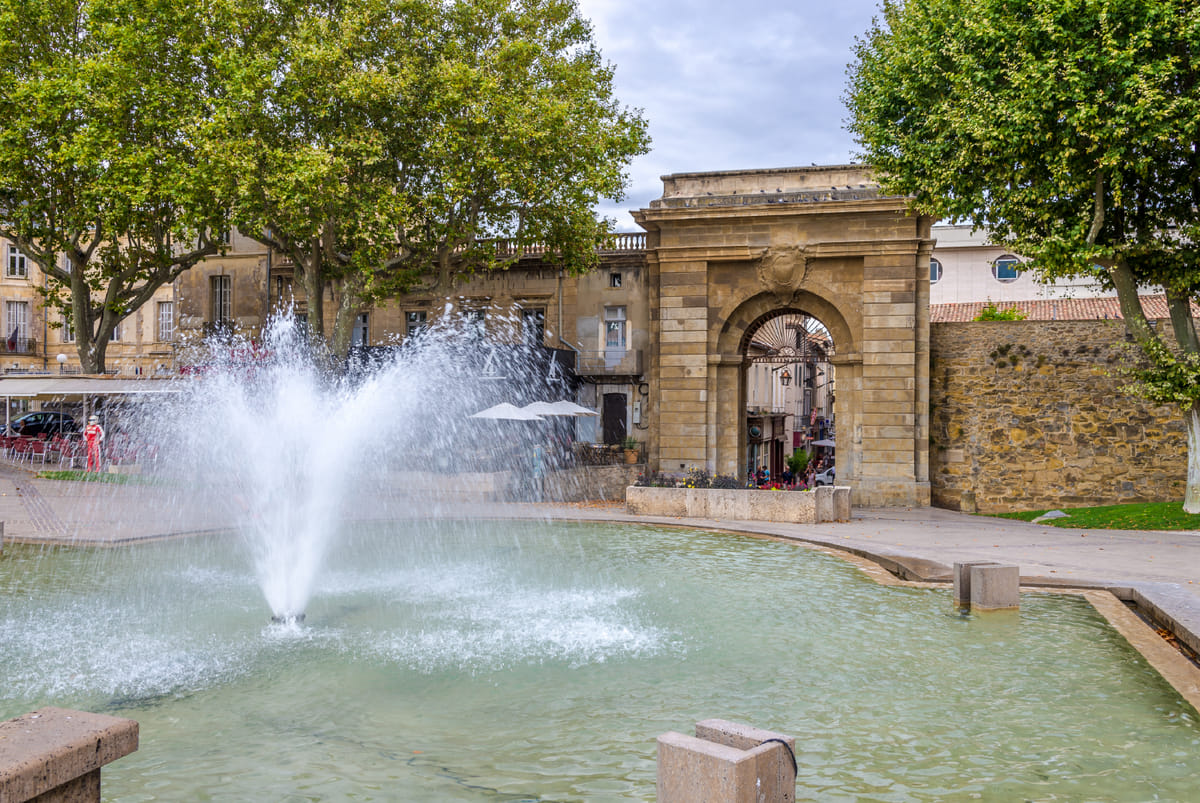
Here you are on the Place du Général-de-Gaulle. Here, we come across what was once one of the most important buildings in the city: the Jacobin Gate, on your right, marks the entrance to the lower city of Carcassonne.
Please Note
- An internet connection is required to download the itinerary before the visit, organize yourself accordingly
- Always check local conditions before you leave
- Make sure your smartphone is sufficiently charged or carry an external battery.
- After booking, you will receive an email with instructions for installing the application (available for iPhone and Android) as well as the procedure for activating the circuit code
- The circuit is not suitable for people with reduced mobility (presence of stairs).
Cancellation Policy
Fully refundable until 1 day before start
Non-refundable after 1 day before start