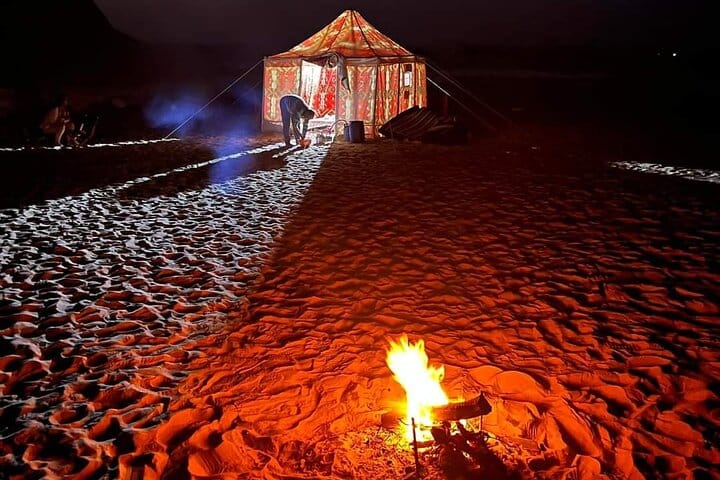
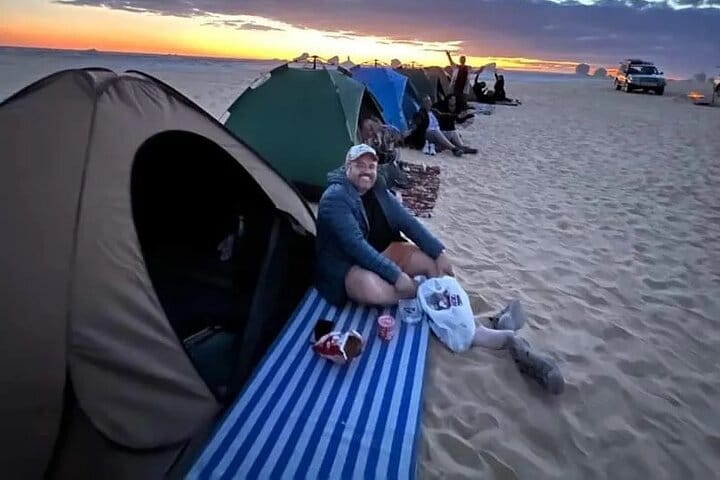
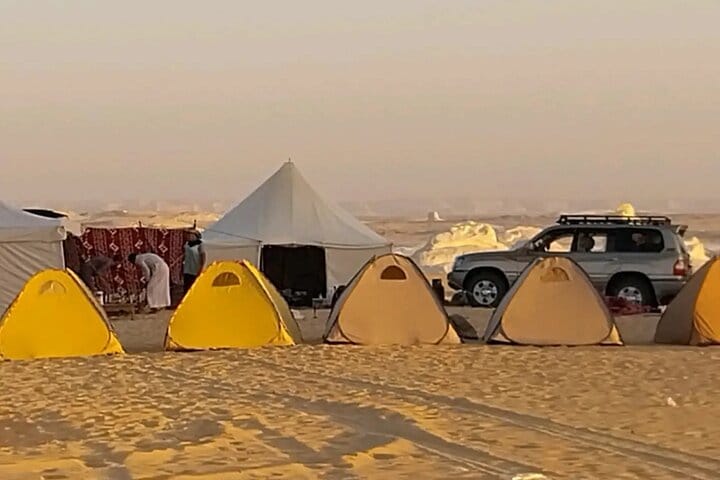
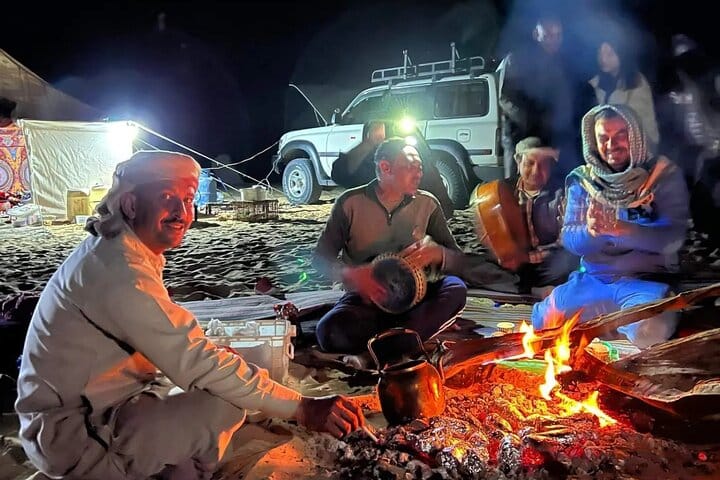
Camp in the white desert
Day 4:
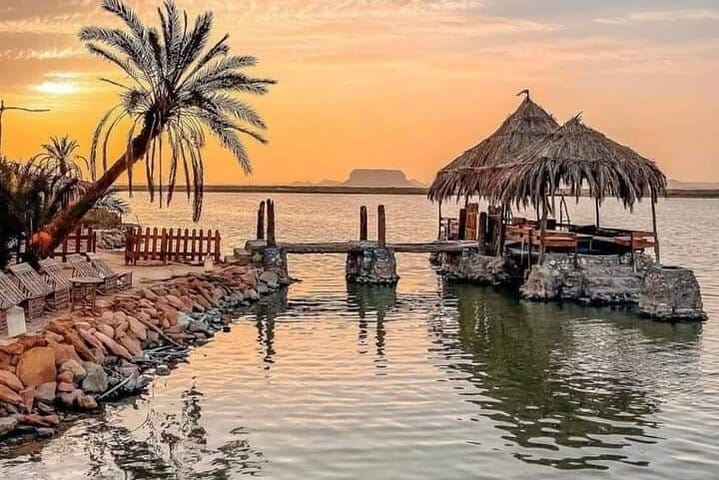
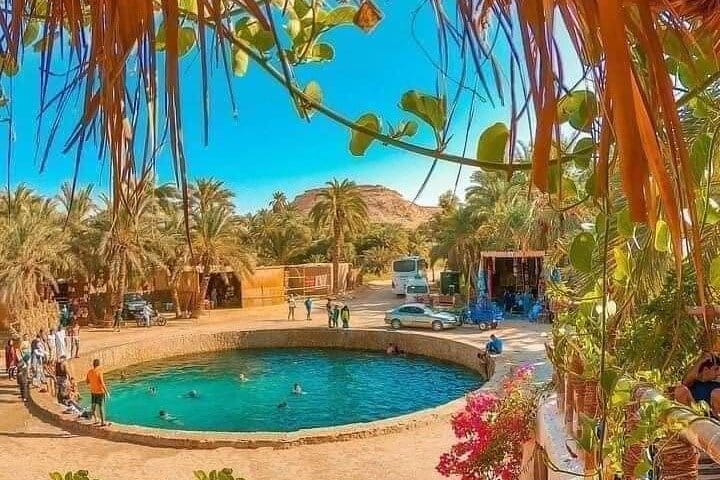
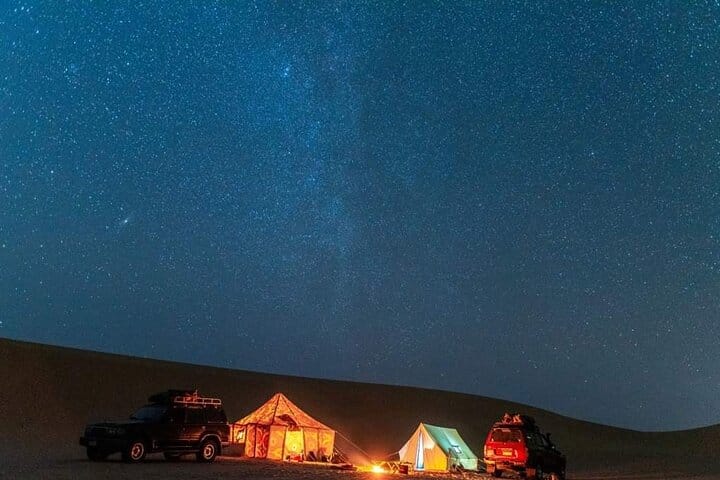
After eating breakfast, we resume our journey by car to explore more in the black desert, visit the Al-Marsous crossing, then drive to the village of Al-Haz to see the cold spring, and we resume our trip to visit the Crystal Mountain and the Aqaba region, then from the Aqaba region we continue driving on the road to cross the valleys and reach the green spring, where we will eat our lunch and see the spring From the Roman era and then drive to cross the new white desert, where the best formations of limestone are found, then the white desert. We find a great place to make our camp for dinner and spend the night under the stars.
Meals: breakfast - lunch - dinner
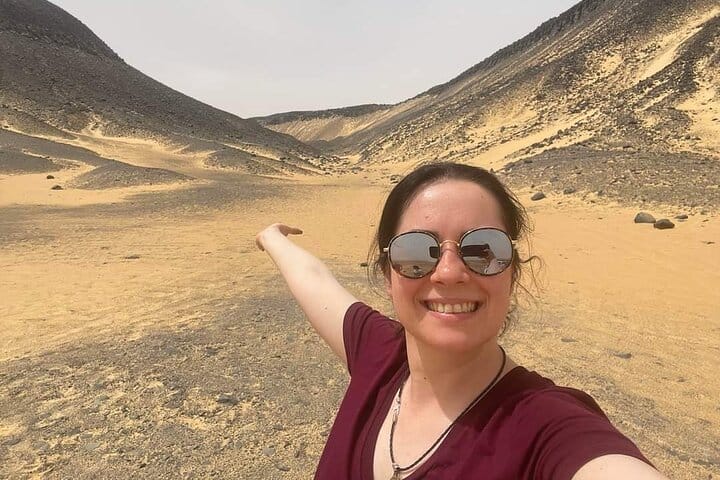
Volcanic History: The Black Desert’s appearance is the result of ancient volcanic activity. The dark stones and rocks are remnants of volcanic eruptions that happened millions of years ago, covering the area in basalt and other volcanic minerals.
Rock Formations: The black hills are actually weathered mounds of volcanic rock, and some areas have black stones scattered over yellowish sand, creating a striking contrast in color. Some hills have a conical shape, while others are rounder, creating a unique landscape Exploration and Hiking: Tourists often hike up the black hills to get panoramic views of the landscape. The desert’s unusual colors and contrasts make it a popular destination for photographers and adventurers.
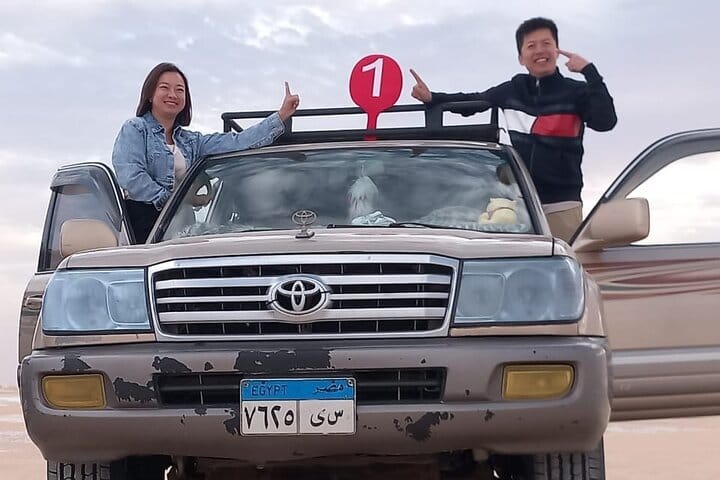
Desert Safari Tours: Many visitors to Bahariya Oasis take organized safari tours that include visits to both the Black Desert and the White Desert. Tours are usually done in 4x4 vehicles due to the rugged terrain.
Camping: Some tours offer overnight camping in the Black
The formations often look like they’re sparkling, particularly in bright sunlight, due to the crystalline quartz and gypsum.
This unique landscape creates an almost otherworldly scene with shimmering rocks set against the expansive Sahara Desert, offering a stark contrast to the surrounding sand dunes and desert terrain.
Due to its remote location, Crystal Mountain is not a heavily frequented tourist destination, but it is visited by adventure travelers and those interested in geology or unique natural wonders.
Some tour operators who organize desert expeditions to places like Egypt and Morocco may offer specialized tours to similar sites with crystal or quartz formations.
Because the area is politically sensitive, with ongoing disputes over Western Sahara, access can be restricted or require specific arrangements with local guides.
Crystal Mountain is significant as a natural wonder and is part of the region’s broader geological and ecological system. Its minerals contribute
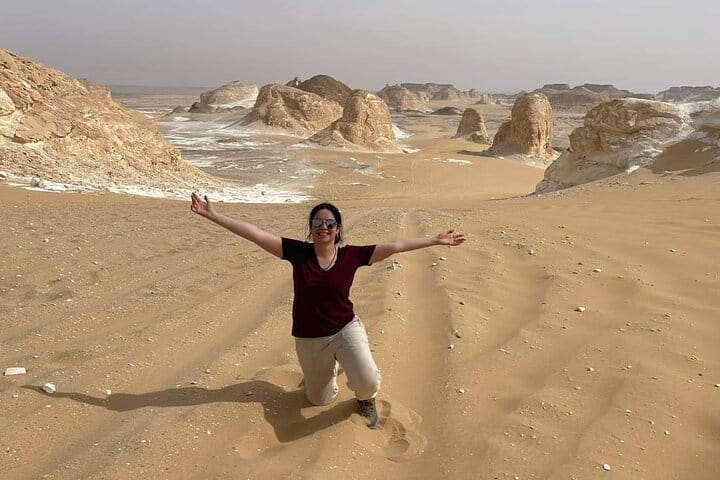
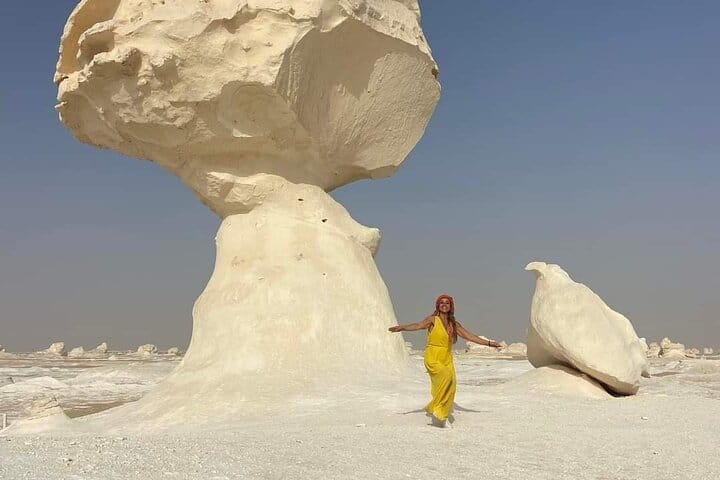
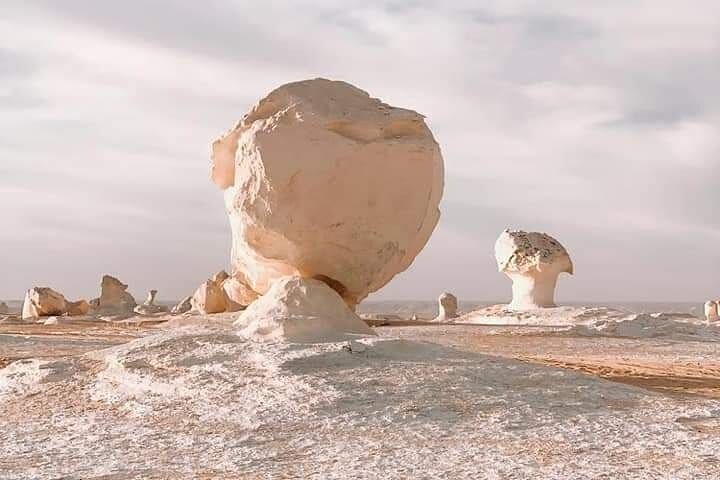
Limestone Towers and Cliffs: The Valley of Agabat is known for its towering limestone cliffs and unique rock formations, which have been carved by wind and sand. These formations are sometimes compared to mushroom or coral shapes and are made of chalky white limestone that contrasts beautifully with the golden sands.
Sand Dunes: Between the limestone cliffs are large, fine-grain sand dunes, which add a golden tone and texture to the valley’s appearance. These dunes make the valley popular for sandboarding.
Otherworldly Scenery: Agabat’s rock formations are often considered surreal or “Martian” in appearance due to the mix of chalk-white stones and stark, rugged cliffs, giving it a unique, almost alien look. Although the Valley of Agabat is in a harsh desert climate, some flora, such as small shrubs and desert plants, have adapted to the area.
Wildlife in the region is sparse but includes desert-dwelling animals such as the Fennec fox, various reptiles, and migratory birds that may
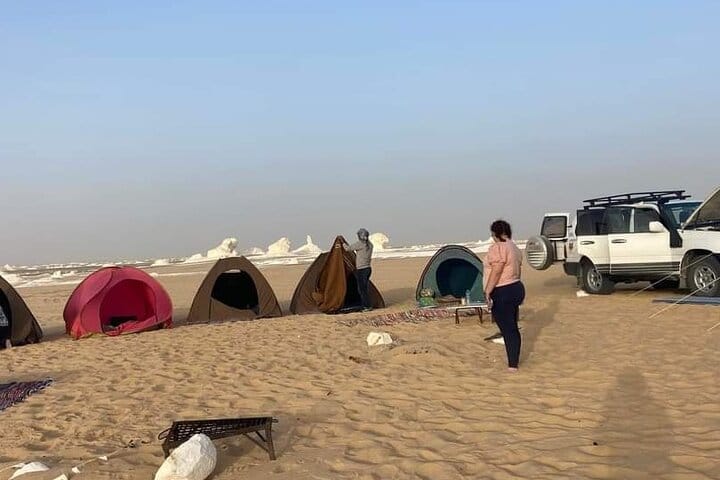
Guided Tours and Campsites: Camping in the White Desert is typically arranged through tour operators based in Bahariya Oasis or Cairo. These tours include a guided 4x4 vehicle, camping gear, food, and experienced local guides who handle setup and cooking.
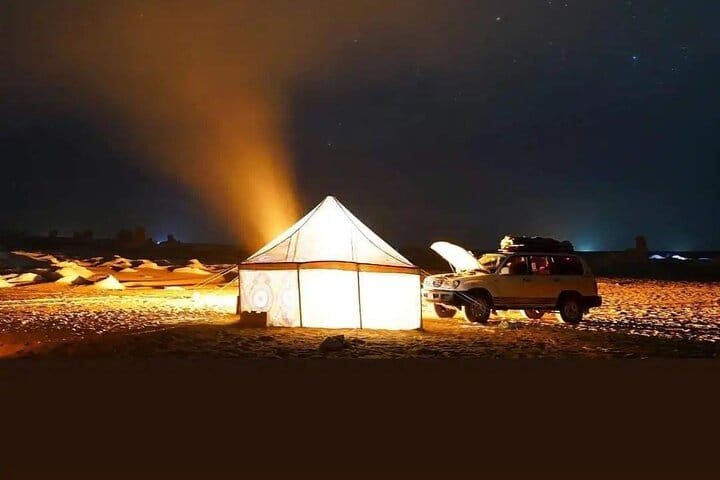
Wild Camping Experience: There are no formal campsites; instead, camping is done “wild” style, allowing for a more immersive experience in nature. Tours usually camp at sites near the most scenic formations. Stargazing: One of the highlights of camping in the White Desert is the exceptional stargazing opportunity. The remote location offers minimal light pollution, making the night sky brilliantly clear. Many visitors are captivated by the view of the Milky Way stretching across the desert.
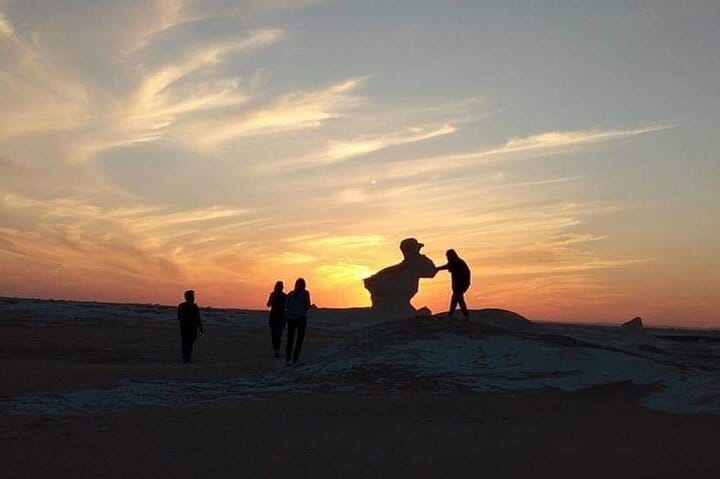
Desert Exploration: During the day, visitors can explore the unique rock formations, hike through the white sands, and take photographs of the iconic landscape.
Photography: The desert’s colors and formations make it a paradise for photographers.
Staying in a camp in the White Desert